Electrical Problems That Would Cause a Car Not to Start: Top Fixes
When you turn your car key and nothing happens, it’s easy to panic. Sometimes, the engine stays silent, or you might only hear a click. For many drivers, this is confusing and stressful. The truth is, most car starting problems are electrical.
Modern vehicles depend on a complex network of wires, sensors, and electronic parts. If something goes wrong, your car might refuse to start.
Understanding electrical problems that cause a car not to start is important for every driver. These issues range from a weak battery to more hidden faults like a broken ignition switch. If you know what to look for, you can save time, money, and avoid getting stranded. This article will explain the most common electrical reasons your car won’t start, how to spot them, and tips to fix or prevent them.
We’ll also clear up myths and offer advice you won’t find in a quick mechanic’s summary. By the end, you’ll feel more confident about what’s happening under the hood—and what to do next.
The Battery: Heart Of The Starting System
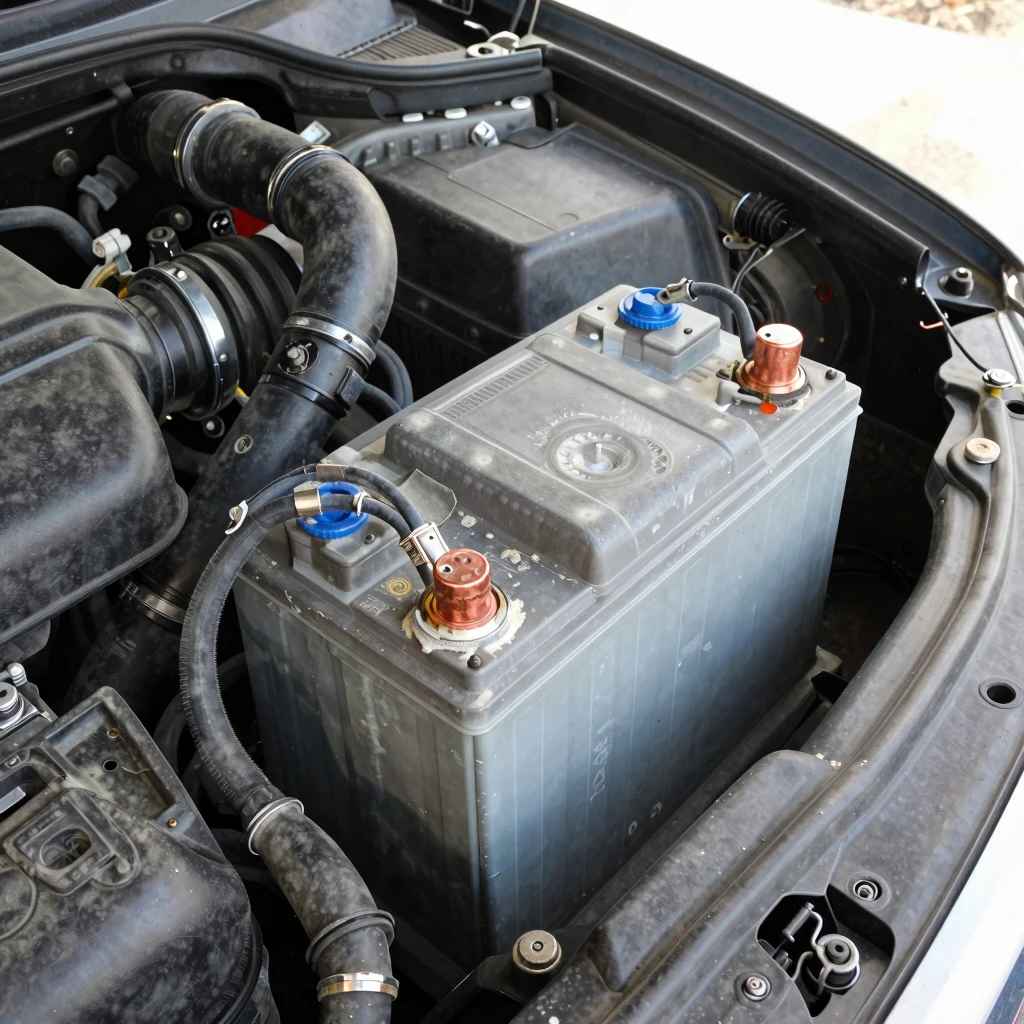
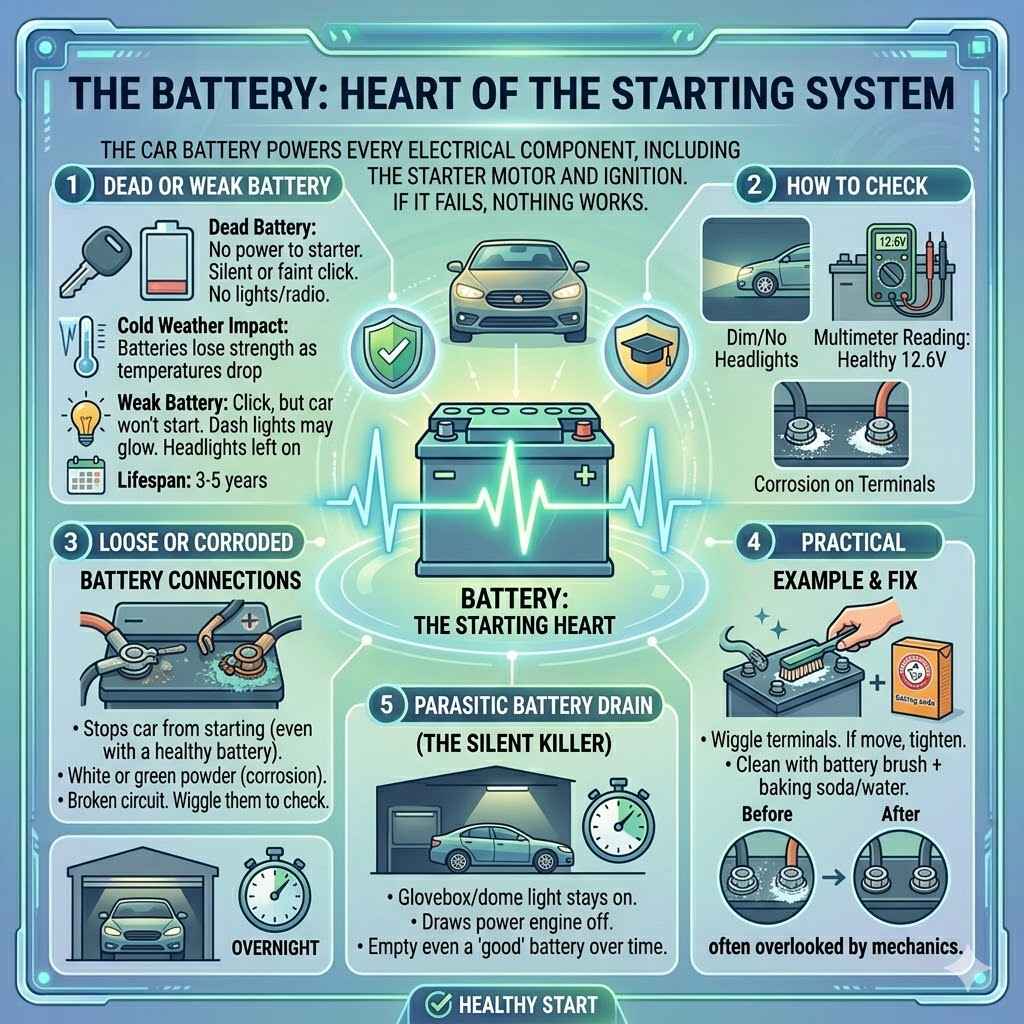
The car battery is the most frequent culprit when your car won’t start. It powers every electrical component, including the starter motor and ignition. If it fails, nothing works.
Dead Or Weak Battery
A dead battery means no power reaches the starter motor. Signs include total silence when you turn the key, or maybe a faint click. Sometimes, lights or the radio won’t turn on. Cold weather often makes this worse because batteries lose strength as temperatures drop.
A weak battery might allow dash lights to glow, but the starter motor may just click. This often happens if you leave your headlights or dome lights on overnight. Batteries usually last 3-5 years, but extreme heat or cold can shorten their life.
How To Check
- Turn on the headlights. If they’re dim or don’t turn on, the battery is likely dead.
- Use a multimeter. A healthy battery should read about 12.6 volts when the car is off.
- Look for corrosion on battery terminals—this can block the flow of electricity.
Loose Or Corroded Battery Connections
Even with a healthy battery, loose or corroded terminals can stop your car from starting. Corrosion looks like white or green powder on the battery posts and cables. Loose connections may not be obvious, but they break the circuit.
Practical Example
If your car sometimes starts and sometimes doesn’t, check the battery terminals. Wiggle them gently (with the car off). If they move, tighten them. Clean off corrosion with a battery brush and a mix of baking soda and water.
Parasitic Battery Drain
Sometimes, something in your car keeps drawing power even when the engine is off—like a glovebox light that never turns off. This is called a parasitic drain. Over time, even a small drain can empty the battery.
Non-obvious Insight
Parasitic drain is often overlooked. Mechanics sometimes miss it, especially if the car starts fine after a jump. If your battery dies overnight but tests as “good,” consider this as a cause.
The Starter Motor And Related Problems
The starter motor turns the engine when you turn the key. If it fails, the engine won’t crank.
Faulty Starter Motor
A bad starter usually makes a single loud click or a series of rapid clicks. Sometimes, there’s no sound at all. Starters can wear out over time, especially if you drive in stop-and-go traffic.
What You Might Miss
A failing starter sometimes works inconsistently. One morning the car starts, the next it doesn’t. This can lead you to blame the battery, but if jump-starting doesn’t help, suspect the starter.
Starter Solenoid Issues
The starter solenoid is a small part that connects battery power to the starter motor. If the solenoid fails, the motor won’t get power. Symptoms are similar to a dead starter—clicks but no cranking.
Practical Tip
Sometimes, tapping the starter gently with a tool can make it work temporarily. This is a short-term fix, not a solution.
Wiring To The Starter
Wires leading to the starter can corrode, break, or become loose. Damage here stops electricity from reaching the starter, making the car silent when you turn the key.
Data Table: Battery Vs. Starter Problems
Here’s a comparison to help you tell the difference between battery and starter issues:
| Symptom | Likely Battery Problem | Likely Starter Problem |
|---|---|---|
| Dash lights dim or off | Yes | No |
| Single click sound | Sometimes | Often |
| Lights and radio work, but engine won’t crank | Unlikely | Yes |
| Jump-start works | Usually | Rarely |
Ignition Switch And Key System Failures
The ignition switch sends power to critical systems when you turn the key. If it’s faulty, your car may not start.
Bad Ignition Switch
A worn or broken ignition switch might cause no response when you turn the key, or the engine might start and then stall. Sometimes, you can jiggle the key and get it to work temporarily.
Overlooked Detail
Many cars today use electronic key fobs and push-to-start buttons. If the switch or fob battery fails, the car won’t recognize the key, and the engine won’t start.
Faulty Immobilizer Or Key Transponder
Modern cars have immobilizer systems that need to detect the correct key. If the system doesn’t “see” the chip in your key, the engine won’t start. Sometimes, a light on the dash will flash, or a message like “Key Not Detected” appears.
Common Mistake
Replacing the ignition switch or starter without checking the key fob battery or immobilizer can lead to wasted money and time.
Fuses And Relays: Small Parts, Big Problems
Your car has dozens of fuses and relays that control power to different systems. If a fuse blows, the starter or fuel system may lose power.
Blown Starter Relay Or Fuse
A blown starter relay or fuse means the starter can’t get power. This might happen after an electrical short or for no clear reason.
How To Check
- Locate your car’s fuse box (see the owner’s manual).
- Look for the starter relay and related fuses.
- Replace any blown fuses with the same rating.
Main Fuse Or Fusible Link Failure
Some cars have a main fuse or fusible link that protects all electrical circuits. If this fails, nothing electrical works—not even the lights or radio.
Non-obvious Insight
A main fuse rarely blows without a serious issue, like a major short circuit or a battery installed backwards. If this happens, find the root cause before replacing the fuse.
Wiring And Ground Issues
Wires carry electricity everywhere in your car. They can break, corrode, or come loose, especially in older cars or those with rodent damage.
Damaged Or Loose Wiring
Wires to the starter, battery, ignition switch, or computer can be damaged by heat, age, or animals. Even a single broken wire can stop your car from starting.
Poor Ground Connections
Every electrical system needs a good ground—a return path for electricity. If the main ground cable between the engine and battery is loose or corroded, you’ll get weak or no starting.
Table: Common Ground Points In A Car
| Ground Point | Location | Common Issues |
|---|---|---|
| Battery ground cable | Battery to chassis/engine | Corrosion, loose bolts |
| Engine ground strap | Engine block to body/frame | Rust, breakage |
| Chassis ground | Frame to body panels | Paint blocking contact |
Alternator Problems
The alternator charges your battery while the engine runs. If it fails, the battery can drain, leaving you unable to start the car.
Bad Alternator
A failing alternator might show a warning light shaped like a battery. If your battery keeps dying, even after replacement, the alternator may not be charging it.
Example
You replace the battery, but it dies again after a day or two. Check the alternator by measuring voltage at the battery with the engine running—it should read 13. 8-14. 4 volts.
Slipping Alternator Belt
If the belt driving the alternator is loose or broken, the battery won’t charge. You might hear a squealing noise, especially at startup.
Computer And Sensor Failures
Modern cars have engine control units (ECUs) and many sensors. If these fail, the car may not start even if all other parts are good.
Faulty Engine Control Unit (ecu)
A bad ECU can prevent the car from recognizing the key, sending fuel, or sparking. Sometimes, the “Check Engine” light stays on, or you see error codes.
Advanced Example
After a battery change, some cars need the ECU reset. If you disconnect the battery for too long, the ECU might “forget” its settings and block the start.
Crankshaft And Camshaft Position Sensors
These sensors tell the ECU where the engine is, so it knows when to fire the spark plugs. If either sensor fails, the car often cranks but won’t start.
What Beginners Miss
A failed sensor may not always trigger a “Check Engine” light at first. Diagnosing sensor problems often requires a scan tool.
Security System Faults
Many cars have anti-theft systems. If these fail, they might “think” someone is stealing the car and prevent starting.
Faulty Aftermarket Alarm Systems
An aftermarket alarm or remote start system can cause problems if installed poorly or if its wiring fails. Sometimes, removing or bypassing the alarm is the only solution.
Factory Immobilizer Failures
Even factory systems can malfunction, especially if the key or fob battery dies. Always try a spare key before assuming something major is broken.
Faulty Neutral Safety Switch Or Clutch Switch
Automatic cars have a neutral safety switch; manuals have a clutch switch. If these fail, the car won’t start unless it’s in park (automatic) or the clutch is pressed (manual).
Symptoms
- Car won’t start in “Park” or “Neutral,” but starts in one and not the other.
- Car won’t start unless you press the clutch pedal harder than usual.
Dirty Or Failing Connections
Even if all parts are good, dirty or loose connectors can stop your car from starting. This is especially common in humid or salty climates.
Signs Of Bad Connections
- Car starts after wiggling wires or connectors.
- Visible green or white corrosion inside connectors.
- Random electrical problems, like flickering lights.
Uncommon Electrical Problems
Rodent Damage
Mice and rats sometimes chew on car wires, especially if you park outside or store your car for long periods. Chewed wires can cause random, hard-to-find electrical problems.
Water Intrusion
Water leaks into fuse boxes or wiring can cause shorts. This is common after heavy rain, flooding, or car washes.
How To Diagnose Electrical Starting Problems
Finding the true cause of an electrical starting problem can be tricky. Here’s a practical approach:
- Start with the battery. Check voltage, terminals, and age.
- Listen for clicks or silence when you turn the key.
- Try jump-starting the car. If it starts, the battery is likely the issue.
- Check fuses and relays related to starting.
- Inspect wiring for corrosion, looseness, or damage.
- Test the starter and ignition switch with a multimeter if possible.
- Use a scan tool to check for error codes in modern cars.
Table: Quick Diagnostic Steps
| Step | What to Check | Possible Cause |
|---|---|---|
| 1 | Battery voltage & connections | Dead/weak battery, corrosion |
| 2 | Listen for starter click | Starter/solenoid issue |
| 3 | All lights dead | Main fuse, battery, ground |
| 4 | Try spare key/fob | Immobilizer, fob battery |
| 5 | Scan for error codes | Sensor, ECU, security |
Preventing Electrical Starting Problems
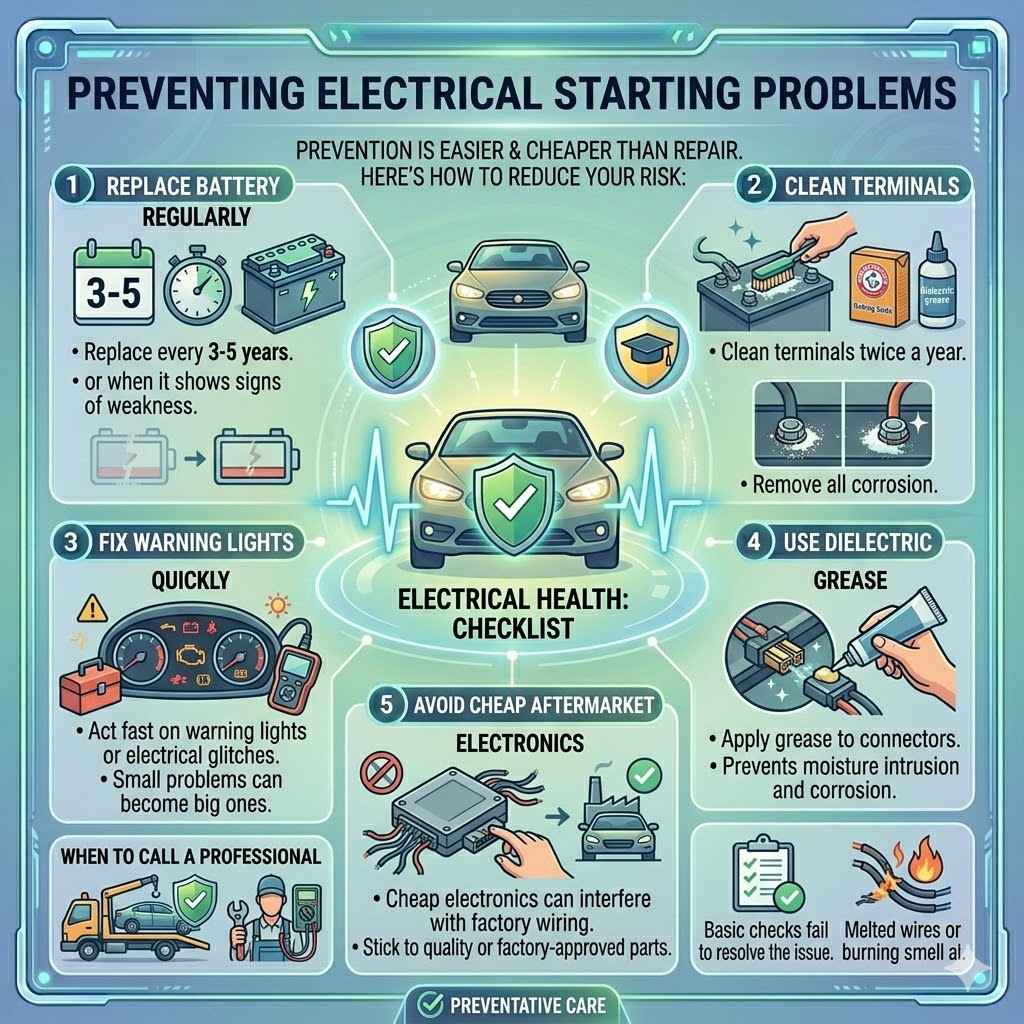
Prevention is easier and cheaper than repair. Here’s how to reduce your risk:
- Replace your battery every 3-5 years or when it shows signs of weakness.
- Clean battery terminals and check for corrosion twice a year.
- Fix warning lights or electrical glitches quickly—small problems can become big ones.
- Use dielectric grease on electrical connectors to prevent moisture intrusion.
- Avoid cheap aftermarket electronics that can interfere with factory wiring.
- Park indoors when possible to reduce rodent risk.
When To Call A Professional
While some problems are easy to fix, others require special tools or knowledge. If you’re stuck after basic checks, or if you see melted wires or burning smells, call a professional. Modern cars are complex, and guessing can be costly.
Frequently Asked Questions
What Is The Most Common Electrical Reason A Car Won’t Start?
The most common cause is a dead or weak battery. Other frequent reasons include corroded battery terminals, bad starter motors, or a faulty ignition switch.
Can A Bad Alternator Cause A Car Not To Start?
Yes. A bad alternator can prevent the battery from charging. If the battery runs out of power, the car won’t start—even if the alternator failed days earlier.
How Do I Know If My Car’s Security System Is Stopping It From Starting?
If your car won’t start and you see a flashing security light or a message like “Key Not Detected,” the immobilizer or security system may be blocking the start. Try using a spare key or changing the fob battery.
Why Does My Car Click But Not Start?
A clicking sound usually means the starter motor is trying to work but not getting enough power. This often points to a weak battery, bad starter, or poor connections.
Can Blown Fuses Really Stop My Car From Starting?
Yes. A blown fuse or relay, especially for the starter or main power, can stop your car from starting. Check the owner’s manual for fuse locations and ratings.
If you want to learn more about automotive electrical systems, visit Wikipedia’s automotive electrical system page.
A car that won’t start can turn a normal day upside down. But by understanding the common electrical problems, you’re better prepared to diagnose and fix the issue—or explain it to a mechanic. Stay proactive with maintenance, and you’ll avoid most surprises.
If you ever feel unsure, don’t hesitate to get expert help. Your car’s electrical system is complex, but with the right knowledge, you’re in control.