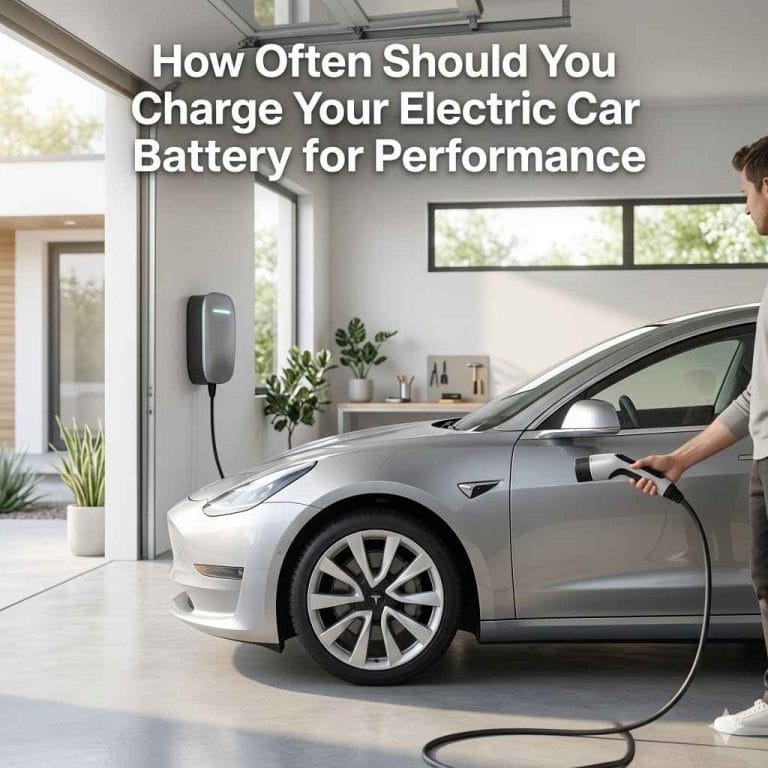
Electric Car Lease vs Buy: Which Makes More Sense?
Lease an EV if you drive relatively few miles a year, want lower risk, and can live without building equity; consider buying new if you tend to keep cars for several years; buy used if your main goal is a lower monthly payment. Ignore mileage caps, battery condition, and resale timing, and you can pay thousands more in fees, depreciation, or surprise repairs. I use this split when I price EV deals for real drivers. This guide compares lease, new-buy, and used-buy costs and risk by driver profile, so you can pick the best path for your usage.
This guide is part of our Electric vehicle basics: a simple owner guide series.
Electric car lease vs buy: the real trade-off
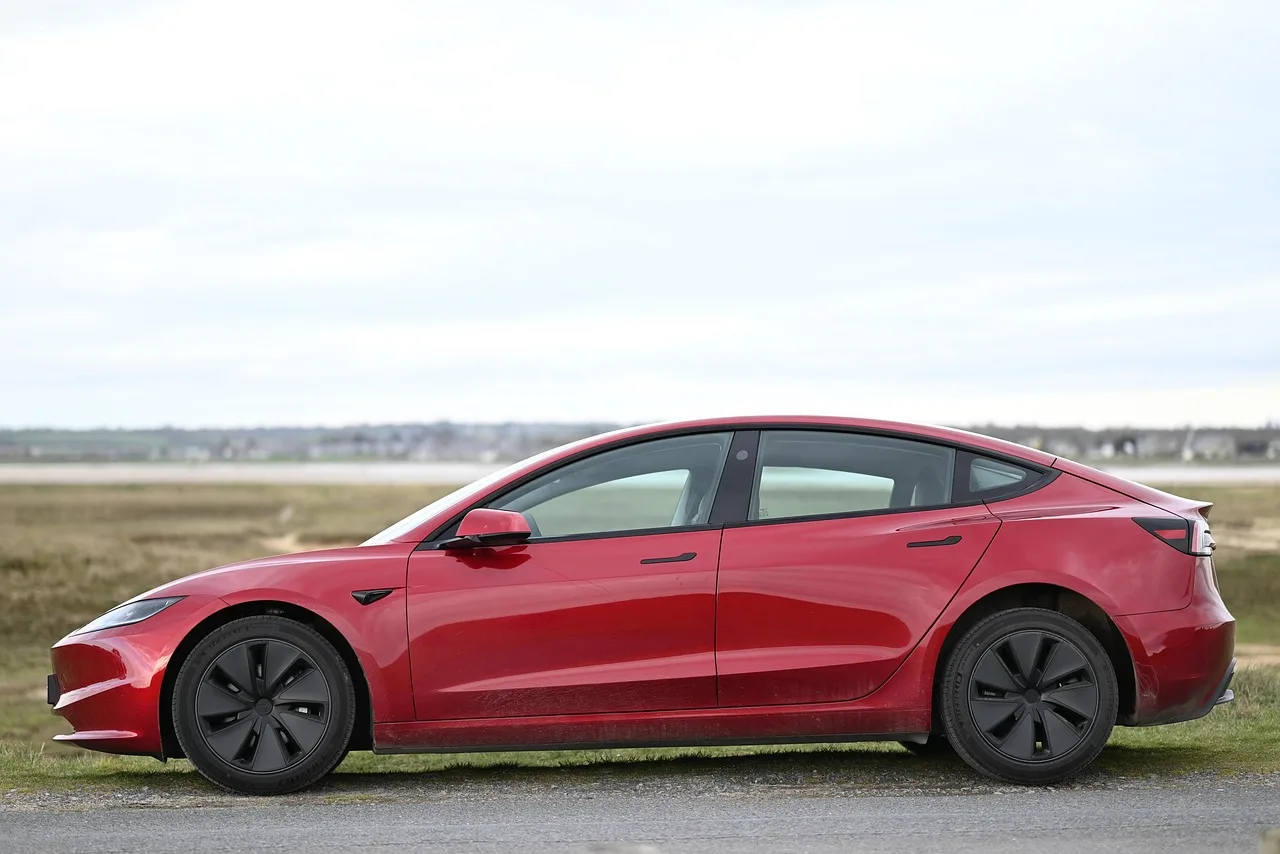
What you pay each month versus what you own at the end
A lease is payment for use. A purchase is payment toward ownership. That gap looks small on paper until mileage caps, residual value, tax treatment, and end-of-term fees hit the budget.
A lease often keeps the monthly number lower because the payment covers expected depreciation over a short term, not the full sticker price. A purchase usually costs more each month, but each payment builds equity if the car holds value well.
Why EV depreciation changes the answer faster than it does for many gas cars
EVs tend to lose value early, especially when a model gets a longer-range refresh or when new incentives make fresh inventory cheaper than expected. The first owner usually takes the steepest hit. The used market then starts doing some of the work for the next buyer.
That is also why a lease can feel safer. The lessor takes the residual-value risk. If the market softens, the driver usually does not carry the full loss.
When buy-used enters the comparison
Used EVs belong in the decision from the start, not as an afterthought. Used EV sales jumped 32.1 percent year-over-year in May 2025, and 43 percent of used EVs were priced under $25,000. Forty-five percent of used EV listings were from 2023 to 2025 model years, which means the market already has a deep pool of near-new cars.
Used EVs were priced, on average, less than $2,000 below comparable ICE vehicles. That narrows the old gap, but the value case is still often strong because the big first-year depreciation has already happened.
According to Should You Buy a Used EV? The Upsides and Downsides — The average new car transaction price in the U.S. was almost $48,000. (source)
Lease vs buy at a glance
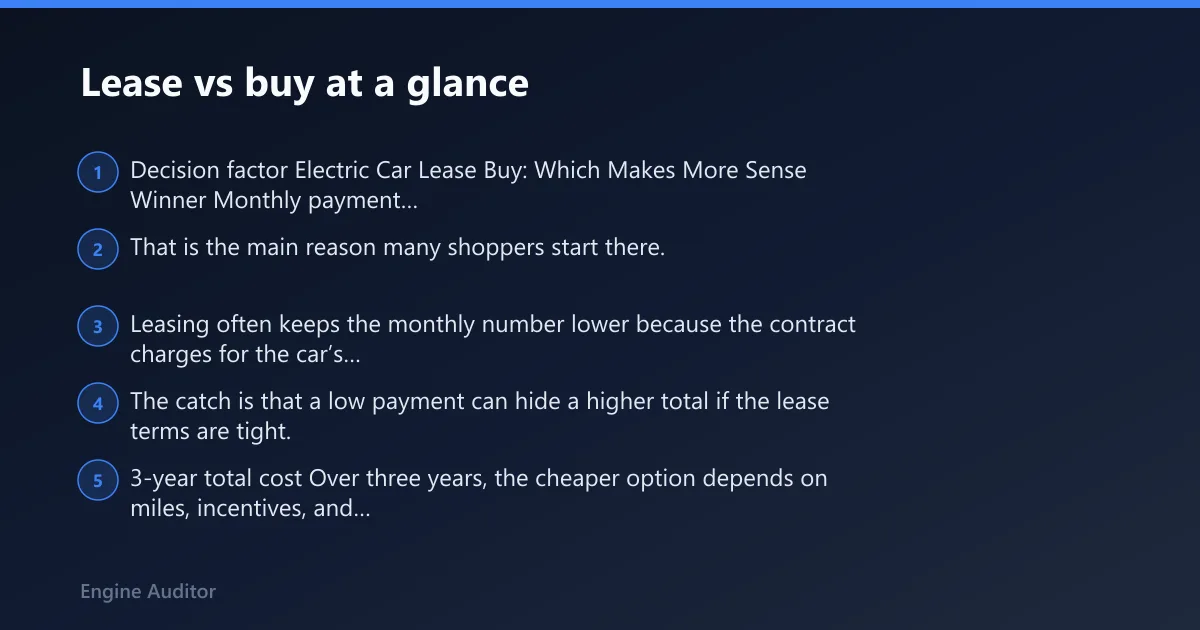
| Decision factor | Electric Car Lease | Buy: Which Makes More Sense | Winner |
|---|---|---|---|
| Monthly payment | Usually lower | Usually higher if financed new | Electric Car Lease |
| 3-year total cost | Often lowest for low-mileage drivers with strong incentives | Can be lower if the car holds value well or is bought used | Tie |
| 5-year total cost | Can rise fast if a second lease starts or overages hit | Often better if the car is kept and sold later | Buy: Which Makes More Sense |
| Mileage limits and exit risk | Annual mileage allowance, overage fees, wear charges, disposition fee, early termination risk | No mileage cap, but resale value falls with excess miles and wear | Buy: Which Makes More Sense |
| Battery-risk exposure | Lower during the lease term if warranty remains active | Higher if keeping past warranty or buying a high-mileage used EV | Electric Car Lease |
| Resale value and equity | No equity unless you buy out the car | Potential equity if resale value beats the payoff balance | Buy: Which Makes More Sense |
| Incentives | Federal lease credit pass-through can be strong; some brands add lease support | Purchase incentives vary by vehicle and eligibility | Electric Car Lease |
Monthly payment
Leases usually win the monthly-payment comparison because you are paying for depreciation, not full ownership. That is the main reason many shoppers start there. Leasing often keeps the monthly number lower because the contract charges for the car’s expected drop in value, not the whole vehicle. The catch is that a low payment can hide a higher total if the lease terms are tight.
3-year total cost
Over three years, the cheaper option depends on miles, incentives, and resale value. A lease can be the least expensive path for a low-mileage driver who stays within the allowance. A purchase can beat it when the model holds value better than the residual estimate or when the buyer starts with a used EV.
5-year total cost
Buying usually improves over time because the car keeps serving after the loan is gone. By about year three, a lease may lead into another lease, and that next contract can reduce or cancel the early payment advantage. If someone plans to keep the car a long time, ownership usually becomes the stronger value play.
Mileage limits and exit risk
Lease contracts usually set an annual mileage limit, and extra-mileage fees can add up quickly if you underestimate your driving. There is also early termination risk if life changes and the car needs to go back sooner than planned. A buyer has no mileage cap, but extra miles still hurt resale value.
Battery-risk exposure
Battery anxiety matters less on a short lease than on a long ownership hold. U.S. EVs have a mandatory eight-year, 100,000-mile warranty, which reduces replacement fear inside that window. Buying becomes riskier when the car will cross that threshold during ownership or when battery state of health is already uncertain. (motortrend.com)

Why do most EV buyers lease instead of buy?
Most EV shoppers lease because the payment is easier to fit, the battery risk window is shorter, and the lease can pick up incentives that a purchase may not get in the same form. For a driver with modest miles and a short holding period, that setup often feels cleaner than owning a depreciating asset.
How EV incentives can be stronger on leases
Lease deals can benefit from federal credit pass-through, state rebates, and manufacturer lease support. The practical effect is that the incentive may show up inside the monthly payment rather than as a purchase tax benefit the driver has to qualify for directly. That can make the lease look much better on paper.
How depreciation risk gets shifted to the lessor
EV values can move quickly when range, price cuts, or incentives change. On a lease, the residual value is set up front, so much of that market risk sits with the lessor. On a purchase, the owner eats the difference between the loan balance and the market price at resale.
Why low-mileage drivers often fit leases better
If the car mostly handles a short commute and local errands, a lease lines up well with the way the vehicle is used. The mileage cap is less likely to bite, the battery warranty usually covers the whole term, and the driver avoids the long-tail resale gamble. That is the cleanest lease case.
How much money do you save by leasing an EV?
Sometimes the lease saves money every month and still costs more overall. That happens when a low payment is offset by fees, overages, or a second lease later. The savings are real only if the mileage stays in bounds and the driver does not pay much to exit or buy out the car.
When the lease payment is lower but the total cost is higher
A lease front-loads convenience. A buyer fronts more cash or larger monthly payments but may keep the car past the payoff date and capture resale value later. If the EV depreciates hard, the lease may win for a short term. If the car holds value, buying can catch up and pass it.
Mileage overages, wear charges, and disposition fees
These are the hidden costs that get skipped in many comparisons. A driver who commutes farther than expected can pay overage fees that erase the payment advantage. Add wear-and-tear charges and the disposition fee at turn-in, and the “cheap lease” can stop being cheap.
When a buyout at lease end can change the math
A lease-end buyout can turn a good lease into a decent purchase if the residual value was set too high or the car is worth keeping. That path matters most when the model still has strong demand, battery health is good, and the buyout price is below market. It is not free money, but it can rescue an average lease.
Battery risk, warranty coverage, and what happens during a lease
The battery question is different for a lessee and a buyer. A lessee mostly cares whether the pack stays usable through the contract. A buyer has to care whether the battery will still be acceptable when the loan ends and the car is older, lower in range, and worth less.
What the 8-year battery warranty usually covers
U.S. EVs have a mandatory eight-year, 100,000-mile warranty. That does not mean perfect capacity forever, but it does reduce the chance that a major battery defect becomes the owner’s problem early. For many lease terms, that coverage window overlaps the contract almost completely.
How battery state of health affects buyers more than lessees
State of health is the practical battery question. A pack can still work and still have lost enough capacity to dent range and resale value. Lessees usually return the car before that becomes a major bill. Buyers, especially used-car buyers, have to live with it longer.
Range loss, replacement cost risk, and transferability
Range degradation is the slow risk. Replacement cost risk is the sharp one. Warranty transferability helps the second owner more than the first because it carries remaining coverage into the used market. That is one reason clean, newer used EVs can be strong buys when battery reports look good.
Proof asset: three driver profiles and the cheapest path
The cheapest EV path changes with mileage, holding period, and battery exposure. The table below uses simple illustrative estimates to compare a lease, a new purchase, and a used purchase for three common profiles. It is meant to show the decision pattern, not to quote a universal price.
| Driver profile | Monthly cost | Estimated 3-year total cost | Mileage risk | Battery-risk exposure | Recommended choice |
|---|---|---|---|---|---|
| Low-mileage commuter | Lease: $390; Buy new: $560; Buy used: $430 | Lease: $14,040; Buy new: $20,160; Buy used: $15,480 | Low, under 10,000 miles a year | Low during lease term | Lease |
| High-mileage driver | Lease: $460; Buy new: $620; Buy used: $470 | Lease: $19,560 plus overages risk; Buy new: $22,320; Buy used: $16,920 | High, likely to exceed cap | Moderate on a lease, higher on a purchase held long | Buy used |
| Long-term owner | Lease: $430; Buy new: $590; Buy used: $410 | Lease: $15,480, then renew; Buy new: $21,240 with equity; Buy used: $14,760 with equity | Low to moderate | Higher if kept past warranty | Buy new or buy used, based on model resale strength |
Low-mileage commuter
This profile is the lease sweet spot. The driver stays inside the mileage allowance, the battery stays under warranty, and the lower monthly outlay matters more than eventual equity. If the commute is predictable and short, the lease is usually the least risky choice.
High-mileage driver
This profile is where leases get expensive. Overages can eat the monthly advantage, and heavy use can raise wear charges too. Buying used usually makes more sense here because the driver avoids the mileage cap and starts from a lower price point.
Long-term owner
This profile should focus on resale and total ownership cost. If the model keeps value well, buying new can make sense. If depreciation is steep, a newer used EV often gives the best blend of lower entry price and remaining battery coverage.
How to read the decision table
Start with miles, then holding period, then battery exposure. If the driver is under the cap and wants the smallest short-term commitment, lease. If the driver will keep the car long enough to own the payoff and sell later, buy. If the first owner already took the largest depreciation hit, buy used.
Choose Electric Car Lease if… / Choose Buy: Which Makes More Sense if…
Choose Electric Car Lease if your annual miles stay low, you want predictable short-term costs, and you do not want resale risk. It also fits shoppers who can use lease incentives but do not qualify for the same purchase-side benefit. It is the cleaner move when battery coverage will last through the term.
Choose Buy: Which Makes More Sense if you plan to keep the car past the loan, drive enough miles to make a lease cap annoying, or want equity at the end. Buying also makes more sense for models with strong resale value and for long-hold drivers who can absorb early depreciation once and then keep the car working.
Choose buy used if depreciation has already done the heavy lifting and the battery report looks solid. This path often gives the lowest monthly cost without the mileage leash. It is especially attractive when the car is still inside the eight-year, 100,000-mile warranty window.
What are the risks of buying an EV outright?
Buying outright puts the depreciation, battery-health, and resale timing risk on the owner. The payment may be higher than a lease, but the bigger issue is market timing: if the car drops faster than expected, the owner absorbs that loss when it is sold or traded.
Down payment, loan term, and ownership equity
A purchase usually starts with a down payment and a loan term that stretches monthly cash flow. Every payment builds equity if the car keeps value. That helps on strong-resale models, but weak resale can leave the owner paying for a car that is worth less than the balance.
Depreciation exposure and resale value
EVs tend to lose value faster in the early years than many gas cars. The first owner gets hit first. If the model is especially prone to price cuts or rapid tech updates, buying new can be the costliest route unless the driver plans to keep it long enough for depreciation to matter less.
When ownership is still the right answer
Ownership works best when the driver wants long service life, can use the car beyond the loan, and expects steady mileage. It also works when the used market is thin and the specific model holds value unusually well. In that case, the equity at sale can beat the savings from leasing.
Does an EV qualify for lease tax credits?
Often, yes, but the credit usually works differently on a lease than on a purchase. On a lease, the tax benefit may pass through from the lessor, which can lower the payment or be folded into lease support. On a purchase, eligibility can depend on the buyer, the vehicle, and incentive rules.
Federal lease credit pass-through
This is the reason some lease deals look unusually good. The lessor can sometimes capture the credit and price the car accordingly. The shopper should ask how much of that benefit is being applied to the lease and whether it is showing up as a lower cap cost or a separate support line.
State rebates and manufacturer lease support
State rebates can stack differently from federal treatment, and manufacturers often add lease support to move inventory. That support can make a lease cheaper than a purchase even when the car itself is not the cheapest way to own the vehicle over many years. The details matter.
How much do EVs depreciate compared with gas cars?
EVs often depreciate faster in the early years than many gas cars, and that is the main reason lease math can look attractive. The flip side is that the used market can become a bargain once the first owner has taken the biggest hit. The current market already shows that shift.
First-year value loss and used-market pricing
The first-year loss is usually where the pain is concentrated. A buyer who pays full new-car pricing takes the sharpest hit if the market softens. A used buyer arrives after that drop, which is why inventory from 2023 to 2025 model years is such an important part of the value conversation.
Lease-offloading effect
Leases can push early depreciation risk away from the driver and onto the lessor. That makes leasing look safer when values are unstable. It also means the used market gets more supply once those leases end, which can keep prices soft and create more buying opportunities for the next shopper.
Is leasing a used EV ever a good idea?
Yes, if the program is real and the numbers are cleaner than the equivalent new-lease terms. A used EV lease can work when the car already absorbed much of its depreciation, the battery report is strong, and the mileage allowance fits the driver. It is a niche deal, not a default answer.
Coming-off-lease inventory and price bands
Coming-off-lease inventory is one reason used EV shopping has improved. More near-new cars are entering the market, and many sit in the lower price bands. The 43 percent under $25,000 figure shows that used EVs are no longer a tiny premium category.
Battery-health reports
Battery reports matter more on used EVs than on new ones. CarMax uses Recurrent’s battery health tool for EV inventory, and CarMax includes a battery range score on EV listings. Those tools help shrink the guesswork around state of health, which is the main hidden risk in a used EV purchase.
Frequently asked questions
Is it better to lease or buy an electric car?
Lease if the driver is low-mileage, wants a lower monthly bill, and values short-term risk control over ownership. Buy if the plan is to keep the EV past the loan term and capture resale value. Buy used if the goal is the lowest monthly cost with less depreciation exposure.
Why do most EV buyers lease instead of buy?
Many shoppers lease because the payment is lower, the battery risk window is shorter, and incentives can be stronger on a lease. It is also easier to walk away after a few years if the market changes or if the car does not fit the driver’s habits.
How much money do you save by leasing an EV?
The savings are often strongest in monthly cash flow, not always in total cost. A lease can be cheaper for three years if miles stay low and fees stay contained. Once overages, wear charges, and disposition fees show up, the savings can shrink quickly.
What happens if an electric car battery degrades during a lease?
If the battery loses capacity during a lease, the driver usually feels it as reduced range, not a repair bill. That is why leasing reduces battery anxiety. The key question is whether the battery remains functional and within warranty during the contract.
Can you buy out an EV lease at the end?
Often yes. A lease-end buyout can make sense if the residual value is below market or if the car has battery health left and the driver wants to keep it. It is worth comparing the buyout number to real used-market prices before signing anything.
What are the risks of buying an EV outright?
The big risks are depreciation, battery condition, and resale timing. The owner carries all of them. That can still be the right choice, but only if the car will be kept long enough for the ownership math to work in its favor.
Products related to this article
Sponsored / affiliate links. As an Amazon Associate I earn from qualifying purchases. I may earn additional commission from eligible campaigns.