How Many Cars Does Chevy Make a Year? Surprising Production Facts
Chevrolet, known worldwide as Chevy, is one of the most recognizable car brands. People everywhere see their cars on the streets, in movies, and even in motorsports. But if you stop and wonder, “How many cars does Chevy make a year?” you might be surprised by the scale and complexity behind this simple question. Let’s dig deep into the numbers, explore how production works, and understand what makes Chevy a giant in the auto industry.
Chevy’s Annual Production: The Big Picture
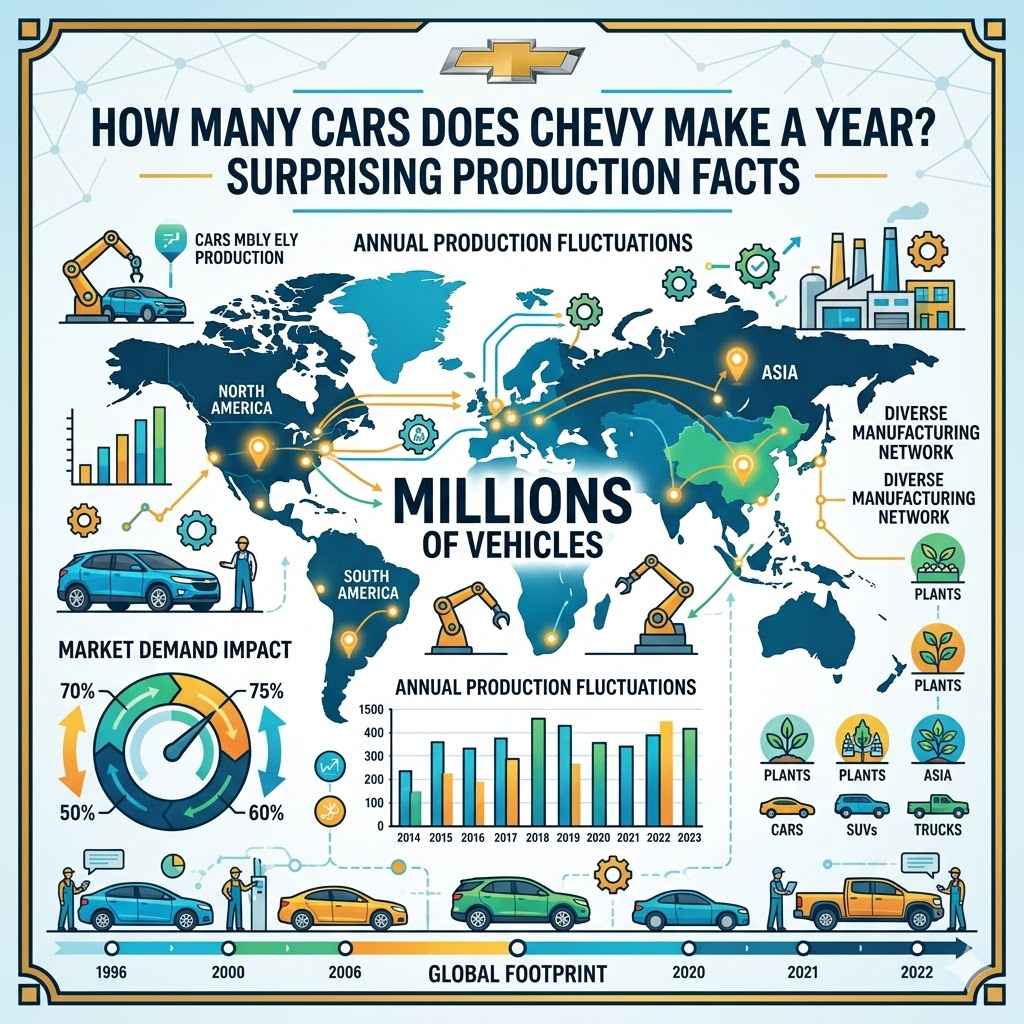
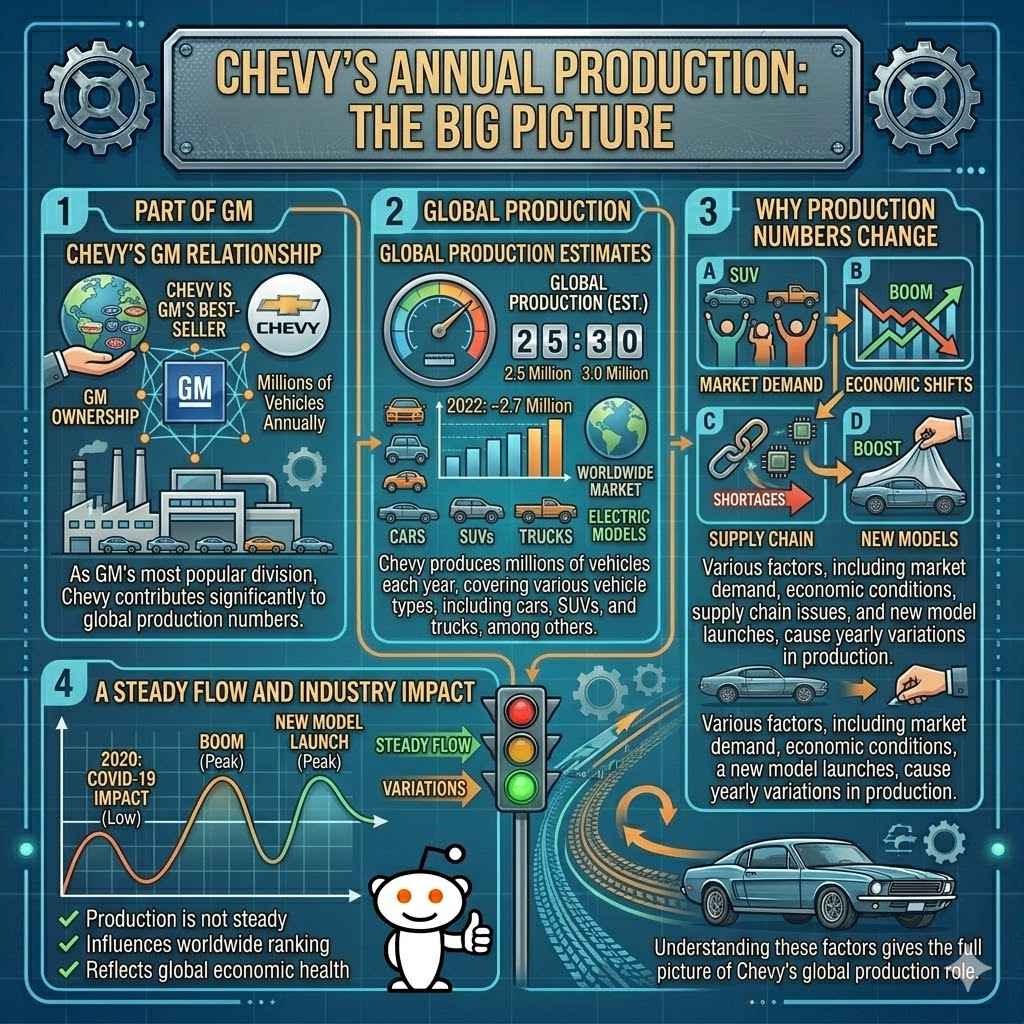
Chevy is a part of General Motors (GM), which is one of the largest car makers globally. GM owns several brands, but Chevy stands out as its most popular and best-selling division. Each year, Chevy makes millions of vehicles, including cars, SUVs, trucks, and electric models.

AMT
1/25 1957 Chevy Bel Air
- Scale: 1/25
- Skill Level: 2 (ages 10 and up)
- Glue assembly, paint required
As an Amazon Associate I earn from qualifying purchases.
According to GM’s official reports, Chevy produces between 2.5 million and 3 million vehicles a year. This number can change, depending on the world economy, demand, and supply issues. For example, in 2022, Chevy made about 2.7 million vehicles globally. Not all of these are traditional cars; some are pickup trucks, SUVs, or crossovers. Still, this puts Chevy among the top car makers worldwide.
Why Production Numbers Change
Car production is never steady. Some years, Chevy makes more cars; other years, less. Several factors affect these numbers:
- Market demand: If people want more SUVs or trucks, Chevy makes more.
- Economic shifts: Recessions or booms change how many cars people buy.
- Supply chain: Parts shortages (like chips) slow production.
- New models: Launching new cars can boost numbers.
For instance, in 2020, COVID-19 slowed production everywhere. Chevy’s numbers dropped to about 2.2 million vehicles. But as markets recovered, production ramped up again.
Breakdown: What Types Of Cars Does Chevy Make?
Chevy doesn’t only make one kind of car. Their lineup covers many categories, and each has its own production numbers. Here’s a closer look:
Sedans And Hatchbacks
Chevy’s sedans and hatchbacks used to be their biggest sellers. Models like the Malibu and Spark are made in large numbers. However, demand for sedans has decreased in recent years as buyers prefer SUVs and trucks. Still, Chevy makes hundreds of thousands of sedans yearly.
Suvs And Crossovers
SUVs and crossovers are now Chevy’s best sellers. Models like the Chevy Equinox, Traverse, and Tahoe make up a huge part of production.
- In 2022, Chevy produced about 800,000 SUVs and crossovers.
- The Equinox alone accounted for more than 300,000 units.
Pickup Trucks
Chevy is famous for its trucks, especially the Silverado series. Trucks are popular in North America and Latin America.
- Chevy made about 600,000 Silverado trucks in 2022.
- The Colorado and smaller trucks add another 200,000 units.
Electric Vehicles (evs)
Chevy is moving fast into electric cars. The Chevy Bolt and new models like the Blazer EV are becoming more important.
- Chevy produced about 100,000 EVs in 2022.
- This number is growing quickly as demand rises.
Commercial Vehicles
Chevy also makes vans and fleet vehicles, such as the Express Van. These are used by businesses and government agencies.
- Around 150,000 commercial vehicles are made each year.
Estimated Chevy Production By Vehicle Type
Here’s a summary of Chevy’s production numbers by vehicle type:
| Vehicle Type | Approx. Annual Production (2022) |
|---|---|
| Sedans & Hatchbacks | 400,000 |
| SUVs & Crossovers | 800,000 |
| Pickup Trucks | 800,000 |
| Electric Vehicles | 100,000 |
| Commercial Vehicles | 150,000 |
| Total | 2,250,000 |
How Chevy Manufactures Its Cars
Chevy cars are made in many factories worldwide. GM operates more than 30 Chevy plants in North America, South America, Asia, and Europe. The biggest plants are in the United States, Mexico, and China.
Main Chevy Factories
- Detroit-Hamtramck Assembly (USA): Makes EVs and sedans.
- Fort Wayne Assembly (USA): Builds Silverado trucks.
- Spring Hill Assembly (USA): Produces SUVs.
- Ramos Arizpe (Mexico): Makes several models for global export.
- Shanghai (China): Produces cars for the Asian market.
Each plant specializes in certain models. For example, Fort Wayne is famous for trucks, while Spring Hill focuses on SUVs.
Production Process
Chevy uses modern assembly lines and robots to build cars quickly and safely. The process involves:
- Stamping: Making body parts from steel or aluminum.
- Body assembly: Welding parts to make the car frame.
- Paint shop: Painting and finishing the body.
- Final assembly: Installing engines, electronics, and interiors.
- Quality checks: Ensuring every car meets Chevy’s standards.
A single plant can make hundreds of cars daily. For example, Fort Wayne Assembly produces about 1,300 trucks per day.
How Chevy’s Production Compares To Other Brands
Chevy’s yearly output is impressive, but how does it compare to competitors like Ford, Toyota, or Honda? Here’s a comparison of annual production numbers for major car brands (2022):
| Brand | Annual Production |
|---|---|
| Chevy | 2,700,000 |
| Ford | 2,500,000 |
| Toyota | 8,500,000 |
| Honda | 4,500,000 |
| Volkswagen | 8,000,000 |
Chevy is a top producer, but Toyota and Volkswagen make more cars worldwide. Still, Chevy’s numbers show its strong presence, especially in North America.
Chevy’s Sales Vs. Production
Not every car made is immediately sold. Sometimes production and sales numbers are different. Chevy often produces cars ahead of demand, sending them to dealers worldwide.
In 2022, Chevy sold about 2.2 million vehicles in the United States and Canada. Globally, sales were slightly lower than production, because some cars are shipped, stored, or used for fleet purposes.
Why Sales And Production Differ
- Inventory: Cars are made for stock, not just immediate sale.
- Exports: Some cars are shipped overseas and sold later.
- Fleet sales: Vehicles for companies may not appear in regular sales data.
This gap is common for all car brands. Chevy manages its inventory carefully to avoid overproduction.
Chevy’s Most Produced Models
Certain Chevy models are made in larger numbers than others. These models are popular, reliable, and often affordable.
Top Chevy Models By Production (2022)
- Chevy Silverado: Over 600,000 units
- Chevy Equinox: Over 300,000 units
- Chevy Tahoe/Suburban: About 150,000 units
- Chevy Malibu: About 120,000 units
- Chevy Traverse: About 110,000 units
- Chevy Colorado: About 100,000 units
- Chevy Bolt EV: About 70,000 units
These numbers show that trucks and SUVs are Chevy’s main focus. Sedans and hatchbacks are still made, but in smaller numbers.
Global Reach: Where Are Chevy Cars Made And Sold?
Chevy is a global brand. Its cars are built and sold in many countries.
Main Production Regions
- North America: USA, Mexico, Canada
- South America: Brazil, Argentina
- Asia: China, South Korea
- Europe: Limited production, mostly imports
Chevy adapts its production to local markets. In China, for example, it offers compact cars and electric vehicles that fit city needs.
Major Sales Markets
- United States: Chevy’s largest market
- Canada: High demand for trucks and SUVs
- Mexico: Mix of sedans, trucks, and SUVs
- Brazil: Popular for compact cars
- China: Growing electric vehicle market
Chevy adjusts its production numbers based on local demand. More SUVs are made for the US, while compact cars are popular in Latin America.
The Role Of Technology In Chevy Production
Modern Chevy factories use advanced technology to improve quality and speed. Robots do much of the heavy work, but skilled workers handle details and checks.
Innovations In Manufacturing
- Automation: Robots weld, paint, and assemble parts.
- AI and Data: Computers track production and spot problems.
- Electric Vehicle Lines: Special lines for EVs, with battery assembly.
These innovations help Chevy produce more cars with fewer mistakes. For example, the Detroit-Hamtramck plant is now called Factory ZERO and uses advanced systems for making electric vehicles.
Quality And Safety
Chevy invests in quality control. Every car goes through many checks before leaving the factory. Problems are fixed immediately, and feedback from customers helps improve future models.
Environmental Impact: Chevy’s Green Initiatives
Car production uses lots of energy and materials. Chevy works hard to reduce its environmental footprint.
Sustainability Steps
- Recycling: Chevy recycles steel, aluminum, and plastics.
- Energy efficiency: Plants use solar and wind power where possible.
- EV Focus: Making more electric vehicles helps reduce pollution.
Chevy aims to make its factories carbon neutral by 2040. New facilities are built with green standards in mind.
Ev Growth
Electric vehicles are a key part of Chevy’s future. The Bolt EV and upcoming models are made in special, clean factories. As EV production grows, Chevy’s total yearly numbers will include more electric cars.
Non-obvious Insights About Chevy Production
Even beginners may not realize some hidden details about Chevy’s yearly car output:
- Production Isn’t Just Cars: Chevy makes trucks, SUVs, and vans in huge numbers. Counting only traditional cars would miss half the story.
- Global Variations: Some models are only made for certain markets. For example, the Chevy Sail is made mostly for China and Latin America, not the US.
- Seasonal Peaks: Production often peaks before new model releases or holidays, when buyers expect deals.
- Supply Chain Issues: If a single part (like a computer chip) is delayed, it can slow production for thousands of cars.
- Dealer Orders Matter: Chevy builds cars based on what dealers order, not just what customers want directly.
- Fleet Customers: Large companies, rental agencies, and governments buy thousands of Chevy vehicles each year. These fleet sales are a big part of Chevy’s production.
Common Mistakes When Estimating Chevy’s Yearly Output
Many people make errors when guessing how many cars Chevy makes a year:
- Confusing sales with production: Sales numbers are often lower than production because not every car sells immediately.
- Ignoring non-car vehicles: Chevy’s trucks and SUVs are a big part of total output.
- Missing global numbers: Focusing only on US production misses Chevy’s worldwide impact.
- Overlooking supply chain effects: Production can change fast if parts are delayed.
- Forgetting electric vehicles: As EVs grow, they become a bigger part of Chevy’s totals.
Chevy’s Production Over Time: Trends And Changes
Chevy’s yearly production has changed a lot in the past decades. Here’s a quick look at how numbers shifted:
| Year | Annual Production |
|---|---|
| 2010 | 3,000,000 |
| 2015 | 2,800,000 |
| 2020 | 2,200,000 |
| 2022 | 2,700,000 |
Chevy’s output peaked in the early 2010s, then dipped during tough years like 2020. It’s now rising again, especially with new electric models.
How Chevy Plans For The Future
Chevy’s future plans affect how many cars it will make each year. GM has announced big investments in electric vehicles and green factories.
Key Plans
- More EVs: Chevy will launch new electric cars and trucks.
- Smart factories: Upgrading plants with AI and automation.
- Global expansion: Growing in markets like China and Brazil.
- Flexible production: Adapting quickly to changes in demand.
These plans mean Chevy’s yearly production may increase, especially as EVs become more popular.
What Makes Chevy’s Production Unique
Chevy stands out for several reasons:
- Wide model range: From small cars to big trucks and SUVs.
- Strong US presence: Most vehicles made in North America.
- Reliable supply chain: Despite challenges, Chevy keeps up production.
- Focus on quality: Strict checks and customer feedback.
- Adapting to trends: Quickly shifts to SUVs and EVs as markets change.
Not all brands can handle such rapid changes or produce millions of vehicles every year.
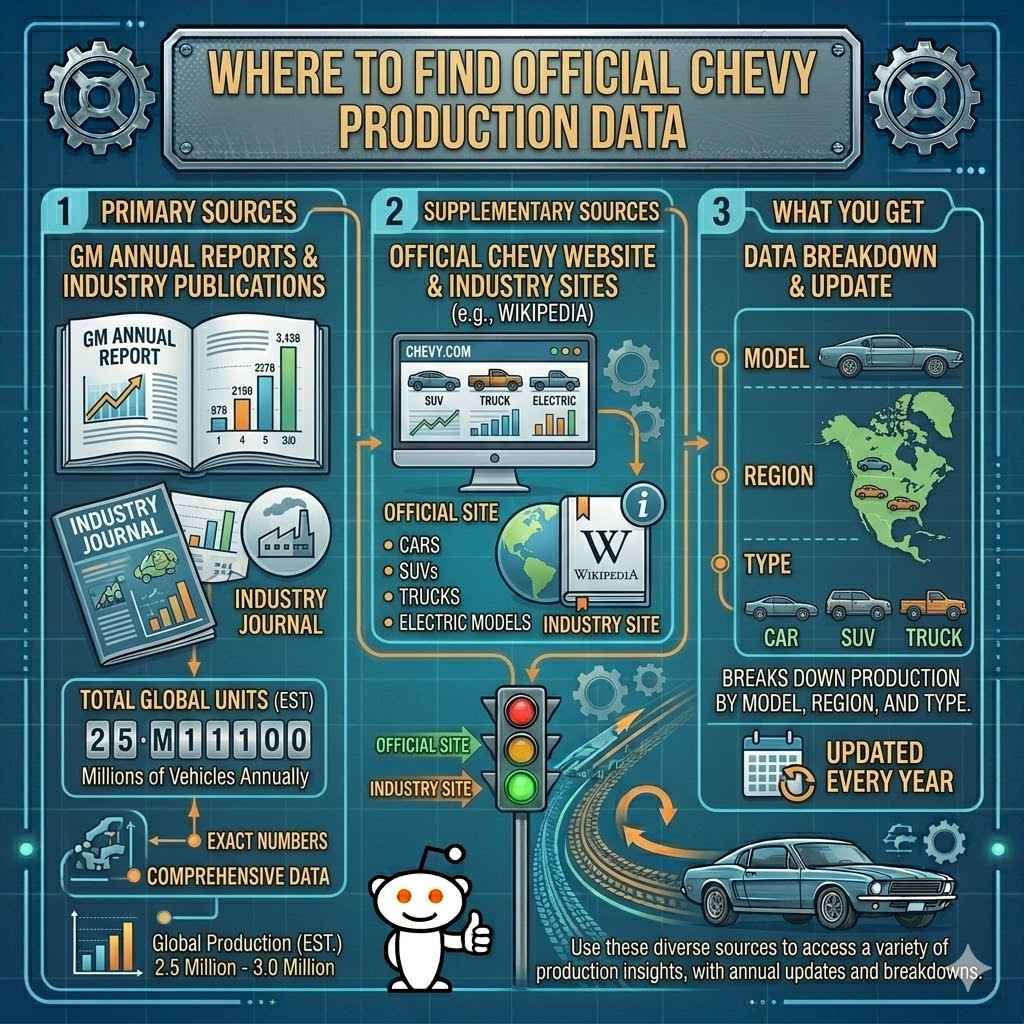
Where To Find Official Chevy Production Data
If you want exact numbers, the best source is GM’s annual reports and industry publications. Chevy’s official website and industry sites like Wikipedia also share useful data.
These sources update their numbers every year. They break down production by model, region, and type.
Frequently Asked Questions
How Many Cars Does Chevy Make In The United States Each Year?
Chevy produces about 1.5 million vehicles in the United States yearly. This includes trucks, SUVs, and cars. Most US production comes from plants in Michigan, Indiana, and Tennessee.
Does Chevy Make More Trucks Or Cars?
Chevy now makes more trucks and SUVs than traditional cars. In recent years, trucks like the Silverado and SUVs like the Equinox have outsold sedans. About 60% of Chevy’s yearly output is trucks and SUVs.
How Many Electric Cars Does Chevy Make Yearly?
Chevy’s electric car production is growing. In 2022, they made about 100,000 EVs, mostly the Bolt EV and EUV. With new models coming, Chevy plans to increase EV production to 200,000–300,000 units yearly in the next few years.
Are All Chevy Cars Made In The Usa?
No, Chevy builds cars in several countries. Major plants are in the USA, Mexico, China, and Brazil. Some models are only made overseas, especially those for local markets.
Where Can I Find Official Chevy Production Numbers?
You can find official Chevy production numbers in GM’s annual reports and trusted industry websites. Wikipedia also tracks yearly production and sales data.
Final Thoughts
Chevy’s yearly car production is huge and complex. Making 2.5–3 million vehicles each year means Chevy is a leader in the auto world. Their numbers cover sedans, SUVs, trucks, EVs, and commercial vehicles. Production changes with demand, technology, and global trends. Chevy’s ability to adapt, invest in green solutions, and deliver quality makes it stand out among competitors.
If you’re curious about cars, Chevy’s story shows how modern manufacturing works, how brands respond to customers, and how the auto industry keeps moving forward. Whether you’re a fan of trucks, sedans, or the newest electric models, Chevy’s yearly output proves its place as a trusted name in cars.
Related pick: Check today's price on Amazon