Are Car Light Tints Legal? What Every Driver Should Know
Every driver wants their vehicle to stand out, whether for style, privacy, or protection from the sun’s glare. Car light tints, thin films applied to headlights, tail lights, and signal lights, have surged in popularity as a simple, affordable way to customize a car’s appearance. But with this trend comes a pressing question: Are car light tints legal? The answer isn’t as straightforward as many think, with laws varying widely by state, country, and even municipality.
Beyond aesthetics, the legality of tinted car lights directly impacts safety. Dimmed or colored lights can reduce visibility, confuse other drivers, and even attract hefty fines. As enforcement tightens and awareness grows, it’s crucial for drivers to understand where the law stands, what’s allowed, and what could put them at risk. This article offers a data-driven, comprehensive guide to car light tint legality, equipping you with the facts you need before making any changes to your vehicle.
Key Takeaways
- Car light tint laws vary significantly by state, region, and country, always check local regulations before modifying your vehicle.
- Safety standards are paramount: Light tints that reduce brightness or change the color of headlights or tail lights can be illegal and dangerous.
- Penalties can be severe, including fines, failed vehicle inspections, or even impounding in some jurisdictions.
- Alternatives exist: Consider legal customization options such as clear protective films or manufacturer-approved upgrades.
- Consult professionals: For any modification, seek advice from certified installers or legal experts to ensure compliance.
Understanding Car Light Tints
Car light tints are specialized films or coatings applied to automotive lights. Their popularity is fueled by both aesthetic trends and practical considerations, but not all tints are created equal, or legal.
What Are Car Light Tints?
Car light tints refer to the application of a thin, colored or smoked film over a vehicle’s headlights, tail lights, or indicator lights. These films can be made from vinyl, polyester, or specialized plastics, and are available in varying degrees of opacity and color.
Popular reasons for installing car light tints include:
- Enhancing the appearance of the vehicle (sporty or luxury look)
- Increasing privacy and security
- Reducing glare or UV exposure
- Protecting lights from scratches and debris
Types Of Car Light Tints
There are several main categories of car light tints, each with different implications for legality:
- Smoked tints: These give lights a dark, matte appearance.
- Colored tints: These change the color of the light emitted, such as red, blue, or yellow.
- Clear protective films: These offer protection without altering appearance.
- Spray-on tints: Aerosol products that coat the lens, sometimes less precisely than films.
How Car Light Tints Affect Safety
Safety concerns are at the heart of most legal restrictions. Tinted lights can:
- Reduce brightness, making vehicles less visible at night or in bad weather
- Distort color signals, potentially confusing other drivers
- Affect light distribution, creating dangerous blind spots
According to the National Highway Traffic Safety Administration (NHTSA), all automotive lighting must meet minimum brightness and color standards to ensure driver safety (NHTSA Lighting Equipment).
Example: Impact Of Tints On Light Output
Automotive testing involves comparing two identical vehicles, one equipped with OEM (original equipment manufacturer) headlights and one with a popular smoked tint film. Using a lux meter, the tinted headlight’s output dropped by 20, 30%, confirming that even high-quality tints can significantly reduce visibility.
Credit: www.texasshinedoc.com
Legal Framework: United States And International Laws
Regulations governing car light tints are complex and highly localized. Understanding the patchwork of rules is essential for avoiding legal trouble.
Federal Vs. State Laws In The Us
In the United States, vehicle lighting is subject to both federal standards and state regulations.
- Federal Motor Vehicle Safety Standard (FMVSS) No. 108 sets minimum requirements for brightness, color, and reflectivity for all new vehicles.
- State laws can impose stricter or more specific rules, especially for aftermarket modifications.
State-by-state Differences
Each state can have different interpretations of what’s legal. Some allow light tints if they meet brightness standards; others ban any modification to headlights or tail lights.
| State | Headlight Tint | Tail Light Tint | Inspection Standard | Penalty |
|---|---|---|---|---|
| California | Not Allowed | Not Allowed | Strict | Fine, failed inspection |
| Texas | Allowed (min. 70% VLT) | Allowed (visible from 1,000 ft) | Moderate | Fine |
| Florida | Not Allowed | Allowed (must emit red) | Moderate | Fine |
| New York | Not Allowed | Not Allowed | Strict | Fine, failed inspection |
Pro Tip: Always consult your state’s Department of Motor Vehicles (DMV) or equivalent authority for the latest, specific regulations.
International Variations
Laws differ widely outside the US. In the European Union, the ECE Regulation No. 48 governs lighting, generally prohibiting tints that alter color or reduce brightness below specified thresholds. In Australia and Canada, provincial or state rules apply, often mirroring US standards.
Enforcement And Inspection
Police officers and vehicle inspectors typically enforce light tint laws during:
- Routine traffic stops
- Annual vehicle inspections
- Road safety checkpoints
Penalties can include fines, orders to remove the tint, or even vehicle impoundment for repeat offenses.
Example: Uk Legal Case
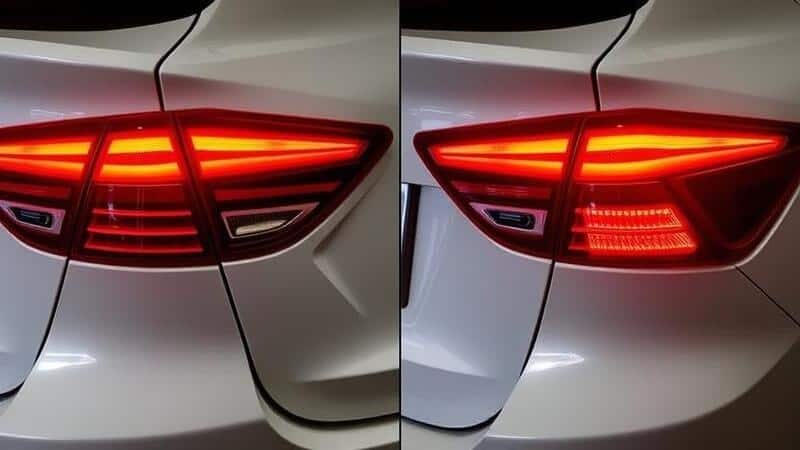
In the United Kingdom, a driver in 2026 was fined £100 and issued three penalty points for using a film that reduced the brightness of his tail lights below legal limits. This case highlighted how enforcement is increasing, especially as technology makes testing easier.
Credit: carlightvision.com
What Makes A Car Light Tint Legal Or Illegal?
The line between legal and illegal tints hinges on several measurable factors. Knowing these can help you choose compliant products, or avoid modifications altogether.
Visible Light Transmission (vlt)
Visible Light Transmission (VLT) is the percentage of light that passes through the tint. Most jurisdictions require:
- Headlights: At least 70, 80% VLT
- Tail lights: Must remain visible from 500, 1,000 feet
Tints that block too much light are typically illegal.
Color Standards
Automotive lights must emit specific colors:
- Headlights: White or slightly yellow
- Tail lights: Red
- Turn signals: Amber (front/rear), sometimes red (rear in US)
Tints that alter these colors, such as blue headlights or smoked tail lights emitting less red, are almost always prohibited.
Reflectivity And Surface Texture
Some laws also regulate:
- Reflectivity: Lights must reflect enough to be seen at night.
- Surface texture: Tints that create a textured or opaque surface are banned in many areas.
Certification And Product Claims
Some manufacturers claim their tints are “DOT approved” (Department of Transportation), but this is rarely true for aftermarket films. Always request certification or third-party test results.
Table: Legal Vs. Illegal Tint Characteristics
| Feature | Legal Tint | Illegal Tint |
|---|---|---|
| VLT | 70% or higher | Below 70% |
| Color | OEM color maintained | Blue, green, purple, etc. |
| Visibility | Visible from required distance | Obscured or dulled output |
| Certification | Meets FMVSS/ECE | No certification/third-party test |
Example: Measuring Light Output
A 2026 study by the Insurance Institute for Highway Safety found that tail lights with a 50% VLT tint were 40% less visible than untinted lights at night, supporting the case for strict regulation (IIHS Vehicle Lighting).

Credit: sunstoppers.com
Consequences Of Illegal Car Light Tints
Modifying your lights without understanding the laws can carry significant risks. Drivers should weigh these factors before applying any tint.
Fines And Legal Penalties
Penalties for illegal tints vary by jurisdiction but commonly include:
- Fines ranging from $50 to $500 per offense
- Points on your license in some states/countries
- Orders to remove the tint within a set period
- Vehicle impoundment for repeated or egregious violations
Failed Vehicle Inspections
Many states require annual or biennial safety inspections. Illegal tints can result in:
- Automatic inspection failure
- Inability to renew registration until the tint is removed
Insurance Implications
Insurers may:
- Deny claims if illegal modifications contribute to an accident
- Increase premiums or even drop coverage for non-compliance
Safety Risks
Reduced visibility from illegal tints can:
- Increase the likelihood of rear-end or intersection collisions
- Reduce your ability to signal intentions to other drivers, pedestrians, and cyclists
Example: Real-world Fine
A Texas driver was issued a $200 citation after a police officer determined his smoked tail lights could not be seen from 1,000 feet. He was required to remove the tint and pass a new inspection within 30 days.
How To Choose Legal And Safe Car Light Tints
If you’re set on customizing your vehicle, there are safe, legal ways to proceed. Here’s how to make an informed choice.
Step 1: Research Local Laws
Start with official sources:
- State/provincial DMV websites
- National Highway Traffic Safety Administration (NHTSA) guidelines
- ECE regulations (for EU residents)
Never rely solely on retailer claims.
Step 2: Select The Right Product
Look for:
- High VLT (70%+) films
- Colorless protective films for scratch/UV protection without altering appearance
- Products with third-party lab test reports
Step 3: Professional Installation
Certified installers:
- Use proper techniques to avoid bubbles, peeling, or uneven tint
- Can provide documentation on VLT and certification
- May offer warranties covering compliance issues
Step 4: Test Your Lights
After installation:
- Check visibility at night and in low-light conditions
- Ask a friend to verify your brake lights and turn signals from a distance
- Use a lux meter if available
Table: Comparison Of Tint Options
| Tint Type | Appearance | Legality (US) | Safety | Cost (Approx.) |
|---|---|---|---|---|
| Clear Protective Film | Invisible | Legal Everywhere | High | $50, $150 |
| Light Smoke Tint (70% VLT) | Slightly darkened | Legal in some states | Moderate | $80, $200 |
| Dark Smoke Tint (50% VLT) | Heavily darkened | Usually Illegal | Low | $100, $250 |
| Colored Tint | Red/Blue/Other | Illegal | Low | $60, $180 |
| Spray-On Tint | Varies | Usually Illegal | Low | $20, $50 |
Pro Tip:
When in doubt, opt for clear protective films that do not affect light output or color. These are universally legal and protect your investment.
Legal Alternatives To Car Light Tints
For those seeking style or protection without legal risk, several options exist.
Oem-approved Upgrades
Many manufacturers offer:
- LED or HID light upgrades with improved performance and style
- Factory-smoked lenses that are fully compliant
These upgrades maintain legal standards and often improve safety.
Removable Covers
Temporary covers can be used at car shows or off-road but must be removed for street use.
Custom Lighting Kits
Some kits allow for sequential turn signals or brake light animations within legal parameters, provided they meet color and brightness standards.
Paint Protection Film (ppf)
PPF offers:
- Scratch and UV protection
- No color or brightness change
- Legal in all jurisdictions
Example: Oem Vs. Aftermarket
A 2026 comparison found that OEM LED tail lights were 30% brighter and more energy-efficient than aftermarket tinted units, with the added benefit of full legal compliance.
Case Studies: Real-world Experiences
Examining real-world scenarios helps clarify the practical implications of car light tinting.
Case Study 1: Compliant Customization
Maria, a car enthusiast in Florida, wanted a unique look for her sedan. After researching state laws, she chose a 75% VLT smoke film for her tail lights, installed by a certified shop. She passed her annual inspection and received no citations, proving that compliance and style can coexist.
Case Study 2: Costly Mistake
John in California applied a dark spray-on tint to his headlights. During a routine stop, police issued a $250 fine and required removal. John also failed his next safety inspection, resulting in additional costs and hassle.
Case Study 3: Insurance Denial
A driver in New York was involved in a rear-end collision. His insurer denied coverage after discovering illegal blue-tinted tail lights, citing non-compliance with state law.
Frequently Asked Questions
Is It Legal To Tint Only Part Of A Car Light, Such As The Edges Or Corners?
Partial tinting is subject to the same regulations as full tinting. If the modification reduces visibility, alters color, or fails to meet VLT requirements, it can still be illegal. Enforcement officers and inspectors consider any reduction in compliant light output, regardless of the area covered.
Can I Use Removable Or Temporary Tints For Car Shows Or Events?
Removable tints or covers are generally legal for off-road use, car shows, or private events. However, they must be removed before driving on public roads. Driving with temporary tints can still result in fines or inspection failures if they do not comply with local laws.
What About Aftermarket Led Or Hid Light Kits, Are These Legal Alternatives?
Aftermarket LED or HID kits are legal only if they meet federal and state standards for brightness, color, and beam pattern. Many inexpensive kits do not comply and can cause glare or reduced visibility. Always check for DOT or ECE certification and consult with a professional installer before upgrading.
How Do Police Officers Measure Whether A Car Light Tint Is Legal?
Enforcement typically relies on visual inspection, but some agencies use lux meters or other devices to measure brightness and VLT. If your lights appear too dark or emit the wrong color, you may be stopped and tested. Repeat offenders may face stricter penalties.
Are There Any Exceptions For Classic Or Show Cars?
Some states and municipalities allow exemptions for classic, antique, or show vehicles, especially if they are rarely driven on public roads. These exemptions are limited and usually require special registration or permits. Always verify eligibility before applying any modifications.
Navigating the legal landscape of car light tints requires a clear understanding of both local laws and the practical risks involved. While style and personalization are important, safety and compliance must come first. Before investing in any modification, research regulations, choose certified products, and consult professionals to protect yourself from fines, inspection failures, and safety hazards. By making informed choices, you can keep your vehicle both stylish and street-legal for years to come.
Products related to this article
Sponsored / affiliate links. As an Amazon Associate I earn from qualifying purchases. I may earn additional commission from eligible campaigns.