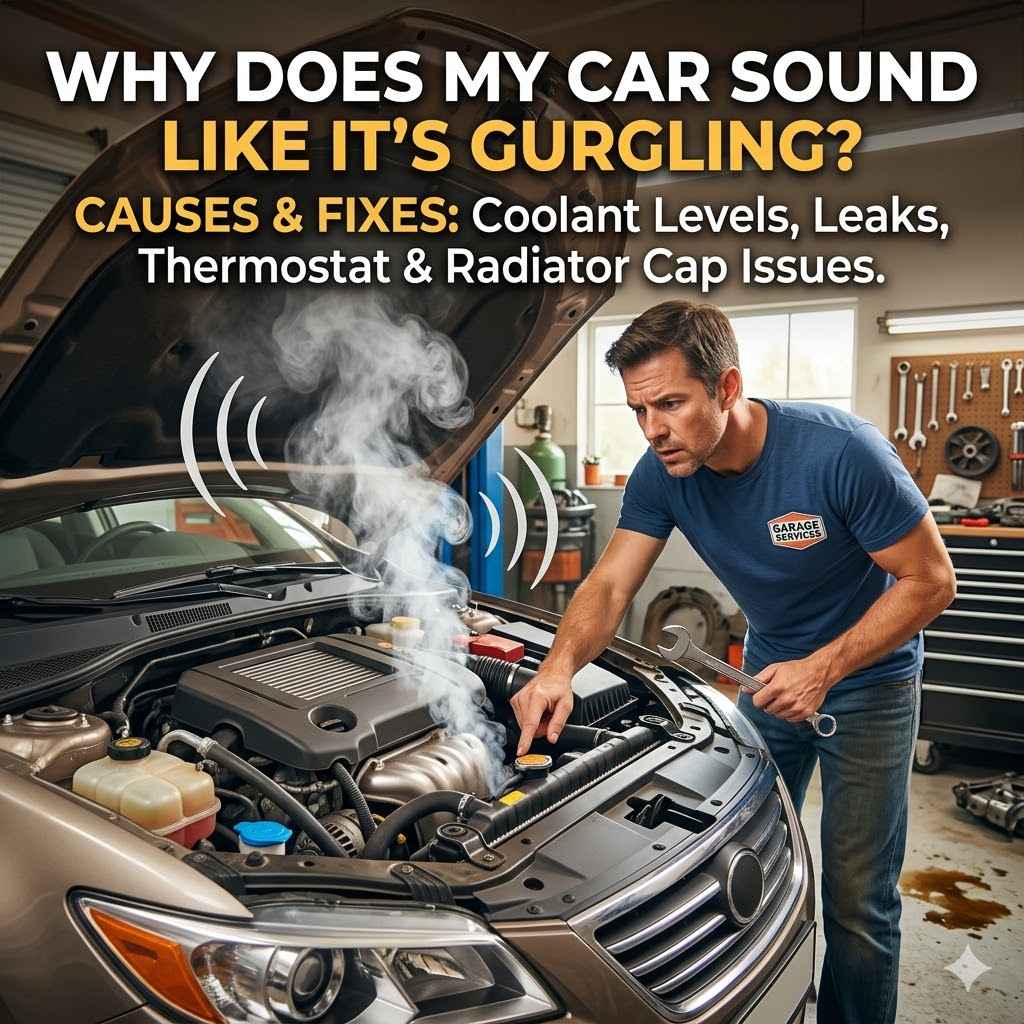
Why Does My Car Sound Like Its Gurgling? (Reasons & Fixes)
Why Does My Car Sound Like It’s Gurgling
A gurgling sound in your car almost always means air or fluid is moving somewhere it shouldn’t — usually trapped air in the coolant system, a failing radiator cap, or low coolant. Ignoring it risks overheating and a bigger repair down the road. This guide covers the exact causes and how to fix each one.
What Does A Gurgling Sound Mean In A Car?
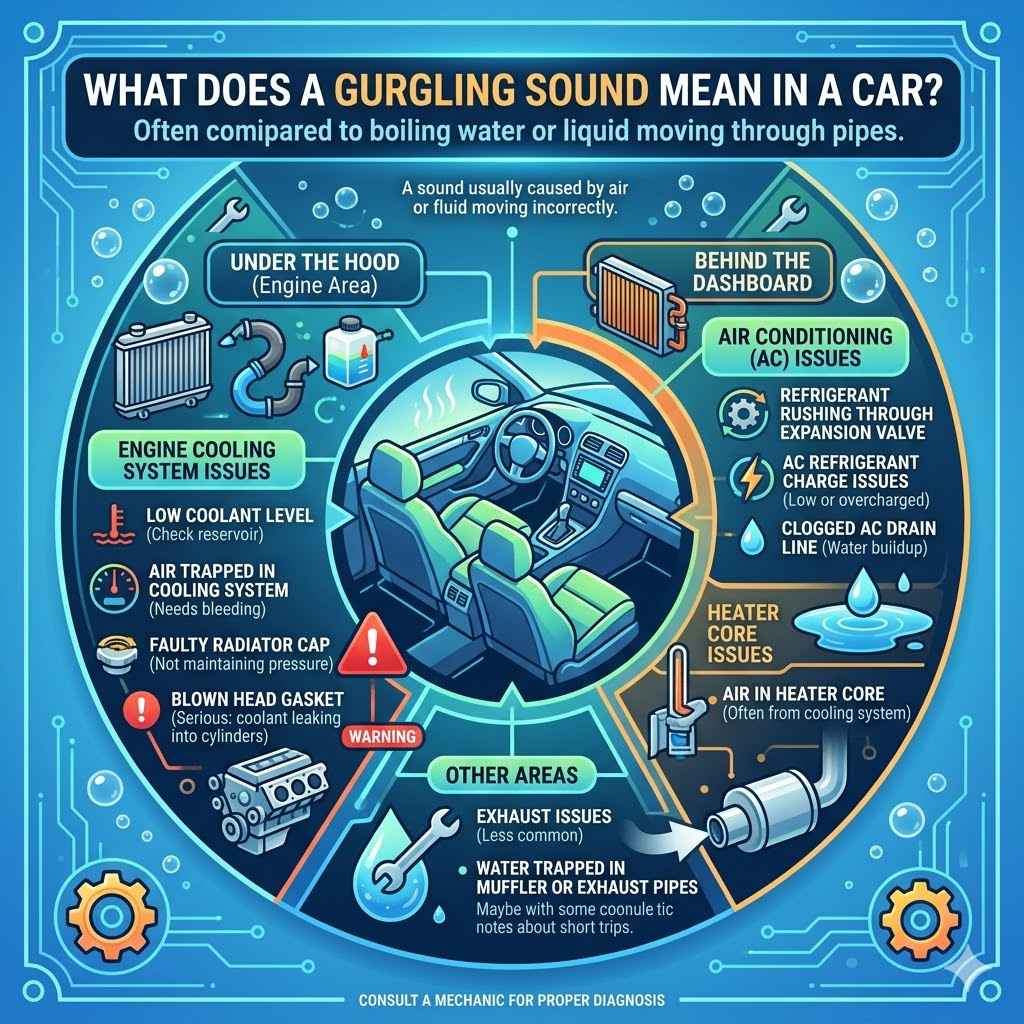
A gurgling sound in your car is often compared to the noise of water boiling or liquid moving through pipes. It might come from under the hood, behind the dashboard, or even near your feet. This sound usually means that air or fluid is moving in a way it shouldn’t.
Most often, gurgling is related to coolant, air, or water. Sometimes, it’s harmless, but it can also mean there’s a problem with the engine’s cooling system, the air conditioning, or even the exhaust.
Best Gurgling Fix Pick
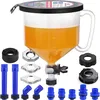
Coolant Bleeder Funnel Kit (Radiator Burping) – $22.99
The exact fix this guide names for gurgling caused by trapped air pockets — burping the cooling system while refilling to stop the gurgle for good.
- Best for: removing the air pockets that cause the gurgling this guide describes
- Why we picked it: purpose-built burping funnel bleeds air as coolant is added, no special process needed
- Main drawback: won’t help if the real cause is a failed radiator cap or head gasket
Compare more cooling system tools
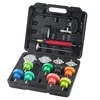 Option 1 VEVOR Radiator Pressure Tester Kit – $37.90
|
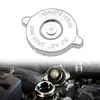 Option 2 Universal 16 PSI Radiator Cap – $7.93
|
 Option 3 EPAuto Spill-Proof Radiator Coolant Funnel – $20.82
|
As an Amazon Associate we earn from qualifying purchases.
Main Causes Of Gurgling Sounds In Cars
Let’s break down the most common reasons for hearing a gurgling sound in your car. Each problem has its own warning signs, risks, and repair solutions.
1. Low Coolant Level Or Air In The Cooling System
When the coolant level drops or air gets trapped, you may hear a bubbling or gurgling sound, usually from the engine bay or under the dashboard.
Why it happens:
- Coolant keeps the engine from overheating.
- If the coolant is low, air pockets form in the system.
- As the engine warms up, coolant and air move through the heater core and hoses, making a gurgling noise.
Warning signs:
- The temperature gauge shows higher than normal readings.
- The heater doesn’t blow hot air.
- You see coolant leaks under your car.
Risks:
- Overheating can damage the engine.
- Heater may stop working.
How to fix:
- Check and refill the coolant when the engine is cold.
- Bleed the cooling system to remove air pockets (often requires a special process).
- Find and repair leaks.
2. Failing Heater Core
The heater core is a small radiator inside your dashboard. If it’s leaking or blocked, it can cause a gurgling sound.
Why it happens:
- Air and coolant move through the heater core.
- Leaks or blockages create air bubbles and noise.
Warning signs:
- Wet carpet under the dashboard.
- Sweet smell inside the car (coolant leak).
- Windows fog up easily.
Risks:
- Loss of heat in winter.
- Coolant loss and engine overheating.
- Mold growth due to damp carpets.
How to fix:
- Replace the heater core if leaking.
- Flush the system to clear blockages.
3. Blocked Or Clogged Radiator
The radiator cools your engine by circulating coolant. If it becomes blocked, coolant can’t flow smoothly, causing gurgling or bubbling.
Why it happens:
- Old coolant turns into sludge and blocks the radiator.
- Debris or rust causes blockages.
Warning signs:
- Engine runs hot or overheats.
- Gurgling sound when you turn off the engine.
- Visible rust or dirty coolant.
Risks:
- Severe engine damage.
- Costly repairs.
How to fix:
- Flush the radiator.
- Replace severely blocked radiators.
4. Faulty Radiator Cap
A radiator cap keeps the cooling system sealed and under pressure. If it fails, air can enter, leading to gurgling sounds.
Why it happens:
- Old or damaged cap can’t hold pressure.
- Air gets sucked into the system.
Warning signs:
- Coolant leaks around the radiator neck.
- Coolant reservoir overflows.
- Temperature gauge fluctuates.
Risks:
- Air pockets lead to overheating.
- Coolant loss.
How to fix:
- Replace the radiator cap with the correct type for your car.
5. Condensation In The Air Conditioning System
When you use your car’s air conditioning, water forms as a byproduct. If the drain is blocked, water collects and may gurgle.
Why it happens:
- Normal AC use creates condensation.
- Blocked drain tube keeps water inside.
Warning signs:
- Gurgling sound from behind the dashboard (especially when AC is on).
- Wet floor on the passenger side.
- Musty smell.
Risks:
- Mold growth.
- Water damage to interior.
How to fix:
- Clean or unblock the AC drain tube.
6. Exhaust System Issues
A gurgling sound from the exhaust can mean there’s a leak or blockage.
Why it happens:
- Holes or cracks in the exhaust let air in and out.
- Water vapor in the exhaust system can also cause gurgling, especially when starting the car.
Warning signs:
- Louder exhaust noise.
- Smell of exhaust fumes inside the car.
- Poor fuel economy.
Risks:
- Fumes inside the car are dangerous.
- Failing emissions test.
How to fix:
- Repair or replace the faulty exhaust parts.
7. Transmission Problems
Some automatic transmissions make a gurgling sound if the fluid level is low or there’s air in the system.
Why it happens:
- Leaks cause low fluid.
- Air bubbles form, making noise as gears shift.
Warning signs:
- Delayed or rough shifting.
- Transmission warning light.
- Fluid puddle under the car.
Risks:
- Transmission failure (very expensive).
How to fix:
- Check and refill transmission fluid.
- Fix leaks and flush system if needed.
8. Water Trapped After Heavy Rain
Water sometimes gets trapped in the cowl (the area between the hood and windshield) or in door sills.
Why it happens:
- Blocked drainage holes after rain.
- Water moves when you drive, causing a gurgling sound.
Warning signs:
- Gurgling after rain or car wash.
- Wet carpets or visible water.
Risks:
- Rust or mold.
- Electrical problems.
How to fix:
- Find and clear blocked drains.
9. Intake System Issues
A rare cause is an issue in the air intake system. If there’s a leak or blockage, air can move in strange ways.
Why it happens:
- Intake hoses or air filter box not sealed.
- Moisture in the system.
Warning signs:
- Engine runs rough.
- Check engine light.
- Reduced power.
Risks:
- Poor performance.
- Engine damage (if not fixed).
How to fix:
- Inspect and repair intake hoses and air filter.
10. Power Steering System Problems
Some cars have hydraulic power steering. If air enters the system, it can make a bubbling or gurgling sound when you turn the wheel.
Why it happens:
- Low fluid or leaks.
- Air gets mixed with fluid.
Warning signs:
- Steering feels heavy or jerky.
- Power steering fluid low.
Risks:
- Hard to steer safely.
- Pump damage.
How to fix:
- Top up fluid.
- Bleed the system to remove air.
How To Locate The Source Of A Gurgling Sound
Finding where a gurgling sound comes from is not always easy. But a careful approach can help you narrow it down.
- Listen closely: Where do you hear the noise? Under the hood, behind the dashboard, near the exhaust, or elsewhere?
- Note when it happens: Is it only when starting, after turning off the engine, when using AC or heater, or after rain?
- Check for leaks or wet spots: Look under the car, on the floor, and under the dashboard for signs of fluid.
- Smell for unusual odors: Sweet, musty, or fuel-like smells can give clues.
- Observe warning lights or gauges: High temperature, warning lights, or changes in performance can help pinpoint the problem.
You can use this simple table to match symptoms to likely causes:
| Symptom | Possible Cause | Check This |
|---|---|---|
| Noise under hood | Cooling system, intake, power steering | Coolant level, power steering fluid, hoses |
| Noise behind dashboard | Heater core, AC condensation | Heater operation, wet carpets, AC drain |
| Noise after rain | Water trapped in cowl or sills | Drain holes, carpets, door sills |
| Noise from exhaust | Exhaust leak or water vapor | Exhaust smoke, louder noise, fumes |
How Serious Is A Gurgling Sound?
Not all gurgling sounds mean disaster, but they should never be ignored. Here’s a quick guide:
- Cooling system gurgling: Needs attention soon. Overheating can destroy your engine.
- Heater core issues: Can damage your car’s interior and affect engine cooling.
- AC condensation: Usually minor, but can lead to mold and odors.
- Exhaust gurgling: Can be urgent if you smell fumes inside.
- Transmission or power steering noise: Serious—repair quickly to avoid big bills.
- Rainwater gurgling: Can be fixed, but don’t let water sit.
Step-by-step Diagnosis
If you want to diagnose the noise yourself, here’s a safe process:
- Wait until the car is cold before opening the hood.
- Check coolant level: Look at the reservoir, not the radiator cap (unless the engine is cool).
- Inspect for leaks: Under the car and inside.
- Start the car and listen. Turn on the heater and AC one at a time.
- Check power steering and transmission fluids: Look for low levels or leaks.
- Test the exhaust: Listen for noise changes as you accelerate or idle.
- Use a flashlight to check for water in the cowl or sills after rain.
Can You Fix A Gurgling Car Noise Yourself?
Many gurgling noises can be fixed at home, but some require a mechanic.
You can try:
- Topping up coolant, power steering, or transmission fluid.
- Checking and cleaning AC drain tubes.
- Unblocking door and cowl drains.
- Replacing a radiator cap.
Leave to a mechanic:
- Flushing and bleeding the cooling system.
- Replacing the heater core or radiator.
- Repairing exhaust leaks.
- Fixing internal engine, transmission, or power steering problems.
Here’s a comparison of DIY vs. professional fixes:
| Fix | DIY | Mechanic Needed |
|---|---|---|
| Top up fluids | ✔️ | ❌ |
| Bleed cooling system | ⚠️ (if you know how) | ✔️ |
| Heater core replacement | ❌ | ✔️ |
| Unblock drains | ✔️ | ❌ |
| Exhaust repair | ❌ | ✔️ |
Real-life Examples
Let’s look at a few examples to make things clearer.
Case 1: A driver hears gurgling when starting the car in the morning. The sound comes from behind the dashboard, and the heater blows cold air. The temperature gauge climbs quickly. After checking, the coolant reservoir is empty. The problem is a small leak in a heater hose, causing air pockets. The fix is to replace the hose, top up coolant, and bleed the system.
Case 2: After heavy rain, a car owner hears sloshing from the passenger side. The carpet is wet, and there’s a musty smell. The AC drain tube is blocked, so water backs up. Unclogging the drain solves the problem.
Case 3: A car makes a bubbling noise from the exhaust after short trips. No warning lights appear, and the noise stops after a few minutes. The cause is harmless condensation in the exhaust system, common in cool weather. No repair needed.
These examples show that some gurgling sounds are urgent, while others are not dangerous.
How To Prevent Gurgling Sounds In Your Car
Prevention is often easier than repair. Here’s how to avoid common causes of gurgling noises:
- Check fluids regularly: Coolant, transmission, and power steering fluid should be checked every month.
- Flush the cooling system: Most cars need this every 2–5 years. Old coolant causes blockages and leaks.
- Inspect hoses and caps: Replace cracked hoses and weak radiator caps.
- Run the heater and AC: Use both systems regularly to keep them working well.
- Clear drains: After storms or washes, check that water drains freely from doors, cowl, and AC.
- Fix leaks quickly: Small leaks get worse over time. Early repair saves money.
- Use the right fluids: Only use fluids recommended in your owner’s manual.
Non-obvious Insights Most Drivers Miss
1. Air pockets can move. Air in the cooling system does not always stay in one place. It can shift with engine speed and temperature, causing the gurgling sound to come and go. That’s why the noise might only happen sometimes, making it tricky to diagnose.
2. Not all water leaks are from rain. Sometimes, a wet carpet or gurgling after a car wash is actually from a failed heater core or AC drain problem—not from outside water. Always check if the liquid is clear (water) or sticky/sweet-smelling (coolant).
3. Gurgling is sometimes a warning before overheating. Some drivers wait for the temperature gauge to move before acting. But by the time the engine overheats, damage could already be done. If you hear gurgling, check the cooling system first, even if the car runs fine.
When Should You See A Mechanic?
Go to a mechanic if:
- The car overheats or the temperature gauge acts strangely.
- You find coolant or transmission fluid under your car.
- The gurgling sound is loud, constant, or gets worse.
- The heater or AC stops working.
- You smell exhaust, fuel, or a sweet odor inside.
- You’re not sure how to safely check or fix the problem.
Repair Costs For Gurgling Noise Issues
Costs depend on the cause and car type. Here’s a rough estimate:
| Repair | Average Cost (USD) |
|---|---|
| Coolant top-up/bleed | $50–$150 |
| Heater core replacement | $500–$1,000 |
| Radiator flush | $100–$200 |
| Exhaust leak repair | $150–$400 |
| Unblock AC drain | $50–$100 |
| Transmission service | $150–$300 |
Remember, ignoring a small problem can lead to much higher costs later.
Safety Tips
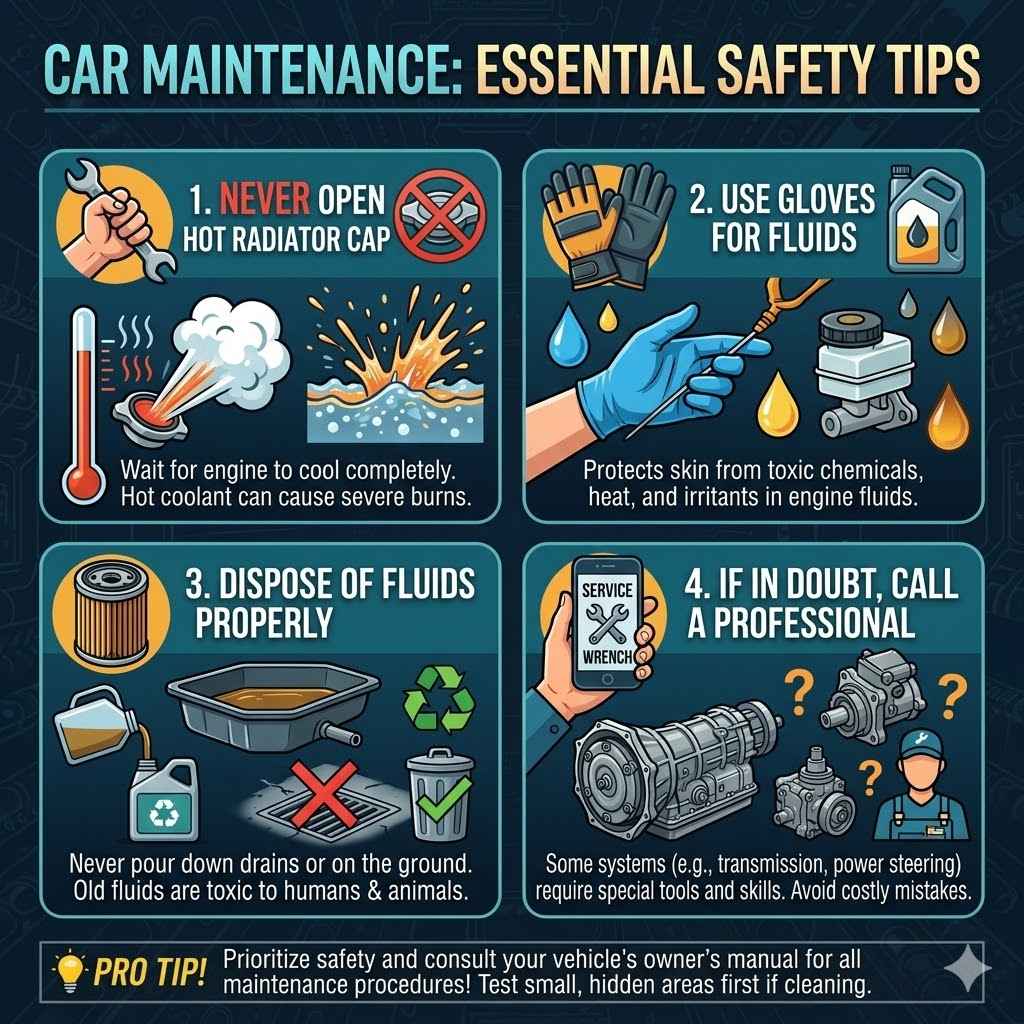
- Never open the radiator cap when the engine is hot. Hot coolant can spray out and cause burns.
- Use gloves when handling engine fluids.
- Dispose of old fluids properly. They are toxic to people and animals.
- If in doubt, call a professional. Some systems (like transmission and power steering) require special tools and skills.
Final Thoughts
A gurgling sound in your car is not just background noise. It’s your vehicle’s way of telling you something needs attention. The problem could be as simple as trapped water or as serious as an overheating engine. By listening, inspecting, and acting quickly, you can avoid expensive repairs and keep your car safe and reliable.
Remember, most issues start small, but with the right care, you can keep your car running smoothly for years.
If you want to learn more about vehicle maintenance and troubleshooting, check out this excellent resource from the American Automobile Association.
Frequently Asked Questions
Why Does My Car Gurgle When I Turn Off The Engine?
This usually means air or coolant is moving in the cooling system. As the engine cools, pressure drops and coolant flows back into the radiator, sometimes making a gurgling sound. If you hear this often, check the coolant level and watch for leaks.
Is A Gurgling Sound Dangerous?
It can be. Gurgling from the cooling system or exhaust can signal problems that may lead to overheating or leaks. While some noises are harmless, it’s best to diagnose the cause quickly to avoid serious damage.
Can A Gurgling Sound Be Caused By Low Oil?
No, low engine oil does not usually cause a gurgling sound. Low oil makes the engine rattle or knock. Gurgling is more often related to coolant, water, or air in the system.
Why Does My Car Gurgle When Using The Heater Or Ac?
This often means there is air in the heater core or water trapped from the AC system. It could also be due to a blocked drain or low coolant. Check coolant level and ensure all drains are clear.
How Can I Tell If The Gurgling Sound Is A Major Problem?
Look for other symptoms: overheating, fluid leaks, warning lights, or changes in how the car runs. If the noise is new, loud, or comes with other problems, get it checked by a mechanic soon.