Where Can I Buy Car Engine Oil near Me: Top Local Stores
Looking for car engine oil is a common task for many vehicle owners. Maybe your oil light just came on, or you’re preparing for a DIY oil change. Whatever the reason, knowing where to buy car engine oil near you can save time, money, and prevent engine problems.
But with so many options—auto parts stores, supermarkets, gas stations, online shops—it’s easy to feel lost. This guide will help you find the best places to buy engine oil nearby, understand what to look for, and share tips that even experienced drivers sometimes miss.
Why The Right Engine Oil Matters
Engine oil is not just a routine purchase. It acts as the lifeblood of your car’s engine, providing lubrication, reducing friction, and preventing overheating. Using the wrong oil, or running your engine with low or old oil, can cause expensive damage. That’s why it’s important to buy the correct type and quality of oil, and to know where you can get it quickly and easily.
Where To Buy Car Engine Oil Near You
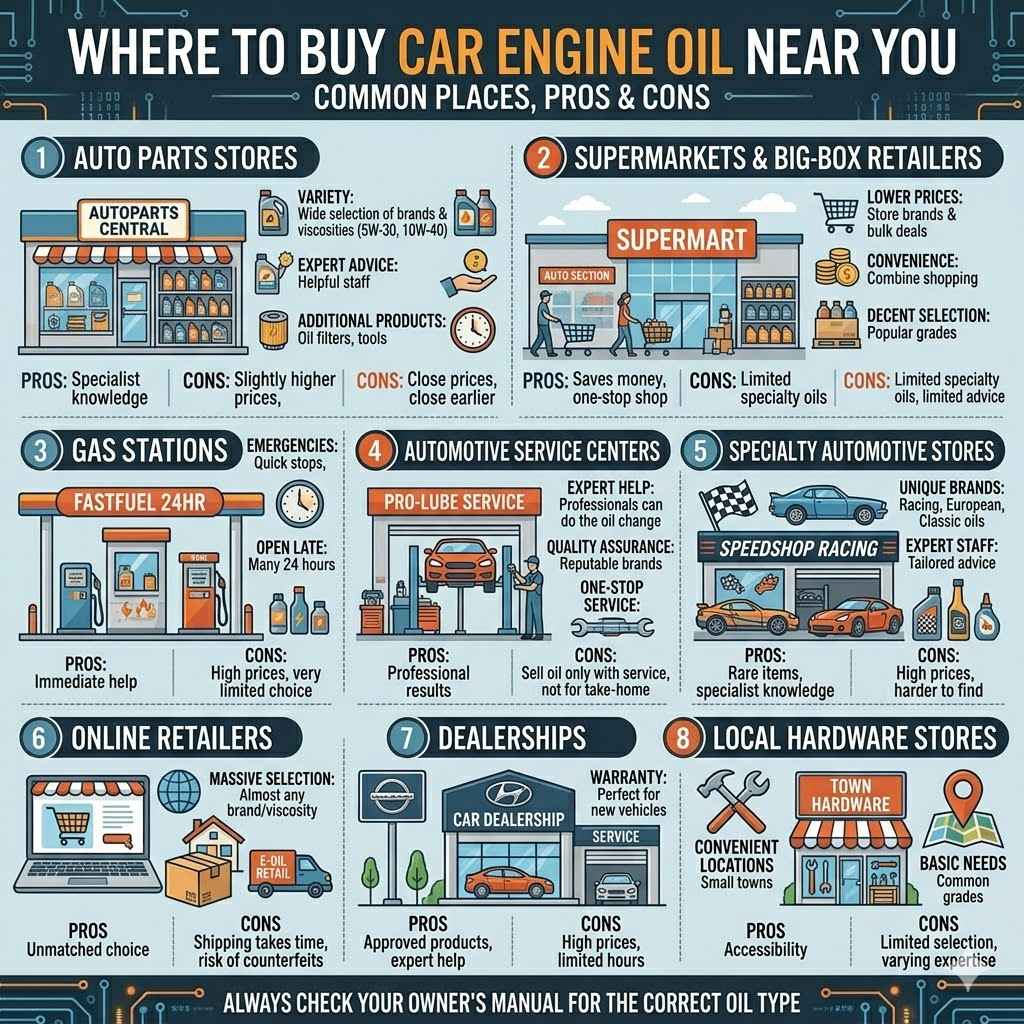
Let’s look at the most common places where you can buy engine oil, with their pros and cons.
1. Auto Parts Stores
Auto parts stores like AutoZone, Advance Auto Parts, O’Reilly Auto Parts, and NAPA Auto Parts are dedicated to car products. Here’s why they’re a solid choice:
- Variety: You’ll find a wide selection of brands, viscosities (like 5W-30 or 10W-40), and types (synthetic, semi-synthetic, conventional).
- Expert Advice: Staff can help you find the right oil for your car’s make and model.
- Additional Products: Pick up an oil filter, gloves, or a drain pan at the same time.
However, prices can be a bit higher than big-box retailers. Also, these stores usually close by 9 pm, so late-night emergencies may require other options.
2. Supermarkets And Big-box Retailers
Major chains like Walmart, Target, or even Costco often have automotive sections.
- Lower Prices: Bulk buying and store brands can save you money.
- Convenience: You can shop for groceries and car oil together.
- Decent Selection: Most carry popular grades and leading brands.
But, specialty or high-performance oils may not be available, and staff may not know much about cars.
3. Gas Stations
Nearly every gas station has a small automotive aisle.
- Great for Emergencies: If your oil light comes on during a trip, this is the quickest stop.
- Open Late: Many gas stations are open 24 hours.
Selection is usually limited to 1–2 brands and common viscosities, and prices are often higher.
4. Automotive Service Centers
Shops like Jiffy Lube, Valvoline Instant Oil Change, and local mechanics also sell oil.
- Expert Help: Professionals can advise or even do the oil change for you.
- Quality Assurance: Products are usually reputable brands.
- One-Stop Service: Get oil, filter, and service together.
Note that these centers typically sell oil only with an oil change service, not for take-home.
5. Specialty Automotive Stores
Performance and specialty shops, such as Pep Boys or local racing stores, offer premium and rare oils.
- Unique Brands: Find racing oils, European blends, or motorcycle oils.
- Expert Staff: Get advice tailored to high-performance or classic cars.
Prices are higher, and these shops can be harder to find outside big cities.
6. Online Retailers
Buying engine oil online is more popular than ever, with options like Amazon, eBay, and retailers’ own websites.
- Massive Selection: Almost every brand and viscosity you can imagine.
- Convenience: Home delivery means you don’t have to leave the house.
- Bulk Deals: Save money on larger orders.
But shipping takes time, and there’s a risk of counterfeit products—always buy from trusted sellers.
7. Dealerships
Car dealerships sell the exact oil recommended for your car’s make and model.
- Factory-Approved: Perfect for vehicles under warranty.
- Brand-Specific Knowledge: Staff can answer detailed questions.
Expect higher prices and sometimes limited hours.
8. Local Hardware Stores
Some hardware stores, like Ace Hardware, carry small automotive sections.
- Convenient Locations: Especially in smaller towns.
- Basic Options: Usually carry common grades and brands.
Selection is basic, and staff expertise may vary.
How To Find Engine Oil Near You
Even with so many choices, you might wonder: “How do I find engine oil near me right now?” Here’s how:
- Google Maps: Search for “engine oil near me” or “auto parts store near me.” Read reviews and check opening hours.
- Store Locators: Retailers like Walmart, AutoZone, and Advance Auto Parts have store locator tools on their websites.
- Ask Locals: Mechanics, car clubs, or even neighbors often know the best local spots.
- Apps: Use apps like Waze or Yelp to find stores and read user comments.
What To Look For When Buying Engine Oil
Picking up any bottle of oil is not enough. Here’s what you should check before you buy:
1. Viscosity Grade
Viscosity is the oil’s thickness, shown as numbers like 5W-30. Your owner’s manual will recommend the right grade. Using the wrong viscosity can hurt engine performance, especially in extreme weather.
2. Oil Type
- Conventional: Cheapest, good for older cars.
- Synthetic Blend: Mix of conventional and synthetic. Good balance of price and performance.
- Full Synthetic: Best for newer cars, high-mileage engines, and extreme conditions. More expensive, but protects better.
3. Certification
Look for API (American Petroleum Institute) or ILSAC certifications. These symbols mean the oil meets industry standards.
4. Brand
Famous brands like Mobil 1, Castrol, Valvoline, and Pennzoil are reliable. Generic brands can be fine, but always check for certifications.
5. Expiry Date
Engine oil can degrade over time. Check the bottle for a production or expiration date, especially if buying from a small or slow-moving store.
Comparing Buying Options: Price, Convenience, And Selection
The experience can be very different depending on where you shop. Here’s a quick comparison.
| Location | Price | Selection | Expert Help | Open Late? |
|---|---|---|---|---|
| Auto Parts Store | Medium | Wide | Yes | Sometimes |
| Supermarket/Big-Box | Low | Moderate | No | Yes |
| Gas Station | High | Limited | No | Yes |
| Online | Low to High | Extensive | No | Always |
| Dealership | High | Specific | Yes | No |
Two Insights Most People Miss
- Not All Oil Is Created Equal: Even if the bottle says “5W-30,” differences in additives, detergents, and certifications can affect your engine’s health. Always check the specifications—especially for turbocharged or high-mileage engines.
- Freshness Matters: Old oil from a store shelf (or a friend’s garage) can lose its protective qualities. Oil stored in heat or direct sunlight may degrade before you use it.
Signs You Need Engine Oil Right Away
Don’t wait until your next scheduled oil change. If you notice these signs, get engine oil now:
- Oil warning light on your dashboard
- Strange engine noises (ticking or knocking)
- Visible leaks under your car
- Excessive exhaust smoke
- Burning smell from the engine
Running your engine low or dry on oil can cause permanent damage within minutes.
How To Read An Engine Oil Label
Engine oil labels can be confusing, especially for non-native English speakers. Here’s what to look for:
| Label Part | What It Means |
|---|---|
| Viscosity (e.g., 5W-30) | How thick the oil is in cold and hot temperatures |
| API/ILSAC Symbol | Industry certification for quality and compatibility |
| Synthetic / Conventional | Type of oil base |
| “For Gasoline Engines” | Confirms suitability for your engine type |
| “High Mileage” | Special additives for older engines |
If you’re not sure, bring your car’s manual or take a photo of your oil cap, which often lists the required viscosity.
Smart Tips For Buying Engine Oil
- Buy in Multiples: If your car needs 5 quarts, buy the multi-pack. It’s usually cheaper per quart.
- Save Your Receipts: Some car warranties require proof that you used the right oil.
- Check Promotions: Many auto stores offer deals or loyalty programs.
- Watch for Counterfeits: Only buy from trusted stores or sellers. Counterfeit oil can damage your engine.
- Store Oil Properly: Keep extra oil in a cool, dry place, away from sunlight.
Common Mistakes When Buying Engine Oil
- Ignoring Your Manual: Your car’s manual is the best guide for oil type and viscosity.
- Mixing Types: Don’t mix synthetic and conventional oils unless the bottle says it’s okay.
- Buying “Universal” Oil: There’s no true universal oil. Always match your car’s needs.
- Overfilling the Engine: Too much oil can damage seals and sensors. Only add the recommended amount.
- Relying on Color: Dark oil doesn’t always mean it’s “dirty.” Some oils darken quickly but are still fine.
How To Add Engine Oil Safely
If you buy oil to add yourself, follow these steps for safety and best results:
- Let the Engine Cool: Wait at least 10 minutes after turning off your car.
- Locate the Oil Cap: Usually marked with an oil can symbol.
- Check the Dipstick: Wipe, dip, and check the oil level.
- Add Oil Slowly: Pour a little at a time, checking the level regularly.
- Don’t Overfill: Stop when the oil reaches the “full” line.
- Replace the Cap: Tighten securely.
- Dispose of Bottles Properly: Recycle used oil containers according to local rules.
Special Cases: When You Need Specific Oil
Some cars, especially luxury or European brands, need special types of oil. For example:
- BMW, Mercedes, Volkswagen: Often require ACEA-certified or European blends.
- Turbocharged Engines: Need synthetic oils with strong detergents.
- Older Vehicles: High-mileage oil with extra conditioners helps prevent leaks.
If you’re unsure, call your dealer or check online forums for your car’s make.
Environmental Tips For Oil Buyers
- Recycle Used Oil: Many auto stores and service centers accept old oil for recycling.
- Choose Eco-Friendly Brands: Some oils are made with less environmental impact.
- Buy Only What You Need: Don’t stockpile oil if you won’t use it within 2–3 years.
What To Do If You Can’t Find The Right Oil Nearby
Sometimes, you need a specific oil that local shops don’t have. Here’s what to do:
- Ask the Store to Order: Many shops can order oil for you, often with quick delivery.
- Try Online Shopping: Websites like Amazon have a huge selection.
- Check Nearby Cities: Larger towns or specialty stores may stock what you need.
- Call Your Mechanic: Some mechanics can sell you the right oil directly.
How Often Should You Buy Engine Oil?
Most cars need an oil change every 5,000–7,500 miles (8,000–12,000 km), but always check your manual. Buying oil ahead of time can help you avoid last-minute emergencies.
The Difference Between Engine Oil And Other Automotive Oils
It’s easy to confuse engine oil with other fluids. Here’s a quick overview:
- Engine Oil: Lubricates and cools the engine.
- Transmission Fluid: For automatic or manual gearboxes.
- Brake Fluid: For hydraulic brakes.
- Coolant/Antifreeze: Regulates engine temperature.
Never use one in place of the other—they are not interchangeable.
Signs Of A Good Store To Buy Engine Oil
- Clean Shelves: Dusty bottles or leaking containers are a red flag.
- Knowledgeable Staff: Staff who ask about your car show they care.
- Clear Labels: All products should be clearly marked and up-to-date.
- Visible Certifications: Look for API/ILSAC or manufacturer approval labels.
Saving Money When Buying Engine Oil
- Buy in Bulk: Bigger containers or packs are usually cheaper per quart.
- Use Coupons or Apps: Stores like AutoZone and Advance Auto Parts have mobile coupons.
- Check for Rebates: Some brands offer mail-in rebates.
- Sign Up for Rewards: Store loyalty programs can save you money over time.
Comparing Top Engine Oil Brands
You may see many brands on the shelf. Here’s a comparison of popular options:
| Brand | Type | Price Range (per quart) | Special Features |
|---|---|---|---|
| Mobil 1 | Full Synthetic | $8–$12 | Advanced protection, long life |
| Castrol | Full/Synthetic Blend | $7–$11 | Strong detergents, turbo safe |
| Valvoline | Conventional/Synthetic | $6–$10 | High-mileage options |
| Pennzoil | Full Synthetic | $7–$12 | Made from natural gas |
| Quaker State | Conventional/Synthetic | $5–$9 | Affordable, reliable |
Always balance price, specifications, and your vehicle’s needs. Cheaper oil can cost more in the long run if it leads to engine problems.
The Importance Of Emergency Oil Kits
Consider keeping an emergency oil kit in your car. Include:
- 1–2 quarts of your car’s oil
- Disposable gloves
- Funnel
- Paper towels
This can be a lifesaver on a road trip or in remote areas.

When To Let A Professional Handle It
If you’re not comfortable adding oil yourself, or if your car has oil leaks, it’s smart to let a professional handle it. Mechanics can spot problems you might miss and ensure the right oil is used.
Frequently Asked Questions
Where Can I Find The Recommended Oil For My Car?
Check your owner’s manual or the label on your oil cap. Most manuals list the correct viscosity and type. If you lost your manual, many carmakers post them online or you can ask a dealership.
Is It Okay To Mix Different Brands Of Engine Oil?
Mixing brands is usually safe if the oils have the same viscosity and certifications (like API). But mixing synthetic and conventional is not recommended unless the bottle says it’s a blend.
Can I Use Diesel Engine Oil In A Gasoline Engine?
No, diesel oil has different additives and can harm gasoline engines. Always use oil marked as “For Gasoline Engines” unless your manual says otherwise.
How Long Does Engine Oil Last On The Shelf?
Unopened, most engine oil lasts up to 5 years if stored in a cool, dry place. Always check the expiration or production date before use.
What’s The Difference Between Synthetic And Conventional Oil?
Synthetic oil is made with fewer impurities and better additives, so it protects your engine longer, especially in extreme temperatures. Conventional oil is less expensive but needs more frequent changes.
Buying the right car engine oil near you is easier when you know where to look and what to ask for. Whether you’re at a gas station in an emergency or shopping for the best price online, a little knowledge goes a long way.
With these tips and insights, you’ll keep your engine running smoothly and avoid costly mistakes on the road.
Products related to this article
Sponsored / affiliate links. As an Amazon Associate I earn from qualifying purchases. I may earn additional commission from eligible campaigns.
 ECOGARD X10023 Cartridge Engine Oil Filter for Conventional Oil - Premium Replacement | Fits 2018-2023 Volkswagen Atlas 3.6L; 2020-2023 Atlas Cross Sport 3.6L
 ECOGARD X10040 Cartridge Engine Oil Filter for Conventional Oil - Premium Replacement | Fits 2011-2026 Jeep Grand Cherokee, Dodge Durango 3.6L; 2012-2026 Wrangler 3.6L; 2014-2022 Cherokee 3.2L