What Does Vehicle Type Approval Mean? (Simple Explanation)
Every day, millions of vehicles move on roads across the world. But before any car, bus, or truck is allowed to be sold and driven, it must meet certain rules. These rules are not just suggestions—they are strict checks to make sure the vehicles are safe, clean for the environment, and work as promised. This is where vehicle type approval comes in. Many people have heard the term, but few know what it really means or why it is so important.
Understanding vehicle type approval is not just for car manufacturers or engineers. If you own, drive, or plan to buy a vehicle, knowing about this process can help you make smarter choices. It also explains why some cars are available in certain countries but not others, and why new models sometimes face delays before launch.
This article will take you through the full picture of vehicle type approval—what it is, how it works, why it matters, and what happens if it is not done right. Along the way, you will see practical examples, learn about different approval types, and find answers to common questions most drivers never think to ask.
What Is Vehicle Type Approval?
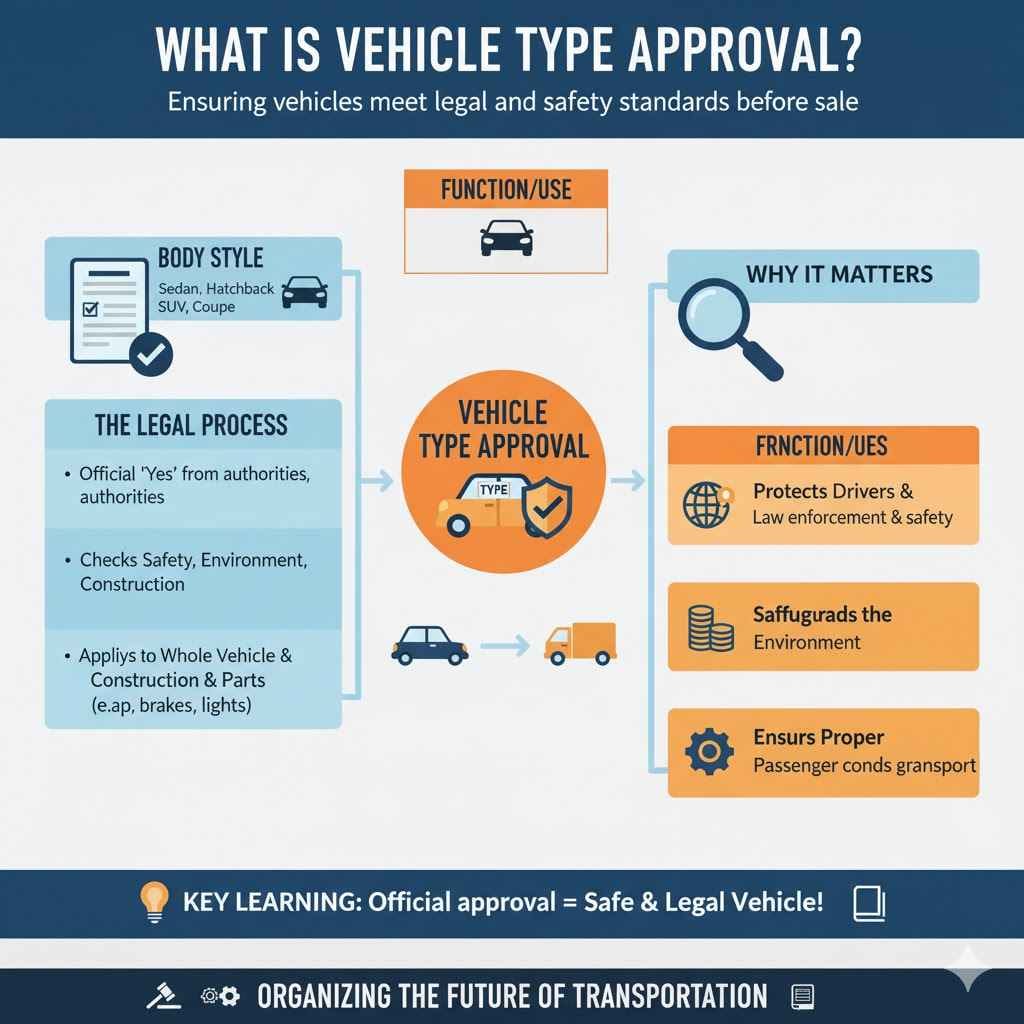
Vehicle type approval is a legal process that checks if a vehicle meets all the necessary regulations and standards before it can be sold or used on public roads. Think of it as an official “yes” from the government or authorized body, saying, “This vehicle is safe, environmentally friendly, and built correctly.”
This approval is not just for the whole vehicle. Sometimes, it also applies to important parts and systems—like lights, brakes, or engines. The goal is to protect drivers, passengers, and the environment.
Why Is Vehicle Type Approval Necessary?
Safety is the most obvious reason. If vehicles are not checked, they could have dangerous defects. These issues might not be visible at first but could cause accidents or failures on the road.
Another reason is environmental protection. Vehicles produce emissions that can harm air quality. Type approval makes sure that vehicles meet strict emission limits, helping reduce pollution.
Fair competition also depends on type approval. Every manufacturer must follow the same rules. This stops companies from cutting corners or using unsafe materials just to save money.
Finally, vehicle type approval gives confidence to buyers. When you buy a vehicle with proper approval, you know it has passed tough tests and checks.
Key Elements Checked During Vehicle Type Approval
The process of vehicle type approval covers many areas. Here are the main elements that are checked:
- Safety Standards: This includes crash tests, seat belts, airbags, braking performance, lighting, and visibility.
- Emissions and Environmental Controls: Vehicles must meet regulations for exhaust gases like CO2, NOx, and particulates.
- Noise Levels: Cars and motorcycles should not be too loud.
- Build Quality: The materials and assembly must follow set rules.
- Dimensions and Weight: Vehicles must fit within legal size and weight limits.
- Electronic Systems: Modern vehicles use many electronic systems, like anti-lock brakes (ABS) and stability controls. These must work reliably.
- Documentation: Manufacturers must provide clear manuals and information about the vehicle.
If a vehicle fails any of these checks, it cannot be sold until the issues are fixed.
How Does The Vehicle Type Approval Process Work?
The process is detailed and takes several steps. Here’s a simplified look at how it usually works:
1. Application By The Manufacturer
The car maker submits an application to the approval authority. This includes detailed designs, technical data, and test results. They must show that the vehicle or component is ready for inspection.
2. Laboratory And Field Testing
Independent, accredited labs test the vehicle or its parts. These tests are strict and cover all the areas mentioned above. For example, crash tests are done using dummies to see how well passengers would survive an accident.
3. Document Review
Experts check all the technical documents. They ensure everything matches the rules and nothing is missing.
4. Approval Decision
If the vehicle passes all tests, the authority issues a type approval certificate. This means the vehicle can now be mass-produced and sold. If not, the manufacturer must fix the problems and try again.
5. Production Audits
Approval does not end with one test. There are regular checks to make sure every vehicle made matches the approved type. Factories are inspected, and random samples are tested.
Types Of Vehicle Type Approval
Vehicle type approval is not the same everywhere. Different countries and regions have their own systems. Here are the main types:
Whole Vehicle Type Approval (wvta)
This is the most complete form. It covers the entire vehicle, including all systems and parts. Once a vehicle has WVTA, it can usually be sold in all countries that accept this approval.
System Or Component Type Approval
Sometimes, only a part (like headlights or brakes) needs approval. This is common when parts are sold to be used in different vehicles.
National Vs. Regional Approval
- National approval is for one country only. For example, a car may be approved in Japan but not in Europe.
- Regional approval covers a group of countries. The best-known example is the European Union’s system.
Single Vehicle Approval
This is for unique or custom-built vehicles, such as a kit car or a one-off modification. The process is more flexible but still requires safety checks.
Who Are The Main Players In Vehicle Type Approval?
Many organizations are involved in this process. Here are the key players:
- Manufacturers: They design and make the vehicles, and apply for approval.
- Type Approval Authorities: These are official bodies that review applications and give approval. Examples include the UK’s Vehicle Certification Agency (VCA) and Germany’s Kraftfahrt-Bundesamt (KBA).
- Testing Laboratories: Independent centers that carry out the physical and technical tests.
- Technical Services: Experts who help prepare the application and make sure it meets the rules.
- Government Agencies: They set the rules and check that the system is fair.
Vehicle Type Approval In Major Regions
Vehicle type approval varies depending on where you are in the world. Let’s look at the main systems:
Europe
The European Union uses a system called European Community Whole Vehicle Type Approval (ECWVTA). It allows vehicles to be sold in all EU countries if they meet the standards. The rules are set out in EU regulations and directives.
United States
In the U.S., the system is called self-certification. Manufacturers must show they follow the Federal Motor Vehicle Safety Standards (FMVSS). The government can test vehicles at any time, and there are big penalties for cheating.
Japan
Japan has a national type approval system. The Ministry of Land, Infrastructure, Transport, and Tourism (MLIT) checks all vehicles and components.
Other Regions
Countries like China, India, and Australia have their own systems. Some follow European or U. S. standards, while others have unique rules.
Below is a comparison of the main features in three regions:
| Region | Main System Name | Who Approves | Accepted In |
|---|---|---|---|
| Europe | ECWVTA | Government Authority | All EU countries |
| United States | FMVSS Self-Certification | Manufacturer (with government checks) | USA only |
| Japan | MLIT Type Approval | Government Agency | Japan only |
Real-world Example: Why Type Approval Matters
Let’s say a car company in Europe wants to sell a new electric car. Before it can offer the car to customers, it must pass many tests—crash safety, battery safety, emissions, and more. If it fails, the car cannot be sold.
In 2015, the Volkswagen emissions scandal (“Dieselgate”) showed how important approval and honest testing are. Cars that cheated on emissions tests caused harm to the environment and led to huge fines and recalls.
What Happens Without Type Approval?
Selling or using vehicles without proper approval is illegal in most countries. Here’s what can happen:
- Fines and Penalties: Companies can be fined millions of dollars.
- Vehicle Recalls: Cars may have to be returned and fixed or destroyed.
- Loss of Reputation: Manufacturers lose trust, and customers may avoid their products.
- Safety Risks: People may be injured or killed by unsafe vehicles.
The Approval Certificate: What Does It Contain?
A vehicle type approval certificate is an official document. It includes:
- The name of the manufacturer
- The vehicle type and model
- The list of standards passed
- Approval number
- Date of approval
- Any special notes or conditions
This certificate must be kept by the manufacturer and sometimes by the vehicle owner. It is proof that the vehicle is legal and meets all requirements.
Type Approval And Aftermarket Modifications
Many drivers like to modify their cars. But making changes—like adding new wheels, spoilers, or engine parts—can affect the original approval. In some countries, big modifications require a new approval or inspection. If not, the car may become illegal to drive.
For example, in Germany, adding a turbocharger to a car that did not have one originally means the car must pass new emissions and safety tests. Otherwise, insurance may not pay out after an accident.
Common Challenges In The Type Approval Process
Getting type approval is not easy. Here are some challenges manufacturers face:
- Cost: Testing and paperwork can cost millions, especially for small companies.
- Time: The process can take months or even years.
- Changing Rules: Laws and standards change often, and companies must keep up.
- Different Systems: A car approved in Europe may need extra changes to be sold in the U.S. or Asia.
- Technical Complexity: Modern vehicles have advanced electronics, software, and batteries, all of which must be tested.
Recent Trends And Changes In Type Approval
Vehicle type approval systems are always evolving. Here are some trends:
Digital And Automated Testing
New technology is making testing faster and more accurate. Some tests are now done using computer simulations, especially for crash safety.
Focus On Electric Vehicles
As more electric cars enter the market, new rules cover battery safety, charging systems, and fire risks.
Cybersecurity
Modern cars are like computers on wheels. Now, approval checks also cover cybersecurity—making sure hackers cannot take control of the vehicle.
Harmonization
Some regions are working to make their rules more similar. This helps manufacturers sell the same vehicle in more countries with less extra testing.
Here is a table comparing the focus areas for approval in the past and today:
| Year | Main Focus Areas | New Additions |
|---|---|---|
| 2000 | Crash Safety, Emissions, Noise | None |
| 2024 | Crash Safety, Emissions, Noise | Cybersecurity, Battery Safety, Automated Systems |
How To Check If A Vehicle Has Type Approval
If you are buying a car, especially an imported or used one, you may want to check if it has valid type approval. Here’s how:
- Ask for the Approval Certificate: Reputable sellers will provide this on request.
- Look for a Type Approval Number: This is often found on a label or plate in the engine bay or door.
- Check with Authorities: National agencies or online databases can confirm if a vehicle model is approved.
- Ask About Modifications: If the car has been modified, check if it still meets approval standards.
Non-obvious Insights Most People Miss
The Impact On Insurance
Many drivers don’t realize that insurance companies often require vehicles to have valid type approval. If you are in an accident and your car does not have it, the insurer can refuse to pay—even if the accident was not your fault. This is especially true for heavily modified cars.
Approval For Connected And Self-driving Cars
With the rise of autonomous vehicles and connected cars, type approval now includes checks for software updates, data privacy, and remote control systems. These rules are still changing quickly, and some countries now require a “software update log” as part of the approval.
Common Mistakes In The Type Approval Process
Even big companies can make mistakes. Here are some common errors:
- Incomplete Documentation: Missing test results or unclear diagrams can delay approval.
- Testing to the Wrong Standard: If a manufacturer tests to an old or foreign standard, the approval may be refused.
- Ignoring Local Rules: Even after passing European tests, some countries have extra rules for things like lighting or mirrors.
- Late Updates: Failing to update approval when a vehicle design changes can lead to problems.
How Vehicle Type Approval Affects Consumers
Vehicle type approval is not just a technical issue for manufacturers. It affects everyone who buys or uses a vehicle. Here’s how:
- Peace of Mind: You know your car is safe and legal.
- Resale Value: Cars with proper approval are easier to sell and keep their value better.
- Fewer Recalls: Vehicles that pass tough tests are less likely to be recalled.
- Import and Export: Approval makes it easier to move cars between countries.
The Future Of Vehicle Type Approval
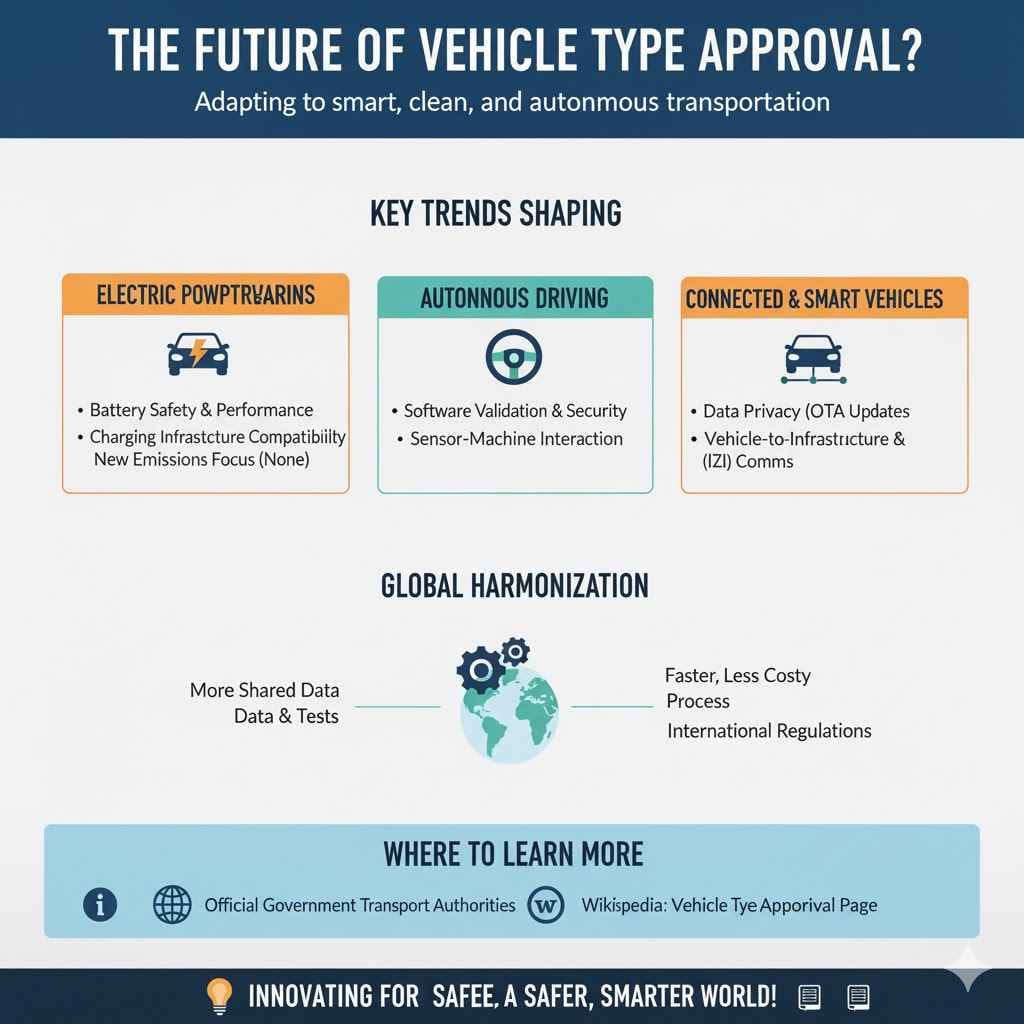
As vehicles become smarter and cleaner, the type approval process will continue to change. Experts expect more focus on electric powertrains, autonomous driving, and software safety. Some countries are working to share data and tests, making the process faster and less costly.
For those interested in the official details, you can learn more from the Wikipedia page on vehicle type approval.
Frequently Asked Questions
What Is Vehicle Type Approval?
Vehicle type approval is an official process to check if a vehicle or its parts meet all legal, safety, and environmental requirements before being sold or used on public roads.
Is Type Approval The Same In Every Country?
No, each country or region has its own rules and systems. Some, like the European Union, accept one approval for many countries, while others, like the United States, use a self-certification system.
Do Modified Vehicles Need New Approval?
Yes, significant modifications (like engine changes or big body alterations) may require a new approval or inspection. Minor changes, such as new tires, usually do not.
How Can I Check If A Car Has Type Approval?
You can ask the seller for the approval certificate or look for the approval number on the car. National authorities also have databases to check approved Vehicle Models Does GM Have: Ultimate Best List” target=”_blank” rel=”noopener” data-wpil-monitor-id=”4295″>vehicle models.
What Happens If A Vehicle Is Sold Without Type Approval?
Selling vehicles without proper type approval is illegal in most countries. It can lead to large fines, vehicle recalls, and safety risks for drivers and the public.
Vehicle type approval may seem complex, but it is a vital part of keeping our roads safe and protecting the environment. For consumers and manufacturers alike, understanding this process is key to making smart, legal, and safe choices when it comes to vehicles. See also best car types list every style ranked for every driver. See also how to make a homemade car that actually runs guide .
Products related to this article
Sponsored / affiliate links. As an Amazon Associate I earn from qualifying purchases. I may earn additional commission from eligible campaigns.
 TRIMAX TNL740 Spare Tire Nut Lock for Side Mount Spare Tires, Easy Install - for SUV, Trailer Tire, and More - 1 Pack
 Dalmbox Compact Portable Handgun Pistol Gun Safe Lock Box for Car & Travel | Secures handgun storage, combination-lock access, steel build, small 9.4" x 6.4" x 1.8", for car, home, travel