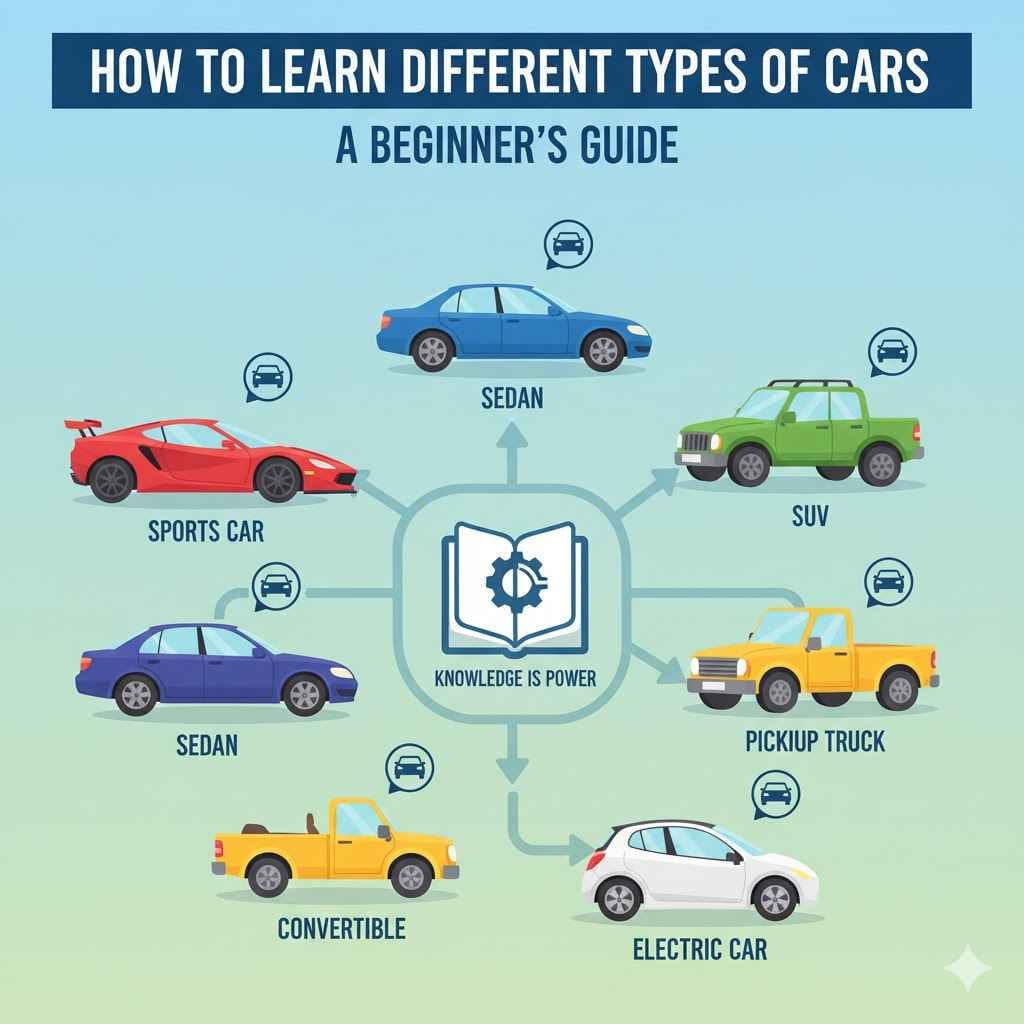
How to Learn Different Types of Cars: A Beginner’s Guide
Learning about the different types of cars is more than just memorizing names or shapes. It’s about understanding what makes each type unique, how they fit different needs, and the history behind their designs. Whether you want to buy a car, impress friends, or simply satisfy your curiosity, knowing about various car types helps you see the big picture of the automotive world.
This guide will show you how to learn about cars, the main types you’ll find, and smart ways to remember what you learn. You’ll also get practical tips, see real-world examples, and avoid mistakes that many beginners make.
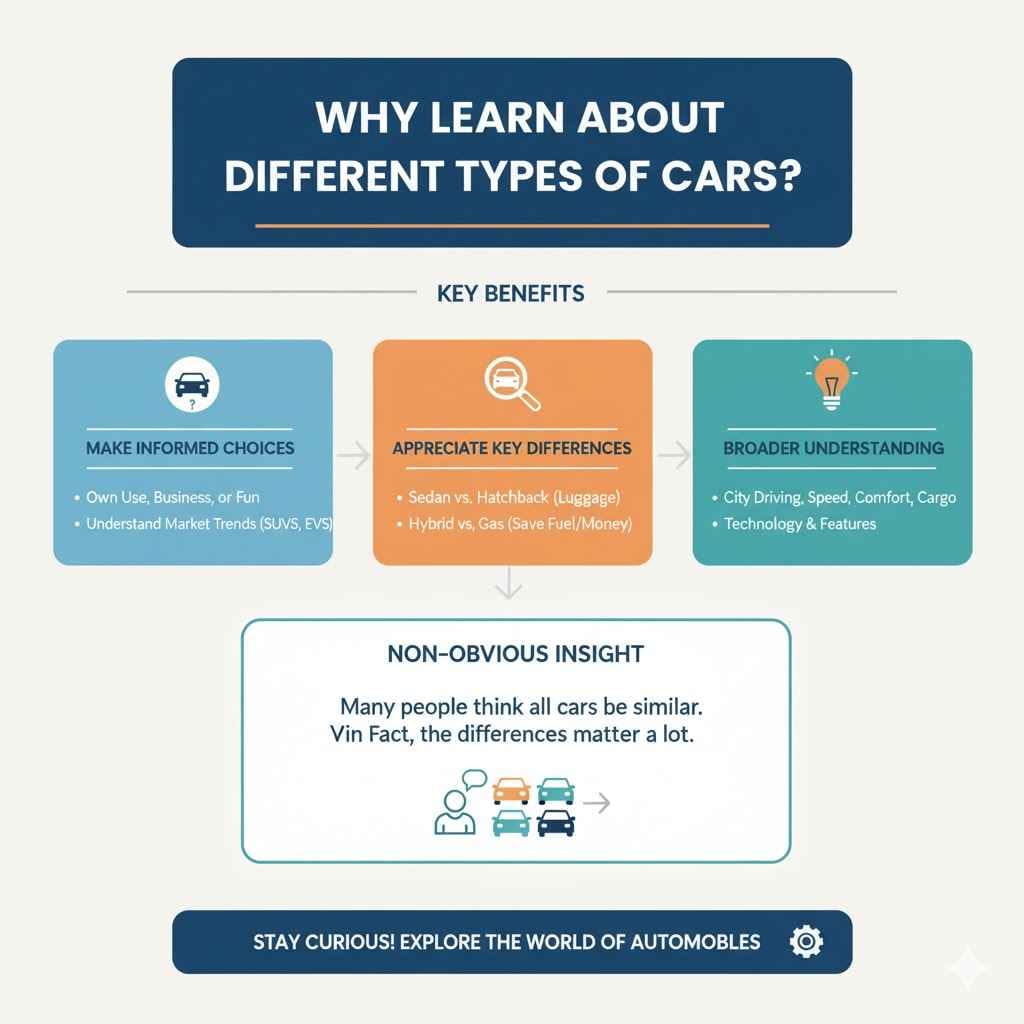
Why Learn About Different Types Of Cars?
Cars are everywhere, but not all of them are the same. Some are made for city driving, others for speed, comfort, or carrying heavy loads. By learning about car categories, you make better choices—whether for your own use, business, or just for fun. It also helps you understand trends, such as why SUVs are popular now or why electric cars are growing fast.
As an Amazon Associate I earn from qualifying purchases.
Many people think all cars are similar. In fact, the differences matter a lot. For example, knowing the difference between a sedan and a hatchback can affect how you pack luggage for a trip. Or, learning about hybrid cars can help you save money on gas.
Main Types Of Cars Explained
To master car types, start with the main categories. Each has its own shape, purpose, and audience. Here are the most common:
1. Sedans
Sedans are the classic family car. They have four doors and a separate trunk. Sedans offer a balance of comfort, space, and good fuel economy. They’re popular for daily driving.
Example: Toyota Camry, Honda Accord
Most sedans seat five people. They are quieter than smaller cars and have good safety features. But, sedans are not great for rough roads or carrying large items.
2. Hatchbacks
Hatchbacks look like small sedans but have a rear door that opens upwards. The back seats can fold down, making more room for bags or boxes.
Example: Volkswagen Golf, Ford Focus
Hatchbacks are easy to park and use less fuel. They are perfect for city life or students. However, they may not feel as stable on highways as bigger cars.
3. Suvs (sport Utility Vehicles)
SUVs are larger vehicles made for both city and off-road driving. They sit higher than sedans and offer more space. Many families choose SUVs for comfort and safety.
Example: Toyota Rav4, Honda Cr-v
SUVs can handle bad weather and rough roads. They also have large trunks. On the downside, SUVs use more gas and can be harder to park in small places.
4. Crossovers
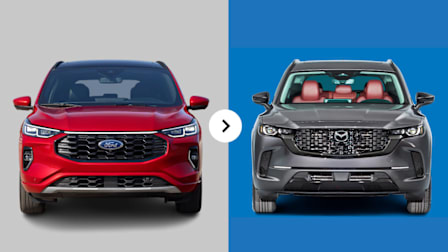
Crossovers look like SUVs but are built on a car’s frame, not a truck’s. This makes them smoother to drive and better for fuel economy.
Example: Nissan Rogue, Hyundai Tucson
Crossovers are now more popular than traditional SUVs. They give you the look and space of an SUV with the comfort of a car. They are not as strong for heavy off-roading.
5. Coupes
Coupes are stylish cars with two doors and a sporty look. They are made for speed and good handling rather than carrying many people.
Example: Ford Mustang, Audi A5
Coupes are fun to drive and look cool. But, they have less space inside and are not ideal for families or long trips.
6. Convertibles
Convertibles are cars with a roof that can fold down or be removed. They are made for enjoying nice weather.
Example: Mazda Mx-5 Miata, Bmw Z4
Convertibles are exciting and feel special. But, they are often more expensive, less safe in a crash, and have less space for passengers and luggage.
7. Station Wagons
Station wagons are like sedans with a longer rear area and more cargo space. The roof extends to the back, making it easy to carry large items.
Example: Subaru Outback, Volvo V60
Station wagons are practical and offer car-like comfort with SUV-like space. However, they are not as popular now, especially in North America.
8. Pickup Trucks
Pickup trucks have a cabin for passengers and a separate open bed for carrying goods. They are built for hard work, like construction or farming.
Example: Ford F-150, Chevrolet Silverado
Pickups are strong and can pull heavy trailers. They are common in rural areas. But, they use more fuel and can be difficult to park in cities.
9. Minivans
Minivans are made for families and groups. They have sliding doors and three rows of seats.
Example: Honda Odyssey, Toyota Sienna
Minivans are easy for kids and older people to enter. They have lots of storage and safety features. However, they are not very stylish and use more gas than small cars.
10. Sports Cars
Sports cars are made for speed and sharp handling. They are usually low to the ground and have powerful engines.
Example: Porsche 911, Chevrolet Corvette
Sports cars are fun and exciting. But, they are expensive, less comfortable, and not practical for daily use.
11. Luxury Cars
Luxury cars focus on comfort, advanced technology, and high-quality materials. They can be sedans, SUVs, or coupes.
Example: Mercedes-benz S-class, Lexus Ls
Luxury cars are smooth and quiet. They come with the latest safety features. But, they cost much more to buy and repair.
12. Electric Cars
Electric cars run on batteries instead of gasoline. They are cleaner for the environment and cheaper to operate.
Example: Tesla Model 3, Nissan Leaf
Electric cars are quiet and require less maintenance. Their main problem is range—how far you can go before recharging. Charging stations are not everywhere yet.
13. Hybrid Cars
Hybrid cars have both a gasoline engine and an electric motor. They switch between them to save fuel.
Example: Toyota Prius, Honda Insight
Hybrids use less gas and are good for cities. But, they cost more than regular cars and have complex systems that might be expensive to fix.
14. Diesel Cars
Diesel cars use diesel fuel, which is common in Europe and for trucks.
Example: Volkswagen Passat Tdi, Bmw 320d
Diesel cars are fuel-efficient and last longer. However, they can cost more to repair and produce more pollution than some other cars.
15. Microcars
Microcars are very small cars with three or four wheels. They are made for short trips in crowded cities.
Example: Smart Fortwo, Tata Nano
Microcars use very little fuel and are super easy to park. But, they are not safe for fast roads and have almost no space for people or bags.
16. Off-road Vehicles
Off-road vehicles are built for rough terrain, like mountains or deserts. They have high ground clearance and strong suspension.
Example: Jeep Wrangler, Land Rover Defender
Off-roaders are tough and can go places regular cars can’t. However, they use a lot of gas and are uncomfortable for everyday driving.
How To Learn And Remember Different Car Types
Knowing the names is just the start. Here’s how you can learn and remember car types more deeply:
Use Visual Learning
Pictures help you connect shapes with names. Look at online galleries or car dealer websites. Try matching cars you see in real life with their type. For example, when you see a Toyota Camry, remember it is a sedan.
Visit Local Car Shows Or Dealerships
Seeing cars in person makes a big difference. Notice the size, shape, and features. Ask questions to salespeople—they can explain why a family might pick a minivan or why someone chooses a pickup truck.
Practice Classification
Create your own lists. For example, write down cars you see on the road and guess their type. Later, check if you were right. This active practice helps you remember.
Watch Review Videos
There are many car review channels on YouTube. They compare car types, show interiors, and discuss pros and cons. Some channels even test cars in real-life situations, which makes learning fun and practical.
Use Car Games Or Apps
Apps like “Guess the Car” or simulation games help you learn while playing. Some apps let you sort cars by type, brand, or country.
Read Car Magazines And Blogs
Articles often compare sedans, SUVs, and other types. You’ll see why certain models win awards and what makes them special. This helps you learn about real-world trends.
Learn The History
Knowing why cars were invented or changed helps you remember them. For example, station wagons became less popular when SUVs offered more space and style.
What Makes Each Car Type Unique?
To really master car types, pay attention to these details:
- Body Shape: Sedans have a separate trunk, hatchbacks have a rear door, SUVs are taller.
- Purpose: Minivans for families, pickups for work, sports cars for fun.
- Fuel Type: Gasoline, diesel, electric, hybrid.
- Drive Type: Some cars are front-wheel drive, others rear or all-wheel drive. This affects how they handle different roads.
- Size: Microcars are the smallest, full-size SUVs are among the largest.
Here’s a quick comparison to help you see differences:
| Car Type | Main Purpose | Seating | Fuel Type | Typical Size |
|---|---|---|---|---|
| Sedan | Family, commute | 5 | Gasoline/Hybrid | Medium |
| Hatchback | City, students | 5 | Gasoline/Diesel | Small/Medium |
| SUV | Family, off-road | 5-7 | Gasoline/Diesel/Hybrid | Large |
| Sports Car | Performance, fun | 2 | Gasoline | Small/Medium |
| Pickup Truck | Work, transport | 2-5 | Gasoline/Diesel | Large |
Common Mistakes When Learning Car Types
Many beginners fall into traps when trying to learn about cars. Here are mistakes to avoid:
- Judging by Brand: Some people think all BMWs are luxury cars or all Fords are trucks. Brands make many types, so focus on the model and shape.
- Ignoring Details: Small changes can turn a sedan into a hatchback or a crossover. Look for rear doors, trunk shape, and ride height.
- Trusting Old Information: Car types change over time. For example, crossovers did not exist 30 years ago. Stay updated.
- Confusing Purpose and Type: Not all SUVs are good off-road. Some are made only for city use.
How To Compare Car Types For Your Needs
Understanding car types is more useful when you know what to look for. Here’s how to compare:
Space Vs. Size
Do you need to carry many people or things? Minivans and SUVs give more room. Hatchbacks and microcars are better for small spaces.
Fuel Economy
If you drive a lot, fuel economy matters. Sedans, hatchbacks, and electric cars use less fuel than pickups or SUVs.
Price
Luxury and sports cars cost more. Hatchbacks and sedans are usually cheaper. Used cars can also be a smart choice.
Safety
Modern cars have many safety features. SUVs and minivans often score well in crash tests, but always check ratings for the model.
Here’s a simple cost and fuel comparison:
| Car Type | Average Price (USD) | Fuel Economy (mpg/l) | Maintenance Cost (per year) |
|---|---|---|---|
| Sedan | $25,000 | 30 / 7.8 | $500 |
| SUV | $35,000 | 22 / 10.7 | $650 |
| Pickup Truck | $40,000 | 18 / 13.1 | $700 |
| Electric Car | $40,000 | 100+ MPGe | $350 |
| Hatchback | $22,000 | 33 / 7.1 | $400 |
*Note: Prices and costs are averages and can change by country and brand.*
The Role Of New Technology In Car Types
The car world changes quickly. New technology creates new car types and features:
- Electric Vehicles (EVs): Becoming more common, with better batteries and more charging stations.
- Self-Driving Cars: Not fully common yet, but some cars have autopilot features.
- Connectivity: Many cars now have touch screens, smartphone links, and voice control.
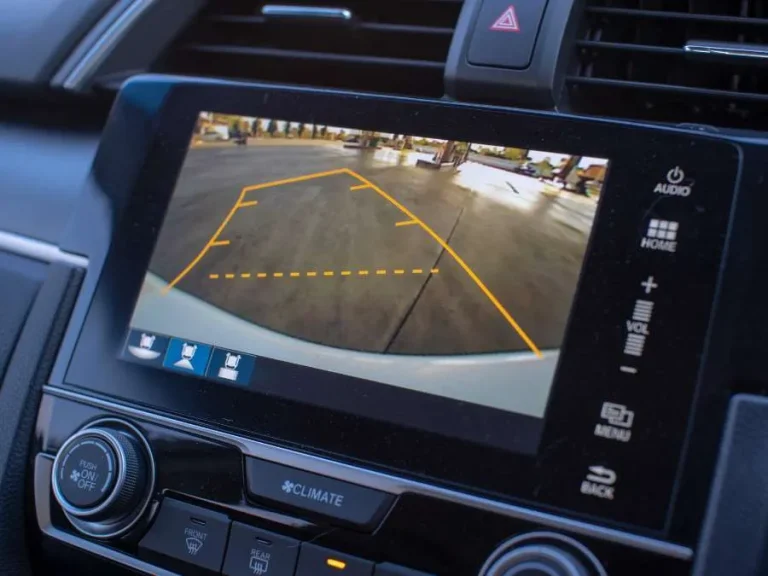
- Safety Tech: Automatic braking, lane assist, and cameras are now standard in many cars.
These changes mean that in the future, learning car types will include new features and new models.
Learning From The Real World
If you want to remember different car types, connect your learning with real life:
- Observe parking lots: Notice how many SUVs, sedans, or pickups you see.
- Ask owners: If you see a car you like, ask the owner what they like or dislike.
- Join online forums: Many communities discuss cars in simple language.
Non-obvious tip: When you rent a car or use a ride-sharing app, try different types. Write down your impressions—how it feels, how much space, and how easy it is to drive.
Memorization Shortcuts
Here are some memory aids:
- Silly Associations: Make up funny stories. “Hatchbacks hatch open like an egg.”
- Acronyms: Use “SUV” to remember “Sport Utility Vehicle”—good for both sports and work.
- Grouping by Size: Think small (microcar), medium (sedan/hatchback), large (SUV/minivan/pickup).
How To Research More
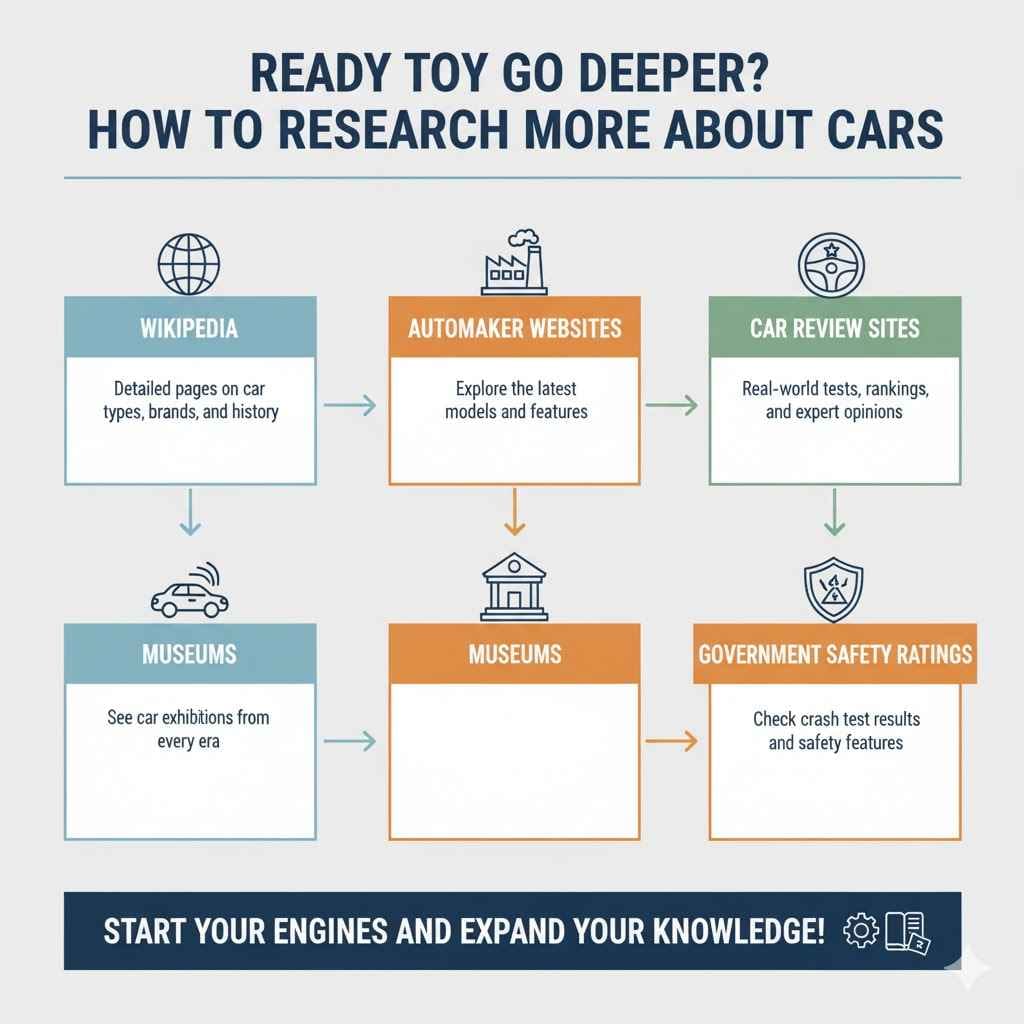
Ready to go deeper? Here are some trustworthy places to learn:
- Wikipedia: Has detailed pages on car types, brands, and history.
- Automaker websites: Show the latest models and explain features.
- Car review sites: Give real-world tests and rankings.
- Museums: Some have car exhibitions where you can see cars from every era.
- Official government safety ratings: Check crash test results for different car types.
For a more detailed overview, you can visit the Wikipedia Car Classification page.
Frequently Asked Questions
What Is The Difference Between A Sedan And A Hatchback?
A sedan has a separate trunk and fixed rear window. A hatchback has a rear door that opens upwards with the window, making it easier to load large items. Hatchbacks are often smaller and more flexible for city use.
Are Crossovers And Suvs The Same?
No. Crossovers are built on a car’s frame, making them lighter and smoother. SUVs are built on a truck’s frame, making them stronger for heavy loads or off-roading. Many modern “SUVs” are actually crossovers.
Which Car Type Is Best For Families?
Minivans and SUVs are top choices. Minivans offer sliding doors and lots of space. SUVs offer a higher driving position and can handle more road types. The best choice depends on your family’s size and lifestyle.
Do Electric Cars Cost More Than Gasoline Cars?
Usually, electric cars cost more to buy but less to run. They need less maintenance and electricity is cheaper than gasoline. Over time, the cost difference can get smaller, especially if you drive a lot.
How Can I Tell If A Car Is Hybrid Or Electric?
Hybrid cars have both a gas and electric engine, so you may see both a fuel cap and a charging port. Electric cars only have a charging port and no exhaust pipe. The car’s badge or the owner’s manual will also tell you.
Learning about different types of cars is a journey. With practice, your eyes will quickly spot the difference between a sedan and a coupe, or an SUV and a crossover. Keep exploring, stay curious, and use every drive as a chance to learn something new. See also cheapest vehicle models you can buy new in 2026.
Related pick: Check today's price on Amazon See also what vehicle type is a rav4 toyota’s classification explained.