How to Compare Car Rental Prices and Save Big on Your Next Trip
Choosing the best car rental deal can feel confusing. With so many companies, prices, and options, it’s easy to pay more than you need. But if you know what to look for, comparing car rental prices becomes much easier—and you can save a lot of money.
Whether you need a car for a holiday, business trip, or just for a weekend drive, learning how to compare car rental prices helps you get the best value without surprises.
People often focus only on the daily rate, but many other costs hide in the details. Insurance, taxes, fuel policies, mileage limits, and even where you pick up the car can change the total price. Understanding these factors will help you avoid expensive mistakes.
This guide will show you every step, from searching for deals to reading the fine print. By the end, you’ll feel confident booking your next rental car at the best price.
Understanding The True Cost Of Car Rental
When you see a low price, it’s tempting to book right away. But the “headline” price is rarely the final amount you pay. To compare car rental prices properly, you need to understand what’s included and what’s not.

PJVUBN
Rental Car Parking Only Aluminum Metal Sign,…
- PROFESSIONAL BUSINESS SIGNAGE - This Rental Car Parking Only Lot sign helps you communicate clearly with customers and visitors. P…
- HIGH-QUALITY ALUMINUM - 8x12 inch premium aluminum construction that's built for daily use. Weather-resistant for both indoor and…
- HIGH VISIBILITY - Bold, easy-to-read text with high-contrast colors ensures your message gets noticed. Perfect for storefronts, of…
As an Amazon Associate I earn from qualifying purchases.
Main Factors In Car Rental Pricing
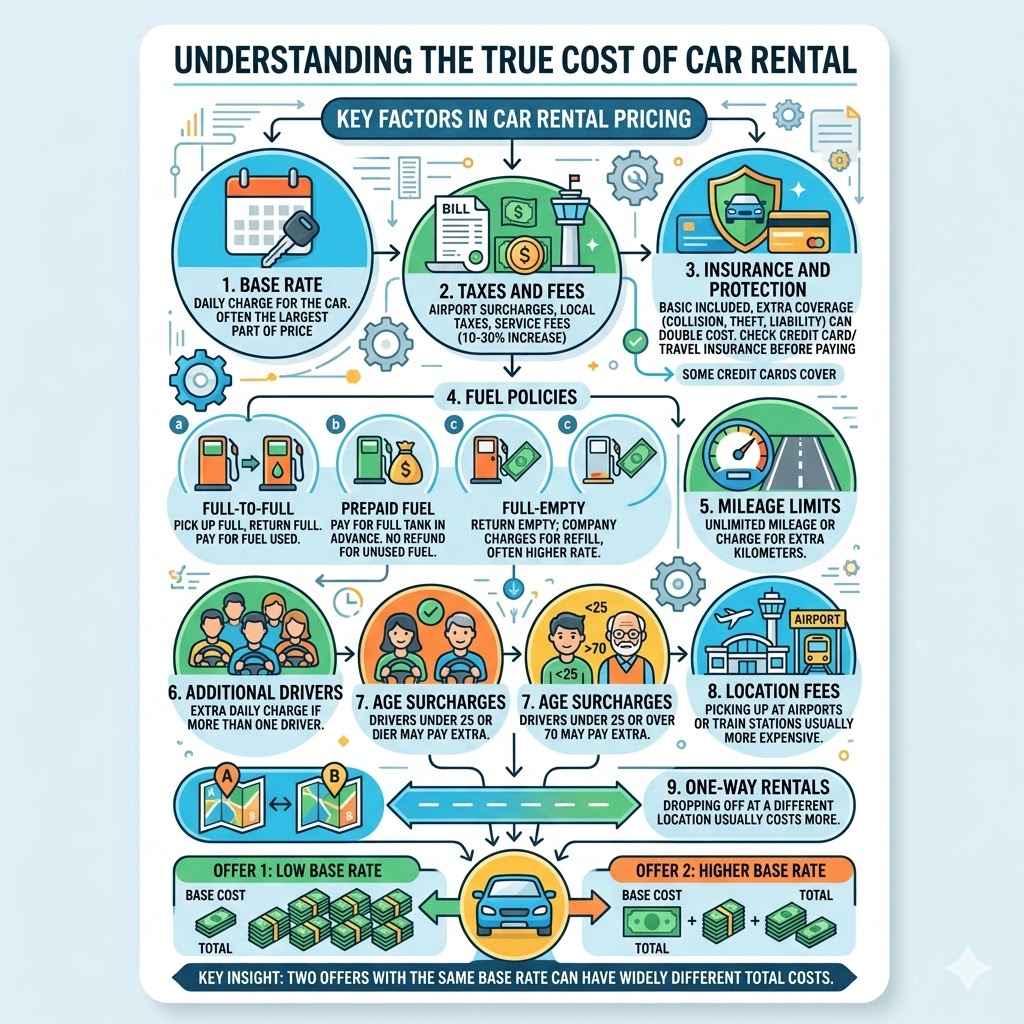
1. Base Rate
This is the daily charge for the car. It’s often the largest part of the price, but not the only one.
2. Taxes And Fees
Rental companies often add airport surcharges, local taxes, or extra service fees. These can increase your total bill by 10–30%.
3. Insurance And Protection
Basic insurance may be included, but extra coverage (collision, theft, liability) can double the cost. Some credit cards or travel insurance already cover you, so check before paying more.
4. Fuel Policies
Common options are:
- Full-to-full: Pick up and return with a full tank. You pay only for the fuel you use.
- Prepaid fuel: Pay for a full tank in advance. No refund for unused fuel.
- Full-to-empty: Return empty; company charges for a refill, often at a higher rate.
- Mileage Limits
Some rentals offer unlimited mileage, others charge for extra kilometers.
6. Additional Drivers
If more than one person will drive, there’s often an extra daily charge.
7. Age Surcharges
Drivers under 25 or over 70 may pay extra.
8. Location Fees
Picking up at airports or train stations is usually more expensive due to extra fees.
9. One-way Rentals
Dropping off at a different location usually costs more.
Key Insight: Two offers with the same base rate can end up costing very different amounts. Always check the full price breakdown before booking.
How To Start Your Car Rental Search
Finding the best car rental price starts with knowing where and how to look. Here’s how to begin:
Use Major Comparison Websites
Start with large booking websites that compare prices from many companies. These include:
- Kayak
- Expedia
- Rentalcars.com
- Skyscanner
These sites make it easy to see prices from many brands, but always double-check details before booking.
Check Direct Company Websites
Sometimes, rental companies offer better deals or extra perks on their own site. Popular brands include:
- Hertz
- Avis
- Enterprise
- Europcar
- Sixt
It’s worth taking a few minutes to check the same dates on both comparison sites and the company’s own website.
Try Local Companies
Smaller local companies may offer lower prices or better service. They might not show up on big search engines, so search for “car rental + city” and check reviews.
Pro Tip: Local companies may have older cars, but if you don’t mind, you can save a lot.
Comparing Rental Offers: What To Look For
When you have several offers, don’t just look at the total price. Compare these important details:
Vehicle Type And Size
A compact car is usually cheaper than an SUV or minivan. But sometimes, larger cars are discounted if there’s low demand.
Inclusions And Extras
Carefully read what’s included:
- Is basic insurance provided?
- Is there unlimited mileage?
- Are road taxes and airport fees included?
- Does the offer include GPS, child seats, or other extras?
Payment And Cancellation Policies
Some Offers Are “pay Now,” Others “pay At Counter.”
- “Pay now” is often cheaper but may be non-refundable.
- “Pay at counter” is flexible but costs a bit more.
Check cancellation fees before booking.
Insurance Coverage
Rental companies sell extra insurance. But many credit cards or travel insurance policies already cover rentals. Call your card company or insurer to check what’s included.
Non-obvious Insight: If you buy extra insurance from a third-party site (like Booking.com), you may still need to leave a deposit at the rental desk.
Fuel And Mileage Policies
- Unlimited mileage is important for long trips.
- Full-to-full fuel policy is usually cheapest.
Location And Hours
Check where the rental office is. Some are inside the airport, others require a shuttle bus. Also, see if you’re arriving outside their opening hours—there may be late pick-up fees.
Using Data Tables To Compare Offers
When you’re comparing several rental offers, a simple table helps you see differences quickly. Here’s an example with three rental options for a 3-day trip in Barcelona:
| Company | Base Rate (€) | Total Price (€) | Insurance Included | Fuel Policy | Mileage | Extras |
|---|---|---|---|---|---|---|
| Hertz | 90 | 140 | Basic | Full-to-full | Unlimited | GPS €10/day |
| Sixt | 85 | 135 | None | Prepaid | 500 km limit | Child seat €15 |
| LocalRent | 80 | 110 | Basic | Full-to-full | Unlimited | Free additional driver |
You can see that the lowest base rate is not always the lowest total price. Also, different extras and policies can make a big difference.
Understanding Insurance Options
Insurance is one of the most confusing—and expensive—parts of car rental. Here’s what you need to know:
Main Types Of Car Rental Insurance
1. Collision Damage Waiver (cdw)
Limits your responsibility if the car is damaged, but usually has an excess (deductible). Not always “full” insurance.
2. Theft Protection
Covers you if the car is stolen, also with an excess.
3. Third-party Liability
Covers damage to other cars or property.
4. Super Cdw / Zero-excess
Removes or reduces the excess. Expensive, but gives peace of mind.
5. Personal Accident Insurance
Covers medical costs for you and passengers.
Should You Buy Extra Insurance?
- If your credit card or travel insurance already covers rental cars, you may not need extra.
- If you want zero excess, consider buying “Super CDW” from the rental company, or much cheaper third-party excess insurance online.
Non-obvious Insight: If you refuse all extra insurance, you will need to leave a large deposit (sometimes €1,000+) on your credit card.
Tip: Always bring a credit card in the main driver’s name. Most companies won’t accept debit cards for the deposit.
How To Save Money When Comparing Car Rental Prices
Everyone wants a good deal. Here are the best ways to save when comparing car rentals:
1. Book Early
Prices rise as the rental date gets closer, especially in busy seasons.
2. Avoid Airport Pickup
Airport locations often charge extra fees. City offices can be cheaper.
3. Check For Coupons And Discount Codes
Many companies offer online coupons, especially for longer rentals.
4. Consider Week-long Rates
Sometimes, renting for a full week is cheaper than five or six days.
5. Return The Car On Time
Late return fees can be very high—even for 1 hour late.
6. Bring Your Own Extras
Bring your own GPS or child seat instead of paying daily rental fees.
7. Compare Fuel Policies
Full-to-full is often cheapest, as you pay only for what you use.
8. Check Mileage Allowance
Unlimited mileage is best if you plan to drive a lot.
9. Avoid Under-25 Or Senior Surcharges
If possible, choose a driver in the “safe” age range (usually 25–70).
10. Check Credit Card Benefits
Some credit cards offer free rental insurance—call to confirm.
Understanding One-way Rentals And International Travel
One-way Rentals
If you pick up your car in one city and drop it in another, there is usually a one-way fee. This can be €30 to €150, or even more for crossing countries.
International Border Crossings
Not all rental companies allow you to take cars across borders. If you plan to cross, always check:
- Is cross-border travel allowed?
- Is extra insurance required?
- Are there extra fees?
Example: Renting in Germany and driving to Poland may cost €40 extra, or not be allowed at all.
Picking The Right Car Class And Size
Common Car Classes
- Mini/Compact: Cheapest, good for city driving, small luggage space.
- Economy: Slightly bigger, more comfortable for longer drives.
- Intermediate: Room for 4–5, more luggage.
- Full-size/Standard: Best for families, long trips.
- SUV/Minivan: Expensive, but needed for large groups or rough roads.
Tip: Pick the smallest car that fits your needs. Upgrades at the counter are often more expensive than booking online.
Example: Car Size Vs. Price
| Car Type | Seats | Luggage | Daily Price (€) |
|---|---|---|---|
| Mini (Fiat 500) | 4 | 2 small bags | 18 |
| Economy (VW Polo) | 5 | 2 large, 1 small | 22 |
| Compact (Ford Focus) | 5 | 3 large | 25 |
| SUV (Nissan Qashqai) | 5 | 4 large | 35 |
Bigger cars cost more. If you don’t need the space, choose a smaller model.
Reading The Fine Print
Many people get caught by hidden fees or strict rules in the rental contract. Always read the full terms before you book.
What To Check In The Terms
- Deposit Amount: How much is blocked on your card?
- Excess/Deductible: How much do you pay if there’s damage?
- Fuel Policy: Do you need to return full?
- Mileage Limit: Is there a daily or total limit?
- Late Return Fees: How much per hour/day?
- Out-of-Hours Fees: Is there a charge for late pickup/drop-off?
- Cleaning Fees: Is an extra fee for dirty cars?
- Age Restrictions/Surcharges: For young or senior drivers.
Tip: Take photos of the car when you pick up and drop off. This helps if there is a dispute about damage.
Booking Tips For Different Destinations
Europe
- Manual cars are cheaper than automatics.
- Many cities have low-emission zones—check if your car is allowed.
- Cross-border rentals may need extra insurance.
Usa
- Automatic is standard, manual cars are rare.
- Unlimited mileage is common.
- Third-party insurance is usually needed for non-US renters.
Asia
- Local companies can be much cheaper, but check reviews and insurance.
- International Driving Permit (IDP) is often required.
Australia/new Zealand
- Long distances: Unlimited mileage is important.
- Check for one-way fees if driving between cities.
Advanced Comparison: Loyalty Programs And Credit Cards
Some rental companies have loyalty programs. If you rent often, joining can get you:
- Discounts on future rentals
- Free upgrades
- Faster pick-up and return
Some credit cards offer extra benefits, like free additional driver or priority service. Call your bank to ask.
Non-obvious Insight: If you belong to an airline frequent flyer program, you may earn extra miles by booking with partner car rental companies.
Checking Reviews And Reputation
Price isn’t everything. A cheap company with poor service can ruin your trip. Check:
- Customer reviews on Google, Trustpilot, or TripAdvisor.
- Ratings for pick-up/drop-off speed, car condition, and refund process.
Example: Some companies are known for aggressive damage claims. If many reviews mention “extra charges” or “deposit not returned,” consider paying a bit more for a trusted brand.
What To Do At Pick-up And Drop-off
At Pick-up
- Inspect the car carefully for scratches or damage.
- Take photos and video of all sides, wheels, and interior.
- Make sure all damage is noted on the contract.
- Check fuel level matches the contract.
At Drop-off
- Return the car with the agreed fuel level.
- Take photos again to prove the car’s condition.
- Ask for a final invoice and confirmation that your deposit will be returned.
Pro Tip: Drop off during office hours if possible. If you use a key drop box, take photos and keep the paperwork.
Real-world Example: Total Cost Comparison
Let’s compare two offers for a 4-day rental in Rome, Italy, for a 30-year-old driver:
| Company | Base Rate (€) | Airport Fee (€) | Insurance (€) | Additional Driver (€) | Fuel Policy | Total (€) |
|---|---|---|---|---|---|---|
| Europcar | 80 | 40 | 60 | 32 | Full-to-full | 212 |
| LocalRent | 100 | 0 | 0 | 0 | Full-to-full | 100 |
The cheaper “base rate” offer ends up costing more due to extra fees and insurance. Always calculate the real total before booking.
Common Mistakes When Comparing Car Rental Prices
1. Ignoring Extra Fees
Only looking at the daily rate can lead to surprises.
2. Not Checking Insurance
Paying twice for coverage you already have, or being left unprotected.
3. Booking The Wrong Car Size
Too small = uncomfortable; too large = expensive and harder to park.
4. Missing Fuel Policy Details
Returning with less fuel can cost double what you’d pay at a gas station.
5. Overlooking Mileage Limits
Extra kilometers can be very expensive.
6. Not Reading The Terms
Skipping the fine print leads to costly mistakes.
7. Trusting Only Big Brands
Sometimes, local companies offer better value and service.
8. Not Taking Photos
Hard to prove you returned the car in good condition.
When To Book For The Best Price
- 2–4 weeks before travel is often the sweet spot for best rates.
- For popular destinations (summer holidays, big cities), book earlier—prices rise fast.
- Last-minute deals are rare and risky.
Pro Tip: Set price alerts on comparison sites to watch for drops.
Useful Resources
If you want to learn more about car rental insurance or read about global policies, check the Wikipedia Car Rental page.

Frequently Asked Questions
What Documents Do I Need To Rent A Car?
You usually need a valid driver’s license, credit card (in the main driver’s name), and sometimes an international driving permit (IDP) if your license is not in Roman alphabet. Some companies ask for your passport, especially abroad.
Can I Rent A Car With A Debit Card?
Most companies require a credit card for the deposit. Some allow debit cards, but you may need extra documents or buy their insurance. Always check with the company before booking.
Is It Cheaper To Book Car Rental In Advance Or Last Minute?
Booking in advance (2–4 weeks before) is almost always cheaper, especially in busy seasons. Last-minute prices are usually higher, and car selection is limited.
What Should I Do If I Get A Traffic Ticket With A Rental Car?
Pay the ticket directly if possible. If not, the rental company will charge you an administration fee (often €30–50) on top of the fine. Always check local traffic laws before driving.
Can I Take A Rental Car Across Country Borders?
Some companies allow it, some don’t. You may need to pay extra, and special insurance may be required. Always ask before booking and check the contract.
Comparing car rental prices is more than just finding the lowest number. Once you know what to look for, you can avoid hidden fees, choose the right insurance, and get the best deal for your needs. With these tips, you’ll book your next car rental with confidence and enjoy your journey without surprises.
Related pick: Check today's price on Amazon