
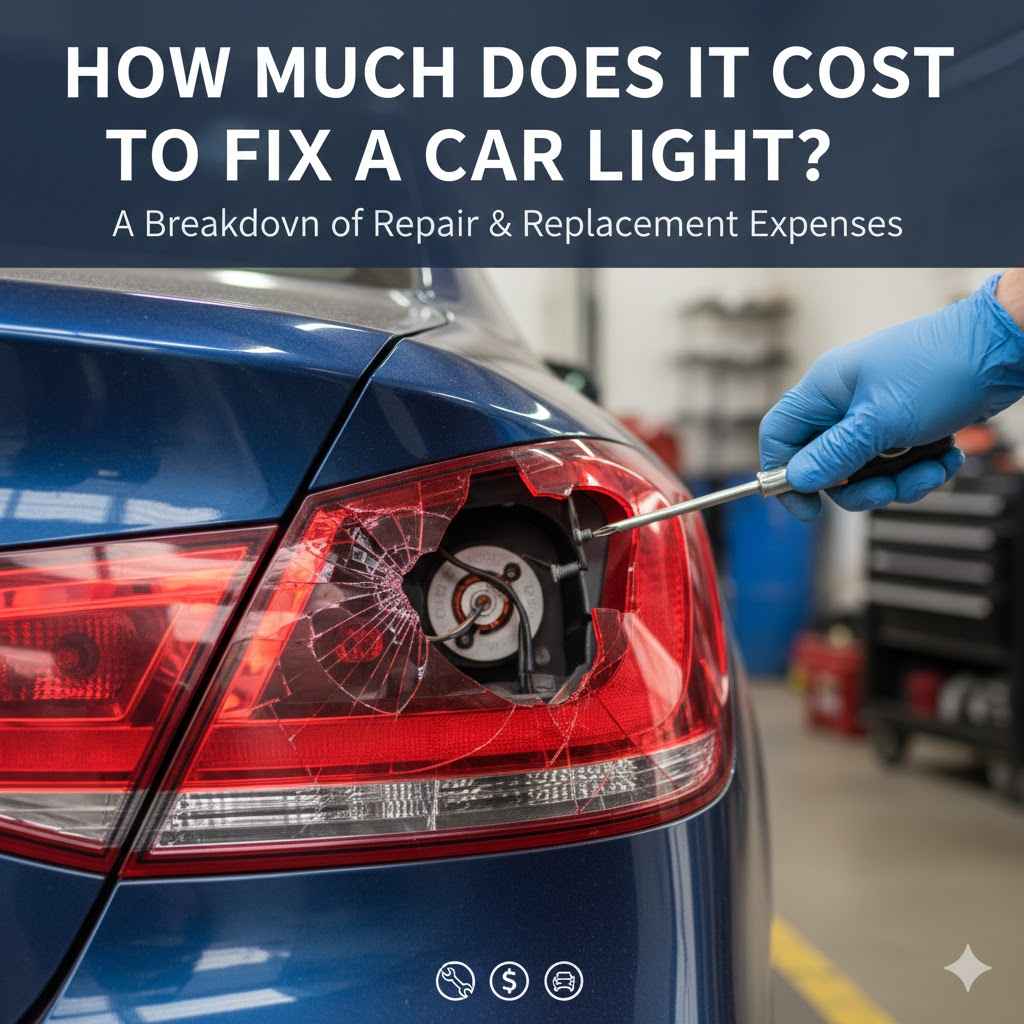
Figuring out the cost to fix a car light can feel a bit tricky, especially if you’re new to car stuff. You might wonder, “How much does it cost to fix a car light?” because it’s a common problem. Lights can go out for simple reasons or more complex ones.
Don’t worry, though! This guide will break it down simply, step by step. We’ll help you understand the costs and what to expect so you can get your car’s lights working again without any fuss.
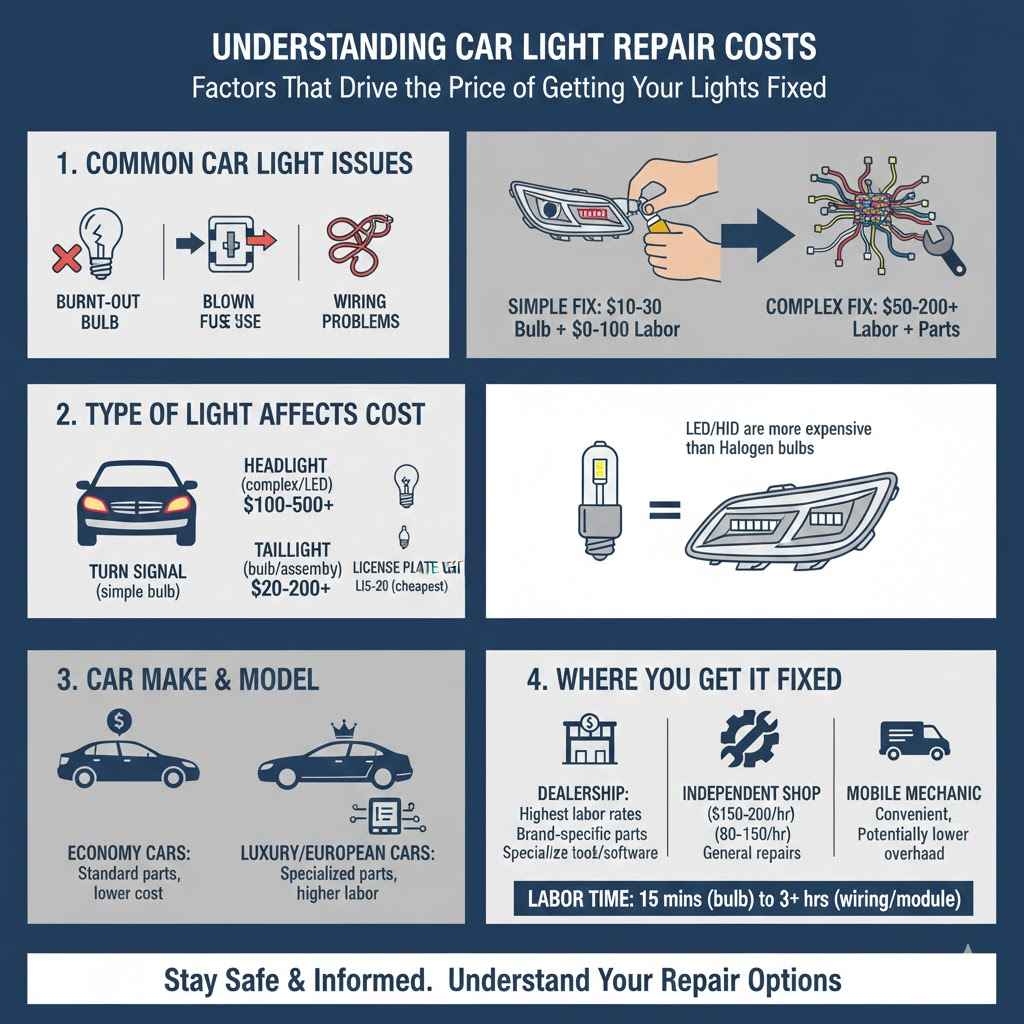
Understanding Car Light Repair Costs
When your car’s lights aren’t working right, it’s not just annoying, it can be a safety issue. Knowing how much it costs to fix a car light helps you budget and plan. The price can change a lot depending on what part needs fixing.
It could be a simple bulb replacement or something more involved like wiring issues. This section looks at the main reasons why costs vary and what factors play a role in the final bill. We will explore the different types of lights on your car and how their repair costs can differ.
Common Car Light Issues and Their Causes
Car lights are vital for safety, letting you see the road and other drivers see you. When they fail, it’s important to know why. Often, it’s just a burnt-out bulb.
These are the most common and cheapest to fix. Sometimes, the problem is a blown fuse, which is also inexpensive to
A burnt-out bulb is like a light bulb in your house that has reached the end of its life. The filament inside breaks, and no electricity can pass through to make it light up. Fuses are like little safety devices.
They have a thin wire that melts and breaks if too much electricity flows through, protecting the car’s electrical system from damage. Switches are what you use to turn lights on and off. If a switch is bad, the signal to the light might not get through.
Damaged wiring can interrupt the flow of electricity anywhere in the circuit. Finally, modern cars use computers to control many functions, including lights. If these computers have issues, it can cause lights to malfunction in strange ways.
Bulb Replacement
Replacing a car light bulb is often the simplest and least expensive repair. Most cars have bulbs that are easy to access. You can often buy these bulbs at an auto parts store or even a supermarket.
The cost of a single bulb can range from about $10 to $30, depending on the type. Some bulbs are special, like HID or LED bulbs, which cost more, sometimes $50 to $100 or even more for a pair. If you can change it yourself, you save on labor costs, which can add another $30 to $100.
Fuse Replacement
If a fuse is blown, replacing it is usually very cheap. A single fuse costs less than a dollar. Your car’s owner’s manual will show you where the fuse box is and which fuse controls which light.
Replacing a fuse takes just a minute or two. If you take it to a mechanic, they might charge a small labor fee, maybe $15 to $30, on top of the fuse cost. It’s important to
Wiring and Connector Issues
Problems with wires or connectors can be more complex. Wires can get damaged by road debris, corrosion, or just wear and tear. Connectors can become loose or corroded.
Fixing these issues often involves tracing the wiring to find the problem, which takes time. Labor costs can add up quickly here. You might be looking at $50 to $200 or more just for labor, plus the cost of any new connectors or wire used.
This is where a mechanic’s expertise is really needed.
Switch and Module Problems
If the light switch itself or a control module is the issue, the cost can be higher. Switches are relatively simple parts, but replacing them might require removing dashboard panels. A new switch could cost $30 to $100.
Control modules, which are like small computers for specific car functions, are much more expensive. These can cost anywhere from $100 to $500 or more, plus significant labor costs for diagnosis and replacement.
Factors Affecting Repair Costs
Several things can make the cost to fix a car light go up or down. The type of car you drive is a big one. Luxury cars or cars with advanced lighting systems often have more expensive parts and require specialized tools, meaning higher labor costs.
The specific light that needs fixing also matters. Headlights are usually more complex and costly to repair than, say, a license plate light. The location of the problem can also influence the price.
If the issue is hard to get to, like deep inside the bumper or dashboard, it will take a mechanic longer to fix, increasing the labor charge.
The age of your car can play a part too. Older cars might have more worn-out wiring or less common parts that are harder to find. Newer cars often have more complex electronics that require specialized diagnostic equipment, which adds to the cost.
The choice of where you get the repair done is also important. Dealerships tend to be the most expensive, while independent repair shops might offer lower prices. Doing the repair yourself, if it’s a simple fix like a bulb, will always be the cheapest option.
Type of Light
Car lights aren’t all the same. You have headlights, taillights, brake lights, turn signals, and interior lights, among others. Each type can have different replacement parts and labor requirements.
For instance, a standard halogen headlight bulb might cost $20 to replace, while an LED headlight assembly could cost $300 or more. Brake lights and turn signals usually use smaller, less expensive bulbs, costing around $10 to $20 for the bulb and a few minutes of labor. License plate lights are typically the simplest and cheapest to fix.
Car Make and Model
Different car brands and models use different types of lighting systems. European luxury cars, for example, often have advanced LED or Xenon HID headlights that are significantly more expensive to replace than standard halogen bulbs found in many economy cars. The complexity of the electrical system also plays a role.
Some cars have integrated lighting modules that control multiple lights, making diagnosis and repair more involved and costly. Parts for popular car models are usually more readily available and cheaper than for rare or specialized vehicles.
Labor Rates and Time
Mechanics charge for their time, and labor rates vary by region and by shop. A dealership might charge $150-$200 per hour, while an independent shop could charge $80-$150 per hour. The time it takes to fix a light can range from 15 minutes for a simple bulb change to several hours for complex electrical troubleshooting.
This is why getting a quote beforehand is always a good idea. A simple repair might cost $50-$100 total, while a complex one could easily reach $300-$500 or more.
Location of the Repair Shop
Where you get your car fixed can influence the price. Shops in major metropolitan areas often have higher overhead costs, which they pass on to customers through higher labor rates. Rural areas might have lower rates.
Dealerships generally have the highest labor rates because they specialize in a particular brand and often use manufacturer-specific diagnostic tools and training. Independent shops can offer competitive pricing and are often a great option for general repairs like fixing car lights. Mobile mechanics are also becoming popular, offering convenience at potentially lower prices.
Average Costs for Common Car Light Repairs
Let’s break down what you might expect to pay for fixing common car light problems. These are estimates, and actual costs can be higher or lower. Understanding these ranges can help you decide if you want to tackle a repair yourself or take it to a professional.
We’ll look at the most frequent issues, from simple bulb changes to more involved electrical fixes, and provide realistic cost figures. This will give you a clear picture of how much does it cost to fix a car light for typical scenarios.
Headlight and Taillight Issues
Headlights and taillights are crucial for visibility and safety. When they fail, repairs can vary widely in cost. A simple replacement of a halogen headlight bulb is usually the most affordable option.
However, many modern cars use more advanced lighting technologies like LED or Xenon HID. These systems are significantly more expensive to repair. A single LED headlight bulb might cost $50-$150, and if the entire assembly needs replacement, it could be hundreds or even thousands of dollars.
Taillight repairs are often less expensive than headlights, but still depend on the specific bulb or module that needs replacing.
Halogen Bulb Replacement
Replacing a standard halogen headlight bulb is usually a straightforward job. The bulb itself typically costs between $15 and $30. If you have the knowledge and tools, you can do this yourself in about 15-30 minutes, saving on labor.
If you take it to a mechanic, expect to pay for about 0.5 to 1 hour of labor, which could add $40 to $100 to the total cost. So, the total for a halogen bulb replacement could range from $55 to $130.
LED or HID Bulb/Assembly Replacement
LED and HID (High-Intensity Discharge) lighting systems are more advanced and thus more expensive. A single LED or HID bulb can cost $50 to $200. Replacing an entire headlight assembly, which might be necessary if the housing is damaged or the integrated LED unit fails, can be a major expense.
These assemblies can cost anywhere from $200 to $1000 or more per side, depending on the car. Labor for these more complex replacements can also be higher, ranging from $100 to $300 or more due to the intricate nature of the installation and required calibration.
Taillight Bulb or LED Module
Taillights usually have multiple bulbs or a single LED module. Replacing a single taillight bulb is similar to replacing a turn signal bulb, costing around $10-$20 for the bulb. Labor, if needed, might be $20-$50.
If your car has an LED taillight assembly, and a section of it fails, it might require replacing the whole unit. This can range from $100 to $400 for the part, plus labor.
Brake Light and Turn Signal Issues
Brake lights and turn signals are critical for signaling your intentions to other drivers. Malfunctions here need prompt attention. The good news is that these are typically among the cheaper repairs.
Most cars use standard incandescent bulbs for these functions, which are inexpensive. The main cost here is usually the bulb itself and a small amount for labor if a mechanic does the work.
Bulb Replacement for Brake Lights and Turn Signals
The bulbs for brake lights and turn signals are usually standard, inexpensive parts. You can expect to pay $5 to $15 for a single bulb. Many cars allow for easy access to these bulbs from the trunk or by removing a small panel.
If you change it yourself, the total cost is just the bulb price. A mechanic might charge 0.5 hours of labor, which could be $40 to $75, bringing the total to $45 to $90.
Socket or Wiring Issues
Sometimes, the bulb is fine, but the socket it plugs into is corroded or damaged, or there’s a wiring problem. Fixing these can be more expensive than just replacing a bulb. A mechanic will need to clean or replace the socket and repair any damaged wires.
This type of repair could cost $50 to $150, depending on the extent of the damage and how long it takes to diagnose and fix.
Interior Light and Dashboard Light Issues
Interior lights, like dome lights and reading lights, and dashboard warning lights are also important. While interior light issues are usually less critical for safety, dashboard warning lights can indicate serious problems. The cost for these repairs can vary significantly.
Interior Bulb Replacement
Replacing bulbs for interior lights is typically very simple and cheap. These are often small incandescent bulbs that cost just a few dollars each. Access is usually easy.
If you’re comfortable, you can do it yourself for under $10. Even a mechanic would likely charge minimal labor, so the total cost would probably be under $30.
Dashboard Warning Lights
When a dashboard warning light comes on, it signals a potential problem that needs attention. The cost to diagnose and fix these can range greatly. It might be a simple issue like a faulty sensor, costing $100-$300.
Or, it could point to a more serious system failure, like a transmission problem or engine issue, leading to repair costs of hundreds or even thousands of dollars.
Example: A Common Headlight Repair Scenario
Let’s say your passenger-side headlight bulb went out.
- Diagnosis: You suspect it’s a burnt-out bulb.
- DIY Option: You buy a new halogen bulb for $20. You spend 20 minutes figuring out how to access the bulb and replace it yourself. Total Cost: $20.
- Shop Option (Simple Bulb): You take it to an independent mechanic. They confirm it’s a blown bulb,
- Shop Option (Complex System): Your car has an LED headlight. The bulb itself costs $100. The mechanic finds that the entire headlight module needs to be replaced, which costs $300. They charge for 1.5 hours of labor to install it and ensure it’s properly aligned. Total Cost: $100 (bulb) + $300 (module) + $150 (labor) = $550.
DIY vs. Professional Repair for Car Lights
Deciding whether to fix your car lights yourself or hire a professional depends on your comfort level with car maintenance, the complexity of the issue, and your budget. Some fixes are so simple that anyone can do them, saving you money. Others require specialized tools, knowledge, or diagnostic equipment that only a mechanic has.
This section will help you weigh the pros and cons of each approach and guide you toward the best decision for your specific situation, answering the question “How Much Does It Cost to Fix a Car Light?” based on your choice.
When to Consider a DIY Repair
If the problem is a simple bulb replacement, especially for headlights, taillights, or interior lights, you can likely do it yourself. Many cars are designed so that you can easily access these bulbs by opening the hood, trunk, or removing a small panel. You’ll need to identify the correct replacement bulb, which can be found in your car’s owner’s manual or by checking the old bulb.
Tools needed are usually basic, like a screwdriver or socket wrench. Doing it yourself can save you the entire labor cost, which can be $50 to $150 or more.
For example, changing a license plate light bulb or a brake light bulb is often a quick, 10-minute job. You just need the right bulb and perhaps a small screwdriver. The cost would be minimal, just the price of the bulb.
Similarly, replacing a burnt-out dome light bulb requires no special skills. It’s a great way to save money if you’re willing to spend a little time learning. Always consult your owner’s manual for specific instructions for your vehicle.
Simple Bulb Replacements
For most incandescent bulbs used in headlights, taillights, brake lights, turn signals, and interior lights, a DIY replacement is very feasible. The cost of bulbs ranges from $5 to $30. Your car’s owner’s manual will guide you on how to access the bulb housing.
Typically, this involves opening the hood or trunk, locating the light assembly, and either twisting a socket or releasing a clip to remove the old bulb and insert the new one. No specialized tools are usually needed beyond a screwdriver or a pair of pliers. The time commitment is usually between 10 minutes and an hour.
Fuse Replacement
Replacing a blown fuse is one of the easiest DIY repairs. Fuses are inexpensive, costing less than a dollar each. Your car’s fuse box is usually located under the dashboard or in the engine bay.
The owner’s manual will have a diagram identifying which fuse controls which circuit. You simply pull out the blown fuse with a fuse puller (often found in the fuse box or a cheap tool) and push in a new one of the same amperage. This takes less than five minutes.
Benefits of DIY Repair
- Cost Savings: The most significant advantage is saving money on labor costs. This can often double or triple the price of a repair. For a simple bulb replacement, you might save $50-$150 by doing it yourself.
- Learning and Empowerment: Tackling basic car maintenance builds confidence and a better understanding of your vehicle. This knowledge can help you identify problems sooner and potentially prevent future issues.
- Convenience: You can perform the repair on your own schedule, without needing to book an appointment at a shop. This is especially helpful if the repair is minor and you have the parts on hand.
When to Call a Professional Mechanic
More complex issues require professional help. If your car has LED or HID lighting systems, specialized diagnostic tools are often needed. These systems can have integrated control modules that are tricky to replace.
Electrical problems, like faulty wiring or corroded connectors, also require the expertise of a mechanic to trace and fix safely and effectively. Dashboard warning lights are another signal that it’s time to see a professional, as they can indicate a wide range of serious issues that need accurate diagnosis.
For instance, if your car’s anti-lock braking system (ABS) light comes on, it’s not just a light bulb issue; it’s a complex safety system that needs expert attention. Similarly, if multiple lights are malfunctioning or you’re experiencing intermittent electrical problems, a mechanic has the advanced diagnostic equipment to pinpoint the root cause. Attempting these repairs yourself without the right knowledge could lead to further damage or safety hazards.
Complex Electrical Issues
When dealing with issues beyond simple bulb or fuse replacements, professional help is essential. Complex electrical problems might involve damaged wiring harnesses, faulty sensors, or malfunctioning control modules. These require specialized diagnostic tools like multimeters and oscilloscopes to test circuits and identify shorts, opens, or incorrect voltage.
Mechanics have the training to interpret diagnostic codes from the car’s computer and follow wiring diagrams accurately. Improper repair of electrical systems can lead to fire hazards or damage to other vehicle components.
Advanced Lighting Systems (LED, HID, Xenon)
Modern cars increasingly use LED, HID, or Xenon lighting. These systems are not as simple as swapping a bulb. They involve ballasts, igniters, and sophisticated control modules.
Replacing a faulty LED headlight assembly, for example, might require removing the bumper or other body panels. The new assembly often needs to be calibrated using specialized equipment to ensure proper beam alignment and function. The cost of these components and the labor involved make professional installation the recommended route.
Dashboard Warning Lights
Dashboard warning lights are a direct communication from your car’s computer about a potential problem. While some lights are simple reminders (like low washer fluid), others indicate critical system failures (like low oil pressure or engine malfunction). Attempting to diagnose and fix these without proper training and diagnostic equipment can be dangerous and lead to costly mistakes.
A mechanic can connect their diagnostic scanner to read the error codes, which point them towards the specific system or component that is failing.
Benefits of Professional Repair
- Expert Diagnosis: Mechanics have the training and tools to accurately identify the problem, even if it’s not obvious. This saves you from guessing and potentially fixing the wrong thing.
- Proper Tools and Equipment: For complex repairs, mechanics have specialized tools that ensure the job is done correctly and safely. This includes diagnostic scanners, calibration equipment, and specialized wrenches.
- Warranties and Guarantees: Most reputable repair shops offer a warranty on their parts and labor. This gives you peace of mind that if something goes wrong after the repair, they will fix it.
Tools and Materials for DIY Light Repair
If you decide to take on a DIY light repair, having the right tools and materials makes the job easier and safer. For most simple bulb changes, you’ll need a few basic items. Always start by checking your car’s owner’s manual.
It will specify the type of bulb needed and may even have basic instructions. Purchasing the correct replacement bulb is the most critical step.
Beyond the bulb, a set of basic screwdrivers (Phillips and flathead) is often necessary to remove trim panels or light housings. Pliers can be helpful for gripping stubborn connectors. A socket set might be needed for some housing bolts.
For fuse
Essential Tools
- Screwdriver Set: A variety of Phillips and flathead screwdrivers are essential for removing trim pieces and accessing light housings.
- Socket Set: Some light assemblies are secured with bolts that require specific socket sizes.
- Pliers: Needle-nose pliers are useful for gripping small parts, disconnecting wire harnesses, or removing fuses if a fuse puller isn’t available.
- Fuse Puller: A small plastic tool designed to safely extract fuses from the fuse box without damaging them or the socket.
- Owner’s Manual: Crucial for identifying the correct bulb type, fuse location, and specific procedures for your vehicle.
Replacement Parts
- Correct Bulbs: Ensure you purchase the exact bulb type specified for your vehicle and the specific light function (e.g., headlight, brake light). These are often labeled with codes like H4, 9005, or 1157.
- Dielectric Grease (Optional but Recommended): Applying a small amount of dielectric grease to the electrical contacts of new bulbs can prevent corrosion and ensure a good connection, extending the bulb’s life.
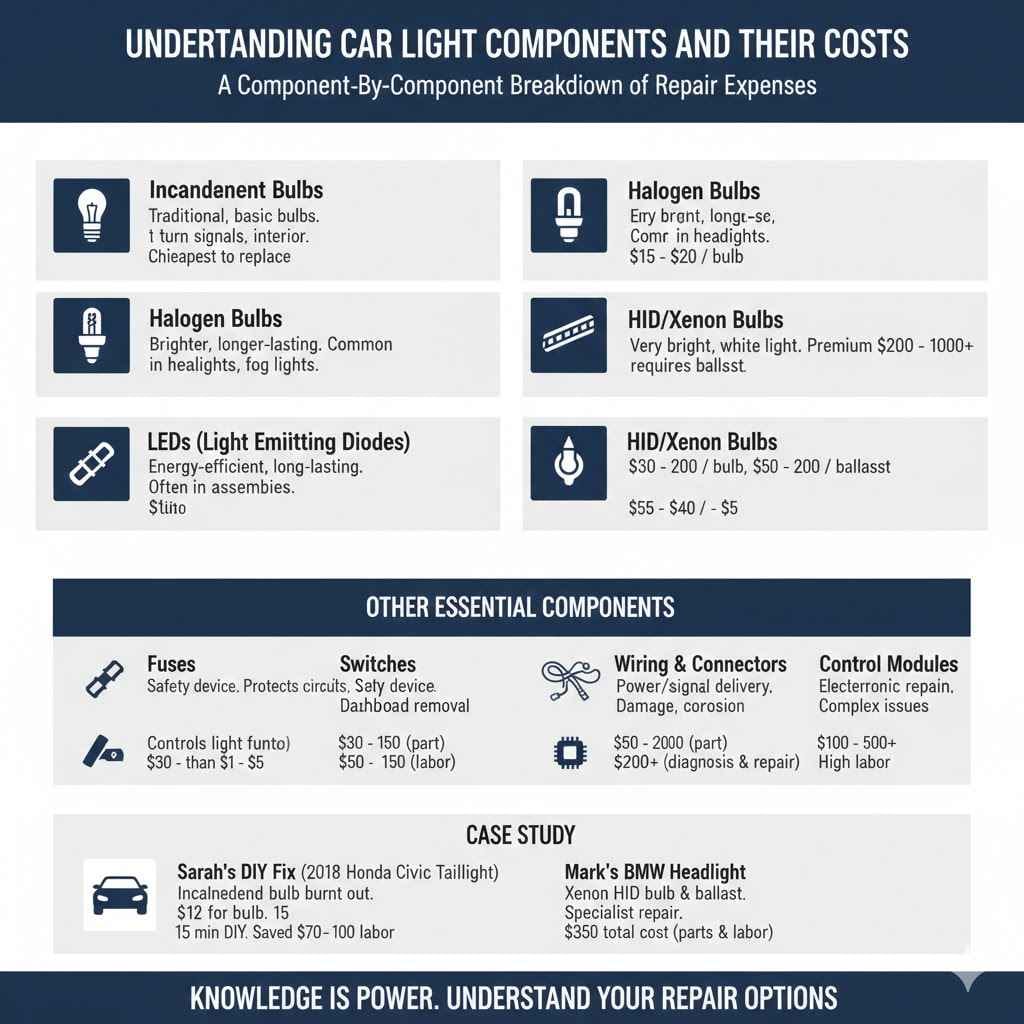
Understanding Car Light Components and Their Costs
The cost to fix a car light depends heavily on which component is failing. Different parts have vastly different price tags, from a few dollars for a basic bulb to hundreds for an electronic control module. Knowing the different parts involved can help you understand why repair estimates vary so much.
This section breaks down the common components of a car’s lighting system and what you can expect to pay for them. This helps you get a clearer picture of “How Much Does It Cost to Fix a Car Light?” by looking at the parts themselves.
Light Bulbs
Light bulbs are the most common part to fail in a car’s lighting system. They have a lifespan and will eventually burn out. The cost varies significantly based on the type of bulb technology.
From simple incandescent bulbs to high-tech LEDs, the price range is wide.
Incandescent Bulbs
These are the most traditional type of bulb, using a filament that heats up to produce light. They are found in many older vehicles and are used for brake lights, turn signals, and some interior lights. Incandescent bulbs are the cheapest to replace.
Cost: $5 – $20 per bulb.
Halogen Bulbs
An upgrade from standard incandescent bulbs, halogen bulbs are common in headlights and fog lights. They produce brighter light and last longer.
Cost: $15 – $40 per bulb.
LEDs (Light Emitting Diodes)
LEDs are becoming increasingly standard, especially in newer vehicles. They are energy-efficient, long-lasting, and produce very bright light. Often, LEDs are integrated into the headlight or taillight assembly, meaning if one part fails, the whole assembly might need replacement.
Cost: $30 – $150 per bulb (if replaceable), $200 – $1000+ for an entire assembly.
HID/Xenon Bulbs
High-Intensity Discharge (HID) or Xenon bulbs produce a very bright, white light and are often found in premium or performance vehicles. They require a ballast to operate.
Cost: $50 – $200 per bulb. Ballasts can add another $50 – $200.
Fuses
Fuses are safety devices that protect electrical circuits from overcurrents. They are inexpensive but critical. If a fuse blows, the component it protects, like a headlight or taillight, will stop working.
Cost: Less than $1 – $5 per fuse.
Switches
Light switches (e.g., headlight switch, turn signal lever) control the flow of electricity to the lights. If a switch is faulty, the lights may not turn on or may not function correctly.
Cost: $30 – $150 for the switch itself. Labor to replace can add $50 – $150.
Wiring and Connectors
The wiring harness carries electrical power and signals to the lights. Connectors link the wires to the bulbs and other components. Damage, corrosion, or loose connections can cause lights to fail.
Cost: $50 – $200+ for diagnosis and repair, depending on the extent of the damage and complexity.
Control Modules
Modern vehicles use electronic control modules (ECMs or computers) to manage various functions, including lighting. If a lighting control module fails, it can cause widespread lighting issues.
Cost: $100 – $500+ for the module, plus significant labor costs for diagnosis and programming.
Case Study: Fixing a Malfunctioning Taillight
Sarah noticed her right taillight wasn’t working. She drives a 2018 Honda Civic. She checked her owner’s manual and saw that the taillight bulb was a standard type that she could replace herself.
- Sarah purchased a replacement bulb from an auto parts store for $12.
- She followed the instructions in her owner’s manual, which involved opening the trunk, removing a small plastic cover, and twisting a socket to release the old bulb.
- She inserted the new bulb and reassembled the cover. The whole process took about 15 minutes.
- Total Cost: $12 for the bulb. She saved an estimated $70-$100 in labor costs by doing it herself. This is a clear example of how understanding the issue can lead to significant savings.
Another scenario involved a driver named Mark. He noticed his headlights were dim. He drives a 2020 BMW 3 Series, which uses Xenon HID headlights.
- Mark first checked the fuses, which were fine. He then looked up the cost of Xenon bulbs for his car, which were around $80 each.
- He contacted a local independent BMW specialist. The mechanic diagnosed that one of the Xenon bulbs was failing and that the ballast might also be an issue.
- The quote for replacing one Xenon bulb and the ballast was $350. He decided to proceed with the repair.
- The mechanic replaced the bulb and ballast, performed a headlight alignment, and charged him for 1.5 hours of labor.
- Total Cost: $350 for the repair. This illustrates how the technology and labor involved in premium vehicles significantly increase the cost compared to simpler repairs.
Frequently Asked Questions
Question: How much does it typically cost to replace a headlight bulb?
Answer: For a standard halogen headlight bulb, you can expect to pay $15-$40 for the bulb. If you do it yourself, that’s your total cost. If a mechanic replaces it, add $40-$100 for labor, bringing the total to $55-$140.
For LED or HID bulbs, costs are significantly higher, often $50-$200 for the bulb alone, plus more for labor.
Question: Is it cheaper to fix car lights yourself or at a shop?
Answer: For simple fixes like replacing standard bulbs or fuses, doing it yourself is much cheaper, saving you significant labor costs. For complex electrical issues or advanced lighting systems, professional repair is often necessary and might be safer and more cost-effective in the long run.
Question: What is the most expensive car light repair?
Answer: The most expensive car light repairs usually involve replacing entire LED or Xenon HID headlight assemblies, especially on luxury or high-performance vehicles. These can cost hundreds or even thousands of dollars due to the high price of the components and the specialized labor required for installation and calibration.
Question: Why did my car light suddenly stop working?
Answer: A car light can suddenly stop working for several reasons. The most common is a burnt-out bulb. Other possibilities include a blown fuse, a loose or corroded connection, a faulty switch, or a problem with the car’s electrical system or control module.
A professional diagnosis is often needed to pinpoint the exact cause.
Question: How long does it take to fix a car light?
Answer: The time to fix a car light varies greatly. Replacing a simple bulb or fuse can take 10-30 minutes. More complex issues, such as diagnosing wiring problems or replacing an entire headlight assembly, can take anywhere from 1 to several hours.
Summary
The cost to fix a car light varies widely, from under $10 for a DIY bulb change to over $1000 for complex LED headlight replacements. Simple issues like burnt-out bulbs or fuses are inexpensive and often DIY-friendly. More advanced systems and electrical problems require professional attention, increasing labor and part costs.
Always consider the type of light, your car’s make and model, and the complexity of the issue when estimating repair expenses.