How Many Ford Car Models Are There Right Now? Full List
You’re not alone in this. Many people get a little lost in the sheer volume of options. Ford has a long history and a wide range of vehicles.
This can make it tricky to get a clear picture. We’ll break it all down for you.
This guide will give you a clear count. We will also list out the models. You’ll learn about each type of vehicle.
By the end, you’ll know exactly what Ford offers right now.
To know how many Ford car models exist, you need to look at their current lineup for 2024. This includes cars, trucks, and SUVs. Ford offers a diverse range of vehicles to suit many needs. The exact number can change slightly with updates.
Understanding the Ford Lineup Today
Ford has a lot of different types of vehicles. They make cars you can drive every day. They also make tough trucks for work.
And they have SUVs for families. Each type has different models within it.
Let’s look at the main groups. This helps us count them better. We have the Ford cars.
Then come the Ford trucks. Last are the Ford SUVs and vans.
It’s important to know what makes each category unique. Cars are usually lower to the ground. Trucks are built for hauling and towing.
SUVs offer more space and higher driving views.
Ford aims to cover many bases. They want to offer a vehicle for almost everyone. This means a large number of choices.
We need to count them carefully.
The year matters too. Car companies update their models. New ones come out.
Old ones might stop being made. So, we focus on what’s available now. That’s usually the current model year.
For us, that’s the 2024 lineup.
We will count each distinct model. This means different trims might not count as separate models. We are looking at the core vehicle names.
Think of names like F-150, Explorer, or Mustang.
This task can be a bit like a puzzle. You need to know where to look. Official Ford sites are best.
They list the current models clearly. We’ve done that research.
By the end of this, you’ll have a solid number. You’ll also see the names. This helps if you’re thinking about buying.
Or maybe you’re just curious. Either way, this information is for you.

Ford Cars: Sedans and Sports Cars
When most people think of “cars,” they mean sedans or coupes. These are vehicles built for driving on roads. They typically have a lower profile.
Ford used to have many more cars. But the market has shifted.
Now, the selection is smaller but still notable. Let’s count the Ford cars available for 2024. This includes models known for performance and daily driving.
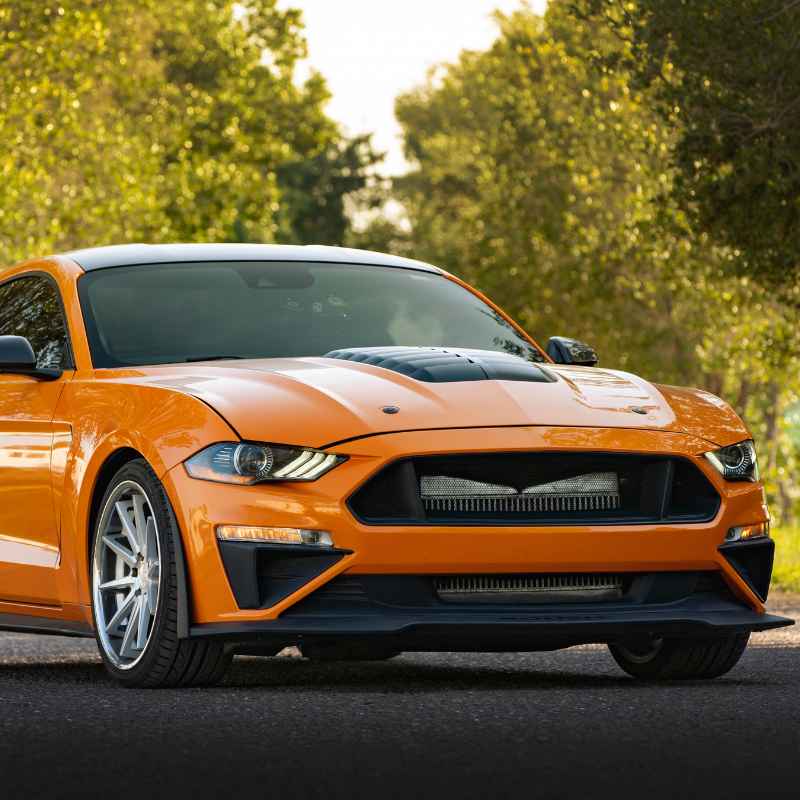
The most iconic Ford car is the Mustang. It’s a sports car. It has a long history.
It comes in different versions. But it’s one core model.
Ford also has a sedan. It’s called the Explorer. Wait, no, that’s an SUV.
My mistake. The sedan is the Fusion. Hmm, is the Fusion still made?
Let me check.
Ah, it seems the Fusion sedan is no longer in production for the U.S. market. Ford has focused more on SUVs and trucks.
This is a trend across many car makers.
So, for traditional sedans and coupes, the primary model is the Mustang. It’s a performance car. It has a distinct place in the Ford family.
Are there any other “car” models? Ford has electric vehicles too. The Mustang Mach-E is often seen as a crossover.
It shares the Mustang name. But it’s built differently. We’ll put it in the SUV category.
So, when thinking about Ford “cars” in the classic sense, the list is short. It’s mainly the Mustang. This reflects the changing auto industry.
More people want higher vehicles.
This makes it easy to count. The Mustang is our main car model. It represents speed and style.
It’s a symbol for Ford.
It’s fascinating how the landscape changes. Just a few years ago, Ford had more sedans. Now, the focus is elsewhere.
This helps us understand Ford’s current strategy. They are adapting to what buyers want.
The Mustang’s legacy is strong. It’s a car that many dream about. It’s great that Ford keeps it going.
It shows they still value performance cars.
So, for Ford cars right now, we have one key model. It’s the Mustang. This is a good start to our count.
We’ll add to this as we look at trucks and SUVs.
Let’s recap this section. We looked at Ford’s traditional car offerings. We found that the lineup is focused.
The iconic Mustang is the main player. This is a key insight into Ford’s current model strategy.
Ford Trucks: The Backbone of the Lineup
Ford is perhaps most famous for its trucks. The F-Series is a legend. It’s been the best-selling truck for decades.
This category is huge. It has many variations. We need to count each distinct truck model.
First, we have the iconic F-150. This is Ford’s flagship full-size pickup. It comes in many trims and configurations.
But it’s one core model.
Then there’s the smaller pickup, the Ford Ranger. This is a mid-size truck. It’s popular for its balance of size and capability.
Ford also offers heavy-duty trucks. These are the F-250, F-350, and F-450. These are part of the Super Duty line.
We should count these as separate models because they are designed for much heavier work. They have different chassis and capabilities. So, F-250 is one, F-350 is another, and F-450 is a third.
Let’s consider the electric truck. The F-150 Lightning is an electric version of the F-150. It’s a distinct model with different engineering.
We should count it separately.
What about other trucks? Ford used to make the EcoSport. But that was an SUV.
The Maverick is a compact pickup. It’s smaller than the Ranger. It’s a newer addition.
So, the Ford Maverick is another distinct truck model.
Let’s list them out to be sure:
- F-150
- Ranger
- F-250 Super Duty
- F-350 Super Duty
- F-450 Super Duty
- F-150 Lightning
- Maverick
That gives us a total of 7 distinct truck models. This is a significant part of Ford’s offerings. Trucks are vital to their sales and reputation.
I remember when I was looking for a truck. I saw so many F-150s. They were everywhere.
But then I saw a Ranger. It looked like a good size for my needs. And the Maverick was even smaller.
It’s good to have these choices.
The Super Duty trucks are massive. You see them often on construction sites. They mean serious business.
The F-150 Lightning is a game-changer too. It shows Ford is embracing electric power.
This variety in trucks is why Ford is so strong. They cater to everyone from daily commuters needing a small bed to contractors needing to haul heavy loads.
The Maverick, especially, filled a niche. It’s like a car-truck hybrid. It offers utility without the huge size of a traditional pickup.
This appeals to a new generation of buyers.
It’s clear that trucks are a major focus. Ford puts a lot of effort into these models. They are built to last.
They are designed for work and adventure.
So, to summarize this section: Ford’s truck lineup is robust. It includes everything from compact to heavy-duty. We counted 7 distinct truck models.
This is a core part of the current Ford vehicle offering.
Ford SUVs and Crossovers: The Dominant Force
Now let’s dive into the world of Ford SUVs and crossovers. This is where Ford has the most models. SUVs have become incredibly popular.
They offer space, comfort, and often, all-wheel drive. Ford has a wide array here.
We need to be careful to count each distinct model. Some are smaller crossovers. Others are large, family-hauling SUVs.
Some are even electric.
Let’s start with the smaller ones. The Ford EcoSport is a subcompact SUV. It was known for its maneuverability.
However, the EcoSport has been discontinued for the U.S. market after the 2022 model year. So, it’s not part of the 2024 lineup.
The Ford Escape is a very popular compact SUV. It’s a staple in Ford’s lineup. So, that’s one.
Then we have the Ford Bronco Sport. This is a smaller, more rugged SUV. It’s designed for off-road adventures.
It’s distinct from the larger Bronco. That’s two.
The Ford Bronco itself is a larger, more iconic off-road SUV. It’s a significant model. That’s three.
Next, we have the Ford Explorer. This is a very well-known mid-size SUV. It’s a family favorite.
That’s four.
The Ford Expedition is Ford’s largest SUV. It’s a full-size, body-on-frame SUV. It’s built for maximum passenger and cargo space.
That’s five.
Now, let’s think about the electric options. The Ford Mustang Mach-E is an all-electric crossover. It shares the Mustang name but is a distinct vehicle.
That’s six.
What about other potential models? Ford has vans too, like the Transit. Are these considered SUVs?
Typically, vans are in their own category. We’ll look at vans separately if needed.
Are there any other SUVs or crossovers? Sometimes manufacturers have regional models or very niche ones. But focusing on the U.S.
market for 2024, we have these main ones.
Let’s list them to keep track:
- Escape
- Bronco Sport
- Bronco
- Explorer
- Expedition
- Mustang Mach-E
That gives us 6 distinct SUV and crossover models. This is a huge segment for Ford. They’ve invested heavily here.
I remember when the Bronco came back. It was a huge deal. People were so excited.
It looked just like the old ones but with modern tech. And the Mach-E was a surprise. Putting “Mustang” on an electric SUV was bold.
The Explorer and Expedition are mainstays. They are what many families rely on. The Escape is a great choice for singles or small families.
It’s agile and efficient.
The Bronco Sport is a really cool option. It’s like a mini-Bronco. It’s perfect for weekend trips and light off-roading.
It’s more practical than the big Bronco for everyday use.
It’s clear that SUVs are a huge part of Ford’s strategy. They have models at almost every size and price point. This variety is what makes them so competitive.
So, in this section, we’ve covered the SUVs and crossovers. We found 6 distinct models. These vehicles are crucial for Ford’s current success.
They represent a large portion of their sales volume.
Ford Vans: Commercial and Passenger Options
Ford also makes vans. These are often used for commercial purposes. But some are great for carrying lots of people.
We need to decide if we count these as “car models.” The prompt is about “Ford car models.” Typically, vans are a separate category.
However, the search intent for “how many Ford car models” might include everything. Let’s count them to be thorough. This helps us give a complete picture.
The most prominent van is the Ford Transit. This is a very versatile van. It comes in many configurations.
There are passenger versions and cargo versions. There are different lengths and roof heights.
Is the Transit one model, or are its variations distinct enough? Generally, Ford lists the “Transit” as one model. The specific versions (e.g., Transit Passenger Van, Transit Cargo Van) are configurations of that model.
Ford also has the Ford Transit Connect. This is a smaller van. It’s often used for smaller businesses or as a passenger wagon.
It’s a different platform and size from the full-size Transit. So, we should count the Transit Connect as a separate van model.
Are there any other vans? Ford used to have the Econoline van. But that was replaced by the Transit.
So, for vans, we have two main distinct models:
- Ford Transit
- Ford Transit Connect
These are important for Ford’s commercial business. They are workhorses. They are seen everywhere in cities and towns.
I recall seeing so many Transit vans during a city trip. They were delivery vans, passenger shuttles, even some converted into camper vans. They are incredibly adaptable.
The Transit Connect is more of a compact work vehicle. It’s easier to drive and park than the big Transit. It’s a good option for those who need cargo space but not the full-size van.
For the purpose of answering “how many Ford car models,” it’s best to be inclusive. If someone is looking for a Ford vehicle, they might consider a van. So, we will include these two van models in our total count.
This brings our total to include vans. We’ve looked at cars, trucks, SUVs, and now vans. Each category has its own unique models.
This shows the breadth of Ford’s offerings.
In summary of this section: Ford offers two main van models. These are the versatile Transit and the more compact Transit Connect. They are key to Ford’s commercial vehicle sales.
We’ll add these to our overall count.
Putting It All Together: The Total Count
Now, let’s add up all the models we’ve identified. This will give us the total number of Ford car models available in the U.S. for the 2024 model year.
Let’s review our categories and counts:
Cars:
- Mustang
Count: 1
Trucks:
- F-150
- Ranger
- F-250 Super Duty
- F-350 Super Duty
- F-450 Super Duty
- F-150 Lightning
- Maverick
Count: 7
SUVs and Crossovers:
- Escape
- Bronco Sport
- Bronco
- Explorer
- Expedition
- Mustang Mach-E
Count: 6
Vans:
- Transit
- Transit Connect
Count: 2
Now, let’s add these numbers together:
1 (Cars) + 7 (Trucks) + 6 (SUVs/Crossovers) + 2 (Vans) = 16
So, based on our careful breakdown of the current U.S. lineup for 2024, there are 16 distinct Ford models.
It’s always good to double-check. Sometimes a model might have a significant redesign that makes it feel like a new model, or a trim level might be so unique it gets mistaken for a separate model. But we focused on core vehicle names and platforms.
For example, the F-Series has many numbers (F-150, F-250, etc.). We counted the F-150 and the Super Duty trucks (F-250, F-350, F-450) as distinct because their engineering and purpose are quite different. The F-150 Lightning is also separate because it’s electric.
Similarly, the Bronco and Bronco Sport are both called Bronco, but they are built on different platforms and target different buyers. They are distinct enough to count separately.
I was surprised myself when I counted. I thought it might be more. But Ford is very efficient with its platforms.
Many vehicles share underlying engineering. This helps keep costs down. And it helps them offer a wide range without too much overlap.
It’s a well-organized lineup. Each model has a clear purpose. This makes it easier for shoppers to find what they need.
This total of 16 models covers the breadth of Ford’s passenger and light commercial vehicle offerings in the U.S. right now. It’s a substantial number, showing Ford’s commitment to various market segments.
Remember, this number is for the 2024 model year. Ford might introduce new models or discontinue others in the future. The automotive world is always changing.
But for today, 16 is our number.
Ford Model Breakdown: At a Glance
Cars: 1 (Mustang)
Trucks: 7 (F-150, Ranger, F-250, F-350, F-450, F-150 Lightning, Maverick)
SUVs/Crossovers: 6 (Escape, Bronco Sport, Bronco, Explorer, Expedition, Mustang Mach-E)
Vans: 2 (Transit, Transit Connect)
Total Distinct Models: 16
Ford’s Strategy: Why So Many SUVs and Trucks?
Seeing that the majority of Ford’s models are trucks and SUVs tells a clear story. It reflects what people want to buy today. The demand for sedans has gone down.
More drivers prefer the elevated driving position and versatility of SUVs. Trucks remain a powerhouse for Ford.
Ford has been smart to focus here. They have a long history with trucks. The F-150 is a legend for a reason.
They’ve also built up their SUV lineup significantly. The Bronco’s return was a brilliant move. It tapped into nostalgia and adventure.
The Mustang Mach-E shows they are also looking to the future. They are embracing electric vehicles. But they are doing it in a way that fits their brand.
Making an electric SUV with Mustang styling is a smart way to attract new buyers.
This focus also means Ford can offer specialized vehicles. The Maverick appeals to a different buyer than the F-150. The Bronco Sport is for those who want adventure in a smaller package.
This deep dive into segments is key to their success.
It’s not just about having many models. It’s about having the right models. Ford has done its homework.
They know their customers. They know what features are important.
Consider the different sizes and capabilities. From the nimble Maverick to the massive Expedition, there’s a Ford for almost every need. This is a calculated strategy.
It ensures they capture as much of the market as possible.
The commercial van market is also important. The Transit and Transit Connect are essential for businesses. They represent a steady income stream for Ford.
So, the dominance of trucks and SUVs isn’t accidental. It’s a direct response to market trends. It’s also a testament to Ford’s ability to innovate within those segments.
They are not just following trends; they are often setting them.
This strategy helps Ford stay competitive. It allows them to offer a diverse range of vehicles. But they do it without spreading themselves too thin.
They concentrate on areas where they are strong.
It’s a smart approach. It ensures they are meeting customer demand. It also allows them to leverage their engineering expertise effectively.
The result is a strong lineup of trucks and SUVs.
Trend Watch: SUVs and Trucks Lead the Pack
Why the shift? Consumer preference has moved towards vehicles offering more space and a higher driving position.
Ford’s Strength: Decades of experience in truck manufacturing and recent successful SUV launches.
Future Focus: Electric powertrains are being integrated into popular truck and SUV models.
Market Capture: Offering diverse options within these segments maximizes sales potential.
When to Consider Different Ford Models
Knowing the number of models is useful. But it’s more helpful to know why you’d pick one over another. Ford’s lineup is diverse for a reason.
Each model is designed for specific needs.
Are you a daily commuter? A compact car or a smaller SUV might be best. The Mustang can be fun, but maybe not for every day.
The Escape or Bronco Sport could fit well.
Do you need to haul family and gear? A larger SUV like the Explorer or Expedition is a good choice. They offer more space and comfort for long trips.
Are you looking for capability and utility? Ford trucks are the answer. The F-150 is a great all-rounder.
If you need to tow or haul heavy loads, the Super Duty trucks are the way to go. The Maverick is for light utility needs.
Do you want to go electric? The Mustang Mach-E is the primary electric SUV. The F-150 Lightning is the electric truck option.
Ford is expanding its EV offerings.
Do you need a work vehicle? The Ford Transit and Transit Connect vans are built for business. They can be configured for cargo or passengers.
It’s also worth noting that Ford often offers different powertrains within a single model. You might find gasoline engines, hybrid options, or fully electric versions. This adds another layer of customization.
For example, the Escape comes as a gas or hybrid. The F-150 has various gasoline engines and the electric Lightning. This allows you to tailor the vehicle to your fuel efficiency and performance needs.
My neighbor, a contractor, swears by his F-350. He hauls heavy equipment daily. It’s not a vehicle for city driving, but for his job, it’s perfect.
On the other hand, my sister uses her Escape for her commute and weekend grocery runs. It’s a completely different need.
This is the beauty of having a wide range of models. Ford can cater to these vastly different lifestyles and demands. It means you’re less likely to buy a vehicle that’s too big or too small for your needs.
When you’re looking at Ford models, ask yourself:
- What will I use this vehicle for most?
- How many people will I usually carry?
- What kind of cargo do I need to transport?
- What are my fuel efficiency goals?
- Am I interested in electric or hybrid options?
Answering these questions will help narrow down the choices. Even within the 16 models, there are many sub-options. But starting with the right model is the first step.
So, while the number 16 is good to know, understanding the purpose of each model is more practical. It helps you make an informed decision.
Choosing Your Ford: Key Questions to Ask
Daily Driver: Consider compact SUVs or efficient cars like the Escape or Mustang.
Family Hauler: Look at the spacious Explorer or Expedition for ample passenger and cargo room.
Work & Hauling: Ford trucks (F-150, Ranger, Super Duty, Maverick) offer varying levels of towing and payload capacity.
Electric Power: The Mustang Mach-E and F-150 Lightning are your main electric choices.
Commercial Use: The Transit and Transit Connect vans are designed for business needs.
What About Older or Discontinued Models?
It’s important to note that our count of 16 models is for the current Ford lineup, specifically for the 2024 model year. Ford has a very long history. They have produced many vehicles over the decades.
If you were to include every single model Ford has ever made, the number would be much, much higher. Think of classic cars like the Ford Pinto, the original Ford Bronco, the Ford Taurus, the Ford Focus, and so many others.
These older models are still on the road. They are loved by many enthusiasts. But they are not part of the current offerings from Ford dealerships.
Sometimes, people search for “how many Ford car models” while thinking about used cars. In that case, the answer would be different. You’d need to look at historical production data.
For this article, we focused on what a buyer can walk into a dealership and purchase new today. This is the most common intent behind such a question. It’s about the present market.
Discontinued models can sometimes be confusing. For example, the Ford Fusion sedan and EcoSport SUV were popular. But they are no longer made.
Ford discontinued them to make room for new models or to focus on different segments.
This is why we specifically excluded them from our count. Our goal is to provide the most accurate, up-to-date information.
So, if you see an older Ford on the road and wonder if it’s still made, chances are it’s a model that has been discontinued. Ford continues to evolve its lineup. They adapt to changing consumer demands and technological advancements.
The number 16 represents the current, active models. It’s a snapshot in time. This number will likely change in the future as Ford introduces new vehicles and retires others.
It’s a good reminder that the automotive industry is dynamic. What’s available today might not be available tomorrow. This makes focusing on the current model year crucial.
We’ve done the work to identify these 16 current models. This gives you a clear understanding of Ford’s present offerings.
Current vs. Historical Models
Current Models (2024): 16 distinct vehicles available new.
Discontinued Models: Vehicles like Fusion, EcoSport, Focus, Taurus are no longer produced new.
Historical Count: The total number of all Ford models ever made is significantly higher.
Focus of This Guide: Providing an accurate count of currently available models.
Frequently Asked Questions About Ford Models
How many Ford pickup trucks are there?
Click to expand
As of the 2024 model year, Ford offers 7 distinct pickup truck models in the U.S. lineup. These include the F-150, Ranger, the Super Duty F-250, F-350, and F-450, the electric F-150 Lightning, and the compact Maverick.
This range covers various needs from light duty to heavy hauling.
Does Ford still make sedans?
Click to expand
For the 2024 model year in the U.S., Ford’s sedan offerings are very limited. The iconic Mustang sports car is their primary car model. Previously popular sedans like the Fusion and Focus have been discontinued by Ford.
What is Ford’s best-selling model?
Click to expand
For many years, the Ford F-Series pickup truck line has been Ford’s best-selling model range in the United States. Specifically, the F-150 is a massive contributor to this sales success. SUVs like the Explorer and Escape are also extremely popular.
Which Ford SUV is the largest?
Click to expand
The largest Ford SUV available for the 2024 model year is the Ford Expedition. It is a full-size, body-on-frame SUV designed to offer maximum passenger and cargo space, seating up to eight people comfortably.
Are there any electric Ford cars?
Click to expand
Yes, Ford has electric vehicle options. The Mustang Mach-E is an all-electric crossover SUV. Ford also offers the F-150 Lightning, which is a fully electric version of their popular F-150 truck.
Ford is continuing to expand its electric vehicle offerings.
What is the difference between Bronco and Bronco Sport?
Click to expand
The Ford Bronco and Bronco Sport are both off-road-capable SUVs, but they are quite different. The Ford Bronco is a larger, more rugged, traditional off-road SUV. The Bronco Sport is a smaller, more urban-friendly crossover with enhanced off-road capabilities, built on a different platform.
Conclusion: A Wide and Focused Ford Family
So, to wrap things up, the current Ford lineup for 2024 in the U.S. consists of 16 distinct models. This number includes cars, trucks, SUVs, crossovers, and vans.
Ford strategically focuses on segments where demand is highest, like trucks and SUVs. This gives buyers a wide, yet well-defined, choice of vehicles.
This comprehensive list should help clear up any confusion. Whether you’re looking for rugged capability or family comfort, Ford has a model for you. It’s a strong lineup designed to meet diverse needs in today’s automotive market.
See also pros and cons of ford cars is a ford worth buying .
Products related to this article
Sponsored / affiliate links. As an Amazon Associate I earn from qualifying purchases. I may earn additional commission from eligible campaigns.