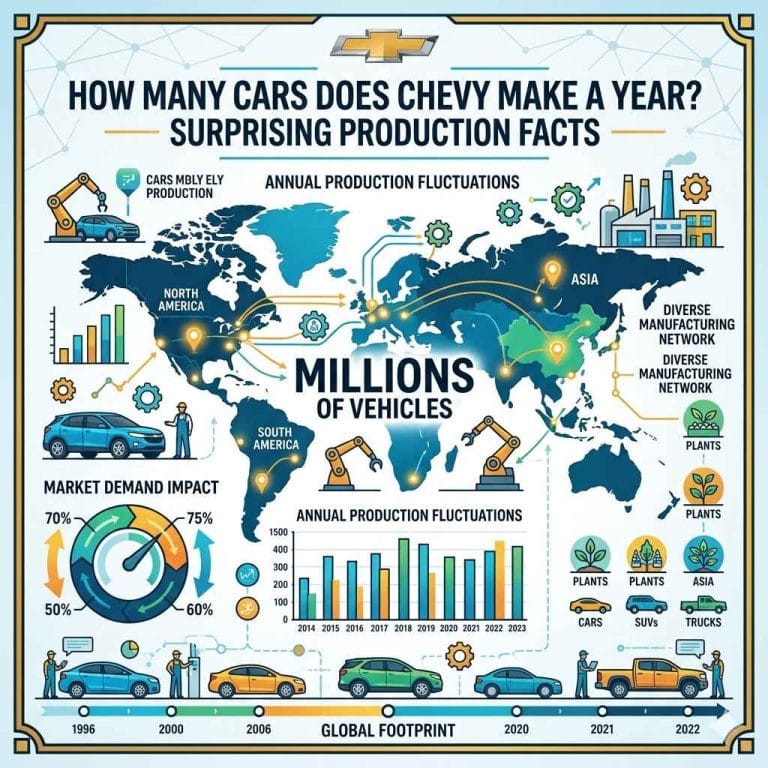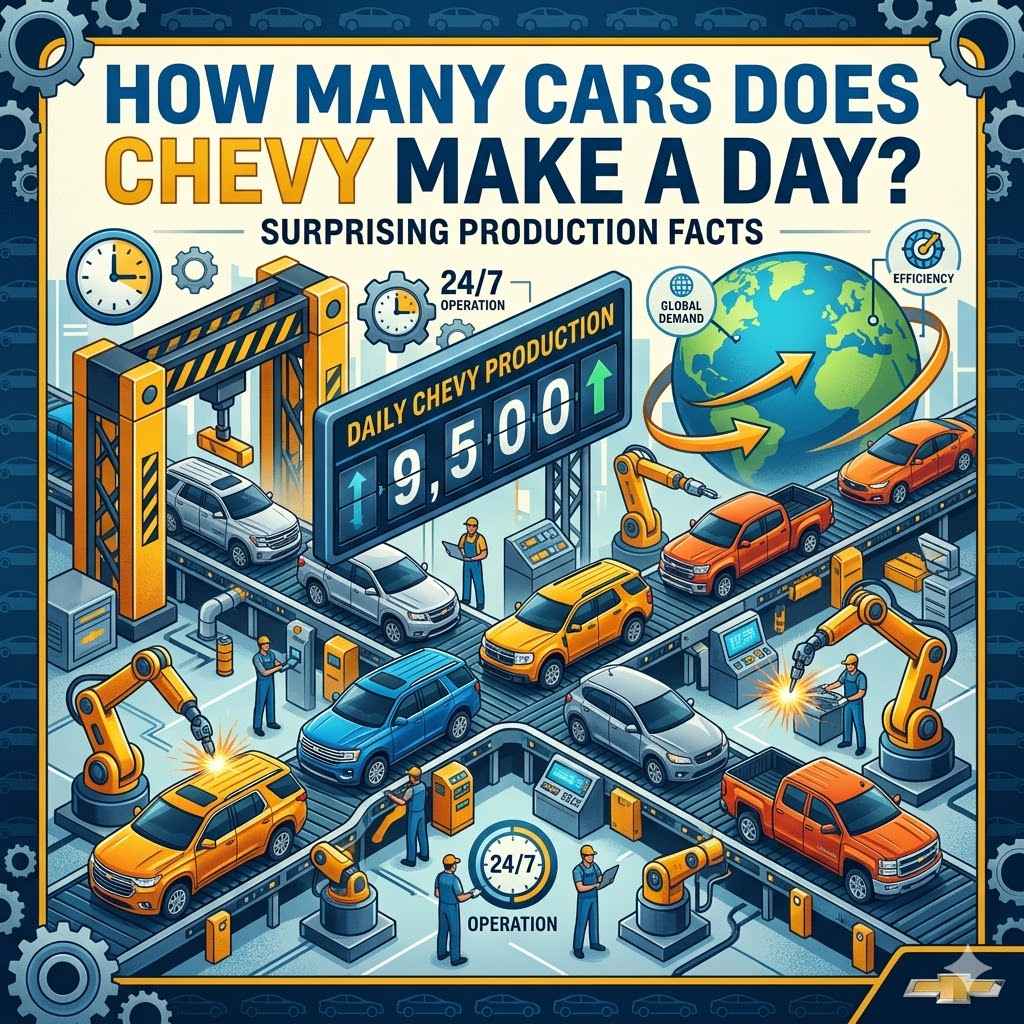
How Many Cars Does Chevy Make a Day? Surprising Production Facts
Every day, thousands of cars roll off Chevy’s assembly lines, quietly shaping how people move across North America and beyond. Many drivers recognize the Chevy bowtie logo but few know how many vehicles the company actually builds in a single day. Underneath the shiny hoods and familiar model names lies a world of complex planning, precise engineering, and global teamwork.
The answer to “How many cars does Chevy make a day?” isn’t a simple number—it’s a story of factories, workers, market demands, and even supply chain challenges.
To truly understand Chevy’s daily production, you need to look deeper than just headlines or a quick Google answer. Let’s explore how many cars Chevy makes each day, what influences these numbers, and why they matter for car buyers, workers, and the auto industry as a whole.
The Scale Of Chevy’s Production
Chevrolet, commonly called Chevy, is a major part of General Motors (GM). Chevy’s cars, trucks, and SUVs are built in many factories, mainly in North America, but also in other countries. The scale of their operations is massive—Chevy is one of the world’s top car brands.

AMT
1/25 1957 Chevy Bel Air
- Scale: 1/25
- Skill Level: 2 (ages 10 and up)
- Glue assembly, paint required
As an Amazon Associate I earn from qualifying purchases.
Global Presence
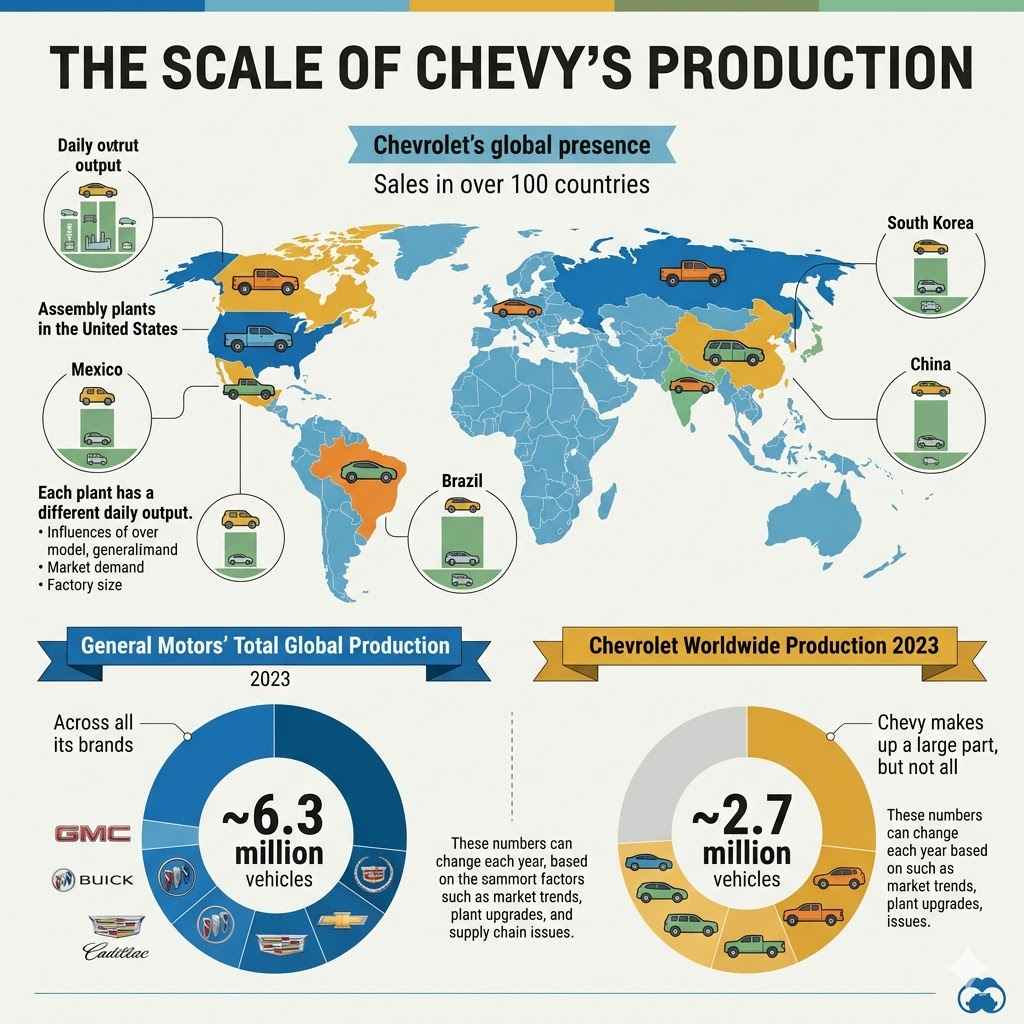
Chevy vehicles are sold in over 100 countries. The company operates assembly plants in the United States, Mexico, Canada, South Korea, Brazil, and China. Each plant has its own daily output, depending on the model, market demand, and factory size.
Annual Production Data
To estimate how many cars Chevy makes in a day, it helps to look at the yearly production numbers. According to General Motors’ official reports, GM produced about 6. 3 million vehicles globally in 2023, across all its brands. Chevy makes up a large part of this number, but not all.
In 2023, Chevrolet produced roughly 2.7 million vehicles worldwide. This includes cars, SUVs, and trucks. These numbers can change each year based on market trends, plant upgrades, or supply chain issues.
Calculating Chevy’s Daily Output
Now, let’s break down the numbers. If Chevy built around 2. 7 million vehicles in 2023, how many does that mean per day?
Simple Calculation
There are 365 days in a year. However, car plants don’t run every day. Most factories operate about 250 days per year (Monday to Friday, with some holidays and shutdowns).
2,700,000 vehicles ÷ 250 days = 10,800 vehicles per day (approximate)
So, Chevy makes about 10,000 to 11,000 vehicles each day on average.
Real-world Factors
This is an average. The real number each day can go up or down. Some days, production slows for maintenance, while during peak times, extra shifts might boost output. Some factories have special “down weeks” for upgrades or equipment changes.
Examples From Key Plants
- The Chevy Silverado is built in plants like Fort Wayne (Indiana) and Silao (Mexico). These can produce over 1,000 trucks per day at full speed.
- Chevy Equinox is built in CAMI (Canada) and Ramos Arizpe (Mexico), with similar high daily numbers.
- The Chevy Corvette is built in Bowling Green, Kentucky, at a lower volume—about 100 cars per day—since it’s a specialty vehicle.
What Affects Daily Production Numbers?
Chevy’s daily vehicle output is not fixed. Several factors can push the numbers higher or lower.
1. Market Demand
When a model is popular, Chevy increases production. For example, when the Chevy Silverado or Tahoe is in high demand, plants add overtime or extra shifts.
2. Supply Chain
If parts are delayed (for example, computer chips or wiring harnesses), production can slow. The global chip shortage in 2021 caused many automakers, including Chevy, to cut back on daily production.
3. Factory Capacity
Some plants are bigger and can make more vehicles each day. Others are small and build specialty models, so their daily numbers are lower.
4. Model Mix
Building trucks often takes longer than building compact cars. When a plant builds many types of vehicles, the daily total can shift.
5. Economic Events
Events like the COVID-19 pandemic or a labor strike can stop or slow production for days or weeks.
6. Seasonal Changes
Factories sometimes close for a week or two in summer for upgrades. Output drops during these shutdowns.
Chevy’s Main Assembly Plants And Their Outputs
Let’s look closer at some key Chevy assembly plants and how many vehicles they typically build each day. This gives a more detailed picture of how Chevy’s daily total comes together.
| Plant Location | Main Models | Estimated Daily Output |
|---|---|---|
| Fort Wayne, Indiana, USA | Silverado, GMC Sierra | 1,300 |
| Wentzville, Missouri, USA | Canyon, Colorado, Express | 850 |
| Arlington, Texas, USA | Tahoe, Suburban | 1,200 |
| Bowling Green, Kentucky, USA | Corvette | 100 |
| Ramos Arizpe, Mexico | Blazer, Equinox | 1,000 |
| Oshawa, Canada | Silverado, Heavy Duty | 800 |
| São Caetano do Sul, Brazil | Onix, Tracker | 900 |
These numbers are estimates and can change based on factors discussed earlier.
How Chevy’s Daily Production Compares To Other Brands
Understanding how Chevy stands compared to other car makers gives more context to its daily output.
| Brand | Average Daily Output | Main Markets |
|---|---|---|
| Chevrolet | 10,800 | Americas, Asia |
| Toyota | 27,000 | Global |
| Volkswagen | 25,000 | Europe, China |
| Ford | 11,000 | Americas, Europe |
| Honda | 10,000 | Global |
Chevy’s numbers are competitive, especially in the American market. Toyota and Volkswagen operate more factories worldwide, which explains their higher daily output.
How An Assembly Line Works
To understand how Chevy builds so many cars in one day, it helps to know how an assembly line operates.
Step-by-step Process
- Body shop: Large metal sheets are pressed and welded to create the car’s main structure.
- Paint shop: The body is cleaned, primed, and painted using robots for speed and consistency.
- General assembly: Workers and machines install engines, wiring, seats, glass, and other parts.
- Quality checks: Each vehicle is tested for leaks, noise, and safety before it leaves the factory.
Speed And Precision
On a modern Chevy line, a vehicle can be finished every 60–90 seconds. This fast pace allows each plant to build hundreds or thousands of cars per day.
Example: Silverado Plant
At Fort Wayne, the line moves steadily. Parts are delivered just in time, and skilled workers team up with robots. One truck body is finished every minute, leading to a high daily total.
Why Chevy’s Daily Production Matters
Chevy’s daily output is more than just a business statistic. It affects the economy, workers, and customers.
Jobs
Every car built means work for factory employees, parts suppliers, truck drivers, and dealers. High daily production supports thousands of jobs.
Car Prices
When production is strong, more cars reach dealerships, which helps keep prices steady. If production drops (like during a parts shortage), fewer cars are available and prices can rise.
Brand Reputation
Consistent, high-quality output helps Chevy keep its place as a trusted car brand.
Hidden Challenges In Daily Car Production
Producing thousands of vehicles daily sounds simple but is actually quite complex. Many challenges happen behind the scenes.
Supply Chain Disruptions
Something as small as a missing computer chip can stop an entire line. Chevy must have backup plans and global contacts to keep parts flowing.
Labor Issues
If workers strike or there is a shortage of skilled labor, output can drop quickly. For example, the 2019 UAW strike stopped production at several GM plants for weeks.
Quality Control
Rushing production can lead to mistakes. Chevy invests in inspection systems and training to catch errors before cars leave the plant.
Model Changes
When a new model year is launched, factories sometimes pause to retool equipment and train workers. This can reduce daily output for a short time.
How Chevy Adjusts Production To Market Demand
Chevy doesn’t build the same number of cars every day, all year long. It adjusts output to match what dealers and customers want.
Flexible Shifts
When sales are strong, Chevy adds extra shifts or runs lines longer. When demand drops, they can cut shifts or schedule downtime.
Real-time Data
Chevy uses computer systems to track inventory, dealer sales, and factory output. This helps them change production plans quickly.
Model Popularity
If a new SUV is selling well, Chevy can shift resources to build more of that model and fewer of another.
Example
In 2021, demand for trucks was high, so Chevy increased Silverado and Colorado production. At the same time, some smaller car lines were slowed or paused.
Electric Vehicles And The Future Of Chevy Production
The shift to electric vehicles (EVs) is changing how Chevy builds cars. EVs need different parts, new skills, and often new factories.
New Ev Plants
Chevy is investing in new plants (like Factory ZERO in Detroit) dedicated to building electric trucks and SUVs. These plants are designed to be flexible, so they can adjust output as EV demand grows.
Current Ev Output
Right now, Chevy’s daily EV numbers are small compared to gas-powered cars. As battery supplies increase and more models launch, this will change.
Example: Chevy Bolt
The Chevy Bolt EV is built at Lake Orion, Michigan. Its daily output is lower than large truck plants but is expected to rise as EV sales increase.
Interesting Insights Most People Miss
Chevy’s production numbers reveal more than just the size of the company. Here are two key insights many beginners overlook:
- Not all Chevy vehicles are built in America. Some popular models (like the Chevy Equinox or Trax) are built mainly in Mexico, Canada, or South Korea. This spreads risk and helps Chevy serve different markets.
- Production is not just about speed. Building 10,000 vehicles daily means nothing if quality drops. Chevy uses advanced cameras, sensors, and worker training to keep standards high, even when building at scale.
The Human Side Of Chevy’s Daily Output
Behind every car, there are thousands of people—designers, engineers, workers, and managers—making sure each vehicle meets standards and reaches customers on time.
Factory Life
A typical Chevy worker might handle one job on the line, like installing seats or checking paint quality. Each role is important, and small mistakes can affect the entire car.
Community Impact
Large Chevy plants support whole towns. Schools, restaurants, and shops often depend on the steady jobs and income from the factory.
How Chevy’s Daily Production Has Changed Over Time
Chevy’s daily output has grown and changed over the decades. Let’s look at some key shifts.
Growth In The 20th Century
After World War II, Chevy factories built fewer than 5,000 cars daily. By the 1970s and 1980s, automation and higher demand boosted output.
Modern Automation
Robots and new technology have made production faster and safer. Today’s plants can make more cars with fewer errors than ever before.
Impact Of Globalization
Moving some production overseas has helped Chevy manage costs and reach new markets, but also means fewer cars are “made in America” than in the past.
Comparing Chevy’s Us And International Production
Where Chevy builds vehicles affects how many are made each day in each region.
| Region | Main Models | Estimated Daily Output |
|---|---|---|
| United States | Silverado, Tahoe, Corvette | 6,000 |
| Mexico | Equinox, Blazer, Trax | 2,000 |
| South America | Onix, Tracker | 1,000 |
| South Korea | Spark, Trax | 800 |
| Canada | Silverado, Equinox | 1,000 |
Chevy builds the most vehicles in the US, but international plants are a key part of its global strategy.
Common Misunderstandings About Chevy’s Production
Many people think all Chevys are made in Detroit or that the number built daily never changes. Here are some common myths:
- All Chevys are American-made: False. Chevy builds cars in several countries.
- The daily output is always the same: Not true. It changes with demand, supply chain issues, or factory upgrades.
- Bigger factories always build more cars: Sometimes smaller plants are more efficient or focused on high-demand models.
How Production Numbers Affect Car Buyers
If you’re looking to buy a Chevy, the daily production rate has some hidden effects:
- Waiting times: If production is slowed, you might wait longer for a popular model.
- Discounts: When dealers have more cars (from high production), you might find better prices.
- Model availability: Some colors or options might be rare if they’re built less often.
Environmental Considerations
Building thousands of cars daily uses energy and resources. Chevy has made efforts to reduce its carbon footprint by using solar power, recycling water, and lowering factory emissions.
Example
At the Spring Hill, Tennessee plant, Chevy recycles most of its water and uses energy-efficient lighting to cut down on waste.
Looking Forward: How Will Chevy’s Daily Output Change?
As car technology evolves, Chevy’s daily production will shift too.
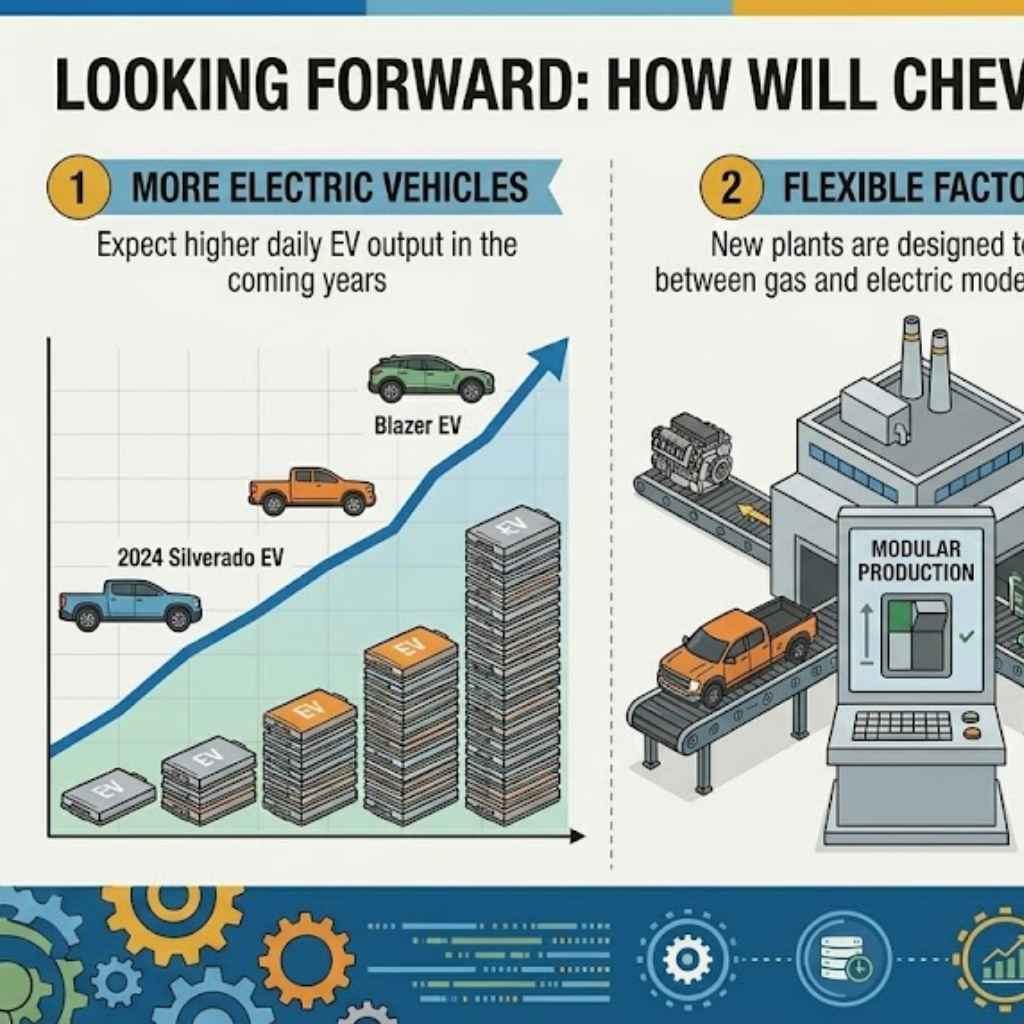
- More electric vehicles: Expect higher daily EV output in the coming years.
- Flexible factories: New plants are designed to switch between gas and electric models as needed.
- Digital monitoring: Robots and sensors will help keep quality high, even as production speeds increase.
Frequently Asked Questions
How Many Cars Does Chevy Make Per Day On Average?
On average, Chevy makes about 10,000 to 11,000 vehicles each day worldwide. This includes cars, trucks, and SUVs. The exact number changes based on factory schedules, demand, and other factors.
Are All Chevy Vehicles Made In The United States?
No, not all Chevys are American-made. Chevy builds vehicles in the US, Mexico, Canada, South Korea, and South America. Where a car is made depends on the model and market.
What Is Chevy’s Best-selling Model?
The Chevy Silverado is usually the brand’s best-selling model. It is a full-size pickup truck built mainly in the US and Mexico. The Silverado’s popularity often leads to higher daily output in those plants.
Does Chevy Make Electric Vehicles Every Day?
Yes, Chevy builds electric vehicles daily, but in smaller numbers compared to gas-powered cars. The main EV is the Chevy Bolt, and more EVs are planned for the future as Chevy increases electric production.
Where Can I Find Official Data On Chevy’s Production Numbers?
You can find official data on Chevy’s production and sales in General Motors’ annual reports and from industry sources like Statista. These sources provide up-to-date information on how many vehicles Chevy builds each year.
Chevy’s daily production is a story of teamwork, technology, and the changing world of cars. Whether you’re a car buyer, an industry watcher, or just curious, understanding these numbers reveals how a familiar brand shapes the road ahead—one vehicle at a time.
Related pick: Check today's price on Amazon
Products related to this article
Sponsored / affiliate links. As an Amazon Associate I earn from qualifying purchases. I may earn additional commission from eligible campaigns.