
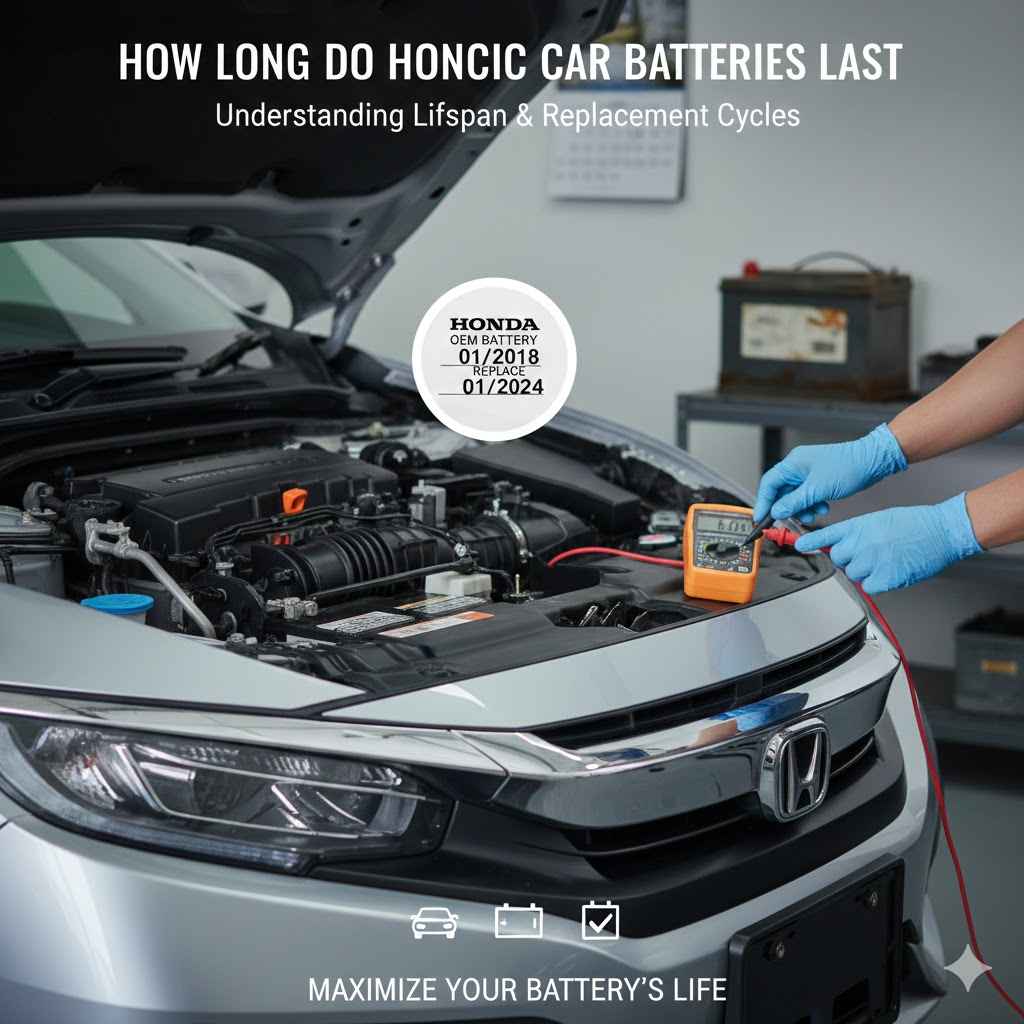
Wondering about your Honda Civic battery life? Many drivers ask, How Long Do Honda Civic Car Batteries Last? It can seem like a tricky question, especially if you’re new to car care. You just want to know when to expect a change.
We’re here to make it simple. This guide will walk you through it step by step, so you’ll know exactly what to look for and when to plan ahead.
Honda Civic Battery Lifespan Expectations
Understanding how long a Honda Civic car battery typically lasts is essential for car owners. This knowledge helps in planning for replacements and avoiding unexpected car trouble. Several factors influence battery life, and knowing these can help you extend its service.
We will explore the average lifespan and what makes a battery last longer.
Average Battery Lifespan
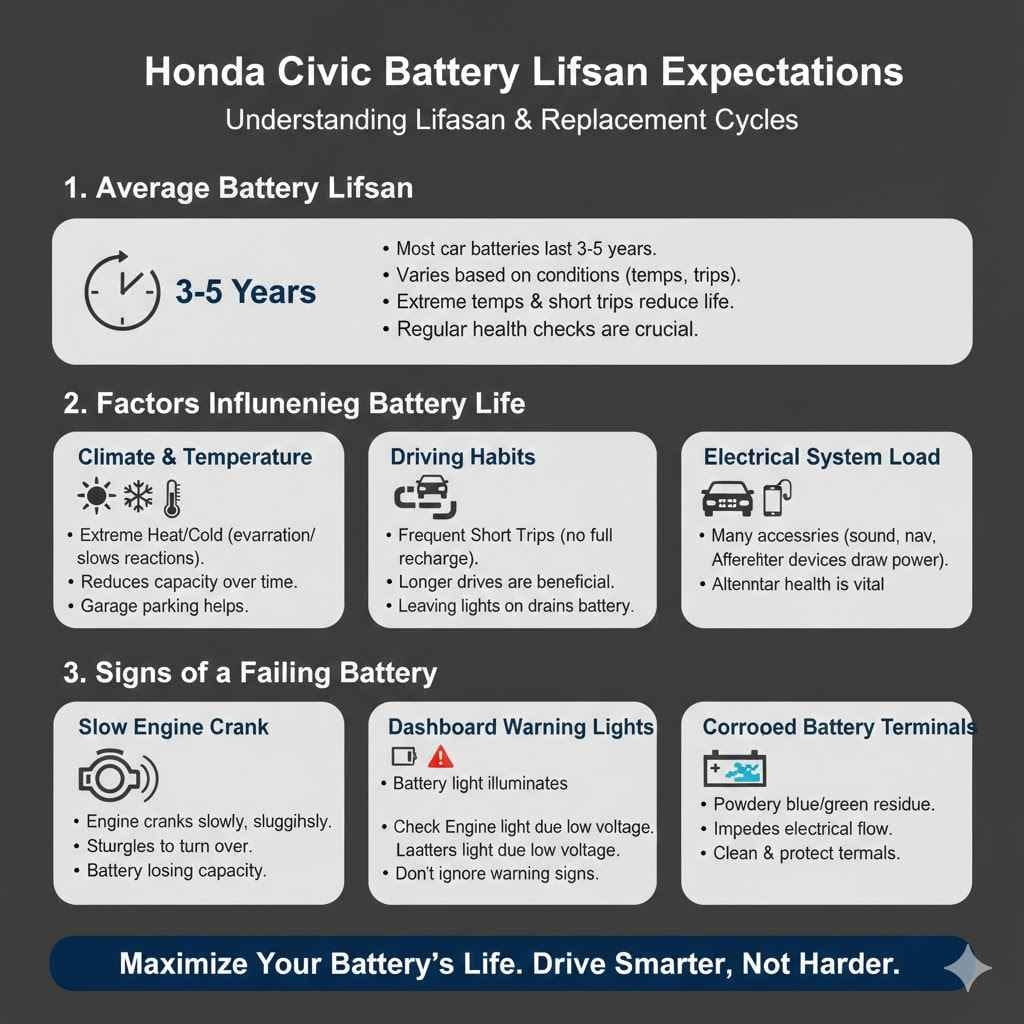
Most car batteries, including those in Honda Civics, are designed to last between 3 to 5 years. This is a general guideline, and actual performance can vary. Some batteries might last a bit longer, while others may need replacement sooner.
Several conditions can affect how long your battery holds a charge. Extreme temperatures, both hot and cold, can put a strain on the battery. Frequent short trips where the battery doesn’t have enough time to fully recharge can also shorten its lifespan.
Driving habits and the overall electrical load on your car play a role too.
For a Honda Civic, checking battery health regularly is a good practice. This includes looking for signs of corrosion on the terminals or any swelling of the battery case. These are indicators that the battery might be nearing the end of its life and could fail soon.
Keeping records of when your battery was last
Factors Influencing Battery Life
Several elements play a significant role in determining how long a Honda Civic car battery lasts. Understanding these factors helps owners maintain their batteries and potentially extend their operational life.
Climate and Temperature
Extreme temperatures are harsh on car batteries. Very hot weather can cause the battery fluid to evaporate faster, leading to internal damage. Cold weather can slow down the chemical reactions inside the battery, reducing its ability to start the engine.
Consistently high or low temperatures, especially those experienced in different regions, significantly impact battery performance over time.
For instance, a battery in a region with scorching summers and freezing winters might not last as long as one in a more temperate climate. The battery has to work harder in both extremes to maintain its charge and deliver power. This constant stress can lead to premature failure.
Many battery manufacturers recommend avoiding prolonged exposure to extreme heat, as it is particularly damaging. Storing your car in a garage or using a battery blanket in very cold climates can help protect it. These simple measures can contribute to a longer battery life.
Driving Habits
How you drive your Honda Civic can also impact battery longevity. Frequent short trips, where the engine is started and stopped many times without sufficient driving time to fully recharge the battery, can wear it down. This is because the alternator has less time to replenish the energy used during startup.
Conversely, long drives that allow the alternator to fully recharge the battery are beneficial. If you primarily use your car for short commutes, consider taking it for a longer drive once a week to ensure the battery gets a proper charge. This helps maintain its overall health.
Leaving accessories like headlights, radios, or interior lights on after turning off the engine also drains the battery. While modern cars have systems to prevent complete draining, repeated minor drains can still contribute to a shorter lifespan. Being mindful of these power-consuming features is important.
Electrical System Load
The number of electronic accessories in your Honda Civic and how often you use them contribute to the electrical load on the battery. Features like powerful sound systems, navigation devices, heated seats, and multiple USB chargers all draw power. A higher electrical load means the battery is working harder to supply energy.
If your car has many aftermarket electronic devices, these can put an additional strain on the battery. It’s important to ensure these devices are installed correctly and do not cause unnecessary power drain when the car is off. Faulty accessories or improper installation can lead to the battery discharging faster than it should.
Regularly checking the health of your alternator is also part of managing the electrical system load. The alternator is responsible for recharging the battery while the engine is running. If the alternator is not functioning correctly, it won’t charge the battery adequately, leading to premature battery failure, regardless of how new the battery is.
Signs of a Failing Battery
Recognizing the warning signs of a failing battery is crucial for avoiding unexpected breakdowns. Catching these indicators early allows for a planned replacement, preventing inconvenience and potential damage to other car systems.
Slow Engine Crank
One of the most common signs of a weakening battery is a slow or sluggish engine crank when you turn the key or push the start button. Instead of the engine starting up quickly and smoothly, you might hear a labored, drawn-out cranking sound.
This happens because a dying battery struggles to provide the high surge of power needed to turn over the engine. The starter motor needs a significant electrical current, and a failing battery cannot deliver it effectively. This symptom is often one of the first noticeable indications that your battery is losing its capacity.
If you experience this, it’s a good idea to have your battery tested. Many auto parts stores offer free battery testing services. They can measure the battery’s cranking amps and voltage to determine its current health and predict how much longer it might last.
Dashboard Warning Lights
Your Honda Civic’s dashboard has various warning lights designed to alert you to potential issues. A battery warning light, often shaped like a battery symbol, is a clear indicator of a problem with the charging system or the battery itself. This light may illuminate while you are driving.
Other lights, such as the check engine light, could also illuminate if the battery voltage is too low. This is because many electronic components in your car rely on stable voltage to function correctly. When the voltage drops due to a weak battery, these systems may report errors.
Don’t ignore these lights. They are designed to give you advance notice. A persistent battery warning light means you should have your car inspected as soon as possible to diagnose the exact cause, which could be a faulty battery, alternator, or wiring issue.
Corroded Battery Terminals
Corrosion on the battery terminals, which are the metal posts where the battery cables connect, is another telltale sign of a battery nearing its end. This corrosion typically appears as a powdery, bluish-green substance. It forms when the battery acid reacts with the metal terminals.
Corrosion can interfere with the flow of electricity between the battery and your car’s electrical system. This means even a healthy battery might not be able to deliver its full power if the terminals are heavily corroded. It creates resistance, much like a clogged pipe restricts water flow.
You can often clean minor corrosion with a stiff brush and a mixture of baking soda and water. However, significant corrosion might indicate that the battery is leaking or has reached a point where it is degrading. If you see this, it’s wise to have the battery checked by a professional.
Dim Headlights and Electrical Issues
A battery that is losing its charge might cause your headlights to appear dimmer than usual, especially when the engine is idling or when other electrical accessories are in use. This indicates that the battery is not able to supply enough consistent power to all the car’s systems.
You might also notice other electrical components acting strangely. This could include power windows operating slower than normal, the radio cutting out, or the interior lights flickering. These symptoms suggest that the battery’s voltage is unstable and dropping too low.
When you notice these issues, it’s a clear signal that your battery is underperforming. It’s important to address these problems promptly, as a completely dead battery can leave you stranded. A professional can test the battery and the entire charging system to pinpoint the exact problem.
Maintaining Your Honda Civic Battery for Longevity
Proper maintenance can significantly extend the life of your Honda Civic’s car battery. Simple practices can help prevent premature failure and ensure reliable performance. Let’s explore how you can take care of your battery.
Regular Cleaning and Inspection
Keeping the battery terminals clean and free from corrosion is a key maintenance task. As mentioned, corrosion can impede electrical flow. Cleaning involves disconnecting the battery cables (negative first, then positive) and using a wire brush or terminal cleaner to remove any buildup.
After cleaning, reconnect the cables, ensuring a snug fit (positive first, then negative). A light coating of dielectric grease can help prevent future corrosion. Regularly inspecting the battery for any signs of physical damage, such as cracks or swelling, is also important.
A healthy battery case should be intact. If you notice any damage, it’s a sign that the battery should be replaced immediately, as it could be leaking harmful chemicals. A visual check every few months can save you a lot of trouble down the road.
Proper Charging Practices
For drivers who often take many short trips, it’s beneficial to ensure the battery gets a full charge periodically. This can be achieved by taking your Honda Civic on a longer drive, at least 30 minutes, at highway speeds once every few weeks.
This allows the alternator ample time to replenish the energy consumed during startups and power the car’s electronics. If your car is used very infrequently, consider using a trickle charger or battery tender. These devices maintain a consistent charge without overcharging the battery, which can be detrimental.
Avoid draining the battery completely by leaving lights or accessories on. Modern cars often have systems to prevent this, but it’s still good practice to double-check. A smart charger can also be a good investment if you have multiple vehicles or a car that sits for extended periods.
Protecting Against Extreme Temperatures
While you can’t always control the weather, you can take steps to protect your battery from extreme temperatures. Parking your car in a garage or a shaded area during hot weather can help keep the battery cooler. In colder climates, parking indoors is also beneficial.
In regions with very harsh winters, consider using a battery warmer or insulating blanket. These accessories can help the battery perform better in freezing temperatures. Ensuring your battery is in good condition before winter arrives is also a proactive measure.
Regular battery testing, especially before the onset of extreme seasons, can alert you to a battery that might be struggling. A weakened battery is more susceptible to failure in extreme conditions. Addressing issues before they become critical is always the best approach for battery longevity.
Choosing a Replacement Battery for Your Honda Civic
When it’s time to replace your Honda Civic’s battery, making the right choice ensures optimal performance and longevity. Several factors come into play when selecting a new battery.
Battery Type and Specifications
Honda Civics typically use absorbed glass mat (AGM) or conventional flooded lead-acid batteries. AGM batteries are more modern, offer better performance, and are more resistant to vibration and temperature fluctuations. They are often recommended for vehicles with many electronic features.
Always check your owner’s manual or consult with a mechanic to determine the exact specifications required for your specific Civic model. Key specifications include Group Size, Cold Cranking Amps (CCA), and Reserve Capacity (RC). Group Size ensures the battery physically fits in the tray and connects properly.
CCA indicates the battery’s ability to start the engine in cold temperatures. A higher CCA is generally better, especially if you live in a cold climate. Reserve Capacity tells you how long the battery can power essential accessories if the alternator fails.
Warranty and Brand Reputation
When purchasing a replacement battery, consider the warranty offered. Most reputable brands offer warranties ranging from 1 to 5 years. A longer warranty period often signifies a manufacturer’s confidence in their product’s quality and durability.
Look into battery brands known for their reliability and good customer service. Popular brands often have a strong track record and readily available support if you encounter issues. Reading online reviews and asking for recommendations from trusted mechanics can help you choose a dependable brand.
A battery warranty typically covers defects in materials and workmanship. Understand the terms and conditions of the warranty, including any requirements for regular maintenance or proof of purchase. This will ensure you can make a claim if necessary.
Cost vs. Value
The cost of a
Consider the expected lifespan of different battery types and brands in relation to their price. For example, an AGM battery might cost more upfront than a conventional battery but could last longer and offer superior performance, making it a better value for your money.
Don’t forget to factor in the cost of installation if you’re not doing it yourself. Many auto parts stores offer installation services for a fee. Compare prices and services from different retailers to find the best deal.
The goal is to find a battery that offers a good balance of price, performance, and reliability for your Honda Civic.
How Long Do Honda Civic Car Batteries Last?
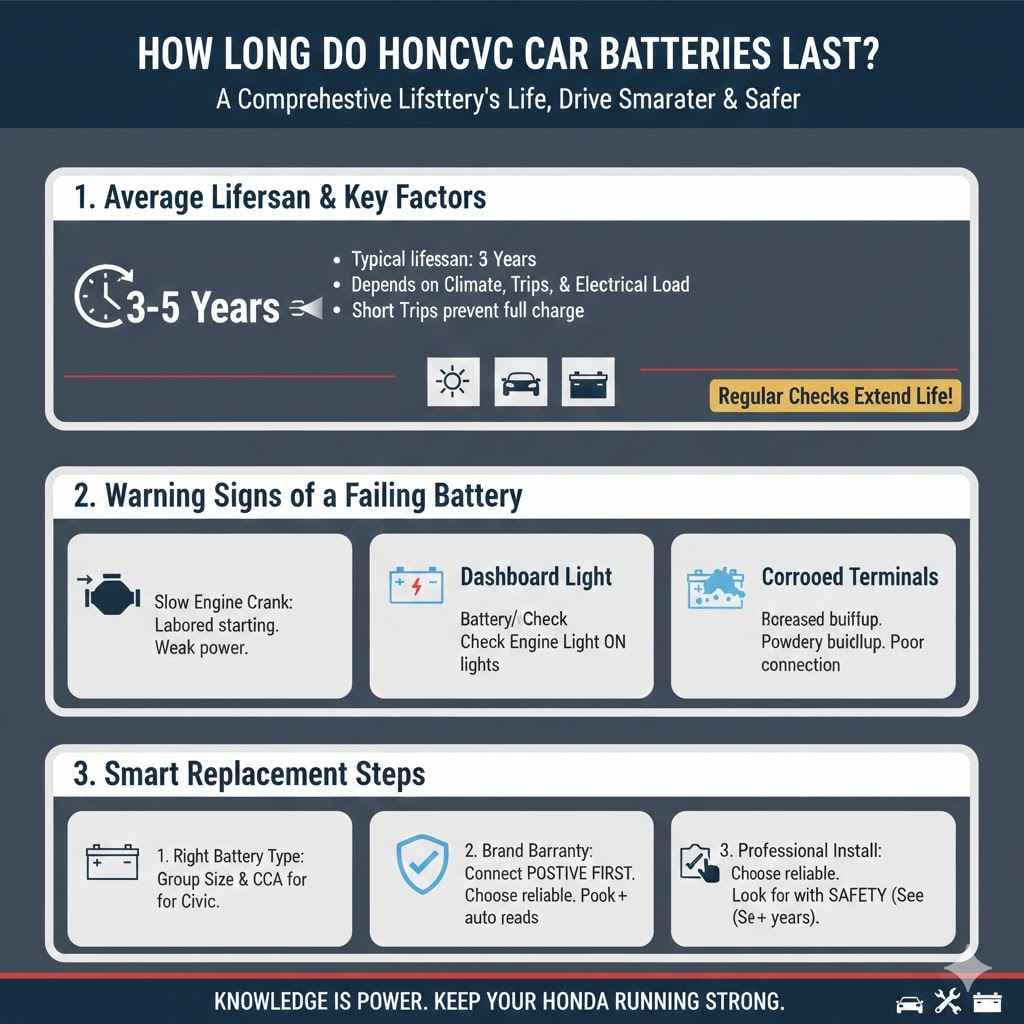
The typical lifespan for a Honda Civic car battery is between 3 to 5 years. This timeframe can be influenced by various factors such as climate, driving habits, and the electrical load on the car. Regular maintenance, proper charging, and protection from extreme temperatures can help extend battery life.
Paying attention to warning signs like a slow engine crank or dashboard lights is crucial. When it’s time for a replacement, selecting the right battery type and considering brand reputation and warranty will ensure a reliable and long-lasting solution for your Honda Civic.
Frequently Asked Questions
Question: How often should I check my Honda Civic battery?
Answer: It’s a good idea to visually inspect your Honda Civic battery for corrosion or damage every few months. More thorough checks, like testing its voltage and cranking power, are recommended annually or if you notice any signs of weakening.
Question: Can I use a battery from a different car make in my Honda Civic?
Answer: While some batteries might seem physically similar, it’s best to use a battery that meets the specific Group Size, CCA, and RC requirements for your Honda Civic. Using an incorrect battery can lead to fitment issues or performance problems.
Question: What does CCA stand for on a car battery?
Answer: CCA stands for Cold Cranking Amps. It measures the battery’s ability to start your engine in freezing temperatures. A higher CCA rating is generally better for cars used in cold climates.
Question: How does extreme heat affect a car battery?
Answer: Extreme heat can cause the battery fluid to evaporate faster and accelerate internal corrosion. This can shorten the battery’s lifespan and reduce its performance over time. Parking in shaded areas can help.
Question: Is it worth getting an AGM battery for my Honda Civic?
Answer: For many modern Honda Civics, especially those with advanced electronics, an AGM battery can be a worthwhile investment. They offer better durability, longer life, and improved performance compared to traditional flooded batteries, though they are typically more expensive.
Summary
Your Honda Civic battery generally lasts 3 to 5 years. Keep it clean, charge it well, and protect it from heat and cold. Watch for slow starts or dim lights.
Choosing a quality replacement with a good warranty ensures peace of mind. Regular checks and simple maintenance make a big difference.