How Often to Replace Honda Civic Car Battery
Figuring out when to swap out your Honda Civic‘s car battery can be a bit tricky, especially if you’re new to car care. Many drivers wonder, “How Often to
Honda Civic Car Battery Lifespan Factors
Understanding how long a car battery lasts is key to knowing when to replace it. Several things influence this, and for your Honda Civic, it’s no different. We’ll explore the main elements that affect battery life.
This will help you predict when a change might be needed.
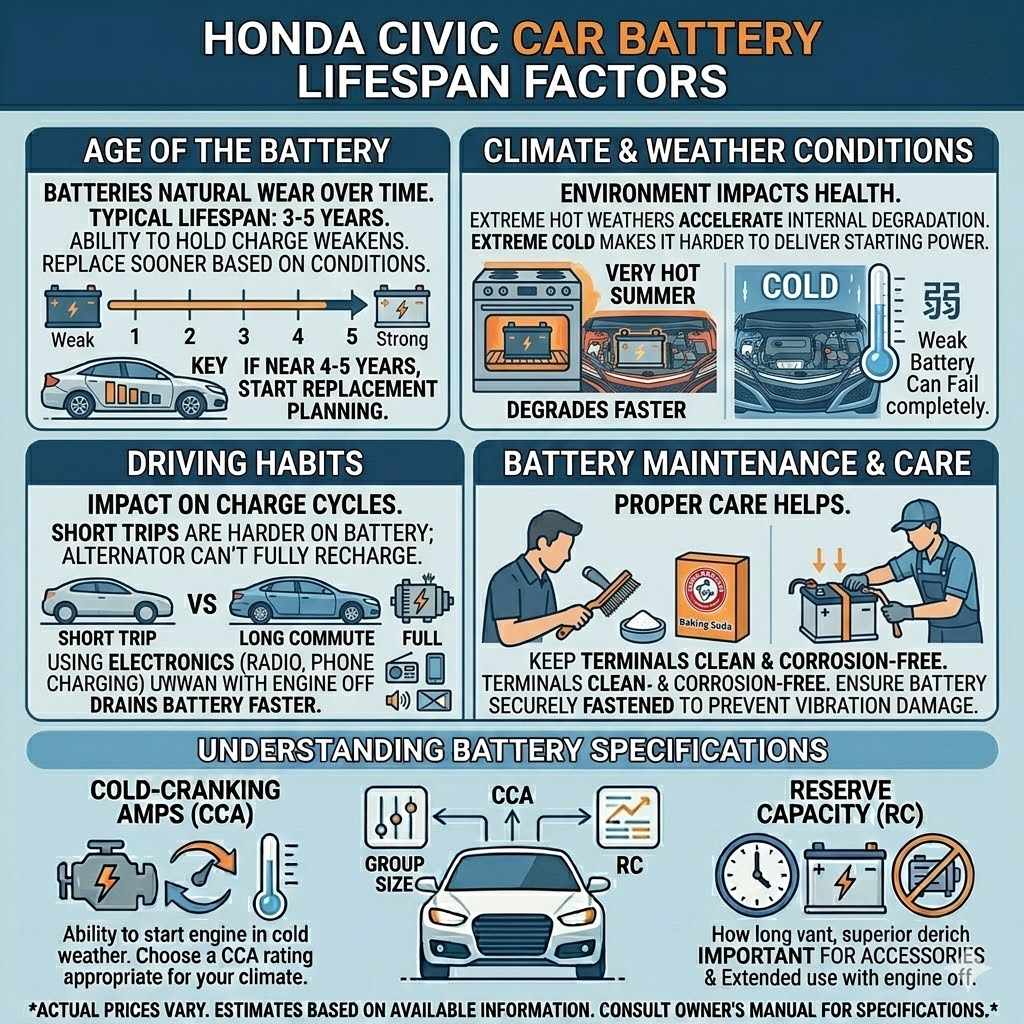
Age of the Battery
Batteries don’t last forever. Over time, their ability to hold a charge weakens. This is a natural process of wear and tear.
Most car batteries are designed to last between three to five years. Some might give you a bit more time, while others might need replacing sooner. This lifespan can vary quite a bit based on how you use your car and the conditions it faces.
For a Honda Civic, like any vehicle, age is a primary indicator. If your battery is pushing the four or five-year mark, it’s a good idea to start thinking about a replacement, even if it seems to be working fine for now. Catching it early can prevent being stranded.
Climate and Weather Conditions
The environment your car lives in plays a huge role in battery health. Extreme temperatures can be tough on batteries.
Very hot weather can speed up the battery’s internal chemical reactions, causing it to degrade faster. Think of it like baking something too long; the heat breaks it down more quickly.
On the other hand, extreme cold can make it harder for the battery to deliver the power it needs to start your engine. While it might not directly shorten the battery’s life as much as heat, it can make a weak battery fail completely when you need it most. Cities with very hot summers or very cold winters often see batteries die sooner than in milder climates.
Driving Habits
How you drive your Honda Civic can also impact its battery. Short trips are harder on batteries than longer ones.
When you only drive for short distances, the alternator doesn’t have enough time to fully recharge the battery after starting the car. This means the battery is constantly working with less than a full charge, which wears it out faster.
If you frequently use electronics in your car when the engine is off, like listening to the radio or charging your phone, you’re also draining the battery. Doing this regularly without enough driving time to recharge can shorten its lifespan. People who drive a lot for work or long commutes usually get more life out of their batteries.
Battery Maintenance and Care
Proper care can help a battery last longer. Keeping the terminals clean is an important part of this.
Corrosion can build up on the battery terminals, which are the metal posts where the cables connect. This corrosion can block the flow of electricity. Cleaning these terminals with a wire brush and a baking soda solution can ensure a good connection.
Ensuring the battery is securely fastened in its tray is also important. A loose battery can vibrate, which can damage its internal components over time. Regular checks by a mechanic can catch these issues early.
Signs Your Honda Civic Battery Needs Replacing
Your car’s battery doesn’t always die without warning. Often, there are clear signs that it’s time for a change. Paying attention to these signals can save you from unexpected breakdowns.
We’ll go over the common symptoms that tell you your Honda Civic battery is on its last legs.
Slow Engine Crank
One of the most common signs that your battery is weakening is when the engine cranks slowly when you try to start your car. You’ll hear a slower, more labored sound as the starter motor turns the engine over.
This happens because a weak battery can’t supply the strong electrical current needed to get the engine going quickly. The starter motor needs a lot of power, and a failing battery just doesn’t have enough to give. It’s like trying to push a heavy door with very little strength; it moves, but slowly and with effort.
If you notice this sluggish starting, even on a warm day, it’s a strong indicator that your battery is losing its power. This symptom often appears before a complete failure, giving you a chance to replace it proactively.
Dim Headlights and Electrical Issues
Your car’s battery powers more than just the starter. It also supplies electricity to all the lights and electronic systems. When the battery starts to fail, these systems may not get enough power.
You might notice your headlights dimming, especially when the engine is idling or when you use other electrical accessories like the power windows. Other electrical components might also act strangely, such as the radio cutting out or dashboard lights flickering.
These electrical problems are a sign that the battery’s voltage is dropping too low. The battery’s job is to maintain a stable electrical supply. When it can’t do that, you’ll see inconsistent performance from various car parts.
This is a clear signal that the battery is no longer up to the task.
Warning Lights on the Dashboard
Modern cars have warning lights that alert drivers to various issues. A common one related to the battery is the battery warning light itself, often shaped like a battery.
This light usually means there’s a problem with the charging system or the battery itself. It might illuminate if the battery isn’t charging correctly, or if its voltage is too low.
Sometimes, other warning lights might also appear if the battery’s low voltage affects the car’s computer systems. Don’t ignore these lights. They are the car’s way of telling you that something needs attention.
A steady battery light is a direct message that your battery might be the culprit.
Strange Smells
A battery that is failing or damaged can sometimes emit a strange smell. This smell is often described as a “rotten egg” odor.
This smell is usually due to a sulfuric smell, which comes from the battery acid. It can happen if the battery is overheating, overcharging, or if there’s a leak in the battery case.
If you detect this smell around your car, especially under the hood, it’s a serious warning. It indicates a problem that needs immediate attention, as leaking battery acid is corrosive and can be dangerous. It’s a strong sign that the battery needs to be inspected and likely replaced very soon.
Old Age
As mentioned before, age is a major factor. If your battery is more than four or five years old, it’s on borrowed time.
Even if it seems to be working perfectly, its internal components have degraded. The chemical reactions that store and release energy become less efficient with age. This means it can hold less charge and deliver less power.
Think of it like a smartphone battery; after a few years, it just doesn’t hold a charge as long as it used to. For a car battery, this means it might fail suddenly without much warning, leaving you stranded. Proactive replacement at this age is often the smartest choice.
Testing Your Honda Civic’s Battery Health
You don’t have to wait for your battery to show obvious signs of failure. There are ways to test its health and predict if it’s nearing the end of its life. Knowing how to test your battery can help you answer “How Often to
Using a Multimeter
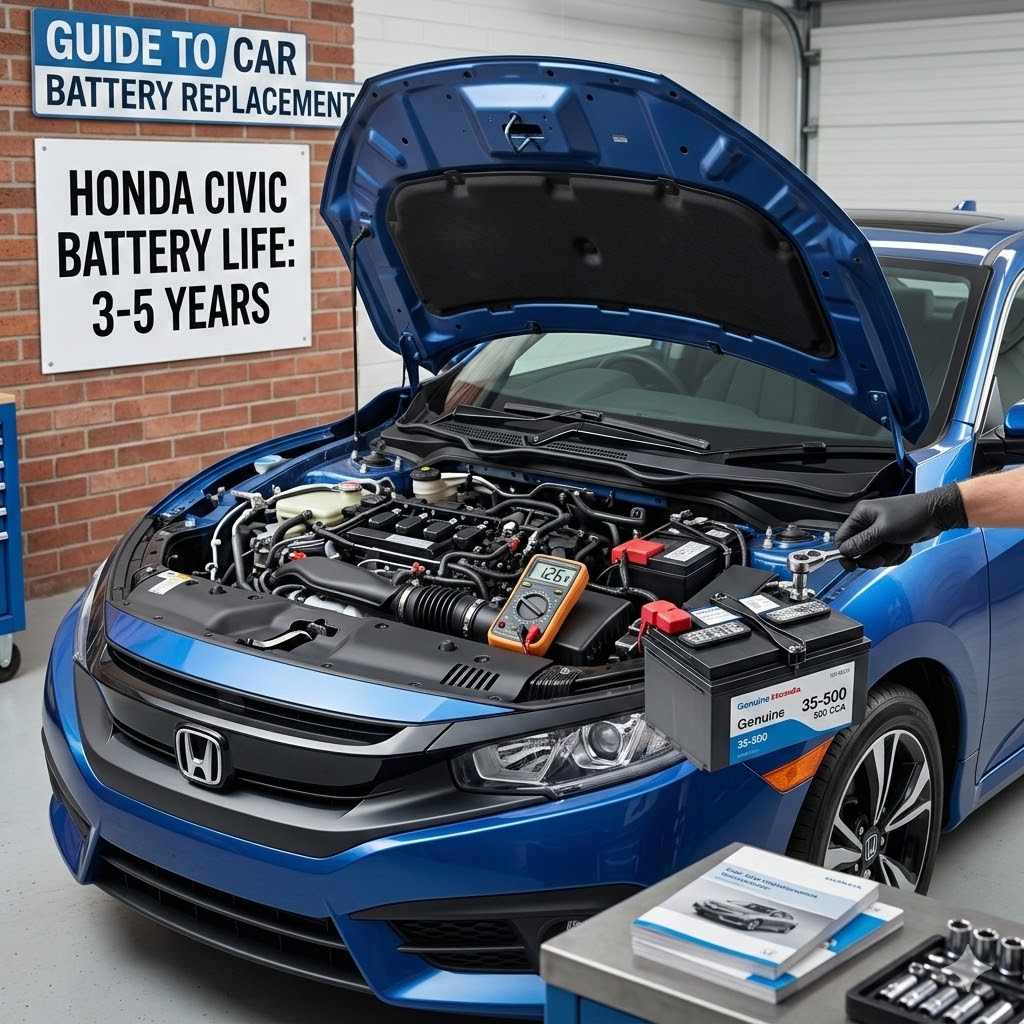
A multimeter is a tool used to measure electrical properties like voltage. It’s a very useful device for checking your car battery.
To use it, you’ll need to set the multimeter to measure DC voltage. Then, connect the red probe to the positive (+) terminal of the battery and the black probe to the negative (-) terminal. Make sure your car is turned off.
A fully charged battery should read around 12.6 volts or higher when the engine is off. If the reading is below 12.4 volts, the battery might need charging or is starting to lose its capacity. A reading below 12 volts often means the battery is significantly discharged or failing.
This simple test gives you a good idea of the battery’s charge state.
Load Testing the Battery
A load test is a more thorough way to check a battery’s health. It simulates the high current draw that occurs when you start your engine.
This test checks how well the battery can hold its voltage under a heavy load. It’s a better indicator of a battery’s ability to start your car than a simple voltage reading.
Many auto parts stores offer free battery testing services, including load tests. They have specialized equipment for this. If you’re concerned about your battery, taking it to one of these places is a good idea.
They can give you a professional assessment of its condition and tell you if it needs replacement.
Checking Battery Age Stickers
Many batteries have stickers on them that indicate when they were manufactured. These stickers can be a quick way to estimate the battery’s age.
Look for a series of letters and numbers. Often, a letter represents the month (A for January, B for February, and so on, skipping the letter ‘I’), and a number represents the year (e.g., ‘3’ for 2023). So, “C4” might mean March 2024.
If you can’t find a clear sticker or decipher it, you might need to look up the manufacturer’s code. Knowing the manufacturing date helps you gauge how much life the battery likely has left, based on the typical lifespans we discussed.
Replacing Your Honda Civic Battery
When it’s time to replace your battery, you have a few options. You can do it yourself if you’re comfortable, or you can have it done for you. We’ll guide you through the process and what to consider.
This section helps you act on the knowledge of “How Often to Replace Honda Civic Car Battery?”
DIY Battery Replacement
Replacing a car battery yourself can save you money. It’s a relatively straightforward process for most Honda Civic models.
First, gather your tools: a wrench set (usually 10mm and 12mm), gloves, and safety glasses. Park your car on a level surface and make sure the engine is off.
Always disconnect the negative (-) terminal first, then the positive (+). Remove any hold-down clamps securing the battery. Lift the old battery out, being careful as it’s heavy.
Place the new battery in the tray, connect the positive terminal first, then the negative. Reinstall the hold-down clamp. Double-check that everything is secure.
Professional Battery Replacement
If you’re not comfortable doing it yourself, professional replacement is a great option. Most auto repair shops and dealerships can handle this for you.
This is often the easiest route. You drive in, and they take care of the entire process. They’ll also typically test your charging system to ensure the new battery will function correctly.
Many auto parts stores also offer battery installation services, sometimes for a small fee or even free if you purchase the battery from them. This can be a convenient and affordable choice if you prefer expert help.
Choosing the Right Replacement Battery
Not all batteries are the same. It’s important to choose a replacement battery that is suitable for your Honda Civic.
Check your car’s owner’s manual for the recommended battery group size and specifications. This ensures the new battery will fit correctly and have the right power output.
Look for batteries with good reviews and a decent warranty. A longer warranty period often indicates that the manufacturer has confidence in the battery’s quality and lifespan. Brands like Bosch, Optima, and ACDelco are well-regarded.
Battery Disposal
Once you have a new battery, you need to dispose of the old one properly. Batteries contain hazardous materials and should not be thrown in the regular trash.
Most places that sell car batteries will take your old one back for recycling. This is often part of the purchase process, especially if you pay a core charge that gets refunded when you return the old battery.
Local recycling centers and auto repair shops are also equipped to handle battery disposal. Responsible disposal protects the environment and ensures hazardous waste is managed safely.
How Often to Replace Honda Civic Car Battery? Recommendations
So, after all this, let’s get to the heart of the matter: How Often to Replace Honda Civic Car Battery? While there’s no single exact answer, we can provide clear guidelines based on typical conditions. This is your direct answer to the question you came here for.
General Recommendation
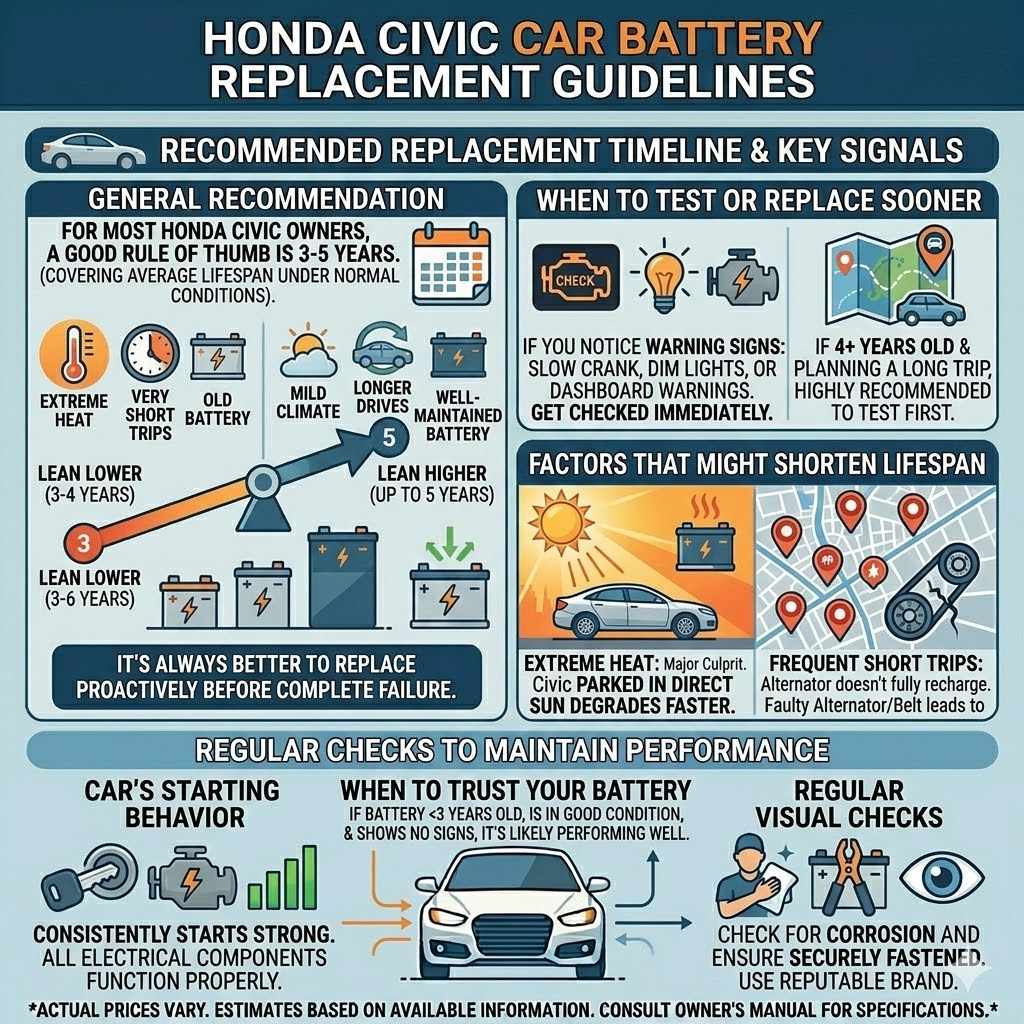
For most Honda Civic owners, a good rule of thumb is to consider replacing your car battery every 3 to 5 years. This timeframe covers the average lifespan of car batteries under normal operating conditions.
If you live in an area with extreme temperatures, frequently make short trips, or have an older battery, you might lean towards the lower end of this range, around 3-4 years. If your car is kept in a mild climate and mostly used for longer drives, you might get closer to 5 years.
It’s always better to replace a battery slightly before it fails completely than to wait until it leaves you stranded. This proactive approach saves you inconvenience and potential towing costs.
When to Test or Replace Sooner
There are specific situations where you should consider testing or replacing your battery sooner than the 3-5 year mark.
If you notice any of the warning signs we discussed—like a slow engine crank, dim lights, or warning lights on your dashboard—get your battery checked immediately. Don’t wait for it to die.
Also, if your battery is already 4 years old and you’re planning a long road trip, it’s a wise idea to have it tested. A potential failure on a trip can be very disruptive. Proactive replacement in such cases is highly recommended.
Factors That Might Shorten Lifespan
Certain conditions can significantly shorten a battery’s life. Understanding these can help you manage expectations.
Extreme heat is a major culprit. If your Civic is parked in direct sun all day in a hot climate, its battery will likely degrade faster.
Frequent short trips, where the engine doesn’t run long enough to fully recharge the battery, also wear it down more quickly. Similarly, leaving lights or accessories on with the engine off can drain the battery.
Undercharging due to a faulty alternator or alternator belt can also lead to a premature battery death. If the battery isn’t getting enough juice to stay fully charged, its performance will suffer, and its lifespan will be reduced.
When to Trust Your Battery
If your Honda Civic’s battery is less than three years old, is in good condition, and shows no signs of trouble, it’s likely still performing well. Batteries made by reputable brands and maintained properly can often exceed the average lifespan.
Pay attention to your car’s starting behavior. If it consistently starts strong and all electrical components work as they should, your battery is probably fine. Regular visual checks for corrosion and ensuring it’s securely fastened can help maintain its performance.
Don’t feel pressured to
Frequently Asked Questions
Question: How long do Honda Civic batteries typically last
Answer: Honda Civic batteries typically last between 3 to 5 years. However, this can vary based on climate, driving habits, and battery maintenance.
Question: What are signs that my Honda Civic battery is going bad
Answer: Signs include a slow engine crank, dim headlights, dashboard warning lights (especially the battery light), and a rotten egg smell from the battery area.
Question: Can I test my Honda Civic battery myself
Answer: Yes, you can test your battery using a multimeter to check its voltage or by visiting an auto parts store for a free load test.
Question: Should I replace my Honda Civic battery every 3 years
Answer: It’s a good general recommendation to consider replacement every 3 to 5 years. If your battery is 4 years old or showing signs of weakness, replacing it is wise. Otherwise, if it’s under 3 and working well, it’s likely fine.
Question: Where can I get my Honda Civic battery replaced
Answer: You can replace it yourself, or have it done at auto repair shops, dealerships, or many auto parts stores, some of which offer installation services.
Summary
Knowing How Often to Replace Honda Civic Car Battery is about watching for signs and understanding average lifespans. Most batteries last 3 to 5 years. Pay attention to slow starts, dim lights, or warning indicators.
Extreme weather and short trips can shorten battery life. Testing your battery with a multimeter or at a shop provides a clear picture. Proactive replacement, especially around the 4-year mark or if issues arise, prevents roadside trouble.
Products related to this article
Sponsored / affiliate links. As an Amazon Associate I earn from qualifying purchases. I may earn additional commission from eligible campaigns.