Car Stop Light Not Working? Here’S How to Fix It Fast
If your car’s stop light isn’t working, you’re not just risking a traffic ticket, you’re endangering yourself, your passengers, and everyone else on the road. Brake lights are a critical safety feature, alerting other drivers when you’re slowing down or stopping. A burned-out bulb, faulty switch, or wiring problem can turn your daily drive into a hazardous experience. But before you rush to a mechanic, know that many stop light issues can be diagnosed and fixed quickly, often with just basic tools and a little guidance.
Imagine sitting in rush hour traffic, pressing the brake pedal and seeing a confused driver behind you, only to realize your stop lights aren’t illuminating. Not only could this lead to a rear-end collision, but in some states, a malfunctioning stop light can cost you a hefty fine.
Fortunately, most stop light problems are easy to troubleshoot, and with the right approach, you can restore your car’s safety features in less than an hour, sometimes in just minutes.
Key Takeaways
- Stop lights are vital for road safety and are legally required to function.
- Most stop light failures stem from common issues: Blown bulbs, faulty fuses, or bad switches.
- With basic tools, you can diagnose and fix most stop light problems at home.
- Timely repairs help prevent accidents and avoid traffic citations.
- A step-by-step approach ensures you address the root cause and not just the symptom.

Credit: www.powerstop.com
Understanding Your Car’s Stop Light System
Before tackling repairs, it’s essential to understand how the stop light circuit works. This knowledge helps you diagnose issues efficiently and avoid unnecessary part replacements.
How The Stop Light System Works
When you press the brake pedal, the brake light switch, usually located near the pedal, completes an electrical circuit. Power flows through the switch, fuse, and wiring to illuminate the stop light bulbs at the rear of your vehicle. Many modern vehicles incorporate the stop lights into a multi-function rear lamp assembly.
Key Components Of The Stop Light System
- Brake Light Bulbs: The most commonly replaced part; standard bulbs or LEDs.
- Brake Light Switch: Activates the lights when the pedal is pressed.
- Fuses: Protect the stop light circuit from electrical overload.
- Wiring Harness: Carries power between components.
- Tail Light Housing and Sockets: Secure the bulbs and connect wiring.
Common Types Of Stop Light Bulbs
| Bulb Type | Typical Lifespan | Common Vehicles | Replacement Cost (USD) |
|---|---|---|---|
| Halogen | 500-1,000 hours | Most cars (pre-2015) | $2-$8 |
| LED | Up to 50,000 hours | Modern cars | $10-$30 |
| Incandescent | 1,000-2,000 hours | Older vehicles | $2-$6 |
Example: Diagnosing A 2010 Honda Accord
A 2010 Honda Accord owner noticed the brake lights weren’t working, but the tail lights functioned. Upon inspection, the issue was traced to a faulty brake light switch, an $18 part, easily replaced in 20 minutes.
Diagnosing The Problem: Step-by-step
A systematic approach helps you pinpoint the exact failure without unnecessary part swaps. Here’s how to methodically check your stop light system.
Step 1: Check The Stop Light Bulbs
- Remove the rear light assembly cover (usually accessible from the trunk).
- Inspect bulbs for burnt-out filaments or darkened glass.
- If you have LED lights, check for any signs of moisture or corrosion.
Step 2: Test The Fuse
- Locate the fuse box (commonly under the dashboard or in the engine bay).
- Refer to the owner’s manual for the stop light fuse location.
- Pull the fuse and examine the metal strip; a broken strip means a blown fuse.
- Replace with a fuse of identical amperage.
Step 3: Inspect The Brake Light Switch
- The switch is mounted near the top of the brake pedal arm.
- With the ignition on, press the brake pedal and check for a clicking sound or resistance.
- Use a multimeter to test continuity: No continuity means the switch is faulty.
Step 4: Examine Wiring And Sockets
- Check for loose connections, frayed wires, or corroded sockets.
- Moisture or rust in the socket can prevent bulbs from lighting up.
Step 5: Test The Circuit With A Multimeter
- Set the multimeter to voltage.
- With the brake pedal pressed, probe the socket terminals, if there’s no voltage, the issue may be upstream (switch or wiring).
Pro Tip:
Document each step you take. This helps if you need to consult a mechanic or reference repairs later.

Credit: www.europeanservicecenter.com
Quick Fixes For Common Stop Light Issues
Many stop light problems are surprisingly simple to repair. Here are practical solutions for the most frequent issues.
Replacing A Burned-out Bulb
- Purchase the correct replacement bulb, consult your owner’s manual or an auto parts store.
- With the car off, remove the light assembly and the old bulb.
- Insert the new bulb, reassemble, and test.
Swapping A Blown Fuse
- Identify the correct fuse (the diagram on the fuse box cover or manual).
- Use fuse pullers or needle-nose pliers to remove the fuse.
- Insert a new fuse of the same rating.
Adjusting Or Replacing The Brake Light Switch
- If the switch is misaligned, adjust its position until it activates with pedal depression.
- If faulty, unplug the connector, remove the old switch, and install a new one.
Cleaning Corroded Sockets
- Use electrical contact cleaner and a small brush to remove corrosion.
- Dry thoroughly before reinserting bulbs.
Example: Diy Success Story
A Nissan Altima owner replaced a burned-out bulb and cleaned the corroded socket in under 15 minutes, restoring full stop light function without a trip to the shop.

Credit: www.youtube.com
When To Call A Professional
Some stop light failures signal deeper electrical problems or require specialized tools. Recognizing when to seek help saves time and prevents further issues.
Complex Wiring Faults
If you’ve checked bulbs, fuses, and switches, but the stop lights remain dark, the problem may lie in the wiring harness or connectors. Diagnosing shorts, broken wires, or bad grounds often requires expertise.
Faulty Control Modules
In newer vehicles, body control modules (BCMs) may control the stop lights. A malfunction can cause multiple lighting problems, requiring advanced diagnostics and reprogramming.
Non-standard Lighting Systems
Luxury vehicles may use proprietary lighting assemblies or integrated electronics. Attempting DIY repairs without proper knowledge could void warranties or cause damage.
Example: Bmw 5 Series Case
A BMW 5 Series owner experienced intermittent stop light failure. After basic checks, a diagnostic scan revealed a faulty BCM, repaired only at a certified service center.
Pro Tip:
If you see other symptoms (dash warnings, multiple electrical failures), consult a professional technician. DIY attempts on complex systems can lead to costly mistakes.
Safety, Legal, And Insurance Implications
Ignoring a stop light issue isn’t just inconvenient, it can have serious legal and financial consequences.
Road Safety Risks
Non-functioning stop lights dramatically increase the risk of rear-end collisions, especially in low-visibility conditions. According to the National Highway Traffic Safety Administration (NHTSA), brake light failures contribute to thousands of accidents annually.
Legal Requirements
Most US states require all stop lights to be operational. You can be stopped by police and cited for a defective light, with fines ranging from $25 to $200 depending on jurisdiction.
Insurance Impacts
If you’re involved in an accident and your stop lights weren’t working, you may be found partially at fault, even if rear-ended. This can increase your premiums or complicate claims.
Example: Traffic Stop Scenario
A driver in California was pulled over for a non-functioning stop light. Besides a $50 ticket, the officer issued a “fix-it” notice, requiring proof of repair within 30 days to avoid further penalties.
Pro Tip:
Keep all receipts and records of repairs, these can serve as evidence of due diligence if you’re ever cited or involved in a dispute.
Preventing Future Stop Light Failures
A proactive approach can minimize stop light issues and extend the life of your lighting system.
Regular Inspections
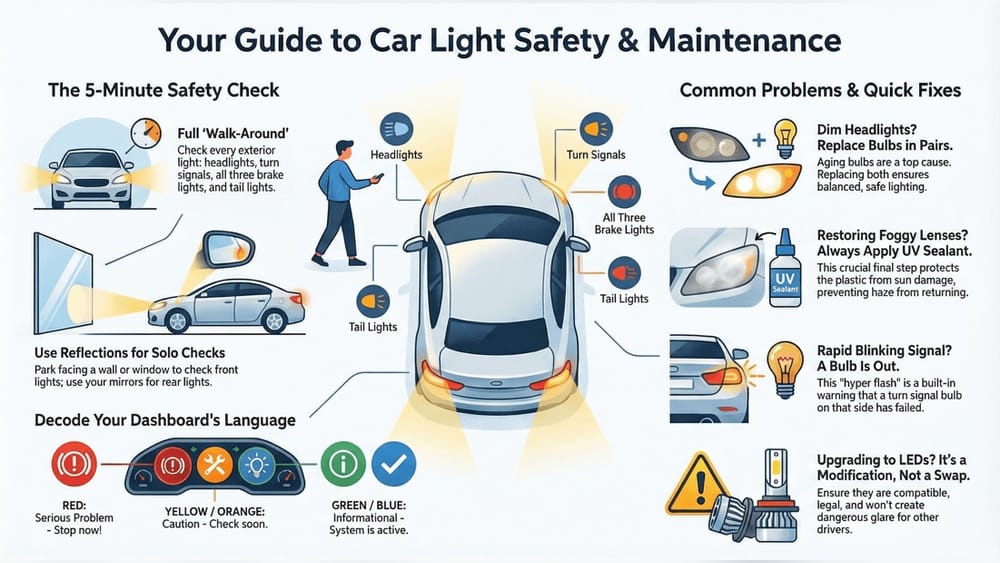
- Check all exterior lights monthly, enlist a friend or use reflective surfaces.
- Replace bulbs at the first sign of dimming or flickering.
Use Quality Parts
- Opt for OEM (Original Equipment Manufacturer) bulbs and fuses.
- Avoid bargain or off-brand bulbs, which may have inconsistent lifespans.
Protect Against Moisture
- Ensure tail light seals are intact to prevent water ingress.
- Address trunk leaks promptly to avoid corrosion.
Schedule Routine Maintenance
Ask your mechanic to inspect the lighting system during scheduled services. Many shops include this check at no extra charge.
Data Table: Bulb Lifespan And Replacement Frequency
| Bulb Type | Average Lifespan | Recommended Inspection Interval |
|---|---|---|
| Halogen | 500-1,000 hours | Every 6 months |
| LED | Up to 50,000 hours | Annually |
| Incandescent | 1,000-2,000 hours | Every 6 months |
Pro Tip:
Consider replacing both stop light bulbs at the same time, if one fails, the other may not be far behind.
Tools And Resources For Diy Repairs
Having the right tools and information simplifies stop light repairs and boosts your confidence.
Essential Tools
- Screwdrivers (Phillips and flathead)
- Needle-nose pliers or fuse puller
- Multimeter for testing circuits
- Electrical contact cleaner
- Socket wrench set for light assembly removal
Reliable Information Sources
- Your vehicle owner’s manual, the first stop for diagrams and specifications.
- Online forums and video tutorials for model-specific guidance.
- Reputable websites, such as NHTSA Lighting Equipment, for safety standards and best practices.
Example: First-time Diyer
This process on a Toyota Camry takes less than 30 minutes with only a screwdriver and a $4 bulb, far less time and money than a trip to the shop.
Pro Tip:
Store a spare bulb and fuse in your glove compartment for emergency repairs on the road.
Cost Comparison: Diy Vs. Professional Repair
Is it worth fixing your stop light yourself, or should you pay a pro? Here’s a breakdown of typical costs.
| Repair Task | DIY Cost (Parts Only) | Professional Repair Cost | Time Required |
|---|---|---|---|
| Replace Bulb | $2-$8 | $30-$60 | 15-30 minutes |
| Replace Fuse | $2-$5 | $20-$40 | 10-20 minutes |
| Replace Brake Light Switch | $10-$30 | $70-$150 | 30-60 minutes |
| Wiring Repair | $5-$20 (parts) | $100-$300+ | 1-2 hours |
Factors Affecting Cost
- Vehicle make/model: Luxury or imported vehicles may have higher parts/labor costs.
- Location: Labor rates vary by region.
- Severity of problem: Complex electrical faults increase costs.
Pro Tip:
If you’re comfortable with basic hand tools, most stop light repairs fall well within the DIY category.
Frequently Asked Questions
What Should I Do If Only One Stop Light Is Out?
If a single stop light is out, start by checking the bulb and socket. In most cases, the issue is limited to a burned-out bulb, a loose connection, or minor corrosion. If replacing the bulb doesn’t work, inspect the wiring to that specific light.
Rarely, a localized wiring fault or socket failure may be to blame.
Can A Faulty Stop Light Affect My Vehicle’s Cruise Control?
Yes, in many modern vehicles, the brake light switch also signals the cruise control system. If the switch is faulty, cruise control may disengage or fail to activate as a safety precaution. Replacing the switch typically resolves both the stop light and cruise control issues.
How Do I Test Stop Lights Without Help?
You can check your stop lights by backing up close to a reflective surface (like a garage door or window) and pressing the brake pedal while observing the reflection. Alternatively, use a heavy object (such as a brick or stick) to hold the pedal down while you walk to the rear of the vehicle.
What Type Of Bulb Should I Use For Replacement?
Always use the bulb type specified in your owner’s manual. Using the wrong wattage or socket type can cause electrical issues or overheating. If switching to LEDs, ensure they’re compatible with your vehicle’s electrical system and won’t trigger warning lights.
Are There Any Resources For Learning More About Automotive Wiring?
Absolutely. The Automotive Lighting Wikipedia page offers a comprehensive overview of automotive lighting technology, including wiring diagrams, bulb types, and regulatory standards. For hands-on guidance, many auto parts retailers and online forums provide tutorials and troubleshooting guides.
A functional stop light is essential for your safety and legal compliance. With a little knowledge and the right tools, you can diagnose and fix most stop light problems quickly and affordably. Whether you choose the DIY route or consult a professional, prompt action keeps you, and everyone around you, safer on the road.
Products related to this article
Sponsored / affiliate links. As an Amazon Associate I earn from qualifying purchases. I may earn additional commission from eligible campaigns.