
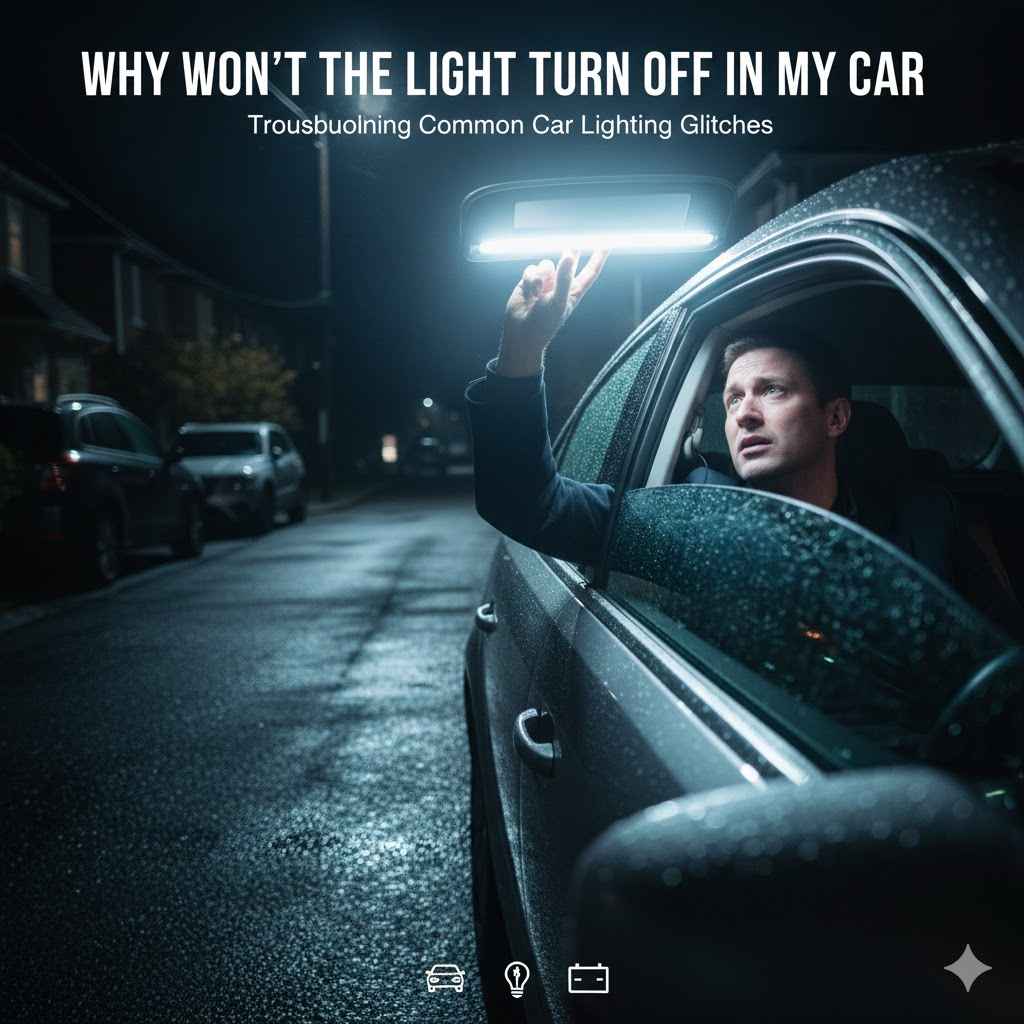
Sometimes a little light in your car stays on when it shouldn’t. This can be confusing, especially if you’re new to car troubles. You might wonder, Why Won’t the Light Turn Off in My Car? It’s a common puzzle many drivers face.
But don’t worry, figuring this out is usually simpler than it seems. We’ll walk through the common reasons step-by-step so you can get your car back to normal.
Common Car Light Issues and What They Mean
Many car lights are designed to alert you to something important happening with your vehicle. When one of these lights stays on, it’s your car’s way of telling you to pay attention. Understanding what these lights signify is the first step to solving the mystery of why they won’t turn off.
This section will break down the most frequent culprits behind persistent warning lights, making it easier for you to identify the problem.
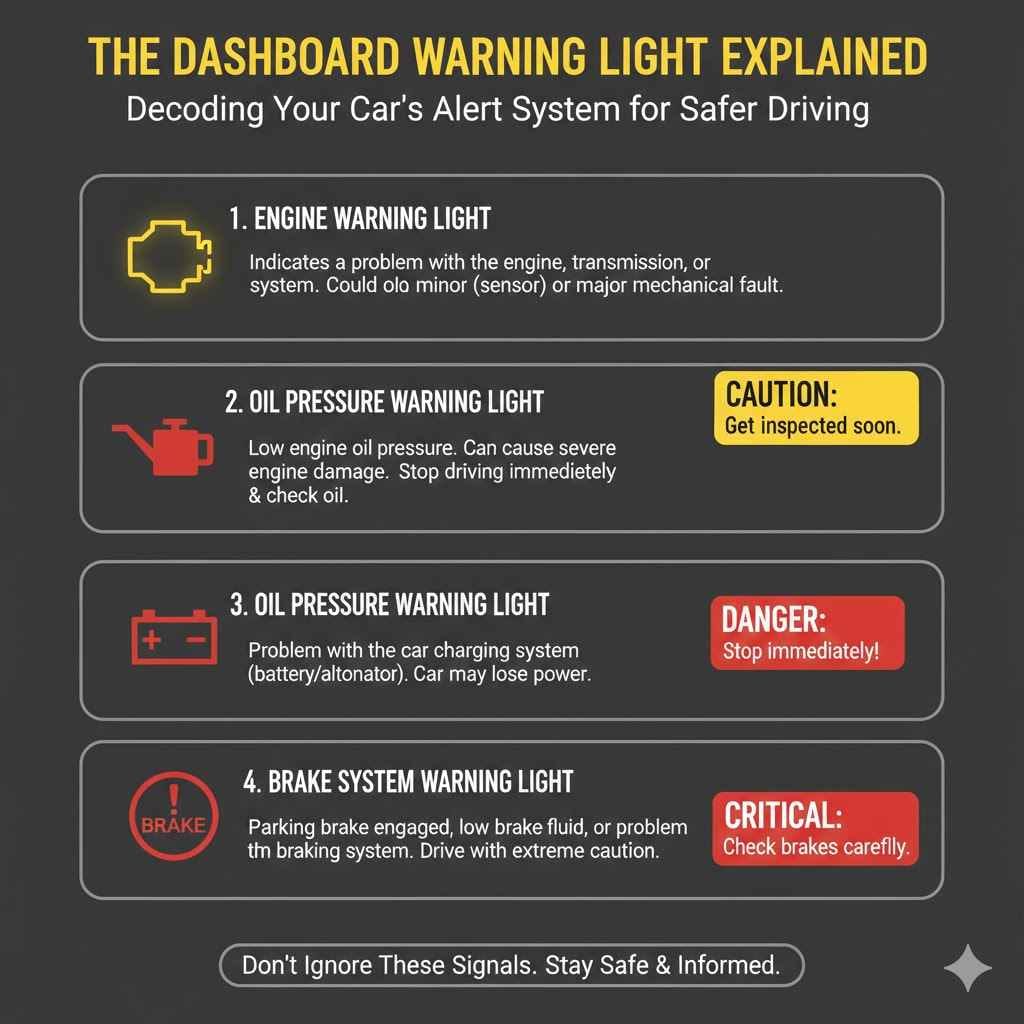
The Dashboard Warning Light Explained
Dashboard warning lights are your car’s primary communication system for alerting you to potential problems. These lights can range from indicating a minor issue, like a loose gas cap, to a more serious concern, such as a problem with the engine or brakes. Recognizing the shape and color of these lights can give you a preliminary clue about the severity of the issue.
Engine Warning Light (Check Engine Light) This is perhaps the most common and concerning dashboard light. It illuminates when the car’s onboard computer detects a problem with the engine, transmission, or emissions system. The issue could be as simple as a faulty oxygen sensor or a misfiring spark plug, or it could indicate a more significant mechanical fault requiring immediate attention.
Oil Pressure Warning Light This light looks like an old-fashioned oil can. If it comes on, it means your engine oil pressure is too low. Low oil pressure can cause serious engine damage very quickly.
You should stop driving as soon as it is safe to do so and check your oil level. If the oil level is fine, there might be a problem with the oil pump or a leak.
Battery Warning Light This light resembles a battery. It indicates a problem with your car’s charging system. This could mean your battery isn’t getting enough charge from the alternator, or there’s an issue with the alternator itself.
If this light stays on, your car may eventually run out of power and stop working.
Brake System Warning Light This light often looks like an exclamation mark inside a circle or the word “BRAKE.” It can signify a few things. It might mean your parking brake is engaged, or it could indicate low brake fluid levels or a more serious problem with your braking system, like worn brake pads or a leak in the brake lines. If this light is on, you should be extremely cautious when driving.
These lights are designed to be noticeable. Their purpose is to grab your attention so you address the issue before it becomes a major problem. Ignoring them can lead to more expensive repairs down the line.
Understanding Different Types of Car Lights
Cars have various lights, not just the ones that warn you of problems. There are also lights that indicate the status of different systems. Knowing the difference helps you avoid unnecessary worry.
For example, a light that comes on when you turn your headlights on is normal. But a light that stays on when it shouldn’t is what we need to focus on.
Interior Lights That Stay On
Sometimes, the lights that stay on are inside the car. This could be the dome light, the vanity mirror light, or even a light that indicates a door is ajar. While often less critical than engine lights, they can still be annoying and drain your battery if left on overnight.
Dome Light Issues The dome light, which illuminates the car’s interior, has a switch that can be faulty or left in the “on” position. Sometimes, even when switched to “off” or “door” mode, a bad switch can cause it to remain illuminated. This is usually a simple fix involving the switch itself.
Door Ajar Indicator Most cars have a light that indicates if a door is not fully closed. If this light stays on even when all doors are shut tightly, it suggests a problem with the door latch sensor or switch. These sensors tell the car’s computer if a door is open or closed.
Exterior Lights That Won’t Turn Off
Exterior lights can include headlights, taillights, brake lights, and turn signals. Issues here can affect your visibility and safety, as well as the safety of others. A headlight that stays on constantly when it shouldn’t, or taillights that never go off, needs investigation.
Headlight Problems If your headlights stay on even when the car is off and the switch is in the off position, there might be a problem with the headlight switch or the car’s body control module. In some newer cars, automatic headlight systems can also malfunction.
Taillight and Brake Light Malfunctions If your taillights or brake lights remain illuminated constantly, it could be due to a faulty light switch, a problem with the brake light relay, or even a stuck brake pedal switch. This is a safety concern as other drivers may not know when you are braking.
Common Causes for Persistent Car Lights
Several common issues can cause a car light to stay on. Most of these are not overly complicated and can often be diagnosed with a bit of patience and basic knowledge. We will explore these in detail.
Faulty Light Switch
The light switch is the control center for many of your car’s lights. Over time, these switches can wear out or become damaged. When a switch malfunctions, it might send a constant signal to the lights, telling them to stay on even when they are supposed to be off.
How a Light Switch Works Your car’s light switch is an electrical component that completes or breaks circuits. When you turn the knob or press the button, you are physically moving contacts inside the switch to allow electricity to flow to the lights, or to stop the flow. A dirty, corroded, or broken internal contact can get stuck in the “on” position.
Symptoms of a Bad Switch Besides lights that won’t turn off, a failing light switch might also cause lights to flicker, work intermittently, or not turn on at all when they are supposed to. Sometimes, turning the switch might feel loose or gritty.
Simple Fixes In many cases, especially with older cars, a faulty light switch can be replaced relatively easily. You can often find replacement parts online or at an auto parts store. The process usually involves removing a dashboard panel and disconnecting a few wires.
Issues with Sensors and Relays
Modern cars rely heavily on sensors and relays to control various functions, including lights. A faulty sensor can send incorrect information, and a stuck relay can keep a circuit energized.
What Are Sensors? Sensors are devices that measure physical conditions like temperature, pressure, or light levels and convert them into electrical signals. For example, a light sensor might tell your headlights to turn on when it gets dark. If this sensor is dirty or broken, it might falsely believe it’s always dark.
What Are Relays? A relay is an electrically operated switch. It uses a small amount of electrical power to control a larger amount of power. In cars, relays are often used for high-current items like headlights or cooling fans.
If a relay’s internal contacts get stuck closed, the circuit it controls will remain powered.
Diagnosing Sensor/Relay Problems Diagnosing these issues can be more technical. Sometimes, a mechanic uses a scan tool to read error codes from the car’s computer, which can point to a specific sensor or relay. Testing relays often involves checking for voltage and continuity.
A common example is a problem with the ambient light sensor that controls automatic headlights. If this sensor is covered in dirt or grime, it might think it’s perpetually nighttime, keeping the headlights on.
Electrical System Faults
The entire electrical system of your car is a complex network of wires, fuses, and connections. A short circuit, a frayed wire, or a bad ground connection can all cause lights to behave erratically.
Short Circuits A short circuit happens when an electrical current takes an unintended path, often bypassing the normal resistance. This can happen if a wire’s insulation is damaged and it touches another metal part of the car. Shorts can cause fuses to blow or damage electrical components.
Bad Ground Connections Electrical circuits need a good ground to complete their path back to the battery. A loose or corroded ground connection can cause lights to dim, flicker, or stay on because the electrical signal isn’t properly completing.
Wiring Harness Issues The wiring harness is like the nervous system of your car, containing all the wires that connect components. Damage to this harness, perhaps from vibration, heat, or rodents chewing wires, can lead to all sorts of electrical gremlins, including lights that won’t turn off.
Problem with the Car’s Computer (ECU)
In newer cars, the Engine Control Unit (ECU) or Body Control Module (BCM) manages many electrical functions. If the computer itself has a glitch or a fault, it can send incorrect commands, leading to lights staying on.
What the ECU/BCM Does The ECU, often called the car’s computer, monitors and controls various engine functions. The BCM, on the other hand, typically manages comfort and convenience features, including interior and exterior lighting, power windows, and door locks. They receive input from sensors and send commands to actuators.
When the Computer Fails While rare, these computers can fail due to power surges, water damage, or internal component failure. Symptoms can be widespread and may include multiple electrical systems acting strangely.
Troubleshooting Computer Issues Diagnosing a faulty ECU or BCM usually requires specialized diagnostic equipment. Mechanics connect to the car’s OBD-II port to read codes and test the module’s performance. Replacement is often expensive.
Troubleshooting Steps to Fix Persistent Lights
If you’re dealing with a car light that won’t turn off, there are a few steps you can take to try and pinpoint the problem before seeking professional help.
Start with the Simplest Solutions
Before diving into complex diagnostics, always check the most straightforward causes. These are often overlooked but can be the simplest to fix.
Check Your Owner’s Manual Your car’s owner’s manual is an invaluable resource. It will identify what each dashboard warning light means and might offer basic troubleshooting steps for common issues. It’s the first place you should look.
Inspect Door Seals and Latches For interior lights or door ajar warnings that won’t turn off, carefully check all doors, the trunk, and the hood. Ensure they are fully closed and latched. Sometimes a piece of debris can prevent a door from closing properly, tricking the sensor.
Verify Light Switch Position Double-check that your interior and exterior light switches are in the correct “off” or “auto” positions. Sometimes a simple oversight can be the cause.
These basic checks can save you time and money by resolving the issue before it gets complicated.
Resetting Fuses and Relays
Fuses and relays are designed to protect your car’s electrical system. Sometimes, a minor electrical hiccup can be resolved by resetting them.
Locate Your Fuse Box Cars typically have one or more fuse boxes, usually located under the dashboard or in the engine compartment. Your owner’s manual will show you where they are and what each fuse controls.
Identify the Relevant Fuse Look for the fuse associated with the light that is staying on. It might be labeled for headlights, interior lights, or a specific module. If you’re unsure, you can temporarily remove fuses for related systems.
Check and Reset Fuses Pull out the fuse using a fuse puller or small pliers. Visually inspect it for a broken wire inside. If it looks intact, try reinserting it firmly.
If it was blown,
Consider Relays Relays are less commonly reset than fuses, but sometimes tapping on a relay housing can help dislodge stuck contacts. However, precise diagnosis is usually needed for relay issues.
A blown fuse is a sign of an underlying electrical problem, so if a fuse blows again immediately after replacement, further investigation is necessary.
Checking for Diagnostic Trouble Codes (DTCs)
Modern cars store information about detected problems in their computer. Retrieving these codes can provide valuable clues.
What Are DTCs? Diagnostic Trouble Codes (DTCs) are standardized codes that the car’s computer system generates when it detects a fault. These codes correspond to specific problems within the vehicle’s various systems.
How to Read DTCs You can read DTCs using an OBD-II scanner. Many auto parts stores offer free OBD-II scanning services. You can also purchase an affordable scanner for home use.
Plug the scanner into the OBD-II port, usually located under the dashboard on the driver’s side, and follow the device’s instructions to retrieve codes.
Interpreting the Codes Once you have the codes, you can look them up online or in your manual. The code will provide a general idea of the system or component that is having an issue. For example, a code like P0420 might relate to an emissions system problem.
Interpreting DTCs is a crucial step for accurate diagnosis. For instance, a code related to the ambient light sensor (e.g., B1A03) would directly point to a potential cause for automatic headlights staying on.
When to Call a Professional
While many issues can be resolved with basic troubleshooting, some problems require specialized tools and expertise.
Complex Electrical Problems If you suspect a short circuit, wiring harness damage, or a faulty computer module, it’s best to consult a qualified mechanic. These issues can be difficult and dangerous to diagnose without proper training and equipment.
Persistent Warning Lights If you’ve tried basic steps and the warning light remains on, or if multiple lights are illuminated, it’s time to seek professional help. The mechanic can perform a thorough diagnostic check.
Safety-Related Systems For issues concerning brakes, airbags, or critical engine functions, always prioritize safety and seek professional diagnosis and repair immediately. Don’t take chances with your vehicle’s safety systems.
Mechanics have access to advanced diagnostic tools and technical service bulletins that can help them quickly and accurately identify and fix even the most stubborn car light problems.
Real-Life Examples of Persistent Lights
Seeing how others have solved similar problems can be very helpful. Here are a couple of scenarios that illustrate common causes and solutions.
Scenario 1: The Headlights That Wouldn’t Turn Off Sarah noticed her headlights stayed on even after she turned off the car and removed the key. She checked her owner’s manual and confirmed the switch was in the “off” position. After ensuring the car wasn’t in a “parking light” mode, she suspected a faulty headlight switch.
She found a
Scenario 2: The Persistent Interior Light Mark’s interior dome light wouldn’t go off, even when all doors were closed. He first checked the dome light switch itself to ensure it wasn’t manually set to “on.” When that didn’t work, he examined the door jamb switches. He found that one of the rear passenger door jamb switches was stuck, likely due to dirt or misalignment.
He cleaned it and jiggled it a few times, and the light then shut off correctly when the door was closed. This saved him a trip to the mechanic.
These examples show that sometimes the cause is simple, while other times it might be a component that needs specific attention.
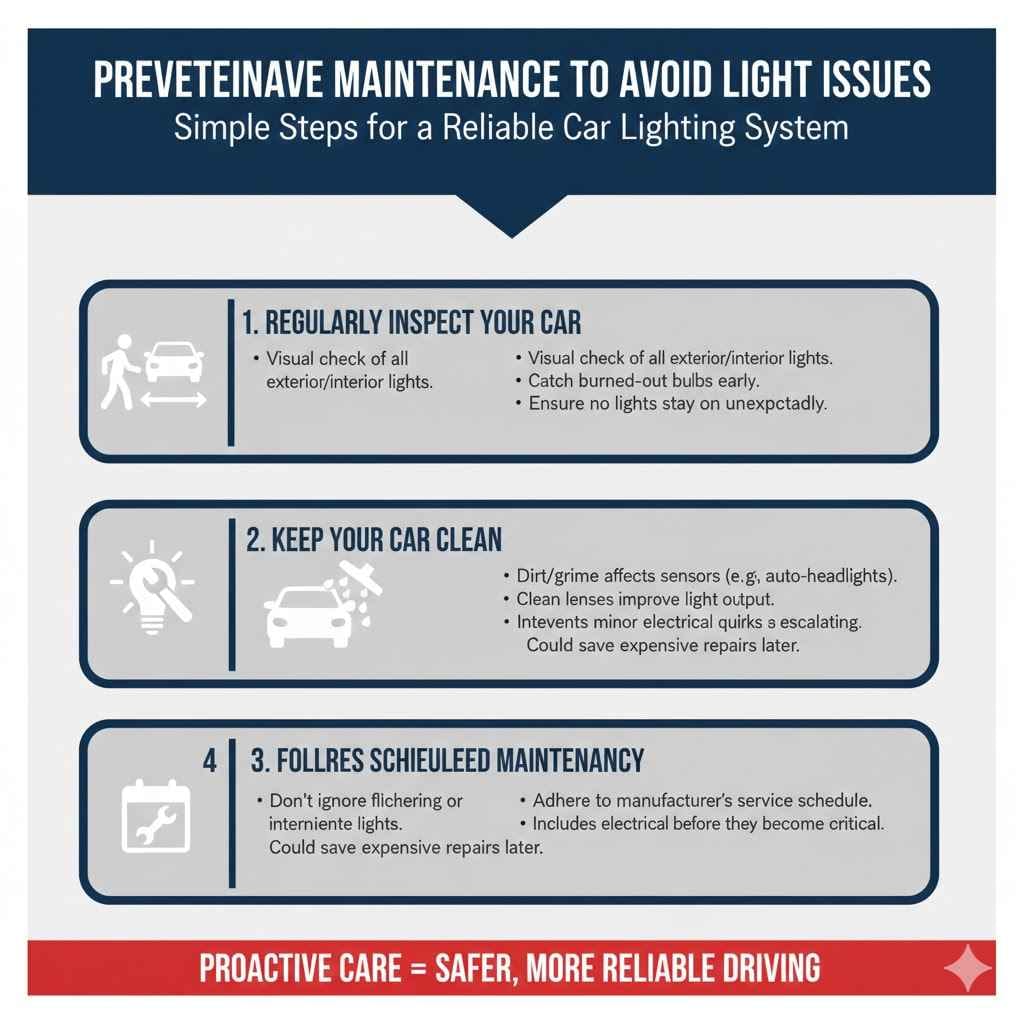
Preventative Maintenance to Avoid Light Issues
While you can’t prevent all car issues, good maintenance practices can reduce the likelihood of lights staying on unexpectedly.
Regularly Inspect Your Car Take a moment to visually inspect your car’s lights regularly. Ensure all lights are working when they should be and that no lights are on when they shouldn’t be. This quick check can catch issues early.
Keep Your Car Clean Dirt and debris can interfere with sensors, like the ambient light sensor for automatic headlights. Keeping your car’s exterior and interior clean can help these sensors function properly.
Address Small Problems Quickly If you notice a flickering light or an intermittent issue, don’t ignore it. Addressing minor electrical quirks promptly can prevent them from escalating into bigger problems that cause lights to stay on permanently.
Follow Scheduled Maintenance Adhering to your car manufacturer’s recommended maintenance schedule, including checks of the electrical system, can help identify potential issues before they become critical.
Proactive care makes a big difference in keeping your car running smoothly and its warning lights behaving as they should.
Frequently Asked Questions
Question: What should I do if my car’s brake light stays on?
Answer: If your brake light stays on, first check if the parking brake is fully disengaged. If it is, check your brake fluid level. If the fluid is low, there might be a leak or worn brake pads.
It is crucial to have your brake system inspected by a professional immediately for safety reasons.
Question: Can a loose gas cap cause a warning light to stay on?
Answer: Yes, a loose or missing gas cap can often trigger the Check Engine Light. The car’s emissions system is sensitive to pressure changes. Tighten the gas cap until it clicks, and the light may turn off after a few driving cycles.
Question: How long does it take for a warning light to turn off after fixing the issue?
Answer: This varies depending on the car and the issue. For simple problems like a loose gas cap, it might take a few short drives for the computer to reset and turn the light off. For more complex issues resolved by a mechanic, they may be able to reset the light immediately.
Question: Is it safe to drive my car if the battery warning light is on?
Answer: It is generally not safe to drive for an extended period with the battery warning light on. This light indicates a problem with the charging system. Your car’s battery will eventually run out of power, and the engine will stop running.
Drive to a safe location or mechanic as soon as possible.
Question: My interior dome light won’t turn off. What’s the easiest fix?
Answer: The easiest fix is often to check the dome light’s switch and ensure it’s set to the “off” or “door” position. If that doesn’t work, inspect the door jamb switches. Sometimes, one of these switches might be stuck or dirty, preventing the light from turning off when the doors are closed.
Cleaning or adjusting the switch can solve the problem.
Wrap Up
When a car light won’t turn off, it’s usually due to a faulty switch, a bad sensor, or a simple electrical issue. You can often fix common problems by checking your manual, fuses, or door sensors. For more complex issues, a quick scan for diagnostic codes can guide you.
Don’t hesitate to see a mechanic if you’re unsure; they can diagnose and repair it safely.