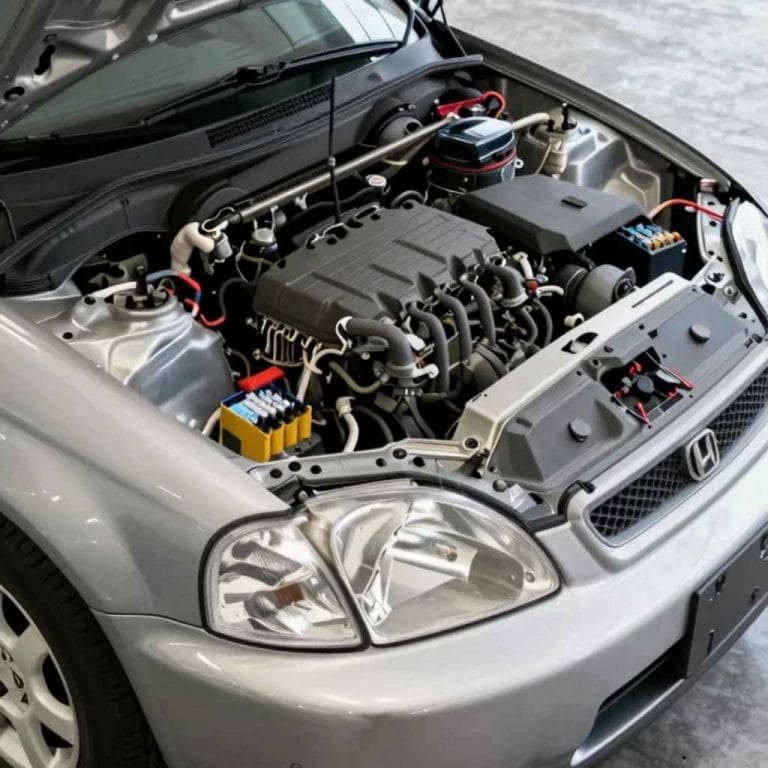
Why Is My Honda Civic Not Starting? Common Causes & Fixes
Your Honda Civic not starting is a frustrating experience that can stem from several common issues. This post will help you identify the likely causes and provide practical fixes to get you back on the road quickly.
Simply put, a dead battery is the most frequent reason a Honda Civic won’t start, but problems with the starter motor, fuel system, or ignition can also be at fault. Knowing the symptoms saves time and money.
Key Takeaways
- Honda Civic not starting is most often due to a dead or weak battery, especially in cold weather or after leaving lights on.
- Clicking sounds or no sound at all point to a battery or starter issue, while a cranking engine that won’t fire suggests fuel or ignition problems.
- Diagnosing the issue step by step can help you avoid unnecessary repairs and get your Civic running again.
- Modern Honda Civics may also suffer from immobilizer or security system malfunctions that prevent starting.
- Regular maintenance of battery terminals, starter connections, and fuel filters reduces no-start occurrences.
What Does It Mean When Your Honda Civic Won’t Start?
When you turn the key or push the start button and the engine fails to crank or run, you’re facing a no-start condition. This isn’t the same as a car that starts but dies immediately – a no-start means the engine never fires up. In Honda Civics, the problem usually falls into three categories: electrical issues (battery, starter), fuel delivery problems (pump, injectors), or ignition faults (spark plugs, coils). According to AAA, dead batteries cause about 40% of all roadside no-start calls. For your Civic, understanding the specific symptoms is the first step toward a fix.
Symptoms to Watch For
- No sound at all: Dead battery or faulty starter solenoid.
- Clicking noise when turning the key: Weak battery or poor connection.
- Engine cranks but won’t start: Fuel or ignition issues.
- Rapid clicking: Often a very low battery.
- Dashboard lights dim or flicker: Battery or alternator problem.
- Security light flashing: Immobilizer or key fob issue.
| Symptom | Likely Cause | Priority Check |
|---|---|---|
| No crank, no sound | Dead battery, bad starter | Check battery first |
| Single click, then nothing | Weak battery, corroded terminals | Inspect battery connections |
| Cranks but no start | Fuel pump, spark, security | Check fuel pressure |
These symptoms guide you to the right system to test, saving hours of guesswork.
Common Causes of a Honda Civic Not Starting
Honda Civics are reliable vehicles, but like all cars, they have weak points that cause no-start issues. The most frequent offenders include battery failure, starter motor wear, fuel pump problems, and ignition system faults. A 2023 study from CarMD showed that the average repair for a no-start condition across all vehicles is $380, but many fixes for Civics cost far less when caught early. Let’s break down the top causes by frequency.
Top 5 Causes by Frequency
- Dead or weak battery: Accounts for nearly 50% of no-starts. Cold weather, old age, or parasitic drains are common triggers.
- Starter motor failure: The starter wears out over time, especially after 100,000 miles. Listen for a grinding sound.
- Fuel system issues: Clogged fuel filter, failed fuel pump, or bad relay can starve the engine of fuel.
- Ignition system problems: Worn spark plugs, faulty ignition coils, or a bad crankshaft position sensor.
- Security system or immobilizer: If the key fob battery is dead or the immobilizer chip fails, the engine won’t start even with good cranking.
Tip: Keep a set of jumper cables in your trunk. A simple jump start can confirm if the battery is the culprit before you buy a new one.
How to Diagnose a No-Start Condition in a Honda Civic
Diagnosing a no-start requires a systematic approach. Start with the easiest checks first – you don’t need to be a mechanic to solve many issues. The diagnostic process follows a logical path: battery power, starter cranking, fuel delivery, and spark presence. For Honda Civics, some models have specific quirks, like the 8th generation (2006-2011) being prone to starter relay failures.
Step-by-Step Diagnosis Guide
- Check the battery voltage: Use a multimeter. A healthy battery reads 12.6 volts or higher. Below 12.4 volts, charge or replace it.
- Inspect battery terminals: Look for white or green corrosion on the terminals. Clean them with a wire brush if needed.
- Test the starter: Have someone tap the starter with a wrench while you turn the key. If it starts, the starter is likely failing.
- Listen for the fuel pump: Turn the key to “ON” (not start). You should hear a whirring sound from the rear for 2-3 seconds. No sound means a fuel pump issue.
- Check for spark: Pull a spark plug wire and hold it near a ground while cranking. A blue spark is good; no spark indicates ignition trouble.
- Scan for trouble codes: Use an OBD-II scanner. Codes like P0335 (crankshaft sensor) or P0627 (fuel pump relay) point directly to the problem.
Warning: Never crank the engine for more than 10 seconds at a time. Continuous cranking can damage the starter or drain the battery further.
This order ensures you don’t replace parts unnecessarily. Many people buy a new starter when a corroded battery terminal was the issue.
Dead Battery: The Most Likely Culprit
A dead or weak battery is the number one reason your Honda Civic won’t start. Batteries typically last 3-5 years, but extreme temperatures, frequent short trips, and electrical drains shorten their life. According to Honda’s own technical bulletins, parasitic drains from aftermarket accessories are a common cause of unexpected battery death in Civics. If your headlights are dim or the interior lights are very weak, the battery is almost certainly dead.
How to Test and Fix a Dead Battery
- Visual check: Look at the battery case for cracks or swelling. A bloated battery is overheating and needs replacement.
- Load test: An auto parts store can do a free load test. If the battery fails, replace it immediately.
- Jump start: Using quality cables, connect red to positive terminals and black to a ground point on the dead car. Start the donor car first.
- Clean terminals: Use a mixture of baking soda and water to remove corrosion. Tighten the clamps securely after cleaning.
| Symptom | Battery Check | Action |
|---|---|---|
| No lights, no sound | Battery likely 0 volts | Replace or charge |
| Dome light dim | Low voltage under 12.2V | Jump start then test |
| Battery light on dash | Alternator may be bad | Charge battery and test alternator |
If the battery is old, replace it at the first sign of trouble to avoid sudden failure. Honda recommends using a Group 151R or 51R battery for optimal performance.
Starter Motor and Solenoid Issues
If the battery is good but you hear a clicking sound or nothing at all, the starter motor or solenoid might be failing. The starter in Honda Civics is mounted on the engine block and engages with the flywheel. Over time, the internal brushes wear out, or the solenoid gets stuck. According to RepairPal, starter replacement is the second most common no-start repair for Honda Civic models, averaging $300 to $500.
Symptoms of a Failing Starter
- Single loud click: The solenoid is engaging, but the starter motor isn’t spinning.
- Grinding noise: The starter gear isn’t meshing properly with the flywheel.
- Intermittent starting: Sometimes it works, sometimes it clicks – classic starter wear.
- Whirring sound without engine crank: The starter spins but isn’t engaging the engine.
Important: On some Honda Civics, a bad starter relay can mimic a dead starter. Check the relay in the fuse box first – it’s a cheap fix.
To test the starter, tap it gently with a hammer while someone tries to start the car. If the car starts, the starter brushes are worn and need replacement. Otherwise, you may need a new starter assembly.
Fuel System Problems
A fuel delivery issue can leave your engine cranking but never catching. The fuel pump, fuel filter, or injectors can fail, especially in older Civics with high mileage. Honda reports that fuel pump failures are more common in the 7th generation (2001-2005) Civics, but it can happen to any model. A quick check is to listen for the fuel pump prime when you turn the key to the “ON” position.
Common Fuel System Failures
- Fuel pump failure: No whirring sound from the fuel tank area. The pump can be tested with a multimeter at the pump connector.
- Clogged fuel filter: If the filter hasn’t been changed in 30,000 miles, it can restrict flow. Symptoms include slow starting and hesitation.
- Bad fuel pump relay: This cheap part can cause intermittent no-starts. Swap it with a similar relay from the fuse box to test.
- Empty tank: It happens more often than you think. Always check the fuel gauge first.
Warning: Working on the fuel system requires caution. Fuel is highly flammable. Release fuel pressure before disconnecting any lines.
To diagnose a fuel issue, you can check fuel pressure at the test port on the fuel rail. A pressure gauge should read around 50-60 psi for most Civics. Low pressure points to a failing pump or clogged filter.
Ignition System Failures
If the engine cranks strongly but won’t start, and you have fuel, the problem is likely in the ignition system. Honda Civics use spark plugs, ignition coils (one per cylinder), and a crankshaft position sensor to time the spark. Worn spark plugs can cause misfires and starting issues. According to NGK, spark plugs should be replaced every 60,000 to 100,000 miles on modern Honda engines.
Ignition System Checks
- Remove and inspect spark plugs: Look for wear, carbon buildup, or cracks. Replace if the electrode is rounded.
- Test ignition coils: Swap coils between cylinders. If the problem moves, the coil is bad.
- Check the crankshaft position sensor: A failed CKP sensor prevents the engine computer from firing the coils. Use an OBD-II scanner for codes.
Honda Civic not starting due to ignition issues often shows no warning lights. It can be intermittent, making diagnosis tricky. A misfire code like P0301 (cylinder 1) usually points to a plug or coil problem.
Security System and Immobilizer Malfunctions
Modern Honda Civics have an immobilizer system that reads a chip in the key. If the system doesn’t recognize the key, the engine won’t start. This is a common complaint on 9th generation (2012-2015) Civics. Symptoms include a flashing green key light on the dashboard and a cranking engine that never fires.
Fixes for Immobilizer Issues
- Use the spare key: If the spare works, your primary key’s chip is damaged. Get a new key cut and programmed.
- Replace the key fob battery: A weak fob battery can disrupt communication with the car.
- Reset the system: Turn the key to “ON” for 10 seconds, then OFF. Repeat three times. Some Civics will reset the immobilizer.
- Disconnect the car battery: Wait 15 minutes and reconnect. This resets the electronic control unit (ECU) and sometimes clears immobilizer glitches.
Tip: Keep your key away from water and strong magnets. The immobilizer chip is fragile and can be permanently damaged by liquid or shock.
If none of these work, you may need a Honda dealership or a locksmith to reprogram the immobilizer. This can cost $100 to $200 but is cheaper than replacing the ECU.
Frequently Asked Questions
Why does my Honda Civic click but not start?
A clicking noise usually means the battery is too weak to engage the starter, or the starter solenoid is stuck. Check the battery voltage first, then inspect the starter connections.
How do I start my Honda Civic with a dead key fob?
Use the physical key blade inside the fob to unlock the door, then touch the fob to the start button. Many models allow push-button start even with a dead fob if you hold it against the button.
Can a blown fuse cause a no-start in a Honda Civic?
Yes, a blown fuse for the fuel pump, starter relay, or ECU can prevent starting. Check the fuse box under the hood and under the dashboard for any blown fuses.
What does it mean if my Honda Civic cranks but won’t start after sitting?
This points to fuel evaporation or a weak fuel pump. The fuel pump may have lost its prime, or there could be a leak in the fuel line. Try cycling the key three times to prime the pump.
How much does it cost to fix a Honda Civic that won’t start?
Costs vary widely. A battery replacement is $100-$200, a starter is $300-$500, and a fuel pump can be $400-$700. Diagnosis by a shop typically costs $100-$150.
Final Thoughts
A Honda Civic not starting is usually a straightforward fix, starting with the battery and moving through the starter, fuel, and ignition systems. By systematically checking each component, you can save time and money. Many issues are preventable with regular maintenance, like cleaning battery terminals and replacing spark plugs on schedule.
If the problem persists, don’t hesitate to consult a professional mechanic – but now you have the knowledge to diagnose it yourself first. See also best car cover for honda civic durable picks reviewed. See also honda civic vs accord size comparison what’s the difference. See also is the honda civic the world’s lowest car truth revealed.
Products related to this article
Sponsored / affiliate links. As an Amazon Associate I earn from qualifying purchases. I may earn additional commission from eligible campaigns.