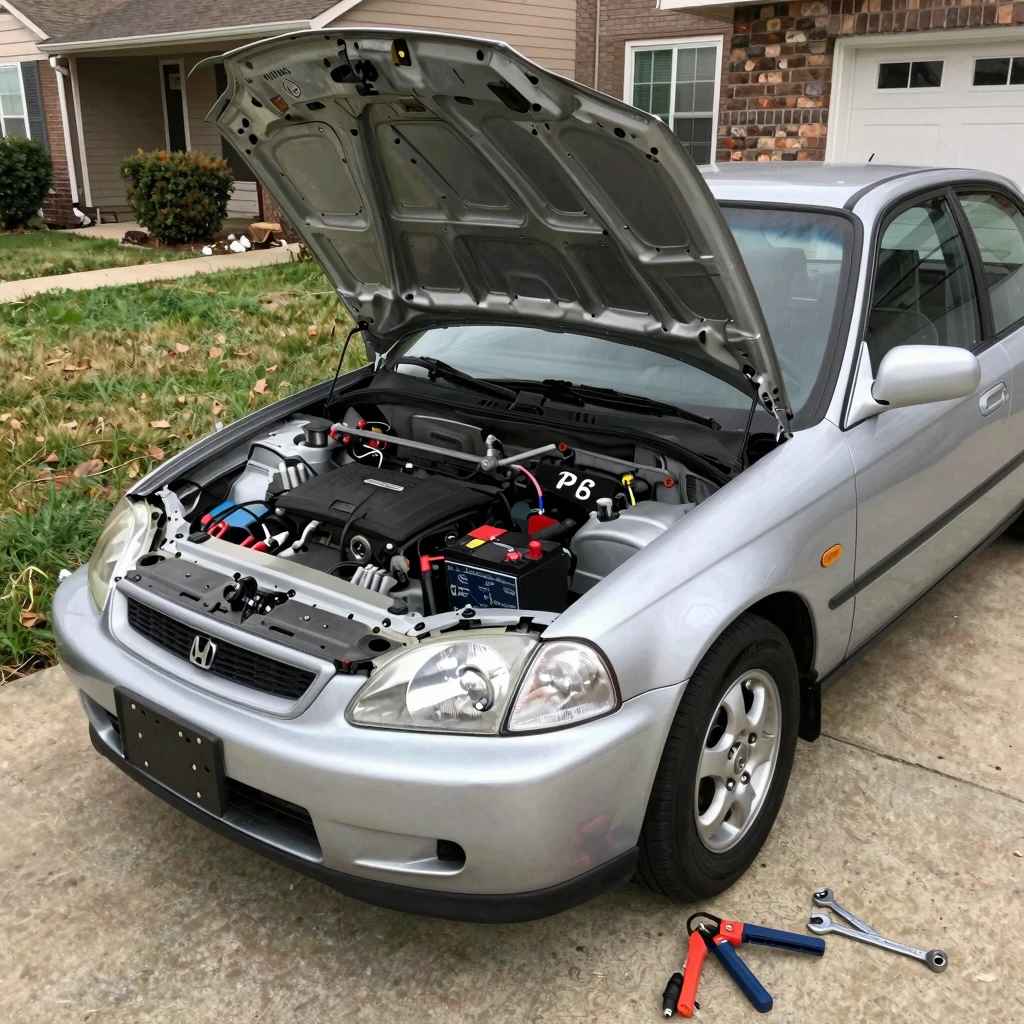
Why Isn’t My Car Starting Honda Civic: Top Causes & Fixes
If you own a Honda Civic and find that it suddenly will not start, it can be a stressful and puzzling experience. Modern cars are filled with electronics and mechanical components, and when something goes wrong, it may not always be obvious why. Whether your car is completely silent, makes a clicking sound, or tries to turn over but fails, understanding the possible reasons can help you get back on the road faster and avoid unnecessary repair costs.
This guide will walk you through every likely cause, help you pinpoint the problem, and give you practical advice on what to do next. Even if you are not a car expert, you will learn how to check key systems, avoid common mistakes, and know when it’s time to call for help.
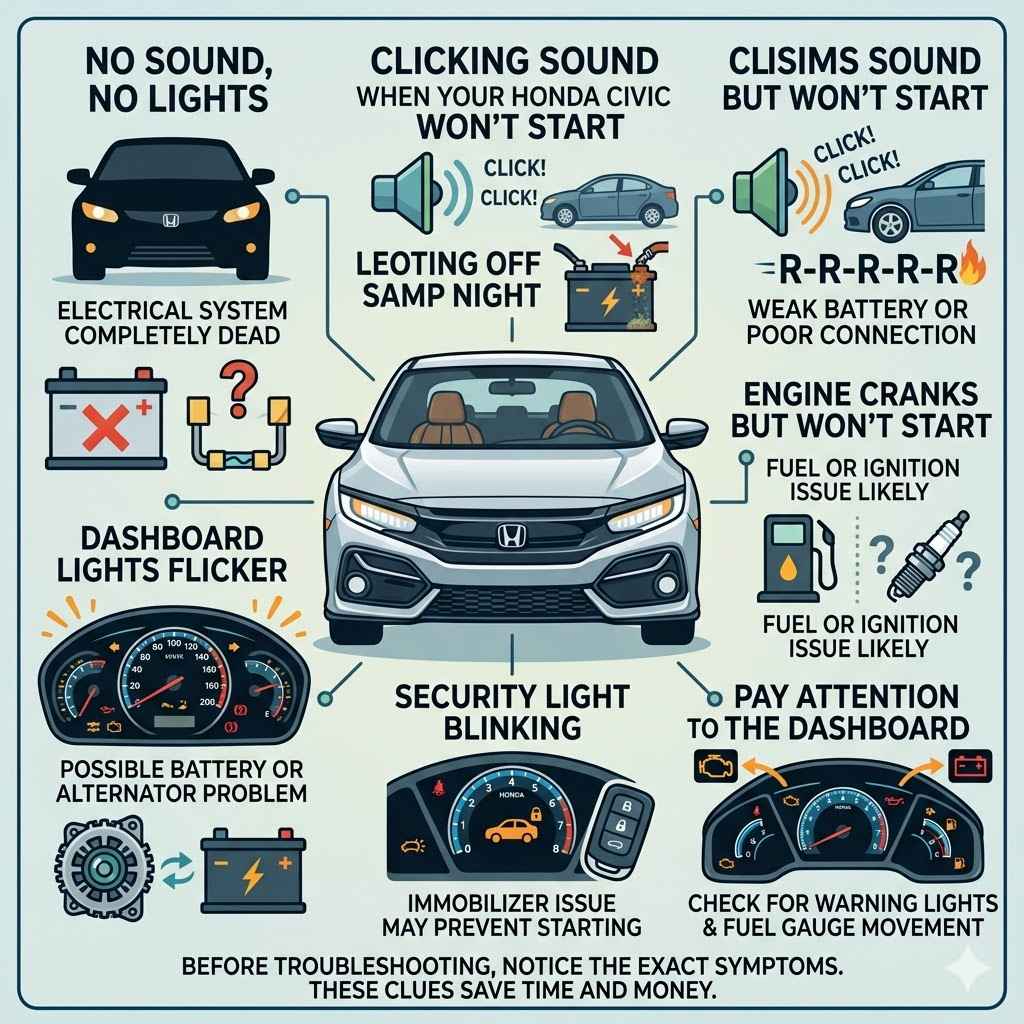
Common Symptoms When Your Honda Civic Won’t Start
Before you start troubleshooting, notice the exact symptoms your car is showing. These clues can save you time and money.
- No sound, no lights: Electrical system may be completely dead.
- Clicking sound: Usually a sign of a weak battery or poor connection.
- Engine cranks but won’t start: Fuel or ignition issue likely.
- Dashboard lights flicker: Possible battery or alternator problem.
- Security light blinking: Immobilizer issue may prevent starting.
Pay attention to the dashboard. Are warning lights on? Does the fuel gauge move? These small details are important.
The Battery: The Most Common Culprit
A dead or weak battery is the number one reason cars won’t start, including the Honda Civic.
Signs Of A Bad Battery
- The engine does not crank, or cranks slowly.
- Interior lights are dim or do not come on.
- You hear a clicking sound when turning the key.
Why Car Batteries Fail
Batteries usually last 3–5 years. Hot or cold weather, short trips, or leaving lights on can shorten battery life. Corroded battery terminals or loose cables can also prevent starting, even if the battery is still good.
How To Check Your Battery
- Turn on the headlights. Are they bright? If not, the battery is weak.
- Check the battery terminals for corrosion (white or green powder).
- Try jump-starting the car with jumper cables and another vehicle.
- Use a multimeter: A healthy battery reads about 12.6 volts with the car off.
If a jump start works, your battery is likely the problem. If it dies again soon after, your alternator or charging system may be at fault.
Battery Comparison: New Vs. Old
| Battery Age | Voltage (Engine Off) | Chance of Failure |
|---|---|---|
| 0–2 years | 12.6V–12.8V | Low |
| 3–5 years | 12.4V–12.6V | Medium |
| 5+ years | Below 12.4V | High |
Many people overlook battery terminal corrosion—cleaning these connections can sometimes fix the problem without replacing the battery.
Starter Motor And Starter Relay Problems
If your battery is strong but your Honda Civic still won’t start, the starter system may be to blame.
What Is The Starter Motor?
The starter motor is a small electric motor that turns the engine over when you turn the key. The starter relay sends power from the battery to the starter motor.
Symptoms Of Starter Issues
- Single click or series of clicks when turning the key.
- Interior lights stay on, but the engine does not turn.
- Sometimes starts after several tries.
How To Test
- Listen for a click under the hood when you try to start.
- Tap lightly on the starter with a tool and try again. If it starts, the starter is failing.
- Check for loose wires or burned fuses in the starter circuit.
If your starter is faulty, it needs repair or replacement. Starters typically last 80,000 to 150,000 miles.
Alternator And Charging System
The alternator charges your battery while the engine runs. If it fails, your battery will quickly lose power and the car will not start.
Signs Of Alternator Problems
- Battery warning light on the dashboard.
- Headlights and dashboard lights dim or flicker.
- Engine stalls while driving.
How To Spot Alternator Failure
- After jump-starting, if the car dies again soon, the alternator may not be charging.
- Listen for a whining noise from the engine.
- Use a multimeter: With the engine running, voltage should be 13.8V–14.5V.
Replacing a faulty alternator usually solves the issue. A weak alternator can slowly damage a new battery, leading to repeated failures.
Fuel System Problems
If your engine turns over but does not start, the fuel system could be at fault.
Common Fuel System Issues
- Empty fuel tank (more common than you think!)
- Bad fuel pump
- Clogged fuel filter
- Faulty fuel injectors
How To Check
- Make sure there is enough fuel in the tank.
- When you turn the key to “ON,” listen for a quiet humming sound from the back seat—this is the fuel pump.
- Spray a small amount of starting fluid into the air intake (only if you know how). If the engine tries to start, fuel delivery is the issue.
In the Honda Civic, fuel pumps last about 100,000–150,000 miles but can fail sooner if you often drive with a nearly empty tank.
Ignition System Failures
The ignition system creates the spark needed to ignite the fuel-air mixture in the engine.
Components That Can Fail
- Ignition switch
- Spark plugs and ignition coils
- Crankshaft position sensor
How To Identify Ignition Problems
- Engine cranks but does not start.
- No spark at spark plug wires.
- Engine stalls randomly while driving.
Detailed Example: Ignition Switch Failure
A common issue in older Civics is a worn ignition switch. Signs include:
- Intermittent starting (works sometimes, not others)
- Electrical accessories (radio, lights) cut out when turning the key
Replacement of the ignition switch is required if this happens.
Security System And Immobilizer
Modern Honda Civics have an immobilizer—a security feature that prevents the car from starting if the key or system is not recognized.
Signs Of Immobilizer Problems
- Green key light or security light blinking on the dashboard.
- Engine cranks but does not start.
- “Key not recognized” message.
How To Fix
- Try a spare key (sometimes the chip in the main key fails).
- Disconnect and reconnect the battery (may reset the system).
- If the problem continues, the dealer must reprogram the immobilizer.
Many owners overlook immobilizer issues and waste time replacing good parts. Check for a blinking security light before going further.
Starter Circuit Fuses And Relays
A simple blown fuse or failed relay in the starter circuit can stop your Civic from starting.
Where To Look
- Under the hood: Main fuse box
- Under the dashboard: Secondary fuse box
How To Check
- Find the starter relay and fuses using your owner’s manual.
- Pull out the suspected fuse and check if the metal strip is broken.
- Swap the starter relay with a similar one to test.
Replacing a blown fuse or faulty relay is an easy and cheap fix.
Transmission Range Switch (automatic Models)
For automatic Honda Civics, the transmission range switch (also called the neutral safety switch) prevents the car from starting in gear.
Symptoms
- Car only starts in “Neutral” but not in “Park,” or vice versa.
- No crank when turning the key.
What To Do
Try starting the car in both Park and Neutral. If it starts in one but not the other, the switch may be faulty and needs adjustment or replacement.
Engine Control Unit (ecu) And Sensors
The ECU is the car’s brain. If it fails or receives bad signals, your Civic may not start.
Common Sensor Issues
- Crankshaft position sensor
- Camshaft position sensor
- Engine coolant temperature sensor
Signs Of Ecu Or Sensor Problems
- Check Engine Light is on.
- Trouble codes when scanned with an OBD2 tool.
- Engine cranks but does not start.
Sensors are often overlooked. For example, a bad crankshaft sensor can prevent the engine from firing, but the battery and starter are fine.
Flooded Engine (rare In Modern Civics)
If you press the gas pedal too many times while trying to start, you can “flood” the engine with fuel.
How To Spot A Flooded Engine
- Strong smell of gasoline.
- Engine cranks quickly but does not start.
How To Fix
Hold the gas pedal down to the floor and crank the engine for 10 seconds. Wait and try again. This clears excess fuel.
This is rare in fuel-injected Civics but can happen if the engine is cold and starting attempts are repeated quickly.
Other Electrical Issues
Wiring problems, loose connectors, or a bad main relay (common in older Civics) can all cause no-start situations.
Main Relay Failure
Located under the dashboard, the main relay controls power to the fuel pump and ECU.
Symptoms
- Car starts sometimes, especially when weather is cool.
- Fails to start when hot or after driving.
Replacing the main relay often solves random no-start issues in Civics from the 1990s and early 2000s.
Comparing Common Causes Of A Honda Civic Not Starting
Here is a summary of main causes and their likelihood:
| Cause | Symptoms | How Common? |
|---|---|---|
| Battery | No crank, clicking, dim lights | Very common |
| Starter Motor | Clicking, no crank, lights OK | Common |
| Fuel System | Cranks, no start | Moderate |
| Ignition Switch | Random, intermittent no start | Occasional |
| Immobilizer | Light blinking, cranks, no start | Occasional |
| Main Relay | Hot weather, random no start | Rare (older Civics) |
Two Insights Most Owners Miss
- Battery Terminals: Many people replace the battery when only the terminals are corroded or loose. Always clean and tighten these first.
- Main Relay Heat Failure: In older Civics, the main relay fails more when hot. If your car starts in the morning but not after running, suspect the relay.
What To Do If Your Honda Civic Still Won’t Start
If you have tried the above checks and your Civic still will not start, consider the following steps:
- Scan for error codes with an OBD2 scanner. This can reveal hidden sensor or ECU problems.
- Call a trusted mechanic or the Honda dealership if you suspect immobilizer or ECU faults.
- Avoid cranking the engine for long periods. This can drain the battery or damage the starter.
- Do not replace parts at random—diagnose first to save money.
Tip: Keep a portable jump starter in your car. It is a small investment that can save you from being stranded.
Cost To Fix A Honda Civic That Won’t Start
Here is a rough guide to repair costs (varies by region and model year):
- Battery: $100–$200
- Starter motor: $300–$600 installed
- Alternator: $400–$700 installed
- Fuel pump: $500–$900 installed
- Ignition switch: $150–$300
- Main relay: $70–$150
Labor costs may be higher at dealerships. Always ask for an estimate before work begins.
Preventing Future No-start Problems
- Replace your battery every 4–5 years.
- Check and clean battery terminals twice a year.
- Use high-quality fuel and avoid running the tank low.
- Service your car according to the maintenance schedule.
- Get error codes checked early—don’t ignore warning lights.
When To Get Professional Help
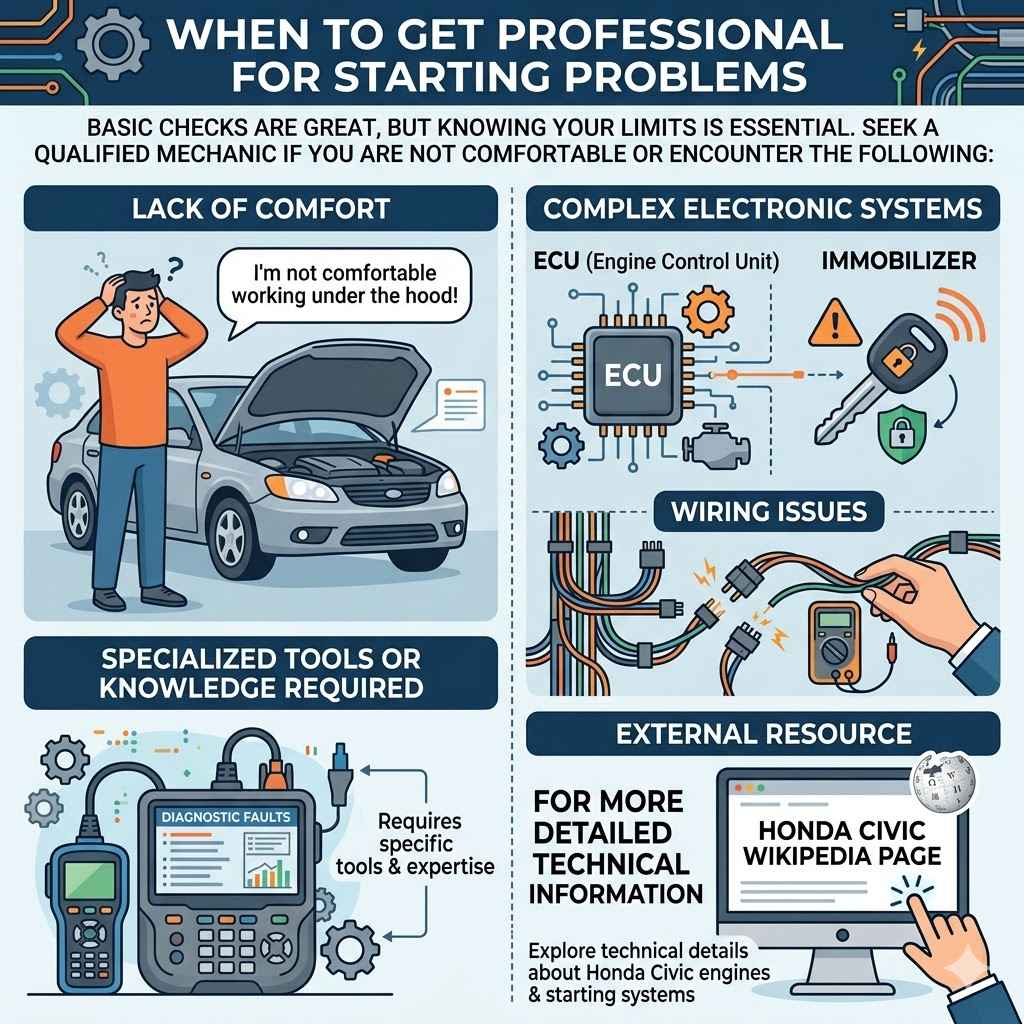
While many starting problems can be fixed with basic checks, some require specialized tools or knowledge. If you are not comfortable working under the hood, or if the issue involves the ECU, immobilizer, or wiring, it is best to seek a qualified mechanic.
External Resource
For more detailed technical information about Honda Civic engines and starting systems, visit the official Honda Civic Wikipedia page.
Frequently Asked Questions
Why Does My Honda Civic Just Click When I Try To Start It?
A single or repeated clicking sound usually means the battery is too weak to turn the starter motor. It can also mean the starter relay or motor is faulty. Check battery connections and try jump-starting first.
Can A Bad Key Or Immobilizer Stop My Honda Civic From Starting?
Yes, if the immobilizer system does not recognize your key, the engine will crank but not start. Look for a blinking key or security light on the dashboard. Try your spare key or consult a Honda dealer.
What Should I Do If My Honda Civic Starts Sometimes But Not Always?
Intermittent problems often point to a failing starter, worn ignition switch, or a problem with the main relay (in older Civics). Note when the problem happens (hot or cold, after driving) to help diagnose.
How Do I Know If The Fuel Pump Is Bad On My Honda Civic?
A failed fuel pump means the engine will crank but not start. With the key in the “ON” position, you should hear a humming sound from under the rear seat. No sound may mean the pump or relay is bad.
Is It Safe To Jump-start My Honda Civic?
Yes, jump-starting is safe if done correctly. Connect positive (red) to positive and negative (black) to a metal ground. Never let the clamps touch. If the car starts, drive for 20 minutes to recharge the battery.
Getting your Honda Civic started again is often easier than it seems. By following these steps and understanding the most common causes, you can save time, money, and avoid unnecessary stress. If in doubt, do not hesitate to ask for professional help—sometimes, that is the fastest way back on the road.
Products related to this article
Sponsored / affiliate links. As an Amazon Associate I earn from qualifying purchases. I may earn additional commission from eligible campaigns.