Which Ford Car Is the Fastest? Top Speed Models Ranked
Ford has long been synonymous with innovation, speed, and performance. From the adrenaline-charged racetracks of Le Mans to the streets of America, Ford has consistently engineered vehicles that push the boundaries of what’s possible on four wheels. Whether you’re a passionate collector, a performance enthusiast, or simply curious about automotive history, discovering which Ford car holds the crown for top speed reveals a fascinating journey through decades of engineering excellence.
Today, Ford’s fastest models blend advanced technology, racing pedigree, and modern design to deliver breathtaking speed. This article dives deep into Ford’s highest-performing production cars and race-inspired supercars, ranking them by top speed and examining the technology and stories behind each.
You’ll find detailed comparisons, data-driven insights, and real-world examples that showcase Ford’s relentless pursuit of speed.
Key Takeaways
- Ford GT (2017–2026) is the fastest production Ford, reaching 216 mph.
- Historic models like the Ford GT40 and Mustang Shelby GT500 have set speed benchmarks over decades.
- Ford’s top speed cars feature advanced aerodynamics, powerful engines, and track-tested engineering.
- Technology from Ford’s racing programs influences street models, enhancing performance and reliability.
- Real-world tests often reveal subtle differences in top speed versus manufacturer claims.

Credit: carbuzz.com
The Evolution Of Ford’s Fastest Cars
Ford’s journey towards creating the fastest cars is rooted in its racing history and drive for innovation. From the iconic GT40 that triumphed at Le Mans to the cutting-edge Ford GT, each model represents a leap forward in engineering.
Ford’s Racing Legacy
The Ford GT40 was born from a desire to beat Ferrari at the prestigious 24 Hours of Le Mans. Its victory in 1966 marked a turning point and cemented Ford’s reputation for speed. The GT40’s mid-engine layout and aerodynamic design were revolutionary, influencing future supercars.
Ford’s dedication to motorsport didn’t end with Le Mans. Throughout the late 1960s and 1970s, the company continued to invest in high-performance engineering. The GT40 program alone laid the foundation for decades of innovation, with Ford learning valuable lessons about chassis balance, engine cooling, and reliability under extreme conditions.
This knowledge trickled down into its production vehicles and inspired a new generation of engineers.
Milestones In Performance
Throughout the 1970s and 1980s, Ford continued to develop fast cars, introducing models like the Mustang Boss 429 and the RS200 rally car. The Boss 429, for example, featured a massive 7.0L V8 engine derived from NASCAR technology. While its top speed was limited by the era’s tire technology and aerodynamics, its straight-line acceleration and brute force made it a legend among muscle cars.
The RS200, developed for the fearsome Group B rally era, showcased Ford’s versatility. This mid-engine, all-wheel-drive machine was built to tackle both gravel and tarmac stages, and while its official top speed (140 mph) may seem modest by supercar standards, its acceleration and agility were world-class. The RS200’s lightweight composite construction and advanced suspension demonstrated Ford’s willingness to experiment with new materials and layouts.
In the 2000s, the Ford GT marked a return to supercar territory. Inspired by the GT40, the 2005–2006 Ford GT combined retro styling cues with cutting-edge engineering. This model used a 5.4L supercharged V8 and a lightweight aluminum chassis, helping it achieve a top speed of 205 mph—a remarkable feat for the time.
Transition To Modern Supercars
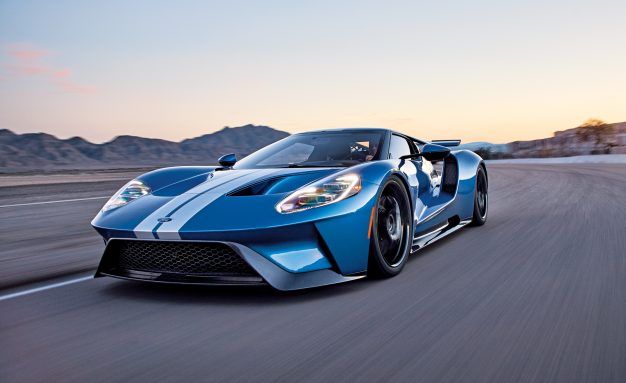
Ford’s commitment to speed culminated in the 2017–2026 Ford GT. With a carbon-fiber body and a twin-turbo V6, it was engineered for both the road and the racetrack. This model set new benchmarks for top speed, handling, and technology integration.
Unlike earlier supercars, the new Ford GT was built with an uncompromising focus on aerodynamics and track performance. It featured an active rear wing, adjustable ride height, and advanced electronics to ensure it could compete with the best from Europe.
The GT’s EcoBoost engine, although smaller in displacement, delivered immense power thanks to advanced turbocharging and direct fuel injection. As a result, the car was not only fast in a straight line but also exceptionally agile through corners—a true testament to modern engineering.
Credit: www.huffineschevyplano.com
Ranking Ford’s Fastest Cars By Top Speed
Ford’s fastest cars span decades and include both production vehicles and purpose-built race cars. Below is a ranked list based on verified top speed figures.
| Rank | Model | Top Speed (mph) | Engine | Years Produced |
|---|---|---|---|---|
| 1 | Ford GT (2017–2026) | 216 | 3.5L Twin-Turbo V6 | 2017–2026 |
| 2 | Ford GT (2005–2006) | 205 | 5.4L Supercharged V8 | 2005–2006 |
| 3 | Ford GT40 Mk II | 210 | 7.0L V8 | 1966–1969 |
| 4 | Mustang Shelby GT500 (2020–present) | 180 | 5.2L Supercharged V8 | 2020–present |
| 5 | Ford RS200 Evolution | 140 | 2.1L Turbocharged I4 | 1986 |
| 6 | Mustang Shelby GT350R | 173 | 5.2L Naturally Aspirated V8 | 2015–2020 |
| 7 | Ford Mustang Cobra R | 170 | 5.4L Naturally Aspirated V8 | 2000 |
| 8 | Ford Focus RS | 165 | 2.3L Turbocharged I4 | 2016–2018 |
Ford Gt (2017–2026)
The modern Ford GT stands as the fastest production Ford ever made, with a verified top speed of 216 mph. Its lightweight carbon-fiber chassis, active aerodynamics, and a 3.5L twin-turbo V6 engine producing 647 hp make it a true supercar. The GT’s advanced technology, including adjustable suspension and drive modes, allow it to perform on both the track and the road.
The Ford GT’s engine, known as the EcoBoost V6, employs dual turbochargers, direct fuel injection, and an integrated intercooler system to maintain optimal power delivery even during extended high-speed runs. The car’s seven-speed dual-clutch transmission ensures rapid gear changes, minimizing power loss and maximizing acceleration.
The GT’s active suspension can lower the ride height by 50mm in Track mode, optimizing its center of gravity for high-speed cornering.
Furthermore, the Ford GT’s interior is engineered for both comfort and focus. The fixed driver’s seat, adjustable pedal box, and digital displays ensure that the driver remains in complete control, whether on a straightaway or navigating complex corners at speed.
Ford Gt (2005–2006)
The first-generation revival of the GT reached 205 mph, powered by a 5.4L supercharged V8 delivering 550 hp. Its retro-inspired styling paid homage to the GT40, while modern engineering ensured exceptional speed and reliability.
This model’s supercharged V8 was paired with a six-speed manual transmission, appealing directly to enthusiasts who value driver engagement. The GT’s aluminum space frame provided rigidity and lightness, while Brembo brakes and race-inspired suspension components contributed to its impressive handling.
The 2005–2006 GT was also notable for its accessibility—owners reported that, despite its supercar performance, it could be driven comfortably on public roads, making it a dual-purpose machine.
Mustang Shelby Gt500 (2020–present)
The latest Mustang Shelby GT500 is Ford’s fastest Mustang, clocking 180 mph thanks to its 5.2L supercharged V8 and 760 hp. The GT500’s aggressive aerodynamics, advanced cooling systems, and performance-oriented electronics make it a formidable competitor on the street and track.
A highlight of the GT500 is its use of a seven-speed dual-clutch transmission (a first for the Mustang lineup), enabling lightning-fast shifts. The car’s MagneRide adaptive suspension system continuously adjusts damping rates based on road conditions and driver input, ensuring optimal grip and stability at high speeds.
The GT500’s massive Brembo brakes offer fade-free stopping power, crucial for track driving or high-speed runs.
Ford Gt40 Mk Ii
A racing legend, the GT40 Mk II achieved speeds up to 210 mph during its Le Mans campaigns. Its 7.0L V8 engine and streamlined bodywork were key to its dominance, setting a standard for future Ford performance cars.
The GT40 Mk II’s chassis was designed with input from some of the era’s top engineers, including Carroll Shelby. The car’s low profile (just 40 inches tall) minimized aerodynamic drag, while the high-displacement engine ensured it could maintain high speeds over long distances.
The GT40’s endurance racing success proved that American engineering could compete with—and defeat—the best from Europe, inspiring generations of performance vehicles.
Ford Rs200 Evolution
Built for Group B rallying, the RS200 Evolution reached 140 mph with its 2.1L turbocharged engine. Its lightweight construction and four-wheel drive allowed it to excel in both speed and agility.
Though best known for its rally heritage, the RS200 Evolution was capable of 0–60 mph in under 3. 5 seconds—a figure that rivaled contemporary supercars. The car’s mid-engine layout and advanced suspension design gave it superb balance and traction on mixed surfaces, from gravel to tarmac.
Today, the RS200 Evolution is celebrated as one of the most advanced rally cars ever built.
Mustang Shelby Gt350r
The GT350R boasts a top speed of 173 mph, powered by the 5.2L naturally aspirated V8 known as the “Voodoo” engine. Its track-focused suspension and aerodynamics deliver impressive handling alongside high speed.
The Voodoo engine’s flat-plane crankshaft enables it to rev to an astonishing 8,250 rpm, offering a unique sound and power delivery. The GT350R’s aggressive aerodynamic package, including a large rear wing and front splitter, generates significant downforce. Lightweight components such as carbon fiber wheels and a stripped-down interior further enhance performance.
Ford Mustang Cobra R (2000)
The Cobra R hit 170 mph, featuring a 5.4L V8 and minimal weight for maximum performance. Limited production numbers make it a sought-after collector’s item.
Produced in just 300 units, the 2000 Cobra R was stripped of unnecessary features—no rear seats, radio, or air conditioning—to reduce weight. The result was a raw, track-focused machine that delivered blistering lap times and a visceral driving experience.
Ford Focus Rs
As Ford’s fastest hot hatch, the Focus RS achieved 165 mph from its 2.3L turbocharged four-cylinder. Its all-wheel-drive system and dynamic handling make it a favorite among enthusiasts.
The Focus RS features a sophisticated torque-vectoring all-wheel-drive system that can send up to 70% of power to the rear wheels, enhancing cornering agility. Its selectable drive modes, including a dedicated “Drift Mode,” make it one of the most playful and capable hot hatches on the market.
Technology Driving Ford’s Top Speed
Achieving high speeds requires more than just powerful engines; Ford’s fastest cars incorporate cutting-edge technology in every aspect.
Advanced Aerodynamics
- Active aerodynamics (e.g., adjustable rear wings, retractable front splitters) reduce drag and increase stability at speed.
- Carbon fiber construction in the Ford GT minimizes weight and maximizes strength.
- Wind tunnel testing ensures optimal airflow and cooling.
Aerodynamics play a critical role in high-speed stability. For example, the Ford GT’s rear wing can automatically deploy or adjust its angle based on speed and driving conditions. This not only improves straight-line speed by reducing drag but also increases downforce during cornering for greater grip.
Many modern Ford performance cars also employ underbody diffusers and air curtains to manage airflow underneath and around the vehicle, reducing lift and enhancing balance.
Engine Innovation
- Twin-turbocharging in the Ford GT provides a balance of power and efficiency.
- Supercharging in the Mustang Shelby GT500 delivers instant throttle response.
- High-revving, naturally aspirated engines (like the GT350R’s Voodoo V8) offer unique driving experiences.
Ford’s use of forced induction (turbocharging and supercharging) allows for smaller engines with higher output and improved fuel efficiency. The EcoBoost family, for example, is found in everything from the Focus RS to the Ford GT, leveraging advanced turbo technology and intercooling to maintain performance in all conditions.
Electronic Systems
- Track-focused drive modes adjust suspension, steering, and power delivery for maximum speed.
- Launch control and traction management optimize acceleration and stability.
- Performance data recorders provide real-time feedback to drivers.
Modern Ford performance cars are equipped with sophisticated electronic aids that help drivers extract the maximum performance safely. The Mustang Shelby GT500, for instance, features customizable drive modes for street, track, and drag strip use. Data loggers allow drivers to record lap times, g-forces, and other critical metrics for analysis.
Lightweight Materials
- Aluminum and carbon fiber reduce overall vehicle weight, improving acceleration and handling.
- Composite panels and lightweight wheels further enhance performance.
By reducing weight, Ford’s engineers can improve every aspect of a car’s performance—acceleration, braking, cornering, and even fuel efficiency. The extensive use of carbon fiber in the Ford GT’s structure sets a new standard for American supercars, while aluminum suspension components and lightweight wheels are common in the Mustang lineup.
Case Study: Ford Gt Active Aerodynamics
A real-world example is the active aerodynamics system on the Ford GT. At high speeds, the rear wing automatically adjusts its angle to increase downforce or reduce drag. This allows the car to maintain stability while maximizing speed, especially during cornering or straight-line acceleration.
This system is integrated with the car’s electronic brain, which monitors parameters such as steering input, brake pressure, and vehicle speed. If the car detects aggressive braking at high speed, the wing can act as an airbrake, improving stopping distances.
In corners, it increases downforce for better grip, then flattens out on straights to minimize drag. This dynamic adaptability is a hallmark of modern supercar engineering.
Credit: www.caranddriver.com
Real-world Speed Tests And Comparisons
Manufacturer claims often differ from actual performance in real-world conditions. Professional testers and automotive journalists have conducted numerous speed trials to validate Ford’s top speed figures.
Ford Gt (2017–2026) Road Test
During testing by Car and Driver, the Ford GT consistently achieved speeds above 210 mph, confirming its status as Ford’s fastest production car. The car’s stability, braking, and acceleration impressed reviewers, solidifying its supercar credentials ([Car and Driver](https://www.caranddriver.com/ford/gt)).
Notably, testers found that the GT’s performance was remarkably consistent, even during extended high-speed runs. The car’s cooling systems and aerodynamic balance ensured that it didn’t lose power or stability, a challenge for many high-performance vehicles. Drivers also praised the steering precision and the effectiveness of the dual-clutch transmission.
Mustang Shelby Gt500 Test
In a controlled environment, the GT500 reached its claimed 180 mph top speed. Reviewers praised its balance of power and handling, noting that aerodynamics and tire selection played a crucial role in achieving high speeds ([Motor Trend](https://www.motortrend.com/cars/ford/mustang/2020/2020-ford-mustang-shelby-gt500-first-drive-review/)).
The GT500’s sophisticated traction and stability control systems allowed even less-experienced drivers to safely reach high speeds on track. Testers also highlighted the effectiveness of the MagneRide suspension in maintaining composure over bumps and through fast corners.
Ford Gt40 Le Mans Example
Historical records show the GT40 Mk II hitting speeds over 200 mph on the Mulsanne Straight during Le Mans, demonstrating Ford’s engineering prowess in real-world racing scenarios ([Wikipedia](https://en.wikipedia.org/wiki/Ford_GT40)).
At the time, these speeds were nearly unheard of for production-based race cars, and the GT40’s success forced competitors to rethink their approach to aerodynamics and engine durability. The GT40’s legacy is still felt today in endurance racing, where top speed remains a critical factor for overall victory.
| Model | Claimed Top Speed (mph) | Tested Top Speed (mph) | Source |
|---|---|---|---|
| Ford GT (2017–2026) | 216 | 211 | Car and Driver |
| Mustang Shelby GT500 | 180 | 180 | Motor Trend |
| Ford GT (2005–2006) | 205 | 204 | Top Gear |
| Ford GT40 Mk II | 210 | 205 | Wikipedia |
These real-world results demonstrate that Ford’s claims are generally backed up by independent testing, reinforcing the brand’s credibility and engineering prowess.
Comparing Ford’s Fastest Cars To Competitors
How do Ford’s fastest cars stack up against rivals from Chevrolet, Dodge, and European marques? Top speed is just one metric, but it’s a key benchmark in the performance world.
American Muscle: Mustang Vs Camaro And Challenger
The Mustang Shelby GT500 competes directly with the Chevrolet Camaro ZL1 and Dodge Challenger Hellcat. While the GT500’s 180 mph top speed is impressive, the Challenger Hellcat Redeye and Camaro ZL1 also reach similar speeds, making the competition fierce.
In terms of horsepower, the Hellcat Redeye (797 hp) edges out the GT500 (760 hp), but the GT500’s more advanced chassis and suspension often translate to better lap times. The Camaro ZL1, with its 650 hp supercharged V8, is also a formidable opponent.
Each of these cars offers a distinct driving experience—Ford focuses on balance and handling, Dodge on sheer power, and Chevrolet on a blend of both.
Supercar Showdown: Ford Gt Vs Ferrari, Lamborghini
The Ford GT takes on European supercars like the Ferrari 488 Pista (211 mph) and Lamborghini Huracán Evo (202 mph). The GT’s 216 mph top speed places it ahead of many rivals, showcasing Ford’s engineering capabilities on a global stage ([Ford Official Site](https://www.ford.com/performance/gt/)).
What sets the Ford GT apart is its racing-derived technology and focus on aerodynamics. While Ferrari and Lamborghini are renowned for their exotic styling and high-revving engines, the Ford GT emphasizes track performance and stability at speed. Owners and reviewers consistently note that the GT feels more like a race car than a luxury supercar, making it a favorite among purists.
| Model | Top Speed (mph) | Engine | Country |
|---|---|---|---|
| Ford GT (2017–2026) | 216 | 3.5L Twin-Turbo V6 | USA |
| Ferrari 488 Pista | 211 | 3.9L Twin-Turbo V8 | Italy |
| Lamborghini Huracán Evo | 202 | 5.2L V10 | Italy |
| Chevrolet Camaro ZL1 | 198 | 6.2L Supercharged V8 | USA |
| Dodge Challenger Hellcat Redeye | 203 | 6.2L Supercharged V8 | USA |
European Imports: Ford Focus Rs Vs Vw Golf R
Among hot hatches, the Focus RS matches the Volkswagen Golf R and Honda Civic Type R in speed and handling. Ford’s all-wheel-drive system and turbocharged engine provide a competitive edge in acceleration and cornering.
The Focus RS’s “Drift Mode” sets it apart from rivals, allowing drivers to enjoy controlled oversteer on the track—a rarity in this segment. While the Golf R is known for refinement and everyday usability, the Focus RS delivers a more aggressive, performance-oriented driving experience.
The Stories Behind Ford’s Speed Machines
Every fast Ford has a story, often rooted in racing, innovation, or a desire to break records.
Ford Gt40: Beating Ferrari
The GT40’s creation was fueled by Ford’s ambition to defeat Ferrari at Le Mans. After being rebuffed by Enzo Ferrari during a potential acquisition, Henry Ford II set out to build a car that would dominate endurance racing. The result was the GT40, which not only won Le Mans four years in a row but also achieved speeds previously unheard of in American cars ([Road & Track](https://www.roadandtrack.com/car-culture/a28514402/ford-gt40-history-le-mans/)).
The GT40’s success wasn’t just about speed—it was about persistence, teamwork, and innovation. Engineers overcame early reliability issues, and the program eventually produced a car capable of running flat-out for 24 hours. The GT40’s victories helped reshape the global perception of American performance engineering.
Mustang Shelby Gt500: American Muscle Reinvented
The Shelby GT500 represents the evolution of American muscle. Its blend of raw horsepower and modern technology makes it one of the most versatile performance cars ever produced. Carroll Shelby’s influence on the Mustang line continues to inspire new generations of engineers and drivers.
Over the decades, the GT500 has evolved from a simple hot-rod Mustang into a technologically advanced sports car. Today’s model features launch control, adaptive suspension, and advanced driver aids—all while retaining the visceral soundtrack and straight-line performance that made the original famous.
Ford Rs200 Evolution: Rally Legend
Built for the infamous Group B rally class, the RS200 Evolution was designed to be lightweight, fast, and agile. Although its top speed doesn’t rival the GT or Mustang, its rally pedigree and engineering make it a standout among Ford’s speed machines ([Wikipedia](https://en.wikipedia.org/wiki/Ford_RS200)).
The RS200’s short-lived rally career was cut short by the cancellation of Group B, but its impact on automotive engineering endures. Today, surviving RS200 Evolution models are prized by collectors for their rarity and technological innovation.
Ford Gt: Modern Engineering Triumph
The 2017–2026 Ford GT is a testament to Ford’s ability to blend racing technology with road-going practicality. Its EcoBoost engine, carbon-fiber body, and active aerodynamics are direct descendants of Ford’s racing heritage, making it a true successor to the GT40 legacy.
The modern GT was also developed in secrecy, with a small team of engineers working outside the usual corporate structure. This “skunkworks” approach allowed for rapid innovation and a focus on performance above all else. The car’s debut at the 2016 24 Hours of Le Mans, where it won its class on the 50th anniversary of the original GT40’s victory, was a fitting tribute to its lineage.
Real-world Ownership: Experiences From Ford’s Fastest Cars
Owning a fast Ford isn’t just about speed; it’s about the thrill of driving and the pride of being part of a legacy.
Ford Gt Owner Perspective
Owners of the Ford GT report exceptional handling, comfort, and exclusivity. The car’s rarity (fewer than 1,350 units produced) adds to its allure. The GT’s adjustable suspension and drive modes make it suitable for both daily driving and track use ([Autoblog](https://www.autoblog.com/2019/07/24/ford-gt-owner-review/)).
Owners often participate in exclusive track events and car shows, where the GT’s unique engineering draws crowds and admiration. The car’s build quality and attention to detail are frequently praised, as is Ford’s customer service for GT owners.
Shelby Gt500 Community Stories
Enthusiasts praise the GT500 for its accessible power and aggressive styling. Many owners participate in track days, drag races, and car shows, showcasing the model’s versatility.
The GT500 community is highly active, sharing modifications, performance data, and driving experiences online. Owners appreciate the car’s balance of daily usability and track capability, with many reporting thousands of reliable miles both on and off the circuit.
Focus Rs Daily Driving
The Focus RS is celebrated for its balance of performance and practicality. Owners appreciate its all-wheel-drive system, turbocharged power, and roomy interior, making it a favorite for spirited driving and daily commuting.
Despite its high-performance credentials, the Focus RS is comfortable enough for everyday use, with features like heated seats, advanced infotainment, and ample cargo space. Owners enjoy the ability to switch from a comfortable commuter to a track weapon with the push of a button.
Frequently Asked Questions
What Is The Fastest Ford Car Ever Made?
The Ford GT (2017–2026) holds the record as the fastest production Ford, with a verified top speed of 216 mph. Its advanced aerodynamics and twin-turbo V6 engine set it apart from all other models.
How Does The Mustang Shelby Gt500 Compare To European Supercars?
The Mustang Shelby GT500 delivers 180 mph top speed, putting it in direct competition with cars like the BMW M4 and Mercedes-AMG C63. While European supercars focus on balanced performance, the GT500 emphasizes raw power and American muscle heritage.
Are Ford’s Top Speed Cars Reliable For Daily Driving?
Yes, many of Ford’s fastest cars, including the Mustang Shelby GT500 and Focus RS, are engineered for both performance and reliability. However, supercars like the Ford GT are best suited for occasional driving and track use due to their specialized engineering.
How Do Ford’s Fastest Cars Perform On The Racetrack?
Ford’s top speed models, such as the GT and GT500, excel on the racetrack thanks to advanced suspension, aerodynamics, and high-powered engines. Owners and professional drivers report impressive lap times and handling, confirming their track-ready credentials.
What Role Does Ford’s Racing History Play In Its Fastest Cars?
Ford’s racing history, especially its success at Le Mans with the GT40, directly influences the engineering and technology in its fastest cars. Lessons learned on the racetrack are applied to production models, improving performance, safety, and reliability.
Ford’s fastest cars are more than just numbers on a spec sheet—they represent decades of innovation, racing heritage, and a relentless pursuit of speed. Whether you’re drawn to the historic GT40, the modern GT, or the muscular Shelby GT500, each model offers a unique blend of performance and character. By understanding the technology, history, and real-world experiences behind these speed machines, enthusiasts and collectors alike gain a deeper appreciation for the blue oval’s enduring commitment to high-performance engineering. For more details and official specs, visit the Ford GT Wikipedia page and Ford Performance Official Site.
Products related to this article
Sponsored / affiliate links. As an Amazon Associate I earn from qualifying purchases. I may earn additional commission from eligible campaigns.