Which Car Comparison Site is Best: Top Picks for 2024
Buying a car can feel overwhelming. With so many choices, prices, and features, it’s easy to get lost. That’s why car comparison sites have become so popular. They give you tools to see different models, prices, and reviews side by side.
But with so many comparison sites out there, how do you know which one is the best for your needs?
Some people want the lowest price. Others care about detailed car specs. Some want real user reviews, while others need expert opinions. Every car shopper is different, so the “best” site depends on what you want. Still, some websites clearly stand out for their features, data accuracy, and user experience.
In this guide, you’ll discover the top car comparison sites, what makes each one unique, and how to choose the right site for you. You’ll also find non-obvious tips, common mistakes to avoid, and answers to key questions. By the end, you’ll be ready to compare cars with confidence.
What Makes A Great Car Comparison Site?
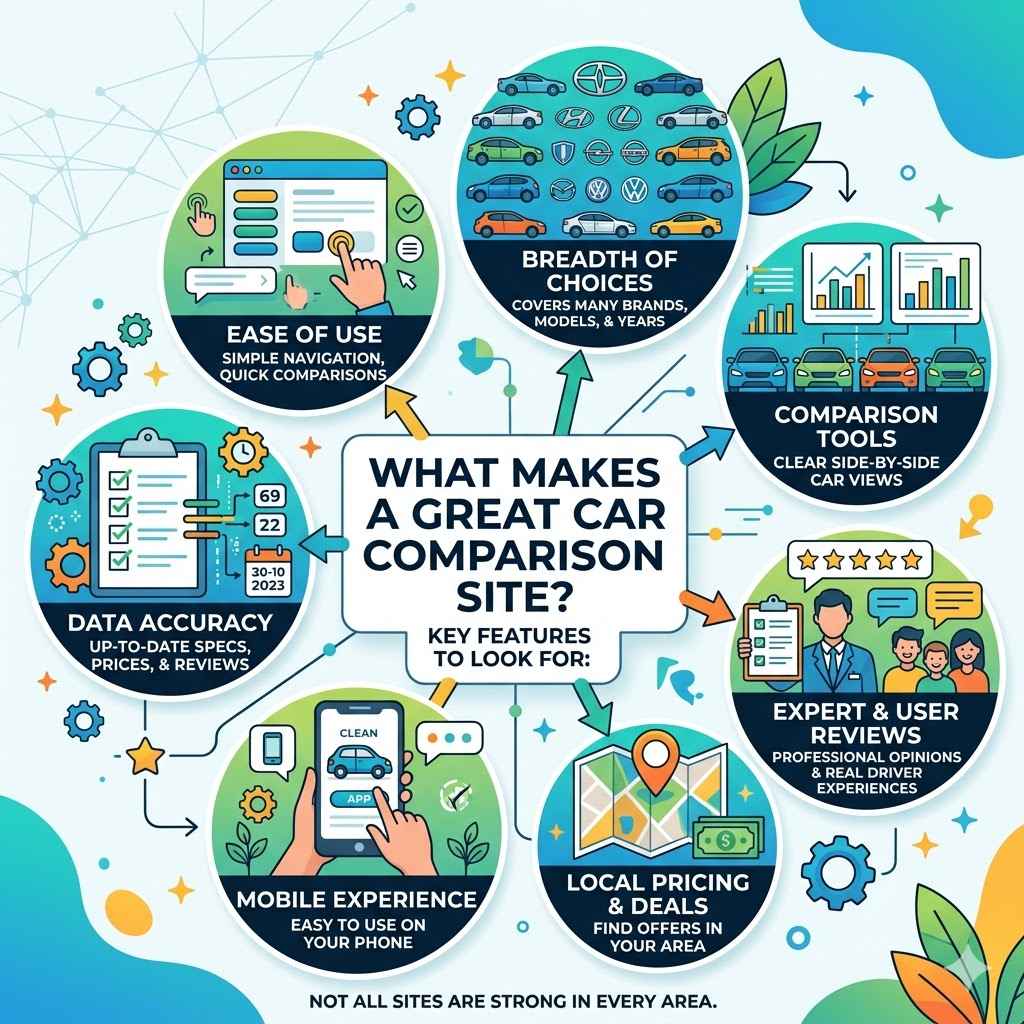
Before looking at the top sites, it’s important to know what matters most in a car comparison website.
Key features to look for:
- Data accuracy: Are the specs, prices, and reviews up-to-date?
- Ease of use: Is the site simple to navigate? Can you quickly compare cars?
- Breadth of choices: Does the site cover many brands, models, and years?
- Comparison tools: Can you see cars side by side in a clear way?
- Expert and user reviews: Does it include both professional opinions and real driver experiences?
- Local pricing and deals: Can you find offers in your area?
- Mobile experience: Is it easy to use on your phone?
Not all sites are strong in every area. Some focus on new cars, some on used, and some on both. Knowing what you need helps you pick the right one.
Top Car Comparison Sites Reviewed
Let’s look at the leading car comparison websites, with their strengths, weaknesses, and best use cases.
1. Edmunds
Edmunds is one of the oldest and most trusted car research sites in the US. It covers new and used cars, with expert reviews, pricing tools, and powerful comparison features.
What makes Edmunds great:
- Thorough car reviews from auto experts
- True Market Value (TMV) pricing shows what people really pay
- Side-by-side comparison tool for specs, features, and ratings
- User reviews add real-life feedback
- Cost to own calculator estimates five-year ownership expenses
Example insight: Edmunds shows “pros and cons” for every car, making it easier to spot deal-breakers.
Limitation: For some international buyers, the focus is mainly on the US market.
2. Kelley Blue Book (kbb)
Kelley Blue Book is famous for its car value estimates. It’s not just for pricing: KBB’s comparison tools let you match up cars, check reviews, and see what’s popular.
What KBB does well:
- Trusted pricing guides for buying or selling
- Compare up to 4 cars at once
- Expert and consumer reviews
- Dealer inventory search for new and used
Non-obvious tip: KBB’s “5-Year Cost to Own” tool helps you budget beyond just the sticker price.
Limitation: Website ads can be distracting, and some features are US-focused.
3. Cars.com
Cars.com is known for its huge inventory of cars for sale, but it also offers strong comparison tools and honest reviews.
Strengths:
- Millions of new and used cars listed
- Compare specs for several models easily
- Certified pre-owned section
- Verified owner reviews
Useful tip: Use their “Matchmaker” tool to get car suggestions based on your needs.
Limitation: Interface can feel crowded for first-time users.
4. Cargurus
CarGurus uses data to rate car deals as “Great”, “Good”, or “Overpriced”, helping you see the best offers fast.
What stands out:
- Deal ratings based on market data
- Detailed price analysis for every listing
- Side-by-side comparison for cars
- Dealer reviews for trust
Unique insight: CarGurus highlights how long a car has been listed, which can help in negotiations.
Limitation: Heavy focus on used cars.
5. Autotrader
Autotrader is one of the largest car marketplaces, with advanced search filters and strong comparison features.
Why it’s useful:
- Wide selection of cars, including private sellers
- Compare cars by price, features, and ratings
- Vehicle history reports on many listings
Tip for buyers: Use the “Save search” feature to track price drops.
Limitation: Some cars may not have detailed specs or history.
6. Truecar
TrueCar specializes in price transparency. It shows what others paid for the same car in your area, so you can negotiate better.
Key benefits:
- See local prices paid
- In-depth car comparisons
- Certified dealer network
- Upfront pricing—avoid surprises
Extra insight: TrueCar often partners with banks and insurance companies for extra savings.
Limitation: Not every dealer is part of the TrueCar network.
7. U.s. News Best Cars
U.S. News Best Cars ranks vehicles in many categories, from “Best SUVs” to “Best Compact Cars”. Their data-driven reviews are trusted by many.
Best features:
- Rankings based on expert reviews, safety, and reliability
- Compare cars on key specs and scores
- Easy-to-read pros and cons
Helpful detail: Their “scorecard” system highlights strengths and weaknesses at a glance.
Limitation: Fewer user reviews compared to some sites.
8. Carfax
Carfax is famous for its vehicle history reports, but it also offers a comparison tool for used cars.
What Carfax offers:
- Trusted vehicle history data
- Compare used cars for accident history, mileage, and price
- Dealer ratings
Pro tip: Always check the Carfax report before buying any used car.
Limitation: Not as strong for new car research.
9. Motortrend
MotorTrend is a respected automotive magazine with deep car reviews and comparison tools.
Advantages:
- Expert reviews and rankings
- Detailed performance data
- Side-by-side comparison for specs and ratings
Interesting insight: MotorTrend often tests cars in real-world conditions, not just on paper.
Limitation: More focused on new cars and enthusiasts.
10. Carwow (uk)
Carwow is a top choice in the UK, helping buyers compare offers from local dealers.
Why it stands out:
- Get offers from multiple dealers
- Compare deals, specs, and finance options
- See real user experiences
Extra value: Carwow’s negotiation is done online, saving time and hassle.
Limitation: Only available in the UK and some parts of Europe.
11. Parkers (uk)
Parkers is a UK-based site with long experience in car pricing and comparisons.
Key strengths:
- Detailed car specs and reviews
- Side-by-side comparison
- Used car valuations
Tip: Parkers covers both new and classic cars, helpful for unique needs.
Limitation: Focused on the UK market.
12. Auto Express
Auto Express is a UK magazine known for in-depth reviews and car group tests.
Best for:
- Expert group tests to see which car wins
- Clear pros and cons
- Practical advice for buyers
Unique detail: Their “verdict” section is blunt—making decisions easier.
Limitation: Limited coverage outside the UK.
13. Consumer Reports
Consumer Reports is an independent non-profit that tests cars thoroughly. Their reviews are trusted for honesty.
What they provide:
- Lab-tested reviews on safety, reliability, and satisfaction
- Owner surveys
- Side-by-side comparisons
Expert insight: They sometimes find problems that others miss, like real-world fuel economy.
Limitation: Some data is behind a paywall.
14. J.d. Power
J.D. Power is famous for its car reliability and satisfaction studies.
Highlights:
- Detailed ratings on dependability, quality, and performance
- Compare cars by rankings and specs
- Owner feedback
Non-obvious advantage: Their “Initial Quality” scores are based on thousands of real drivers.
Limitation: Not all comparison tools are free.
15. Autotempest
AutoTempest is a search engine that pulls listings from many sites at once. It’s great for used car hunters.
Strengths:
- Searches multiple marketplaces in one go
- Side-by-side comparison for listings
Tip: Use filters to avoid duplicate listings.
Limitation: Focused on US and Canadian markets.
16. Iseecars
iSeeCars analyzes millions of listings to help you find the best deals.
Key features:
- Data-driven deal ratings
- Compare cars for price, mileage, and history
- Market value analysis
Extra insight: Their “car score” helps you spot undervalued cars.
Limitation: Interface is more functional than flashy.
17. Carsguide (australia)
CarsGuide is a leading car research site for Australia.
Why it’s useful:
- Expert reviews and ratings
- Compare cars for specs and features
- Advice for buyers and sellers
Unique: Offers “car advice” articles for common questions.
Limitation: Focused only on Australian market.
18. Drive.com.au
Drive.com.au offers news, reviews, and car comparison tools in Australia.
Strengths:
- Group tests and rankings
- Compare specs, prices, and ratings
- Finance and insurance info
Tip: Their “Best Of” lists are great starting points.
Limitation: Not for international users.
19. Autotrader.ca (canada)
AutoTrader.ca is Canada’s top marketplace for car listings and comparisons.
Key benefits:
- Large inventory of new and used cars
- Compare cars for specs, price, and reviews
- Dealer and private listings
Non-obvious detail: Includes “ownership cost” breakdowns for Canadian buyers.
Limitation: Not useful outside Canada.
20. Autolist
Autolist focuses on used cars, showing price history and comparison data.
Why it stands out:
- Compares price, mileage, features
- Tracks price drops over time
- Mobile-friendly experience
Tip: Use alerts for deals on your favorite cars.
Limitation: Less coverage for new cars.
How The Top Car Comparison Sites Stack Up
To help you choose, here’s a look at how some of the most popular sites compare across key features:
| Site | New Cars | Used Cars | Expert Reviews | User Reviews | Market Coverage |
|---|---|---|---|---|---|
| Edmunds | Yes | Yes | Yes | Yes | US |
| KBB | Yes | Yes | Yes | Yes | US |
| Carwow | Yes | Yes | Yes | Yes | UK/Europe |
| CarsGuide | Yes | Yes | Yes | Yes | Australia |
| AutoTrader.ca | Yes | Yes | Yes | Yes | Canada |
Features Comparison: What Matters Most?
Different car shoppers have different priorities. Some want the lowest price, others want reliability, and some want the latest tech.
Here’s how the top sites compare on specific features:
| Feature | Best Site(s) | Why |
|---|---|---|
| Best for Price Data | KBB, TrueCar, iSeeCars | Detailed market pricing and deal ratings |
| Best for Expert Reviews | Edmunds, U.S. News, MotorTrend | In-depth, unbiased reviews |
| Best for Used Cars | CarGurus, Autolist, Carfax | Strong used car data and history reports |
| Best for User Reviews | Cars.com, KBB | Many verified owner opinions |
| Best for Global Buyers | Carwow, Parkers, CarsGuide | Local market focus outside the US |
Common Mistakes When Using Car Comparison Sites
Even with the best tools, buyers make mistakes. Here are common errors and how to avoid them:
- Trusting only the “best deal” badge: Not every “Great Deal” fits your needs. Check car history, location, and condition.
- Ignoring ownership costs: Insurance, tax, fuel, and repairs add up. Use “cost to own” calculators when possible.
- Overlooking local market differences: Prices and availability change by region. Set your zip code or country for accurate results.
- Not reading user reviews: Expert reviews are useful, but real owner feedback reveals long-term issues or surprises.
- Missing fine print on deals: Some offers have extra fees or conditions. Always read full details before deciding.
How To Choose The Best Car Comparison Site For You
With so many options, here’s how to pick the best site for your search:
- Define your needs: Are you buying new or used? Do you care more about price, reviews, or features?
- Try several sites: Compare the same car on different platforms. You’ll see different prices and reviews.
- Check for local relevance: Use sites based in your country for better deals and inventory.
- Use advanced filters: Narrow down by must-have features—like fuel type, safety ratings, or mileage.
- Look for extra tools: Price history, deal ratings, and ownership calculators save money in the long run.
Non-obvious insight: Some sites let you set alerts for price drops. This feature helps you buy at the right moment, not just the right price.
Real-world Example: Comparing A Toyota Camry
Let’s walk through a quick example. Say you want to compare a Toyota Camry (new or used):
- Edmunds: Shows expert review, pros/cons, reliability score, “True Market Value” price, and user reviews.
- KBB: Offers side-by-side with Accord and Sonata, pricing trends, and 5-year cost to own.
- CarGurus: Highlights “Great Deal” listings, price history, and dealer ratings.
- Carfax: Focuses on used Camrys, showing accident history and service records.
- CarsGuide (AU): Gives local prices, expert opinions, and owner stories for Australian buyers.
Each site gives you a slightly different view. Checking two or three helps you spot the best deal and avoid hidden problems.
Latest Trends In Car Comparison
The world of car comparison sites is always changing. Here are some current trends:
- Electric and hybrid car filters: More sites now let you filter by eco-friendly options.
- AI-powered suggestions: Some platforms use artificial intelligence to recommend cars based on your habits.
- Mobile-first experience: With more users searching on phones, mobile interfaces are smoother.
- Integration with financing and insurance: Some sites give instant loan or insurance quotes during your search.
Pro tip: Always check when the site’s data was last updated. Outdated info can lead to bad choices.
Where To Find Reliable Car Data
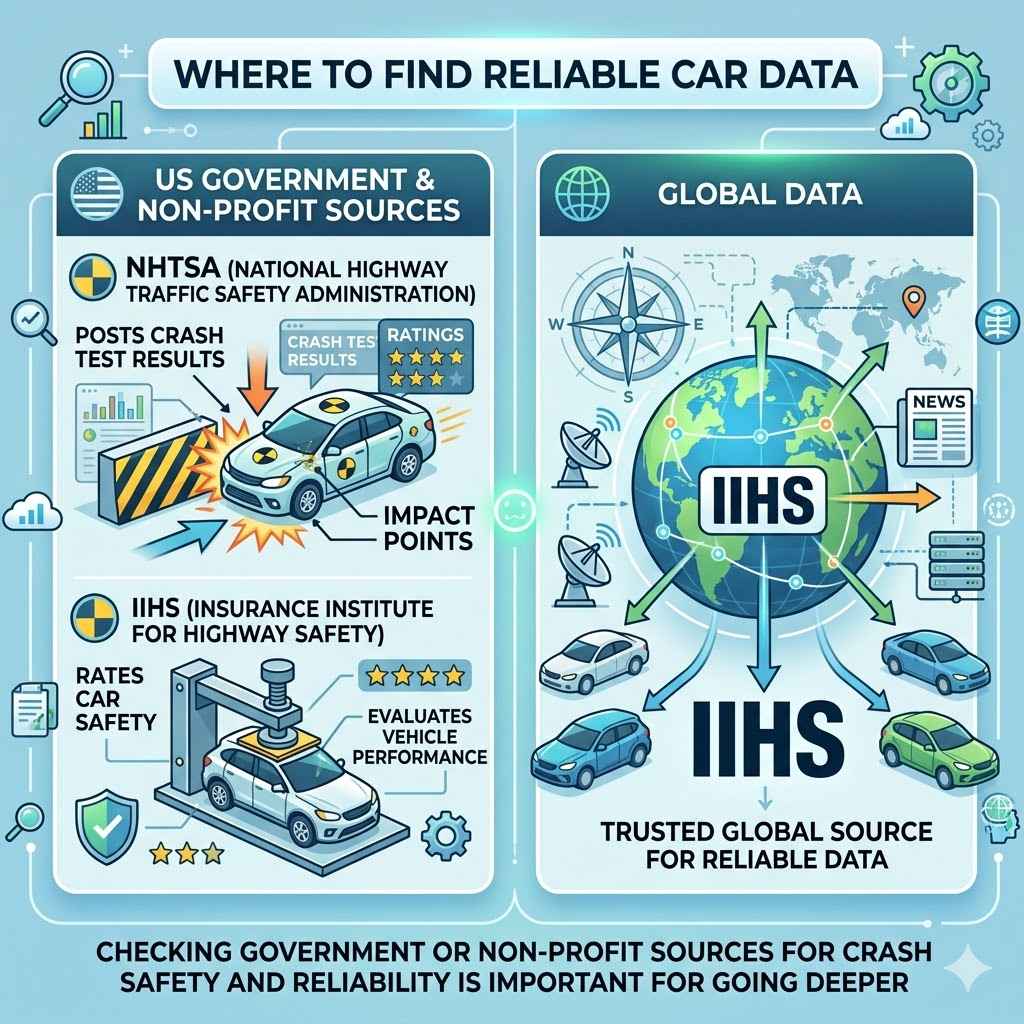
If you want to go deeper, consider checking government or non-profit sources for crash safety and reliability. For example, the US National Highway Traffic Safety Administration (NHTSA) posts crash test results, and the Insurance Institute for Highway Safety (IIHS) rates car safety. For global data, IIHS is a trusted source.
Frequently Asked Questions
What Is The Most Accurate Car Comparison Site?
Edmunds and Kelley Blue Book are known for accurate pricing and expert reviews. They update data often and rely on both market trends and professional tests. Always double-check with local listings for the latest prices.
Are Car Comparison Sites Free To Use?
Most major sites like Cars.com, CarGurus, and AutoTrader are free for buyers. Some, like Consumer Reports, have extra paid features or in-depth reports behind a paywall.
Do These Sites Cover Both New And Used Cars?
Yes, but coverage varies. Sites like Edmunds, KBB, and Cars.com cover both new and used. Others, like Carfax and Autolist, focus mostly on used cars. Always check before starting your search.
How Do I Avoid Scams When Using Car Comparison Sites?
Stick to trusted, well-known sites. Look for dealer ratings and user reviews. Never send money before seeing the car in person. If a deal seems too good to be true, it probably is.
Can I Trust User Reviews On These Websites?
User reviews can be helpful, but look for patterns—not just single opinions. Combine user feedback with expert reviews for a balanced view. Sites like Cars.com and KBB verify many reviews for authenticity.
Car shopping has never been easier, thanks to detailed comparison sites. By knowing which features and tools matter most to you, and by double-checking information across a few top platforms, you’ll find the best car—and the best deal—for your needs.
Happy car hunting!