How to Use Honda Civic Car Jack: Step-by-Step Safety Guide
Using a car jack may seem simple, but doing it wrong can be dangerous—even on a reliable car like the Honda Civic. Whether you need to change a flat tire, check your brakes, or perform basic maintenance, knowing exactly how to use your Civic’s car jack keeps you safe and avoids damage to your vehicle. Many first-time users make mistakes that can lead to injury or costly repairs.
This guide, written as a calm expert, will walk you through each step, share practical advice, and highlight important safety tips. By the end, you’ll feel confident using your Honda Civic car jack, even if you’re new to car maintenance.
Understanding The Honda Civic Car Jack
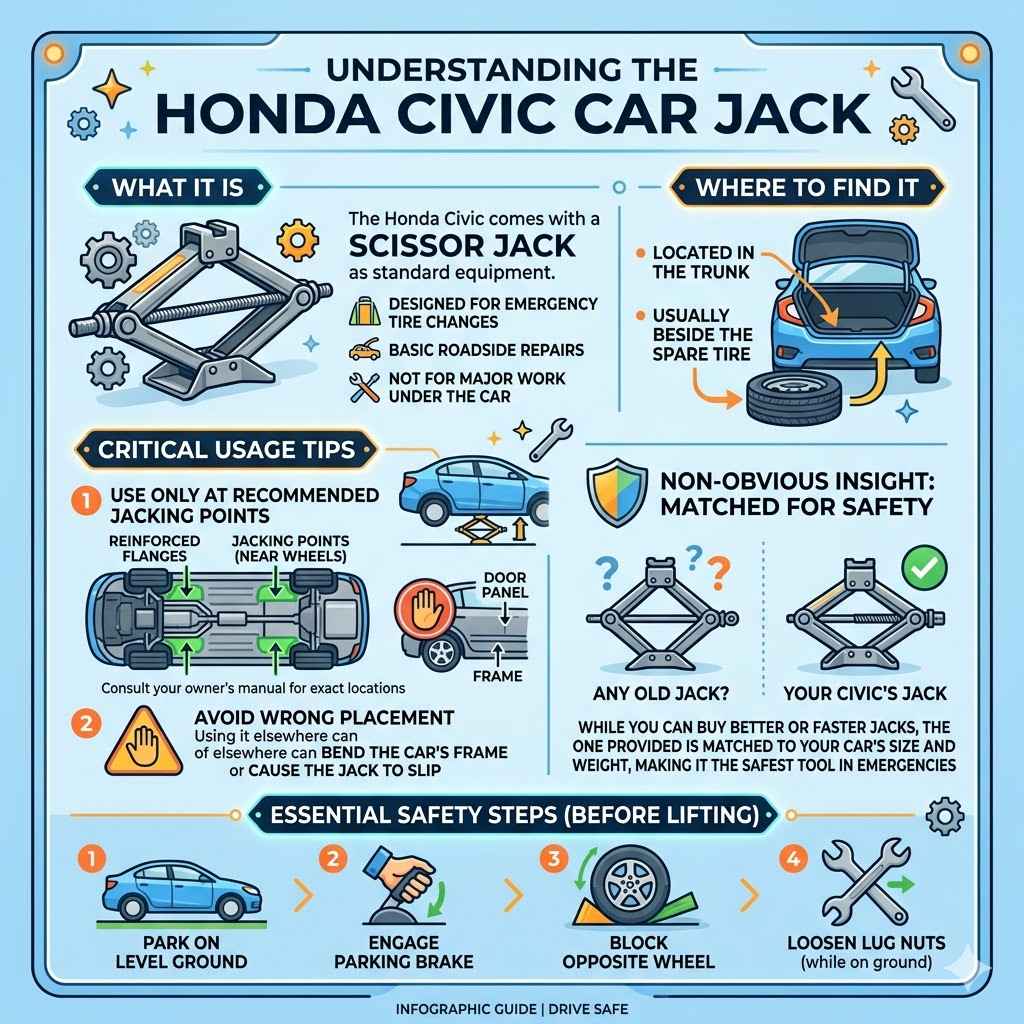
The Honda Civic comes with a scissor jack as standard equipment, located in the trunk, usually beside the spare tire. This jack is designed for emergency tire changes and basic roadside repairs, not for major work under the car. The jack is strong enough for the car’s weight but must be used only at the recommended jacking points. Using it elsewhere can bend the car’s frame or cause the jack to slip.

X AUTOHAUX
X AUTOHAUX 210D-PU Car Cover for Honda…
- [Fitment] Car cover for Honda Civic Sedan/Coupe 1991-2025. Please make sure your car model and the year before purchase. Warm Tips…
- [Good Design] 6 pcs Reflective Warning Bar: Designed with fluorescent orange color emit light at night to avoid unexpected impact.…
- [Upgraded Material] Adopts material with 210D-PU Oxford double stitched and reinforced seams, made for indoor and all outdoor elem…
As an Amazon Associate I earn from qualifying purchases.
Non-obvious insight: The Honda Civic jack is not universal. While you can buy better or faster jacks, the one provided is matched to your car’s size and weight, making it the safest tool in emergencies.
What You Need Before You Start
Preparation is key. Gather these items before you begin:
- Honda Civic car jack (from your trunk)
- Jack handle or wrench (comes with the car)
- Wheel chocks or heavy objects to block tires
- Spare tire (check it’s inflated)
- Gloves for hand protection
- Flashlight if it’s dark
- Car owner’s manual for reference
Pro tip: Keeping a small board or plank in your trunk can help if you need to jack up the car on soft ground.
Safety First: Precautions You Must Take
Using a car jack can be risky if you skip safety steps. Here’s what to always do:
- Park on a flat, hard surface. Never jack up your Civic on a slope or soft ground—concrete is best.
- Turn off the engine and set the parking brake. This keeps your car from rolling.
- Place wheel chocks behind the wheels opposite to the one you’re lifting. For example, if you’re jacking up the front, chock the rear wheels.
- Check for bystanders. Make sure kids and pets are away from the car.
- Read your owner’s manual. Each Honda Civic model may have slightly different jack points or instructions.
Non-obvious insight: Some people forget to loosen the lug nuts before lifting the car. It’s much easier and safer to do this while the tire is still on the ground.
Where To Find Jack Points On A Honda Civic
The jack points are reinforced sections of your car’s frame, made to support the weight safely. Using the wrong spot can cause serious damage.
On most Honda Civics, you’ll find four main jack points:
- Just behind the front wheels (left and right)
- Just in front of the rear wheels (left and right)
Look for small notches or marks under the car’s side skirts. Your owner’s manual has diagrams showing the exact spots. If you can’t find the marks, gently slide your hand under the car’s edge—never use the jack on thin metal or plastic panels.
Quick Comparison: Jack Points Vs. Wrong Points
Here’s a fast comparison to help you identify the right lifting areas.
| Feature | Jack Points | Wrong Points |
|---|---|---|
| Location | Near front/rear wheels | Anywhere else under the car |
| Strength | Reinforced for weight | Thin metal or plastic |
| Safety | Designed for jack use | Risk of damage or slipping |
Step-by-step Guide: How To Use Your Honda Civic Car Jack
Let’s walk through the process clearly, so you don’t miss a thing.
1. Prepare Your Car
- Park safely: Make sure the car is on a level, stable surface.
- Turn off the engine and set the parking brake.
- Put on gloves to protect your hands.
- Place wheel chocks on the tires opposite the one you’ll lift.
2. Get Out Your Tools
Open your trunk and lift the carpet or cover to access the spare tire. Next to it, you’ll see the scissor jack and the jack handle/wrench. Take everything out and keep it close to your work area.
3. Loosen The Lug Nuts
Before lifting the car, use the lug wrench to slightly loosen (not remove) the lug nuts on the wheel you’re changing. Turn each nut about a half-turn counterclockwise. If the nuts are too tight, use your foot to press gently on the wrench handle.
Why do this now? If you try to loosen them after lifting, the wheel will spin, making the job much harder and less safe.
4. Position The Jack
Find the correct jack point (see previous section). Slide the jack under the car so the notch on the jack fits the reinforced area. Double-check that it is lined up exactly.
Practical tip: If the ground is soft (like gravel or grass), place a thick wooden board under the jack for stability.
5. Raise The Car
Insert the jack handle or wrench into the jack and turn it clockwise. The car will slowly lift. Watch the jack—if it bends or seems unstable, stop and lower the car immediately. Raise the car just high enough so the flat tire is off the ground.
Safety reminder: Never put any part of your body under the car while it’s only supported by the jack.
6. Remove The Lug Nuts And Wheel
Now, finish unscrewing the loosened lug nuts and set them in a safe place. Pull the flat tire straight off. If it’s stuck, tap it gently with your hand or foot.
7. Install The Spare Tire
Align the spare tire with the bolts and slide it onto the hub. Hand-tighten the lug nuts as much as you can.
8. Lower The Car
Turn the jack handle slowly counterclockwise. Lower the car until the spare tire touches the ground and the jack is free. Remove the jack completely.
9. Tighten The Lug Nuts
With the car back on the ground, use the lug wrench to fully tighten the nuts in a crisscross pattern. This helps the wheel seat evenly.
10. Check Everything
- Make sure all tools, the flat tire, and the jack are put away.
- Double-check that the lug nuts are snug.
- Remove the wheel chocks before driving.
Common Mistakes And How To Avoid Them
Even experienced drivers can make errors when using a car jack. Here are some typical mistakes and how to avoid them:
- Using the wrong jack point: Always check the owner’s manual and look for marks under your car.
- Forgetting to loosen lug nuts before lifting: This is a frequent error, especially for beginners.
- Jacking on a slope or soft ground: Find a safe, flat place, even if you have to drive a short distance.
- Going under the car: Never crawl under a car supported only by a scissor jack.
- Raising the car too high: Only lift the car enough to remove and replace the wheel.
Non-obvious mistake: Not checking the spare tire’s pressure. A flat spare won’t help you. Check the pressure regularly, not just during emergencies.
When (and Why) To Use A Better Jack
The scissor jack in your Honda Civic is made for emergency use. If you do a lot of your own car work, consider buying a hydraulic floor jack—it’s more stable and faster. However, never use a bigger jack on weak or unreinforced parts of your car.
Here’s a quick comparison:
| Feature | Scissor Jack (OEM) | Hydraulic Floor Jack |
|---|---|---|
| Portability | Very light, fits in trunk | Heavy and bulky |
| Stability | Good for emergencies | Excellent for garage use |
| Speed | Slower to lift | Very fast |
| Safety | Safe if used correctly | Even safer if used with jack stands |
Important: Even with a hydraulic jack, always use the recommended jack points and never work under the car without jack stands.
Extra Tips For Using Your Honda Civic Car Jack Safely
- Check your jack and spare tire every few months. Rust, missing parts, or a flat spare can leave you stranded.
- Practice at home when you’re not in a hurry. Changing a tire for the first time on a busy road is stressful.
- Keep your tools organized. If your jack or wrench is missing, find replacements before an emergency happens.
- If you’re not sure, call for help. Many roadside assistance services can change a tire quickly and safely.
- Use a flashlight at night. Many accidents happen because people can’t see what they’re doing.
How To Put The Jack And Tools Back
After you finish, it’s important to return everything to its proper place. The jack fits into a molded spot in the trunk, usually secured with a wing nut or strap. The wrench and other tools go beside or inside the spare tire compartment.
A loose jack can rattle or cause damage while driving.
Pro tip: If your jack doesn’t fit neatly, double-check its orientation. Forcing it can break the bracket or make the trunk carpet bulge.
What To Do If The Jack Fails
If your jack slips, bends, or seems unstable:
- Lower the car immediately if possible.
- Move everyone away from the car.
- Do not attempt to repair a broken jack on the spot.
- Use your phone to call for roadside assistance or a tow truck.
Never try to use a broken or bent jack again. Buy a replacement from a Honda dealer or a reputable auto parts store.
When Not To Use The Car Jack
There are times when it’s safer to wait for help rather than use your car jack:
- Heavy rain, snow, or extreme cold: Poor weather makes jacking up the car more dangerous.
- Heavy traffic or narrow shoulder: If you can’t get your car well off the road, stay inside and call for help.
- Car is unstable or heavily damaged: After an accident, the frame or jack points may be compromised.
Being patient in these situations protects you and other drivers.
Honda Civic Jacking For Other Repairs
You can use your Civic’s jack for more than just changing tires, but with limits. For example, it’s fine for checking brakes or inspecting underbody parts near the wheels. For bigger jobs (oil changes, exhaust work), use a stronger floor jack and secure the car with jack stands.
Example: To check your front brakes, lift one corner of the car with the scissor jack, remove the wheel, and inspect the brakes. Never work under the car with only the scissor jack holding it up.
Troubleshooting Common Problems
Jack won’t lift the car: Check that you’re turning the handle the right way, and that the jack is centered on the jack point. If it’s rusty, spray a little lubricant on the screw.
Jack handle is missing: A large adjustable wrench can sometimes fit in an emergency, but replace the handle as soon as possible.
Jack is stuck after lowering: Sometimes the jack can be hard to pull out if the car settles. Wiggle it gently or use the handle to turn the screw a bit more.
Lug nuts are too tight: Use a longer bar for more leverage, or try gently stepping on the wrench. Never use power tools on the jack—this can cause the car to slip.
How Often Should You Practice?
Most drivers never use their car jack until there’s an emergency, making mistakes more likely. It’s smart to do a practice run in your driveway once or twice a year. This lets you:
- Learn where everything is stored
- See if your spare tire and jack are in good shape
- Build confidence for real emergencies
After your test, always retighten your wheel’s lug nuts to the proper torque (your owner’s manual lists the number).
How The Honda Civic Jack Compares To Others
Honda Civic’s scissor jack is lightweight and compact, but how does it compare with other common car jacks?
| Type | Best Use | Max Weight Capacity | Portability |
|---|---|---|---|
| Scissor Jack (Civic) | Emergency tire changes | ~1.5 tons | Excellent |
| Bottle Jack | Heavy vehicles, trucks | 2-20 tons | Good |
| Hydraulic Floor Jack | Garage repairs | 1.5-3 tons | Poor |
| Hi-Lift Jack | Off-road vehicles | Up to 3 tons | Fair |
Key takeaway: The Civic jack is perfect for emergencies but not for heavy-duty work. If you plan to do more than change a tire, invest in stronger equipment.
What To Do After Using The Jack
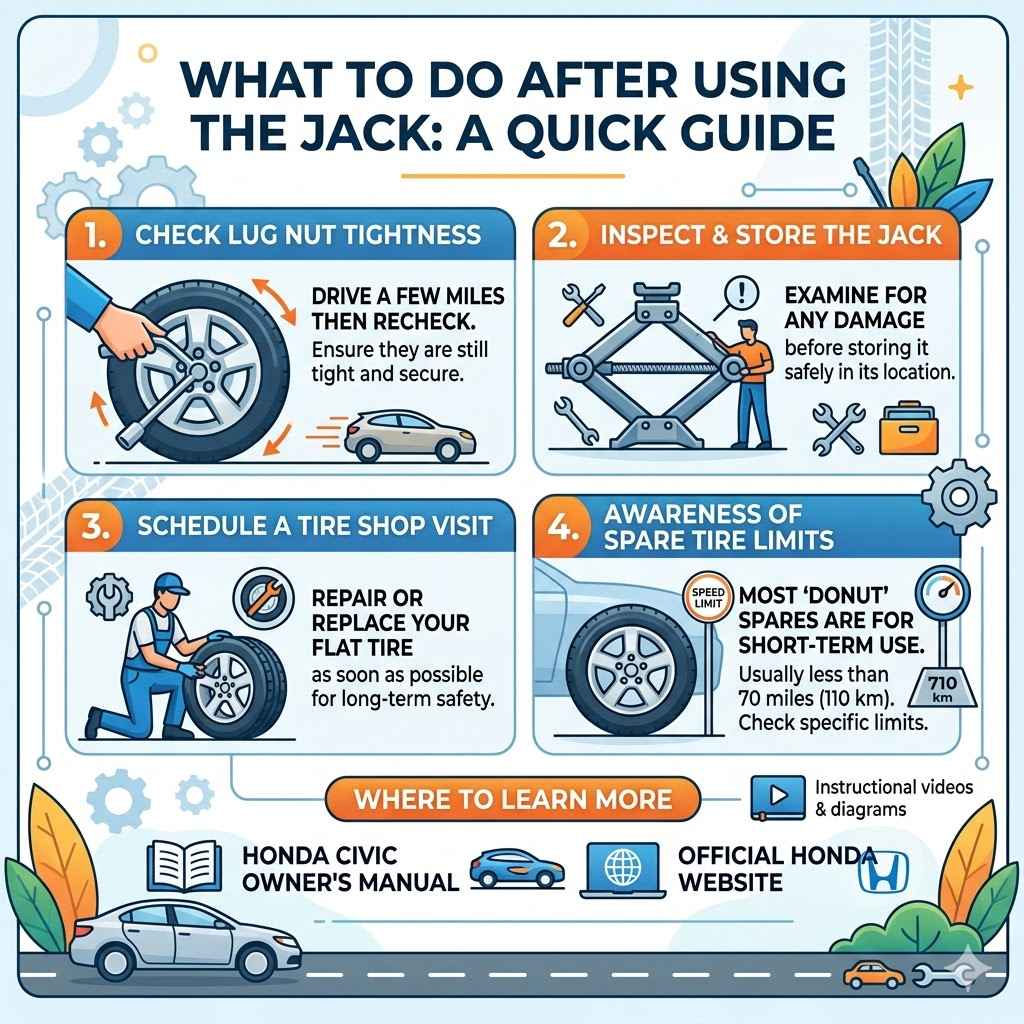
After the emergency is over, it’s a good idea to:
- Check the tightness of your lug nuts after driving a few miles.
- Inspect your jack for any damage before storing it.
- Schedule a visit to a tire shop to repair or replace your flat tire as soon as possible.
- If you used the spare, remember that most “donut” spares are only for short-term use (usually less than 70 miles or 110 km).
Where To Learn More
If you want more detail, check your Honda Civic owner’s manual or the official Honda website. You can also find instructional videos and diagrams online to supplement your understanding. For more about the types and safety ratings of jacks, see Wikipedia.
Frequently Asked Questions
What Size Jack Do I Need For A Honda Civic?
The scissor jack included with your Civic is designed for its weight (about 1. 3–1. 5 tons). If you’re buying a new jack, any jack with a 1. 5-ton or higher rating is safe for Honda Civics.
Can I Use A Hydraulic Floor Jack On My Honda Civic?
Yes, a hydraulic floor jack is safer and faster for garage work. Always use the correct jack points and add jack stands for extra safety before working under the car.
Where Can I Find The Jack In My Honda Civic?
The jack is stored in the trunk, usually beside or under the spare tire. It’s held in place by a wing nut or strap. Check your owner’s manual if you can’t find it.
Why Should I Never Work Under A Car Supported Only By The Scissor Jack?
A scissor jack is only for lifting the car to change a tire or do quick checks. It can slip or fail if disturbed. For safety, always use jack stands if you need to go under the car.
How Often Should I Check My Spare Tire And Jack?
Check both at least every three months. Look for rust, missing parts, and make sure the spare tire is inflated. Regular checks keep you ready for emergencies.
Taking the time to learn how to use your Honda Civic car jack correctly is a smart way to stay safe on the road. Practice makes the process easier, and being prepared can turn a stressful situation into a routine fix. Remember these steps, check your tools often, and don’t rush when safety is at stake. With a little care, you’ll handle any roadside emergency with confidence.
Related pick: Check today's price on Amazon
Products related to this article
Sponsored / affiliate links. As an Amazon Associate I earn from qualifying purchases. I may earn additional commission from eligible campaigns.
 ACARLUOY Portable Air Compressor for Car Tires - 3X Faster Inflation, Fit for Honda civic 2008-2012,6000mAh Battery, LCD Screen, LED Light,Auto Shutoff
 ACARLUOY Portable Air Compressor for Car Tires - 3X Faster Inflation, Fit for Honda civic 2002-2008,6000mAh Battery, LCD Screen, LED Light,Auto Shutoff