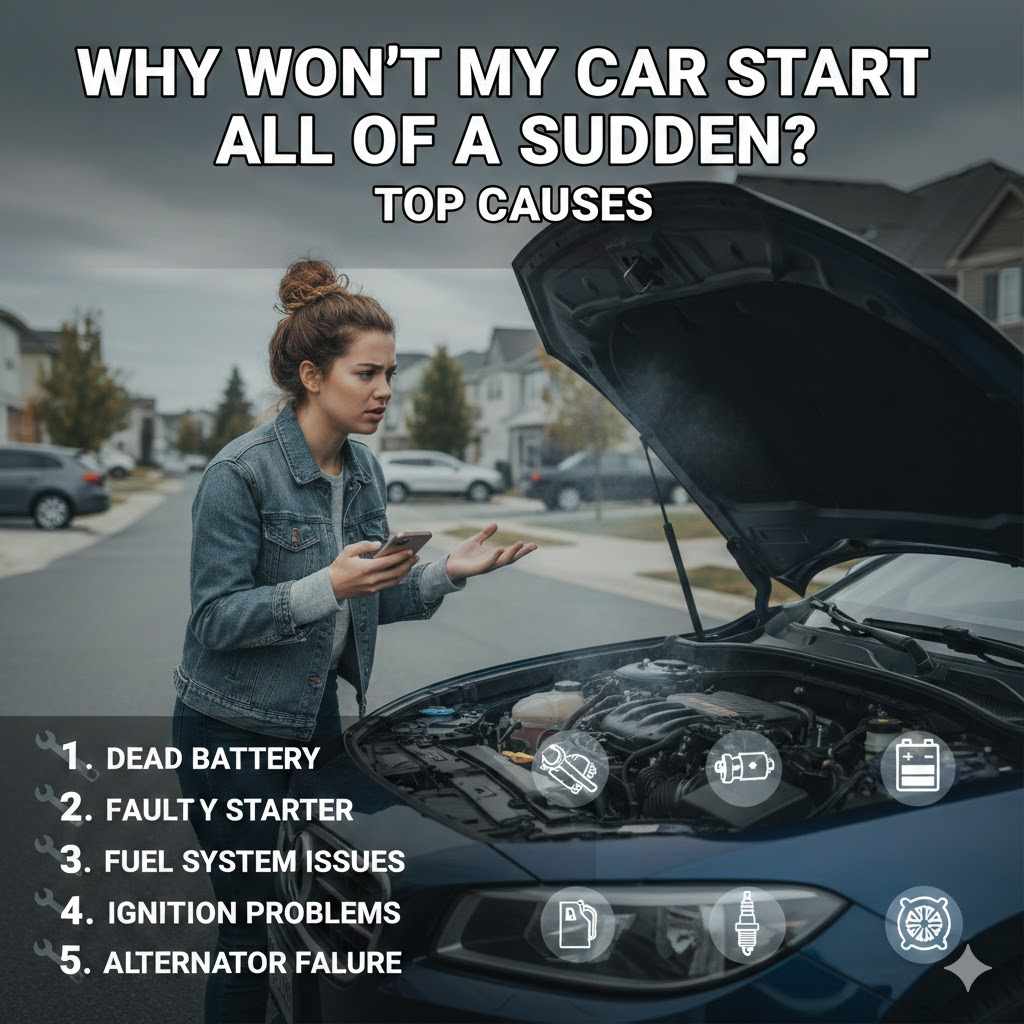
Why Won’t My Car Start All of a Sudden? Top Causes
It’s a frustrating moment when you turn the key or push the start button, and nothing happens. (New to driving? See our beginner’s guide to starting a car first.) You wonder, Why Won’t My Car Start All of a Sudden? Top Causes can seem like a big mystery, especially if you’re not used to fixing cars.
Don’t worry; this guide will help you figure it out. We’ll go through the most common reasons your car might not be starting, step by step. We’ll keep it simple so you can understand what might be going on with your vehicle.
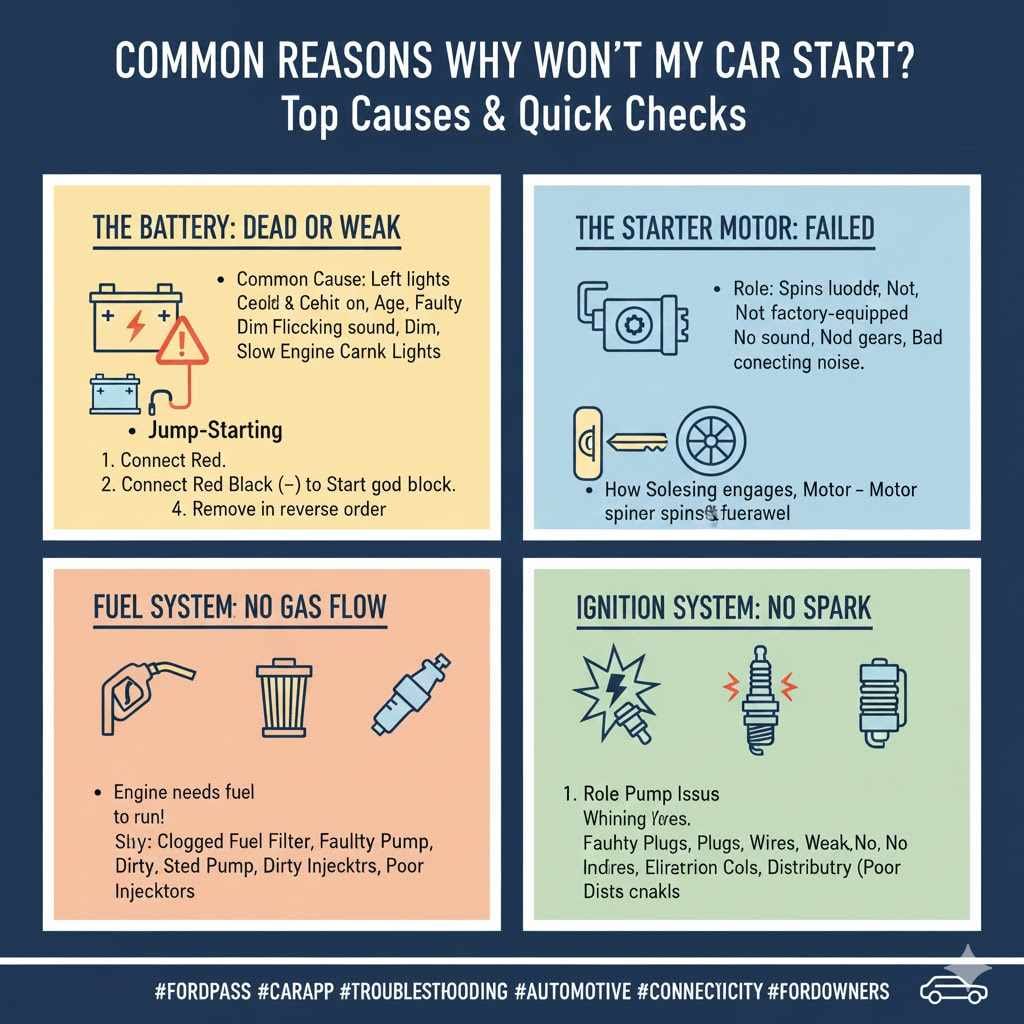
Common Reasons Why Won’t My Car Start All of a Sudden Top Causes
Many drivers face the unsettling situation of their car refusing to start. This sudden silence can be alarming, leaving you stranded and wondering about the potential issues. This section breaks down the most frequent culprits behind a car that won’t crank.
Understanding these common problems is the first step to diagnosing and potentially fixing the issue. We will explore the usual suspects that prevent your engine from roaring to life, from simple battery issues to more complex electrical problems.
The Battery Is Dead Or Weak
A dead or weak battery is the most common reason a car won’t start. The battery provides the electrical power needed to turn the engine over. If it doesn’t have enough juice, the starter motor won’t engage.
This can happen for various reasons, such as leaving lights on, an aging battery, or a faulty charging system.
When a battery is weak, you might hear a clicking sound when you try to start the car, or you might hear nothing at all. Sometimes, the dashboard lights may appear dim or flicker. A battery typically lasts about three to five years, but this can vary based on climate and usage.
Extreme temperatures, both hot and cold, can shorten a battery’s lifespan.
- Signs of a Weak Battery
One of the clearest signs is slow engine cranking. When you turn the key, the engine might sound like it’s struggling to turn over, making a “rur-rur-rur” sound instead of a strong, consistent one. Another indicator is if your headlights are dim when the engine is off but brighten when the engine is running.
This shows the alternator is working, but the battery isn’t holding a full charge.
- How to Test Your Battery
You can test a battery using a multimeter. Connect the red probe to the positive terminal and the black probe to the negative terminal. A fully charged battery should read around 12.6 volts or higher.
If the reading is below 12.4 volts, the battery might need charging or replacing. Many auto parts stores also offer free battery testing services, which is a convenient option if you don’t have a multimeter.
- Jump-Starting Your Car
If your battery is dead, you can try jump-starting your car using jumper cables and another vehicle. Connect the red cable to the positive terminal of the dead battery, then to the positive terminal of the good battery. Connect the black cable to the negative terminal of the good battery, and then to an unpainted metal surface on the engine block of the car with the dead battery.
Start the working car and let it run for a few minutes before trying to start the car with the dead battery. Remove the cables in the reverse order.
Problems With The Starter Motor
The starter motor is a powerful electric motor that spins the engine’s flywheel to get it started. If the starter motor fails, it won’t be able to turn the engine over, even if the battery is good. You might hear a single, loud click when you try to start the car, or sometimes, nothing at all.
A faulty starter motor can be caused by worn-out gears, electrical issues within the motor itself, or a bad connection to the battery. Sometimes, the starter solenoid, which is part of the starter system, can also fail. The solenoid acts like a switch, sending power to the starter motor.
- Symptoms of a Bad Starter Motor
A common symptom is a loud, single click when you turn the ignition key. This click indicates that the starter solenoid is engaging, but the starter motor itself isn’t spinning. Another sign is a grinding noise when you try to start the engine.
This can happen if the starter gear isn’t meshing properly with the flywheel.
- How Starter Motors Work
When you turn the ignition key, a small amount of current flows through a circuit to the starter solenoid. The solenoid then uses this current to engage a gear that pushes into the engine’s flywheel. Simultaneously, the solenoid closes a larger electrical contact, sending a large amount of current from the battery directly to the starter motor.
The motor then spins, turning the flywheel and thus the engine’s crankshaft, which starts the combustion process.
- Starter Motor Replacement
Replacing a starter motor is a moderately difficult repair that usually requires getting under the car. It’s often located on the engine block, near the transmission. Because of the specialized tools and knowledge needed, many people opt to have a mechanic replace a faulty starter motor.
Issues With The Alternator
While the alternator’s primary job is to recharge the battery while the engine is running, a failing alternator can indirectly cause starting problems. If the alternator isn’t working correctly, it won’t recharge the battery, leading to a dead battery over time. You might have experienced this if your battery has died recently.
Symptoms of a failing alternator include dimming headlights, electrical issues like power windows operating slowly, and a battery warning light on the dashboard. If the alternator fails completely, the car will eventually run out of battery power and stop.
- Alternator’s Role in Starting
The alternator is crucial for keeping the battery charged. Without a functional alternator, the battery will gradually lose its charge. Even if you can jump-start the car and get it running, if the alternator isn’t working, the battery won’t get replenished.
This means the car will eventually die again and won’t be able to start.
- Signs of a Failing Alternator
Besides a battery warning light, you might notice a whining or screeching noise coming from under the hood. This sound often occurs when you accelerate. Electrical components may also act erratically, with lights flickering or power accessories like the radio or power windows malfunctioning.
The car may also stall unexpectedly.
- Alternator Testing
An alternator can be tested using a multimeter or by a mechanic. With the engine running, a healthy alternator should produce between 13.5 and 14.5 volts. If the voltage is significantly lower or higher than this range, the alternator may need to be repaired or replaced.
Fuel System Problems
The engine needs fuel to start and run. If there’s an issue with the fuel system, the engine won’t get the gasoline it needs. This can be due to a variety of problems, such as a clogged fuel filter, a faulty fuel pump, or a problem with the fuel injectors.
If the fuel pump isn’t working, it won’t send fuel from the tank to the engine. A clogged fuel filter will restrict the flow of fuel, and dirty or clogged fuel injectors won’t spray fuel into the engine cylinders properly.
- Clogged Fuel Filter
Over time, fuel filters can become clogged with dirt and debris. This prevents enough fuel from reaching the engine. Symptoms of a clogged fuel filter can include rough idling, hesitation during acceleration, and a general loss of engine power.
In severe cases, it can prevent the car from starting at all.
- Faulty Fuel Pump
The fuel pump is responsible for pushing fuel from the gas tank to the engine. If it fails, the engine won’t receive any fuel. You might hear a whining noise from the rear of the car when you turn the key to the “on” position if the fuel pump is trying to work but is failing.
A complete fuel pump failure will prevent the car from starting.
- Fuel Injector Issues
Fuel injectors are responsible for spraying a fine mist of fuel into the engine’s cylinders. If they become clogged or faulty, the engine may misfire or not start. You might notice rough idling, poor fuel economy, and a check engine light if there are issues with the fuel injectors.
Ignition System Problems
The ignition system is responsible for creating the spark that ignites the fuel-air mixture in the engine cylinders. If any part of this system fails, the engine won’t start. This includes the spark plugs, spark plug wires, ignition coils, and the distributor (in older cars).
Faulty spark plugs won’t create a strong enough spark, or they may not spark at all. Worn-out spark plug wires can fail to deliver the electrical current to the spark plugs. Ignition coils are responsible for stepping up the battery’s voltage to create a spark, and if they fail, there will be no spark.
- Spark Plugs And Wires
Spark plugs are small but vital components that sit at the end of each cylinder. They have a gap that allows a spark to jump across, igniting the fuel. Over time, the electrodes on spark plugs can wear down, leading to a weaker spark or complete failure.
Spark plug wires carry the high voltage from the ignition coils to the spark plugs. If these wires are cracked or damaged, the electricity can leak out before reaching the plug.
- Ignition Coils
Modern cars often use individual ignition coils for each spark plug, while older cars might have a single coil connected to a distributor. These coils transform the low voltage from the battery into the thousands of volts needed to create a spark. A failed ignition coil means no spark for the cylinder it serves, preventing the engine from starting or running smoothly.
- Distributor Issues (Older Cars)
In cars with distributors, this component distributes the electrical current from the ignition coil to the correct spark plug at the right time. A worn-out rotor, cap, or faulty ignition module within the distributor can cause the engine to misfire or not start at all. Checking for cracks, moisture, or corrosion in the distributor cap and rotor is a good starting point for diagnosing ignition problems in older vehicles.
More Complex Electrical Issues
Beyond the common issues, there are more intricate electrical problems that can cause a car to refuse to start. These can include problems with the car’s computer, wiring harnesses, or sensors. These systems work together to control everything from fuel delivery to ignition timing.
A faulty sensor, like the crankshaft position sensor or camshaft position sensor, can send incorrect information to the car’s computer, preventing it from knowing when to fire the spark plugs or inject fuel. Damaged wiring or a blown fuse in a critical circuit can also shut down essential systems.
The Car’s Computer (ECU)
The engine control unit (ECU), often called the car’s computer, is the brain of the operation. It takes information from various sensors around the car and uses it to manage the engine’s performance. If the ECU malfunctions, it can cause a wide range of problems, including the car not starting.
A malfunctioning ECU can happen due to electrical shorts, water damage, or simply age. When the ECU isn’t working right, it might not send the correct signals to the fuel pump, ignition system, or other critical components needed to start the engine.
- Role of the ECU
The ECU uses data from sensors like the mass airflow sensor, oxygen sensor, throttle position sensor, and crankshaft position sensor to calculate the optimal amount of fuel to inject and the precise moment to spark. It also controls other functions like idle speed and emissions systems. If the ECU receives faulty data or malfunctions itself, these calculations can be wrong, leading to starting problems or poor engine performance.
- Diagnosing ECU Problems
Diagnosing ECU issues can be challenging. Mechanics use specialized diagnostic tools that plug into the car’s OBD-II port (on-board diagnostics) to read error codes stored in the ECU. These codes can point towards specific sensor failures or internal ECU problems.
Sometimes, the ECU may need to be reprogrammed or replaced entirely, which can be an expensive repair.
- Impact of Power Surges
Power surges or fluctuations can sometimes damage the sensitive electronics within an ECU. This is why it’s important to ensure your car’s electrical system is properly maintained. A failing alternator, for example, can sometimes lead to unstable voltage that could potentially harm the ECU over time.
Sensors Malfunctioning
Cars rely on a network of sensors to monitor everything from engine temperature to wheel speed. If a critical sensor fails, it can send incorrect data to the ECU, causing starting problems. For instance, the crankshaft position sensor tells the ECU the engine’s rotational speed and position, which is vital for timing fuel injection and spark.
If this sensor fails, the ECU won’t know when to trigger ignition.
Other important sensors include the camshaft position sensor, which helps the ECU synchronize the fuel injection and valve timing, and the mass airflow sensor, which measures the amount of air entering the engine. A faulty mass airflow sensor can lead to an incorrect fuel mixture, potentially preventing the engine from starting.
- Crankshaft Position Sensor
This is one of the most common sensors to fail and cause a no-start condition. It’s usually located near the crankshaft pulley or on the transmission bell housing. When it malfunctions, the ECU receives no signal about engine rotation, and thus, no fuel is injected and no spark is generated.
The car might crank but not start.
- Camshaft Position Sensor
This sensor works in conjunction with the crankshaft position sensor to ensure the valves open and close at the correct time relative to the piston’s position. A failed camshaft position sensor can lead to rough running, stalling, or a no-start situation. It’s often found on the front of the engine, near the camshaft pulley.
- Mass Airflow Sensor (MAF)
The MAF sensor measures the density and amount of air entering the engine. This information is critical for the ECU to calculate the correct fuel-air mixture. If the MAF sensor is dirty or faulty, it can send inaccurate readings, leading to a lean or rich fuel mixture that prevents the engine from starting, or causing it to run poorly if it does start.
Wiring And Fuse Problems
The complex web of wires and fuses in your car is responsible for delivering electrical power to all its components. A loose wire, a corroded connection, or a blown fuse in a critical circuit can interrupt the flow of electricity, preventing the car from starting. These issues can sometimes be tricky to find because wires are often hidden within the dashboard or engine bay.
A blown fuse is usually a sign of an underlying electrical problem, such as a short circuit. If a fuse blows, it means the circuit is overloaded, and the fuse sacrifices itself to protect the wiring and components from damage.
- Locating Blown Fuses
Your car’s owner’s manual will have a diagram showing the location of the fuse box(es) and what each fuse controls. You can visually inspect fuses by looking at the metal strip inside. If the strip is broken, the fuse is blown.
It’s important to
- Corrosion And Loose Connections
Electrical connections can become corroded over time, especially in damp environments. This corrosion creates resistance, hindering the flow of electricity. Loose wires can simply fall out of their connectors or break.
These issues can affect everything from the starter motor to the fuel pump. Checking visible connections and gently wiggling wires can sometimes reveal a problem.
- Short Circuits
A short circuit occurs when an electrical current takes an unintended path, usually by bypassing the intended resistance. This can happen when a wire’s insulation is damaged, allowing it to touch a metal part of the car. Short circuits draw excessive current, which will typically blow a fuse immediately.
They can be difficult to trace, as the problem might be hidden within a wiring harness.
Less Common But Possible Reasons
While the above issues are the most frequent causes, a few less common problems can also lead to a car not starting. These might include issues with the ignition switch, a security system lockout, or even problems with the engine itself, though engine mechanical failures are rarer for sudden no-start situations.
Understanding these less common scenarios can be helpful if you’ve ruled out the more typical causes. Sometimes, a simple fix can be overlooked if you’re only focusing on the most common culprits.
Ignition Switch Failure
The ignition switch is what you turn with your key to start the car. It sends power to various systems, including the starter motor, fuel pump, and dashboard lights. If the ignition switch is faulty, it may not be sending power to these components, preventing the car from starting.
You might notice that some electrical accessories on your dashboard don’t turn on when you try to start the car.
A worn-out ignition switch can fail to make proper contact with the electrical contacts inside. This can result in intermittent starting issues or a complete failure to start. Diagnosing an ignition switch often involves checking for power at different terminals of the switch when the key is turned to the start position.
- How the Ignition Switch Works
When you insert the key and turn it to the “on” position, the ignition switch completes circuits that power the car’s accessories and essential systems like the fuel pump and ignition system. When you turn it to the “start” position, it sends a signal to the starter solenoid to engage the starter motor.
- Symptoms of a Bad Ignition Switch
Besides the car not starting, you might experience the dashboard lights not coming on, the starter not engaging, or the engine starting but then immediately dying. Intermittent issues are also common, where the car might start sometimes but not others, depending on the position of the key or how it’s turned.
- Testing the Ignition Switch
Testing an ignition switch typically involves a multimeter to check for continuity and voltage at its various terminals. This is often done with the switch disconnected from the steering column. A mechanic will usually perform this test to confirm if the switch is the cause of the no-start problem.
Anti-Theft System Lockout
Modern cars are equipped with anti-theft systems that can prevent the engine from starting if they detect an unauthorized attempt to operate the vehicle. If your car’s anti-theft system is malfunctioning or has been triggered incorrectly, it can immobilize the engine, even if everything else is working perfectly.
This can happen if the key fob battery is dead, the key chip is damaged, or there’s a fault in the system’s receiver. Sometimes, the system might simply need to be reset. The car might crank but not start, or it might not crank at all.
- How Anti-Theft Systems Work
These systems typically involve a transponder chip in your car key or key fob. When you insert the key or the fob is nearby, the car’s computer reads a unique code from the chip. If the code matches what the car expects, the anti-theft system allows the engine to start.
If the code doesn’t match, or if the system malfunctions, it can disable the fuel pump or the ignition system.
- Common Triggering Issues
One of the most common issues is a dead battery in the key fob, preventing the car from recognizing the authorized key. Sometimes, using a duplicate key that hasn’t been properly programmed can also trigger the system. In rare cases, the car’s computer itself might experience a glitch, causing it to incorrectly engage the anti-theft lockout.
- Resetting The System
Resetting an anti-theft system varies by car make and model. Some require a specific sequence of turning the ignition key on and off, while others might need to be reset by a dealer. Your car’s owner’s manual might provide instructions for a basic reset procedure.
If the problem persists, professional help is usually required.
Mechanical Engine Problems
While less common for a sudden no-start issue, severe mechanical problems with the engine itself could prevent it from starting. This could include a broken timing belt, a seized engine, or major internal damage. These issues are usually preceded by warning signs like strange noises or poor performance.
A broken timing belt, for example, can cause the engine’s valves and pistons to collide, leading to catastrophic damage and preventing the engine from turning. A seized engine means that internal components have jammed, preventing any rotation. These are typically very serious and expensive repairs.
- Timing Belt Failure
The timing belt synchronizes the rotation of the crankshaft and camshafts, ensuring the engine’s valves open and close at the correct times. If this belt breaks, the engine’s timing is lost. In many engines, this can cause the pistons to hit the valves, leading to bent valves and damaged pistons.
This results in an immediate engine failure and a no-start condition.
- Engine Seizure
Engine seizure happens when internal parts of the engine become so hot that they expand and jam together. This can be caused by a lack of oil or severe overheating. If an engine seizes, it will refuse to turn over, even with a good battery and starter.
This is a severe mechanical failure requiring significant engine repair or replacement.
- Internal Engine Damage
Other forms of internal engine damage, such as a broken connecting rod or a failed piston, can also cause a no-start situation. These problems are usually accompanied by loud noises, such as knocking or banging, before the engine stops running or fails to start. They are typically very serious issues that require a complete engine rebuild or replacement.
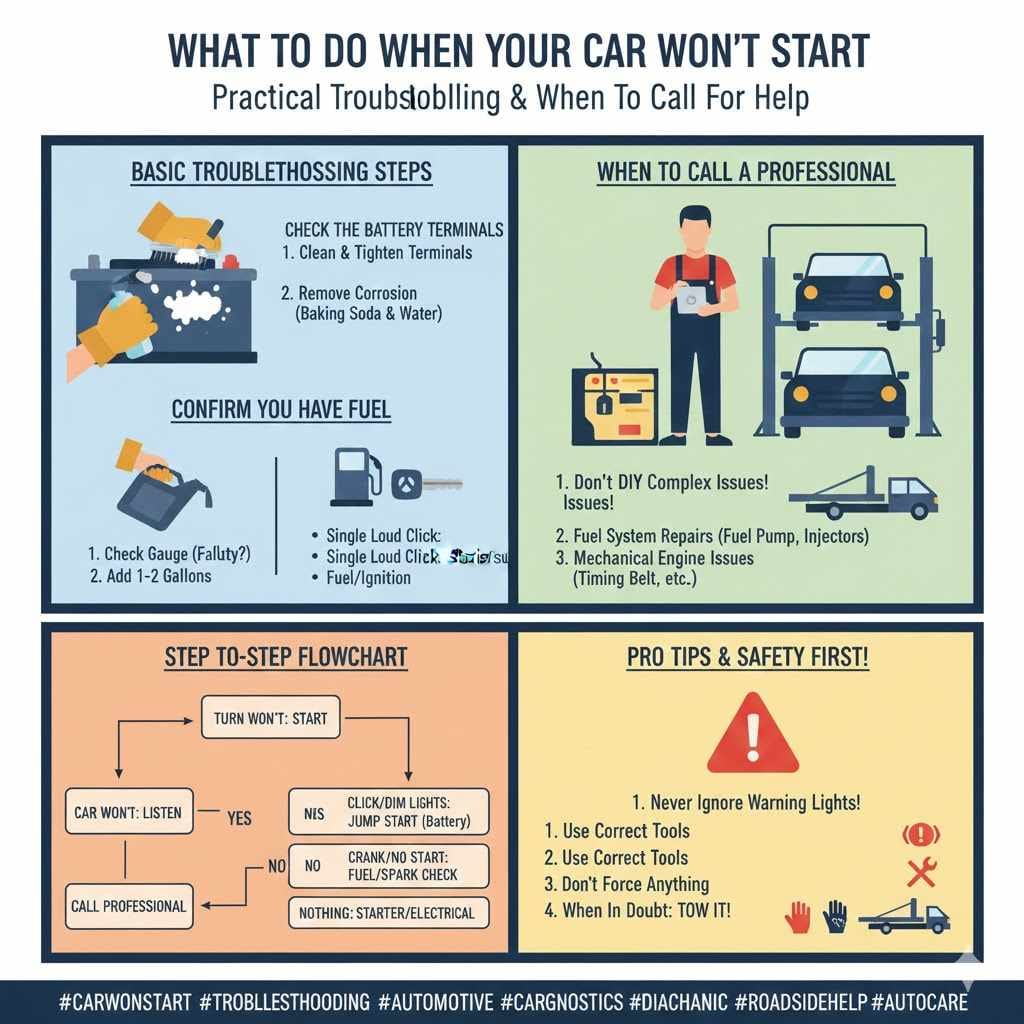
What To Do When Your Car Won’t Start
When your car suddenly refuses to start, it’s important to stay calm and approach the problem systematically. Before calling for a tow or expensive repairs, there are a few basic checks you can perform yourself. These initial steps can sometimes identify a simple fix or at least help you describe the problem more accurately to a mechanic.
Understanding the most common causes we’ve discussed can empower you to troubleshoot. Even if you can’t fix it yourself, knowing the potential issues can save you time and money when explaining the situation to a professional. It helps you avoid unnecessary repairs.
Basic Troubleshooting Steps
Start with the simplest things. Check if your battery terminals are clean and tight. Sometimes, corrosion can prevent a good electrical connection.
Ensure your car has enough fuel; a faulty fuel gauge can sometimes be misleading.
If your car cranks but doesn’t start, listen carefully. Does it sound like it’s trying to catch? Does it make any unusual noises?
These auditory clues can be very helpful in narrowing down the possibilities.
- Check The Battery Terminals
Look at the battery terminals. They should be clean and free of white or bluish-green corrosion. If you see corrosion, you can try cleaning it off with a wire brush and a mixture of baking soda and water.
Make sure the clamps are snug on the terminals. Loose connections are a frequent cause of starting problems.
- Confirm You Have Fuel
It sounds obvious, but it’s worth double-checking. If your fuel gauge is faulty or you’ve recently run out of gas, the car won’t start. Try adding a gallon or two of gas if you suspect this might be the issue.
- Listen For Sounds When Starting
When you turn the key, pay close attention to the sounds. A rapid clicking noise usually points to a weak battery. A single loud click might suggest a starter motor issue.
If the engine cranks normally but doesn’t fire up, the problem is likely with fuel or ignition.
When To Call A Professional
If you’ve gone through the basic checks and your car still won’t start, or if you suspect a more serious problem like a faulty starter, fuel pump, or ignition system, it’s time to call a professional mechanic. Trying to fix complex electrical or mechanical issues without the proper tools and knowledge can sometimes cause more damage.
Mechanics have specialized diagnostic equipment that can quickly pinpoint the exact cause of the problem. They also have the experience to perform repairs safely and effectively. Don’t hesitate to seek professional help when you’re unsure.
- Complex Electrical Diagnostics
Issues with the car’s computer, complex wiring faults, or sensor problems often require advanced diagnostic tools and expertise. Mechanics have access to these tools and can interpret the data to find the root cause of the starting issue.
- Fuel System Repairs
Working with fuel systems can be dangerous if not done correctly. Replacing a fuel pump or dealing with fuel injectors often requires specialized tools and knowledge to ensure the system is sealed properly and that there are no fuel leaks.
- Mechanical Engine Issues
If you suspect a serious mechanical problem with the engine itself, such as a timing belt failure, it’s crucial to have it diagnosed and repaired by a qualified mechanic. These types of repairs are complex and require specialized knowledge and equipment.
Frequently Asked Questions
Question: What is the most common reason a car won’t start?
Answer: The most common reason a car won’t start is a dead or weak battery. Batteries lose their charge over time, especially if left unused or if components like lights are accidentally left on.
Question: Can a car start without a battery?
Answer: No, a car cannot start without a battery. The battery provides the initial electrical power needed to turn over the engine and power the vehicle’s electronic systems.
Question: What does it mean if my car makes a clicking noise when I try to start it?
Answer: A rapid clicking noise usually indicates that the battery is weak and doesn’t have enough power to turn the starter motor. A single, loud click might suggest a problem with the starter motor itself.
Question: How long does a car battery typically last?
Answer: A car battery typically lasts between three to five years, though this can vary depending on factors like climate, driving habits, and battery quality.
Question: Should I try to jump-start my car if I’m unsure how?
Answer: It’s best to have someone experienced help you jump-start your car or consult your owner’s manual for detailed instructions. Incorrectly connecting jumper cables can damage your car or another vehicle’s electrical system.
Summary
When your car won’t start all of a sudden, it’s usually due to a dead battery, starter motor issues, fuel problems, or ignition system failures. Many common causes are relatively simple to check. If basic troubleshooting doesn’t work, professional help is key.
You can get your car running again. See also how long do ford cars last real owner data revealed.