
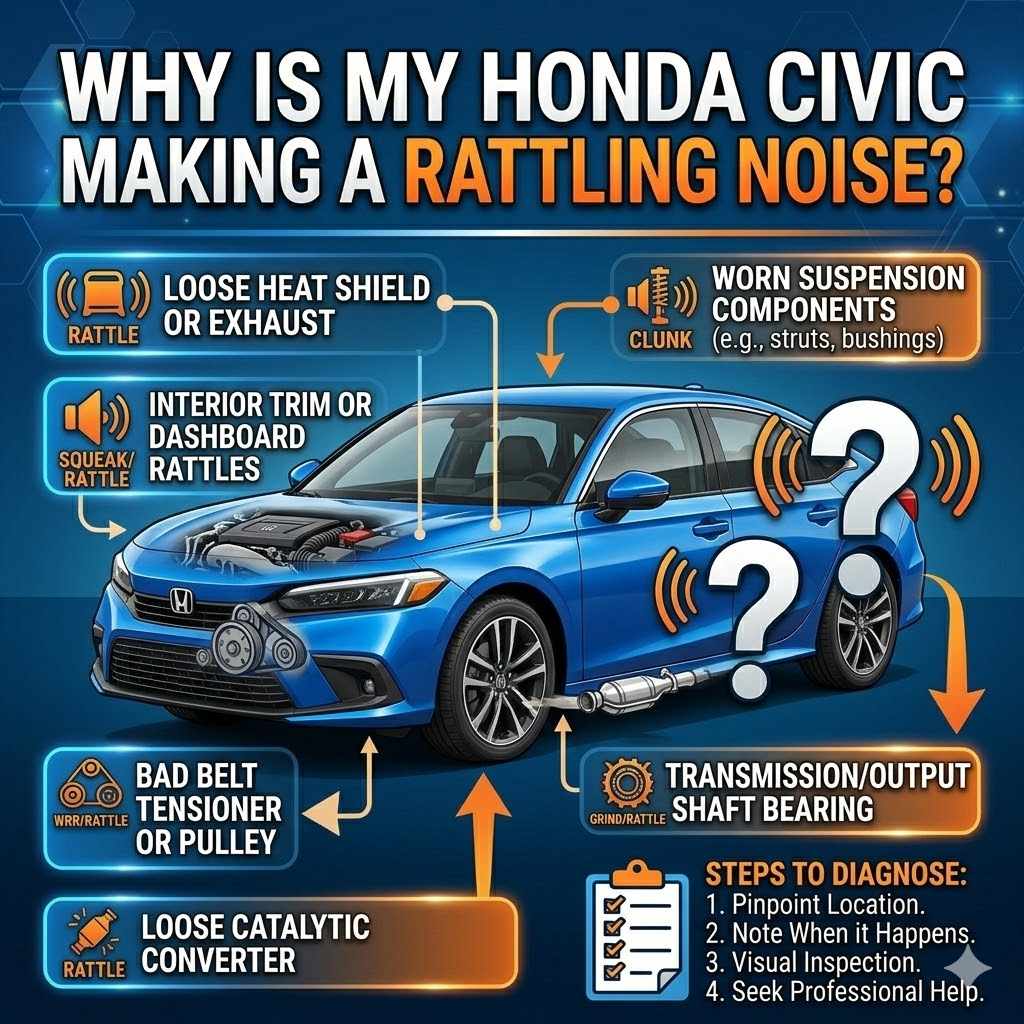
Hearing a rattle in your Honda Civic can be unsettling, especially if you’re new to car care. This common car puzzle, Why Is My Honda Civic Making a Rattling Noise?, often leaves drivers scratching their heads. But don’t worry, finding the cause doesn’t have to be difficult.
We’ll break down the likely culprits in simple steps. Get ready to discover what that noise means and how to fix it.
Common Causes for a Rattling Honda Civic
A rattling sound in your Honda Civic can stem from many sources, ranging from simple fixes to more involved mechanical issues. Understanding these common causes helps pinpoint the problem quickly and efficiently. This section will explore the most frequent reasons for this bothersome noise, providing clear explanations for each potential issue.
Loose Exhaust Components
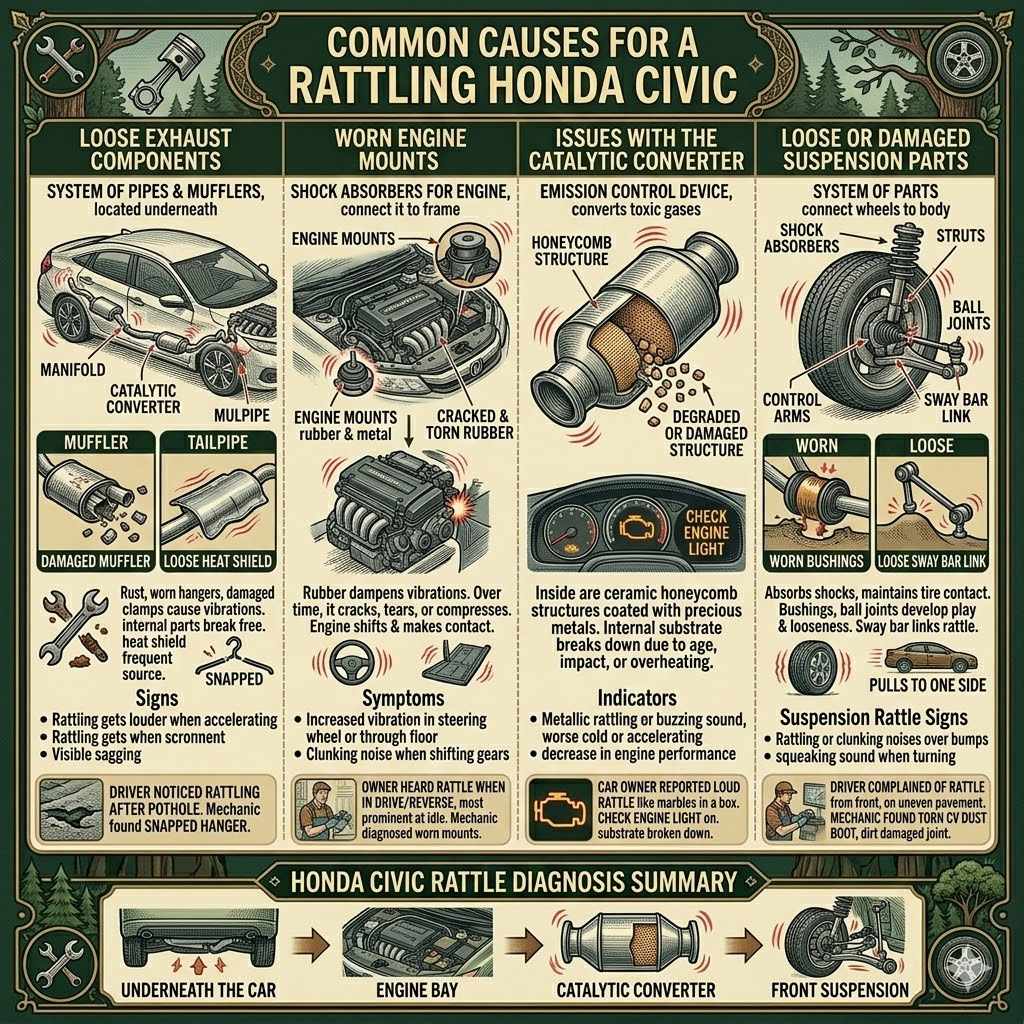
Your car’s exhaust system is a network of pipes, mufflers, and catalytic converters that carry harmful gases away from the engine. It’s often located underneath your vehicle. When parts of this system become loose due to rust, worn-out hangers, or damaged clamps, they can vibrate and create a rattling sound.
This is especially noticeable when the engine is running or when you go over bumps.
What is an exhaust system? The exhaust system is a crucial part of your vehicle that manages engine exhaust. It includes the exhaust manifold, catalytic converter, muffler, and tailpipe. Its main jobs are to reduce noise pollution and clean up harmful emissions before they are released into the air.
The system is designed to withstand high temperatures and vibrations.
Why does it rattle? Over time, the metal components of the exhaust can rust or break. Hangers that hold the exhaust in place can also wear out. A damaged muffler, which is designed to quiet engine noise, can also have internal parts that break free and rattle around.
A loose heat shield, a thin metal cover protecting surrounding parts from exhaust heat, is another frequent source of rattling sounds.
Signs of a loose exhaust:
- A rattling or banging noise that gets louder when you accelerate.
- A deeper, louder exhaust sound than usual.
- Visible sagging or dangling parts under the car.
Example: A driver noticed a persistent rattle after hitting a large pothole. Upon inspection, a mechanic found that the exhaust hanger had snapped, causing the muffler to hang lower and bang against the chassis during movement. A simple replacement of the hanger resolved the issue.
Worn Engine Mounts
Engine mounts are designed to absorb vibrations from the engine and keep it securely in place. They are typically made of rubber and metal. When these mounts wear out or break, the engine can move more than it should, leading to vibrations and rattling noises, particularly when the car is idling or accelerating.
What are engine mounts? Engine mounts are shock absorbers for your engine. They connect the engine to the car’s frame. Their primary function is to dampen the engine’s vibrations and noise, preventing them from reaching the car’s cabin and chassis.
They also help support the engine’s weight.
Why do they cause rattles? Engine mounts use rubber to absorb shock. Over time, this rubber can crack, tear, or become compressed, losing its ability to cushion vibrations. When an engine mount fails, the engine can shift and make contact with other parts of the car, or the engine itself can vibrate excessively, causing rattling sounds.
Symptoms of bad engine mounts:
- Increased vibration felt in the steering wheel or through the floor.
- A clunking or rattling noise when shifting gears or accelerating.
- The engine may seem to “sag” or sit lower than usual.
Real-life scenario: A Honda Civic owner started hearing a distinct rattle every time they put the car in drive or reverse. The noise was most prominent at idle. A mechanic diagnosed worn engine mounts.
Replacing the faulty mounts eliminated the vibration and the rattling sound, making the car much quieter and smoother to drive.
Issues with the Catalytic Converter
The catalytic converter is part of your exhaust system that converts harmful exhaust gases into less harmful ones. Inside the converter are ceramic honeycomb structures coated with precious metals. If these structures break apart due to age, impact, or overheating, the loose pieces can rattle around inside the converter’s housing, creating a distinct metallic rattle.
What is a catalytic converter? A catalytic converter is an emission control device that is part of your car’s exhaust system. It uses chemical reactions to convert toxic byproducts of combustion into less harmful substances like water vapor and carbon dioxide. It’s a vital component for reducing air pollution from vehicles.
Why does it rattle? The internal honeycomb structure, often made of ceramic, can degrade over time or be damaged by physical impact. When this happens, the pieces can break loose and move around inside the metal casing of the converter, producing a rattling noise, much like pebbles in a can, especially when the engine is revved.
Indicators of a faulty catalytic converter:
- A metallic rattling or buzzing sound coming from under the car, often more noticeable when the engine is cold or accelerating.
- A decrease in engine performance or acceleration.
- Illuminated check engine light on the dashboard.
Case study: A car owner reported a loud rattling noise from their Honda Civic that sounded like marbles in a metal box. The check engine light was also on. A diagnostic revealed that the internal substrate of the catalytic converter had broken down.
Replacing the catalytic converter resolved both the noise and the warning light.
Loose or Damaged Suspension Parts
The suspension system keeps your tires in contact with the road and provides a smooth ride. It includes components like shock absorbers, struts, ball joints, and control arms. If any of these parts become loose, worn, or damaged, they can create rattling or clunking noises, especially when you go over bumps or uneven surfaces.
What is the suspension system? The suspension system is a network of parts that connect a vehicle’s wheels to its body. It’s responsible for absorbing shocks from the road, maintaining tire contact, and ensuring a comfortable and controlled ride. Key components include springs, shock absorbers, struts, control arms, and ball joints.
How wear causes rattles: As components like bushings wear out, they can create play or looseness. A worn ball joint might develop a knocking sound. A loose sway bar link can rattle over bumps.
Even a simple loose trim piece or a detached splash guard can create a surprising amount of noise.
Suspension rattle signs:
- Rattling or clunking noises when driving over bumps or rough roads.
- A squeaking or groaning sound when turning.
- Uneven tire wear or a tendency for the car to pull to one side.
Example scenario: A driver complained about a constant rattle from the front of their car, particularly noticeable on uneven pavement. Upon inspection, a mechanic found that a protective dust boot on a CV joint had torn, allowing dirt to enter and damage the joint, leading to a clicking or rattling sound. This required replacing the CV axle.
Investigating Other Potential Rattling Sources
Beyond the major systems like the exhaust, engine mounts, catalytic converter, and suspension, numerous other smaller components can contribute to a rattling noise in your Honda Civic. These can often be overlooked but are equally important to consider for a complete diagnosis. This part of the guide will delve into these less obvious, yet common, sources of rattling.
Interior Rattles and Loose Trim
Sometimes, the rattling isn’t coming from the mechanics of the car but from inside the cabin. Loose interior panels, dashboard components, door trim, or even items left in storage compartments can vibrate against each other or the car’s frame, creating a persistent rattle that can be mistaken for a more serious issue.
Why interior parts rattle: Over time, the clips and fasteners that hold interior panels in place can loosen or break. Small vibrations from the road or engine can then cause these panels to move and make noise. Even something as simple as a coin or a toy left in a cup holder can cause a surprising amount of rattle.
How to find them:
- Gently press on different interior panels while the car is making the noise to see if the sound stops or changes.
- Check all storage areas, including glove boxes, door pockets, and the center console.
- Inspect the dashboard, center console, and door cards for any loose or misaligned trim pieces.
Sample scenario: A driver was annoyed by a persistent rattle that seemed to come from the passenger side dashboard. After checking all the usual mechanical suspects, they discovered that a small plastic cover near the windshield vent had come slightly loose. A gentle push and a small piece of foam tape behind the cover completely silenced the rattle.
Heat Shields on Engine Components
Many engine components, like the exhaust manifold or turbocharger, generate significant heat. To protect surrounding parts, thin metal heat shields are installed. These shields are often held in place by small bolts or clips.
If these shields become loose, rusted, or their mounting points fail, they can vibrate against the engine or exhaust, producing a metallic rattle.
What are engine heat shields? Heat shields are protective barriers made of metal, usually aluminum or steel, designed to deflect or block heat radiating from hot engine components. They prevent heat from damaging sensitive parts like wiring, hoses, or plastic components nearby. They are typically thin and form-fitting.
Reasons for rattling: The bolts or clamps that secure heat shields can loosen over time due to engine vibrations and temperature fluctuations. Rust can also weaken the shield itself or its mounting points. A damaged or bent heat shield can also come into contact with other parts, causing it to rattle.
Signs of loose heat shields:
- A metallic rattling or buzzing sound that often occurs during acceleration or deceleration.
- The noise may be more prominent when the engine is hot.
- Visual inspection can sometimes reveal a loose or bent shield.
Practical advice: If you suspect a loose heat shield, a simple fix might involve tightening the bolts or using a hose clamp to secure a rattling shield. However, if the shield is extensively rusted or damaged, replacement might be necessary.
Water Pump or Alternator Bearing Issues
Components like the water pump and alternator have bearings that allow them to spin freely. When these bearings wear out, they can start to make noise. This noise often begins as a whine or hum but can develop into a rattling or grinding sound as the bearing deteriorates further.
This sound is typically heard when the engine is running.
What are water pumps and alternators? The water pump circulates coolant through your engine to prevent overheating. The alternator generates electricity to power your car’s electrical systems and charge the battery. Both are driven by belts connected to the engine’s crankshaft.
Bearing failure symptoms:
- A whirring, grinding, or rattling noise that changes with engine speed.
- A burning smell if the bearing overheats.
- Warning lights on the dashboard, such as a battery light (for alternator issues) or an overheating light (for water pump issues).
Example: A Honda Civic owner noticed a high-pitched rattling sound that seemed to emanate from the front of the engine. The sound would get louder as they pressed the gas pedal. After a diagnostic check, it was found that the bearing in the alternator had failed, causing the rattling and also affecting the battery’s charging ability.
Loose Engine Cover or Air Intake Components
Modern cars have plastic engine covers for aesthetic purposes and to help direct airflow. The air intake system guides air into the engine. If these plastic covers or parts of the air intake system become loose, cracked, or are not properly secured, they can vibrate and create a rattling or buzzing sound that might be mistaken for an engine problem.
What are engine covers and air intake systems? The engine cover is a decorative or functional plastic shroud placed over the top of the engine. The air intake system is responsible for drawing in outside air and delivering it to the engine’s combustion chambers. This includes components like the air filter box, intake tube, and throttle body.
How they rattle: Clips that hold engine covers can break. Bolts can loosen. Vibrations from the engine can cause these plastic parts to move and make noise.
A loose air intake hose or a cracked air filter housing can also produce rattling sounds, especially under load.
What to look for:
- Visually inspect the plastic engine cover for any cracks or loose fasteners.
- Check the air intake system, ensuring all hoses are securely attached and the air filter box is properly closed.
- Listen for the rattle when the engine is running and gently tap on the plastic parts to see if the sound changes.
Real-life scenario: A new car owner heard a light rattling noise whenever they started their Honda Civic. It turned out that one of the clips holding the plastic engine cover in place had not been fully secured after a recent service. A simple push to click it into place silenced the noise.
Troubleshooting Your Honda Civic’s Rattle Step-by-Step
To effectively address the rattling noise in your Honda Civic, a systematic approach to troubleshooting is essential. This section provides a clear, step-by-step guide, allowing you to methodically identify the source of the rattle and determine the best course of action. We will cover how to safely inspect common areas and what to do with the information you gather.
Initial Checks When the Car Is Cold
Before diving into complex diagnostics, it’s wise to perform some basic checks when your car is cool. Many rattles are more apparent or easier to locate when the engine is not hot and fluids are not circulating vigorously. This is also a safer time to inspect accessible parts.
What to do first:
- Visual Inspection Underneath: Safely get under the car (use jack stands for support if needed) and look for anything obviously loose. Check the exhaust system for dangling parts, loose hangers, or damaged heat shields. Inspect suspension components for any visible damage or looseness.
- Check Engine Bay: With the engine off and cool, examine the engine bay. Look for loose engine covers, air intake components, or anything that appears out of place. Gently try to wiggle components to see if they are secure.
- Test Drive (Cautiously): If the noise isn’t immediately obvious, take a short, slow test drive. Try to note when the rattle occurs—during acceleration, braking, turning, or over bumps. This information is crucial for narrowing down the possibilities.
Safety first: Always ensure the vehicle is on a level surface and use sturdy jack stands if you need to lift it. Never rely solely on a car jack.
Listening and Isolating the Sound
The next critical step is to pinpoint the origin of the rattling sound as precisely as possible. This often involves careful listening and sometimes recreating the conditions under which the rattle occurs. This can be challenging as sounds can travel and reflect within the car.
Techniques for isolation:
- Passenger Help: If possible, have a passenger listen from different locations in the car (driver’s seat, passenger seat, back seat) while you carefully drive over a known bumpy spot or accelerate gently.
- Engine Bay Listening: With the engine running (and parking brake engaged), a helper can carefully rev the engine while you listen from the engine bay. Be extremely cautious around moving parts.
- Parked Tests: Some rattles might occur even when parked. Try shifting from drive to reverse, or gently rocking the steering wheel.
Understanding sound travel: Remember that a rattle originating from one area might sound like it’s coming from another due to how sound waves bounce around the car’s interior and undercarriage.
When to Seek Professional Help
While many rattles can be diagnosed and fixed by the owner, some issues require specialized tools, knowledge, and safety precautions. Knowing when to hand the reins to a professional mechanic can save you time, money, and potential damage to your vehicle.
Situations that warrant professional attention:
- Uncertainty: If you’ve gone through the basic checks and still can’t identify the source, or if you’re unsure about what you’re seeing, it’s best to consult a professional.
- Safety-Related Components: Issues with brakes, steering, or critical suspension parts should always be inspected by a qualified mechanic. A rattle from these areas could indicate a serious safety hazard.
- Complex Systems: Problems with the engine itself, transmission, or internal catalytic converter issues often require specialized diagnostic equipment and expertise.
- Persistent or Loud Noises: If the rattle is very loud, constant, or accompanied by other warning lights or performance issues, it’s a strong signal to seek professional help immediately.
Benefits of professional diagnosis: Mechanics have the experience and tools to accurately diagnose issues, ensure repairs are done correctly, and prevent further damage. They can also identify potential problems you might have missed.
Maintenance Tips to Prevent Rattles
Preventing rattles in your Honda Civic is often easier and more cost-effective than fixing them after they appear. Regular maintenance helps keep all the car’s systems in good working order, reducing the likelihood of components loosening or wearing out prematurely. This section will outline key maintenance practices that can help keep your Civic quiet and smooth.
Regular Inspections During Service
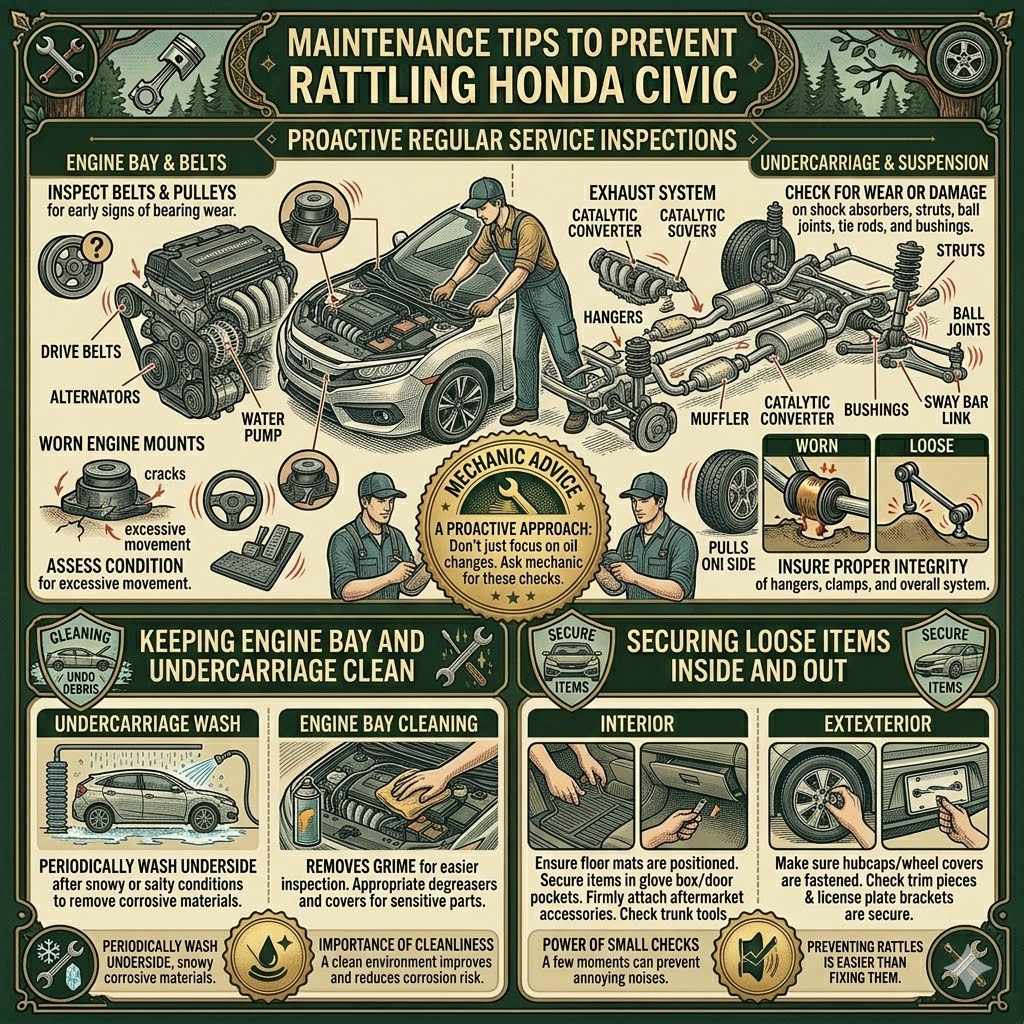
Your car’s routine service appointments are the perfect opportunity to have potential rattle sources inspected. Technicians can identify worn parts, loose fasteners, or early signs of damage before they become problematic and start making noise.
What mechanics should check:
- Exhaust System: They should inspect hangers, clamps, heat shields, and the overall integrity of the exhaust pipes and muffler.
- Suspension Components: A thorough check of shock absorbers, struts, ball joints, tie rods, and bushings for signs of wear or damage.
- Engine Mounts: Mechanics can assess the condition of engine mounts for cracks or excessive movement.
- Belts and Pulleys: Inspecting the drive belts and the pulleys they run on can reveal early signs of bearing wear in components like the alternator or water pump.
Proactive approach: Don’t just focus on oil changes. Ask your mechanic to pay attention to these specific areas during regular service intervals.
Keeping Engine Bay and Undercarriage Clean
Dirt, debris, and road salt can accelerate rust and corrosion, weakening metal components like exhaust heat shields and suspension parts. Keeping these areas clean can help prolong their lifespan and prevent premature failure that leads to rattles.
Cleaning recommendations:
- Undercarriage Wash: Periodically wash the underside of your car, especially after driving in snowy or salty conditions. This helps remove corrosive materials.
- Engine Bay Cleaning: While less frequent, a clean engine bay allows for easier visual inspection and can prevent buildup of grime that might affect components. Use appropriate engine degreasers and covers for sensitive parts.
Importance of cleanliness: A clean environment allows for better visibility of potential issues and reduces the risk of corrosion-related failures.
Securing Loose Items Inside and Out
This might sound simple, but it’s incredibly effective. Many rattles originate from unsecured items, both inside and outside the car.
What to secure:
- Interior: Ensure floor mats are properly positioned, items in the glove compartment and door pockets are not loose, and any aftermarket accessories are firmly attached. Check that no tools or spare items are rattling in the trunk.
- Exterior: Make sure hubcaps or wheel covers are securely fastened. Check if any trim pieces or even license plate brackets are loose.
The power of small checks: Taking a few moments to ensure everything is secure can prevent a lot of annoying noise.
Frequently Asked Questions
Question: What is the most common reason for a rattle in a Honda Civic?
Answer: The most common reasons for a rattle in a Honda Civic often involve loose exhaust components, such as heat shields or hangers, or worn suspension parts. Interior rattles from loose trim are also quite frequent.
Question: Can a rattling noise damage my Honda Civic?
Answer: Yes, depending on the cause. A persistent rattle from a loose exhaust or failing suspension component can worsen over time and potentially lead to more significant damage or even a safety issue if left unaddressed.
Question: How much does it typically cost to fix a rattling noise in a Honda Civic?
Answer: The cost varies greatly. Simple fixes like tightening a loose heat shield might cost very little, while replacing a catalytic converter or suspension parts can range from a few hundred to over a thousand dollars.
Question: Should I be worried if my Honda Civic rattles when I start it?
Answer: A rattle on startup could be anything from a loose engine cover to a more serious issue like a worn component in the accessory drive (alternator, water pump). It’s best to have it checked out, especially if the noise persists or gets louder.
Question: Can I ignore a minor rattle in my Honda Civic?
Answer: While a very minor rattle might seem ignorable, it’s generally not recommended. Small issues can escalate into larger, more expensive problems if not addressed promptly, and some rattles can indicate safety concerns.
Wrap Up
Your Honda Civic making a rattling noise can be unsettling, but you now have a clear guide to understanding and addressing it. From exhaust and suspension to interior trim, we’ve explored common causes and simple troubleshooting steps. With a bit of careful listening and inspection, you can often identify the source and decide on the best fix, ensuring a quieter and safer ride.