
Understanding Daytime Running Lights
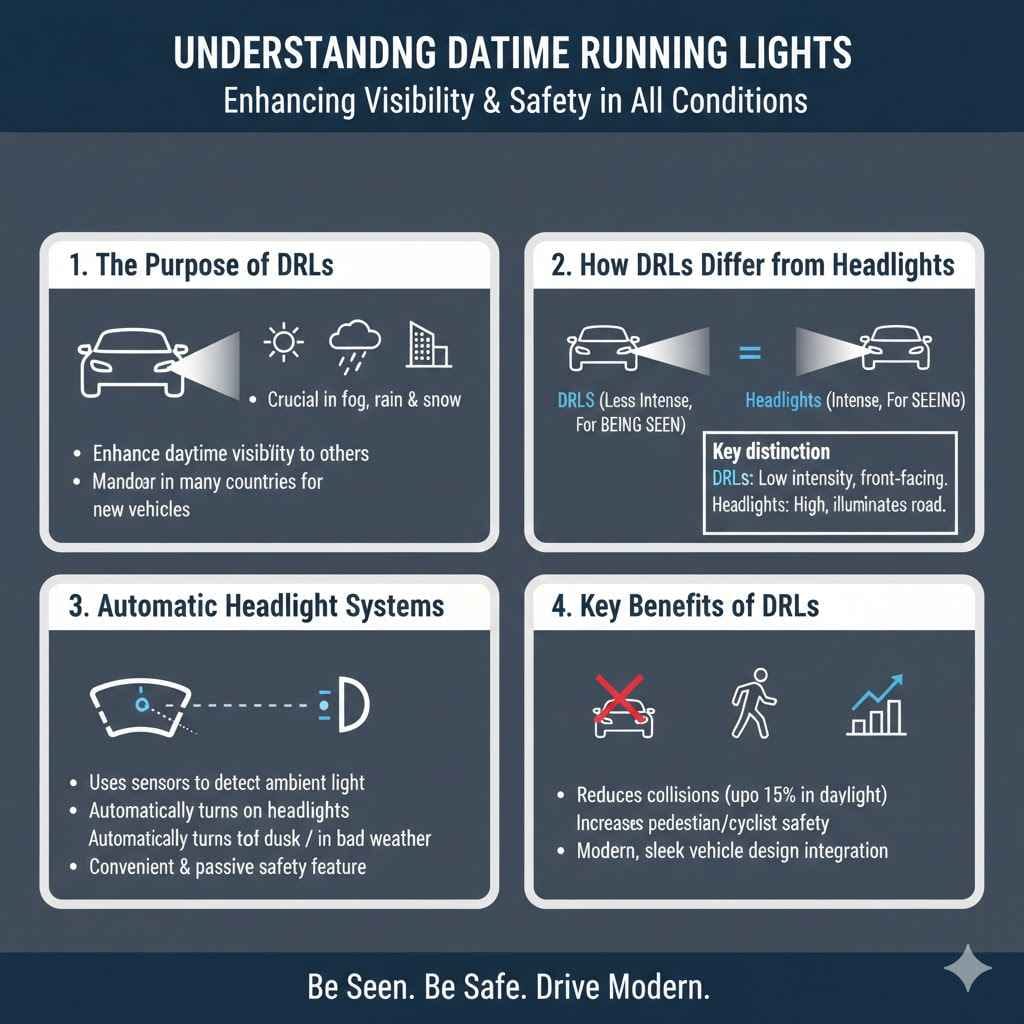
Daytime Running Lights, or DRLs, are a key reason why you see car lights on even when it’s not fully dark. These lights are designed to make vehicles more visible to other drivers and pedestrians during the daytime. They are usually dimmer than full headlights and are often integrated into the vehicle’s design, sometimes appearing as sleek LED strips. The primary goal is to increase safety by ensuring other road users can easily spot your car, reducing the chances of accidents.
The Purpose of DRLs
The main purpose of DRLs is to enhance visibility. While headlights are meant for illuminating the road ahead in low-light conditions, DRLs are about being seen. They help in various weather conditions, such as fog, rain, or snow, where visibility can be significantly reduced. DRLs also play a role in making your vehicle stand out against busy backgrounds, like city streets or rural landscapes. This constant visibility can prevent collisions, especially at intersections or when changing lanes.
Many countries have made DRLs mandatory on new vehicles. This has led to them becoming a standard feature, explaining why so many cars you see will have them on. The technology has evolved, with many cars now featuring automatic DRLs that turn on and off with the ignition.
This means drivers don’t have to remember to activate them, making them a passive safety feature.
How DRLs Differ from Headlights
It’s important to understand that DRLs are not the same as regular headlights. Headlights are designed to illuminate the road ahead, allowing the driver to see clearly in the dark. They typically have a much brighter beam and can be adjusted to avoid blinding other drivers. DRLs, on the other hand, are primarily for making the vehicle visible to others. They are usually less intense and do not provide significant illumination of the road.
The difference in brightness is a key distinction. If you’re in a situation where you need to see the road better, you would switch on your full headlights. DRLs are more about being seen by others, so they are often positioned at the front of the vehicle, clearly visible.
Automatic Headlight Systems
Many modern cars are equipped with automatic headlight systems. These systems use sensors to detect ambient light levels. When the light dims, such as at dusk, in tunnels, or during inclement weather, the system will automatically turn on the headlights. This feature helps drivers by ensuring their lights are on when needed, without them having to manually adjust them. It’s a convenient safety feature that contributes to why car lights are frequently seen on.
The sensors for these systems are usually located on the windshield, near the rearview mirror. They measure the amount of light coming into the vehicle. If the light drops below a certain threshold, the system triggers the headlights.
Similarly, when the ambient light increases, the system will turn the headlights off again. This constant monitoring ensures optimal visibility in varying conditions.
Legal Requirements and Safety Regulations
The reason you see car lights on so often is also tied to legal requirements and safety regulations in many places. These rules are put in place to help reduce traffic accidents. By making vehicles more visible, especially in conditions that might not seem dark to us, these laws aim to protect drivers and others on the road.
Mandatory Lighting Laws
Many countries and regions have laws that require drivers to have their headlights on during specific times or conditions. This often includes daytime when visibility is poor, such as during fog, heavy rain, or snow. Some jurisdictions even have laws requiring headlights to be on at all times, regardless of the time of day. These regulations are based on extensive research into road safety.
For instance, in many European countries, it’s a legal requirement to use dipped-beam headlights or DRLs at all times when driving. This measure has been shown to reduce the number of fatal accidents, especially in rural areas and during daylight hours. These laws are designed to make all vehicles more conspicuous to other road users.
Visibility in Inclement Weather
Inclement weather conditions pose a significant risk to drivers. Rain, fog, snow, and even heavy dust can drastically reduce visibility. In these situations, having headlights or DRLs on is crucial for ensuring other drivers can see your vehicle. Even if you can see the road ahead, it doesn’t mean other drivers can see you approaching.
A common scenario is driving in fog. Even a light fog can make it difficult for a driver to see a car that does not have its lights on. This is why many people choose to turn on their headlights proactively when driving in foggy conditions, even if it’s not yet dark.
The rule is often summed up as “if your wipers are on, your lights should be on.”
Low Light Conditions and Dusk/Dawn
The periods around sunrise and sunset, often called dusk and dawn, are statistically more dangerous times for driving. Our eyes take time to adjust to changing light levels. Even if it doesn’t feel completely dark, the contrast between your vehicle and the surroundings can be reduced. Turning on headlights or DRLs during these transition periods makes your car more visible to others who may not have fully adjusted their vision.
Think about the time just after sunset. The sky might still have a faint glow, but the shadows are deepening, and streetlights haven’t fully illuminated the roads yet. This is a perfect example of a low-light condition where having your lights on can make a critical difference in preventing a collision.
Understanding Vehicle Technology and Features
Modern vehicles come equipped with sophisticated technology that often manages lighting automatically. This means that car lights can turn on and off without the driver’s direct input, contributing to the phenomenon you observe. These features are designed with safety and convenience in mind.
Automatic Headlights and Light Sensors
As mentioned earlier, automatic headlight systems are very common. These systems use photosensors, often integrated into the windshield, to detect the ambient light level. When the sensor detects that the light is fading, it signals the car’s computer to turn on the headlights.
The sensitivity of these sensors can sometimes be adjusted by the driver through the car’s settings menu. This allows drivers to set how dim the light needs to be before the headlights activate. Some systems also integrate with the wipers; if the wipers are activated, the headlights may also turn on automatically to ensure visibility in wet conditions.
Daytime Running Lights (DRLs) Explained
Daytime Running Lights are a separate set of lights that illuminate whenever the engine is running. They are typically less bright than full headlights and are designed to increase the vehicle’s visibility during daylight hours. Their primary function is to make your car more conspicuous to other road users, not to illuminate the road for the driver.
DRLs have become standard on most new vehicles manufactured in recent years, especially in North America and Europe. This widespread adoption is a major reason why you see so many cars with lights on during the day. They are an active safety feature that contributes to reducing the risk of daytime accidents.
How DRLs and Headlights Work Together
In most vehicles with automatic systems, DRLs might be on during the day. As the light fades, the system may switch from DRLs to full headlights. Some systems will dim the DRLs and then activate the full headlights, while others will completely switch off the DRLs and turn on the headlights.
The transition is usually seamless. The car’s onboard computer manages this process. You might notice that when you drive into a tunnel, your headlights come on automatically.
When you exit the tunnel, they turn off. This is the automatic system at work, ensuring you always have the appropriate lighting for the conditions.
Real-Life Scenarios and Examples
Let’s look at some real-life situations where having car lights on makes a significant difference. These examples highlight why the question “Why Does Everyone Have Their Car Lights On?” has practical answers rooted in safety.
Scenario 1: Morning Commute in Autumn
Imagine you are driving to work at 7:00 AM in October. The sun has risen, but it’s still quite low in the sky. Trees have shed a lot of their leaves, and the light is diffused. Even though it’s not completely dark, the contrast between your car and the surroundings is reduced. A driver coming from a side road might not see you as easily if your lights are off.
In this scenario, having your Daytime Running Lights or even your low-beam headlights on significantly increases your visibility. A study by the U.S. Department of Transportation found that the use of DRLs reduced two-vehicle crashes by 5.3 percent.
This shows how a simple measure like turning on lights can have a measurable impact on safety.
Scenario 2: Driving Through a Tunnel
You are driving on a highway and enter a long tunnel. The sudden drop in light can be disorienting. Even though you might still see your immediate surroundings, your vehicle becomes much less visible to cars entering the tunnel behind you or to other vehicles that might be stopped inside.
Modern cars with automatic headlights will turn on as soon as the light sensor detects the dimness inside the tunnel. This ensures that your vehicle is visible to others entering or already within the tunnel, preventing potential rear-end collisions or other accidents. Without this automatic feature, drivers might forget to turn on their headlights, creating a hazard.
Scenario 3: Overcast Day with Rain
It’s a cloudy day, and it starts to rain heavily. Visibility is poor. You might be able to see the road markings and other cars directly in front of you, but the overall brightness is low. Other drivers might have difficulty spotting your car from a distance, especially if they are approaching from an intersection or a different lane.
In such conditions, headlights are essential. Many drivers will instinctively turn on their headlights. Some vehicles are also equipped with automatic systems that trigger headlights when the windshield wipers are activated.
This proactive approach to lighting in adverse weather is a key reason why you see so many cars with their lights on during the day when it’s raining or foggy.
The Evolution of Car Lighting Technology
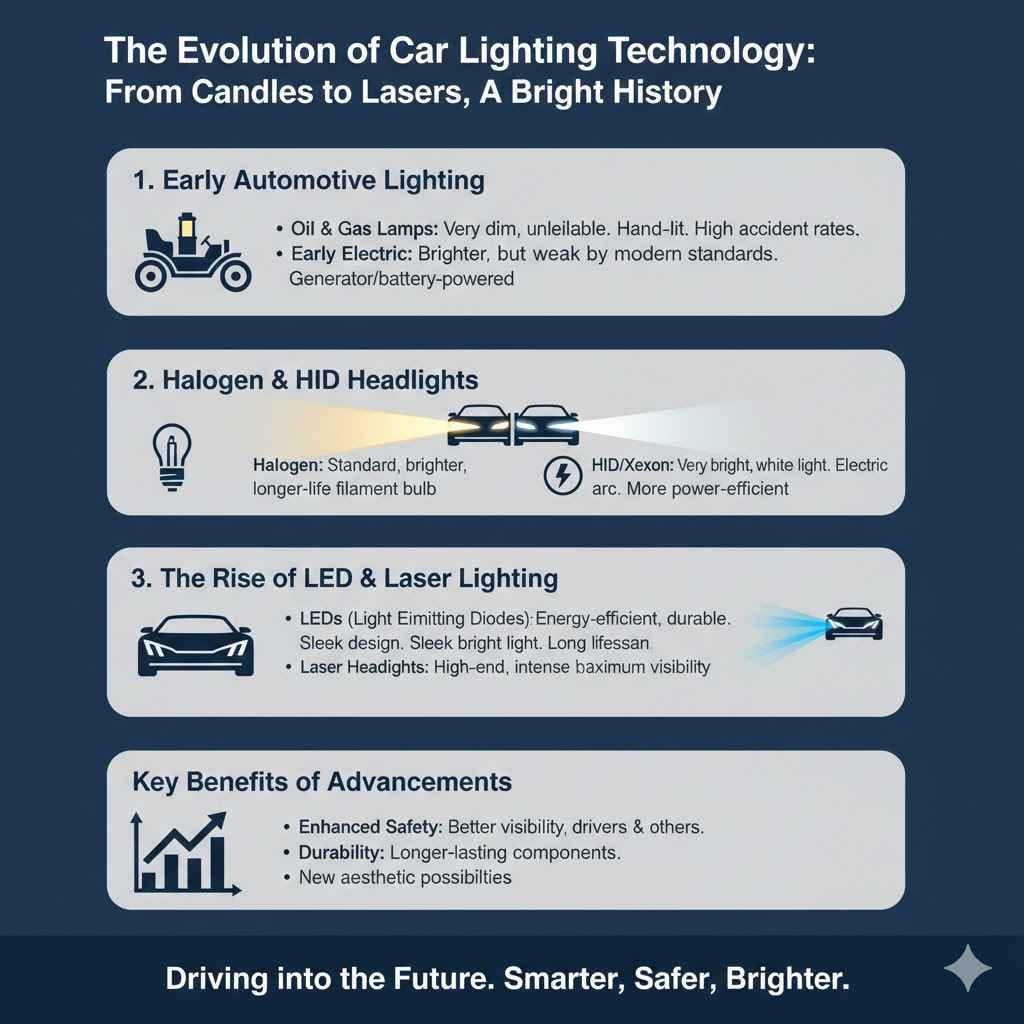
Car lighting has come a long way. From basic bulbs to sophisticated LED systems, the technology has constantly improved. These advancements have not only enhanced visibility but also contributed to making cars more energy-efficient and aesthetically pleasing.
Early Automotive Lighting
In the early days of automobiles, lighting was rudimentary. Cars often used oil lamps or gas lamps, which provided very dim illumination. Headlights were not always standard, and drivers were expected to use lanterns or carry flashlights when driving at night. Visibility was a major challenge, contributing to the high accident rates of the early 20th century.
The introduction of electric headlights marked a significant improvement. These were initially powered by generators and batteries, offering a brighter and more reliable light source. However, even these early electric headlights were not as powerful or efficient as modern lighting systems.
Halogen and HID Headlights
Halogen headlights became the standard for many decades. They use a halogen gas inside the bulb to increase the brightness and lifespan of the filament. Later, High-Intensity Discharge (HID) headlights, also known as xenon headlights, were introduced. These produce a brighter, whiter light by using an electric arc through xenon gas.
HID headlights offer a light output that is significantly brighter than halogen bulbs, providing better visibility for the driver. They also consume less power than traditional halogen bulbs. However, they are more complex and expensive to produce.
The Rise of LED and Laser Lighting
Today, Light Emitting Diode (LED) technology is prevalent in automotive lighting. LEDs are highly energy-efficient, durable, and can be manufactured in various shapes and sizes, allowing for more innovative headlight and DRL designs. They provide a bright, clear light and have a very long lifespan.
More recently, some high-end vehicles have begun incorporating laser headlights, which can produce an even more intense and focused beam of light, extending the driver’s vision considerably. These advanced lighting systems continue to push the boundaries of automotive safety and design.
FAQ
Question: Are Daytime Running Lights (DRLs) the same as headlights?
Answer: No, DRLs are designed to make your vehicle more visible to others during the day, while headlights are for illuminating the road ahead in low-light conditions. DRLs are typically less bright than headlights.
Question: Do I need to turn on my headlights if I have DRLs?
Answer: In many situations, especially in low light or bad weather, you will need to turn on your full headlights even if you have DRLs. Always check local regulations and use your judgment.
Question: Can DRLs drain my car battery?
Answer: Modern DRLs are designed to be very energy-efficient and consume minimal power, so they should not significantly drain your car battery.
Question: Why do some cars have their lights on at night even when it seems bright enough?
Answer: This could be due to automatic headlight systems that activate based on light sensors, or drivers ensuring maximum visibility for safety, as it may not be as bright as it appears.
Question: Is it legal to drive with only DRLs on at night?
Answer: In most places, driving with only DRLs at night is not sufficient or legal. Full headlights are required to properly illuminate the road and ensure visibility to other drivers.
Summary
So, the reason you see so many car lights on is a combination of smart technology like Daytime Running Lights and automatic headlights, alongside laws designed for your safety. These features help make every vehicle more visible in various light and weather conditions. Always pay attention to your surroundings and use your lights wisely to stay safe on the road.