
When you see a “Ford sign” or warning light on your dashboard, the first step is to check its color. A red light means stop safely as soon as possible. A yellow or amber light means you should get your car checked soon. A green or blue light is usually informational, indicating a system is active.
Seeing a new light pop up on your dashboard can be stressful. Your mind might jump to expensive repairs or being stranded on the side of the road. But don’t worry! These little symbols, or “Ford signs,” are just your car’s way of talking to you. They are there to help, not to scare you.
This guide will help you understand what your Ford is trying to say. We will walk through the most common signs, step by step. You will learn what to do right away and how to handle the situation with confidence. Let’s decode those dashboard lights together and get you back on the road safely.
First, Don’t Panic! Understanding the Colors of Ford Dashboard Signs
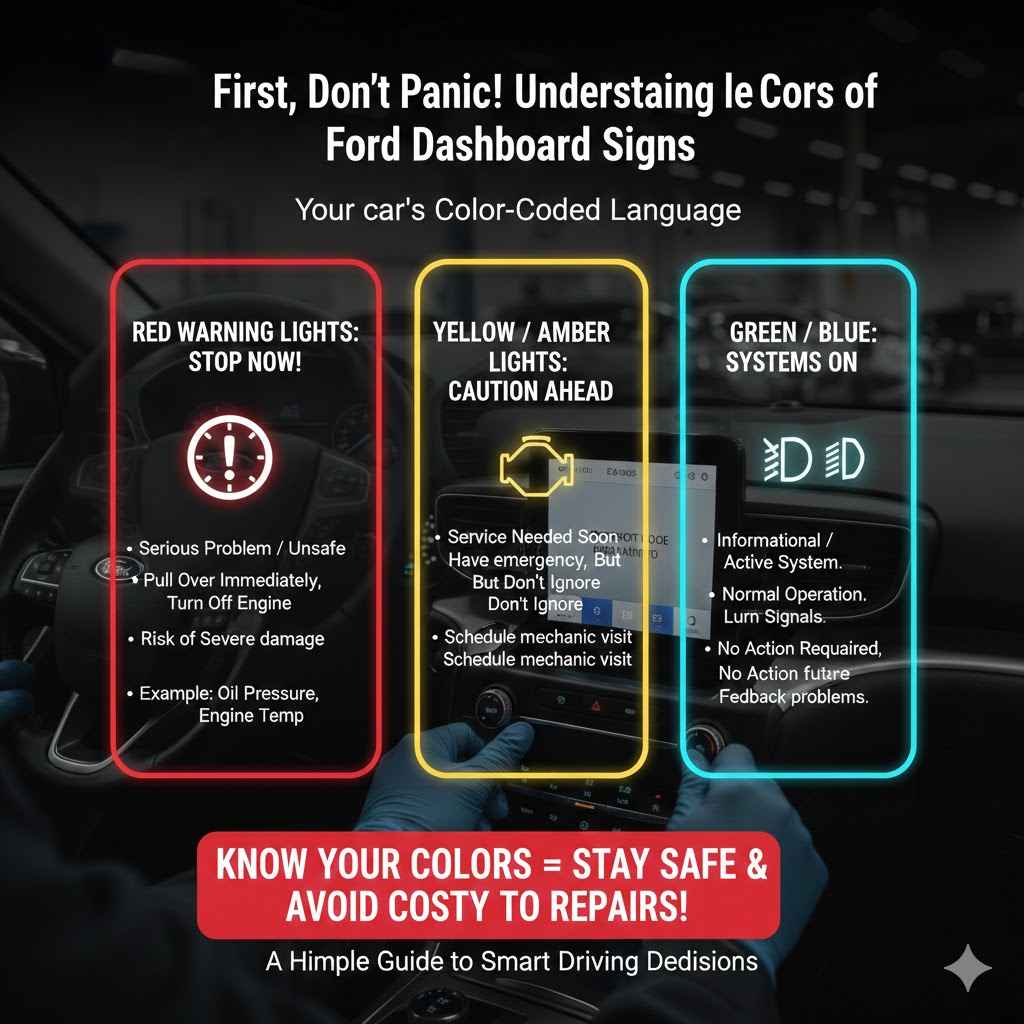
Before we dive into specific symbols, let’s talk about the most important clue your car gives you: the color of the light. Car manufacturers, including Ford, use a simple color-coded system, much like a traffic light. Understanding this system is the first step to making a smart decision.
Red Warning Lights: Stop Now!
A red light signals a serious problem that needs your immediate attention. If you see a red warning light, you should find a safe place to pull over, turn off the engine, and assess the situation. Continuing to drive could cause severe damage to your car’s engine or other critical systems, and it could be unsafe. Think of red as a full stop. Common red lights include the oil pressure warning and engine temperature warning.
Yellow or Amber Warning Lights: Caution Ahead
A yellow or amber light is a “caution” signal. It means something on your vehicle needs service or repair soon, but it’s not usually an emergency. You can typically continue driving, but you should not ignore the light. Make a plan to visit your local mechanic to have the issue diagnosed. The most common yellow light is the check engine light.
Green or Blue Indicator Lights: Systems On
Green and blue lights are not warning lights. They are simply informational. These lights let you know that a system in your car is on and working as it should. For example, your high beams (a blue light) or your turn signals (a flashing green arrow) will show up in this color. There is no need to worry when you see one of these.
| Light Color | Meaning | Action Required |
|---|---|---|
| Red | Serious Issue / Safety Hazard | Stop the car safely as soon as possible. Turn off the engine and call for help. |
| Yellow / Amber | Caution / Service Needed | Get the vehicle inspected by a mechanic soon. Avoid long trips or hard driving. |
| Green / Blue | System is Active / Information | No action needed. This is a normal operation indicator. |
The Most Common Ford Signs (Warning Lights) and What They Mean
Now that you know the color code, let’s look at some of the specific symbols you might see on your Ford’s dashboard. While your owner’s manual is the best source for your specific model, these are some of the most common signs across the Ford lineup.
Engine & Powertrain Signs
These lights relate to your car’s engine and the parts that get power to the wheels. They are very important for your car’s health.
Check Engine Light (Malfunction Indicator Lamp)
This light looks like the outline of an engine. It is one of the most misunderstood warning lights. When it comes on, it means the car’s computer has detected a problem in the emissions, ignition, or fuel system.
- If it’s solid: This is a standard yellow/amber warning. The problem is not an emergency, but you should get it checked. A very common cause is a loose gas cap! Always check that first. Other causes could be a failing oxygen sensor or old spark plugs.
- If it’s flashing: This is serious. A flashing check engine light indicates a major engine misfire. This can quickly damage expensive components like the catalytic converter. You should pull over, reduce your speed, and get to a mechanic immediately. Do not continue driving for long distances.
Powertrain Fault Light (Wrench Symbol)
Many Ford vehicles have a yellow wrench symbol. This is different from the check engine light. It specifically points to a problem with your powertrain (the engine, transmission, and drivetrain) or your all-wheel-drive (AWD) system. When this light appears, you might notice your car is not driving with its usual power. This is a “limp mode” to protect the engine. You should have this diagnosed by a professional.
Engine Temperature Warning Light (Thermometer in Liquid)
This red light looks like a thermometer floating in water. It means your engine is overheating. This is a critical warning. If you see this light, follow these steps immediately:
- Turn on your heater to the highest, hottest setting. This helps pull some heat away from the engine.
- Find a safe place to pull over and turn off the engine completely.
- Let the engine cool down for at least 30 minutes. Do not open the radiator cap while it is hot, as the pressurized coolant can cause serious burns.
- Once cool, check your coolant level. If it’s low, you may need to add more.
- Driving with an overheating engine can cause catastrophic damage, so it’s best to call for a tow truck.
Brake System Signs
Your brakes are your car’s most important safety feature. Any warning light related to them should be taken very seriously.
Brake System Warning Light (“BRAKE” or Circle with “!”)
This red light can mean a few things. First, check if your parking brake is fully released. If it is, this light signals a problem with your brake system, such as low brake fluid or a loss of hydraulic pressure. Your car’s ability to stop could be severely limited. Pull over safely and call for roadside assistance.
ABS Warning Light (“ABS” in a Circle)
The Anti-lock Braking System (ABS) helps prevent your wheels from locking up during a hard stop, allowing you to maintain steering control. If this yellow light comes on, it means there is a fault in the ABS system. Your regular brakes will still work, but the anti-lock feature will not. You should drive more cautiously, leave extra following distance, and have the system serviced soon.
Safety & Driver-Assist Signs
Modern Fords are packed with safety features. These lights let you know if those systems are working correctly.
Airbag Warning Light (Person with a Circle)
This red or yellow light indicates a problem with one of your car’s airbags or the entire safety restraint system. In a crash, the airbags may not deploy. For your safety and the safety of your passengers, it’s crucial to get this system inspected and repaired by a professional right away.
Tire Pressure Monitoring System (TPMS) Light (Horseshoe with “!”)
This yellow light looks like a flat tire with an exclamation point inside. It means the air pressure in one or more of your tires is significantly low. You should pull over when safe and visually inspect your tires. Use a tire pressure gauge to check the pressure in all four tires and fill them to the recommended PSI listed on the sticker inside your driver’s door jamb. If the light stays on after filling the tires, you may have a slow leak or a faulty sensor.
Stability Control Light (Car with Squiggly Lines)
This system helps you maintain control of the car in slippery conditions.
- If it’s flashing: The system is actively working to help you maintain traction. This is normal when driving on ice, snow, or wet roads.
- If it stays on: There is a malfunction in the stability control system. Like the ABS light, this means the safety feature is turned off. Drive carefully and have it checked.
Fluid & Maintenance Signs
These lights are your car’s way of asking for a drink or a check-up.
Oil Pressure Warning Light (Oil Can)
This red light is one of the most serious warnings your car can give. It means there has been a sudden drop in engine oil pressure. Without proper oil pressure, your engine cannot lubricate itself, leading to rapid and severe engine damage. If this light comes on, pull over immediately, turn off the engine, and do not restart it. Check your oil level, but even if the level is fine, do not drive the car. Call for a tow.
Battery/Charging System Light (Battery Symbol)
This red light indicates that your car’s charging system is not working correctly. The problem is likely with the alternator, which charges the battery while the car is running. When this light is on, your car is running solely on battery power, and it will die once the battery is drained. Turn off all non-essential electronics like the radio and A/C, and drive directly to the nearest auto repair shop.
A Step-by-Step Action Plan When a Ford Sign Appears
Feeling overwhelmed? Just follow this simple plan the next time a light appears. It will help you stay calm and make the right choice.
- Identify the Color: Is it red, yellow, or green/blue? This immediately tells you the level of urgency.
- Note the Symbol: What does the light look like? Try to remember its shape so you can look it up or describe it to a mechanic.
- Observe Your Car’s Performance: Did the light come on with any other symptoms? Note any strange noises, smells, vibrations, or a loss of power. This information is very helpful for a diagnosis.
- Assess the Urgency:
- Red Light: Pull over safely now. Turn off the car. Do not continue driving.
- Yellow Light: The issue is not an emergency. Reduce your speed, avoid aggressive driving, and make an appointment with your mechanic.
- Green/Blue Light: No action needed. This is just an indicator that a feature is on.
- Consult Your Owner’s Manual: Your glove box is your best friend. The owner’s manual has a dedicated section that shows every possible dashboard light for your specific model and explains what it means. Many automakers, like Ford, also have digital owner’s manuals available online.
- Use an OBD-II Scanner (Optional): If you have a check engine light and you’re a bit of a DIYer, you can buy an inexpensive OBD-II scanner. This tool plugs into a port under your dashboard and reads the specific trouble code that triggered the light, giving you a better idea of the problem.
- Contact a Professional: When in doubt, always contact a trusted, certified mechanic. They have advanced diagnostic tools and the expertise to find and fix the problem correctly.
When to Drive to a Mechanic vs. When to Call a Tow Truck
Knowing whether your car is safe to drive is crucial. Driving a car with a serious issue can lead to thousands of dollars in repairs or put you in a dangerous situation. Here is a simple table to help you decide.
| Warning Light / Symptom | Safe to Drive (Short, Careful Distance)? | Call a Tow Truck (Recommended Action) |
|---|---|---|
| Flashing Check Engine Light | No | Yes. Stop driving immediately to prevent catalytic converter damage. |
| Solid Check Engine Light | Yes, with caution. | No, unless the car is driving very poorly. |
| Engine Temperature Warning Light (Red) | No | Yes. Stop driving immediately to prevent catastrophic engine damage. |
| Oil Pressure Warning Light (Red) | No | Yes. Stop driving immediately to prevent engine seizure. |
| Brake System Warning Light (Red) | No | Yes. Your braking ability could be compromised. |
| Battery / Charging System Light (Red) | Yes, for a very short distance. | Recommended, as the car will soon lose all electrical power and shut down. |
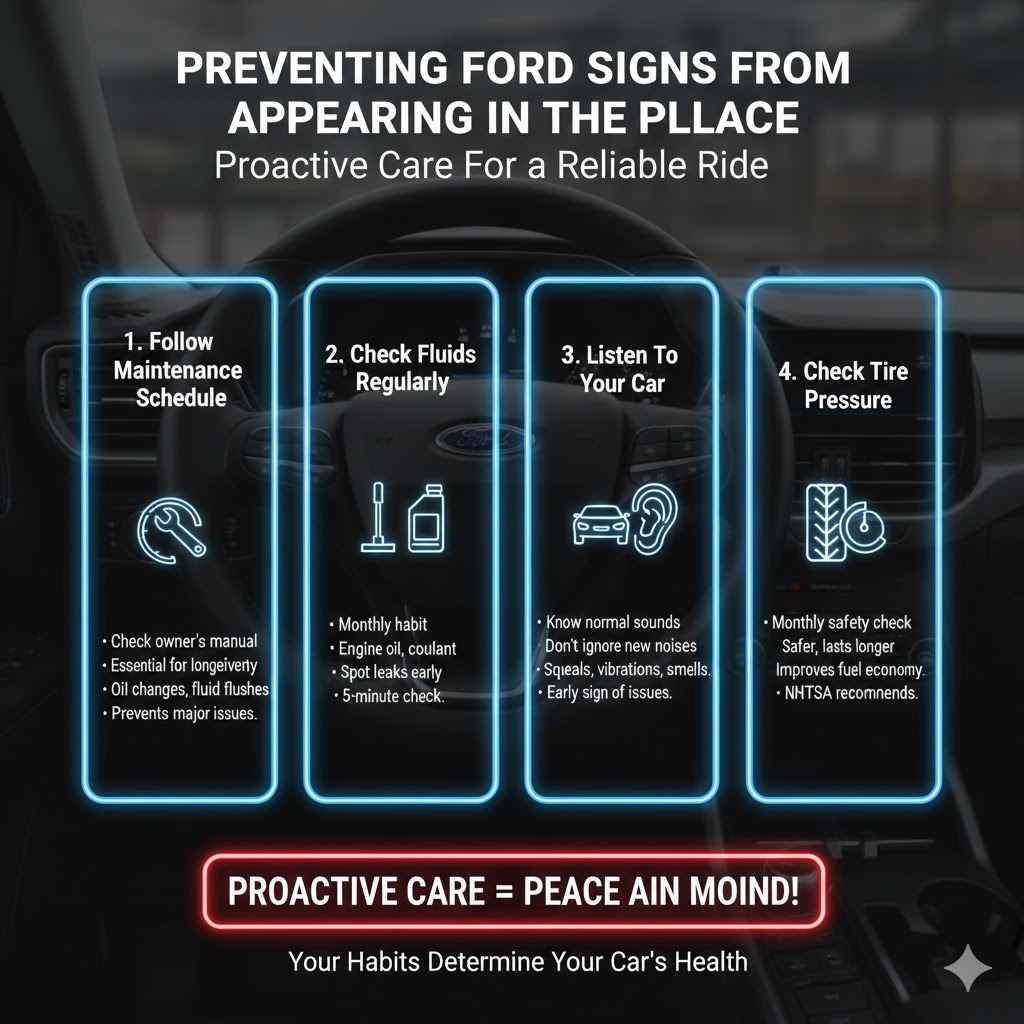
Preventing Ford Signs from Appearing in the First Place
The best way to deal with warning lights is to prevent them from ever coming on. Proactive maintenance is cheaper and less stressful than reactive repairs. A well-cared-for car is a reliable car.
- Follow Your Maintenance Schedule: Your Ford owner’s manual contains a detailed maintenance schedule. Following it for oil changes, fluid flushes, and inspections is the single best thing you can do for your car’s longevity.
- Check Your Fluids Regularly: Once a month, take five minutes to check your engine oil, coolant, and windshield washer fluid. This simple habit can help you spot a leak or a low level before it becomes a major problem.
- Listen to Your Car: You drive your car every day, so you know what it normally sounds and feels like. If you hear a new squeal, feel a new vibration, or smell something unusual, don’t ignore it. These are often early signs of a developing issue.
- Check Your Tire Pressure Monthly: Properly inflated tires are safer, last longer, and improve your fuel economy. According to the National Highway Traffic Safety Administration (NHTSA), keeping tires properly inflated is a simple but critical part of car care.
FAQ: Your Ford Sign Questions Answered
Can I just disconnect the battery to turn off the check engine light?
You can, and it will likely turn the light off temporarily. However, this is a bad idea. Disconnecting the battery erases the trouble code that the mechanic needs to diagnose the problem. The underlying issue is still there, and the light will come back on. You’ve only delayed the repair and made it harder to fix.
My Ford’s “wrench” light came on. What’s the difference between that and the check engine light?
The check engine light is typically for emissions-related issues. The wrench light on a Ford is more specific to the powertrain—the engine, transmission, or drivetrain components. It often means the vehicle has entered a “limp home” mode with reduced power to prevent further damage. It requires a different diagnostic approach than a standard check engine light.
Why is my tire pressure (TPMS) light still on after I filled the tires?
There could be a few reasons. First, you may need to drive the car for a few miles for the sensors to reset and recognize the new pressure. Second, the spare tire might also have a sensor, so be sure to check its pressure too. Finally, if the light stays on, it could indicate a faulty sensor in one of the wheels, which will need to be replaced.
How much does it cost to diagnose a warning light?
Most auto repair shops charge a diagnostic fee, which typically ranges from $75 to $150. This fee covers the mechanic’s time to hook up a professional-grade scan tool and investigate the root cause of the problem. This fee is often applied toward the cost of the final repair.
Is it safe to drive with the ABS light on?
Your primary braking system will still work, so you can stop the car. However, the anti-lock function will be disabled. This means that in a panic stop, your wheels could lock up and cause the car to skid. It is safe to drive to a repair shop, but you should do so with extra caution, especially in wet or slippery conditions.
What does the little snowflake symbol mean on my Ford’s dash?
This is often called the “frost” or “icy conditions” warning light. It’s not a warning of a problem with your car. This yellow or red snowflake symbol simply lights up when the outside air temperature drops to near freezing (usually around 37°F or 3°C), warning you that roads may be slippery. It’s just a helpful reminder to drive carefully.
Conclusion: Driving with Confidence
Those little Ford signs on your dashboard are not there to cause panic. They are your car’s communication system, designed to help you keep it running safely and reliably. By understanding the simple color-coded system and knowing the most common symbols, you can turn a moment of worry into a moment of confident action.
Remember the key steps: check the color, identify the symbol, and consult your owner’s manual. Most importantly, listen to your car. Regular maintenance and paying attention to early warning signs will keep you ahead of major problems. Now, you have the knowledge to be a smarter, more confident driver, ready for whatever lights up on the road ahead.