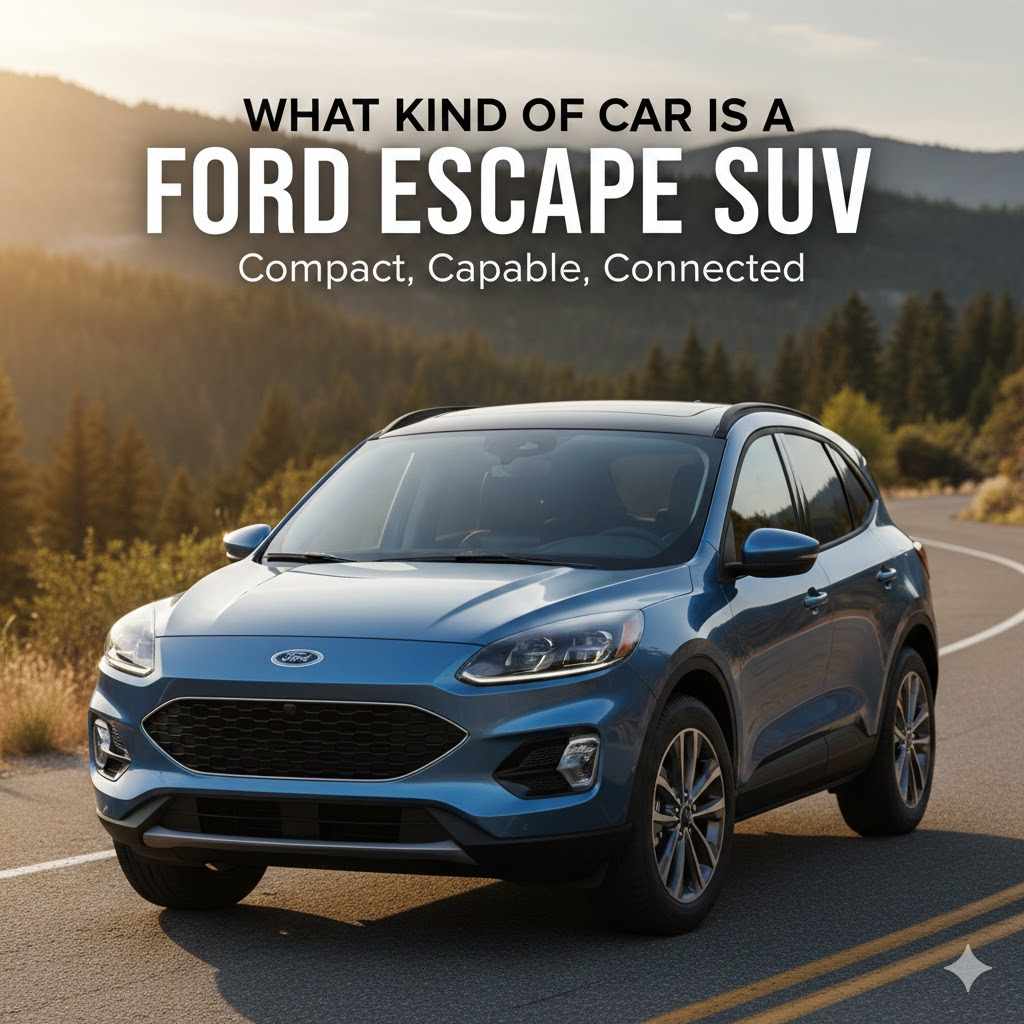
What Kind of Car Is a Ford Escape SUV
Ever wondered, “What kind of car is a Ford Escape?” It’s a question many people new to cars or looking for a practical vehicle ask. Sometimes, car categories can feel confusing with all the different types of cars out there. But don’t worry!
We’re going to break down exactly what a Ford Escape is in a super simple way. You’ll understand its place in the car world quickly. Let’s get started and figure this out together, step by step.
What Is A Ford Escape An SUV
The Ford Escape is widely recognized as a compact crossover SUV. This means it blends features from traditional SUVs with characteristics of a car. It’s designed to offer a higher driving position, more cargo space, and a bit more capability than a standard sedan, while still being easy to drive and park in urban environments.
Its popularity stems from its balance of versatility, fuel efficiency, and comfortable ride, making it a common choice for families and individuals alike. Understanding its SUV classification helps set expectations for its performance and utility.
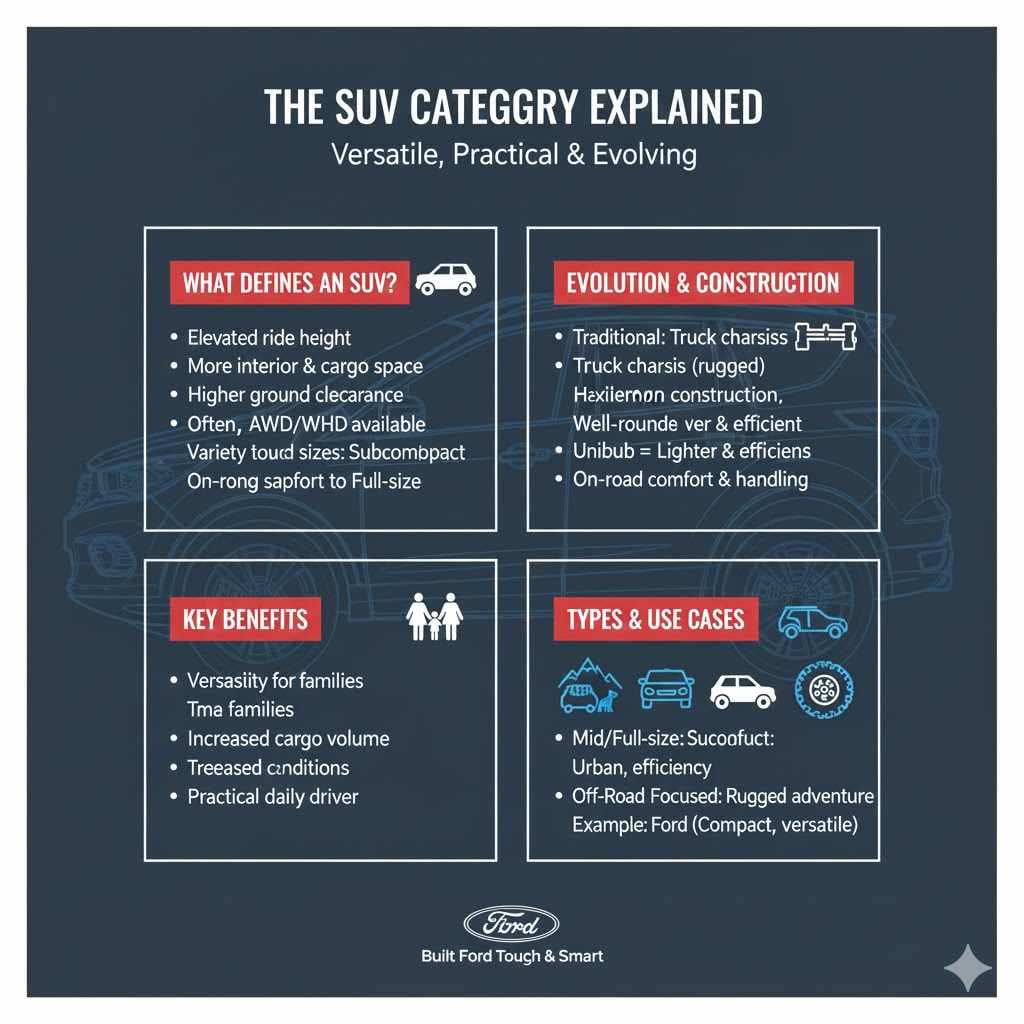
The SUV Category Explained
SUVs, or Sport Utility Vehicles, are a broad class of vehicles known for their elevated ride height and a body style that typically offers more interior space than sedans. They often feature a higher ground clearance, which can be beneficial for light off-roading or driving in snowy conditions. Historically, SUVs were built on truck chassis, giving them rugged capabilities.
However, modern SUVs, especially those in the compact and subcompact segments, often use unibody construction like cars. This makes them lighter, more fuel-efficient, and more comfortable for everyday driving.
The core appeal of an SUV lies in its versatility. You get the practical benefits of increased passenger and cargo volume, often with a more commanding view of the road. Many SUVs also offer all-wheel-drive (AWD) or four-wheel-drive (4WD) options, enhancing traction and control in various weather conditions.
While some SUVs are designed for serious off-roading, many, like the Ford Escape, are geared more towards on-road comfort and everyday utility, making them a practical choice for a wide range of drivers.
Crossover vs Traditional SUV
The distinction between a crossover SUV and a traditional SUV is important for understanding vehicles like the Ford Escape. Traditional SUVs were often body-on-frame, meaning their body was built separately and then mounted onto a truck-like chassis. This design provided ruggedness and towing power, but often at the expense of fuel economy and on-road comfort.
Think of older Ford Explorer or Chevrolet Tahoe models.
Crossover SUVs, on the other hand, are built using unibody construction. This is the same construction method used for most modern cars. The body and frame are a single, integrated unit.
This approach results in a lighter vehicle that generally offers a smoother, more car-like ride. Crossovers typically have better fuel efficiency and handling compared to traditional SUVs. They aim to provide the space and elevated driving position of an SUV without the bulk and less refined driving characteristics of older, truck-based models.
The Ford Escape is a prime example of a crossover SUV.
Unibody Construction
Unibody construction is a method of vehicle manufacturing where the body and chassis are integrated into a single structure. This differs from body-on-frame construction, where the car’s body is a separate unit mounted onto a sturdy frame. Unibody designs are lighter, which contributes to better fuel economy and more agile handling.
For everyday driving, unibody construction offers a more comfortable and quiet ride. The integrated structure provides better shock absorption and reduces the vibration that can be transmitted from the road to the cabin. This makes vehicles built with unibody construction, like most modern crossovers and cars, ideal for commuting and family trips.
It also allows manufacturers to design more aerodynamic shapes, further improving efficiency and performance.
Body-On-Frame Construction
Body-on-frame construction involves a separate chassis or frame onto which the vehicle’s body is mounted. This design is traditional for trucks and older, larger SUVs. The robust frame provides excellent strength for towing heavy loads and for enduring rough terrain, making it suitable for serious off-roading and heavy-duty use.
However, this robust construction can make vehicles heavier and less fuel-efficient. The ride quality can also be less refined, often feeling more truck-like and less comfortable for daily driving compared to unibody vehicles. While still used for some larger SUVs and trucks, this method is less common in the compact SUV segment where fuel economy and a car-like driving experience are prioritized.
What Kind of Car Is a Ford Escape Specifics
Now let’s get down to the Ford Escape. When someone asks, “What kind of car is a Ford Escape?” the answer is consistently a compact crossover SUV. It’s designed to be a versatile vehicle that can handle daily commutes, family errands, and even light adventures.
It’s not a rugged off-roader like a Jeep Wrangler or a heavy-duty truck, nor is it a small, sporty car. It sits comfortably in the middle, offering a practical blend of features.
The Escape typically offers seating for five passengers. Its interior is designed for comfort and utility, with a good amount of cargo space in the rear that can be expanded by folding down the rear seats. This makes it suitable for carrying groceries, luggage, sports equipment, or even small furniture items.
The elevated seating position gives drivers a better view of the road, which many people find reassuring.
Engine Options and Performance
Ford has offered the Escape with a variety of engine options over the years, catering to different driving needs and priorities. These have included efficient turbocharged gasoline engines, hybrid powertrains, and plug-in hybrid (PHEV) variants. The goal with these options is to provide a balance of power for merging onto highways and acceleration, along with competitive fuel economy.
The exact engine available depends on the model year and trim level. For instance, some models might feature a 1.5-liter EcoBoost engine, while others might offer a more powerful 2.0-liter EcoBoost engine. Hybrid and PHEV versions combine a gasoline engine with electric motors for significantly improved MPG.
Performance is generally smooth and comfortable, suitable for its class. It’s not built for track racing but provides ample power for everyday driving situations.
Real-life example: A family of four might use a Ford Escape Hybrid for their daily commute to work and school. They would likely experience excellent fuel efficiency, saving money at the gas station. For weekend trips, the cargo space would be sufficient for luggage and gear, and the comfortable ride would make the journey enjoyable for everyone.
The hybrid’s quiet operation when running on electric power would also add to the driving experience.
Interior Features and Comfort
The interior of the Ford Escape is designed with practicality and comfort in mind. Drivers and passengers can expect supportive seating, with ample legroom and headroom for its class. Higher trim levels often come with premium materials, heated and ventilated seats, and advanced infotainment systems.
Standard features typically include a touchscreen infotainment system with Apple CarPlay and Android Auto integration, allowing seamless connection to smartphones for navigation, music, and calls. Many models also offer a digital instrument cluster, a panoramic sunroof, and a hands-free liftgate for added convenience. The focus is on creating a user-friendly and pleasant environment for all occupants during short trips and long journeys.
Cargo Space and Versatility
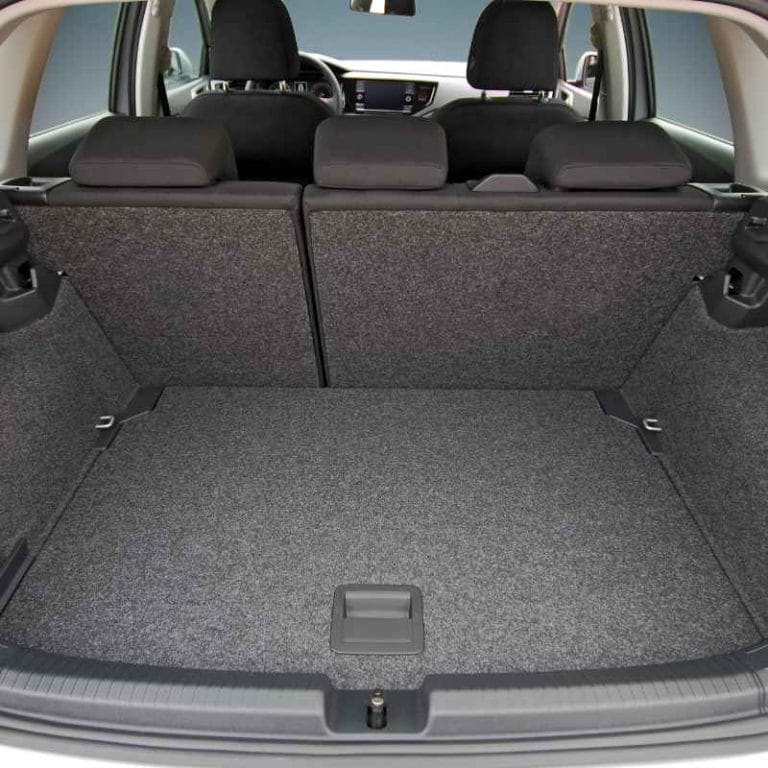
One of the key selling points of the Ford Escape is its cargo capacity. The rear cargo area is generously sized for a compact SUV, easily accommodating a week’s worth of groceries or several suitcases. The versatility really shines when the rear seats are folded down.
This dramatically increases the available space, making it possible to haul larger items like bicycles, furniture, or home improvement supplies.
The shape of the cargo area is typically rectangular and well-proportioned, with a relatively low load floor, making it easier to lift heavy items in and out. Many Escapes also feature a split-folding rear seat design (often a 60/40 split), allowing you to carry both passengers and cargo simultaneously, such as one or two people in the back and longer items like skis or lumber through the folded-down portion.
Safety Features
Ford places a strong emphasis on safety in the Escape, equipping it with a range of advanced driver-assistance systems and safety features. These technologies are designed to help prevent accidents and protect occupants in the event of a collision. Standard safety features often include a rearview camera and a suite of airbags.
Optional and higher-trim features can include things like blind-spot monitoring, rear cross-traffic alert, adaptive cruise control, lane-keeping assist, automatic emergency braking, and a pre-collision system with pedestrian detection. These advanced systems use sensors and cameras to monitor the vehicle’s surroundings and can alert the driver or even intervene by applying the brakes or steering.
Statistic: According to the Insurance Institute for Highway Safety (IIHS), vehicles equipped with automatic emergency braking (AEB) systems have shown a significant reduction in front-end crashes. Studies indicate a decrease of up to 40% in rear-end collisions for vehicles with AEB. This highlights the importance of these safety technologies in modern vehicles like the Ford Escape.
Comparing the Ford Escape To Other Vehicles
When considering what kind of car a Ford Escape is, it’s helpful to see where it fits in the market. It competes in the highly popular compact SUV segment, facing rivals from many other manufacturers. Understanding these comparisons can help a buyer make an informed decision.
The Escape is known for its balanced approach, aiming to be good at many things rather than exceptional at just one. Compared to a smaller subcompact SUV, it offers more space and often more power. Against larger mid-size SUVs, it’s typically more fuel-efficient and easier to maneuver in tight spaces.
Its closest competitors often include models like the Honda CR-V, Toyota RAV4, Mazda CX-5, and Chevrolet Equinox.
Ford Escape vs Honda CR-V
The Honda CR-V is another leading compact SUV, much like the Ford Escape. Both vehicles are known for their reliability, practicality, and fuel efficiency. The CR-V often receives praise for its spacious interior, comfortable ride, and strong resale value.
It typically offers a very smooth and quiet cabin experience.
The Ford Escape, on the other hand, often stands out with a wider range of powertrain options, including more potent turbocharged engines and plug-in hybrid variants that the CR-V might not always match in terms of performance or electric-only range. The Escape can also feel a bit sportier in its handling for some drivers. The choice between them often comes down to specific feature preferences, powertrain needs, and personal driving feel.
Ford Escape vs Toyota RAV4
The Toyota RAV4 is a benchmark in the compact SUV segment, renowned for its legendary reliability and excellent fuel economy, especially in its hybrid form. It’s a practical choice that holds its value very well. The RAV4 generally offers a comfortable ride and a well-organized interior with ample cargo space.
The Ford Escape competes by offering potentially more engaging driving dynamics and a greater variety of technology options on higher trims. Ford’s EcoBoost engines can provide peppy performance, and the Escape’s infotainment system is often praised for its user-friendliness. While the RAV4 is a consistent performer in dependability, the Escape often aims to offer a slightly more dynamic driving experience and more diverse engine choices, including advanced hybrid and PHEV systems.
Ford Escape vs Mazda CX-5
The Mazda CX-5 is often considered the sportier option in the compact SUV class, offering more refined handling and a premium interior feel that rivals luxury brands. It’s a vehicle that many drivers enjoy behind the wheel due to its engaging steering and responsive acceleration, especially with its more powerful engine options.
The Ford Escape is typically positioned as a more broadly appealing, versatile family vehicle. While the CX-5 might offer a more luxurious cabin and a more dynamic driving experience, the Escape often excels in cargo flexibility, offering more overall utility for hauling. The Escape’s range of hybrid and PHEV powertrains also presents a stronger fuel-efficiency focus compared to the CX-5’s more performance-oriented gasoline engines.
Who Is The Ford Escape For
Given its classification as a compact crossover SUV, the Ford Escape is an excellent choice for a wide variety of drivers. It’s particularly well-suited for individuals and families who need a vehicle that can adapt to different aspects of their lives.
Its practicality makes it a strong contender for young families who need space for children, car seats, and all the associated gear. The elevated ride height can also make it easier to get in and out of the vehicle, which can be beneficial for parents or those with mild mobility challenges.
Professionals who commute long distances might find the fuel-efficient hybrid or plug-in hybrid models appealing. These versions can significantly reduce fuel costs and offer a quieter, smoother ride. The ample cargo space is also useful for carrying work equipment, gym bags, or anything else needed for a busy week.
For those who enjoy outdoor activities or weekend getaways, the Escape offers enough cargo space for camping gear, sports equipment, or even a small dog. While it’s not designed for extreme off-roading, available all-wheel-drive provides added confidence when driving on unpaved roads, gravel paths, or in snowy conditions.
Sample Scenario 1 A New Family
Imagine a young couple who are expecting their first child. They currently drive a small sedan but need more space and versatility. They are looking for a vehicle that is safe, fuel-efficient, and can accommodate a car seat and stroller.
They also want a comfortable ride for longer trips to visit family.
- The couple researches compact SUVs and discovers the Ford Escape.
- They test drive an Escape and are impressed by the comfortable seating position and ease of visibility.
- They fold down the rear seats to see how much space is available for a stroller and discover it’s ample.
- They consider the available hybrid model for its fuel savings, which would be helpful with new baby expenses.
- They decide the Ford Escape is a great fit, offering the safety, space, and efficiency they need for their growing family.
Sample Scenario 2 An Active Individual
Consider a single person who enjoys hiking, cycling, and weekend trips to different parts of the state. They need a vehicle that can carry their gear easily, is comfortable for highway driving, and can handle slightly rougher roads to reach trailheads. They also appreciate modern technology and good gas mileage.
- This individual looks into SUVs and finds the Ford Escape’s cargo capacity very appealing.
- They check out the available all-wheel-drive option, which would give them more confidence on dirt roads.
- They test the various driving modes and find the engine responsive enough for merging onto highways.
- They appreciate the tech features like Apple CarPlay for navigation and music on their adventures.
- The Escape fits their needs perfectly, offering the space for gear, the capability for varied terrain, and the comfort for long drives.
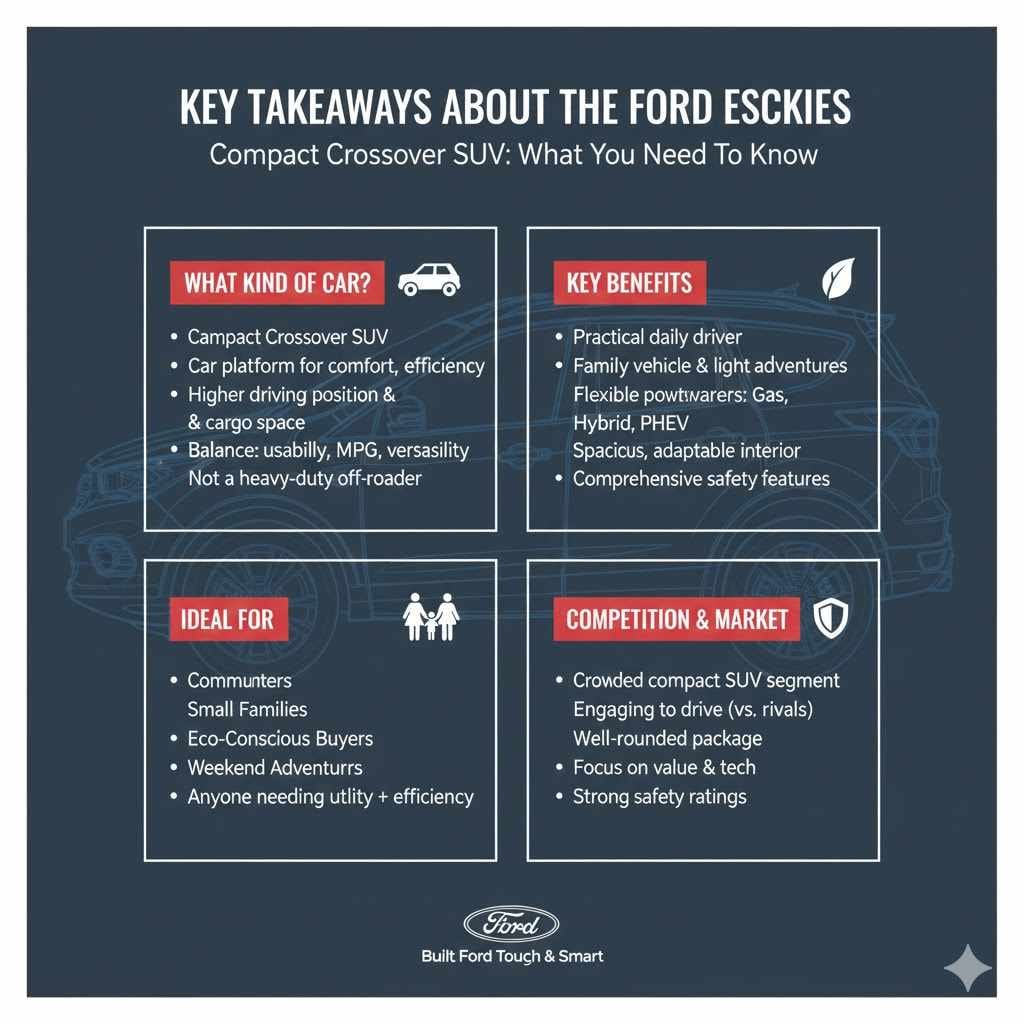
Key Takeaways About The Ford Escape
When asking, “What kind of car is a Ford Escape?” remember it’s primarily a compact crossover SUV. This means it’s built on a car platform for comfort and efficiency but offers SUV-like benefits such as a higher driving position and more cargo space. It aims for a balance of everyday usability, fuel economy, and versatility.
The Ford Escape is not a heavy-duty truck or a hardcore off-roader. It excels as a practical daily driver, a family vehicle, and a capable companion for light adventures. Its flexible powertrain options, including hybrid and plug-in hybrid choices, appeal to those looking to save on fuel.
The spacious and adaptable interior makes it easy to carry passengers and cargo.
Its safety features are generally comprehensive, offering peace of mind for drivers and passengers. In the crowded compact SUV market, the Escape competes by offering a well-rounded package that is often more engaging to drive than some rivals, while still providing the utility and comfort that buyers expect.
Frequently Asked Questions
Question: Is the Ford Escape a good car for long road trips
Answer: Yes, the Ford Escape is generally a good car for long road trips. It offers comfortable seating, a smooth ride, and decent cargo space for luggage. Many models come with advanced cruise control and infotainment systems that enhance the driving experience on highways.
Question: Does the Ford Escape have all-wheel drive
Answer: Many Ford Escape models are available with all-wheel drive (AWD). This option provides improved traction and stability, especially in slippery conditions like rain, snow, or on unpaved roads.
Question: Is the Ford Escape fuel efficient
Answer: The Ford Escape is known for its competitive fuel efficiency, especially its hybrid and plug-in hybrid variants. The gasoline-powered models also offer good MPG for their class, thanks to efficient turbocharged engines.
Question: Can I fit a lot of cargo in a Ford Escape
Answer: Yes, the Ford Escape offers a generous amount of cargo space for a compact SUV. With the rear seats folded down, you can fit larger items, making it versatile for errands, travel, and hauling.
Question: What is the main difference between a Ford Escape and a Ford Explorer
Answer: The Ford Escape is a compact SUV, while the Ford Explorer is a mid-size SUV. The Explorer is larger, typically offers more seating (sometimes with a third row), has more powerful engine options, and can tow heavier loads.
Summary
The Ford Escape is a compact crossover SUV. It provides a balanced mix of car-like comfort and SUV practicality. Its versatility, available efficient powertrains, and spacious interior make it a solid choice for many drivers.
It’s a great option for families and individuals needing a reliable, everyday vehicle. See also can you track a ford car here’s what’s possible today.