What Happens When Electric Car Runs Out of Charge: Essential Guide
When you think about electric cars, you probably imagine a quiet, smooth ride, high-tech features, and freedom from rising fuel prices. But what if your electric car suddenly runs out of charge? Many new EV drivers worry about this situation. It’s a common question: What actually happens when your electric car’s battery hits zero on the road? Is it just like running out of gas, or is it more complicated?
Driving an electric vehicle (EV) is a different experience from using a gasoline car. The way the car behaves as the battery nears empty, the steps you need to take, and even the risks you face are unique. This article will walk you through every important detail.
From warning signs to real-life scenarios, from what to do immediately to how to avoid this problem in the future, you’ll learn exactly what happens when your electric car runs out of charge—and how to handle it with confidence.
How Electric Cars Work: Power And Range Basics
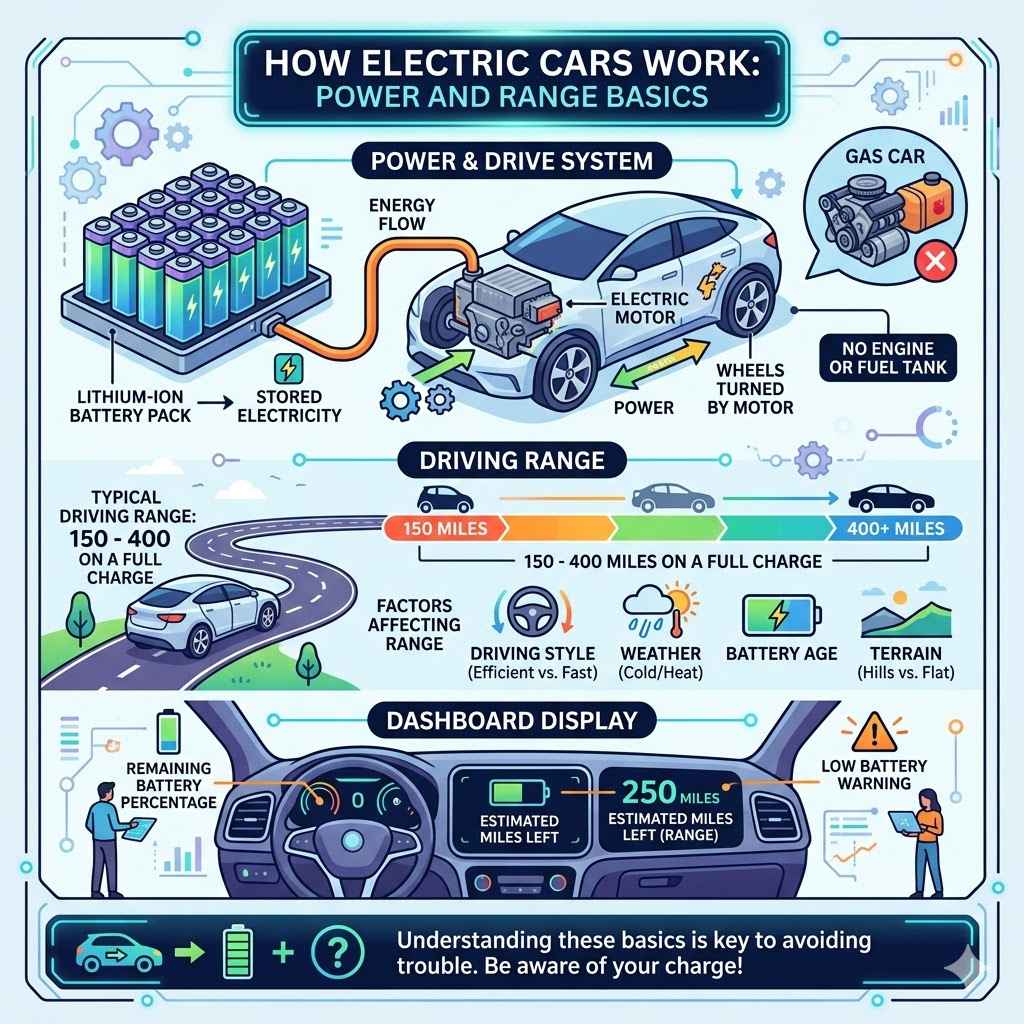
Electric cars use lithium-ion batteries to store energy. When you drive, the battery sends power to an electric motor, which moves the wheels. Unlike gas cars, there’s no engine or fuel tank—just a big battery pack.
The typical driving range for modern electric cars is between 150 to 400 miles on a full charge, depending on the model. For example, a Nissan Leaf might go 150 miles, while a Tesla Model S can reach 400 miles or more. The actual distance depends on driving style, weather, battery age, and terrain.
Most EVs have a dashboard display that shows:
- Remaining battery percentage
- Estimated miles left (range)
- Warnings as the battery gets low
Understanding these basics is key to avoiding trouble. But sometimes, even careful drivers get caught with a nearly empty battery.
What Happens As The Battery Gets Low
When an electric car’s charge drops, it doesn’t just shut off instantly. The car’s system is designed to warn you early and to protect the battery.
Warning Signals And Alerts
As you drive and the battery gets low, your EV will:
- Show a low battery warning on the dashboard (usually around 20%).
- Give audio or visual alerts as the range drops further, often at 10% and 5%.
- Switch the display to show only the most important info, like remaining range.
Some EVs also send a notification to your smartphone app. For example, Tesla, Chevrolet, and Hyundai EVs will all alert you when you’re close to running out.
Power Limiting Features
To protect the battery and give you a chance to reach a charger, most EVs activate “limp mode” or reduced power mode at very low charge:
- The car slows acceleration
- Top speed is limited
- Air conditioning or heating may turn off to save energy
These changes can feel dramatic, especially on highways. It’s a clear sign you need to stop soon.
Estimated Range Becomes Less Accurate
As the battery nears empty, the car’s estimate of remaining miles becomes less reliable. Small changes in speed, hills, or even wind can make the car die sooner than expected.
Non-obvious insight: Many new drivers trust the remaining miles display too much. Always plan to recharge before you reach “0 miles” or 0%.
What Happens When The Battery Is Completely Empty
If you keep driving past all warnings, eventually the car will use up all its usable battery. Here’s what happens next, step by step.
Vehicle Response
- The car enters its final protection mode—even slower acceleration, and possibly a crawl speed (like 10-15 mph).
- Safety features like power steering and brakes usually keep working, but less smoothly.
- The car will eventually stop moving. This is not a slow coast to a stop; it can be abrupt.
Some EVs, like Teslas, keep a tiny reserve (“buffer”) below 0% to let you drive a short distance to safety. But you can’t count on this.
On The Road: What You Experience
When the car stops, it behaves like this:
- The dashboard may still have power (for warnings, hazard lights)
- You can usually shift into park and get out safely
- Some systems, like lights, stay on for a while, but the car won’t drive
You’re now stranded—much like running out of gas, but with some differences.
Risks And Safety
Non-obvious insight: Unlike a gas car, you can’t just walk to a station, buy a can of electricity, and pour it in.
If you’re on a busy road or in extreme temperatures, running out of charge can be dangerous. Always turn on your hazard lights and stay with the vehicle if it’s safe. If you’re in a dangerous spot (like a highway), exit to a safe area if possible.
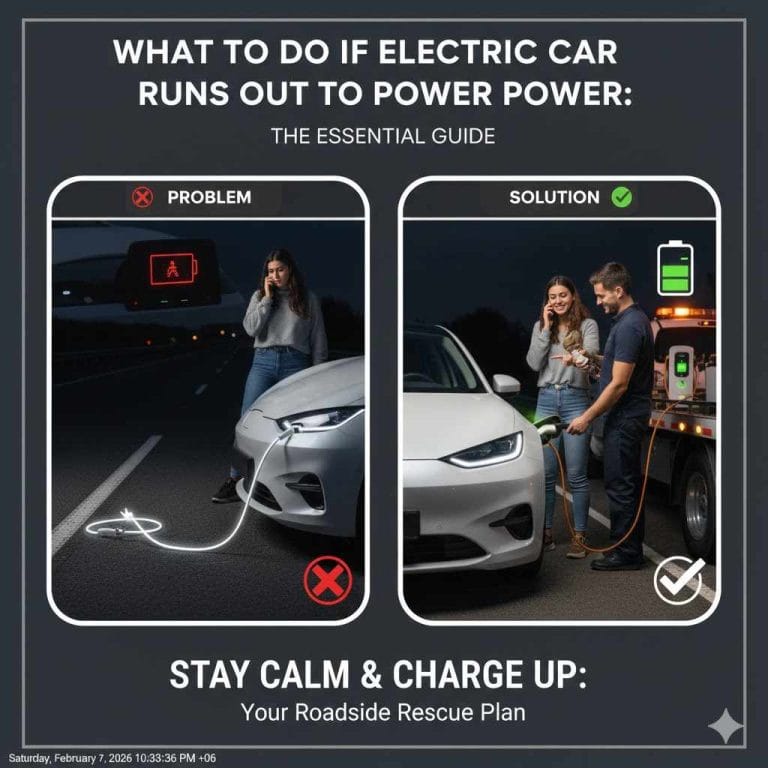
What To Do If Your Electric Car Runs Out Of Charge
If you find yourself with a dead battery, don’t panic. Here’s what you should do:
- Stay calm and safe. Move the car off the road if you still have any power left. Turn on your hazard lights.
- Assess your location. Are you close to a charging station or in a remote area? Check your phone for nearby options.
- Call for help. Use your car’s roadside assistance button or call your insurance/EV roadside service. Many companies now offer EV-specific help.
- Wait in your car if safe. In bad weather or on busy roads, it’s usually safest to stay inside with seatbelt on.
- Avoid draining the 12V battery. Limit use of lights, radio, or climate control while waiting.
Can You Recharge On The Spot?
Unlike a gas car, you can’t just bring a spare battery. But there are a few options:
- Some roadside services have mobile EV chargers—vans with fast chargers that can give you enough power to reach a station.
- Towing to the nearest charger is the most common solution. Flatbed towing is safest for most EVs.
What Not To Do
- Do not try to jump-start the main battery with another car. The high-voltage battery is not like a traditional 12V battery.
- Do not push the car on a busy road. It’s heavy and could be dangerous.
How Running Out Of Charge Affects Your Electric Car
You might worry: does running out of battery damage the car? Here’s what you need to know.
Battery Health And Longevity
Occasionally letting your EV battery hit zero is not good, but it usually won’t cause instant harm. However, frequent deep discharging can:
- Reduce overall battery life
- Lower driving range over time
Manufacturers recommend keeping your battery above 10-20% when possible. Modern EVs have controls to prevent “deep discharge,” but repeated emptying stresses the battery.
12v Battery
Most EVs have a small 12V battery (like in gas cars) for lights and electronics. If you sit with the car “on” for a long time after the main battery is dead, you might drain the 12V battery too. Then, even after charging the main battery, the car might not start until the 12V is recharged or replaced.
Software And System Checks
Some electric cars need a system reset after a full battery drain. You may see error messages or need to wait for the car to “reboot” after recharging.
Real-world Stories: Running Out Of Charge
Hearing about real experiences can help you understand what to expect. Here are two examples:
City Commute
Anna drives a Chevy Bolt in Los Angeles. She ignored the low battery warning, thinking she could make it home. Traffic was heavier than usual, and the estimated range dropped fast. The car slowed down, and air conditioning turned off. Finally, it stopped on a side street, and she called roadside assistance. A tow truck took her to a nearby fast charger.
What she learned: The estimated range is only a guide. Always have a backup charging plan.
Highway Emergency
Steve was driving his Hyundai Ioniq 5 on a rural highway. He didn’t realize how quickly cold weather would drain the battery. At 5% charge, the car limited his speed. Soon, he had to pull to the side. He waited for two hours for a mobile charging van, which gave him enough power to reach the next town.
Key lesson: Weather and speed can dramatically change your real range.
Charging Solutions If You Run Out
When you run out of charge, how you get moving again depends on where you are.
Mobile Charging
Some roadside services now offer mobile EV charging. These are vans or trucks with a battery or generator that can charge your car for 10-30 miles of range, enough to reach a proper charger. This service is still rare in some areas.
Towing
Flatbed towing is best for EVs, especially those with rear- or all-wheel drive. Dragging an EV with wheels on the ground can damage the motor.
Emergency Power Banks
Portable power banks for EVs exist, but they are expensive and not widely available. They are mainly for emergencies and not practical for everyday use.
Comparison: Gas Vs. Electric “running Out”
Here is a quick look at the key differences between running out of gas and running out of charge:
| Feature | Gas Car | Electric Car |
|---|---|---|
| Refueling on the spot | Easy (gas canister) | Difficult (needs charging equipment) |
| Time to get moving again | 5-10 minutes | 20-60 minutes (with mobile charger/tow) |
| Danger to system | Possible fuel pump damage | Possible battery stress |
| Common rescue method | Bring fuel or tow | Mobile charger or tow |
Common Mistakes That Lead To Running Out Of Charge
Understanding where new EV owners go wrong can help you avoid trouble. Here are the most frequent mistakes:
- Ignoring early warnings. Many people keep driving after the first low battery alert, thinking they have plenty of time.
- Trusting range estimates too much. These numbers can change fast in traffic, on hills, or in bad weather.
- Not checking for chargers ahead. Always know where the next charging station is, especially on long trips.
- Driving fast or using climate control excessively. Both use more energy and can reduce range.
- Not planning for cold or hot weather. Batteries drain faster in extreme temperatures.
Tip: Use EV route planning apps (like PlugShare or A Better Route Planner) to avoid surprises.
How To Avoid Running Out Of Charge
With a little planning, you can almost always avoid running out of battery in your electric car.
Smart Planning
- Know your car’s true range. Test your EV in different conditions to see how far you can really go.
- Plan routes with charging stops. Especially for long trips, map out where you’ll charge, and have a backup.
- Charge overnight at home. Most EV owners do 80-90% of charging at home, which prevents most problems.
- Top up when you can. Don’t wait until the battery is low—add charge when you stop at shops or restaurants.
Using Technology
Most EVs have built-in navigation that shows nearby chargers. Apps like PlugShare, ChargePoint, and Tesla’s Supercharger map make it easy to find charging stations.
Understanding Real Range
Remember, the advertised range is usually under ideal conditions. Real-world range is often less due to:
- Speed (higher speed = less range)
- Weather (cold/heat reduces range)
- Extra passengers or cargo
- Tire pressure and driving style
Non-obvious insight: Your range can change even during a single trip. If you notice the range dropping faster than expected, slow down and turn off extra features.
What To Do Differently In Extreme Situations
Some situations require special care:
Hot Weather
Batteries can overheat, and using air conditioning takes extra power. Try to park in the shade, and pre-cool the car while it’s plugged in.
Cold Weather
Cold reduces battery efficiency. Pre-heat your car while it’s charging. Drive slower and avoid using heat at maximum.
Remote Areas
If you’re traveling where charging stations are rare, always start with a full battery. Carry a portable phone charger and be ready to call for help.
Long-distance Driving
Don’t push your luck by running down to the last few miles. Add extra charging stops if needed.
How Automakers Are Addressing “range Anxiety”
Car companies know that fear of running out is a barrier for new EV buyers. Here’s what they’re doing about it:
- Adding bigger batteries: New EVs have more range—many over 250 miles per charge.
- Better navigation systems: Real-time maps show charging stations and even reserve a spot.
- Faster charging: New stations can add 100+ miles in 15 minutes.
- Remote diagnostics: Some cars can warn automakers if you’re about to run out, and offer help.
- Education: EV makers offer apps and guides to help drivers plan their trips and understand their car’s limits.
Future Solutions To Running Out Of Charge
Looking ahead, technology is making running out of charge less likely every year.
- Wireless charging roads: Some cities are testing roads that charge cars as they drive.
- Ultra-fast chargers: Charging in under 10 minutes is becoming possible.
- Better batteries: New chemistries will offer longer life and faster charging.
- Wider charging networks: More stations, even in rural areas, reduce the risk of running out.
For more on how EV technology is advancing, check out this Wikipedia overview of electric car adoption.
Comparing Electric Car Brands: How They Handle Low Battery
Different car makers design their EVs to handle low battery in unique ways. Here’s a comparison of three popular brands:
| Brand | Low Battery Warning | Reduced Power Mode | Emergency Range Buffer |
|---|---|---|---|
| Tesla | 20%, 10%, 5% | Yes (limp mode) | Yes (few miles below 0%) |
| Nissan Leaf | 20%, 10% | Yes | Very small |
| Hyundai Ioniq 5 | 20%, 10%, 5% | Yes | Yes (minimal) |
Knowing how your own car works can help you prepare for emergencies.

Frequently Asked Questions
What Should I Do First If My Electric Car Runs Out Of Charge?
First, stay calm and move your car to a safe place if possible. Turn on your hazard lights. Call your EV roadside assistance or insurance company for help. Do not leave your car unless you are in danger.
Will Running Out Of Battery Damage My Electric Car?
Occasional full battery drains won’t destroy your car, but frequent deep discharges can reduce battery life and range. Try to keep your battery above 10-20% when possible.
Can I Use A Portable Charger To Refill My Ev If It’s Dead?
Some mobile charging services and emergency power banks exist, but they are rare and expensive. Most of the time, you’ll need a tow or mobile charging van to get enough power to reach a station.
How Is Running Out Of Charge Different From Running Out Of Gas?
You can’t just bring electricity in a can. Refueling an electric car takes longer and usually requires towing or a special mobile charger. Running out of charge can also affect battery health if it happens often.
How Can I Prevent Running Out Of Battery In My Electric Car?
Plan your routes, know your real range, and use apps to find charging stations. Avoid pushing your battery to 0% and always charge when you have the chance, especially before long trips.
Driving an electric car is an exciting, modern experience, but it comes with new habits and challenges. Understanding what happens when you run out of charge—and how to avoid it—will help you drive with confidence and peace of mind.
Related pick: Check today's price on Amazon