What Car Does the Ford Ceo Drive? The Answer May Surprise You
In the automotive world, the car a company’s CEO chooses to drive is more than just a personal preference—it’s a powerful statement. For Ford Motor Company, a brand deeply intertwined with American innovation, the vehicle its CEO drives symbolizes the company’s values, priorities, and future direction. But what if the answer to “What car does the Ford CEO drive?” isn’t what you’d expect? Prepare to be surprised, as the reality behind this seemingly simple question reveals fascinating insights about leadership, branding, and the evolving automotive landscape.
In an era where electric vehicles (EVs), sustainability, and technology are reshaping the industry, the personal choices of automotive leaders carry significant weight. The Ford CEO’s car isn’t just a mode of transportation—it’s a signal to employees, customers, and competitors about where the brand is headed. This article delves deep into the story behind the Ford CEO’s choice of car, exploring the reasoning, implications, and broader industry trends that make this topic so compelling.
Key Takeaways

As an Amazon Associate I earn from qualifying purchases.
- The Ford CEO’s car choice reflects strategic priorities and symbolizes the company’s future direction.
- Jim Farley, Ford’s current CEO, is known for his passion for both classic and electric vehicles.
- The CEO’s vehicle choices send clear messages about Ford’s commitment to innovation, sustainability, and performance.
- Examining the CEO’s car reveals broader trends in the auto industry, from electrification to brand authenticity.
- Real-world examples and data comparisons highlight the impact of executive vehicle choices on public perception.
The Role Of A Ceo’s Car In Corporate Messaging
The vehicle a CEO drives is more than just a personal preference—it’s an extension of the company’s brand. For a legacy automaker like Ford, every public appearance, social media post, or interview involving their CEO’s car is scrutinized by the media, investors, and the public.
Symbolism In Executive Choices
When a CEO drives a company’s latest EV or flagship model, it sends a message of confidence in their own products. For instance, when Mary Barra, CEO of General Motors, is seen in a Chevy Bolt EV, it’s a testament to GM’s commitment to electrification. Similarly, the Ford CEO’s choice sets the tone for the entire organization.
Executive vehicles act as moving billboards, and when chosen with intention, they can reinforce or even redefine the brand’s identity. For Ford, a company with a century-old heritage and a customer base spanning generations, the CEO’s car becomes a tangible manifestation of the brand’s evolving story.
It’s not just about the machine, but what the machine represents—innovation, reliability, sustainability, and progress. These vehicles also serve as conversation starters with media and the public, allowing the CEO to directly address Ford’s strategies and future goals.
Impact On Stakeholder Perceptions
Key stakeholders—investors, employees, and customers—interpret the CEO’s car as a signal about strategic focus. A CEO who drives a high-performance sports car may emphasize innovation and power, while an EV choice signals sustainability. The car serves as a rolling endorsement, often impacting:
- Stock market reactions after high-profile launches
- Employee morale and alignment with company values
- Customer trust in the brand’s direction
For example, when the Ford CEO is seen in a Mustang Mach-E at a major auto show or a product launch, it reassures investors that the company’s electrification strategy is more than a press release—it’s an executive priority. Employees, in turn, feel validated for their work on new technologies, and customers gain confidence that the vehicles they buy are truly championed by those at the top.
Case Study: Elon Musk And The Tesla Model S
Elon Musk famously drives Tesla’s own vehicles, frequently showcasing new features and technology. This alignment boosts consumer confidence and positions Tesla as a leader in innovation. Ford’s CEO faces similar scrutiny, with public interest in whether he chooses a classic Mustang, a cutting-edge Mustang Mach-E, or the all-electric F-150 Lightning.
Musk’s approach has set a benchmark in the industry for executive involvement and transparency. His personal engagement with Tesla products, such as live demonstrations of Autopilot or the Cybertruck, sets a precedent for other automotive leaders. Ford’s executive team, led by Jim Farley, must navigate similar expectations, not just from the press but also from a growing online community eager for authentic leadership and product validation.

Credit: www.bakerinstitute.org
Who Is Ford’s Ceo And What Does He Drive?
To understand the significance of the Ford CEO’s car choice, it’s essential to know the person at the wheel. Jim Farley became Ford’s CEO in October 2020, bringing a unique blend of automotive passion and strategic vision.
Jim Farley: A Brief Profile
- Background: Farley is a lifelong car enthusiast, having raced classic cars and worked across multiple automakers.
- Vision: He is steering Ford through a period of rapid transformation, investing heavily in EVs and connected vehicle technologies.
- Public Persona: Farley is active on social media, often sharing insights from his driving experiences and participation in racing events.
Farley’s automotive journey began well before his tenure at Ford. He grew up surrounded by car culture—his grandfather worked at a Ford factory, and Farley himself has an extensive history in racing, particularly with vintage vehicles. This deep-rooted passion for cars isn’t just a personal hobby; it informs his leadership style and the way he communicates Ford’s values to both internal and external audiences.
His hands-on approach is evident in his regular attendance at motorsport events, and his willingness to get behind the wheel—whether it’s a track-ready classic or a state-of-the-art EV—signals an authentic connection to the vehicles his company produces. This is a significant departure from some previous industry leaders who might have preferred more traditional executive vehicles or left driving duties to chauffeurs.
The Surprising Answer: Farley’s Personal Car Choices
Despite leading one of the world’s most iconic car brands, Farley’s personal garage is a blend of old and new:
- Classic Mustang: Farley is known for his love of vintage Ford Mustangs, especially his own 1966 Shelby GT350. This car is a nod to Ford’s storied past and performance legacy.
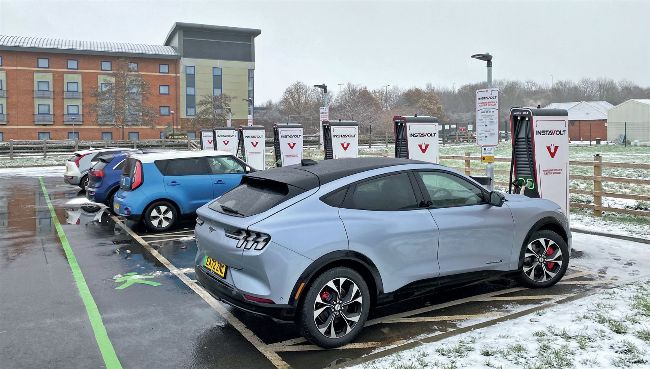
- Mustang Mach-E: He has been photographed and filmed driving the all-electric Mustang Mach-E, symbolizing Ford’s commitment to EVs.
- F-150 Lightning: Farley has also showcased the electric F-150 Lightning, even using it for road trips and media events.
In interviews, Farley has spoken about the emotional connection he feels to classic Ford vehicles, describing the visceral experience of driving the Shelby GT350 as “pure joy. ” Yet, he’s equally enthusiastic about the Mustang Mach-E, often highlighting its instant torque, quiet ride, and cutting-edge technology as proof that Ford can deliver excitement in an electric package.
Farley’s use of the F-150 Lightning goes beyond simple endorsement—he’s been candid about using the truck for practical family and work needs, including towing, hauling, and long-distance travel. His willingness to “walk the talk” by using these vehicles in real-world conditions resonates with Ford’s customer base, which values both performance and utility.
Why These Choices Matter
Farley’s willingness to drive both heritage models and cutting-edge EVs demonstrates a balance between honoring Ford’s legacy and embracing its future. It’s a deliberate strategy to appeal to both traditional enthusiasts and modern, eco-conscious buyers.
This dual approach is especially important in today’s market, where brands are often caught between their historical image and the pressure to innovate. By publicly embracing both ends of the spectrum, Farley reassures longtime Ford loyalists that the company’s muscle car spirit isn’t going away, even as it pivots toward electrification.
Data Table: Ceo Car Choices Among Major Automakers
Below is a comparison of what top automotive CEOs are known to drive:
| CEO | Company | Vehicle(s) Driven | Symbolic Message |
|---|---|---|---|
| Jim Farley | Ford | 1966 Shelby GT350, Mustang Mach-E, F-150 Lightning | Blending heritage with innovation |
| Mary Barra | General Motors | Chevy Bolt EV | Leading electric transformation |
| Elon Musk | Tesla | Model S, Model X | Showcasing in-house technology |
| Akio Toyoda | Toyota | GR Supra, Mirai | Performance and alternative energy |
This table highlights how executive car choices align with and amplify corporate strategies. These leaders use their public personas and driving habits as another tool for shaping the narrative around their respective brands.
Credit: pocketmags.com
The Strategic Importance Of The Ford Ceo’s Vehicle
The choice of car by Ford’s CEO is not random. It’s a carefully considered decision with far-reaching implications, both inside and outside the company.
Inspiring Innovation Internally
When the CEO is seen driving new models like the Mustang Mach-E, it inspires engineers and designers. It demonstrates that the company’s leadership is invested in the products rolling off the assembly line—not just in boardroom discussions.
This kind of leadership by example can ignite a sense of pride throughout the organization. Employees know their hard work is not just a line item on a spreadsheet but something the CEO trusts enough to use personally. The effect can be especially powerful in manufacturing and R&D, where seeing a high-profile executive publicly enjoying the “fruits of their labor” can increase motivation and foster a spirit of innovation.
It can also encourage cross-functional collaboration, as employees from marketing, engineering, and production see their efforts validated in the public eye.
Signaling Commitment To Electrification
Ford’s recent multi-billion-dollar investments in EVs and battery plants are among the largest in its history. By driving the F-150 Lightning and Mustang Mach-E, Farley signals Ford’s determination to lead in the electric vehicle revolution.
- In 2026, Ford’s EV sales surged by 117% year-over-year (Statista), reflecting rising consumer interest.
Farley’s visible commitment helps Ford differentiate itself from competitors who may still be perceived as hesitant or slow to embrace new technologies. It also reassures government regulators and environmental groups that Ford’s sustainability pledges are backed by action at the highest level.
Building Brand Authenticity
Consumers are increasingly skeptical of “greenwashing.” When a CEO is seen using their own EVs in daily life, it builds trust and authenticity. This helps Ford stand out in a crowded market where many automakers are making similar promises.
Authenticity is built not only through positive stories but also through transparency about challenges. For instance, Farley has openly discussed the learning curve and infrastructure gaps facing EV drivers, positioning Ford as a company willing to listen, adapt, and improve.
Example: Ford F-150 Lightning Road Trip
In 2026, Jim Farley took a highly publicized road trip in the all-electric F-150 Lightning. He documented charging stops, range, and driving experience, providing real-world validation for Ford’s claims. This transparency resonated with both consumers and the media.
The road trip, which included candid social media updates about the practical realities and surprises of long-distance EV driving, helped demystify electric trucks for many potential buyers. It also generated extensive media coverage, with automotive journalists and influencers echoing Farley’s experiences and further amplifying Ford’s EV narrative.

Credit: www.shopownermag.com
How The Ford Ceo’s Car Choice Reflects Broader Industry Trends
Jim Farley’s car isn’t just about personal taste; it’s a microcosm of massive shifts in the automotive industry.
Electrification And Sustainability
With governments worldwide pushing for lower emissions and stricter fuel economy standards, automakers are racing to electrify their fleets. Ford aims to have 50% of global vehicle sales electric by 2030 (Ford Media). The CEO’s embrace of EVs is both symbolic and strategic.
The automotive landscape is changing fast, with electrification no longer an option but a necessity. Farley’s public support for Ford’s EV strategy is a crucial part of convincing skeptical buyers, stakeholders, and even dealerships that the transition is real and here to stay.
It also sends a message to policymakers that Ford is ready to be a partner in achieving national and international climate goals.
The Rise Of The “halo” Ev
The Mustang Mach-E and F-150 Lightning are Ford’s “halo” EVs—models designed to draw attention and shift brand perception. Farley’s public use of these vehicles boosts their profile and aligns Ford with innovation.
The Mach-E and Lightning are more than just new models—they’re pivotal in repositioning Ford as a technology leader. “Halo” vehicles are designed to attract new customers, create excitement, and serve as testbeds for future innovations. By driving these vehicles, Farley ensures they’re front and center in the public conversation, helping to shift the perception of Ford from a traditional automaker to an innovative force.
Connecting With New Audiences
By balancing classic car enthusiasm with a genuine passion for EVs, Farley appeals to two distinct audiences:
- Traditionalists, who value Ford’s muscle car heritage
- Early adopters and environmentalists, eager for sustainable mobility
This dual appeal is critical as Ford seeks to maintain its loyal customer base while attracting new buyers.
In practice, this means Farley can engage with enthusiasts at classic car shows one weekend and EV advocates at tech conferences the next. This broad-based approach helps Ford remain relevant to different generations and market segments, ensuring its longevity in a rapidly evolving market.
Comparison Table: Heritage Vs. Electric Ford Models
| Model | Type | Year Introduced | Key Features | CEO Endorsement |
|---|---|---|---|---|
| 1966 Shelby GT350 | Classic Muscle | 1966 | V8 engine, racing pedigree | Personal favorite of Farley |
| Mustang Mach-E | Electric SUV | 2020 | All-electric, advanced tech | Driven regularly by CEO |
| F-150 Lightning | Electric Pickup | 2026 | Long range, utility features | Used for public road trips |
This table demonstrates the strategic balance Ford strikes between honoring its past and paving the way for its future, a theme that is central to Farley’s leadership and public persona.
Media, Public Perception, And The Ceo’s Car
How the media and public interpret the Ford CEO’s vehicle choice can influence everything from company reputation to sales numbers.
Media Coverage And Social Media
Automotive journalists and social media users closely follow Jim Farley’s car choices. His tweets about driving the Mach-E or F-150 Lightning often go viral, amplifying Ford’s marketing efforts. A single Instagram post can generate hundreds of thousands of impressions, helping Ford reach younger, more tech-savvy audiences.
The rise of social media has made the CEO’s car choice more visible—and more consequential—than ever before. Farley’s approachable style, which includes responding to questions and even criticism online, has helped humanize Ford’s leadership. This kind of engagement builds rapport with consumers and offers a direct channel for feedback, which can be invaluable in product development and brand management.
Case Study: Ceo Influence On Brand Perception
In a 2026 survey by Autotrader, 68% of respondents said they are more likely to trust a car brand whose CEO personally uses and endorses new models (Autotrader). This “lead by example” effect has measurable impacts on:
- Brand loyalty
- Dealer confidence
- Consumer adoption rates
The ripple effect extends to dealership staff, who can point to the CEO’s personal endorsement as proof of product reliability and desirability. It also strengthens the company’s negotiating position with suppliers and business partners, who are more likely to invest in or support a brand with visible, passionate leadership.
Addressing Criticism And Skepticism
Of course, not everyone is convinced by executive car endorsements. Critics argue that CEOs may only use certain vehicles for publicity. Farley addresses this head-on by sharing unfiltered experiences—both positive and negative—on public platforms, enhancing credibility.
For instance, he has posted about both the joys and challenges of charging an EV on a road trip, or the realities of winter driving in the Mustang Mach-E. This transparency not only diffuses criticism but also positions Ford as a company willing to learn and improve, a trait valued by modern consumers.
Example: Mustang Mach-e Winter Testing
Farley posted about his experience driving a Mustang Mach-E during harsh winter conditions, noting both the vehicle’s strengths and areas for improvement. This candid feedback loop reassures consumers that Ford’s leadership is genuinely invested in product quality.
Such authenticity is particularly important as Ford and other automakers race to win over buyers who may be wary of new technologies or have had negative experiences with early EVs.
The Impact On Ford’s Product Strategy
The CEO’s vehicle choice isn’t just symbolic—it actively shapes Ford’s product development and go-to-market strategies.
Aligning Product Roadmaps
When Farley champions the Mach-E and F-150 Lightning, it accelerates investment in EV technology. Ford’s rapid rollout of new electric models and charging infrastructure demonstrates a strategic shift, directly influenced by executive leadership.
The CEO’s public use of these models can even influence resource allocation, pushing more funding toward software development, battery supply chains, or charging networks. It also encourages the adoption of an agile product development mindset, where real-world feedback is quickly integrated into new iterations.
Product Feature Prioritization
Feedback from the CEO’s personal use can influence:
- Infotainment system updates
- Battery range improvements
- User experience features
Ford’s engineering teams pay close attention to the CEO’s public commentary, often fast-tracking enhancements based on real-world insights.
For example, when Farley discusses the need for improved charging experiences or better integration with smartphone apps, these suggestions are often reflected in subsequent software updates and new model features. This direct pipeline between executive experience and product development is a powerful differentiator for Ford in a competitive marketplace.
Example: Bluecruise Hands-free Driving
Farley’s advocacy for advanced driver-assist features like BlueCruise has helped prioritize their deployment across Ford’s EV lineup. By testing these systems personally, he ensures they meet the high standards expected by customers.
His public demonstrations—sometimes live-streamed or shared in detailed blog posts—help demystify advanced features and encourage broader adoption, both by consumers and within the organization.
Table: Ford Product Innovations Influenced By Leadership
| Innovation | Model(s) | CEO Involvement | Market Impact |
|---|---|---|---|
| BlueCruise | Mach-E, F-150 Lightning | Personal testing, public feedback | Boosted adoption of hands-free driving |
| Over-the-Air Updates | EV lineup | CEO endorsement in interviews | Improved customer satisfaction |
| Extended Range Batteries | F-150 Lightning, Mach-E | CEO’s public road trips | Increased demand for long-range models |
Real-world Examples: When Ceo Car Choices Made Headlines
The Ford CEO’s car choices aren’t the only ones that have captured public attention. Below are notable instances where executive vehicles became newsworthy—and even influenced company fortunes.
Example 1: Alan Mulally And The Ford Fusion Hybrid
Before Jim Farley, former Ford CEO Alan Mulally was often seen in the Ford Fusion Hybrid. This reinforced Ford’s early commitment to fuel efficiency, at a time when hybrids were gaining traction. Mulally’s endorsement helped the Fusion Hybrid become a sales leader in its segment.
Mulally’s public embrace of hybrid technology came at a critical time for Ford, as it sought to rebuild its reputation and financial stability following the 2008 financial crisis. His choice of vehicle sent a clear message: Ford was committed to innovation and responsible manufacturing, which helped attract environmentally conscious buyers and investors alike.
Example 2: Akio Toyoda And The Toyota Mirai
Toyota’s CEO, Akio Toyoda, has been an outspoken advocate for hydrogen fuel cell technology. By driving the Toyota Mirai, Toyoda positioned the company as a pioneer in alternative energy, influencing both government policy and consumer perception (Wikipedia – Toyota Mirai).
Toyoda’s choice reinforced Toyota’s reputation for technical leadership and willingness to explore unconventional paths, inspiring other companies to invest in hydrogen as a long-term solution.
Example 3: Herbert Diess And The Volkswagen Id.3
Volkswagen’s CEO, Herbert Diess, publicly transitioned to the all-electric ID.3. This move symbolized VW’s aggressive pivot to electrification following the diesel emissions scandal, signaling a new era for the brand (Volkswagen Newsroom).
By making his personal choice public, Diess helped reset Volkswagen’s image and demonstrated tangible commitment to change, both internally and externally.
The Ford Ceo Effect: Building A Legacy
Like his peers, Jim Farley’s car choices are shaping Ford’s legacy. By blending classic muscle with modern EVs, he’s crafting a narrative that embraces both tradition and transformation—a story that resonates with employees and consumers alike.
Farley’s approach also encourages future generations of leadership to maintain this balance, ensuring Ford remains agile and relevant in the face of ongoing technological disruption.
Lessons For Other Companies And Executives
The Ford CEO’s approach offers valuable lessons for leaders in any industry, especially those navigating disruptive change.
Authenticity Is Essential
Consumers and stakeholders are quick to spot inauthentic gestures. Executives must genuinely believe in and use their own products to build trust.
An authentic endorsement can drive employee engagement and customer loyalty, while a perceived lack of authenticity can quickly erode both.
Visibility Drives Change
Publicly endorsing new technologies accelerates adoption—both inside the company and in the marketplace. Executive visibility is a powerful tool for cultural transformation.
Visible leadership also helps set priorities for the organization, ensuring that innovation receives the focus and resources it requires to succeed.
Balance Heritage With Innovation
Striking the right balance between honoring the past and embracing the future can help brands maintain relevance during periods of rapid change.
For heritage brands, the challenge lies in leveraging historical strengths while remaining open to new possibilities—a balance exemplified by Farley’s dual embrace of classic and electric vehicles.
Data-driven Decision Making
By using real-world experiences to inform product strategy, companies can quickly adapt to consumer needs and stay ahead of competitors.
Executive involvement in product testing provides unique insights that can shape not just marketing, but the core product itself.
Example: Ford’s “built For America” Campaign
Ford’s recent marketing campaign, supported by Farley’s visible use of American-made EVs, boosted the company’s brand favorability by 12% in 2026, according to YouGov data (YouGov).
This campaign demonstrates how executive visibility can multiply the effects of traditional advertising, creating a feedback loop that strengthens brand trust and affinity.
Frequently Asked Questions
What Car Does The Ford Ceo Currently Drive?
Jim Farley, Ford’s CEO, is known for driving a mix of vehicles including a 1966 Shelby GT350, the Mustang Mach-E, and the F-150 Lightning. His choices reflect both Ford’s rich heritage and its commitment to electric vehicles.
Why Is The Ford Ceo’s Car Choice Important?
The car driven by Ford’s CEO serves as a public statement about the company’s strategic direction. It signals priorities to employees, investors, and customers, reinforcing Ford’s focus on both tradition and innovation.
Does Jim Farley Drive Ford’s Electric Vehicles Regularly?
Yes, Farley is frequently seen driving the Mustang Mach-E and F-150 Lightning. He shares his experiences on social media and during media events, demonstrating hands-on involvement with Ford’s latest technology.
How Does The Ceo’s Car Choice Impact Ford’s Brand Image?
The CEO’s choice directly impacts brand authenticity, public trust, and media coverage. By visibly supporting both classic and electric vehicles, Farley helps position Ford as a forward-thinking, yet tradition-respecting, automaker.
Are Other Automaker Ceos As Visible With Their Car Choices?
Many automotive CEOs, including Mary Barra (GM), Elon Musk (Tesla), and Akio Toyoda (Toyota), are publicly associated with their brands’ flagship or innovative models. This visibility is increasingly common as companies compete in the electric and sustainable mobility space.
Sources And Further Reading
For those interested in learning more, consider these authoritative sources:
The car that the Ford CEO drives is much more than a set of wheels; it’s a powerful narrative tool, a catalyst for change, and a reflection of Ford’s identity in a rapidly evolving industry. Jim Farley’s blend of classic and contemporary choices demonstrates that leadership, authenticity, and innovation can—and should—coexist.
As Ford accelerates into the future, the world will keep watching what’s parked in the CEO’s driveway. For more on this, see how to get a Ford vehicle out of Transport Mode.
Related pick: Check today's price on Amazon
Products related to this article
Sponsored / affiliate links. As an Amazon Associate I earn from qualifying purchases. I may earn additional commission from eligible campaigns.