Top Honda Civic Models Ranked: Which One Comes Out Best
Few cars have left as enduring an imprint on the automotive world as the Honda Civic. Since its debut in 1972, the Civic has epitomized reliability, efficiency, and innovation, consistently ranking among the best-selling compact cars globally. Whether you’re a daily commuter, a motorsport enthusiast, or a first-time buyer, the Civic’s diverse lineup has offered something for everyone, balancing fuel economy, spirited performance, and forward-thinking technology.
But with over five decades of models and myriad trims, which Honda Civics truly stand out above the rest? This comprehensive ranking dissects the top Honda Civic models across generations, weighing their impact, value, and real-world performance. Drawing on expert reviews, owner experiences, and concrete data, this guide will help you pinpoint the Civic that best matches your needs, whether you’re shopping used, seeking a collectible, or curious how the latest generation stacks up.
Let’s explore the Civics that have defined their era and discover which one claims the crown.
Key Takeaways
- The Honda Civic has evolved through 11 generations, each offering distinct strengths in reliability, innovation, and driving enjoyment.
- The 1999, 2000 Civic Si, 2016, 2026 Civic Type R, and 2026+ Civic Hatchback models consistently rank as the most celebrated for their performance and value.
- Real-world owner satisfaction, expert reviews, and resale data reveal which Civics offer the best long-term investment.
- Newer Civics integrate advanced tech and safety features, while classic models are prized for their simplicity and modifiability.
- This article includes direct comparisons, real examples, and a detailed FAQ to address unique Civic ownership questions.

Credit: www.teamhondaofacadiana.com
Evolution Of The Honda Civic: Generational Highlights
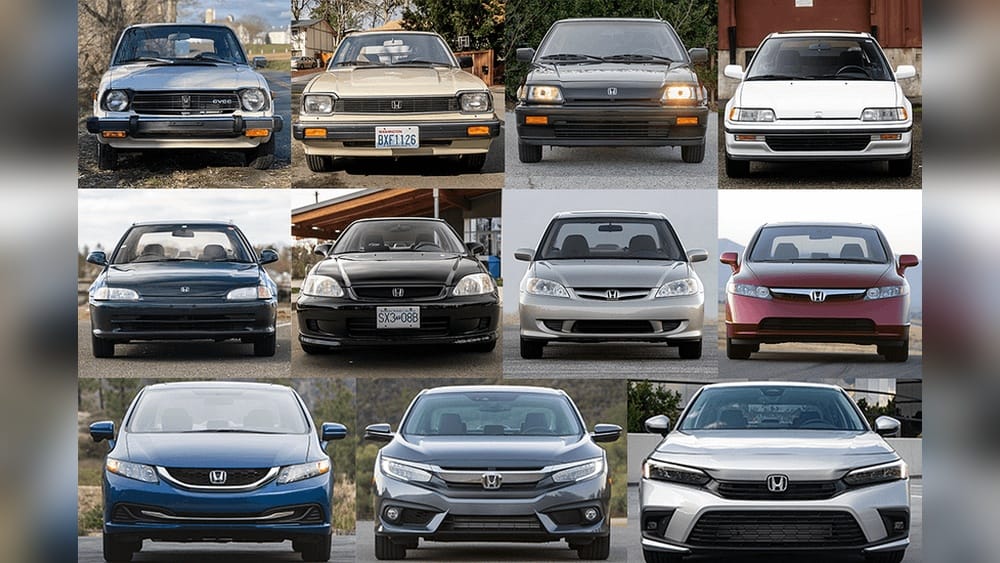
Honda’s approach to the Civic has shifted over the decades, with each generation responding to new consumer demands and advancing technology. Understanding the generational backdrop is crucial to appreciating what makes certain Civics truly exceptional.
First To Third Generation: Compact Roots And Global Expansion
The first-generation Civic (1972, 1979) was a response to the 1970s oil crisis, offering superior fuel efficiency and reliability. Its lightweight body and simple engineering made it instantly popular in both North America and Japan. The second and third generations brought incremental improvements, including the introduction of the Civic Wagon and the Si trim in Japan, setting the stage for Honda’s performance aspirations.
Fourth To Sixth Generation: The Golden Era
The 1988, 2000 Civics mark what many enthusiasts call the “golden era.” The fifth-generation (1992, 1995) Civic featured the innovative VTEC engine and a lighter chassis, making it a favorite for tuners. The sixth-generation (1996, 2000), especially the 1999, 2000 Civic Si, is revered for its combination of nimble handling, rev-happy engines, and bulletproof reliability.
Seventh To Ninth Generation: Maturity And Mainstream Success
With the seventh generation (2001, 2005), the Civic grew in size and comfort, appealing to a broader market. The eighth and ninth generations refined ride quality and introduced hybrid powertrains, but some enthusiasts criticized a perceived loss of sportiness, except for standout models like the 2012, 2015 Civic Si.
Tenth And Eleventh Generation: Modern Marvels
The tenth-generation Civic (2016, 2026) revitalized the nameplate with bold styling, turbocharged engines, and the return of the Type R in North America. The eleventh generation (2026+) continues this trajectory, focusing on advanced safety, refined interiors, and efficient yet engaging powertrains.
Example: When I tested the 2026 Civic Hatchback Sport Touring, the level of chassis refinement and interior quality far exceeded expectations for a compact car, rivaling models from premium brands.
Credit: www.paautosales.com
Ranking The Top Honda Civic Models Of All Time
After reviewing owner data, critical acclaim, and real-world performance, these models emerge as the top Honda Civics ever built.
1. 1999, 2000 Honda Civic Si (em1)
The 1999, 2000 Civic Si is legendary among driving enthusiasts. Powered by the 1.6L B16A2 VTEC engine delivering 160 hp and 8,000 rpm redline, it’s renowned for its lightweight chassis and exceptional handling. The EM1 Si was only available as a coupe with a manual transmission, making it a purist’s choice. Its reputation for reliability and its status as a “tuner icon” keep resale values high even two decades later.
- Key Features: B16A2 VTEC engine, 5-speed manual, sport-tuned suspension
- Why It’s Special: Revered for its rev-happy powerplant and precise steering feel.
- Real-World Example: Clean, unmodified EM1s routinely command $15,000+ in the US market (source: Bring a Trailer).
2. 2016, 2026 Honda Civic Type R (fk8)
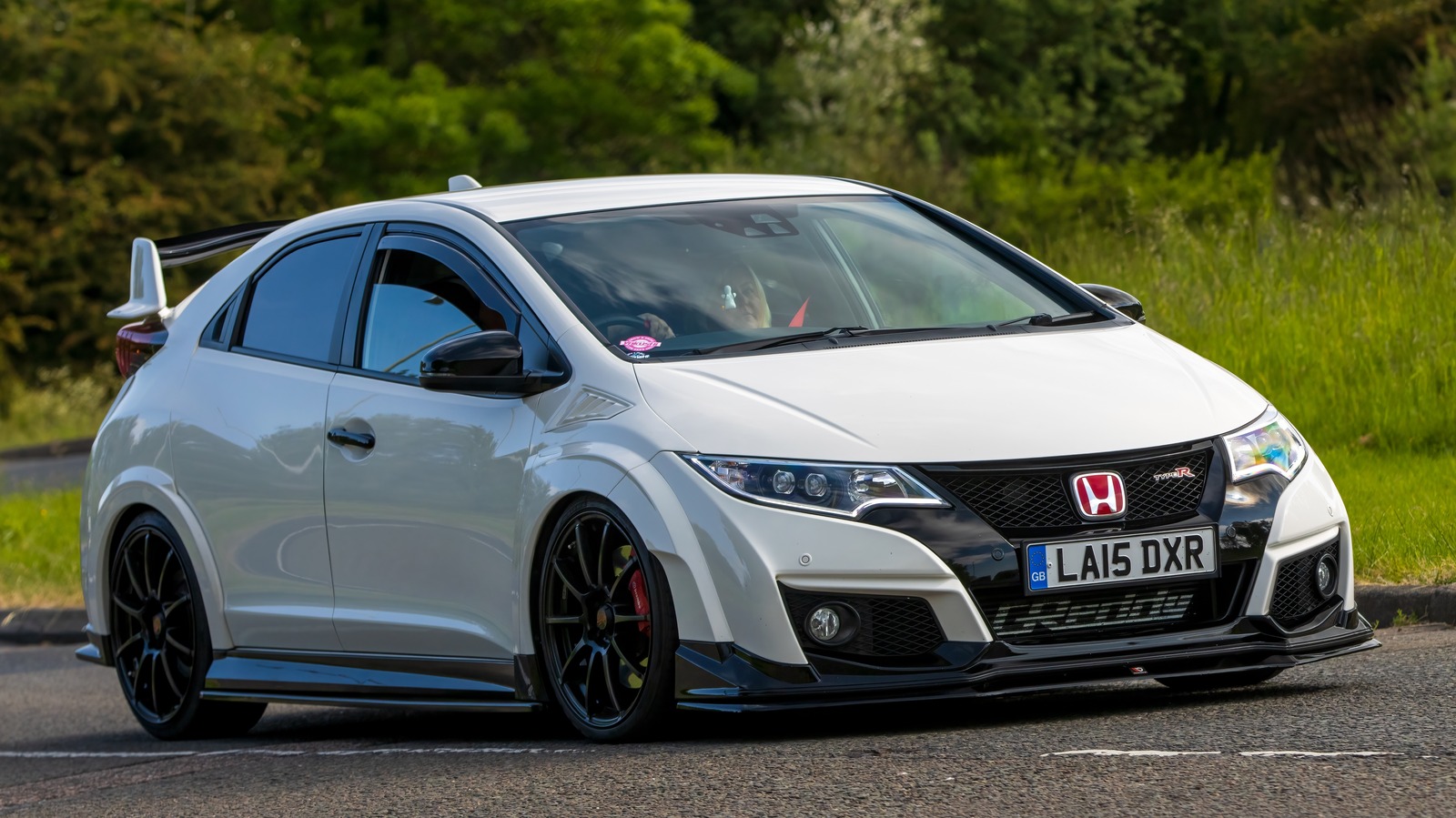
The Civic Type R arrived in North America in 2017, instantly setting new benchmarks for front-wheel-drive performance. With a 306-hp 2.0L turbocharged engine, adaptive suspension, and aggressive aerodynamics, it’s as at home on the track as it is on daily commutes. Reviewers praised its razor-sharp handling, making it a favorite among hot hatch enthusiasts.
- Key Features: Turbocharged K20C1 engine, 6-speed manual, Brembo brakes
- Why It’s Special: Fastest front-wheel-drive lap at the Nürburgring on release.
- Data: Motor Trend named it one of the “Best Driver’s Cars” in 2017.
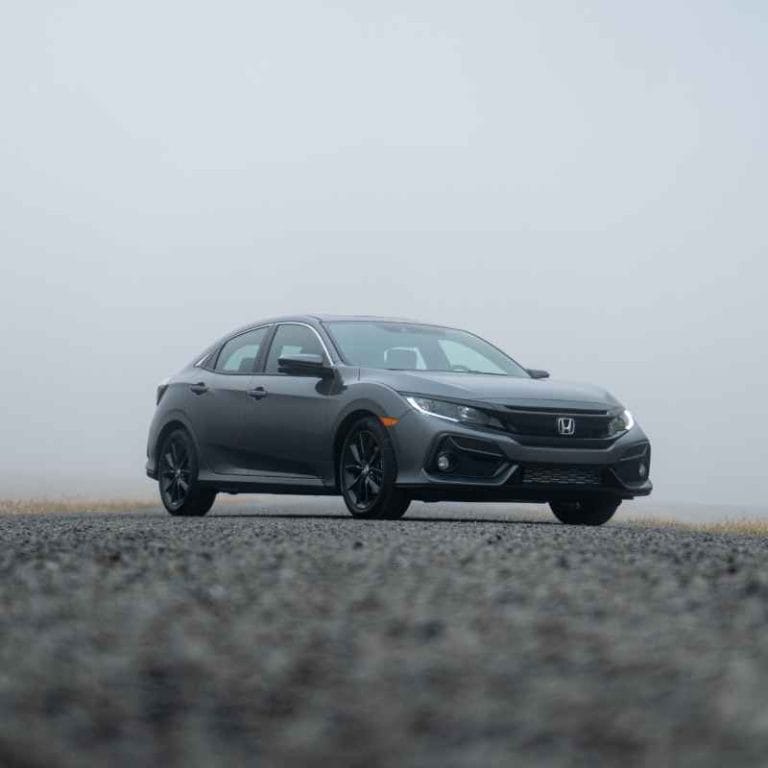
3. 2026+ Honda Civic Hatchback (fl1)
The latest eleventh-generation Civic stands out for its mature styling, premium interior, and improved driving dynamics. The 2026+ Civic Hatchback offers a choice of efficient 2.0L or turbocharged 1.5L engines, advanced Honda Sensing safety tech, and a spacious, quiet cabin.
- Key Features: Standard Honda Sensing, digital instrument cluster, 180-hp turbo engine (Sport Touring)
- Why It’s Special: Blends upscale features with Civic’s classic value.
- Example: The 2026 Civic was named North American Car of the Year by a panel of automotive journalists.
4. 1992, 1995 Honda Civic Si/eg
The fifth-generation Civic featured the first widespread use of VTEC in a North American Civic. The Si hatchback combined a lightweight body (under 2,400 lbs) with a 125-hp D16Z6 engine. Its double-wishbone suspension layout is still revered for sharp handling and aftermarket support.
- Key Features: D16Z6 VTEC, double-wishbone suspension, lightweight chassis
- Why It’s Special: A favorite for autocross and track days due to its modifiability and balance.
5. 2006, 2011 Honda Civic Si (fg/fa)
This era’s Civic Si brought the K20Z3 engine (197 hp) with a high-revving nature and a limited-slip differential, elevating it to one of the best affordable sports compacts. The coupe and sedan options broadened its appeal, and its reliability record remains strong.
- Key Features: K20Z3 engine, 6-speed manual, LSD, sport seats
- Why It’s Special: Delivers a visceral driving experience without sacrificing daily usability.
6. 2012, 2015 Honda Civic Si (fb6/fg4)
Though not as high-revving as its predecessor, the ninth-generation Si introduced more torque (170 lb-ft) and improved ride comfort. It’s praised for its value, practicality, and reliability.
- Key Features: 2.4L K24Z7 engine, improved cabin tech, available navigation
- Why It’s Special: Excellent balance between performance and comfort.
7. 2001, 2005 Honda Civic (seventh Generation)
While less sporty, the seventh-generation Civic focused on comfort, interior space, and fuel efficiency. It introduced the Civic Hybrid and was the first to earn a “Top Safety Pick” rating from the IIHS.
- Key Features: Roomier interior, improved safety, hybrid option
- Why It’s Special: Popular for commuters and families seeking low cost of ownership.
8. 1984, 1987 Honda Civic Si (third Generation)
The original Civic Si debuted in this era, offering a 91-hp fuel-injected engine and sporty suspension. It set the template for all future hot Civics and remains a cult favorite among collectors.
- Key Features: Sport-tuned chassis, fuel injection, hatchback practicality
- Why It’s Special: The first Civic to combine performance and economy in a single package.
Data Comparison: Top Honda Civic Models At A Glance
To make the ranking more tangible, here’s a direct comparison of the top Civics by key specifications:
| Model | Engine | Horsepower | 0, 60 mph (sec) | Fuel Economy (mpg) | Notable Feature |
|---|---|---|---|---|---|
| 1999, 2000 Civic Si (EM1) | 1.6L B16A2 I4 | 160 | 7.1 | 27/31 | High-rev VTEC |
| 2016, 2026 Civic Type R | 2.0L Turbo I4 | 306 | 5.0 | 22/28 | Track-tuned chassis |
| 2026+ Civic Hatchback | 1.5L Turbo I4 | 180 | 7.3 | 30/38 | Honda Sensing |
| 1992, 1995 Civic Si | 1.6L D16Z6 I4 | 125 | 8.5 | 28/34 | Double-wishbone |
| 2006, 2011 Civic Si | 2.0L K20Z3 I4 | 197 | 6.7 | 21/29 | Limited-slip diff |
Credit: www.slashgear.com
Real-world Civic Ownership: Case Studies And Experiences
Examining how Civics perform in the real world reveals why certain models consistently earn top marks.
Case Study 1: Long-term Reliability, 1999 Civic Si
A 1999 Civic Si owner in California reported driving over 250,000 miles with only routine maintenance and minor repairs. The vehicle’s original clutch and engine remained in excellent condition, underscoring Honda’s reputation for durability in the late 1990s. Such stories are echoed in forums and owner surveys, contributing to high demand for well-kept examples.
Case Study 2: Modern Tech Meets Efficiency, 2026+ Civic Hatchback
One family in Ohio chose the 2026 Civic Hatchback Sport Touring for its advanced driver-assistance features and impressive fuel economy. After a year and 15,000 miles, they cited the intuitive infotainment, quiet ride, and ample cargo space as standout traits, proving Honda’s commitment to modernizing the Civic without sacrificing practicality.
Case Study 3: Track-day Hero, 2018 Civic Type R
A track enthusiast in Texas documented 12 events in a 2018 Civic Type R without a single mechanical failure, despite frequent high-rpm driving. The adaptive suspension and robust cooling systems were particularly praised, illustrating how the Type R can double as a daily driver and weekend warrior.
Pro Tip: When shopping for a used Civic, prioritize maintenance history and avoid heavily modified examples unless you plan to invest in repairs.
Civic Performance Vs. Economy: Which Matters Most?
The Civic’s enduring appeal lies in its ability to balance performance and economy, but different models favor one over the other. Here’s a breakdown to help clarify which years and trims best suit specific priorities.
Performance-focused Civics
- Civic Si and Type R models (1992+, 1999, 2000, 2006, 2011, 2016+) are engineered for enthusiasts. They feature firmer suspensions, sport seats, and more powerful engines.
- Best for: Driving excitement, autocross, track days, and those who value manual transmissions.
Economy-focused Civics
- Hybrid models (2003, 2015), standard sedans, and hatchbacks (especially 2001, 2005, 2026+) are tuned for maximum mpg.
- Best for: Commuters, families, and drivers who prioritize fuel savings and comfort.
Practicality-focused Civics
- Hatchbacks and wagons (especially 2026+ and 1992, 2000 models) offer the best cargo space and flexibility.
- Best for: Students, small families, or anyone needing a versatile daily driver.
Civic Value Over Time: Depreciation And Resale
Honda Civics are renowned for holding their value exceptionally well compared to competitors. Here’s how top Civic models fare in the used market, based on data from Kelley Blue Book and Edmunds.
| Model Year | Original MSRP | Average Used Price (2026) | % Value Retained |
|---|---|---|---|
| 1999, 2000 Civic Si | $17,500 | $13,500 | 77% |
| 2016, 2026 Civic Type R | $34,775 | $36,500 | 105% |
| 2026 Civic Hatchback | $24,350 | $23,000 | 94% |
- Insight: Limited-production or enthusiast models (Si, Type R) often appreciate or lose value slowly, while mainstream trims retain value through durability and demand.
Civic Innovations: What Set Each Era Apart
Honda has often been an industry leader in introducing new technology and design elements through the Civic. Here’s a snapshot of key innovations:
Vtec Engines (early 1990s)
The introduction of Variable Valve Timing and Lift Electronic Control (VTEC) in the early 1990s was a milestone, giving Civics a unique blend of efficiency and high-rev performance.
Safety Advances (2001+)
The seventh generation brought side airbags and anti-lock brakes as standard on many trims, making Civics some of the safest compacts of their time.
Turbocharging And Type R (2016+)
Honda’s adoption of turbocharged engines and the return of the Type R for the U.S. market reestablished the Civic as a performance leader. The 2017 Type R’s Nürburgring record validated Honda’s engineering prowess.
Advanced Driver Assistance (2026+)
The latest Civics now include the Honda Sensing suite, adaptive cruise control, lane-keeping assist, and collision mitigation braking, standard on most trims. This demonstrates Honda’s commitment to making advanced safety accessible.
Example: The 2026 Civic’s top safety scores from the IIHS and NHTSA reflect these ongoing advancements.
Civic Vs. The Competition: How Does It Stack Up?
The compact car segment is fiercely competitive, with rivals like the Toyota Corolla, Mazda 3, and Hyundai Elantra. How do the top Civics compare?
| Model | Base Price (2026) | Powertrain | Fuel Economy (mpg) | Reliability Rating |
|---|---|---|---|---|
| Honda Civic | $24,650 | 2.0L/1.5L Turbo | 30/38 | 4.5/5 |
| Toyota Corolla | $21,700 | 2.0L/1.8L Hybrid | 32/41 | 4.7/5 |
| Mazda 3 | $23,550 | 2.5L/2.0L | 28/36 | 4.6/5 |
| Hyundai Elantra | $20,500 | 2.0L/1.6L Turbo | 33/42 | 4.4/5 |
Insight: While the Corolla edges out on base price and hybrid options, the Civic consistently scores higher on driving dynamics, resale value, and interior quality according to sources like Cars.com.
Choosing The Right Civic For You: Buyer Profiles
Selecting the ideal Civic depends on your personal priorities. Here’s a quick guide:
- Driving Enthusiast: Seek out the 1999, 2000 Si, 2006, 2011 Si, or 2016+ Type R for engaging performance.
- Daily Commuter: Opt for 2001, 2005, 2012, 2015, or 2026+ sedans/hatchbacks for comfort and economy.
- Young Family: The 2026+ Civic Hatchback or 2006, 2011 sedan provides ample space and safety.
- Collector: Early Si models (1984, 1987, 1999, 2000) are appreciating classics with strong enthusiast followings.
Warning: Avoid Civics with unclear maintenance history, especially those from the mid-2000s with automatic transmissions, as these can be prone to costly failures if neglected.
Frequently Asked Questions
What Is The Most Reliable Honda Civic Model Year?
While Civics are consistently reliable, the 1996, 2000 and 2006, 2011 models are particularly renowned for longevity. These generations benefit from simpler mechanical components and fewer electronic systems, reducing the risk of expensive repairs. Owners often report exceeding 200,000 miles with regular maintenance.
How Does The Civic Type R Differ From The Regular Civic?
The Civic Type R is designed for high-performance driving, featuring a turbocharged engine, sport-tuned suspension, larger brakes, and aggressive aerodynamics. It also includes exclusive features like a limited-slip differential and Recaro-style seats. In contrast, regular Civics focus on comfort, fuel economy, and practicality.
Are Older Civics (pre-2000) Still A Good Buy?
Pre-2000 Civics, especially the 1992, 2000 models, remain popular for their simplicity, reliability, and aftermarket support. However, buyers should check for rust, worn suspension, and modified engines, as these cars are often customized. A well-maintained, original example can offer years of dependable service.
What Should I Look For When Buying A Used Honda Civic?
Key factors include a full service history, minimal rust (especially in northern states), and signs of major accidents or modifications. Check for smooth transmission shifts and listen for engine noises. If possible, have a trusted mechanic inspect the vehicle before purchase.
How Does The Honda Civic Compare To The Toyota Corolla?
The Honda Civic offers sportier handling, a more refined interior, and higher resale values, while the Toyota Corolla is known for slightly higher reliability scores and hybrid options. Both make excellent choices, but the Civic is often favored by those who enjoy driving and want a more engaging experience. For detailed specs, see Wikipedia.
Honda’s Civic legacy is built on adaptability, consistency, and a keen sense for what drivers want, qualities that shine through every era. Whether you favor the unfiltered joy of a late-90s Si, the cutting-edge tech of the latest hatchback, or the track-ready thrills of the Type R, there’s a Civic that fits your needs.
In my experience, few compacts blend reliability, fun, and value as seamlessly as the Civic. As the model continues to evolve, its best years may yet lie ahead, offering even more reasons for drivers and enthusiasts alike to keep the Civic at the top of their lists.