How to Write a Car Review That Readers Actually Trust
Car reviews wield significant influence over buyer decisions, shaping perceptions long before a test drive ever happens. Yet, with countless opinions flooding the web, readers have grown skeptical, demanding transparency, expertise, and authenticity. To write a car review that readers truly trust, you need more than a keen eye for detail, you need structure, data-driven insights, and an honest voice.
Whether you’re a seasoned automotive journalist, a passionate blogger, or an enthusiast sharing your first impressions, crafting a review that stands out requires deliberate effort. This guide walks you through the core elements of a credible car review, arming you with practical techniques, real-world examples, and actionable tips to ensure your content earns both clicks and confidence.
Key Takeaways
- Use a structured, repeatable format for every review to build reader trust and expectation.
- Back up observations with specific data, real-world examples, and clear comparisons.
- Integrate firsthand experience and transparent disclosure of test conditions.
- Provide balanced viewpoints by highlighting both strengths and weaknesses.
- Optimize for SEO without sacrificing credibility or reader engagement.
Understanding The Purpose Of A Car Review
Car reviews serve as a bridge between automotive brands and potential buyers. They offer insights that go beyond manufacturer claims, addressing real-world usability, comfort, and value.
Why Readers Seek Car Reviews
Modern consumers rely heavily on third-party opinions when making purchase decisions. According to a Cox Automotive study, over 60% of buyers read online reviews before visiting a dealership. Readers expect:
- Unbiased perspectives grounded in real experience
- Comparisons with similar models or previous generations
- Actionable advice on ownership and maintenance
The Role Of Trust In Automotive Content
With increasing skepticism toward sponsored content and influencer partnerships, establishing reader trust is paramount. Transparent disclosures, use of verifiable data, and consistent methodology form the backbone of trustworthy reviews.
How Reviews Influence Buying Decisions
A well-structured review can sway undecided shoppers. For example, the 2026 CarGurus U.S. Car Buyer Insights Report found that 75% of buyers cited online reviews as a deciding factor. This underscores the importance of accuracy and clarity in every review you publish.
Credit: www.topgear.com
Structuring A Car Review Readers Believe
How you organize your review can make or break its credibility. A repeatable, logical structure not only aids reader comprehension but also demonstrates professionalism.
The Ideal Review Format
A trusted car review typically follows this structure:
- Overview: Brief introduction and context
- Specs and Features: Key technical details
- Driving Experience: Handling, comfort, real-world tests
- Interior and Comfort: Cabin materials, space, usability
- Technology and Safety: Infotainment, driver aids, ratings
- Cost and Value: Pricing, fuel economy, ownership costs
- Pros and Cons: Balanced summary
- Verdict and Recommendations
Example: Trusted Review Structure
| Section | Purpose | Key Questions Answered |
|---|---|---|
| Overview | Set context, model history | What is new? Who is it for? |
| Specs & Features | Present data, features | What are the numbers? Standout features? |
| Driving Experience | Share real-world impressions | How does it feel to drive? |
| Interior & Comfort | Assess quality, space | Is it comfortable? Practical? |
| Technology & Safety | Evaluate tech, ratings | How advanced and safe is it? |
| Cost & Value | Discuss pricing, TCO | Is it worth the price? |
| Pros & Cons | Summarize strengths/weaknesses | What stands out? What falls short? |
| Verdict | Offer recommendations | Who should buy it? Alternatives? |
Pro Tip:
Use consistent section headings in every review. This helps returning readers know what to expect, increasing trust and engagement.
Balancing Detail With Readability
While depth is essential, avoid overwhelming readers with jargon. Use clear, concise language. Reserve technical explanations for dedicated sections or sidebars for enthusiasts.

Credit: www.topgear.com
Gathering And Presenting Reliable Data
Readers trust reviews backed by verifiable data and transparent testing.
Sources Of Trustworthy Automotive Information
- Manufacturer specifications (official brochures, press kits)
- Third-party testing organizations (e.g., IIHS, NHTSA for safety ratings)
- Industry databases (e.g., EPA for fuel economy)
- Trusted automotive publications (e.g., Edmunds, Car and Driver)
When referencing numbers, always cite your source. For example, if fuel economy is listed as 30 mpg, indicate whether it’s from the EPA or your own testing.
Example: Data Table, Comparing Competing Models
| Model | Engine | Horsepower | EPA MPG (Combined) | Base Price (USD) |
|---|---|---|---|---|
| 2026 Honda Accord | 1.5L Turbo I4 | 192 hp | 32 | $27,895 |
| 2026 Toyota Camry | 2.5L I4 | 203 hp | 32 | $26,420 |
| 2026 Hyundai Sonata | 2.5L I4 | 191 hp | 31 | $25,615 |
Source:Edmunds
Presenting Test Results Transparently
When describing real-world tests, such as acceleration, braking, or fuel economy, be explicit about conditions:
- Route (urban, highway, mixed)
- Weather
- Load (number of passengers, cargo)
- Testing equipment or methods
This transparency allows readers to contextualize results and trust your findings.
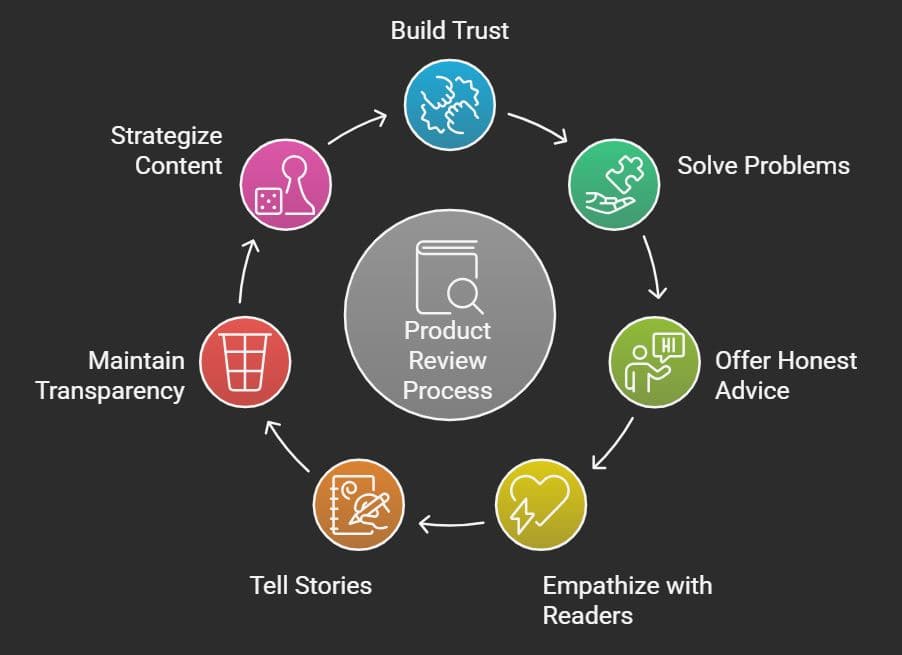
Using Visual Aids For Clarity
Supplement prose with:
- Tables for side-by-side comparisons
- Lists to summarize features or shortcomings
- Photos and charts (where possible)
These elements enhance credibility and make complex information digestible.
Credit: blogsepaise.com
Conveying Firsthand Experience Authentically
Nothing builds trust like genuine, firsthand experience. Readers want to know: Did you actually drive the car? What did you notice that specs alone can’t reveal?
Sharing Real-world Impressions
Describe how the vehicle feels in common scenarios:
- City commuting
- Highway cruising
- Tight parking
- Rough roads
Include sensory details: steering feedback, seat comfort, cabin noise, visibility, control responsiveness.
Example: First-person Test Drive
In my experience with the 2026 Toyota Camry, the steering felt precise during city maneuvers, but road noise became noticeable above 65 mph. The driver’s seat offered ample support for a two-hour trip, reducing fatigue.
Being Honest About Limitations
Admit when test conditions were limited (e. g. , no opportunity for off-road testing, or only tested in dry weather). This candor enhances credibility.
Comparing To Previous Generations Or Rivals
Readers value context. When possible, compare the reviewed model to its predecessor or to key competitors.
Example:
The 2026 Accord’s infotainment is much more intuitive than last year’s model and quicker to respond than the Camry’s system.
Ensuring Balance: Pros, Cons, And Transparency
A car review that highlights only positives (or only negatives) quickly loses credibility. Balanced reporting is critical.
Identifying Strengths And Weaknesses
For every section, ask:
- What stands out?
- What could be better?
- Who might this car not suit?
Example List:
Pros:
- Spacious rear seating
- Smooth ride quality
- User-friendly infotainment
Cons:
- Limited rear visibility
- Higher price than some rivals
Disclosing Potential Conflicts Of Interest
If you received a press loaner, attended a manufacturer event, or were compensated in any way, disclose this clearly at the start or end of the review.
Example Disclosure:
This test vehicle was provided by Honda for a one-week evaluation. No compensation was received, and all opinions are my own.
Pro Tip:
Avoid hyperbolic language (“best ever,” “flawless,” “perfect for everyone”). Instead, back up praise or criticism with specific observations.
Highlighting Who Each Car Is For
No car is ideal for everyone. Clearly state who will benefit most from the vehicle, and who might be better off with a competitor.
Example:
The Camry Hybrid is ideal for commuters seeking excellent fuel economy, but spirited drivers may find its handling uninspiring.
Using Data And Comparisons Effectively
Comparisons contextualize your review and help readers understand where a vehicle stands in its segment.
Types Of Comparisons
- Direct rivals: Similar price, size, or powertrain
- Previous generation: Improvement or regression?
- Segment averages: Is it a class leader in any area?
Example: Feature Comparison Table
| Feature | Honda Accord | Toyota Camry | Hyundai Sonata |
|---|---|---|---|
| Apple CarPlay/Android Auto | Standard | Standard | Standard |
| Adaptive Cruise Control | Standard | Optional | Optional |
| Wireless Charging | Optional | Optional | Standard |
| Blind-Spot Monitoring | Standard | Optional | Optional |
Offering Actionable Purchase Advice
After comparisons, guide the reader toward a decision:
- Recommend trims or options for best value
- Advise on alternatives if the vehicle doesn’t suit all needs
Example:
If you value advanced safety tech, the Accord’s standard suite offers more than the base Camry or Sonata.
Optimizing Car Reviews For Seo And Readability
A trustworthy review must also reach its intended audience. SEO best practices ensure your review is discoverable, while readability keeps readers engaged.
Keyword Research And Integration
Identify target keywords (e.g., “2026 Honda Accord review,” “mid-size sedan comparison”). Integrate these naturally into:
- Title
- Subheadings
- Introduction and conclusion
- Image alt text (if images are included)
Warning: Avoid keyword stuffing. Prioritize clear, readable sentences.
Structuring For Skimmability
Most readers scan before committing. Use:
- Descriptive headings for each section
- Bullet points for lists
- Short paragraphs (2, 4 sentences)
- Tables for complex data
Linking To Authoritative Sources
Cite reputable sources when referencing data, safety ratings, or industry trends. For example, link to the IIHS safety ratings or EPA fuel economy data.
Example External Link:
For more on vehicle safety ratings, visit the Insurance Institute for Highway Safety (IIHS).
Encouraging Reader Engagement
Invite readers to share their experiences or ask questions in the comments. This fosters a sense of community and trust.
Real-world Examples And Case Studies
Examining well-executed reviews can illustrate what works, and what doesn’t.
Example 1: Honest Test Drive With Context
A reviewer at Car and Driver praised the 2026 Accord’s ride comfort but noted the hybrid’s acceleration lagged behind the Toyota Camry. By providing both positive and negative feedback, the review felt balanced and authentic.
Example 2: Transparent Disclosure
On MotorTrend, a journalist disclosed that the test car was part of a manufacturer event, and explained how limited test time might affect impressions. Readers appreciated the transparency, as reflected in the comment section.
Example 3: Data-driven Comparison
A review on Edmunds included a table comparing the Honda Accord’s standard features to those of the Hyundai Sonata and Toyota Camry. This made it easy for readers to see the Accord’s value proposition at a glance.
Frequently Asked Questions
What Makes A Car Review Trustworthy?
A trustworthy car review combines firsthand experience, transparent disclosure of test conditions, and verifiable data from reputable sources. It balances positive and negative aspects, avoids exaggeration, and clearly distinguishes between objective facts and subjective opinions. Consistency in structure and the use of transparent comparisons further enhance credibility.
How Important Is Firsthand Experience In A Review?
Firsthand experience is crucial because it provides insights that specifications alone cannot. Test driving the vehicle allows the reviewer to comment on real-world usability, comfort, and quirks, which are often overlooked in manufacturer materials. Readers value anecdotes and direct observations that help them imagine ownership scenarios.
Should I Include Technical Jargon In My Car Review?
Use technical jargon sparingly and only when necessary. When you do include it, provide clear explanations or context for general readers. For instance, if you mention a “continuously variable transmission (CVT),” briefly explain how it differs from a traditional automatic. This makes the review accessible to a broader audience without sacrificing detail.
How Can I Compare Cars Fairly In A Review?
To compare cars fairly, ensure you use consistent criteria, such as price, performance, features, and safety ratings, across all models. Reference authoritative data sources and clearly explain your testing methodology. Present differences in a table for easy reference, and avoid bias by acknowledging areas where each model excels or falls short.
What Disclosures Are Necessary In A Car Review?
Disclose any potential conflicts of interest, such as receiving a test vehicle from a manufacturer, attending sponsored events, or receiving compensation. Transparency about relationships and review conditions reassures readers that your opinions are unbiased and based on genuine experience.
Writing a car review that readers truly trust requires a blend of authentic experience, reliable data, and transparent communication. By consistently applying a clear structure, substantiating every claim, and acknowledging both strengths and weaknesses, you set yourself apart as a credible voice in the crowded automotive space. Remember, trust is earned over time, review by review. With these strategies, your car reviews will not only inform but empower readers to make confident decisions.