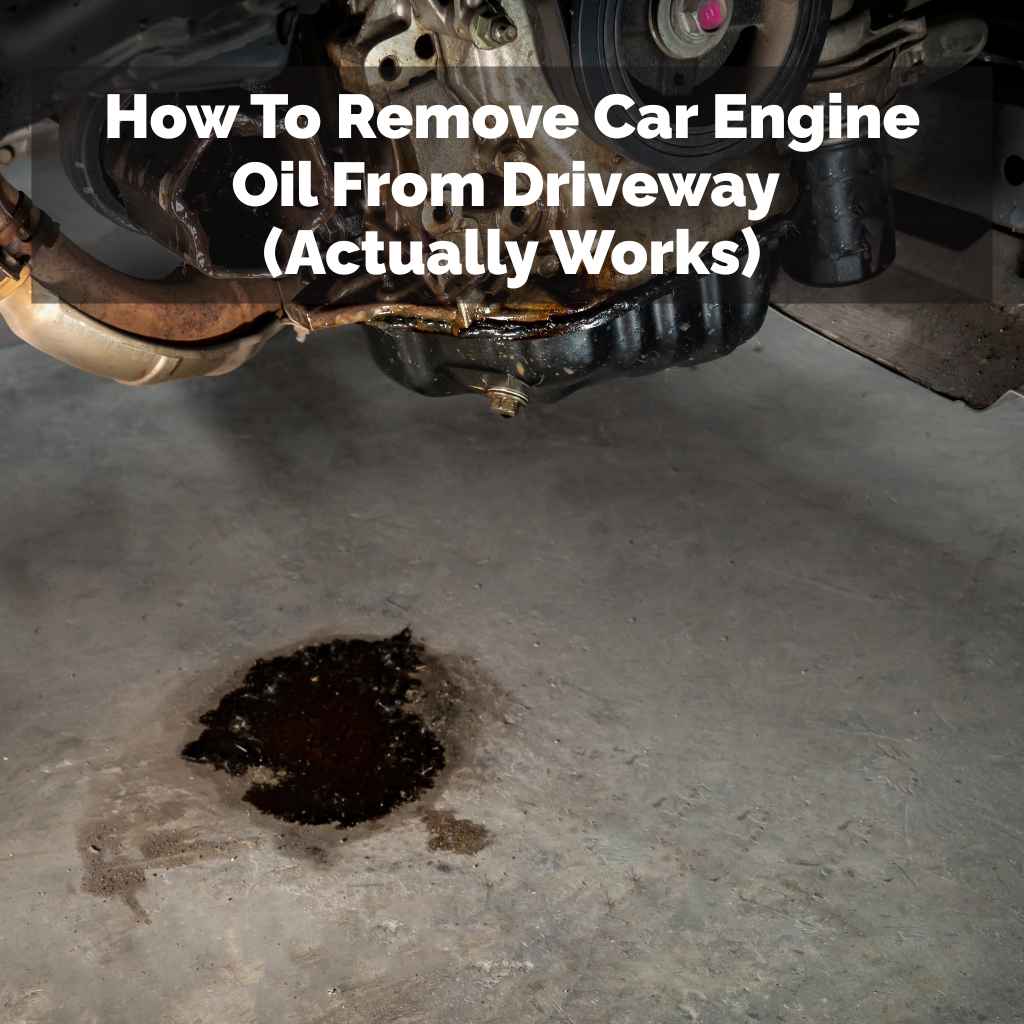
Remove Dried Oil From a Driveway: Degreaser and Poultice
Removing car engine oil from a concrete driveway is possible with the right approach. Simple household items and a bit of patience can lift even tough stains. Key steps involve absorbing fresh oil, using a degreaser, and sometimes a poultice for older marks.
Proper cleaning prevents permanent damage and keeps your driveway looking good.
Best Driveway Oil Stain Remover Pick
CHOMP! Concrete Oil Stain Remover (32oz) – $17.97
A poultice-style remover matching this guide’s approach for lifting older, set-in oil marks out of porous concrete.
- Best for: pulling out oil that has already soaked into the concrete
- Why we picked it: poultice action draws oil out of porous concrete rather than just scrubbing the surface
- Main drawback: takes longer to work than a quick-scrub degreaser on fresh spills
Compare more driveway oil stain remover options
 Option 1 Overnight Poultice Stain Remover – $16.76
|  Option 2 Oil Eater Original Degreaser (1gal) – $12.99
|  Option 3 Prosoco Oil & Grease Stain Remover (1qt) – $27.34
|
As an Amazon Associate we earn from qualifying purchases.
Understanding Oil Stains on Concrete
Engine oil is a thick, greasy substance. When it hits your driveway, it sinks into the porous concrete. This is why it’s so hard to get out.
Concrete has tiny holes, like a sponge. The oil seeps deep into these pores. The longer it sits, the deeper it goes.
This makes it a real challenge to remove completely.
Different types of oil can leave different marks. Motor oil is common. So is transmission fluid or power steering fluid.
They all have similar sticky properties. They also tend to be dark in color. This makes them stand out against light gray concrete.
Sunlight can also bake the oil in. This makes the stain even tougher.
My Own Driveway Oil Stain Saga
I remember it clearly. It was a Saturday morning, and I was doing a routine oil change on my old sedan. The sun was just starting to warm things up.
I had the drain pan positioned just right, or so I thought. As I loosened the oil filter, a spurt of hot, black oil shot out. It missed the pan completely and landed with a dark splat right on my newly poured driveway.
My heart sank. It was a big, ugly mark.
My first thought was panic. I grabbed a rag and tried to wipe it up. That just spread the oil into a bigger, thinner mess.
Then I tried dish soap. It helped a little, but the dark shadow remained. I felt so annoyed with myself.
This driveway was my pride and joy, and now it had this permanent-looking scar. I spent the rest of the day feeling a bit defeated, researching how to get rid of it.
The Best Way to Tackle Fresh Oil Spills
The very first thing you should do if you spot a fresh oil spill is to act fast. Speed is your friend here. You want to soak up as much oil as possible before it sinks in.
Think of it like cleaning up spilled milk. The quicker you grab a towel, the less mess you make.
You don’t need fancy cleaners for this part. Simple household items work wonders. Kitty litter is a classic for a reason.
It’s super absorbent. Just pour a thick layer of clay-based kitty litter right over the fresh spill. Let it sit for a few hours, or even overnight.
The litter will draw the oil up and out of the concrete’s surface.
Quick Absorbents for Fresh Spills
What to use:
- Clay-based kitty litter (best choice)
- Cornstarch
- Baking soda
- Sawdust (if you have it handy)
How to use:
Cover the spill completely. Let it sit for at least 4 hours. Then sweep it up and dispose of it properly.
You might need to repeat this if the spill was large.
After the absorbent has done its job, sweep up the mess. You’ll notice the stain is much lighter. It might even be gone.
But usually, there’s still a bit of color left. This is when you move on to cleaning it out more deeply.
Dealing with Set-In Oil Stains
Now, what about those older stains? The ones that have been there for weeks, months, or even years? These are tougher.
The oil has really bonded with the concrete. But don’t give up hope. There are still effective ways to tackle them.
You just need the right cleaner and a little bit of elbow grease.
One of the most common and effective cleaners for oil stains is a strong degreaser. You can find these at auto parts stores or home improvement centers. Look for a concrete degreaser.
They are made to break down grease and oil effectively. Some people also have success with heavy-duty liquid dish soap. The kind used for washing greasy pans works well.
Choosing the Right Degreaser
When you’re picking out a degreaser, read the label. Some are for general cleaning. Others are specifically for concrete.
Make sure it says it can handle oil or grease. You also want to check if it’s safe for concrete. Most are, but it’s good to be sure.
Some strong chemicals could etch the concrete.
You might also consider a “poultice” method for very old or deep stains. A poultice is like a paste. It draws the stain out of the concrete.
It’s a bit more involved but can be very powerful. We’ll talk more about that later.
The Dish Soap Method (Simple & Effective)
Let’s start with a simple method that uses something most people already have in their kitchen: dish soap. This is great for moderate stains that aren’t too old. It’s easy to try and doesn’t involve buying special products.
First, wet the stained area. You want it damp, not soaking. Then, pour a generous amount of liquid dish soap directly onto the stain.
Use a stiff brush, like a scrub brush or a deck brush, to really work the soap into the stain. Scrub in circles. Make sure you’re getting down into the concrete’s texture.
Let the soapy mixture sit for about 15 to 30 minutes. This gives the soap time to break down the oil. After it has sat, scrub it again.
Then, rinse the area thoroughly with a hose. You might need to repeat this process a few times. If the stain starts to fade, you’re on the right track.
Sometimes, just a few rounds of this are enough to make a big difference.
Dish Soap Scrub Breakdown
What you’ll need:
- Liquid dish soap (like Dawn)
- Stiff scrub brush
- Water
- Hose for rinsing
Steps:
- Wet the stain.
- Apply dish soap generously.
- Scrub well.
- Let it sit for 15-30 mins.
- Scrub again.
- Rinse thoroughly.
- Repeat if needed.
I’ve had success with this method on lighter stains. It’s satisfying to see the dark mark start to lighten up. It makes you feel like you’re winning the battle against the oil.
The key is that persistent scrubbing and letting the soap do its work.
Using Commercial Concrete Degreasers
When dish soap isn’t cutting it, it’s time for a commercial concrete degreaser. These products are made specifically for this kind of problem. They contain stronger chemicals designed to break down tough grease and oil.
Always follow the instructions on the product label. This is very important. These cleaners can be strong.
You usually apply them to the dry stain. Let them sit for the recommended time. Then you scrub and rinse.
Some may require a pressure washer for best results, but a strong hose spray can often work too.
When using these, wear gloves and eye protection. Work in a well-ventilated area. You don’t want to breathe in too many fumes.
Also, be mindful of runoff. If you’re near plants or a storm drain, try to contain the cleaner.
A popular type of degreaser is an alkaline cleaner. These have a high pH level. They are good at breaking down oils and greases.
Another type is a solvent-based cleaner. These work by dissolving the oil. Both can be effective.
I used a citrus-based degreaser once on a tough spot. It smelled much nicer than some of the harsher chemical ones. It still required a good scrub.
But the stain did lift. It took a couple of applications, but the result was worth it. The concrete looked so much cleaner without that dark shadow.
The Poultice Method for Deep Stains
For those really stubborn, deep-set oil stains, a poultice can be your secret weapon. A poultice is a paste that you apply to the stain. It contains an absorbent material and a cleaning agent.
The paste draws the oil out of the concrete as it dries.
You can make your own poultice. A common mix uses an absorbent material like diatomaceous earth, talc powder, or even sawdust. You then mix this with a solvent or strong cleaner.
Acetone, mineral spirits, or a strong liquid degreaser can work as the cleaning agent.
Mix your absorbent and cleaning agent to create a thick paste. It should be like peanut butter. Spread this paste over the oil stain.
Make sure it’s about a quarter to half an inch thick. Cover the entire stained area. Then, cover the paste with plastic wrap.
Tape down the edges of the plastic wrap. This keeps the paste moist and allows it to work longer.
Let the poultice sit for at least 24 hours. As it dries, it pulls the oil up. When it’s completely dry, remove the plastic wrap.
You’ll see the paste has become hard. Scrape it up. You might need to sweep or vacuum any dry residue.
Then rinse the area. You should see a significant improvement.
DIY Poultice Ingredients
Absorbent Base:
- Diatomaceous Earth
- Talcum Powder
- Sawdust
- Kaolin Clay
Cleaning Agent (use carefully):
- Acetone
- Mineral Spirits
- Strong Liquid Degreaser
- Trisodium Phosphate (TSP – use with caution)
Instructions: Mix to a thick paste. Apply 1/4-1/2 inch thick. Cover with plastic wrap, taped edges.
Let dry for 24+ hours. Scrape and rinse.
I tried this on a stain that had been there for over a year. It was from a leaky old motorcycle. I used diatomaceous earth and acetone.
It was a bit messy, but wow. The stain was almost completely gone afterward. It’s definitely a method for the tougher jobs.
Remember to use solvents in a well-ventilated area.
Other Cleaning Agents to Consider
Beyond the common methods, there are a few other things people try. Some have success with oven cleaner. It’s designed to break down grease, so it makes sense.
Apply it, let it sit, scrub, and rinse. Always test it on an inconspicuous spot first.
Trisodium Phosphate, or TSP, is another strong cleaner. It’s very effective at cutting through grease. However, it’s a potent chemical.
You need to use it with extreme caution. Wear heavy gloves, eye protection, and old clothes. It can be harsh on skin and the environment.
It’s often recommended to use a TSP substitute if you can find one.
Baking soda can also be used. It’s a mild abrasive and can help lift lighter stains. Make a paste with water.
Apply it to the stain, let it sit, scrub, and rinse. It’s a gentler option if you’re unsure about stronger chemicals.
What about pressure washing? A pressure washer can be helpful, especially after you’ve applied a cleaner. The high-pressure water helps blast away the loosened oil and grime.
Be careful not to use too much pressure on older or weaker concrete, as it can cause damage.
The Role of Time and Patience
It’s important to remember that removing oil stains isn’t always a one-and-done job. Sometimes it takes multiple attempts. The key is not to get discouraged.
If the first cleaning doesn’t get rid of the stain completely, try again. You might need to use a different method or repeat the same one.
I’ve found that for really bad stains, it’s a process. You might lighten it significantly with one method, then follow up with another. Think of it like peeling an onion.
You remove one layer at a time. Each attempt gets you closer to a cleaner driveway.
The weather can also play a role. Sometimes, the sun helps to dry out the concrete and might make the stain less visible over time. But it can also bake the oil in more.
So, active cleaning is usually more effective than waiting.
Preventing Future Oil Stains
The best way to deal with oil stains is to avoid them in the first place. This might sound obvious, but it’s worth thinking about. Regular car maintenance can prevent leaks.
Keep an eye on your car’s fluids. Check for drips under your car after it’s been parked for a while. If you notice any, try to find the source and fix it.
Fixing a small leak early can save you a lot of cleaning later.
Stain Prevention Tips
Regular Maintenance:
- Check oil levels and look for leaks.
- Inspect hoses and seals for wear.
- Fix any leaks promptly.
Protective Measures:
- Use drip pans when performing car work.
- Consider driveway sealants.
- Park on mats if you suspect leaks.
Another preventive measure is to seal your driveway. A good quality concrete sealer creates a barrier. This makes the concrete less porous.
Spills then sit on the surface longer. This gives you more time to wipe them up before they soak in. There are various sealers available, from simple acrylics to more durable silicones.
If you’re doing a lot of car work at home, you might even consider laying down a tarp or old blankets under the car. This gives you an extra layer of protection. It’s a small effort that can save you big headaches down the line.
What to Do If Stains Persist
Sometimes, despite your best efforts, oil stains can be very stubborn. Concrete is porous, and old stains can go deep. If you’ve tried several methods and the stain is still visible, you have a few more options.
One option is to use a dedicated concrete cleaner that might be more powerful. Some companies specialize in driveway cleaning products. You might find something stronger than what’s available at the general hardware store.
Always read reviews and understand the product before buying.
Another approach is to consider staining or painting the concrete. This is more of a cosmetic fix. You could use a concrete stain to color the entire driveway.
This would mask the individual spots. Or you could paint the driveway with a good quality concrete paint. This gives a fresh, uniform look.
For very severe cases, especially on a driveway that’s already in rough shape, you might even think about resurfacing. This involves applying a thin layer of concrete over the existing surface. It effectively covers up all imperfections.
This is usually a job for a professional.
When It’s Normal and When to Worry
A few small, light oil spots on a driveway can happen. Especially if you own a car or two. They are a normal sign of automotive use.
Don’t beat yourself up over them. Most people don’t have a perfectly spotless driveway after a few years.
You should start to worry if the stains are very large, frequent, or constantly re-appearing after cleaning. This could indicate a significant leak from your vehicle that needs immediate attention. A persistent, large leak can damage your car’s engine or transmission.
Also, if you notice the concrete itself starting to crumble or pit around the stain, that might be a sign of damage. Some harsh chemicals can weaken concrete over time. Or, the oil could be reacting with certain additives in the concrete.
In such cases, consulting a concrete professional might be wise.
It’s also a good idea to consider the environmental impact. Large amounts of oil washed into storm drains can pollute local waterways. So, cleaning up effectively is good for your property and the environment.
Quick Tips for Easier Cleaning
Here are some quick tips to make your oil stain removal easier:
- Act fast: The sooner you treat a spill, the easier it is to remove.
- Test first: Always test cleaning products on a small, hidden area.
- Use the right tools: A stiff brush is essential for scrubbing.
- Protect yourself: Wear gloves and eye protection when using chemicals.
- Be patient: Some stains require multiple treatments.
- Ventilate: Use strong solvents in well-ventilated areas.
- Consider sealing: A sealed driveway is easier to clean.
Frequently Asked Questions About Driveway Oil Stains
How do I remove a fresh car oil stain from concrete?
For fresh oil stains, immediately cover the spill with an absorbent material like clay-based kitty litter, cornstarch, or baking soda. Let it sit for several hours to soak up as much oil as possible. Sweep it up and then proceed with cleaning the remaining residue.
What is the best cleaner for old oil stains on a driveway?
Old oil stains are best treated with a strong concrete degreaser. You can find these at auto parts or home improvement stores. For very deep stains, a poultice made of absorbent material and a solvent like acetone can also be very effective.
Can I use dish soap to clean oil stains?
Yes, liquid dish soap, especially a grease-cutting one like Dawn, can be effective for lighter or moderate oil stains. Wet the stain, apply soap, scrub with a stiff brush, let it sit, and then rinse thoroughly. You may need to repeat this process.
How long should I let a cleaner or poultice sit on the stain?
For dish soap or degreasers, letting it sit for 15-30 minutes is usually good. For a poultice, it needs to dry completely, which often takes at least 24 hours. Always follow the specific product’s instructions.
Will pressure washing remove oil stains?
Pressure washing can help blast away loosened oil and grime after a cleaner has been applied. However, it may not remove deep stains on its own. Use caution with high pressure, as it can damage older concrete.
How can I prevent oil stains on my driveway in the future?
Regularly maintain your vehicle to prevent leaks. Use drip pans when working on cars. Consider applying a concrete sealer to your driveway, as this makes it less porous and easier to clean. Parking on mats can also help catch drips.
Final Thoughts on a Cleaner Driveway
Dealing with oil stains on your driveway can be a real headache. But as you can see, there are several effective ways to tackle them. From simple dish soap to more involved poultice methods, you have options.
The key is to act quickly when possible and to be persistent with your cleaning efforts. With a little effort and the right approach, you can significantly improve the look of your driveway. It’s satisfying to see those dark marks fade away.
Your home will look much better for it.