How to Fix Auto Hold Malfunction on Ford Focus (Step-by-Step Guide)
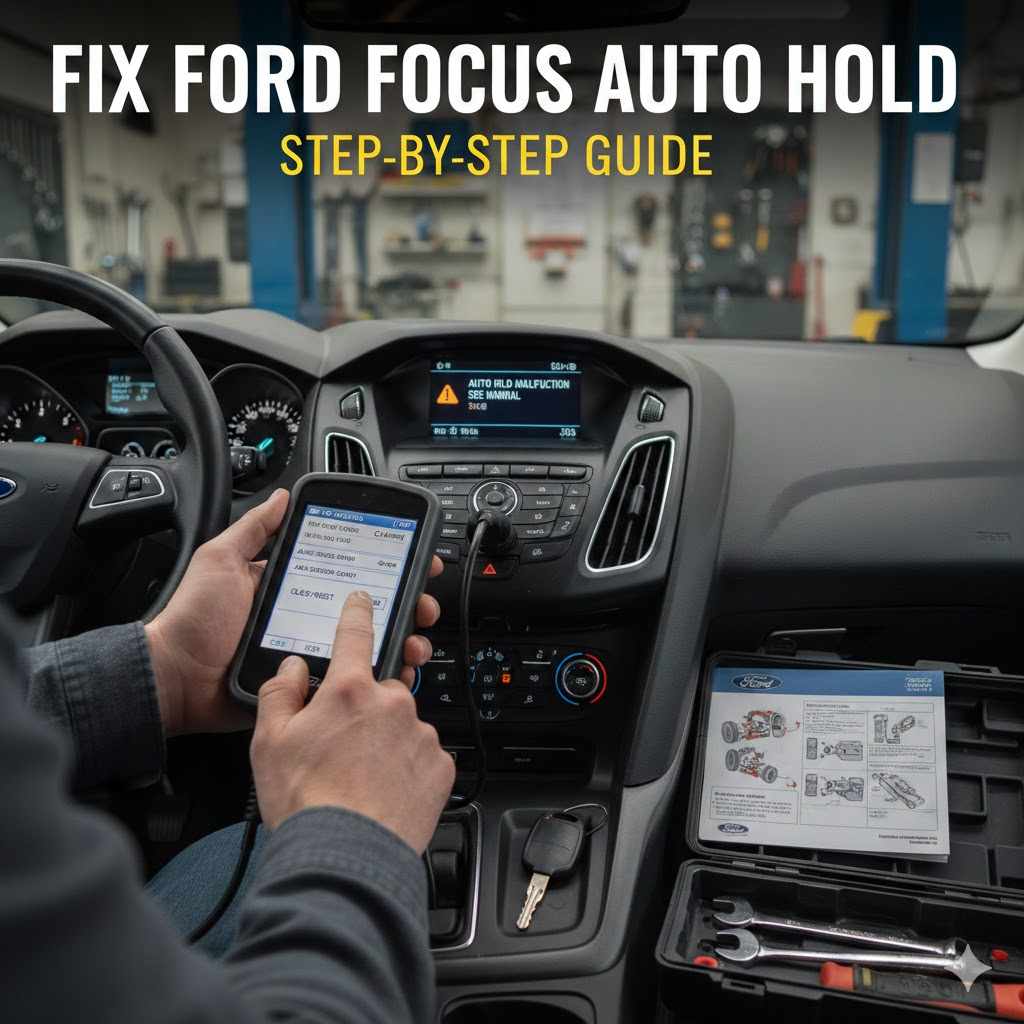
Sometimes, your Ford Focus’s Auto Hold feature might not work right. It can be a bit confusing, especially if you’re not used to car fixes. This is a common issue that pops up for many drivers. But don’t worry, it’s usually something you can sort out with a few simple steps. This guide will walk you through it clearly.
Troubleshooting Auto Hold Malfunction on Ford Focus
When the Auto Hold system in your Ford Focus acts up, it can cause frustration. This system is designed to keep your car stopped automatically when you’re on a hill or in traffic, making driving much easier. A malfunction means it might not engage, disengage unexpectedly, or show an error light on your dashboard. For beginners, figuring out the exact cause can seem like a big task.
Many factors can contribute, from simple sensor issues to more complex electronic problems. This section will help you understand the common reasons for this problem. We will break down the troubleshooting process into easy-to-follow steps.
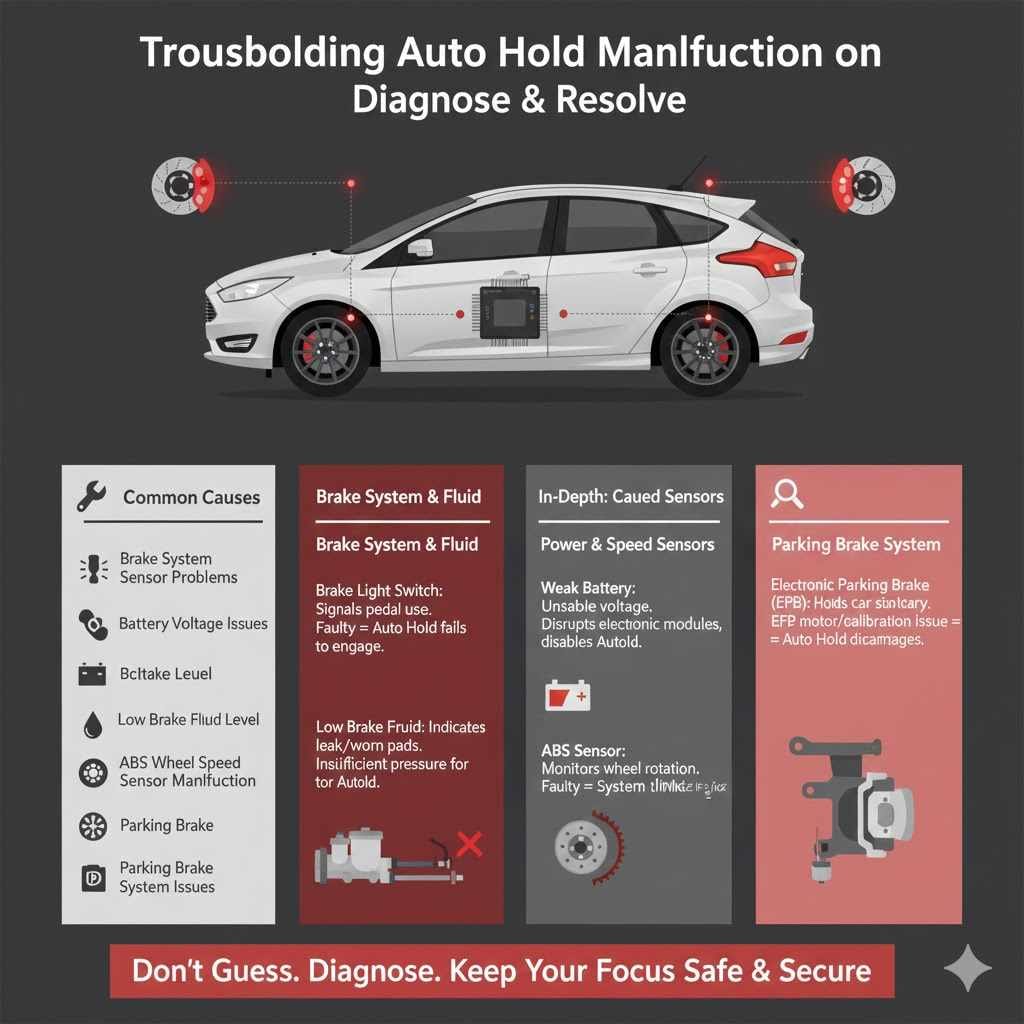
Common Causes of Auto Hold Issues
Several things can make your Auto Hold system stop working correctly. It’s often linked to other vehicle systems that work together. Understanding these common culprits is the first step to getting your Auto Hold back in order.
Brake System Sensor Problems
The Auto Hold feature relies heavily on sensors within the brake system to know when to engage and disengage. These sensors communicate with the car’s computer to manage the braking pressure. If a brake light switch fails, for instance, the system may not receive the correct signal. This can prevent Auto Hold from activating or cause it to release suddenly.
What is a Brake Light Switch?
The brake light switch is a small but vital component located near the brake pedal. When you press the brake pedal, this switch closes an electrical circuit, turning on your brake lights. It also sends a signal to other systems, including the Auto Hold module.
How it Affects Auto Hold
If the brake light switch is faulty or misaligned, the Auto Hold system might not detect that you’re applying the brakes. This can lead to it not engaging when it should. It’s a common point of failure because it experiences constant use.
Battery Voltage Issues
Your car’s battery plays a crucial role in the proper functioning of all its electronic systems, including Auto Hold. If the battery is weak or old, it might not provide enough consistent power. This can cause various electronic modules to behave erratically.
The Importance of Battery Health
Modern cars are packed with electronics that require stable voltage to operate correctly. A low battery voltage can trigger error messages and disable features like Auto Hold. It can be a primary reason for seemingly random electronic glitches.
Signs of Battery Problems
Besides Auto Hold issues, you might notice other signs. These include difficulty starting the car, dimming interior lights, or warning lights on the dashboard that come and go. A failing battery can affect the entire car’s electrical system.
Low Brake Fluid Level
The Auto Hold system is directly linked to your car’s hydraulic braking system. A low level of brake fluid can indicate a leak or that your brake pads are heavily worn. Either way, it affects the braking system’s ability to respond properly.
How Brake Fluid Works
Brake fluid is an incompressible liquid that transmits the force applied to the brake pedal to the brake pads. When you press the pedal, the fluid pushes the pads against the rotors, slowing or stopping the car.
Impact on Auto Hold
The Auto Hold system monitors brake pressure. If the brake fluid level is too low, the system might not be able to generate sufficient pressure, or it might misinterpret pressure readings. This can lead to Auto Hold failure. It’s also a safety concern for your regular braking.
ABS Wheel Speed Sensor Malfunction
Your Anti-lock Braking System (ABS) uses wheel speed sensors to monitor how fast each wheel is rotating. This information is critical for many vehicle safety systems, including Auto Hold. If one of these sensors is dirty, damaged, or faulty, it can disrupt the data sent to the car’s computer.
Understanding ABS Sensors
ABS wheel speed sensors are small devices usually mounted near each wheel hub. They detect the rotation of a toothed ring attached to the axle or brake rotor. This data helps the ABS module prevent wheel lock-up during braking.
Connection to Auto Hold
The Auto Hold system uses wheel speed data to confirm that the vehicle is stationary before engaging. If a wheel speed sensor is giving incorrect readings, the system might believe the car is still moving or not properly stopped. This will cause the Auto Hold to disengage or not engage at all.
Parking Brake System Issues
Many modern vehicles, including the Ford Focus with Auto Hold, use an electronic parking brake (EPB). The EPB system is integrated with the Auto Hold function. Any problem with the EPB motor, calibration, or wiring can directly affect Auto Hold.
What is an Electronic Parking Brake
An EPB
How EPB Problems Affect Auto Hold
The Auto Hold system relies on the EPB to maintain the vehicle’s stationary position. If the EPB is not functioning correctly, perhaps due to a motor failure or calibration error, the Auto Hold will not be able to hold the car in place. This will cause it to disengage.
Diagnosing the Auto Hold Malfunction
Before you can fix the Auto Hold malfunction on your Ford Focus, you need to figure out what’s causing it. This involves a bit of detective work. You’ll often need to check for warning lights and listen for any unusual sounds.
Checking for Dashboard Warning Lights
Your car’s dashboard is a window into its health. When a system isn’t working right, it usually flashes a warning light. For Auto Hold issues, you might see specific symbols.
The Auto Hold Indicator Light
This light typically looks like a steering wheel with a circle around it or an ‘A’ within a circle, often accompanied by the word “HOLD”. If this light is illuminated, flashing, or accompanied by a message on the instrument cluster, it indicates a problem with the Auto Hold system.
What a Solid Light Means
A solid Auto Hold light usually means the system is unavailable due to a detected fault. It could be something as simple as a door being open or a more complex issue like a sensor failure.
What a Flashing Light Means
A flashing Auto Hold light often signifies a more immediate problem or an active fault. It means the system has detected an error and has likely disengaged or is unable to engage.
Related Warning Lights
Don’t ignore other warning lights. Issues with the ABS, traction control, or brake system can also impact Auto Hold.
ABS and Traction Control Lights
If your ABS or traction control lights are on, it means there’s a problem with those systems. Since Auto Hold relies on data from these systems, a fault here will disable Auto Hold.
Brake System Warning Light
A general brake system warning light (often red and shaped like an exclamation mark in a circle) means there’s a serious issue with your brakes. This could be low brake fluid, a parking brake issue, or a problem detected by the ABS. Auto Hold will be disabled for safety.
Using an OBD-II Scanner
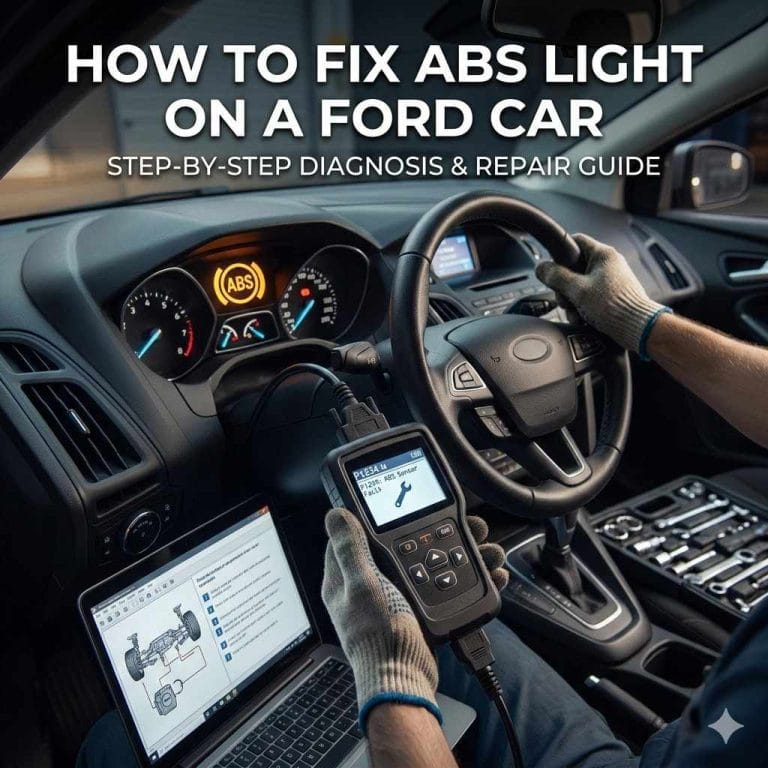
An OBD-II (On-Board Diagnostics II) scanner can provide more specific information about what’s wrong. These devices plug into a port usually located under the dashboard and can read error codes stored in your car’s computer.
What is an OBD-II Scanner?
An OBD-II scanner is a tool that communicates with your car’s Engine Control Unit (ECU) and other modules. It can read diagnostic trouble codes (DTCs) that indicate specific faults within various vehicle systems.
How to Use It
Locate the OBD-II port in your car, typically near the steering column. Plug the scanner into the port and follow the device’s instructions to read the codes. Many scanners will provide a description of the code.
Interpreting Diagnostic Trouble Codes (DTCs)
DTCs are codes that point to the specific system or component that is malfunctioning. For example, a code starting with ‘C’ relates to the chassis systems, which would include Auto Hold. Codes like C100A, C100B, or others related to the ABS or EPB system are common.
Example DTCs and Their Meaning
If your scanner shows a code like P0500 (Vehicle Speed Sensor Malfunction) or C1233 (Wheel Speed Sensor Circuit Malfunction), it directly relates to the wheel speed sensors discussed earlier. Codes related to the Electronic Parking Brake (EPB) system, such as those starting with U0
When to Seek Professional Help
If you’re uncomfortable interpreting codes or if the codes suggest a complex issue, it’s best to consult a qualified mechanic. They have the tools and expertise to diagnose and repair more intricate problems.
Checking Basic Components
Sometimes, the fix is surprisingly simple. Before diving into complex diagnostics, it’s worth checking a few basic things yourself.
Ensuring Doors and Hood Are Closed
Some vehicle systems, including Auto Hold, will not engage if certain doors or the hood are not properly closed. This is a safety feature. Always double-check that all doors are shut securely.
Safety Interlocks Explained
Cars have sensors that detect if doors, trunk, or hood are open. This prevents accidental engagement of systems that could be dangerous if a door is open, like Auto Hold.
Simple Checklist
A quick walk-around checking all doors, the trunk, and the hood is a good first step. Ensure all latches have clicked firmly.
Checking Seatbelt Status
The driver’s seatbelt must be fastened for Auto Hold to engage. This is another safety measure. If the seatbelt is not buckled, the Auto Hold system will not activate.
Driver Presence and Safety
Vehicle systems often monitor driver presence and engagement through seatbelt sensors. This ensures the driver is in control and aware when features like Auto Hold are active.
Quick Verification
Make sure your seatbelt is properly clicked in before attempting to use Auto Hold.
How to Fix Auto Hold Malfunction on Ford Focus
Once you’ve diagnosed the likely cause, you can proceed with the repair. The steps vary depending on the specific issue, ranging from simple resets to replacing parts.
Performing a System Reset
Sometimes, the Auto Hold system might just need a simple reset to clear temporary glitches. This is often the easiest fix.
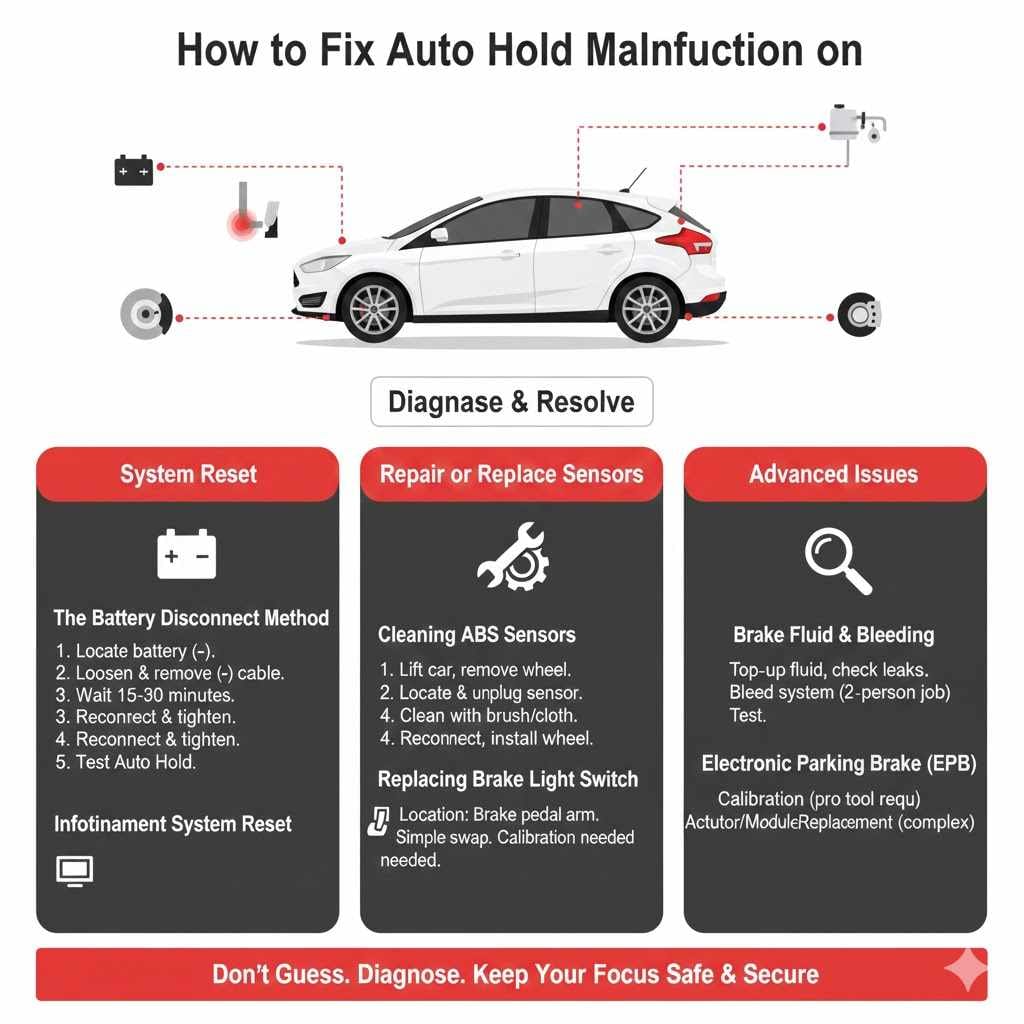
The Battery Disconnect Method
One common way to reset electronic systems is by disconnecting the car battery for a short period. This can clear temporary electronic faults in various modules.
Step-by-Step Battery Reset
1. Locate your car battery, usually under the hood.
2. Using a wrench (typically 10mm), loosen the nut on the negative (-) terminal clamp.
3. Remove the negative cable from the battery post.
4. Wait for about 15-30 minutes. This allows the car’s computer modules to discharge and reset.
5. Reconnect the negative cable to the battery post and tighten the nut.
6. Start your car and check if the Auto Hold system is functioning correctly.
Important Precautions
When disconnecting the battery, ensure the car’s ignition is off. You might need to re-enter your radio presets and clock settings after reconnecting. Some systems may require re-calibration after a battery disconnect.
Resetting Through the Infotainment System
Some Ford Focus models allow you to reset certain vehicle settings through the infotainment screen. Check your owner’s manual for specific instructions related to system resets.
Accessing Vehicle Settings
Navigate through your infotainment system menu. Look for options like “Vehicle Settings,” “Driver Assistance,” or “System Reset.”
Resetting Auto Hold Preferences
There might be an option to reset Auto Hold to its default settings. This can sometimes clear minor software conflicts.
Repairing or Replacing Faulty Sensors
If your diagnosis points to a faulty sensor, it will need to be addressed. This might involve cleaning, recalibrating, or replacing the component.
Cleaning ABS Wheel Speed Sensors
Wheel speed sensors can become covered in dirt, brake dust, or road salt, which can interfere with their readings.
Procedure for Cleaning
1. Safely lift the vehicle and remove the relevant wheel.
2. Locate the ABS wheel speed sensor and its wiring.
3. Carefully unplug the sensor connector.
4. Inspect the sensor for dirt or damage.
5. Gently clean the sensor tip with a soft brush or cloth and a mild cleaner if necessary.
6. Ensure the sensor mounting area is also clean.
7. Reconnect the sensor and reinstall the wheel.
8. Test the Auto Hold system.
When to Replace
If cleaning doesn’t resolve the issue, or if the sensor shows visible damage (cracks, broken wires), it will need to be replaced.
Replacing the Brake Light Switch
A faulty brake light switch is a relatively common issue that can disable Auto Hold.
Location and Replacement
The brake light switch is typically located at the top of the brake pedal arm. It’s a small plastic component that’s usually held in place by a clip or screw. Replacement often involves unplugging the old switch, removing it, and installing the new one.
Calibration After Replacement
In some cases, the new switch might need a brief calibration. This is often done by pressing the brake pedal a few times. Consult your owner’s manual or a professional if unsure.
Replacing Brake Fluid and Bleeding the System
If the brake fluid level is low, it’s crucial to top it up and check for leaks. If the system needs bleeding, it involves removing air bubbles.
Topping Up and Checking for Leaks
Open the brake fluid reservoir under the hood. If it’s low, top it up with the correct type of brake fluid specified in your owner’s manual. Inspect brake lines for any signs of leaks.
Brake Bleeding Process
Brake bleeding requires two people or a specialized vacuum or pressure bleeder. It involves opening a bleeder valve at each wheel while someone else presses the brake pedal to flush out air and old fluid.
Addressing Electronic Parking Brake (EPB) Issues
Problems with the EPB are directly tied to Auto Hold. This often requires professional attention.
EPB Calibration
The EPB system needs to be properly calibrated to work with Auto Hold. If the calibration is off, it can lead to engagement or disengagement issues.
Professional Calibration Tools
EPB calibration usually requires specialized diagnostic tools that can communicate with the EPB module. This is typically a job for a mechanic. They can perform a procedure to reset the EPB’s home position and operating parameters.
How Calibration Works
Calibration ensures the system knows the fully released and fully applied positions of the parking brake. This allows the Auto Hold system to accurately control the brake application.
Replacing the EPB Actuator or Module
If the EPB actuator (the motor that applies the brakes) or the control module fails, it will need to be replaced.
Component Location
The EPB actuators are usually located on the rear brake calipers. The EPB control module is often integrated into another body control module or is a standalone unit.
Complexity of Replacement
Replacing these components can be complex and may involve specialized tools and software for programming the new parts. It’s usually best handled by a professional.
When to Seek Professional Mechanic Help
While some issues are DIY-friendly, others are best left to experts. If you’re unsure or the problem is complex, professional help is the best route.
Complex Electrical Diagnostics
If your OBD-II scanner shows multiple or obscure codes, or if you suspect a wiring issue, a mechanic has the tools to trace electrical faults.
Advanced Diagnostic Tools
Mechanics use oscilloscopes, multimeters, and advanced diagnostic software to pinpoint electrical problems. They can test continuity, voltage, and signal integrity in complex circuits.
Wiring Harness Issues
Damaged or corroded wiring harnesses can be difficult to locate and repair. A professional can safely diagnose and repair these issues.
Dealing with Safety-Critical Systems
Braking and parking systems are critical for safety. If you’re not confident in your ability to repair them, do not attempt it.
Safety First Approach
Brake systems and parking brakes are essential for preventing accidents. Incorrect repairs can be dangerous.
Mechanic’s Expertise
A qualified mechanic has the training and experience to ensure these critical systems are repaired correctly and safely.
Frequently Asked Questions
What does it mean if my Ford Focus Auto Hold light is flashing?
A flashing Auto Hold light usually means the system has detected an error and is unable to engage or has disengaged automatically. It’s a signal that there’s a fault that needs to be addressed.
Can a dead battery cause Auto Hold to stop working?
Yes, a weak or dead battery can cause the Auto Hold system to malfunction. Modern cars rely on stable battery voltage for all their electronic systems, and insufficient power can lead to features being disabled or behaving erratically.
How do I know if my brake fluid is low?
You can check the brake fluid reservoir under the hood. It’s usually a translucent plastic container. If the fluid level is below the “MIN” or “LOW” mark, it’s low. A persistent low brake fluid level can also indicate a leak.
Is it safe to drive my Ford Focus if the Auto Hold is not working?
Yes, it is generally safe to drive your Ford Focus if the Auto Hold system is not working. The Auto Hold feature is a convenience system, and its malfunction does not affect the primary braking system. However, you should still address the issue as it indicates a problem within the vehicle’s systems.
Do I need special tools to fix Auto Hold issues?
Some basic fixes, like resetting the battery, don’t require special tools. However, diagnosing specific sensor issues or working with the electronic parking brake often requires an OBD-II scanner or professional diagnostic equipment.
Conclusion
Fixing Auto Hold problems on your Ford Focus often starts with simple checks. Dashboard lights and warning messages are your first clues. If it’s not a door or seatbelt issue, a system reset or sensor cleaning might be all you need. For more complex errors involving brake sensors or the electronic parking brake, professional diagnosis is often the safest and most effective solution. Addressing these faults ensures your Auto Hold feature works reliably again. See also pros and cons of ford cars is a ford worth buying .