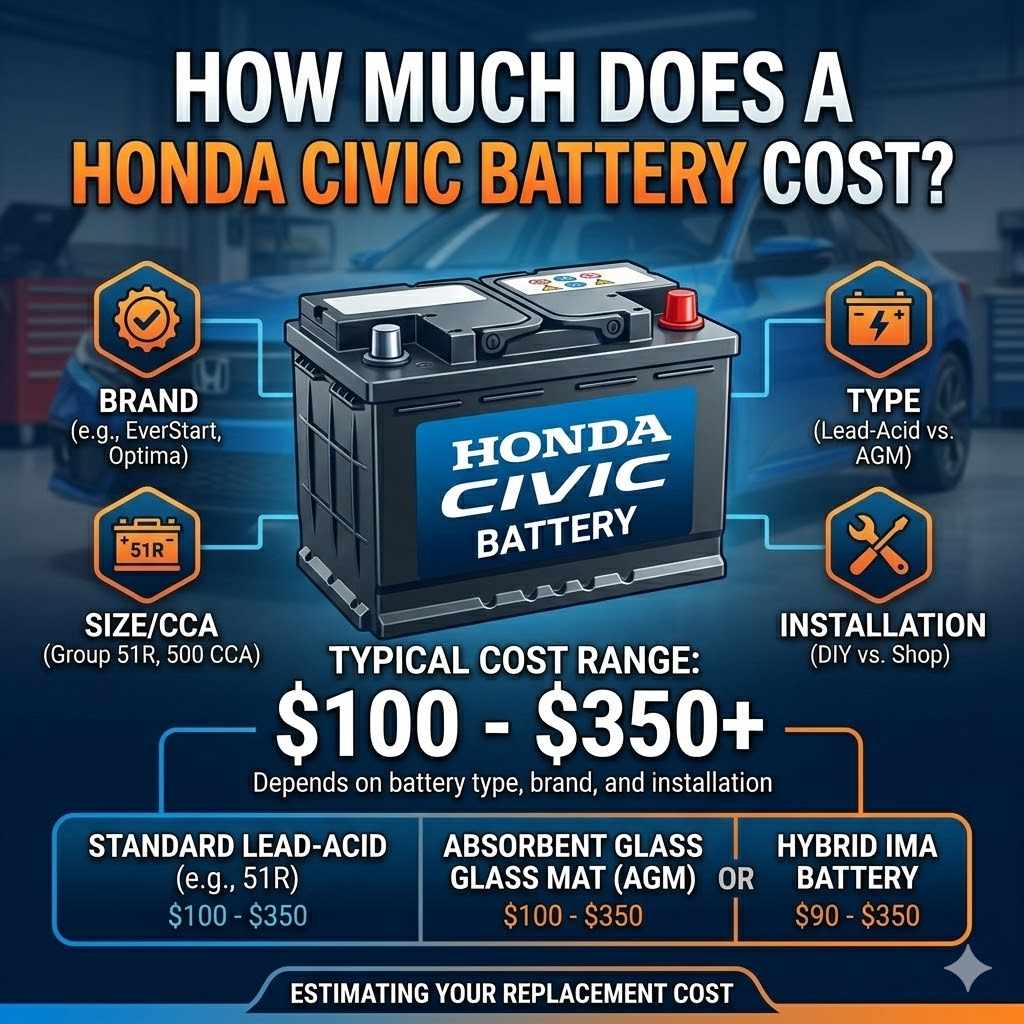
How Much Does a Honda Civic Battery Cost? (2025 Cost Guide)
Wondering about How Much Does a Honda Civic Car Battery Cost? It’s a really common question when your car battery starts acting up. For folks new to car care, figuring out the price can feel a bit tricky. There are different types and brands, and prices can jump around.
Don’t worry, we’ll walk through it easily, step by step. We’ll help you find the right battery without any confusion, showing you just what you need to know to get back on the road smoothly.
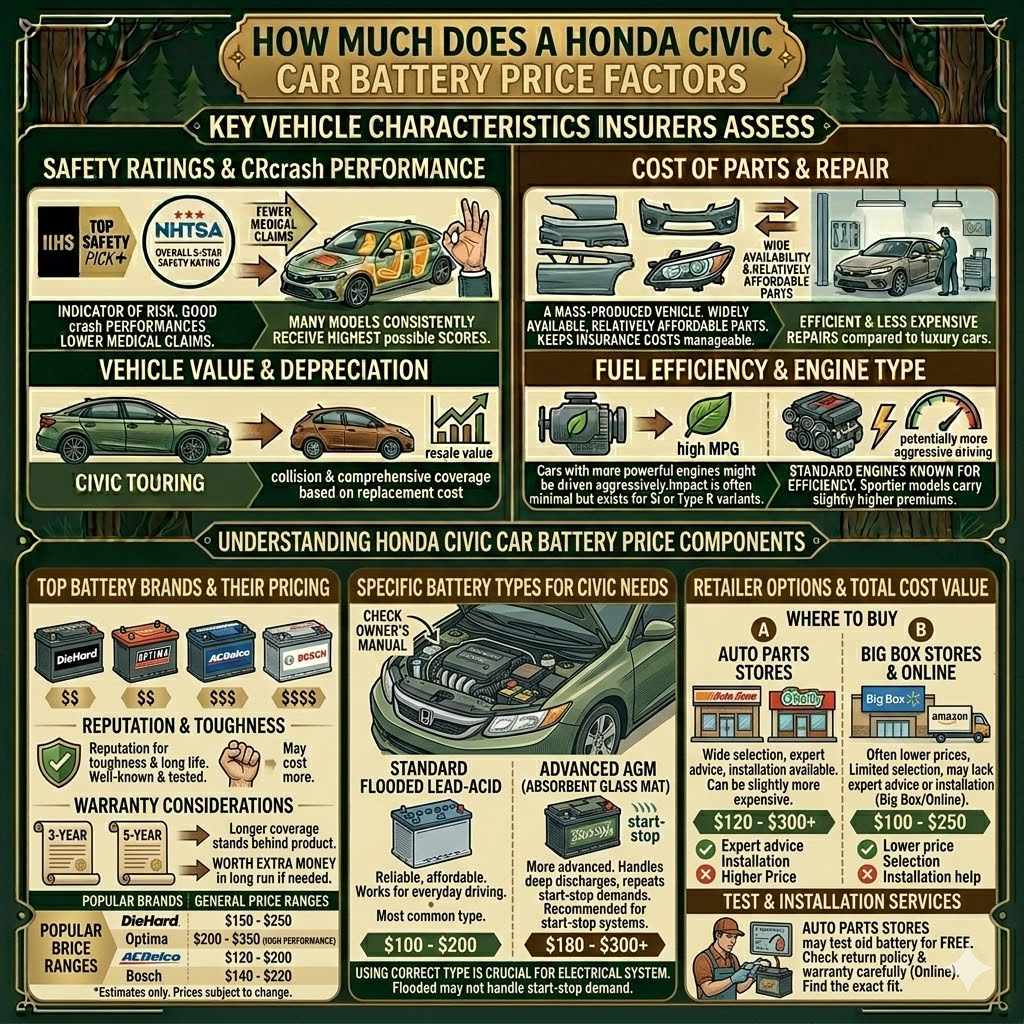
Honda Civic Car Battery Price Factors
The price of a car battery isn’t just a single number. Many things can change how much you pay for a Honda Civic battery. Think about the brand you choose and the specific type of battery your Civic needs.
The store you buy it from also plays a role. We’ll look at each of these parts so you know what makes the price go up or down.
Top Battery Brands and Their Prices
When you buy a car battery, you often see big names like DieHard, Optima, ACDelco, and Bosch. These brands have a reputation for being tough and lasting a long time. Because they are well-known and tested, they might cost a bit more.
A battery from a brand like DieHard could be around $150 to $250. Cheaper brands exist, but they might not last as long or offer the same strength.
Consider the warranty too. A longer warranty often means the brand stands behind its product. This can be worth the extra money.
Some batteries come with a 3-year warranty, while others offer up to 5 years. This longer coverage can save you money in the long run if you need a replacement.
Here are some examples of popular brands and their general price ranges:
- DieHard: $150 – $250
- Optima: $200 – $350 (These are high-performance batteries)
- ACDelco: $120 – $200
- Bosch: $140 – $220
These are just estimates, and prices can change based on sales and where you are located. It’s always a good idea to check current prices at local auto parts stores or online retailers.
Battery Types for Your Honda Civic
Your Honda Civic might use different types of batteries. The most common ones are the standard flooded lead-acid batteries. These are reliable and usually the most affordable.
They work well for most everyday driving needs.
However, some newer Honda Civics, or those with advanced start-stop technology, may require an Absorbent Glass Mat (AGM) battery. AGM batteries are more advanced. They can handle more deep discharges and provide more power.
Because of their technology, AGM batteries are usually more expensive than flooded batteries. They can cost anywhere from $180 to $300 or even more.
The type of battery your car needs is usually listed in your owner’s manual. Using the correct type is important for your car’s electrical system. An AGM battery is often recommended for cars with start-stop systems because it can withstand repeated engine restarts without losing its power.
A regular flooded battery might not be able to handle this demand.
Here’s a look at the typical price difference:
- Flooded Lead-Acid Battery: $100 – $200
- AGM Battery: $180 – $300+
Always confirm your vehicle’s specific battery needs before purchasing. The wrong type could damage your car’s electronics or not perform as expected.
Where to Buy Your Honda Civic Battery
You have a few main places to buy a car battery. Auto parts stores like AutoZone, O’Reilly Auto Parts, and Advance Auto Parts are very popular. They usually have a wide selection of brands and types.
They also offer installation services, which can be very helpful.
You can also find batteries at big box stores like Walmart or Costco. These places sometimes have lower prices. However, their selection might be smaller, and they may not offer installation services.
Online retailers such as Amazon or dedicated battery websites are another option. You can often find good deals online, and they deliver right to your door. Just be sure to check the return policy and warranty information carefully when buying online.
Installing it yourself or finding a local mechanic to do it is then necessary.
Here’s a general price comparison:
| Retailer Type | Typical Price Range | Pros | Cons |
|---|---|---|---|
| Auto Parts Stores | $120 – $300+ | Wide selection, expert advice, installation available | Can be slightly more expensive than other options |
| Big Box Stores | $100 – $250 | Often lower prices, convenient | Limited selection, may lack expert advice or installation |
| Online Retailers | $100 – $280+ | Competitive pricing, convenience of delivery | Need to arrange installation, potential shipping delays, careful return policies |
Many auto parts stores will also test your old battery for free. This can help you decide if you really need a new one. They can also help you find the exact battery that fits your Honda Civic model.
Factors Affecting Battery Lifespan
How long your Honda Civic car battery lasts depends on a lot of things. Extreme weather, how often you drive, and how you care for your car all play a part. Knowing these can help you get the most out of your battery.
The Impact of Climate on Batteries
Hot weather is tough on car batteries. High temperatures can speed up the chemical reactions inside the battery. This can cause the battery to degrade faster.
In really hot climates, a battery might lose about 33% of its lifespan.
Cold weather also presents challenges. When it’s cold, the battery’s ability to produce power decreases. This means your car’s engine needs more power to start.
If the battery is already weak, cold weather can be the final straw. Starting your car in extreme cold requires more energy, which stresses the battery.
Many sources suggest that extreme temperatures, both hot and cold, can shorten a battery’s life. A battery might last 4-5 years in a moderate climate but only 2-3 years in very hot or very cold regions.
Here’s a quick look at how climate can affect battery life:
- Moderate Climate: 4-5 years
- Hot Climate: 2-3 years
- Cold Climate: 2-4 years (can be less if starting is difficult)
Keeping your battery terminals clean can help. Corrosion on the terminals can make it harder for the battery to connect and transfer power. This is especially important in humid or salty environments.
Driving Habits and Battery Health
Your driving habits significantly impact how long your Honda Civic battery will last. If you drive your car a lot, especially for longer trips, the alternator has more time to recharge the battery. This is good for battery health.
On the other hand, if you mostly take short trips, your battery might not get fully recharged. Many short trips, like driving to the store and back, don’t give the alternator enough time to replenish the battery’s charge. Over time, this can lead to a battery that doesn’t hold its charge well.
Leaving electronics on when the engine is off is also hard on the battery. Lights, the radio, or even a phone charging can drain the battery. These small drains can add up, especially if the battery is already older.
Consider these habits:
- Frequent short trips: Can shorten battery life by 1-2 years.
- Regular long drives: Can extend battery life by 1-2 years.
- Leaving accessories on without the engine running: Can significantly reduce battery lifespan.
A car battery’s capacity is measured in Ampere-hours (Ah). This tells you how much energy it can store. If you regularly drain the battery with accessories, you are reducing its overall capacity over time.
Maintenance Tips for Longer Battery Life
Keeping your battery in good shape can extend its life. Simple maintenance tasks can make a big difference. This means ensuring the battery is clean and connections are tight.
It also means being mindful of how you use your car’s electrical system.
Regularly check your battery terminals for corrosion. If you see white or bluish powder, clean them with a wire brush and a mixture of baking soda and water. Make sure the battery is securely fastened in its tray.
A loose battery can be damaged by vibrations.
Avoid draining the battery completely. If you know you’ll be parked for a long time, turn off accessories like the radio or lights. If you have a car that sits for extended periods, consider using a battery tender.
This device keeps the battery topped up without overcharging it.
Here are some key maintenance tips:
- Inspect terminals for corrosion and clean them regularly.
- Ensure the battery is tightly secured in its mount.
- Avoid leaving lights or accessories on when the engine is off.
- Consider a battery tender for cars that are not driven often.
A well-maintained battery not only lasts longer but also ensures your Honda Civic starts reliably every time. Checking your battery’s voltage with a multimeter periodically can also give you an idea of its health.
Honda Civic Battery Replacement Cost Breakdown
When it’s time to replace your Honda Civic’s battery, the total cost involves more than just the battery itself. You’ll need to consider the price of the battery, any potential labor costs if you don’t do it yourself, and possible fees for recycling the old battery.
The Battery Itself The Main Expense
As we’ve discussed, the battery is the biggest part of the cost. For a Honda Civic, you can expect to pay anywhere from $100 to $300 for the battery alone. The price varies based on the brand, type (flooded vs.
AGM), and where you buy it.
A basic, reliable flooded lead-acid battery from a store like Walmart or an ACDelco brand at an auto parts store might be on the lower end of this range. If you opt for a premium brand like DieHard or need an AGM battery for a newer Civic with start-stop technology, the price will be higher.
For example, a standard battery for a 2015 Honda Civic might cost around $130. The same Civic model but with an AGM battery could push the price to $200 or more. It is very important to get the correct Group Size battery for your Civic to ensure a proper fit and electrical compatibility.
Here’s a simplified cost breakdown of just the battery:
- Economy/Standard Battery: $100 – $150
- Mid-Range/Good Quality Battery: $150 – $220
- Premium/AGM Battery: $200 – $300+
Always ask for batteries that meet or exceed your Honda Civic’s original equipment manufacturer (OEM) specifications. This ensures optimal performance and longevity.
Installation Labor Costs
Replacing a car battery is often a straightforward task. For many people, it’s a DIY job they can do at home with basic tools. However, if you’re not comfortable doing it yourself, you can pay for professional installation.
Auto parts stores often offer this service, and their labor costs are usually reasonable.
Some auto parts stores, like AutoZone or O’Reilly, will install your battery for free if you buy it from them. This is a great perk and can save you money. If they do charge for installation, it’s typically a small fee, maybe $20 to $50.
This fee covers their time and expertise to ensure the battery is connected correctly and safely.
Mechanics at independent shops or dealerships might charge more for installation. Their labor rates can range from $50 to $100 or more. This is because mechanics often handle a wider variety of repairs and have higher overhead costs.
For a simple battery swap, many owners choose the convenience of an auto parts store.
Here’s what installation might cost:
- Free installation at most auto parts stores with battery purchase.
- $20 – $50 fee at some auto parts stores.
- $50 – $100+ at independent repair shops or dealerships.
When getting a quote, ask if the installation fee includes proper disposal of the old battery. This is becoming increasingly important for environmental reasons.
Recycling Fees and Core Charges
When you buy a new car battery, you’ll often encounter a “core charge.” This is a deposit you pay upfront. The idea is that you return your old battery (the “core”) to get this deposit back. This is an important environmental practice.
Core charges for car batteries typically range from $10 to $30. Most stores will refund this amount once you bring in your old battery. Make sure to ask about the core charge and how to get your refund.
You usually have a certain period, like 30-90 days, to return the old battery.
Recycling car batteries is crucial because they contain lead and acid, which can be harmful if not disposed of properly. Most retailers are required by law to accept old batteries for recycling. This system ensures that hazardous materials are handled responsibly.
The recycling process itself might also have a small fee, though it’s often covered by the core charge. The primary goal of the core charge is to incentivize recycling. It’s a simple way to ensure old batteries don’t end up in landfills.
Here’s how core charges work:
- Upfront deposit: $10 – $30
- Refund upon return of old battery: Full deposit amount.
- Purpose: To encourage responsible recycling of old batteries.
Always keep your receipt from the purchase of the new battery and the return of the old one. This documentation is helpful if there are any issues with your core charge refund.
DIY vs. Professional Battery Replacement
Deciding whether to
Replacing the Battery Yourself
Replacing your car battery yourself can be quite rewarding and save you money. Most Honda Civics have batteries located under the hood, making them accessible. You’ll need a few basic tools, typically a wrench or socket set, and possibly some gloves and safety glasses.
The process usually involves disconnecting the negative terminal first, then the positive terminal. You’ll then remove any hold-down brackets that secure the battery. Once loose, you can lift the old battery out and place the new one in.
Reconnect the terminals, positive first, then negative, and re-secure the hold-down bracket.
It’s important to follow the correct order for disconnecting and reconnecting terminals to avoid electrical shorts. Disconnecting the negative terminal first prevents accidental sparks if your wrench touches the car’s metal body while working on the positive terminal. Always ensure the engine is off and the parking brake is engaged.
Here’s a simple DIY checklist:
- Gather tools: Wrench/socket set, gloves, safety glasses.
- Locate battery under the hood.
- Disconnect negative terminal (black cable), then positive (red cable).
- Remove battery hold-down bracket.
- Lift out old battery.
- Place new battery and secure it.
- Connect positive terminal, then negative.
- Close the hood.
Many online videos demonstrate battery replacement for specific Honda Civic models. Watching one can provide visual guidance and boost your confidence.
When to Call a Professional
There are times when calling a professional for battery replacement makes more sense. If you’re not mechanically inclined or don’t have the right tools, it’s safer to let an expert handle it. Some car batteries are located in less accessible spots, like under the seat or in the trunk, which can make DIY replacement more challenging.
Also, if your Honda Civic has advanced electronic systems, a professional might be better equipped. They can ensure that all the car’s computers and settings are maintained correctly during the battery swap. Some newer cars require special procedures to reset or re-register the new battery with the car’s system.
If your battery is heavily corroded or stuck, a professional can deal with it without damaging your car. They also have the proper equipment to test your charging system after installation to make sure everything is working correctly. This includes checking the alternator’s output and ensuring the new battery is charging as it should.
Consider professional help if:
- You lack the necessary tools or mechanical experience.
- The battery is in a difficult-to-reach location.
- Your vehicle has complex electronic systems.
- The old battery is severely corroded or stuck.
- You want to ensure the charging system is functioning properly.
Professional installation offers peace of mind and guarantees the job is done right, especially for those who prefer to avoid potential complications.
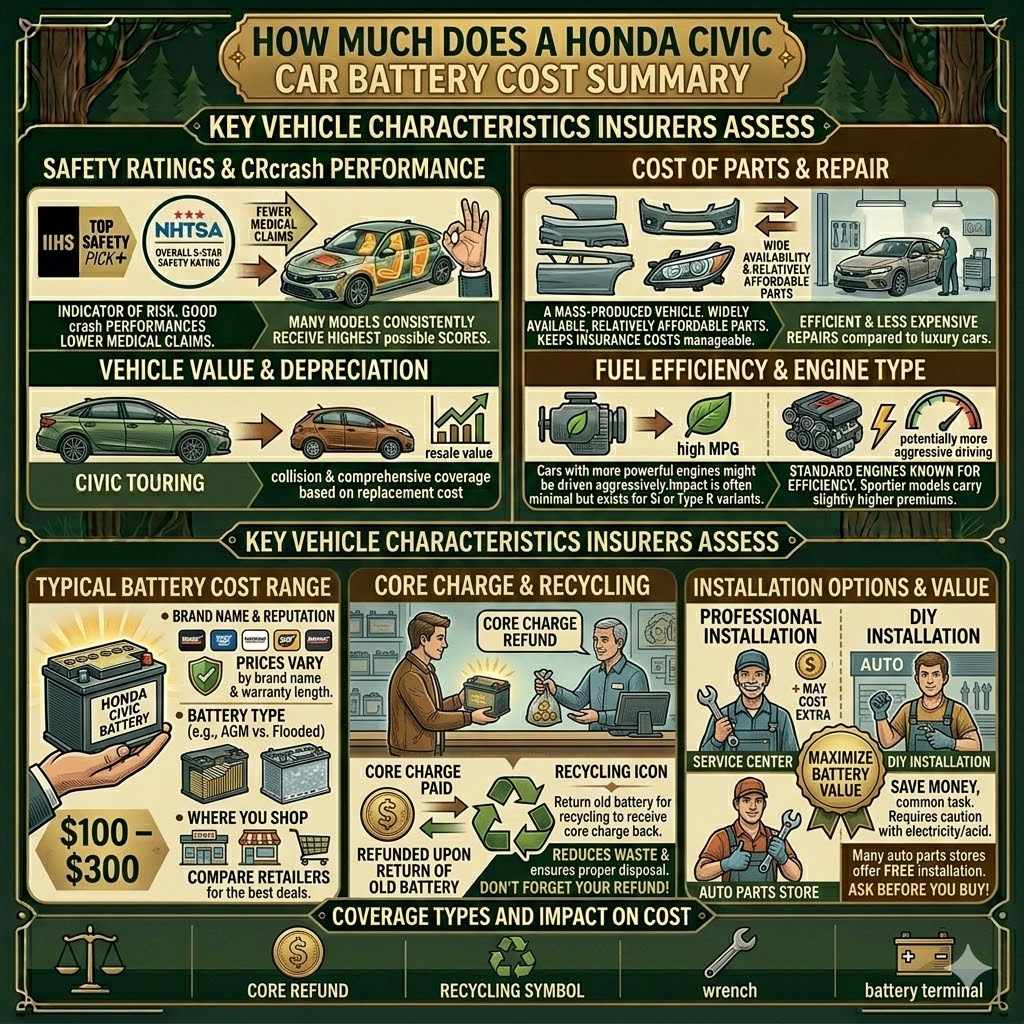
How Much Does a Honda Civic Car Battery Cost Summary
To wrap up, the cost for a Honda Civic car battery generally falls between $100 and $300. This covers the battery itself, with prices depending on brand, type, and where you shop. You might pay extra for professional installation if you choose not to do it yourself, though many auto parts stores offer this for free with purchase.
Don’t forget about the core charge, which you get back when you return your old battery for recycling. By knowing these factors, you can find the best value for your needs.
Frequently Asked Questions
Question: What is the average lifespan of a Honda Civic car battery?
Answer: The average lifespan of a Honda Civic car battery is typically between 3 to 5 years. However, this can be influenced by factors like climate, driving habits, and proper maintenance.
Question: Can I use any car battery for my Honda Civic?
Answer: No, it’s important to use a battery that is the correct size and type for your specific Honda Civic model. Check your owner’s manual for the recommended Group Size and type (e.g., flooded lead-acid or AGM).
Question: Does a Honda Civic with start-stop technology need a special battery?
Answer: Yes, Honda Civics with start-stop technology typically require an Absorbent Glass Mat (AGM) battery. These batteries are designed to handle frequent engine restarts and deeper discharges than standard flooded batteries.
Question: How do I know if my Honda Civic car battery needs replacing?
Answer: Signs your battery needs replacing include slow engine cranking, dim headlights, warning lights on the dashboard, and a battery warning light. If your car struggles to start, especially in cold weather, it’s a strong indicator.
Question: Is it cheaper to buy a Honda Civic battery online or at a local store?
Answer: Prices can vary, but online retailers often offer competitive pricing due to lower overhead. However, you must factor in potential shipping costs and the need to arrange for installation if you can’t do it yourself. Local stores may offer free installation, which can offset a slightly higher battery price.
Products related to this article
Sponsored / affiliate links. As an Amazon Associate I earn from qualifying purchases. I may earn additional commission from eligible campaigns.