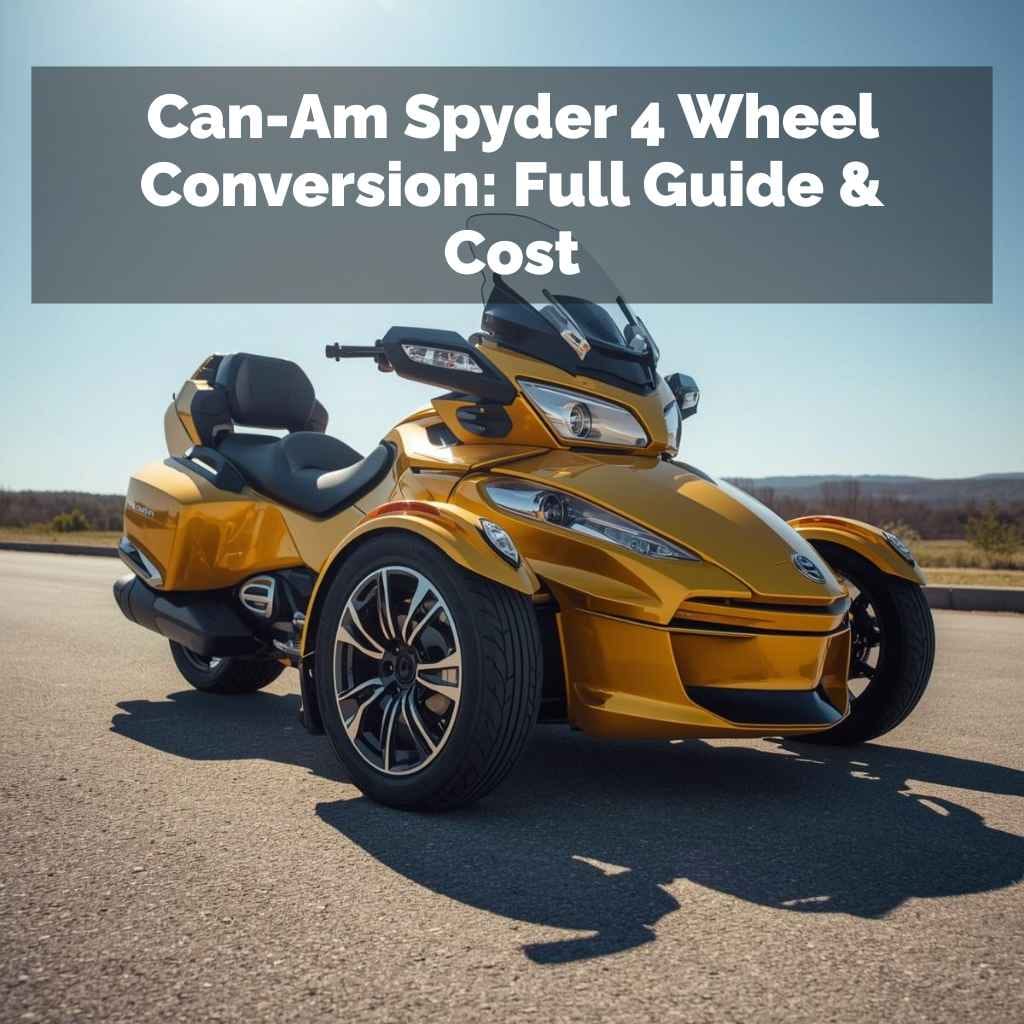
Can-Am Spyder 4 Wheel Conversion: Full Guide & Cost
A Can-Am Spyder 4 wheel conversion involves adding a second wheel to the rear, turning the three-wheeled vehicle into a four-wheeled one. This is typically done through aftermarket kits. The primary reasons are to increase stability, change the driving dynamics, and sometimes for personal preference or specific use cases. Costs can vary widely depending on the kit and installation.
What Is a 4-Wheel Conversion for a Can-Am Spyder?
At its heart, a 4-wheel conversion for a Can-Am Spyder is a modification. It takes the standard three-wheeled vehicle and changes its rear axle. Instead of one wheel at the back, it gets two.
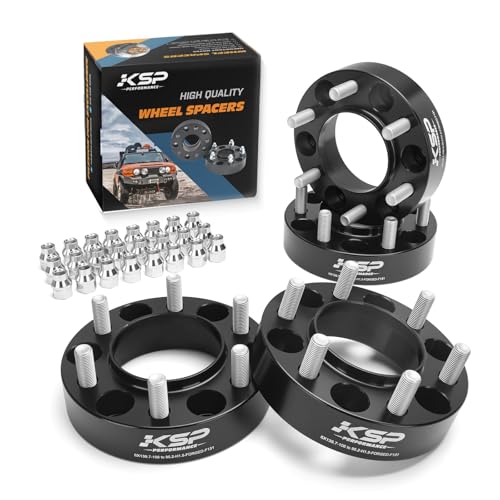
KSP PERFORMANCE
KSP 6x5.5(6x139.7MM) Hub Centric Conversion Adapter, 106mm…
- Hub Bore Conversion: Adapts 106mm hub to 95.2mm wheel center bore for a perfect hub-centric fit and reduced vibration.
- Fits Older Generation Vehicles: Toyota 4Runner (1996–2024), FJ Cruiser (2007–2014), Sequoia (2001–2007), Tacoma 4WD/PreRunner (200…
- Cross-Generation Fit – Allows you to install new 2025+ Toyota 4Runner (N400), 2024+ Toyota Tacoma (N400), 2022+ Toyota Sequoia (XK…
As an Amazon Associate I earn from qualifying purchases.
Think of it like turning a tricycle into a small car, but for your Spyder. This isn’t something Can-Am officially offers. It’s all done by third-party companies or custom shops.
These companies create special kits. These kits usually include a new rear swingarm. They also come with a differential.
This allows both rear wheels to turn. You’ll also get new wheels and tires. Sometimes, the kit includes wider fenders to cover the extra wheels.
The goal is to make it look and feel like a stable four-wheeled vehicle.
The engineering behind these kits is important. They need to work with the Spyder’s existing systems. This includes its engine and transmission.
It also needs to handle the suspension and steering. A well-made kit makes the conversion look clean. It should also perform well on the road.
Poorly done conversions can cause problems.
Why Would Someone Convert Their Spyder to Four Wheels?
People consider this change for several reasons. The most common one is stability. A three-wheeled vehicle, even a stable one like the Spyder, is different from a four-wheeled car.
Some riders feel more secure with two wheels at the back. They might be coming from a motorcycle background and still want some of that open-air feel, but with added confidence.
Another reason is handling. Adding a second rear wheel can change how the Spyder corners. It might offer a different feel during turns.
Some people prefer this. Others might be looking to improve the vehicle’s load-carrying capacity. While not designed as a cargo hauler, some assume more wheels mean more ability.
There’s also the aspect of personal preference. Some riders just like the unique look. They see it as a way to make their Spyder stand out even more.
It’s a customization that sets their vehicle apart from others on the road. It can be a statement piece as much as a functional change.
For some, it might be about perceived safety. While the Spyder is engineered for stability, the physics of three wheels are different from four. A two-wheel-drive rear setup can feel more planted to some riders, especially in less-than-ideal road conditions.
It’s a way to gain a sense of extra security.
Think about it like this: If you’ve ever felt a little wobbly on a three-wheeler when taking a sharp turn at speed, you might understand the appeal. While the Spyder’s design is inherently stable due to its Y-frame and electronics, the psychological comfort of four wheels on the ground is powerful for some.
Key Motivations for 4-Wheel Conversions
Increased Stability: Many riders seek a more planted feel, especially during cornering.
Driving Dynamics: The change alters how the vehicle handles and responds to inputs.
Personalization: A unique aesthetic that makes the Spyder stand out.
Perceived Safety: Some riders feel more secure with a four-wheel setup.
How Does a 4-Wheel Conversion Work?
The process of converting a Can-Am Spyder to four wheels is quite involved. It’s not a simple bolt-on job that most people can do in their garage. It requires specialized parts and mechanical know-how.
These kits are designed to replace significant parts of the original vehicle.
The core of the conversion is the rear axle. The single wheel at the back is removed. A new subframe or swingarm is installed.
This new unit is wider. It’s designed to hold two wheels side-by-side. A differential is crucial here.
This allows the two rear wheels to rotate at different speeds, just like in a car. This is essential for smooth turning.
The kit will also include the necessary brackets and mounts. These connect the new rear end to the Spyder’s frame. The drive shafts need to be extended or replaced to reach both rear wheels.
The braking system is also often modified. It needs to be able to handle the stopping power for two rear wheels.
The bodywork might need to change too. Wider fenders are usually required to cover the two rear wheels. This helps keep road debris from being thrown up.
The exhaust system might also need adjustments. It depends on the specific kit’s design and where the new components are placed.
Professional installation is highly recommended. A mistake during this process can compromise the vehicle’s safety and performance. The alignment of the new rear wheels is critical.
The suspension geometry also needs to be set up correctly. This ensures the vehicle handles predictably.
Imagine the engineers who designed the Spyder. They spent years refining its three-wheel balance. When you add a kit, you’re essentially asking a third party to replicate or improve upon that balance with a different configuration.
It’s a complex mechanical task.
The Kits: What’s Included?
When you look into a 4-wheel conversion kit, you’ll find that they are comprehensive. They aim to give you everything you need to make the structural change. However, the specifics can vary a bit from one manufacturer to another.
Generally, a kit will include:
- New Rear Swingarm/Subframe: This is the main structural piece that replaces the original rear axle assembly. It’s designed to accommodate two wheels.
- Differential: A crucial component that allows the rear wheels to spin at different speeds during turns. This is what makes it function like a car.
- Axles/Driveshafts: These connect the differential to the new rear wheels.
- Wheels and Tires: Often, the kit will specify certain sizes or include matching wheels and tires.
- Fenders: Wider rear fenders are usually necessary to cover the two wheels.
- Hardware: All the nuts, bolts, and brackets needed for installation.
- Brake Components: Sometimes, modifications or upgrades to the rear braking system are included.
Some kits might be more basic, providing the core structural elements and expecting you to source wheels and tires. Others are very complete packages. Always check the exact specifications of any kit you are considering.
Understanding what’s included helps you budget for the entire project, including potential professional installation costs.
It’s also worth noting that some kits might require minor modifications to the Spyder’s original frame. This is why professional installation is often emphasized. They know how to make these precise alterations safely.
Typical Kit Components
Core Structure: Swingarm/Subframe
Drive System: Differential, Axles
Rolling Stock: Wheels, Tires
Bodywork: Wider Fenders
Fasteners: All Necessary Hardware
Cost of a Can-Am Spyder 4-Wheel Conversion
This is where things can get a bit steep. A 4-wheel conversion is not a cheap modification. The cost breaks down into two main parts: the kit itself and the installation.
Prices can vary significantly based on the brand of the kit and where you get it installed.
The kits alone can range anywhere from $4,000 to $10,000 or even more. This depends on the quality of the materials, the engineering involved, and what exactly is included in the package. Some high-end kits might involve extensive customization and premium components, driving the price up.
Then there’s the installation. Since this is a complex modification, it’s best done by experienced professionals. The labor cost can add another $1,000 to $3,000 or more.
This depends on the hourly rates of the shop and how long the job takes. Some shops might charge a flat fee, while others bill by the hour.
So, you’re looking at a total cost that could easily be in the $5,000 to $13,000+ range. This is a substantial investment. It’s comparable to buying a used car or a significant upgrade for another vehicle.
You have to weigh the benefits against this cost.
It’s also wise to factor in potential hidden costs. For instance, if the conversion requires a different type of tire or wheel, those will be ongoing expenses. You might also need to upgrade other parts of your Spyder to handle the new setup.
Always get a detailed quote from the installer.
Here’s a breakdown to consider:
- Kit Price: $4,000 – $10,000+
- Professional Installation: $1,000 – $3,000+
- Potential Additional Costs: $500 – $2,000+ (for unexpected needs or upgrades)
This means the total price tag often lands between $5,500 and $15,000. It’s a serious financial commitment. Make sure you are fully prepared before diving in.
Estimated Cost Breakdown
Base Kit: $4,000 – $7,000
Premium Kit: $7,000 – $10,000+
Labor (Professional Install): $1,000 – $3,000
Total Potential Cost: $5,000 – $13,000+
My Own “What If” Moment
I remember a few years back, I was out with a group of Spyder riders. We were on a scenic route with some sweeping curves. The sun was bright, and the air felt good.
One of the riders, Dave, had a Spyder that had been converted to four wheels. I’d seen pictures, but seeing it in person was different. It had this wide, planted look at the back.
As we navigated a particularly nice set of turns, I watched Dave’s Spyder. It seemed to hug the road in a way that was almost uncanny. My own Spyder felt great, but Dave’s just… stayed there.
He wasn’t pushing it any harder than I was, but his confidence seemed to be on another level. He could take the apex a little tighter, a little faster, without the slight sensation of the rear end wanting to play.
Later, we stopped for coffee. I went over to check out his conversion. The rear fenders were wider, really covering those two tires.
It looked substantial, almost like a mini-sports car from behind. Dave explained that he’d done it after a minor incident on a wet road a couple of years prior. He’d never been uncomfortable with his Spyder, but he wanted that extra measure of security.
He told me, “It’s not about going faster for me. It’s about feeling totally locked in. I can relax more, you know?
I don’t have to think about the rear tire as much.” That really stuck with me. It wasn’t just about the mechanics; it was about the feeling and the peace of mind it gave him. It made me think about how different people use and feel about their machines.
Legality and Insurance Considerations
This is a crucial area. When you modify a vehicle so significantly, you open up questions about legality and insurance. It’s not as simple as just getting the conversion done and riding off into the sunset.
Legality: Vehicle laws vary from state to state. In many places, a 4-wheel conversion might change the classification of your vehicle. It might be considered a car or a custom vehicle.
You need to check with your state’s Department of Motor Vehicles (DMV) or equivalent agency. You might need to get the vehicle re-titled or inspected.
Some states have very specific rules about the number of wheels, braking systems, and lighting for vehicles registered as motorcycles or three-wheelers. Converting to four wheels might mean it no longer fits those categories. This could mean different registration fees, inspections, and even licensing requirements.
Insurance: This is another big hurdle. Most insurance companies view the Can-Am Spyder as a motorcycle or a three-wheeled vehicle. A 4-wheel conversion fundamentally changes the vehicle.
Your current insurance policy might not cover it anymore. You could find yourself in a situation where you’re uninsured if you don’t notify your provider.
Contacting your insurance agent before you do the conversion is essential. Explain what you plan to do. They will tell you if they can insure it and what the new premium will be.
Some companies might refuse to insure highly modified vehicles. Others might offer coverage but at a significantly higher rate due to the perceived increased risk.
You may need to get it insured as a “custom vehicle” or even a “car” depending on local regulations. This can impact your premium and the terms of your coverage. Always be upfront with your insurance provider to avoid any issues down the line.
Important Checks
DMV/State Laws: Verify local regulations for 4-wheel vehicles.
Vehicle Classification: Understand how your state classifies the converted vehicle.
Insurance Policy: Contact your insurer before conversion for coverage details and costs.
Registration & Fees: Be prepared for potential changes in fees and inspection requirements.
What This Means for Your Ride
So, what does this conversion actually change about the experience of riding your Spyder? It’s more than just adding a wheel. It alters the very character of the vehicle.
Handling: This is the most noticeable change. With two wheels at the rear, the vehicle will feel more planted. It will resist leaning as much in turns.
The feeling of instability that some riders associate with three-wheelers can be reduced significantly. It might feel more like driving a small, sporty car. However, this also means you lose some of the agility and quick steering response that a three-wheeler can offer.
Braking: The braking system will likely be improved. With two rear wheels, there’s more contact patch for stopping. The overall braking performance could be enhanced, but it will also feel different.
The car-like stability might encourage higher speeds, so good brakes are a must.
Traction: Two rear wheels generally mean better traction, especially in slippery conditions. This can be a major plus for rider confidence. However, it also means the vehicle will behave more like a car in terms of how it loses traction.
Instead of a rear-wheel slide, you might experience a four-wheel drift, which can be harder to control if you’re not expecting it.
Comfort: Some riders find the ride smoother with four wheels. The suspension might feel more settled. However, this depends heavily on the quality of the conversion kit and the installation.
A poorly done conversion can actually make the ride worse.
Maintenance: You’ll have more to maintain. Two tires need checking, two wheels need alignment, and the new differential needs its own care. This means more time and potentially more money spent on upkeep.
You’ll have more parts that can wear out or need attention.
It’s like choosing between a nimble sport bike and a sturdy, confident sports car. Both are fun, but in very different ways. The 4-wheel conversion pushes the Spyder more towards the latter.
Real-World Scenarios and Use Cases
Let’s look at some situations where a 4-wheel conversion might make sense, or where its impact is felt.
Long-Distance Touring: For riders who cover long miles, the added stability of four wheels can be a significant comfort. On highways, in varying weather conditions, the feeling of being more rooted to the road can reduce fatigue. It allows the rider to focus more on enjoying the scenery and less on micro-adjustments to maintain balance.
Riders with Physical Limitations: Some individuals might have physical challenges that make handling a traditional motorcycle or even a three-wheeler difficult. A 4-wheel conversion can offer a more stable platform that is easier to manage at low speeds or when stopped. This can open up the freedom of the open road to a wider range of people.
Specific Road Conditions: In areas with unpredictable road surfaces, frequent rain, or even light snow (where permissible), the enhanced traction and stability of a four-wheel setup can be a major advantage. Think of mountain roads with loose gravel patches or coastal routes that can get slick after a rain shower.
Show and Customization Enthusiasts: For those who love to customize their vehicles and make them unique, the 4-wheel conversion is a bold statement. It transforms the Spyder into something truly one-of-a-kind. It attracts attention and sparks conversations, which is often a goal for these types of owners.
Driving Schools or Training Centers: While less common, you might see these conversions used by specialized training centers. The increased stability could offer a safer learning environment for individuals new to three-wheeled vehicles or those who are hesitant.
However, it’s important to remember that a converted Spyder is still not a car. It doesn’t have the safety features of a car, like airbags or crumple zones. The steering is still direct, and the seating position is exposed.
It’s a significant modification, but it doesn’t transform it into a completely different class of vehicle.
Use Case Examples
Highway Cruising: Enhanced stability reduces rider fatigue over long distances.
Varied Weather: Better traction in wet or loose-surface conditions.
Personal Expression: Creating a unique and eye-catching vehicle.
Accessibility: Potentially easier handling for riders with certain physical needs.
When Is a 4-Wheel Conversion NOT a Good Idea?
While the idea might sound appealing, it’s not for everyone. There are definite downsides and situations where you should probably stick with the stock three-wheel setup.
Budget Constraints: As we’ve discussed, the cost is substantial. If you’re on a tight budget, the money spent on a conversion could be better used for other upgrades, accessories, or even saving towards a different vehicle entirely. You might also need to consider the resale value; modified vehicles can sometimes be harder to sell.
Desire for Original Performance: If you love the nimble, agile handling of the stock Spyder, a 4-wheel conversion will fundamentally change that. You’ll lose some of the sharp, motorcycle-like responsiveness. If that’s what you enjoy most about riding, this conversion might disappoint you.
Lack of Reliable Installer: This is not a DIY project for most. If you don’t have access to a reputable shop with experience in these types of complex modifications, it’s a risky venture. A bad conversion can lead to dangerous handling issues or damage to your vehicle.
State Regulations: If you live in a state with very strict vehicle modification laws, or if your local DMV is particularly difficult to work with, the legal hurdles might be too high. You could spend a lot of money only to find out you can’t legally register or drive your converted Spyder.
Resale Value Concerns: While a well-done custom job can sometimes increase value, heavily modified vehicles can be a niche market. You might find that your converted Spyder is harder to sell down the line, or that you won’t recoup the full cost of the conversion. Potential buyers might prefer the original configuration.
Warranty Issues: Performing such a significant modification will almost certainly void any remaining factory warranty on your Can-Am Spyder. If you’re concerned about warranty coverage, you should definitely reconsider this type of upgrade.
It really comes down to your priorities. If extreme stability and a car-like feel are paramount, and you have the budget and access to good work, it might be for you. But if you value the original spirit of the Spyder, or if any of these other concerns resonate, it’s probably best to leave it as a three-wheeler.
When to Reconsider
Budget Limitations: Significant financial investment required.
Loss of Agility: If you prefer the stock Spyder’s quick handling.
Installer Availability: Lack of experienced professionals can lead to issues.
Legal Hurdles: State regulations might prevent or complicate registration.
Resale Value: Modified vehicles can have a smaller buyer pool.
Warranty Voided: Factory warranty will likely be invalidated.
Frequently Asked Questions
Is a 4-wheel conversion safe?
A 4-wheel conversion can be safe if done correctly by experienced professionals using high-quality kits. However, any significant modification carries inherent risks. Poor installation or low-quality parts can compromise safety and handling.
It’s crucial to research the kit manufacturer and the installer thoroughly.
Will a 4-wheel conversion make my Spyder faster?
Generally, no. The conversion is focused on stability and handling dynamics, not outright speed. In fact, the added weight and potential aerodynamic changes might slightly decrease acceleration.
The benefit is more about driver confidence and a different feel in corners, not raw speed.
Can I do a 4-wheel conversion myself?
For most people, a 4-wheel conversion is not a DIY project. It requires specialized tools, mechanical knowledge, and precise measurements. Attempting it without the right expertise could lead to dangerous mechanical failures or poor handling.
Professional installation is strongly recommended.
What kind of maintenance does a converted Spyder need?
A converted Spyder will require more maintenance. You’ll have two rear tires to check and maintain, a differential that needs fluid changes, and potentially more complex suspension components. Regular checks and professional servicing are essential to keep it in good working order.
How does a 4-wheel conversion affect fuel economy?
Adding weight and potentially changing the aerodynamics will likely have a negative impact on fuel economy. The exact amount will depend on the specific kit and how you drive the vehicle. Expect a decrease in miles per gallon compared to a stock Spyder.
What is the lifespan of a 4-wheel conversion kit?
The lifespan of a conversion kit depends on the quality of its manufacturing, the materials used, and how well it is maintained. A well-engineered and properly cared-for kit should last many years. However, components like bearings, seals, and the differential will eventually wear out and require replacement, just like on any vehicle.
Final Thoughts
Deciding whether to convert your Can-Am Spyder to four wheels is a big choice. It’s exciting to think about enhanced stability and a different ride feel. But it’s a significant financial and mechanical undertaking.
Think carefully about why you want this change. Weigh the pros and cons, research kits and installers thoroughly, and understand all the legal and insurance implications. Your Spyder is a unique machine, and any modification should be a decision made with clear eyes and a full understanding of what’s involved.
It might be the perfect upgrade for some, while others will be happier with their stock Spyder.
See also can i use 4 wheel drive on the highway know the rules.
Related pick: Check today's price on Amazon