
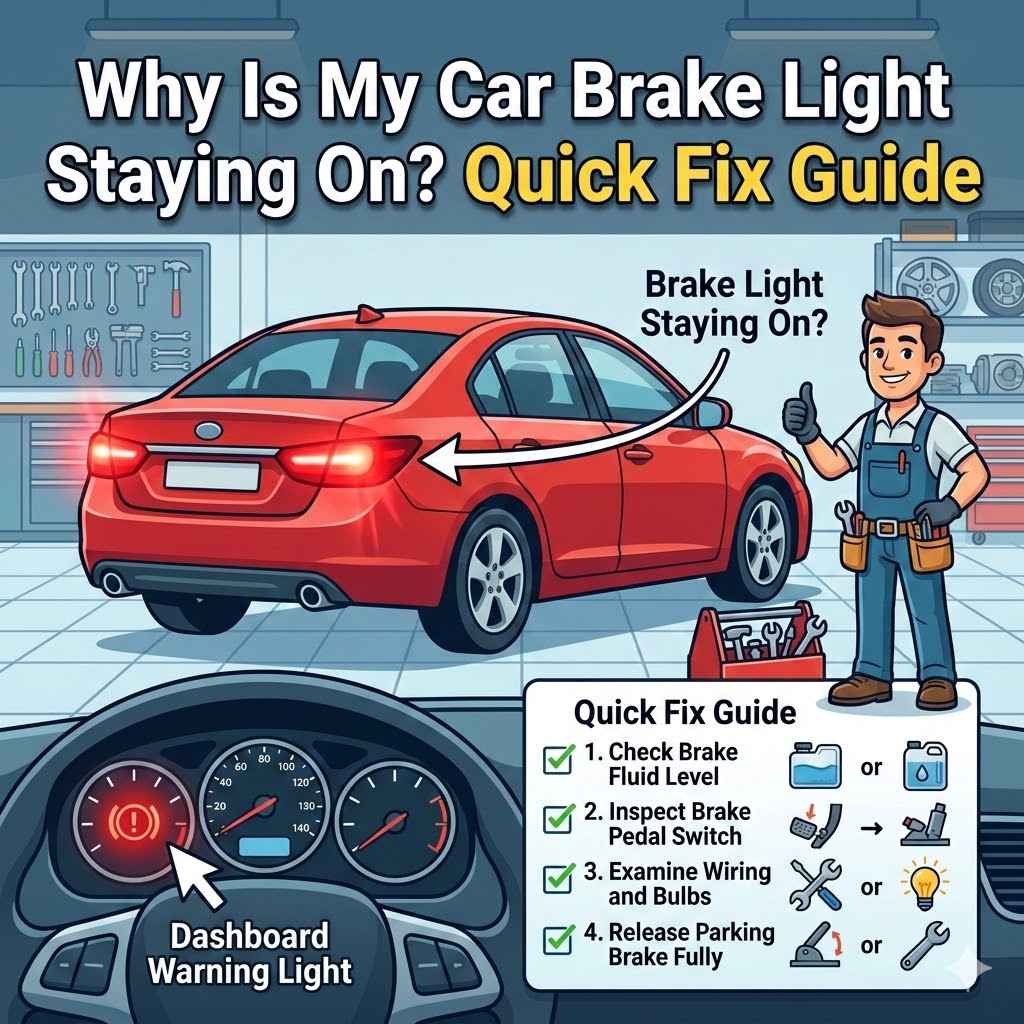
It’s a common worry when you see that red brake light glowing on your dashboard. For many drivers, figuring out Why Is My Car Brake Light Staying On? Quick Fix Guide can feel a bit confusing.
But don’t worry! This guide is here to make things simple. We’ll break down what might be causing it and show you easy steps to sort it out.
Get ready for clear answers and quick solutions.
Understanding Your Car’s Brake Light System
Your car’s brake light system is a vital safety feature designed to alert other drivers when you are slowing down or stopping. When this light stays on unexpectedly, it signals that something is not quite right. It’s important to address this issue promptly because functioning brake lights are essential for road safety.
This section will help you understand the basic components and purpose of your brake lights.
The Role of Brake Fluid
Brake fluid is the hydraulic fluid that transmits force, allowing your brake pads to clamp down on the rotors. This process creates the friction needed to slow or stop your vehicle. If the brake fluid level drops too low, it can trigger the brake warning light.
This low fluid level often indicates a leak somewhere in the brake system or that your brake pads are worn out.
Low brake fluid can also mean that your brake pads are significantly worn down. As brake pads wear, the caliper pistons extend further to compensate, which can lower the overall fluid level in the master cylinder reservoir. A properly filled brake fluid reservoir is key to a responsive braking system.
Regularly checking and topping off your brake fluid is a simple maintenance task that can prevent bigger issues.
Brake Pad Wear Indicators
Many modern brake pads come equipped with wear indicators. These are small metal tabs designed to make a squealing noise when the brake pads reach a certain level of wear. Some systems, however, may use an electronic sensor.
When this sensor detects excessive wear, it can send a signal to your dashboard, illuminating the brake warning light.
These electronic sensors are often embedded within the brake pad material. As the pad wears down, the sensor comes into contact with the brake rotor. This contact completes a circuit, sending a signal to your car’s computer.
The computer then activates a warning light on your dashboard. It’s an efficient way to remind you it’s time for new brake pads before they become a safety hazard.
The Master Cylinder and Its Function
The master cylinder is the heart of your hydraulic braking system. It converts the force from your brake pedal into hydraulic pressure. This pressure is then sent through the brake lines to the wheel cylinders or calipers, which apply the brakes.
If the master cylinder malfunctions or develops a leak, it can lead to a loss of braking power and trigger the brake light.
A faulty master cylinder might not be able to build enough pressure to brake effectively. It can also leak brake fluid internally or externally. Either scenario is a serious concern for your car’s braking performance.
Regular inspections of the master cylinder for any signs of leaks or damage are recommended.

Common Causes for the Brake Light
Seeing your brake light stay on can be unnerving, but usually, there are a few common culprits. Understanding these reasons will help you pinpoint the problem quickly and effectively. Let’s explore the most frequent reasons why this warning light might be illuminated.
Low Brake Fluid Level
The most straightforward reason for the brake light to illuminate is a low level of brake fluid. Your car’s braking system relies on hydraulic pressure, which is created by the brake fluid. If the fluid level drops below the minimum mark on the reservoir, it can trigger the warning light.
This often happens when brake pads wear down, as the fluid level recedes in the master cylinder.
A leak in the brake lines, calipers, or wheel cylinders can also cause the fluid level to drop. It’s important to check the brake fluid level regularly. If it’s low, top it off with the correct type of fluid recommended in your car’s owner’s manual.
However, simply topping it off might be a temporary fix if there’s an underlying leak or worn components.
Real-life example: Sarah noticed her brake light was on. She checked her brake fluid reservoir and saw it was very low. After adding fluid, the light went off.
A week later, the light returned. Upon further inspection, a mechanic found a small leak in one of the brake lines. This shows that while adding fluid can sometimes fix the immediate issue, it’s crucial to investigate the root cause.
Worn Brake Pads
As mentioned earlier, brake pads wear down over time with use. Many cars have sensors that detect when the brake pads are getting too thin. These sensors then send a signal to the dashboard, turning on the brake light.
This is a safety feature to remind you to replace your brake pads before they cause damage to the rotors or lead to reduced braking performance.
When brake pads are worn, they lose their ability to grip the rotors effectively. This can compromise your car’s stopping distance. Ignoring worn brake pads can lead to more expensive repairs down the line, such as replacing rotors that have been scored or damaged by worn-out pads.
It is essential to have them checked and replaced as part of your regular vehicle maintenance.
Statistic: According to the National Highway Traffic Safety Administration (NHTSA), worn brake pads can increase stopping distances by up to 20%, significantly increasing the risk of an accident.
Parking Brake Engaged
This might sound simple, but sometimes the brake warning light stays on because the parking brake (also known as the emergency brake or handbrake) is still engaged. Even if you feel like you’ve fully released it, a small amount of engagement can still trigger the light. Check to ensure it’s completely disengaged.
The parking brake is typically a lever between the seats or a pedal near your feet. When engaged, it mechanically applies the brakes, usually on the rear wheels, to prevent the car from rolling. If the mechanism is sticking or not fully releasing, the sensor connected to it will report that the brake is on, illuminating the warning light.
A quick visual check and a firm push or pull to ensure it’s fully down or up can often solve this.
Issues with the Brake Light Switch
The brake light switch is a small component located near the brake pedal. Its job is to detect when you press the brake pedal and turn on your brake lights. If this switch malfunctions or is misaligned, it can send a false signal, making the car think you’re pressing the brake pedal even when you’re not.
This can cause the brake warning light to stay on.
This switch is typically a simple, spring-loaded mechanism. When the brake pedal is pressed, it pushes the switch, completing a circuit. If the switch gets stuck in the “on” position or if its connection is faulty, the brake light will remain illuminated.
Replacing a faulty brake light switch is usually a relatively simple and inexpensive repair.
Problems with the Anti-lock Braking System (ABS)
If your car has an Anti-lock Braking System (ABS), a separate ABS warning light will usually illuminate if there’s a problem. However, in some vehicles, an ABS issue can also trigger the main brake warning light. The ABS module monitors wheel speed sensors and controls brake pressure to prevent wheels from locking up during hard braking.
When an ABS fault occurs, it means the system might not be able to prevent skidding. This is a serious safety concern. Common ABS problems include faulty wheel speed sensors, issues with the ABS control module, or problems with the hydraulic modulator.
If you see both the brake light and the ABS light on, it’s crucial to have your braking system inspected by a professional.
Troubleshooting Steps and Quick Fixes
Now that we’ve covered the common causes, let’s move on to practical steps you can take to diagnose and potentially fix the issue yourself. These are designed to be straightforward for most car owners.
Step 1 Check Brake Fluid Level
Locate your brake fluid reservoir under the hood. It’s usually a translucent plastic container near the brake master cylinder. Check the fluid level against the MIN and MAX markings.
If it’s low, add the specified type of brake fluid. Be sure to clean the area around the cap before opening it to prevent dirt from entering the system.
Explanation: Brake fluid is essential for your brakes to work. If it’s low, your brake warning light will likely come on. Simply topping it off might solve the problem temporarily, but it’s important to figure out why it was low in the first place.
This could be due to worn brake pads or a leak.
Example: Let’s say you check your brake fluid and it’s almost empty. You add the correct fluid. The light goes off.
Great! But if you notice a strange smell or the pedal feels spongy later, you know there’s a leak that needs fixing.
Step 2 Inspect the Parking Brake
Ensure your parking brake is fully disengaged. Pull up slightly on the parking brake lever or release the pedal. Sometimes, a sticky mechanism can keep it partially engaged, triggering the warning light.
A quick check and ensuring it’s all the way down or up usually does the trick.
Explanation: The parking brake is a separate system that can also activate the main brake warning light if it’s not fully released. This is a very common and easy fix. If you feel resistance or hear a click when you try to release it, the mechanism might be binding.
Step 3 Examine Brake Pad Wear
If you’re comfortable, you can visually inspect your brake pads. You’ll need to look through the spokes of your wheels to see the brake calipers and pads. Look for the thickness of the friction material on the brake pads.
If they appear very thin, they likely need replacing. This often requires removing a wheel for a clear view.
Explanation: Brake pads are designed to wear down. When they get too thin, they can cause the brake light to come on. This is a sign that you’re getting close to the metal backing of the pad, which can damage your rotors.
If they look like a business card or less, it’s time for new ones.
Scenario: You look at your front passenger-side brake pad and see only a sliver of dark material left. The driver’s side looks much thicker. This uneven wear might indicate a problem with the caliper on the passenger side, not just worn pads.
Step 4 Check the Brake Light Switch
The brake light switch is usually located at the top of the brake pedal arm. You might be able to access it by reaching under the dashboard. Gently push the switch in and out to see if it moves freely.
If it feels stuck or loose, it might be the culprit. Some switches have adjustable tabs that can be repositioned.
Explanation: This small switch tells your car when you’re pressing the brake pedal. If it’s faulty or out of place, it can trick your car into thinking the brakes are on all the time. A quick check might reveal if it’s visibly damaged or stuck.
Step 5 Consider ABS System Issues
If you have an ABS warning light on your dashboard as well, or if the steps above don’t solve the problem, it could point to an ABS system issue. This is more complex and often requires diagnostic tools to read fault codes. Problems with wheel speed sensors or the ABS control module are common.
Explanation: The ABS system prevents your wheels from locking up. If it has a problem, it can sometimes affect the main brake light. This is a safety-related issue that needs professional attention.
Ignoring it can lead to reduced control during braking.
When to Seek Professional Help
While many brake light issues can be resolved with simple DIY checks, some problems require the expertise of a qualified mechanic. It’s crucial to know when to stop troubleshooting and call in the professionals to ensure your safety and the longevity of your vehicle.
Understanding the Limits of DIY
Your car’s braking system is a critical safety component. While checking fluid levels or ensuring the parking brake is off are simple tasks, diagnosing complex internal brake system problems, like a failing master cylinder or ABS component, requires specialized knowledge and tools. Attempting repairs beyond your skill level could lead to further damage or compromise your vehicle’s safety.
Statistic: According to automotive repair industry data, brake system failures are a leading cause of vehicle-related accidents. This underscores the importance of accurate diagnosis and repair.
Signs You Need a Mechanic
If the brake light remains on after you’ve performed the basic checks, or if you experience any of the following, it’s time to visit a mechanic:
- Spongy or soft brake pedal
- Squealing or grinding noises when braking
- Vibrations in the brake pedal or steering wheel
- A burning smell coming from the brakes
- Any visible leaks of brake fluid
- If you also see an ABS warning light illuminated
Explanation: These symptoms indicate more serious issues that could affect your car’s ability to stop effectively. A mechanic has the diagnostic equipment and expertise to accurately identify the problem and perform the necessary repairs safely.
What a Mechanic Will Do
A professional mechanic will typically start by connecting a diagnostic scanner to your car’s computer to read any stored trouble codes related to the braking system. They will then conduct a thorough visual inspection of all brake components, including pads, rotors, calipers, brake lines, and the master cylinder. They may also perform a brake fluid flush or pressure test to identify leaks or blockages.
Example Scenario: You bring your car to a mechanic because the brake light is on. The mechanic connects a scanner and finds a code indicating a faulty wheel speed sensor for the ABS. They then visually inspect the sensor and its wiring, confirm it’s damaged, and replace it, resolving the issue and ensuring your ABS functions correctly.
Why Is My Car Brake Light Staying On? Quick Fix Guide
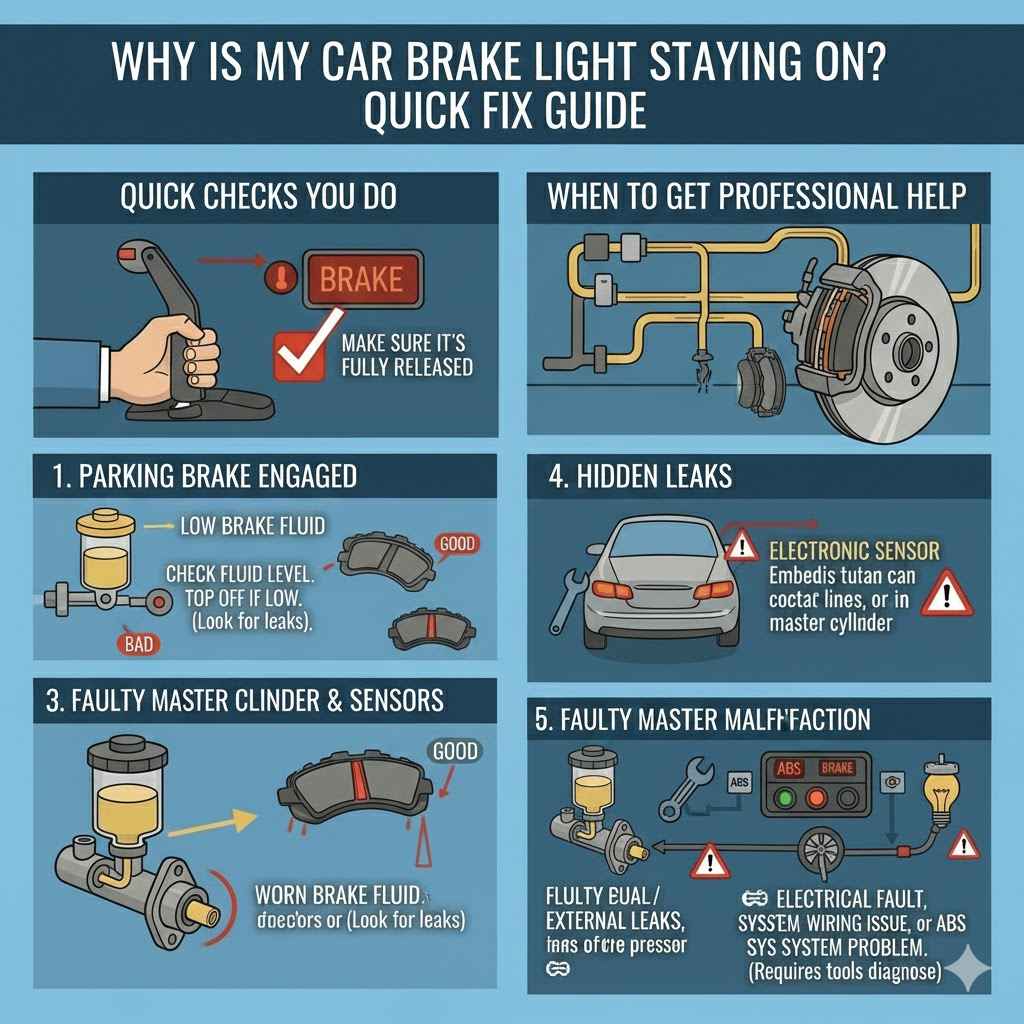
When the brake light stays on, it’s usually one of a few common issues. Low brake fluid, a worn brake pad, or an engaged parking brake are often the simplest to address. You can check your fluid level and ensure the parking brake is fully released.
Visually inspecting brake pads for wear is also a good DIY step.
If these quick fixes don’t work, or if you notice other braking problems, it’s best to get professional help. Mechanics have the tools to find hidden leaks or diagnose issues with the brake system’s more complex parts. Addressing this warning promptly keeps you and others safe on the road.
Frequently Asked Questions
Question: Is it safe to drive with the brake light on?
Answer: It’s generally not recommended to drive with the brake light on. It indicates a potential problem with your braking system, which could compromise your ability to stop safely. If it’s due to low brake fluid or worn pads, your stopping power might be reduced.
Question: How often should I check my brake fluid?
Answer: You should check your brake fluid level at least once a month as part of your regular car maintenance. It’s also a good idea to check it whenever you notice any changes in your brake pedal feel or if a warning light comes on.
Question: Can a bad alternator cause the brake light to stay on?
Answer: While an alternator primarily affects your car’s electrical system and battery charging, a severely failing alternator can lead to low voltage. In some vehicles, low voltage can cause various warning lights, including the brake light, to illuminate erratically or stay on. However, it’s not a direct cause of brake system failure.
Question: What is the difference between the brake light and the ABS light?
Answer: The brake light typically indicates a problem with the standard braking system, such as low fluid or worn pads. The ABS (Anti-lock Braking System) light specifically signals an issue with the anti-lock braking feature, which helps prevent wheel lock-up during hard braking. Sometimes, an ABS issue can also trigger the main brake light.
Question: How much does it cost to fix a brake light issue?
Answer: The cost can vary widely. A simple fix like topping up brake fluid or adjusting the parking brake might cost very little. Replacing worn brake pads can range from $200 to $400 per axle.
More complex issues, like a faulty master cylinder or ABS component, can cost $500 or more.
Summary
When your car’s brake light stays on, it’s a signal to check your braking system. Often, low brake fluid, worn brake pads, or an engaged parking brake are the culprits. Simple checks can resolve these issues.
If the problem persists, it’s best to have a mechanic diagnose and repair it for your safety.