
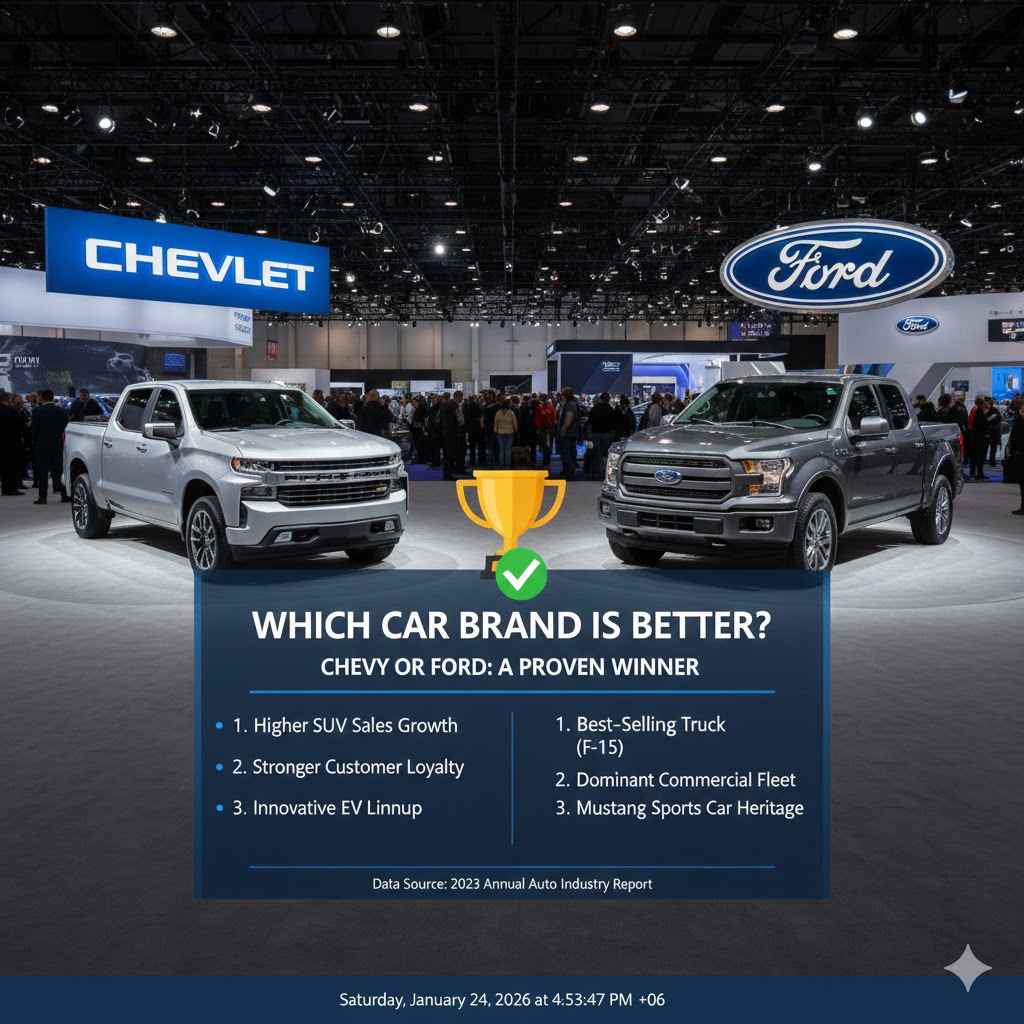
Deciding between Chevy and Ford often comes down to personal needs. Ford typically leads in the truck category with the F-150’s unmatched sales and towing capabilities, while Chevy often excels in ride comfort for its SUVs and trucks. Both brands offer strong contenders in performance and reliability, making the “best” choice dependent on the specific model you’re considering.
Hello there, I’m Dustin Hall. If you’re trying to choose between a Chevrolet and a Ford, you’ve stumbled into one of the oldest and most passionate debates in the automotive world. It’s like picking a side in a friendly neighborhood rivalry that’s been going on for over a century! It can feel overwhelming, with so many opinions, models, and features to sort through.
Don’t worry, I’m here to help you cut through the noise. We’re going to break down this classic matchup into simple, easy-to-understand categories. We’ll look at everything from trucks and SUVs to reliability and repair costs. By the end, you’ll have the confidence to decide which brand is the right fit for you and your family. Let’s get started and find your perfect ride.
Chevy vs. Ford: Unpacking the All-American Rivalry
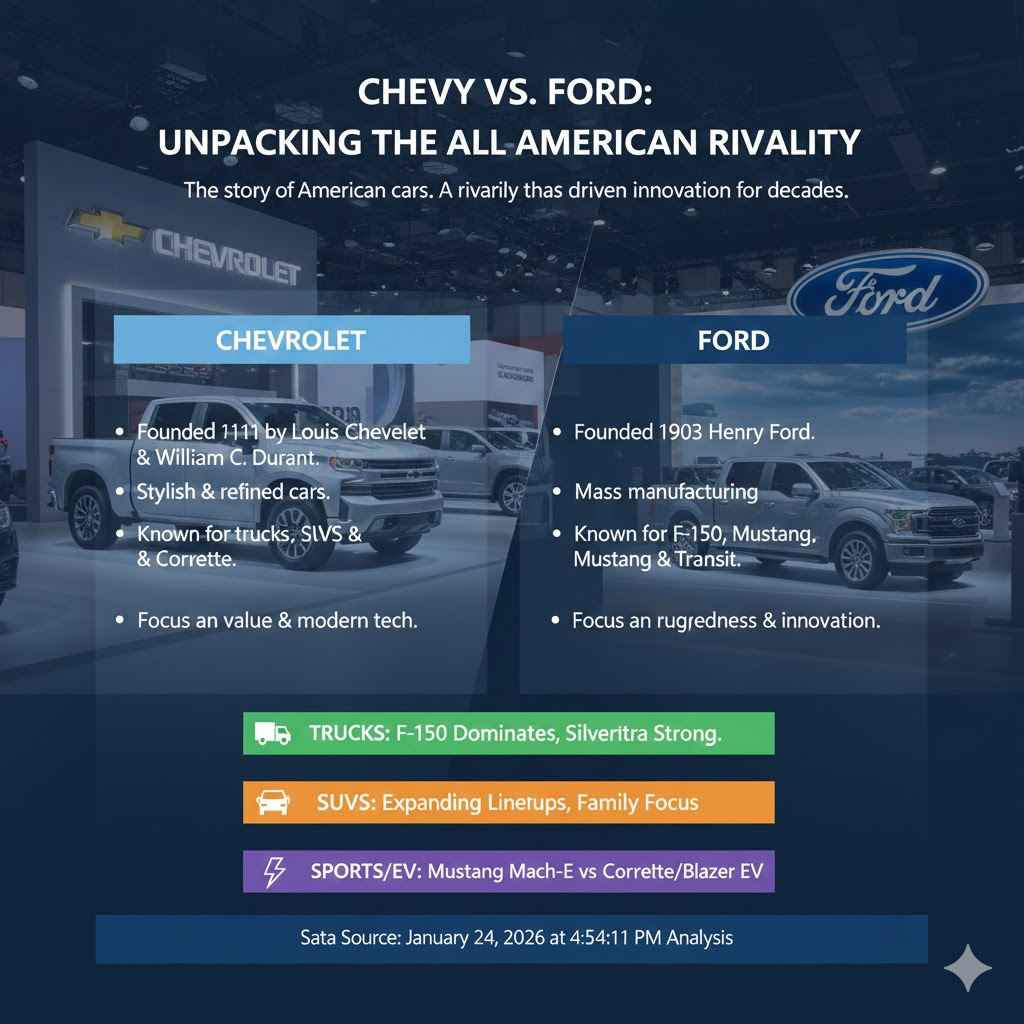
The story of Chevrolet and Ford is the story of American cars. Ford, founded in 1903 by Henry Ford, revolutionized manufacturing with the assembly line and the Model T. Chevrolet followed in 1911, co-founded by race car driver Louis Chevrolet and William C. Durant, who wanted to create a stylish and more refined car to compete with Ford. This rivalry has driven innovation for decades, giving us some of the most iconic vehicles ever made.
Today, both brands are global powerhouses offering a full lineup of vehicles, from small SUVs to heavy-duty trucks. But the core of their competition remains, especially in the hearts of American drivers. Let’s break down how they stack up in the areas that matter most to you.
Category Breakdown: Where Each Brand Shines
Instead of declaring one brand an outright winner, it’s more helpful to see where each one has its strengths. The best brand for a construction worker needing a tough truck might not be the best for a family looking for a safe and comfortable SUV.
Trucks: The Heavy-Hitting Showdown
This is arguably the most fiercely contested battleground. The Ford F-150 has been the best-selling vehicle in America for over 40 years, while the Chevy Silverado is consistently its closest competitor.
Ford F-Series
- Workhorse Mentality: Ford trucks are legendary for their capability. They often lead the class in maximum towing and payload capacities. If your primary need is hauling heavy loads, the F-150 is a proven champion.
- Innovation: Ford isn’t afraid to try new things. They introduced an aluminum body to the F-150 to save weight and have innovative features like the Pro Power Onboard system, which turns the truck into a mobile generator.
- Variety: With a wide range of engines, including the efficient PowerBoost Hybrid and the all-electric F-150 Lightning, there’s an F-Series for nearly every need.
Chevy Silverado
- Ride Comfort: Many drivers and critics agree that the Silverado often provides a smoother, more comfortable ride than its Ford counterpart, making it a great choice for a daily driver that also works hard.
- Proven Powertrains: Chevy’s V8 engines are known for their straightforward, durable design and satisfying power delivery. They offer a no-nonsense approach to performance that many truck owners appreciate.
- Functional Bed: The “Durabed” in the Silverado is often praised for having more standard cargo volume than competitors, along with useful features like 12 standard tie-downs.
Head-to-Head: F-150 vs. Silverado 1500 (Typical Specs)
To give you a clearer picture, let’s look at some typical numbers for their most popular models. Keep in mind these figures can change based on the specific engine, cab, and bed configuration.
| Feature | Ford F-150 (Typical) | Chevy Silverado 1500 (Typical) |
|---|---|---|
| Max Towing Capacity | Up to 14,000 lbs | Up to 13,300 lbs |
| Max Payload Capacity | Up to 3,310 lbs | Up to 2,260 lbs |
| Popular Engine Options | 3.5L EcoBoost V6, 5.0L V8, 3.5L PowerBoost Hybrid | 5.3L V8, 6.2L V8, 3.0L Duramax Turbo-Diesel |
| Key Strength | Best-in-class capability and innovation | Excellent ride comfort and proven V8 power |
SUVs: The Family Haulers
From compact crossovers to giant three-row SUVs, both Ford and Chevy offer strong options for families. Here, the focus shifts from raw power to comfort, space, and safety.
Ford’s SUV Lineup (Explorer, Expedition, Escape)
- Sporty Handling: Ford SUVs, especially the Explorer and Escape, are often noted for feeling more agile and fun to drive than their Chevy competitors.
- Modern Interiors: Ford has put a lot of effort into designing user-friendly and tech-forward interiors, often featuring large touchscreens and clever storage solutions.
- Space for Everyone: The Ford Expedition and its longer Expedition MAX version are direct competitors to Chevy’s large SUVs, offering massive amounts of passenger and cargo room.
Chevy’s SUV Lineup (Tahoe, Suburban, Equinox)
- Unbeatable Space (Tahoe/Suburban): When it comes to maximum interior space, nobody beats the Chevy Suburban and its slightly smaller sibling, the Tahoe. They are the kings of the road trip for large families.
- Comfortable Cruising: Similar to their trucks, Chevy’s large SUVs are praised for their smooth ride, especially with the available independent rear suspension and air ride adaptive suspension.
- User-Friendly Tech: Chevy’s infotainment systems are widely regarded as some of the most intuitive and easy-to-use in the industry, which is a huge plus for busy families.
Performance Cars: Mustang vs. Camaro
This is a rivalry built on pure passion. The Ford Mustang and Chevrolet Camaro have been battling for muscle car supremacy since the 1960s. The “better” car here almost always comes down to personal taste.
Ford Mustang
The Mustang is an icon. It offers a blend of modern technology and retro styling that appeals to a wide audience. It’s available with a potent turbocharged four-cylinder engine or the legendary 5.0L “Coyote” V8. The Mustang is often seen as a slightly more comfortable and practical daily driver compared to the Camaro.
Chevrolet Camaro
The Camaro is all about aggressive performance. Its chassis is widely praised for its sharp handling and track-ready capabilities, making it feel more like a true sports car. However, this performance focus comes with trade-offs, such as a more cramped interior and notoriously poor visibility.
Choosing between them is simple: drive both. One will speak to you more than the other. It’s a decision you make with your heart as much as your head.
Reliability and Maintenance Costs: The Practical Side
A car is a long-term investment, so reliability and running costs are incredibly important. Historically, both Ford and Chevy have had their ups and downs. Today, they are generally quite competitive with each other and with other brands.
According to studies by firms like J.D. Power, both brands typically hover around the industry average for reliability. Some models will be exceptionally reliable, while others might have specific issues. This is why it’s crucial to research the specific model and year you are interested in.
When it comes to maintenance, both brands have a huge advantage: parts are everywhere and they are affordable. Nearly every mechanic in America knows how to work on a Ford or a Chevy. This makes repairs simpler and cheaper than for many foreign brands.
For a general idea of costs, sites like RepairPal provide annual estimates for various brands. Here’s how the two often compare:
| Brand | Average Annual Repair Cost | Reliability Rating (out of 5.0) |
|---|---|---|
| Ford | $775 | 3.5 |
| Chevrolet | $649 | 3.5 |
Source: RepairPal. Data is subject to change.
As you can see, they are very close. Chevy often has a slight edge with slightly lower average repair costs, but both are considered reasonable to maintain. The most important thing you can do for reliability is to keep up with your vehicle’s recommended maintenance schedule, no matter which brand you choose.
How to Choose the Right Brand for You
Okay, we’ve covered a lot. So how do you make the final decision? Follow these simple steps to find the perfect vehicle for your needs.
Step 1: Identify Your Main Purpose
Be honest about what you’ll use the vehicle for 90% of the time. Don’t buy a heavy-duty truck for a daily 10-mile commute just because it looks cool.
- Daily Commuting: Look at smaller, fuel-efficient models like the Chevy Trax or Ford Escape.
- Family Hauling: Consider three-row SUVs like the Ford Explorer or Chevy Traverse/Tahoe.
- Heavy Work/Towing: This is prime territory for the F-150 and Silverado. Compare their specific towing and payload ratings for the configuration you need.
- Fun and Performance: Head straight to the Mustang and Camaro test drives.
Step 2: Set a Realistic Budget
Your budget is more than just the sticker price. Remember to factor in:
- Insurance costs (get quotes for the models you’re considering).
- Fuel expenses.
- Routine maintenance (oil changes, tires, brakes).
- Potential repair costs.
A slightly cheaper car with poor fuel economy or high insurance could cost you more in the long run.
Step 3: Research Specific Models and Years
Once you’ve narrowed it down to a few models, dig deeper. A 2018 Ford Explorer is a different vehicle from a 2023 Ford Explorer. Look up reliability ratings and common problems for the exact year you’re considering. Check safety ratings from official sources like the National Highway Traffic Safety Administration (NHTSA) to ensure the vehicle will protect your family.
Step 4: Test Drive, Test Drive, Test Drive!
This is the most important step. You can read reviews all day, but you won’t know how a car truly feels until you’re behind the wheel. Drive the Ford and the Chevy models you’re considering back-to-back if possible. Pay attention to:
- Comfort: How do the seats feel? Is the ride smooth or bumpy?
- Visibility: Can you see clearly out of all the windows?
- Performance: Does the engine have enough power for your needs? How do the brakes feel?
- Technology: Is the infotainment screen easy to use? Can you connect your phone easily?
Trust your gut. The car that feels right to you is often the right choice.

Frequently Asked Questions (FAQ)
Which car brand is better for trucks, Chevy or Ford?
Ford is generally considered the winner for maximum capability, as the F-150 often has higher towing and payload ratings. However, many people prefer the Chevy Silverado for its comfortable ride and powerful, reliable V8 engines. The best one depends on whether you prioritize raw work power or daily driving comfort.
Is Ford or Chevy more reliable?
Both brands are very similar in overall reliability, typically ranking near the industry average. Reliability can vary more by specific model and year than by the brand itself. It’s best to research the exact vehicle you’re interested in rather than making a decision based on the brand logo alone.
Which brand has cheaper parts and is easier to fix?
Both Ford and Chevy have excellent parts availability and are generally affordable to repair. Since their vehicles are so common in North America, almost any mechanic can work on them, and parts (both new and used) are easy to find. Chevy sometimes has a slight edge in lower average repair costs, but the difference is usually small.
What’s better for performance, the Mustang or the Camaro?
This is a matter of personal preference. The Ford Mustang is often described as a more comfortable and well-rounded daily driver. The Chevrolet Camaro is typically praised for its superior handling and track-focused performance, though this can come at the cost of comfort and visibility.
Which brand holds its value better?
Resale value depends heavily on the specific model. Trucks and large SUVs from both brands, like the F-150, Silverado, Tahoe, and Expedition, tend to hold their value very well. Performance cars like the Mustang and Camaro also have strong resale values. Generally, there isn’t a huge difference across the entire brand lineup.
Do Chevy or Ford have better technology?
Both brands offer modern, competitive technology. Chevy’s infotainment systems are often praised for being extremely simple and intuitive to use. Ford’s SYNC system is also very capable and often features larger screens. Ford has also been a leader in truck-specific tech, like the Pro Power Onboard generator system.
Which brand is better for family SUVs?
If maximum passenger and cargo space is your top priority, the Chevrolet Tahoe and Suburban are unbeatable. If you prefer a more agile, car-like driving experience, the Ford Explorer or Escape might be a better fit. Both brands offer excellent safety features and family-friendly amenities.
Conclusion: The Winner Is Up to You
So, after all that, which brand is better: Chevy or Ford? The proven winner is the one that best fits your life. There is no single right answer, and anyone who tells you otherwise is probably just sharing their personal loyalty.
Ford often stands out for its tough, capable trucks and innovative features. Chevrolet shines with its comfortable ride quality and incredibly spacious large SUVs. Both build world-class performance cars and offer reliable, affordable vehicles for daily driving.
Don’t get caught up in the rivalry. Instead, use it to your advantage. The fierce competition between these two American giants means they are constantly pushing each other to build better, safer, and more capable vehicles for you. By doing your research, taking a few test drives, and focusing on your needs, you can feel confident choosing a car or truck from either one of these legendary brands.