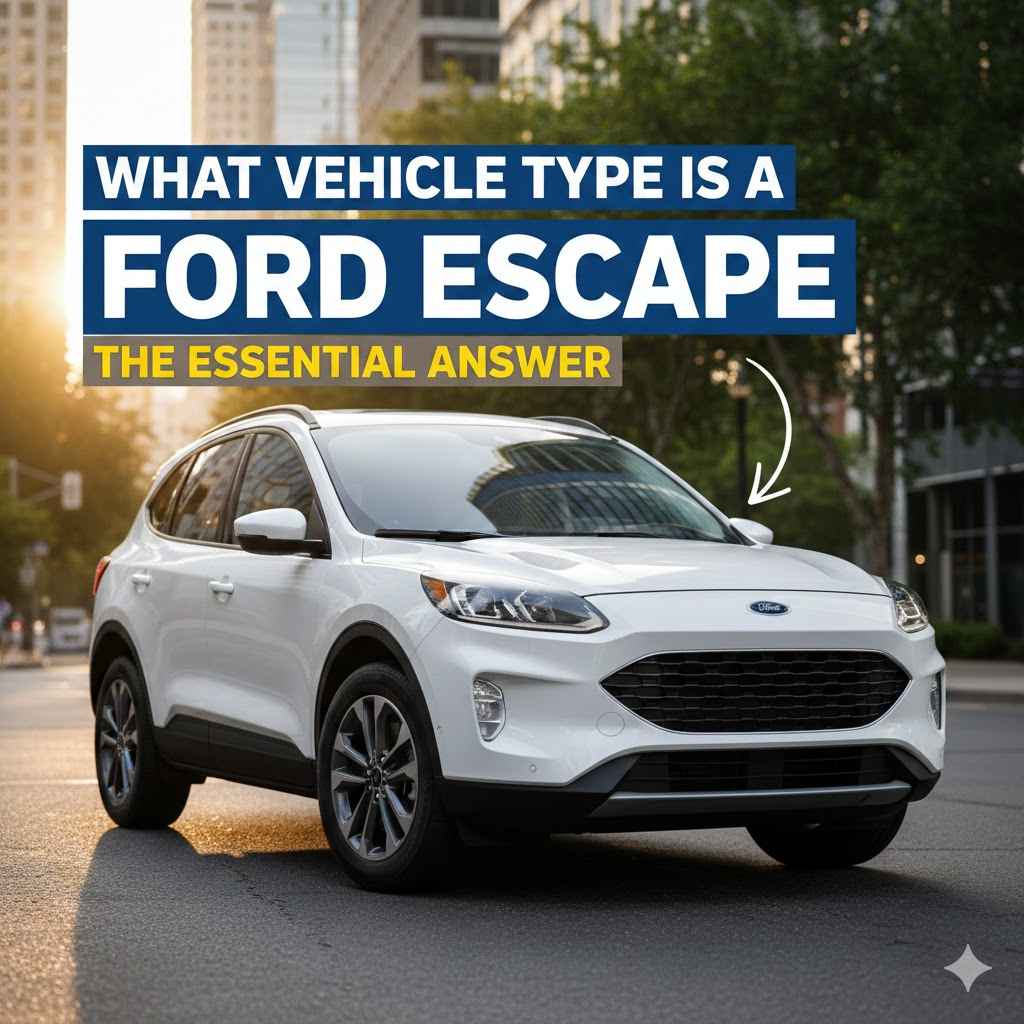
What Vehicle Type Is A Ford Escape The Essential Answer
The Ford Escape is a compact crossover SUV. It combines the comfortable, smooth ride and fuel efficiency of a car with the higher seating position, versatile cargo space, and available all-wheel drive of a traditional SUV. It’s the perfect blend for daily driving, family errands, and weekend adventures.
Have you ever looked at a Ford Escape and wondered, “Is that a car or an SUV?” You’re not alone! With so many different vehicle types on the road, it can be confusing to figure out where each one fits. Cars seem to be getting bigger, and SUVs seem to be getting smaller. It’s a common question, and getting a clear answer helps you understand what a vehicle is truly designed for.
Don’t worry, I’m here to clear things up for you. In this guide, we’ll break down exactly what type of vehicle the Ford Escape is, what that means for you as a driver, and how it has changed over the years. By the end, you’ll be a confident expert on the subject!
First, Let’s Understand the Basics: SUV vs. Crossover
Before we place the Ford Escape, we need to know the two main categories it sits between: the traditional SUV and the modern crossover. For years, “SUV” was the only term used, but a key difference in how they are built created a new class of vehicle.
The Traditional SUV
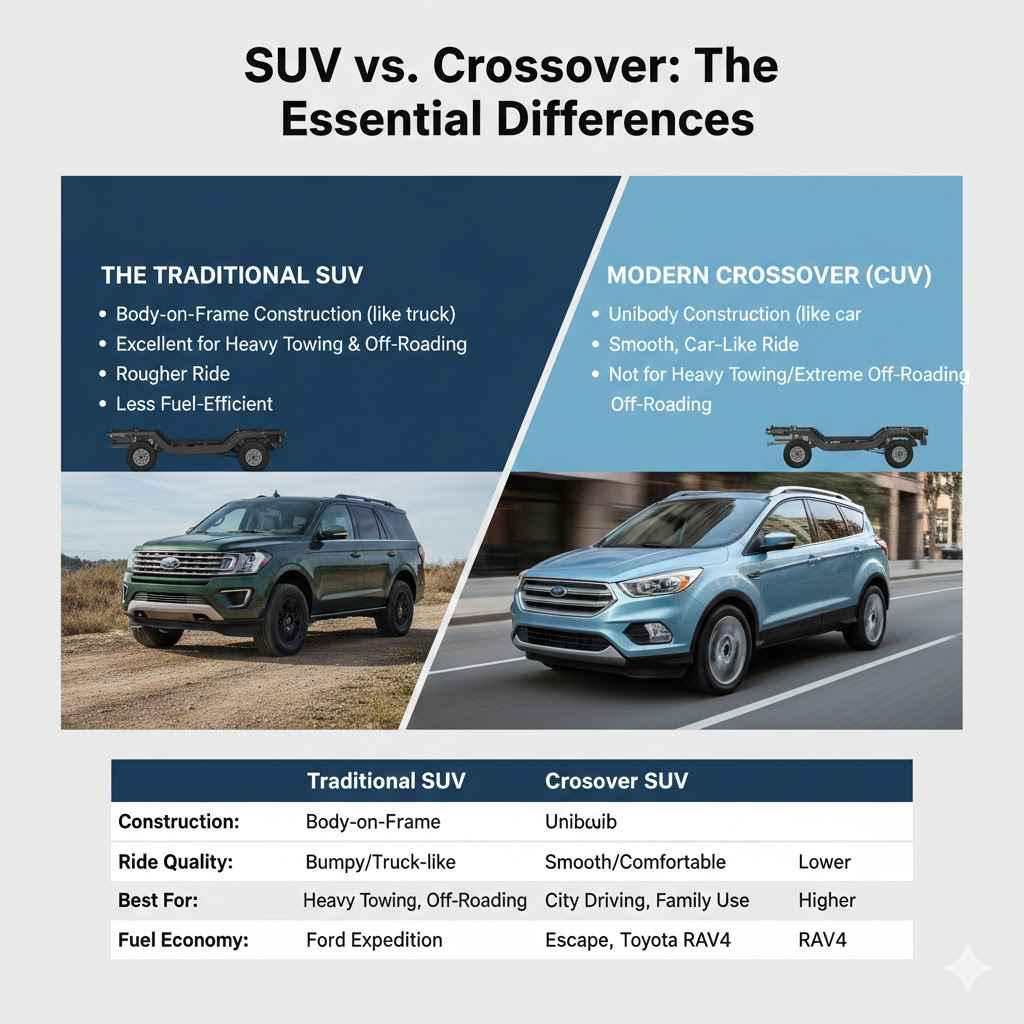
Think of a classic SUV as being built like a tough pickup truck. It uses a method called “body-on-frame” construction. This means the vehicle’s body is built as a separate unit and then bolted onto a strong, rigid steel frame. This heavy-duty frame is great for towing heavy loads and handling rough, off-road terrain. It’s what gives traditional SUVs their rugged, powerful feel.
- Built on a truck chassis (frame)
- Excellent for heavy towing and serious off-roading
- Often has a rougher, bouncier ride on paved roads
- Typically less fuel-efficient due to its weight and design
The Modern Crossover (CUV)
A crossover, on the other hand, is built more like a regular car. It uses “unibody” construction, where the frame and the body are built as a single, integrated piece. This is the same way nearly all modern sedans and hatchbacks are made. This design makes the vehicle lighter, which helps it get better gas mileage and feel smoother and more comfortable on the road. It “crosses over” the best features of a car with the useful features of an SUV.
- Built on a car platform (unibody)
- Provides a smooth, comfortable, car-like ride
- Generally more fuel-efficient
- Not designed for heavy-duty towing or extreme off-roading
Here’s a simple table to help you see the difference at a glance:
| Feature | Traditional SUV | Crossover SUV |
|---|---|---|
| Construction | Body-on-Frame (like a truck) | Unibody (like a car) |
| Ride Quality | Can be bumpy or truck-like | Smooth and comfortable |
| Best For | Heavy towing, serious off-roading | City driving, family use, light trails |
| Fuel Economy | Lower | Higher |
| Example | Ford Expedition, Chevrolet Tahoe | Ford Escape, Toyota RAV4, Honda CR-V |
So, Where Does the Ford Escape Fit In? It’s a Compact Crossover SUV!
Now that we have that cleared up, the answer is simple: The Ford Escape is a compact crossover SUV. It was one of the first vehicles to popularize this category, offering people a “just right” solution that blended practicality with ease of driving.
Let’s break down why it earns this title:
1. It’s Built on a Car Platform (Unibody)
From its very first model, the Ford Escape was built using unibody construction. The first generation was co-developed with Mazda and shared its foundation with a car, the Mazda 626. Later generations shared platforms with the popular Ford Focus. This car-based foundation is the number one reason it’s a crossover. It’s engineered to give you the handling, comfort, and safety of a car, not a heavy truck.
2. It Has SUV-Like Features
While it’s built like a car, it looks and acts like an SUV. This is the “crossover” magic. Here are the SUV traits you get with an Escape:
- Higher Ground Clearance: It sits higher off the ground than a sedan, which helps you see over traffic better and handle snowy roads or bumpy paths without scraping the bottom.
- Available All-Wheel Drive (AWD): Most Escape models offer an AWD option. This system sends power to all four wheels when needed, giving you better traction and control in rain, snow, or on gravel roads. It’s a huge confidence booster in bad weather.
- Versatile Cargo Space: With a large rear hatch and fold-down back seats, the Escape offers a ton of room for groceries, sports equipment, luggage, or even small furniture. This flexible space is a key reason people choose it over a sedan.
3. It’s “Compact” in Size
The “compact” part of its name refers to its size. It’s smaller than mid-size SUVs like the Ford Explorer or full-size ones like the Ford Expedition. This smaller footprint makes the Escape incredibly easy to manage. It’s a breeze to park in crowded city lots, navigate tight streets, and maneuver in traffic. It provides plenty of interior space for passengers and cargo without feeling like you’re driving a giant land-yacht.
A Journey Through Time: How the Ford Escape Evolved
The Ford Escape hasn’t always looked the way it does today. Its evolution over the years clearly shows the auto industry’s shift from traditional SUVs toward more comfortable and efficient crossovers. Understanding its history helps you see why it is what it is today.
First Generation (2001–2007): The Trailblazing Compact SUV
When the first Ford Escape arrived, it was a game-changer. At the time, most SUVs were big, truck-based, and thirsty for gas. The Escape offered a fresh alternative. It had a classic, boxy, rugged SUV look that people loved, but it drove with the ease of a car. It was also one of the first SUVs to offer a hybrid version, which was revolutionary back in 2005. This generation established the Escape as a practical, easy-to-drive vehicle with the utility people wanted.
Second Generation (2008–2012): A Familiar Face with Upgrades
The second generation was more of a major facelift than a complete redesign. It kept the popular boxy shape but gave it a tougher look with a new grille, headlights, and a more sculpted body. Inside, Ford focused on making it quieter and more comfortable, with better materials and new tech features. Ford continued to refine the hybrid model, solidifying its reputation for efficiency. While still looking like a traditional SUV, its car-based roots continued to deliver a pleasant driving experience.
Third Generation (2013–2019): The Great Crossover Transformation
This is when the Escape fully embraced its crossover identity. Ford completely redesigned it, ditching the boxy look for a sleek, aerodynamic, and modern style inspired by its European models. This new Escape looked much more like a raised-up car or wagon. The focus shifted heavily toward fuel economy with the introduction of Ford’s popular EcoBoost turbocharged engines. This generation cemented the Escape as a modern, stylish, and efficient crossover for a new era of buyers.
Fourth Generation (2020–Present): The Tech-Savvy and Efficient Crossover
The latest generation of the Ford Escape is the most car-like yet. Its design is even more rounded and athletic, with some saying it resembles a larger hatchback. The focus is squarely on technology, safety, and efficiency. Ford brought back the popular hybrid and introduced a new plug-in hybrid (PHEV) option, offering outstanding fuel economy. It’s packed with driver-assist features that make driving safer and easier. This modern Escape is the ultimate expression of the crossover concept: car-like comfort and efficiency with SUV-like practicality.
What Makes the Ford Escape a Great Choice? (Pros and Cons)
Understanding that the Escape is a compact crossover helps you see its strengths and weaknesses. It is designed to be a master of daily life, but that means it has to make some trade-offs. Here’s a look at what it does best and where other vehicle types might be a better fit.
Key Advantages of Driving an Escape
- Everyday Versatility: It’s the Swiss Army knife of vehicles. It’s small enough for easy commuting and parking, but spacious enough for a small family’s groceries, strollers, and vacation luggage.
- Impressive Fuel Efficiency: Thanks to its lighter unibody design and modern engines, the Escape gets great gas mileage. The hybrid and plug-in hybrid models take this even further, saving you a lot of money at the pump compared to larger SUVs. You can check specific model ratings on the U.S. government’s official site, FuelEconomy.gov.
- A Comfortable and Quiet Ride: Since it drives like a car, the Escape is smooth and composed on the road. It absorbs bumps well and is easy to handle, making long drives or daily commutes far more relaxing than in a bouncy, truck-based SUV.
- Confident Handling in All Weather: With available All-Wheel Drive (AWD), the Escape provides excellent traction on wet or snowy roads. It gives you peace of mind and helps you stay in control when conditions get slippery.
Potential Downsides to Keep in Mind
- Not a True Off-Roader: While its AWD system is fantastic for bad weather, the Escape is not built for serious off-roading. It lacks the heavy-duty frame, specialized suspension, and high ground clearance of a dedicated off-road vehicle like a Ford Bronco or Jeep Wrangler. Stick to paved roads and light gravel trails.
- Limited Towing Capacity: It can typically tow a small trailer with a jet ski or a lawnmower, but it can’t handle large boats, campers, or heavy equipment. For that, you would need a body-on-frame SUV or a pickup truck.
- No Third-Row Seating: The Escape is strictly a two-row vehicle with seating for up to five people. If you need to carry more passengers, you’ll need to look at a larger, mid-size SUV like the Ford Explorer or a minivan.
How the Escape Compares to Other Vehicle Types
Seeing the Escape next to other common vehicles really helps highlight its unique place in the market. It truly fills the gap between a standard car and a large SUV.
| Vehicle Type | Key Features | Best For |
|---|---|---|
| Compact Crossover (Ford Escape) | Car-like ride, AWD available, flexible cargo space, good fuel economy. | Daily commuting, small families, all-weather driving, and weekend trips. |
| Mid-Size Sedan (e.g., Honda Accord) | Excellent fuel economy, smooth ride, lower price point. | Commuters who prioritize fuel savings and don’t need much cargo space. |
| Mid-Size SUV (e.g., Ford Explorer) | Three-row seating, higher towing capacity, more rugged. | Larger families, towing boats or campers, and needing more space. |
| Minivan (e.g., Chrysler Pacifica) | Maximum passenger and cargo room, sliding doors, family-friendly features. | Families who need the most interior space and convenience possible. |
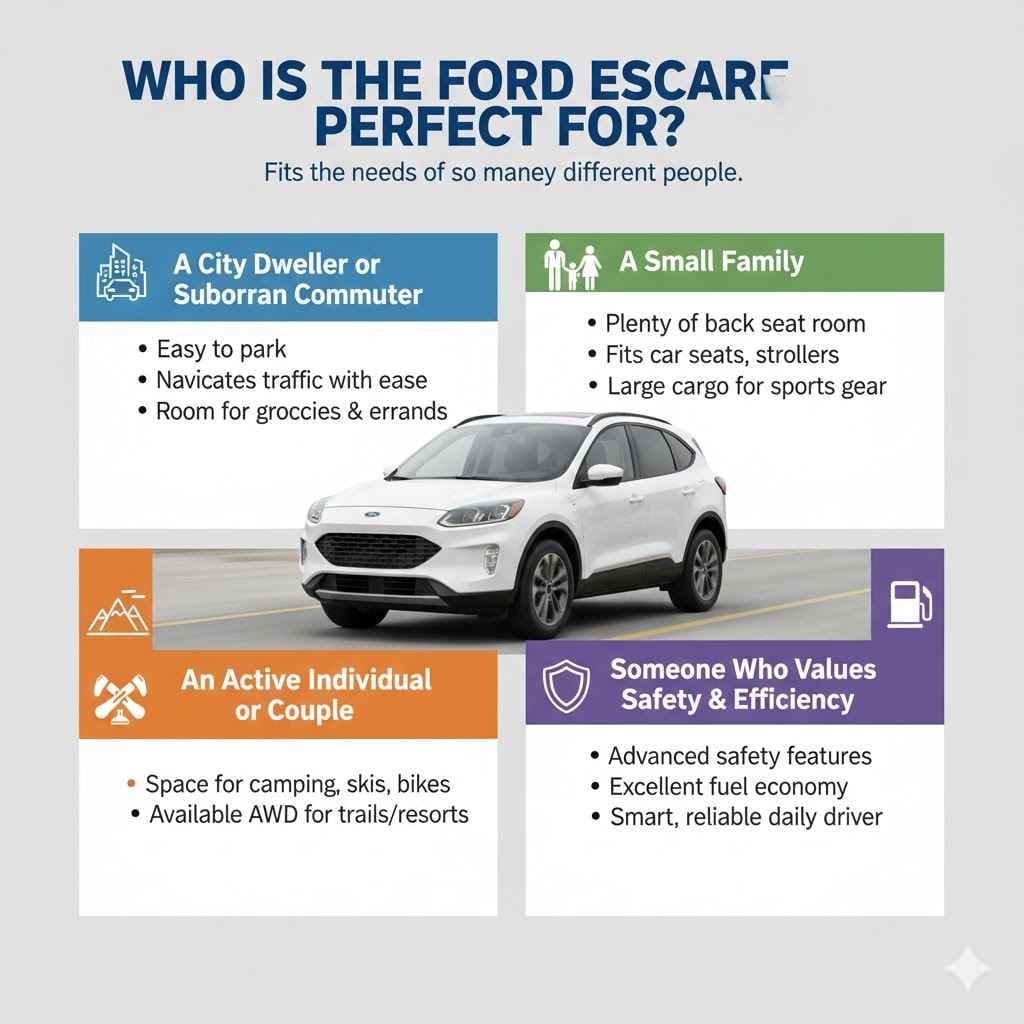
Who is the Ford Escape Perfect For?
The Ford Escape is one of the most popular vehicles in America for a reason: it fits the needs of so many different people. You might be the perfect Escape owner if you are:
- A City Dweller or Suburban Commuter: If you need a vehicle that’s easy to park and navigate through traffic but still has room for a big grocery run or a trip to the hardware store, the Escape is ideal.
- A Small Family: For parents with one or two children, the Escape offers plenty of room in the back seat for car seats and a large cargo area for strollers, diaper bags, and sports gear.
- An Active Individual or Couple: Do you love weekend getaways? The Escape has ample space for camping equipment, skis, bikes (with a rack), or luggage, and its available AWD can get you to the trailhead or ski resort with confidence.
- Someone Who Values Safety and Efficiency: Modern Escapes are loaded with advanced safety features. Combined with excellent fuel economy, it’s a smart, practical choice for anyone who wants a responsible and reliable daily driver.
Frequently Asked Questions (FAQ)
1. So, is a Ford Escape an SUV or a car?
It’s a crossover, which is the perfect blend of both! It’s technically classified as a compact crossover SUV because it uses a car’s unibody platform for a smooth ride but has the height, space, and all-wheel-drive capability of an SUV.
2. Is the Ford Escape good in the snow?
Yes, it performs very well in the snow, especially when equipped with All-Wheel Drive (AWD). The AWD system automatically provides better traction in slippery conditions. Combining AWD with a good set of winter tires makes the Escape a very capable and safe winter vehicle.
3. Can a Ford Escape go off-road?
The Escape is not designed for serious off-roading on rough, rocky trails. However, its higher ground clearance and available AWD make it perfectly capable of handling gravel roads, dirt paths, or driving through a grassy field to a campsite.
4. What other cars are similar to the Ford Escape?
The Ford Escape competes in a very popular class. Its main rivals include the Toyota RAV4, Honda CR-V, Hyundai Tucson, Nissan Rogue, and Chevrolet Equinox. All of these are excellent compact crossover SUVs.
5. Does the Ford Escape have a third row of seats?
No, the Ford Escape is a two-row vehicle that seats a maximum of five people. If you need a third row for more passengers, you would need to look at a larger Ford SUV like the Explorer or Expedition.
6. What does “unibody” mean in simple terms?
Unibody means the vehicle’s frame and body are built as one single, solid piece. Think of it like a strong, protective shell. This is different from a traditional truck or large SUV where the body is placed on top of a separate, heavy frame. A unibody design is lighter, which helps with fuel economy and creates a smoother, more comfortable ride.
7. Is the Ford Escape a reliable vehicle?
Generally, the Ford Escape has a solid reputation for reliability, particularly in its more recent generations. Like any car, reliability can depend on the specific year and how well it’s maintained. For detailed information on safety and recalls for any model year, you can check the National Highway Traffic Safety Administration (NHTSA) website.
Conclusion: Your Go-To Compact Crossover
So, there you have it! The Ford Escape is a compact crossover SUV, expertly designed to give you the best of both worlds. It delivers the smooth handling, comfortable ride, and great fuel economy of a car, all wrapped up in a practical package with the higher seating, flexible cargo space, and all-weather confidence of an SUV.
From its beginnings as a boxy pioneer to its current form as a sleek, tech-forward vehicle, the Escape has always been about one thing: versatility. It’s a vehicle built for the real world—for commutes to work, trips to the grocery store, and adventures on the weekend.
Now that you know exactly what type of vehicle a Ford Escape is, you can be confident in understanding its strengths and deciding if it’s the right fit for your life. It’s a smart, capable, and practical choice that continues to be a favorite for millions of drivers. See also vehicle and types a complete guide for new car buyers.
Products related to this article
Sponsored / affiliate links. As an Amazon Associate I earn from qualifying purchases. I may earn additional commission from eligible campaigns.