What to Do When Car Brakes Lock Up
When your car’s brakes suddenly lock up, it can be a scary and confusing moment, especially if you’re new to driving. This sudden loss of control might make you wonder what went wrong and what you should do right away. Don’t worry; this situation is manageable.
We’ll guide you through exactly What to Do When Car Brakes Lock Up with simple steps to help you stay safe and get back on track.
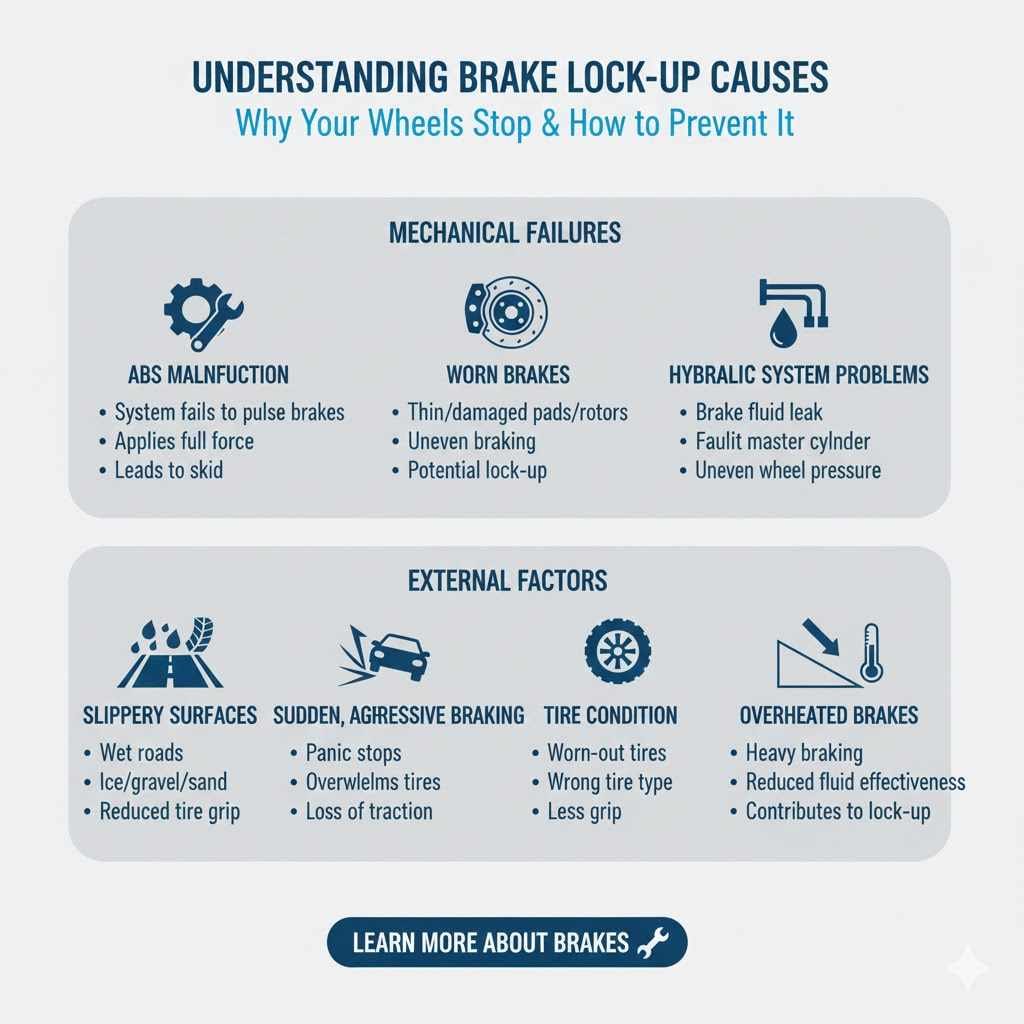
Understanding Brake Lock-Up Causes
Brake lock-up happens when your wheels stop turning while your vehicle is still moving. This causes your car to skid, making it very hard to steer and stop safely. It’s a critical situation that requires immediate attention from the driver.
Understanding why it happens is the first step to preventing it and knowing how to react if it occurs.
Mechanical Failures
Several mechanical issues can lead to brakes locking up. One common cause is a problem with the Anti-lock Braking System (ABS). The ABS is designed to prevent lock-up by pulsing the brakes.
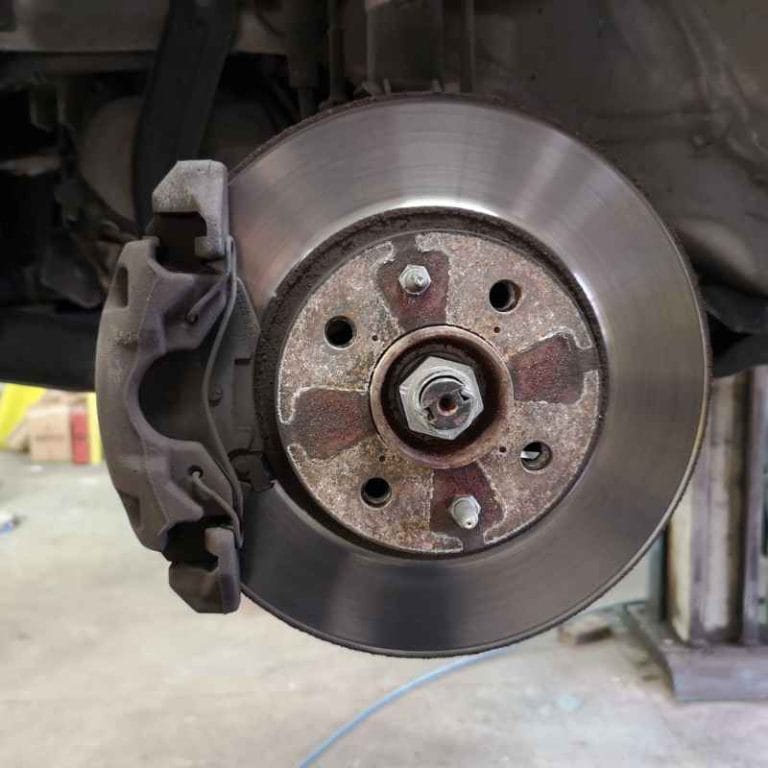
If the ABS malfunctions, it might incorrectly apply full braking force, leading to a skid. Another issue can be worn brake pads or rotors. If these parts are too thin or damaged, they might not function properly, causing uneven braking and potential lock-up.
Hydraulic system problems can also be at play. If there’s a leak in the brake lines or a faulty brake master cylinder, the brake pressure might not be controlled correctly. This can lead to one or more wheels braking much harder than the others, causing them to lock.
Overheated brake fluid, often due to heavy braking, can also reduce braking effectiveness and contribute to lock-up.
External Factors
Sometimes, the environment plays a role in brake lock-up. Driving on slippery surfaces like wet roads, ice, or gravel significantly reduces tire grip. When you brake hard on these surfaces, your tires can easily lose traction and stop rotating, even with a functional braking system.
Sudden, aggressive braking is another major external factor. If you slam on the brakes without warning, especially in a panic situation, your tires might not be able to cope with the sudden deceleration, leading to a skid. The type of tires you have also matters.
Worn-out tires or tires not suited for the road conditions will have less grip, making them more prone to locking up.
Here’s a look at common conditions that increase the risk of brake lock-up:
- Wet roads: Water on the road acts as a lubricant, reducing friction between tires and the road surface. This means your tires can slide more easily.
- Icy surfaces: Ice offers very little friction, making it extremely easy for tires to lose grip. Braking even lightly on ice can cause a lock-up.
- Gravel or sand: Loose surfaces like gravel or sand also reduce tire traction.
When you brake, the tires can dig into the loose material and stop rotating.
- Sudden, hard braking: Applying excessive force to the brake pedal all at once can overwhelm the tires’ ability to grip the road.
Immediate Actions When Brakes Lock Up
The moment your car’s brakes lock up, your first instinct might be to panic, but staying calm is key. Your immediate actions can make a big difference in regaining control and avoiding an accident. The primary goal is to get your wheels turning again so you can steer.
How to React in a Skid
If your brakes lock and you start to skid, the most important thing is to release the brake pedal gently. This allows the wheels to start rotating again. Once the wheels are moving, you can try to steer your vehicle in the direction you want to go.
For cars with ABS, you’ll feel a pulsing sensation in the brake pedal. In this case, you should keep firm pressure on the brake pedal and let the ABS do its job. Don’t pump the brakes; just hold them down.
The system will automatically adjust the braking to prevent a full lock-up.
If your car does not have ABS and you feel the brakes lock, immediately take your foot off the brake pedal. This is crucial for regaining steering control. As soon as the wheels start rolling again, you can reapply the brakes gently.
Here are the core steps to take:
- Release the brake pedal If you have a non-ABS car and your brakes lock up, take your foot completely off the brake pedal. This is the most critical step to regain steering.
- Steer Once the wheels start rolling again, look where you want to go and gently steer your vehicle in that direction. Focus on a clear path.
- Reapply brakes gently After regaining steering, you can gently reapply the brakes.
Avoid slamming them this time.
Importance of Steering Control
During a skid, steering is your primary tool for avoiding obstacles. If your wheels are locked, you cannot steer. Releasing the brakes to get them rolling again is essential for regaining the ability to steer.
This allows you to guide your vehicle away from hazards and towards a safer stopping point.
Imagine you are driving and your brakes lock up. The car starts to slide straight ahead, even though you are trying to turn the steering wheel. The instant you release the brakes, the tires begin to spin again.
Now, if you turn the steering wheel, the tires will respond, and the car will begin to change direction. This is why releasing the brakes is so vital.
What Not to Do
There are common mistakes drivers make when their brakes lock up. One is to keep pressing the brake pedal hard. This will prolong the skid and keep you from steering.
Another mistake is to over-steer. Making sudden, sharp turns can actually make the skid worse and lead to a spin.
Panicking and freezing up is also detrimental. Your brain needs to tell your hands and feet what to do. Thinking clearly, even for a moment, is much more effective than reacting with fear.
Avoid looking directly at the obstacle you are trying to avoid; instead, focus your eyes on the clear path you want to take.
Here are actions to avoid:
- Continue braking hard If your brakes lock, do not keep your foot pressed down on the brake pedal.
- Over-steer Avoid making sudden, jerky movements with the steering wheel. Gentle corrections are best.
- Panic Try to remain as calm as possible. Deep breaths can help.
How to Recover from a Skid Safely
Once you have released the brakes and regained some steering control, the next step is to bring your vehicle to a safe stop without further incident. This involves a combination of gentle braking and careful steering. The goal is to slow down gradually and regain full control of your car.
Gentle Braking Techniques
After releasing the brakes and regaining steering, you should reapply the brakes very gently. This means pressing the brake pedal with light, steady pressure. You want to slow down, but you don’t want to risk locking the wheels again.
If you feel the brakes starting to lock up again, release the pedal slightly and then reapply it gently.
The key is modulation. This means adjusting the pressure you apply to the brake pedal based on how the car is responding. If the tires start to slip, ease up on the pedal.
If the car is still moving too fast and you have good traction, you can increase the pressure slightly.
Steering to Safety
While you are gently braking, continue to steer towards a safe area. This might be the shoulder of the road, an empty parking lot, or a clear stretch of road. Constantly scan for hazards and adjust your steering as needed.
Look where you want to go, not where you don’t want to end up.
If you are on a slippery surface, you might need to make very small, smooth steering adjustments. Large movements can easily cause the tires to lose traction again. The goal is to make controlled corrections to guide the vehicle to a stop.
Bringing Your Vehicle to a Complete Stop
Once you have slowed down considerably and are in a safe location, you can bring your vehicle to a complete stop. Continue to apply the brakes gently until the car is completely stationary. Make sure you are well off the traveled portion of the road.
After stopping, turn on your hazard lights immediately. This will warn other drivers that you have a problem. Take a moment to calm down and assess the situation.
If you feel unsafe or unsure about driving further, call for roadside assistance.
Here’s a sequence for safely stopping after a skid:
- Gentle Pedal Pressure Slowly and smoothly apply pressure to the brake pedal.
- Smooth Steering Inputs Make small, controlled movements with the steering wheel to guide the car.
- Constant Scanning Look ahead for safe areas and potential hazards.
- Gradual Deceleration Aim to slow down smoothly rather than abruptly.
- Secure Location Stop your vehicle completely in a safe place, off the main road.
Preventing Future Brake Lock-Ups
While knowing What to Do When Car Brakes Lock Up is essential, preventing it from happening in the first place is even better. Regular maintenance and safe driving habits can significantly reduce the risk.
Vehicle Maintenance
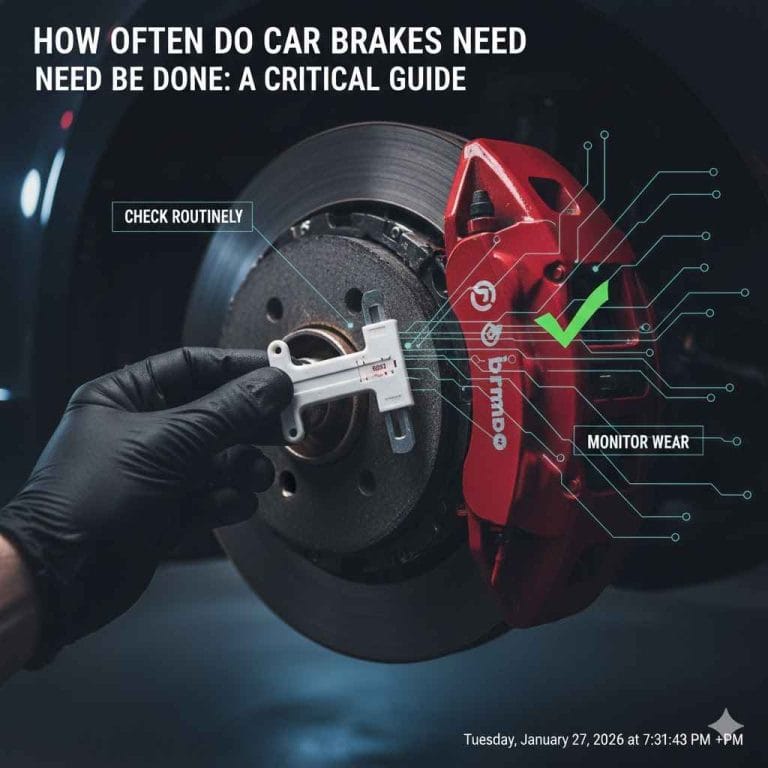
Keeping your car in good working order is crucial for safe braking. Your brake system should be inspected regularly by a qualified mechanic. This includes checking the condition of your brake pads, rotors, brake fluid, and hoses.
Worn brake pads need to be replaced promptly. If they are too thin, they won’t be able to create enough friction to stop your car effectively. Rotors can become warped or scored, also affecting braking performance.
Ensuring your brake fluid is at the correct level and is not contaminated is also important, as old fluid can lose its effectiveness.
If your car has an ABS system, ensure it is functioning correctly. Warning lights on your dashboard related to the braking system should never be ignored. A mechanic can diagnose any issues with the ABS sensors or modules.
Tire Care and Replacement
Your tires are the only part of your car that connects you to the road. Their condition and type play a huge role in preventing skids. Always ensure your tires are properly inflated to the manufacturer’s recommended pressure.
Under-inflated or over-inflated tires do not provide optimal grip.
Check your tire tread depth regularly. Worn tires have less grip, especially in wet or slippery conditions. If your tire tread is low,
Safe Driving Practices
Your driving habits are perhaps the most significant factor in preventing brake lock-up. Always maintain a safe following distance from the vehicle in front of you. This gives you ample time and space to react if they brake suddenly.
Avoid sudden acceleration and hard braking whenever possible. Smooth, gradual inputs to the pedals are much safer and more fuel-efficient. Anticipate traffic conditions ahead.
Look far down the road and be aware of what other drivers are doing. This allows you to adjust your speed or braking smoothly.
When driving in adverse weather conditions like rain, snow, or ice, slow down significantly. Reduce your speed and increase your following distance even further. If conditions are extremely hazardous, it might be best to avoid driving altogether.
Here are some key preventative measures:
- Regular Brake Inspections Have your brakes checked at least once a year or as recommended by your car’s manufacturer.
- Tire Pressure Checks Monitor tire pressure monthly and before long trips.
- Adequate Tread Depth Replace tires when the tread is worn down to about 2/32 of an inch.
- Defensive Driving Always scan the road ahead and anticipate potential hazards.
- Weather Awareness Adjust your driving speed and distance based on road conditions.
Understanding ABS vs. Non-ABS
The way you react to a potential brake lock-up depends heavily on whether your car has an Anti-lock Braking System (ABS). ABS is a safety feature designed to prevent wheels from locking up during hard braking. It works by rapidly pulsing the brakes, allowing the driver to maintain steering control.
If your car has ABS, you will feel a pulsating sensation in the brake pedal, and you might hear a grinding or buzzing sound when it’s active. The correct procedure is to press the brake pedal firmly and hold it down, and let the ABS system do its work. Do not pump the brakes if you have ABS.
Cars without ABS do not have this pulsing feature. When you brake too hard and the wheels lock up, you lose steering. In this situation, you must release the brake pedal immediately to allow the wheels to turn again so you can steer.
Here’s a quick comparison:
| Feature | ABS Equipped Cars | Non-ABS Equipped Cars |
|---|---|---|
| Brake Lock-Up Reaction | Keep firm pressure on brake pedal, let ABS work. | Release brake pedal to regain steering. |
| Pedal Feel | Pulsating, vibrating pedal. | Steady pedal pressure. |
| Sound | Buzzing or grinding noise. | Quieter braking. |
| Steering Control | Maintained during hard braking. | Lost when wheels lock up. |
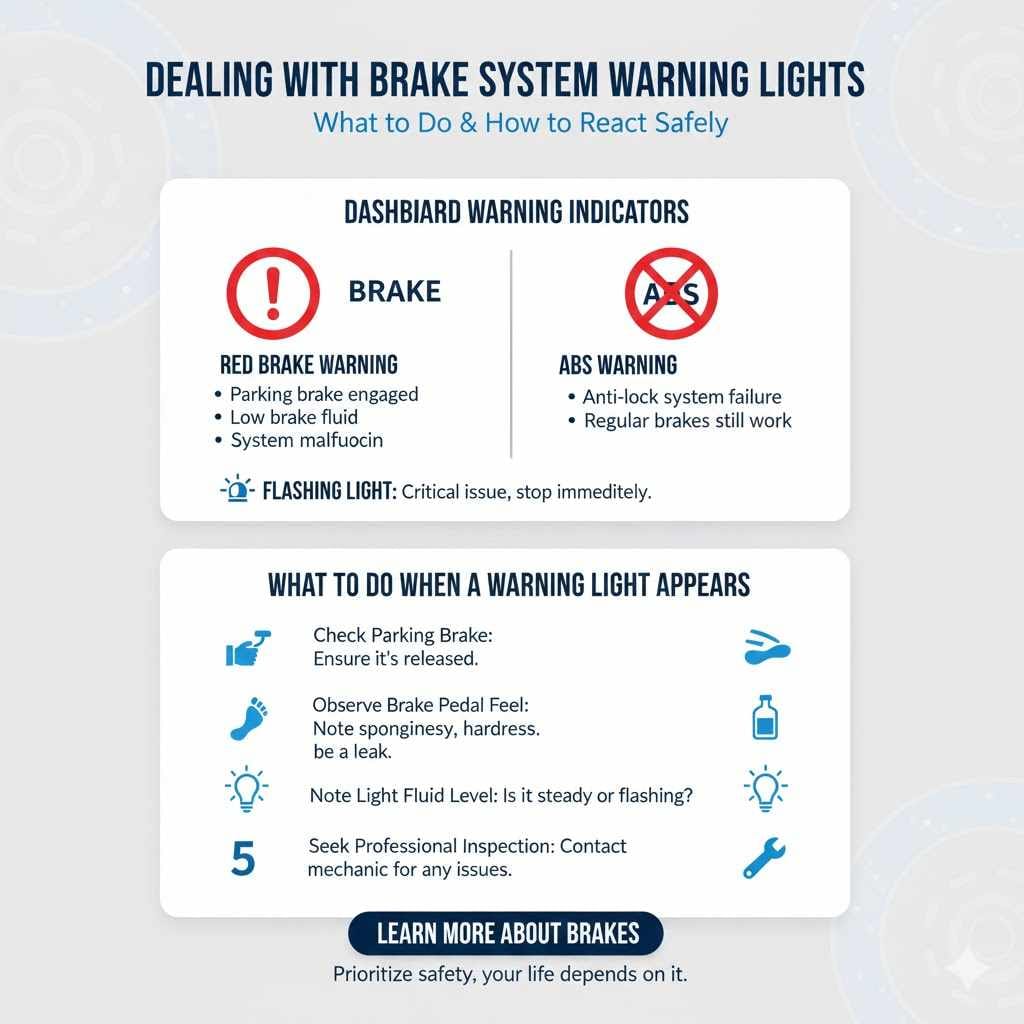
Dealing with Brake System Warning Lights
Modern vehicles are equipped with sophisticated systems that alert drivers to potential problems. If a warning light related to your braking system illuminates on your dashboard, it’s a signal that something needs attention. Ignoring these lights can lead to brake failure or other serious safety issues.
Dashboard Warning Indicators
Several lights on your dashboard could indicate a brake issue. The most common is a red brake warning light, often shaped like a circle with an exclamation mark or the letters “BRAKE” inside. This light can signify several things, such as the parking brake being engaged, low brake fluid levels, or a more serious problem with the braking system itself.
If you have ABS, there is usually a separate ABS warning light, often showing the letters “ABS” in a circle. If this light comes on, it means the Anti-lock Braking System is not functioning correctly. While your regular brakes may still work, the ABS feature will be disabled.
A flashing brake warning light is usually a more urgent signal than a steady light. It often indicates a critical issue that requires immediate attention. For example, a flashing light coupled with a loss of braking power is a sign of a severe problem, and you should pull over as soon as it is safe to do so.
What to Do When a Warning Light Appears
The first step when a brake warning light illuminates is to check your parking brake. Ensure it is fully disengaged. If it is, and the light remains on, you need to assess the situation further.
If the brake warning light is steady and your brakes feel normal, it might indicate low brake fluid. Pull over safely and check your brake fluid reservoir. If it is low, there could be a leak in the system, which is a serious concern.
If the fluid level is fine, or if the light is flashing, or if you notice any changes in how your brakes feel (spongy pedal, grinding noises, pulling to one side), it’s best to stop driving the vehicle and seek professional help.
If the ABS warning light comes on, your primary brakes should still function, but you will not have the benefit of ABS. You should still have the system checked by a mechanic as soon as possible, especially before driving in challenging conditions.
Here’s a step-by-step guide for warning lights:
- Check Parking Brake Ensure it is completely released.
- Observe Brake Pedal Feel Note any sponginess, hardness, or reduced effectiveness.
- Check Brake Fluid Level If safe to do so, locate the reservoir and check the fluid.
- Note Light Behavior Is it steady or flashing?
- Seek Professional Inspection If any doubts or issues arise, contact a mechanic immediately.
Frequently Asked Questions
Question: What should I do immediately if my car’s brakes lock up?
Answer: If your brakes lock up and you don’t have ABS, immediately take your foot off the brake pedal to regain steering. If you have ABS, keep firm pressure on the brake pedal and let the system work.
Question: How can I tell if my car has ABS?
Answer: Cars with ABS usually have an ABS warning light on the dashboard. You might also feel a pulsing sensation in the brake pedal during hard braking.
Question: Is it safe to drive if my ABS warning light is on?
Answer: Your regular brakes will likely still work, but the ABS feature will not. It’s advisable to get it checked by a mechanic soon, especially if you drive in poor weather conditions.
Question: What is the most common cause of brake lock-up on wet roads?
Answer: The most common cause is reduced tire friction due to the water acting as a lubricant, making it easier for tires to lose grip when brakes are applied too hard.
Question: How often should I have my car’s brakes inspected?
Answer: It’s recommended to have your brakes inspected at least once a year, or more frequently if you drive in demanding conditions or notice any unusual symptoms.
Summary
Knowing What to Do When Car Brakes Lock Up is vital for driver safety. By understanding the causes, reacting calmly with proper techniques, and practicing preventative maintenance, you can significantly reduce the risk of this dangerous situation and handle it effectively if it occurs. Stay safe on the road by being prepared and attentive.
Products related to this article
Sponsored / affiliate links. As an Amazon Associate I earn from qualifying purchases. I may earn additional commission from eligible campaigns.