What to Do If Your Car Hits an Electric Pole (Complete Guide)
When you’re driving, the last thing you expect is to crash into an electric pole. But accidents happen, often in a split second. Maybe the road was slippery, you lost control, or another driver forced you off the road. Whatever the cause, hitting an electric pole can be dangerous—and confusing.
You may not know what to do next, but your actions in those first moments can protect your life and the lives of others.
Most people don’t realize that striking a power pole is different from hitting a tree or a street sign. Electricity adds new risks: downed wires, fires, and even electrocution. This guide will walk you through every step to take if your car hits an electric pole, from the immediate aftermath to dealing with insurance and repairs. You’ll learn practical tips, common mistakes to avoid, and what authorities expect from you. Even if you never face this situation, being prepared can make all the difference.
Understanding The Dangers
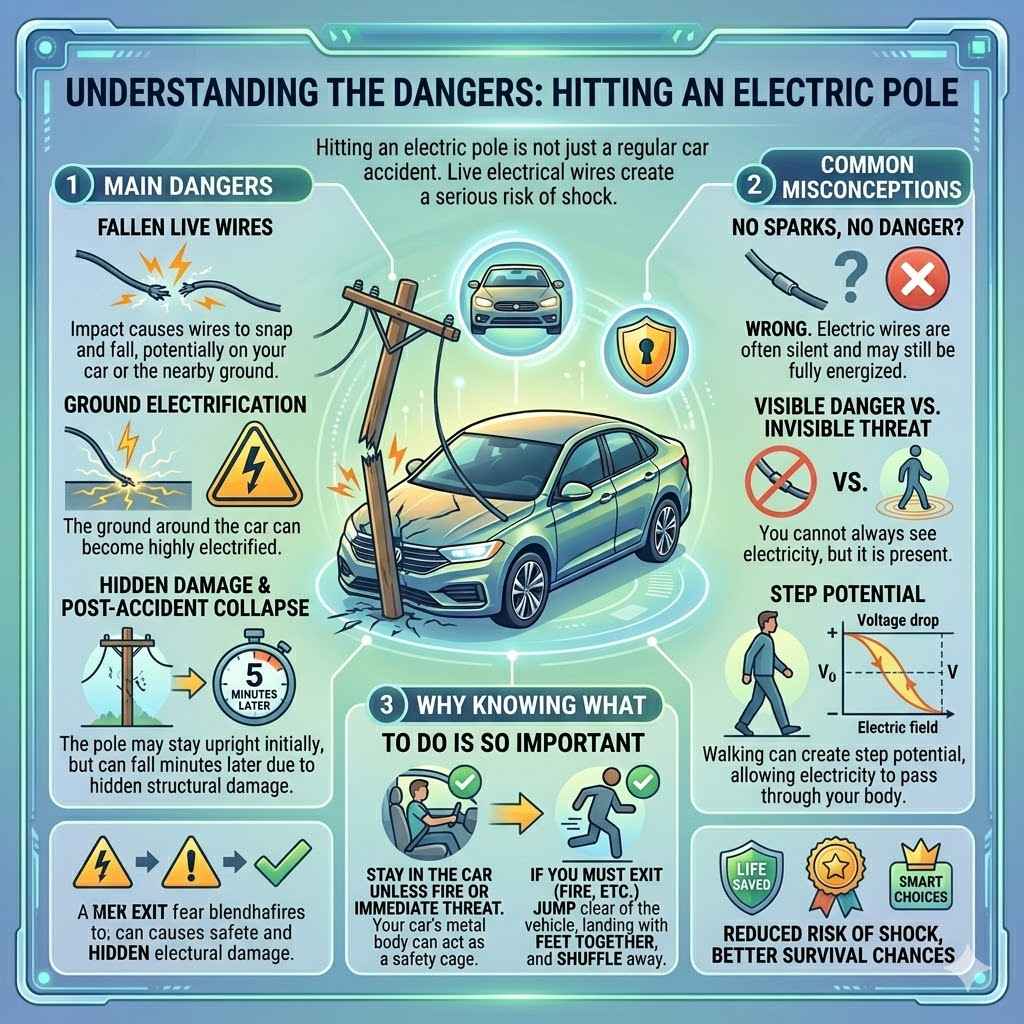
Hitting an electric pole is not just a regular car accident. The main danger comes from live electrical wires. When a car hits a pole, the impact can cause wires to snap and fall. These wires may land on your car or nearby ground, creating a serious risk of electric shock. Sometimes, the pole stays upright, but hidden damage can cause it to fall minutes later.
Many people wrongly assume that if they can’t see sparks, the area is safe. In fact, electric wires are often silent and may still be energized. The ground around your car can even become electrified, especially if a wire is touching it.
That’s why knowing what to do is so important.
Immediate Actions To Take
The moments right after the crash are critical. Here’s what you should do, step by step:
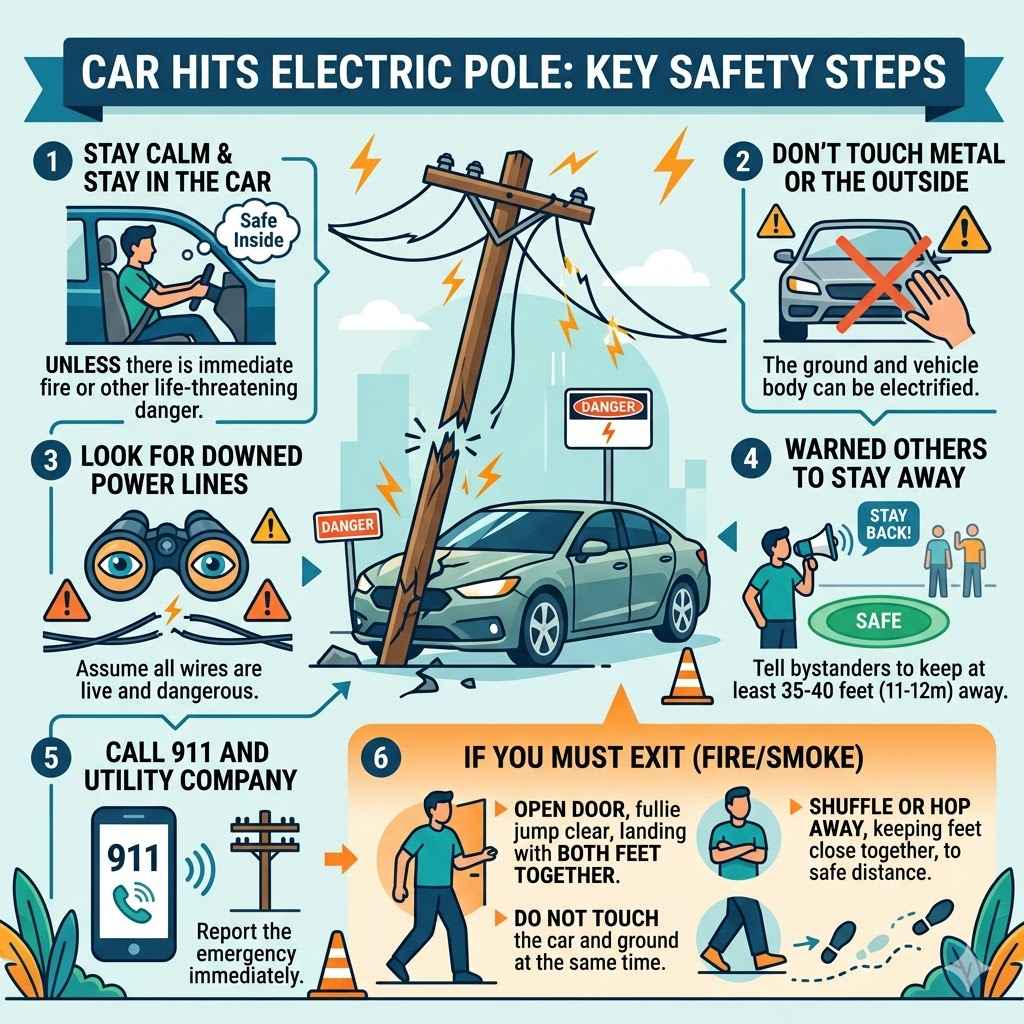
- Stay Calm: Take a deep breath and try to remain calm. Panic makes it harder to think clearly.
- Check Yourself and Passengers: Quickly check for injuries. If anyone is seriously hurt, stay still and avoid moving them unless there’s immediate danger.
- Do Not Leave the Car: Unless there’s a fire or visible smoke, stay inside the vehicle. Your car’s metal frame can protect you from electric shock.
- Avoid Touching Metal Surfaces: If possible, do not touch any metal parts inside the car, especially if you see wires nearby.
- Turn Off the Engine: Switch off the ignition if you can do so safely.
It’s important to remember: leaving your car too soon is often the biggest mistake. The ground outside could be electrified, and stepping out puts you at risk.
When You Must Exit The Car
The only time you should leave your car is if you see fire or heavy smoke. In this situation, you must exit safely:
- Open the Door Without Touching Metal: Use only the handle. Avoid touching the door frame and ground at the same time.
- Jump Clear: Stand on the edge of the seat, cross your arms over your chest, and jump away from the car with both feet together. Do not touch the car and the ground at the same time.
- Shuffle or Hop Away: Keep your feet together and shuffle or hop at least 35 feet (about 10 meters) away from the vehicle. This reduces the risk of electric shock from “step potential.”
- Never Go Back: Once you’re clear, do not return to the car for any reason.
People often forget that electricity can travel through the ground. The farther you get, with both feet together, the safer you’ll be.
Calling For Help
After making sure you and any passengers are safe, call for emergency help right away:
- Dial 911 or your local emergency number.
- Give your exact location. Use landmarks, road names, or GPS coordinates if possible.
- Tell them you hit an electric pole and wires may be down. This helps dispatch the correct emergency teams.
- Explain if anyone is injured or trapped.
Don’t try to direct traffic or warn others yourself—leave this to the professionals. Emergency teams have special equipment to manage electrical hazards.
Warning Others And Staying Safe
If you’re safe inside the car, you might see other drivers or bystanders coming to help. This can put them in danger. Here’s what you can do:
- Signal to Stay Away: Use hand gestures or shout through a closed window, warning people not to approach the car or wires.
- Do Not Let Others Touch the Car: Even touching the door could be deadly if wires are energized.
- Wait for Authorities: Stay inside until emergency workers say it’s safe to get out.
Many well-meaning people have been seriously hurt or killed because they tried to help without understanding the risks.
What To Expect From Emergency Responders
When police, firefighters, or utility workers arrive, they’ll secure the scene. Here’s what usually happens:
- Power Company Arrives: Utility workers will shut off power to the lines. Only they can confirm when it’s safe.
- Emergency Medical Help: If anyone is hurt, paramedics will give care and may take you to the hospital for checks, especially if there’s a risk of electric shock.
- Police Report: Officers will collect information and may ask for your license, insurance, and a statement.
Don’t leave the scene unless police or first responders say it’s okay. Leaving too soon can cause legal problems.
Dealing With Injuries
After an accident with an electric pole, injuries can range from minor cuts to serious trauma. Some injuries may not be obvious right away, especially electric shock symptoms like numbness, muscle pain, burns, or confusion.
If you or a passenger has:
- Burns on the skin
- Unexplained pain or tingling
- Trouble breathing
- Unconsciousness
Get medical help immediately. Electric shock can cause heart problems even hours later. Always let emergency workers check you, even if you feel fine.
Reporting The Accident
After you’re safe and emergency teams have handled the immediate dangers, you must report the accident:
- To Police: This is usually required by law, especially if there’s property damage or injury.
- To Your Insurance Company: Call as soon as possible, ideally within 24 hours. Give them all details: photos, witness names, police report number.
- To the Power Company: Sometimes, emergency responders will do this for you. If not, contact the local utility to inform them of the damage.
Delaying your report can cause insurance problems or even fines. Always get a copy of the police report for your records.
Insurance And Financial Steps
Dealing with insurance after hitting an electric pole can be stressful. Here’s what you need to know:
- Comprehensive or Collision Insurance: Damage to your car is usually covered by collision insurance. Damage to the pole or wires may be covered under liability insurance.
- Deductibles: You’ll likely have to pay a deductible before insurance pays for repairs.
- Utility Company Charges: You may be billed for the cost of repairing the pole, wires, or transformers. This can run from a few hundred to several thousand dollars.
- Documentation: Take clear photos of the scene, your car, the pole, and any visible wires. These help with your claim.
- Claim Process: Contact your insurer quickly. Provide all requested information and cooperate fully.
Not telling your insurer the full story can lead to denied claims. Be honest about what happened.
Repairing Your Car
Once the scene is safe and your claim is started, it’s time to repair your car. Here’s what to expect:
- Assessment: A mechanic or insurance adjuster will inspect the damage. Electric pole crashes often cause more than just body damage—look for frame, suspension, or electrical system issues.
- Approved Repair Shop: Use a repair shop approved by your insurance to avoid delays.
- Timeline: Repairs can take days or weeks, especially if parts must be ordered.
- Quality Check: Before accepting your car back, check that all repairs are finished and the vehicle feels safe to drive.
If your car is totaled (repair costs exceed the car’s value), your insurer will pay you the current market value minus the deductible.
Legal Responsibilities And Consequences
Hitting an electric pole can have legal consequences:
- Traffic Violations: If you were speeding, distracted, or driving under the influence, you may get a ticket or even face criminal charges.
- Negligence: If the accident caused power outages or property damage, you might be held responsible for costs.
- Injury to Others: If someone was hurt due to your actions, civil lawsuits are possible.
Always cooperate with police and provide accurate information. Lying or hiding facts only makes things worse.
How Power Companies Respond
When a vehicle hits a power pole, the utility company acts fast to restore safety and service:
- Shut Off Power: Crews often cut electricity to the area to prevent further hazards.
- Assess Damage: Workers check poles, wires, transformers, and nearby properties.
- Repair or Replace: Broken poles are removed and replaced. Wires are re-strung, and transformers checked for damage.
- Restore Service: Power returns once everything is safe and tested.
This process can take hours or even days, depending on the damage. You are likely responsible for the costs if you caused the accident.
Preventing Future Accidents
While you can’t control everything on the road, you can reduce your risk of hitting an electric pole:
- Drive Slower in Poor Weather: Rain, snow, and ice increase stopping distance.
- Stay Alert: Avoid distractions like phones or eating while driving.
- Avoid Drowsy Driving: Fatigue slows your reaction time.
- Know Your Route: Some roads have poles close to the edge. Take extra care in unfamiliar areas.
If you’re often on narrow or pole-lined roads, consider taking a defensive driving course.
Real-life Example: The Hidden Dangers
In 2022, a driver in Ohio lost control on an icy road and hit a utility pole. The pole broke, and wires fell on the car. The driver stayed inside, called 911, and followed emergency advice. When first responders arrived, they confirmed the wires were live and shut off the power before helping the driver out.
Because he stayed calm and inside his car, he avoided serious injury—even though the accident looked minor at first.
Many people are tempted to leave their car after a crash, especially if they’re scared or embarrassed. But this example shows why it’s safer to wait for help.
Data: Electric Pole Accidents In The Us
To understand the scale of the problem, let’s look at some data:
| Year | Accidents Involving Utility Poles | Estimated Injuries | Estimated Fatalities |
|---|---|---|---|
| 2019 | 38,000 | 9,500 | 330 |
| 2020 | 35,200 | 8,900 | 310 |
| 2021 | 36,800 | 9,200 | 325 |
These numbers show that accidents with utility poles are not rare. Each year, thousands of drivers face this exact scenario.
Costs Of Utility Pole Repairs
Repairing a damaged pole is expensive. Here’s a comparison of typical repair costs:
| Damage Type | Average Cost (USD) |
|---|---|
| Wooden pole replacement | $1,500 – $3,500 |
| Transformer replacement | $3,000 – $7,000 |
| Wire replacement | $500 – $2,000 |
| Labor and emergency response | $1,000 – $5,000 |
If you are found at fault, you could be responsible for these costs. Insurance helps, but not all policies cover the full amount.
Insurance Policy Comparison
Choosing the right insurance can make a big difference. Here’s a quick look at how common policy types cover electric pole accidents:
| Policy Type | Car Damage | Pole Damage | Medical Costs |
|---|---|---|---|
| Liability Only | No | Yes | No |
| Collision | Yes | No | No |
| Comprehensive | Yes | No | No |
| Full Coverage | Yes | Yes | Yes |
Check your policy details before an accident happens, so you know what’s covered.
Two Often-missed Insights
- Step Potential Risk: Even if you avoid touching the car and ground at once, stepping out with feet apart can let electricity flow through your body. That’s why you must always jump clear and land with your feet together, then shuffle or hop away.
- Delayed Electric Shock Symptoms: Some effects of electric shock, like heart rhythm problems or nerve damage, may appear hours after the accident. Always see a doctor if you might have been exposed to electricity, even if you feel fine.
Common Mistakes To Avoid
- Leaving the car too soon, especially if there’s no fire.
- Letting others approach your car or the wires.
- Failing to call emergency services immediately.
- Not reporting the accident to your insurer or police.
- Ignoring medical symptoms after the crash.
Small errors in judgment can have big consequences in this situation.
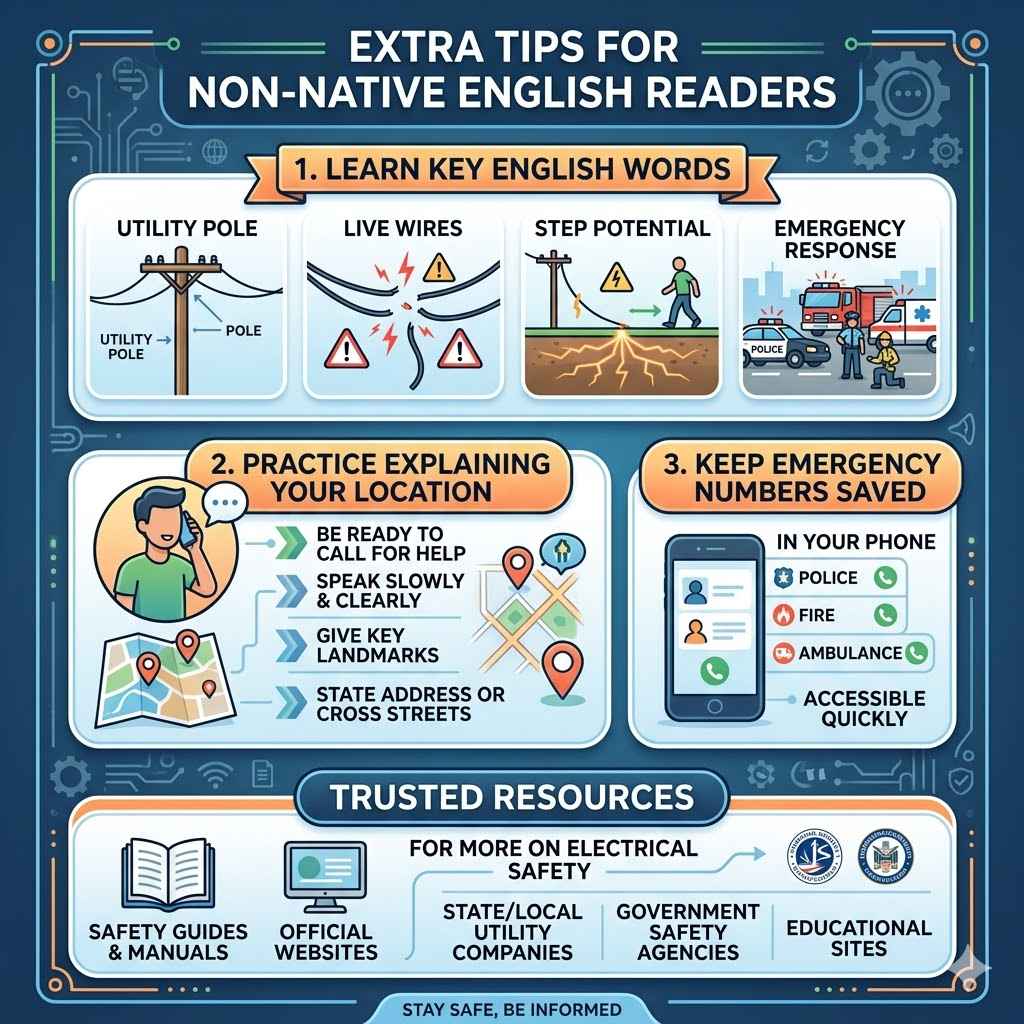
Extra Tips For Non-native English Readers
- Learn key English words: “utility pole,” “live wires,” “step potential,” “emergency response.”
- Practice explaining your location clearly if calling for help.
- Keep emergency numbers saved in your phone.
Trusted Resources
For more on electrical safety and what to do after car accidents, visit the Electrical Safety Foundation International.