
When you drive through thick fog or heavy rain, you might notice that your regular headlights do not help much. Sometimes, the road ahead still seems hidden, and you can barely see the lines on the ground. This is where car fog lights make a big difference. Many drivers have seen the button with a squiggly lamp icon on their dashboard, but not everyone understands what fog lights truly do or why they matter. Knowing the real purpose of fog lights can help you stay safer and make smarter choices when driving in bad weather.
Car manufacturers do not add extra lights just for looks. Every feature on your car has a role, and fog lights are no exception. If you ever wondered why your car has special lights low on the bumper, or why they have a different color than your regular headlights, you are about to find out.
This article will explain everything you need to know about car fog lights—their purpose, how they work, when and how to use them, and even mistakes to avoid. By the end, you will see fog lights in a new way and understand how this small detail can have a big impact on your safety.
Why Do Cars Have Fog Lights?
The main purpose of car fog lights is to help drivers see better in poor visibility conditions, especially during fog, heavy rain, snow, or dust storms. Regular headlights are designed to shine far and illuminate a wide area in front of your car. While this works well in clear weather, it can actually make things worse in foggy or misty conditions.
Fog is made up of tiny water droplets that float in the air. When you use your normal headlights, especially the high beams, the light bounces off these droplets and comes back to your eyes, creating a bright glare. This glare can be so strong that you see less, not more.
That is why standard headlights are often not enough.
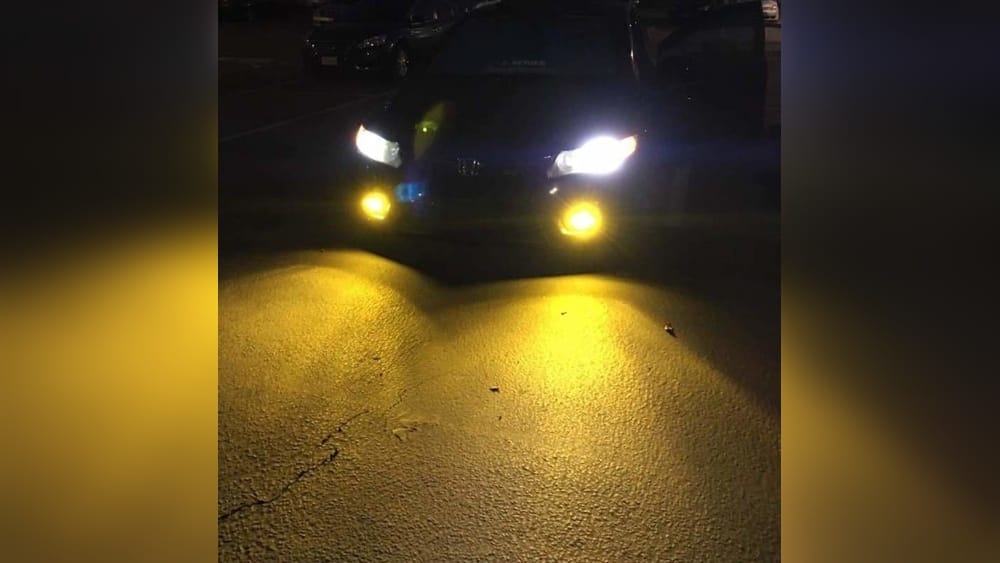
Fog lights are different. They are mounted low on the car, usually close to the bumper, and they point their light downward at a sharp angle. This means the light shines under the fog instead of straight into it. The beam is also wider but does not go very far. As a result, the light spreads across the road close to your car, making it easier to see the edges, lines, and any obstacles right in front of you.
Many fog lights also use a yellow or amber color instead of white. This is not just for style. Yellow light scatters less in fog than white or blue light, so it causes less glare and helps you see better.
In short, the purpose of car fog lights is to cut through fog and other bad weather, reduce glare, and make the road ahead clearer.
How Do Fog Lights Work?
Fog lights are designed with a specific shape and beam pattern. Their main goal is to send light where it is needed most—low and wide, directly in front of the car. Let’s look at how this works in practice.
- Low mounting position: Fog lights are installed closer to the ground than regular headlights. This helps them shine light beneath the fog layer, where visibility is better.
- Sharp cutoff beam: Fog lights have a flat top edge to their light beam, so the light does not go up into the fog or mist. This reduces glare for both the driver and oncoming traffic.
- Wide spread: The light from fog lights spreads out to the sides, illuminating the road edges, curbs, and lane markings. This makes it easier to stay in your lane and avoid obstacles.
- Color choice: Many cars use yellow or amber bulbs for their fog lights. Studies show that these colors scatter less in foggy air, making it easier for the human eye to see the road.
Here’s a comparison showing the key differences between headlights and fog lights:
| Feature | Headlights | Fog Lights |
|---|---|---|
| Position | Higher on car (above bumper) | Lower on car (close to ground) |
| Beam Angle | Long and wide, aimed straight | Short, wide, aimed downward |
| Color | Usually white | Yellow, amber, or white |
| Main Purpose | General driving visibility | Cutting through fog, rain, snow |
This special design is not just for show. It is based on science and real-world testing to help drivers see better and stay safer.
When Should You Use Fog Lights?
Not every situation calls for fog lights. In fact, using them at the wrong time can be a problem for you and other drivers. The best time to use your car fog lights is during poor weather with low visibility, such as:
- Dense fog: The classic situation. When you can barely see the car in front of you or the road lines, fog lights make a big difference.
- Heavy rain: When rain is so strong that regular headlights reflect off the water, fog lights can help you see the road edges and avoid puddles.
- Snowstorms: Snow can create whiteout conditions where normal lights just bounce back. Fog lights cut through the snow near the ground.
- Dust storms or haze: In areas with sand or dust in the air, fog lights can help you see obstacles and lane markings.
But there are times when you should NOT use fog lights:
- Clear weather: They are not needed and can distract other drivers.
- City driving: Fog lights can shine into people’s eyes and are not helpful when visibility is good.
- Oncoming traffic: If your fog lights are too bright or misaligned, they can cause glare for other drivers.
Most countries have laws about when fog lights can be used. For example, in the UK and Australia, it is illegal to use fog lights when visibility is not reduced. Always check your local rules to avoid getting a ticket.
Types Of Fog Lights
Not all fog lights are the same. Over the years, car makers have developed different types, each with their own strengths and weaknesses. The main types are:
Halogen Fog Lights
Halogen bulbs are the most common type. They are cheap, easy to replace, and give a warm yellow light that is good for fog. However, they do not last as long as other types and are not as bright.
Led Fog Lights
LED fog lights are becoming more popular in new cars. They use less energy, last much longer, and can be made in any color. They are brighter than halogen and give a sharp, clear beam, but they can be more expensive to buy or replace.
Hid (xenon) Fog Lights
HID lights are very bright and use a special gas to make light. They are powerful and can shine farther than halogen or LED, but sometimes they are too bright for fog and may cause glare. They are also more costly and can be harder to install.
Here’s a quick comparison of these types:
| Type | Brightness | Cost | Color | Lifetime |
|---|---|---|---|---|
| Halogen | Medium | Low | Yellow/White | 1-2 years |
| LED | High | Medium-High | Any | 5+ years |
| HID | Very High | High | White/Blue | 3-5 years |
Choosing the right type depends on your budget, the weather in your area, and your car’s design.
How To Use Fog Lights Properly
Many drivers make mistakes with their fog lights. Some use them all the time, while others forget to turn them on when needed. Here is practical advice to get the most from your fog lights:
- Know the switch location: Most cars have a separate button or stalk position for fog lights, usually with a wavy lamp symbol. Learn where it is before you need it in an emergency.
- Use in poor visibility only: Turn on fog lights when you cannot see more than 100 meters ahead (about the length of a football field), or when you see fog, heavy rain, or snow.
- Turn them off when clear: As soon as visibility improves, switch them off. This reduces glare for others and saves your bulbs.
- Aim them correctly: Misaligned fog lights can shine into other drivers’ eyes. If you notice people flashing their lights at you, check your fog lights’ aim.
- Combine with low beams: In very bad weather, use fog lights with your low-beam headlights, not high beams. High beams just make glare worse.
A common mistake is using fog lights with high beams. This does not help and can actually make things more dangerous.
Fog Lights Vs. Driving Lights: What’s The Difference?
Many people confuse fog lights and driving lights. They are not the same. Here’s a simple way to tell the difference:
- Fog lights: Low, wide, short-range. Used only in bad weather.
- Driving lights: High, long-range. Used to see far ahead on dark roads (like high beams).
Driving lights help you see further down the road but are not useful in foggy conditions. Using the wrong light at the wrong time can make things worse. For example, using driving lights in fog will cause more glare and reduce your visibility.
Here’s a quick side-by-side look:
| Feature | Fog Lights | Driving Lights |
|---|---|---|
| Position | Low on bumper | High on car or grille |
| Beam Pattern | Wide, short, flat | Long, narrow, focused |
| Main Use | Bad weather (fog, rain, snow) | Rural or dark roads (clear weather) |
| When to Use | Low visibility | No oncoming traffic, clear nights |
Understanding the difference helps you choose the right light for every situation.
The Science Behind Fog Light Color
You may have noticed that many fog lights are yellow or amber. Is this just for style? No—there’s a reason. The color of light affects how it travels through fog, rain, or snow.
Yellow light has a longer wavelength than blue or white light. This means it scatters less when it hits water droplets in the air. Less scattering means less glare and better visibility. That’s why yellow or amber is often used for fog lights.
However, not all countries allow colored fog lights. Some places require white lights for all car lamps. If you are unsure, check your local laws before switching bulbs.
A non-obvious insight: while yellow is great for fog, it can make colors on road signs harder to see. That’s why some modern cars use white LED fog lights with a special beam pattern instead. The beam shape is more important than the color for most situations.
Benefits Of Using Fog Lights
When used correctly, fog lights offer several important benefits:
- Improved short-range visibility: You can see the edges of the road, curbs, and lane markings better.
- Less glare for you and others: Their special beam reduces the “white wall” effect you get with headlights in fog.
- Faster reaction time: Spot obstacles, animals, or pedestrians sooner, giving you more time to brake or steer.
- Extra safety in extreme weather: Even in thick dust or snow, you have a better chance of staying on the road.
Many insurance studies show that cars with well-designed fog lights have fewer minor accidents in bad weather. This is especially true at dawn, dusk, or in areas with sudden fog patches.
Common Myths About Fog Lights
There are many myths about fog lights. Let’s clear up some of the most common ones:
- Myth: Fog lights are just for style.
- Fact: They are designed for safety and have a real function in poor weather.
- Myth: You can use fog lights instead of headlights.
- Fact: Fog lights are for low-speed, short-range use only. Always use headlights for normal driving.
- Myth: The color does not matter.
- Fact: Yellow or amber lights scatter less in fog, but the beam pattern is more important for safety.
- Myth: Brighter is always better.
- Fact: Too much brightness or the wrong beam can actually reduce visibility and annoy other drivers.
Do All Cars Have Fog Lights?
Not every car comes with fog lights as standard equipment. In many basic or economy models, they are an extra feature or part of an upgrade package. Luxury and higher-end vehicles often have them built in, sometimes with advanced features like automatic on/off, cornering lamps, or adaptive beams.
If your car does not have fog lights, you can usually add them. However, this must be done carefully. Aftermarket fog lights must be installed at the correct height and angle to meet safety rules. Using the wrong bulb or color can also get you in trouble with the law.
A useful tip: Always use products that are certified for road use in your country. Cheap or illegal fog light kits can cause more harm than good.
How To Maintain Fog Lights
Like any part of your car, fog lights need regular care to work their best. Here’s how to keep them in top shape:
- Check for dirt and damage: Fog lights are low to the ground, so they get dirty fast. Clean the lens often and check for cracks or chips.
- Inspect the bulbs: If a fog light is dim or not working, replace the bulb right away. Use the correct type for your car.
- Check the alignment: After hitting a curb or pothole, your fog lights may be out of alignment. Have a mechanic check them during your next service.
- Replace old units: Over time, the inside of the light can get dirty or cloudy. If cleaning does not help, you may need a new unit.
A common beginner mistake is ignoring fog lights until they stop working. Regular checks can prevent problems before they happen.
Fog Light Laws Around The World
Different countries have different rules for fog lights. Some key points:
- Europe: Most cars have rear fog lights (red) and sometimes front fog lights (white or yellow). It is illegal to use them in clear weather.
- USA: Fog lights are optional, and color is usually white or amber. Some states have strict rules about brightness.
- Australia: Laws are strict. Use fog lights only in fog, rain, or dust, or you could get a fine.
- Japan: Yellow fog lights are popular, but rules depend on the local region.
Always check your national and local traffic laws before adding or changing fog lights. For more details, see the Automotive lighting article on Wikipedia.
Practical Tips For Safer Driving In Fog
Even with the best fog lights, driving in bad weather requires extra care. Here are some expert tips:
- Slow down: Reduced visibility means less time to react. Drive at a speed where you can stop within the visible distance.
- Increase following distance: Leave more space between you and the car in front.
- Use road markings: Follow the painted lines to stay in your lane.
- Avoid sudden moves: Accelerate and brake gently to avoid skidding.
- Watch for others: Not all drivers use fog lights correctly—stay alert for hazards.
Remember, fog lights are a tool to help you see, but they do not make you invincible. Good driving habits matter even more in tough conditions.
Frequently Asked Questions
What Is The Main Difference Between Fog Lights And Regular Headlights?
The main difference is the beam pattern and position. Fog lights are mounted low and shine a short, wide beam downward to reduce glare in fog or rain. Headlights are higher and shine further, which can cause more reflection and glare in bad weather.
Can I Use Fog Lights At Night When There Is No Fog?
No, you should not use fog lights in clear weather. They are designed for poor visibility. Using them at night without fog can distract other drivers and may be illegal in some places.
Are Led Fog Lights Better Than Halogen?
LED fog lights are brighter, last longer, and use less energy than halogen. However, they can be more expensive. The most important thing is the correct beam pattern, not just the bulb type.
Do Fog Lights Really Improve Safety?
Yes, when used in the right conditions, fog lights help you see the road edges and obstacles better, reduce glare, and give you more time to react. Many insurance studies show fewer accidents when fog lights are used properly.
Is It Legal To Install Yellow Fog Lights On My Car?
This depends on your country or state. Some places allow yellow fog lights, while others require white. Always check your local vehicle lighting laws before making changes.
Car fog lights are a small but important feature for safe driving in bad weather. Their true purpose is to help you see better when fog, heavy rain, snow, or dust make regular headlights less effective. By shining a low, wide beam under the fog, they reduce glare and help you spot hazards early.
Whether you already have fog lights or are thinking of adding them, remember to use them only when needed, keep them clean and aligned, and follow local laws. With the right knowledge and habits, fog lights can make a real difference in your safety on the road.