
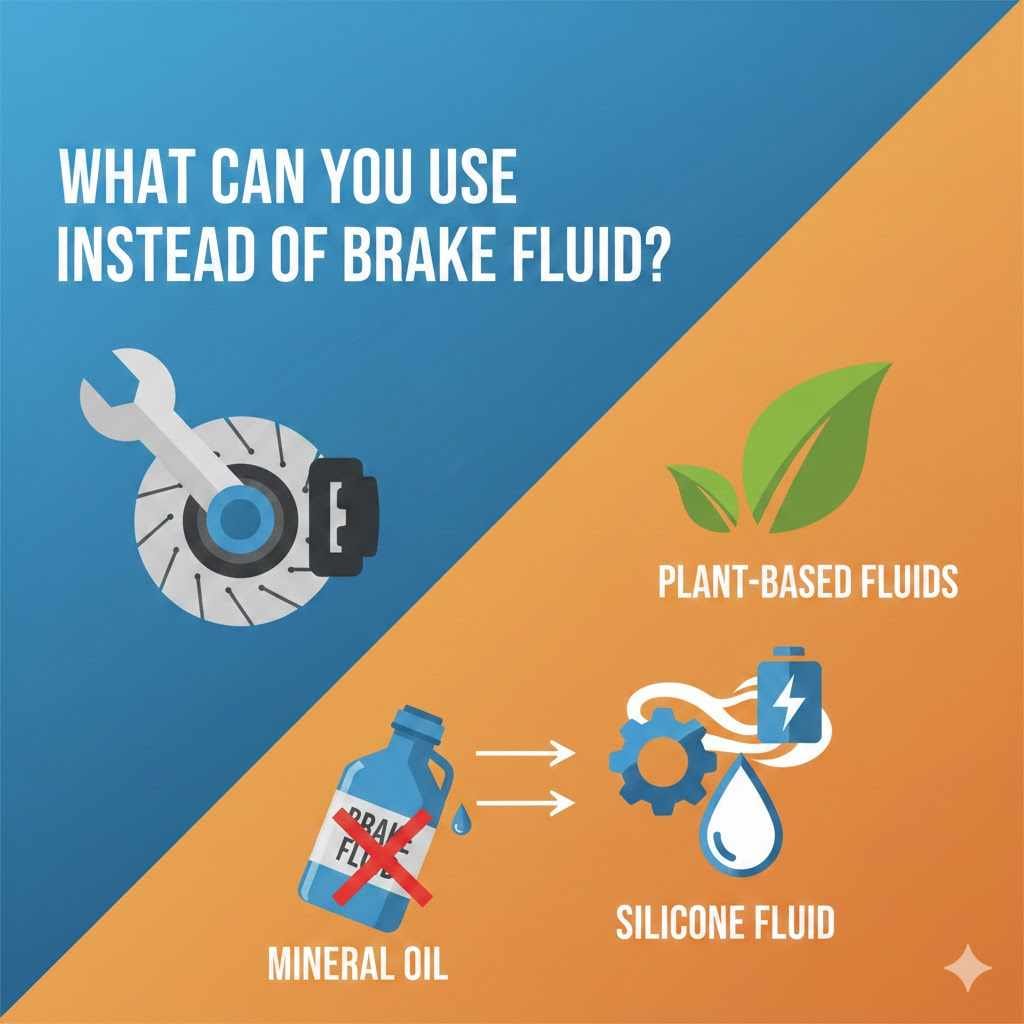
When your car’s brakes feel a bit off, you might wonder about quick fixes. Especially for new drivers or those learning about car care, the idea of using something other than regular brake fluid can pop up. It sounds simple, but is it safe?
This guide makes it easy. We’ll walk through what you need to know and why sticking to the right stuff is super important. Get ready for clear steps that make sense, so you can be sure about your car’s safety.
Understanding Brake Fluid Basics
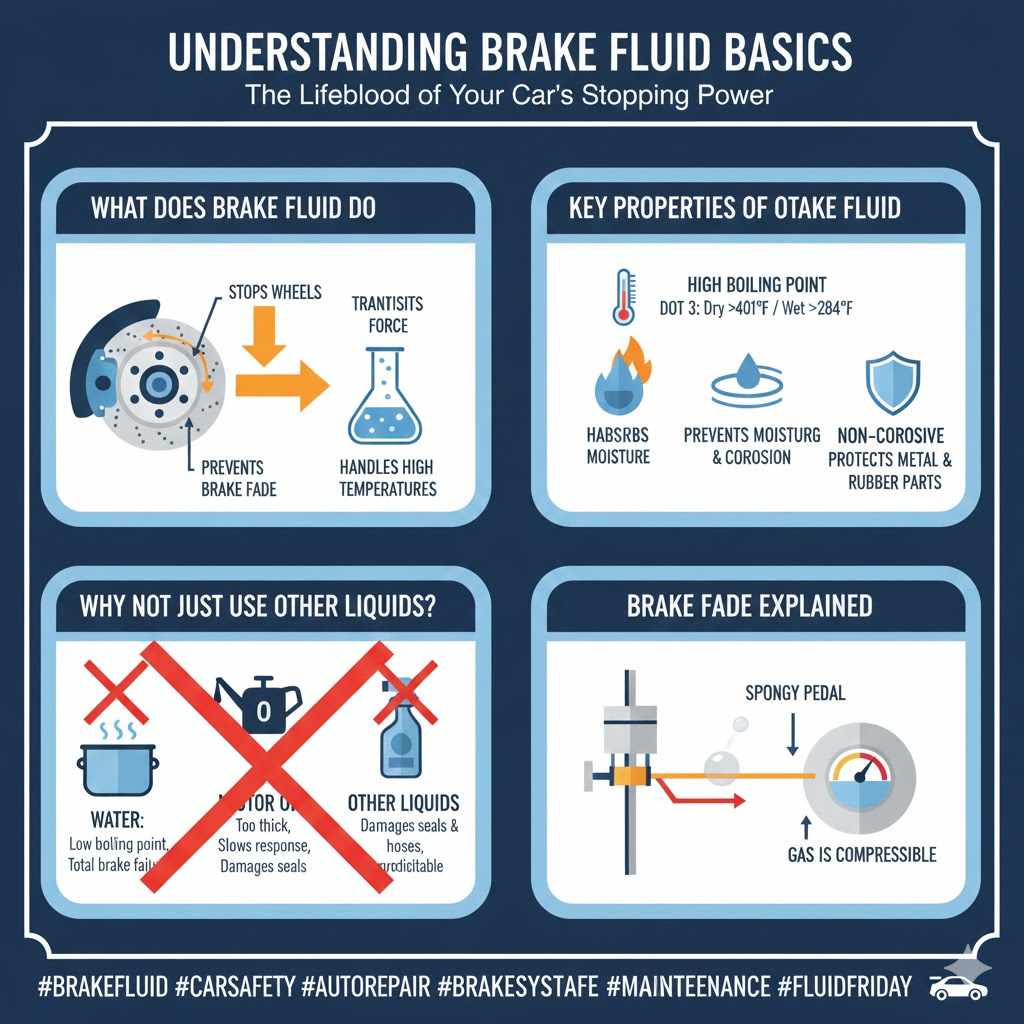
Brake fluid is a special liquid that helps your car stop. It’s a key part of your braking system. When you press the brake pedal, this fluid pushes on parts that create friction.
This friction slows down your wheels. If the fluid isn’t right, your brakes won’t work well. This can be really dangerous.
Learning about brake fluid is a smart step for any car owner. It keeps you and others safe on the road. We’ll explore why it’s so important.
What Does Brake Fluid Do
Brake fluid acts as a hydraulic fluid. This means it uses pressure to transmit force. When you push the brake pedal, you’re really pushing on a piston.
This piston forces the brake fluid through small metal tubes, called brake lines. These lines run to each wheel. At each wheel, the fluid pushes against a brake caliper or wheel cylinder.
This action forces brake pads or shoes to grip the rotors or drums. This creates friction, slowing the car. Without the right fluid, this chain reaction breaks down.
Brake fluid also needs to handle high temperatures. The friction from braking creates a lot of heat. The fluid must not boil at these temperatures.
If it boils, it turns into gas. Gas is compressible, unlike liquid. This means when you press the pedal, the gas would compress instead of pushing the brakes.
This is called brake fade, and it can make your brakes feel spongy or even fail completely. This is why special properties are needed.
Key Properties of Brake Fluid
Brake fluid has specific qualities that make it work well. One key quality is its high boiling point. This prevents it from boiling when brakes get hot.
Standard DOT 3 fluid has a dry boiling point of at least 401 degrees Fahrenheit (205 degrees Celsius). Its wet boiling point, after absorbing some moisture, is at least 284 degrees Fahrenheit (140 degrees Celsius).
Another important trait is its ability to absorb moisture. This sounds bad, but it’s actually designed this way. Water can enter the brake system over time through tiny pores in rubber hoses.
If water didn’t mix with the fluid, it could collect in low spots and freeze in cold weather, blocking brake lines. By absorbing water, the fluid keeps it spread out, and the high boiling point helps prevent this diluted water from boiling.
Brake fluid must also be non-corrosive. It needs to protect metal parts in the brake system from rusting. It also needs to be compatible with the rubber seals and hoses in the system.
If it eats away at rubber, it can cause leaks and failures. These properties are carefully balanced in brake fluid.
Why Not Just Use Other Liquids
Using a liquid that isn’t brake fluid is a bad idea. Many common liquids don’t have the right properties. For example, water has a very low boiling point.
It would boil and turn to gas very easily under braking heat. This would cause total brake failure.
Motor oil is too thick. It wouldn’t flow through the brake lines quickly enough to apply the brakes effectively. It also doesn’t have the right chemical makeup to protect the system’s parts.
Other household liquids like rubbing alcohol or even certain types of coolant can also damage seals and hoses. They don’t provide the necessary hydraulic pressure or protection.
Essentially, brake fluid is engineered for a very specific, critical job. Any deviation from its intended use poses a serious safety risk. The systems are designed to work with these precise characteristics.
Trying to substitute can lead to unpredictable and dangerous outcomes for your braking system.
What Can You Use Instead of Brake Fluid
This is a question many car owners ask when they need a top-up or are facing an unexpected issue. The honest answer is that for safe and effective braking, there isn’t a reliable substitute for proper brake fluid. Your car’s braking system is designed with specific hydraulic properties in mind.
These properties are unique to brake fluid. Using something else can seriously damage your car and, more importantly, put your life at risk. Let’s explore why this is the case and what to do if you find yourself in this situation.
The Dangers of Using Substitutes
Using something other than the recommended brake fluid can cause several immediate and long-term problems. The most critical is the failure of your braking system. This means your car won’t stop when you need it to.
This is a terrifying and extremely dangerous situation for you, your passengers, and everyone else on the road. The consequences can be severe, including accidents and injuries.
Beyond immediate failure, substitutes can also corrode and damage vital components within the brake system. This includes brake lines, calipers, wheel cylinders, and seals. These parts are often made of specific metals and rubber compounds that are designed to work with brake fluid.
Other liquids can eat away at them, causing leaks, weakening the system, and leading to expensive repairs down the line.
Furthermore, different liquids have different viscosity levels. This refers to how thick or thin they are. Brake fluid has a specific viscosity that allows it to flow correctly under pressure.
A liquid that is too thick might not move quickly enough, slowing your braking response. A liquid that is too thin might not create enough pressure to engage the brakes properly. These inconsistencies can make your brakes unpredictable.
Common Misconceptions About Alternatives
There are a lot of myths and misunderstandings circulating about what can be used instead of brake fluid. Some people might think that because a liquid is a lubricant or a hydraulic fluid, it will work. For instance, motor oil is a hydraulic fluid in some machinery, but it’s not suitable for brakes.
Its boiling point is much lower than required, and its chemical composition can attack brake system seals.
Another misconception might involve water or antifreeze. Water boils at a very low temperature, making it incredibly dangerous in a brake system that generates heat. Antifreeze, while it has a higher boiling point than water, contains chemicals that can damage rubber seals and corrode metal parts over time.
It’s also not designed to provide the consistent hydraulic pressure needed for braking.
Some suggest using mineral spirits or other solvents. These are usually highly flammable and can severely degrade rubber components, leading to leaks and rapid system failure. The reality is that brake fluid is a specialized chemical engineered precisely for the harsh conditions and critical function of a vehicle’s braking system.
There’s no shortcut.
What If You’re Stranded and Need a Temporary Fix
If you find yourself in an emergency situation where your brake fluid has leaked out completely and you are stranded, the safest course of action is to avoid driving the vehicle at all costs. Do not attempt to drive a car with no or very low brake fluid. Instead, prioritize getting the vehicle towed to a repair shop.
This is the most responsible and safest decision you can make.
However, in an extreme, life-or-death scenario where towing is absolutely not an option and you must move the vehicle a very short distance, some people have explored highly risky, temporary, and generally ill-advised options. It’s crucial to understand that these are not recommendations and carry severe risks. For instance, some older vehicles might have had systems that could tolerate a very small amount of a specific mineral oil.
But this is extremely rare and outdated.
In virtually all modern vehicles, there is no safe, readily available liquid that can be used as a substitute for brake fluid. Your best bet is always to call for professional roadside assistance. They can arrange for a tow truck to safely transport your vehicle to a qualified mechanic.
This ensures that the issue is addressed correctly and safely by professionals.
Types of Brake Fluid and Their Compatibility
Brake fluid isn’t a one-size-fits-all product. There are different types, mainly classified by their DOT (Department of Transportation) rating. These ratings indicate their performance characteristics, such as boiling point and viscosity.
Understanding these differences is important for maintenance and repair. Using the wrong type can cause problems, though many fluids within the same DOT category or a higher category are often interchangeable in a pinch, but it’s always best to stick to what your car manufacturer recommends.
DOT 3 Brake Fluid
DOT 3 is one of the most common types of brake fluid used in older and some newer vehicles. It’s a glycol-based fluid. It has a minimum dry boiling point of 401°F (205°C) and a wet boiling point of 284°F (140°C).
Glycol-based fluids absorb moisture from the atmosphere over time, which lowers their boiling point. This is why regular brake fluid changes are recommended.
DOT 3 fluid is widely available and relatively inexpensive. It’s compatible with most rubber components found in braking systems. However, its lower wet boiling point means it’s not ideal for high-performance vehicles or those that experience heavy braking conditions, where temperatures can rise significantly.
If your car calls for DOT 3, it’s usually a sign that it’s not designed for extreme thermal loads.
It’s important to note that DOT 3 fluid is hygroscopic, meaning it attracts and absorbs water. Over about two years, the water content can increase enough to lower the boiling point significantly, increasing the risk of brake fade. This absorption process also contributes to corrosion within the brake system if the fluid is not changed regularly.
DOT 4 Brake Fluid
DOT 4 brake fluid is a more advanced glycol-based fluid. It typically has a higher boiling point than DOT 3. Its minimum dry boiling point is usually around 446°F (230°C), and its wet boiling point is about 311°F (155°C).
This higher boiling point makes it suitable for a wider range of vehicles, including those with anti-lock braking systems (ABS) and electronic stability control (ESC).
DOT 4 fluid is also hygroscopic, but it usually contains additives that help resist moisture absorption slightly better than DOT 3, or it has a higher initial wet boiling point that makes it more resilient for longer. It can be used in systems that originally specified DOT 3 fluid, as it’s generally backward compatible. This means if your car needs DOT 3, you can often use DOT 4 without issue.
The increased performance of DOT 4 makes it a popular choice for many modern vehicles. Its higher temperature resistance provides a greater safety margin, especially in demanding driving conditions. When choosing brake fluid, always check your vehicle’s owner’s manual to confirm the recommended type.
DOT 5 Brake Fluid
DOT 5 brake fluid is fundamentally different from DOT 3 and DOT 4. It is silicone-based, not glycol-based. This silicone base gives it a much higher boiling point and makes it non-hygroscopic, meaning it does not absorb water.
Its dry boiling point is typically around 500°F (260°C), and its wet boiling point is around 356°F (180°C).
Because DOT 5 does not absorb water, it will not cause corrosion in the same way glycol-based fluids do. However, if water does enter the system, it tends to pool in low spots rather than disperse, which can lead to localized freezing or boiling and potential hydraulic lock. Also, silicone fluid can sometimes cause issues with certain types of seals, and it does not mix with glycol-based fluids.
Therefore, you cannot mix DOT 5 with DOT 3 or DOT 4. If you switch to DOT 5, the entire system must be flushed and refilled with DOT 5.
DOT 5 fluid is generally used in specialized applications, such as some high-performance or custom vehicles. It is not typically found as the original fill in most standard passenger cars or trucks due to its different properties and compatibility issues. The higher cost and maintenance requirements also contribute to its less common use.
DOT 5.1 Brake Fluid
DOT 5.1 is a glycol-based fluid that combines some of the benefits of both DOT 3/4 and DOT 5. It has a high boiling point, similar to DOT 5, but it is hygroscopic like DOT 3 and DOT 4. This means it absorbs moisture from the air, which will lower its boiling point over time.
Its minimum dry boiling point is typically 500°F (260°C), and its wet boiling point is around 356°F (180°C).
DOT 5.1 fluid is designed to be fully compatible with DOT 3 and DOT 4 fluids. This makes it a great upgrade option for vehicles that originally specified DOT 3 or DOT 4. It offers better performance and a higher safety margin, especially in extreme conditions, without the need for a complete system flush and refill as required when switching to true DOT 5 silicone fluid.
The advantage of DOT 5.1 is that it provides the high boiling points of silicone fluid while retaining the moisture-dispersing properties of glycol fluids. This helps prevent water from pooling and causing localized issues. It’s a common choice for performance-oriented vehicles and for drivers who want an extra layer of safety and reliability from their braking system.
When and How to Check Your Brake Fluid
Regularly checking your brake fluid level and condition is a vital part of car maintenance. It’s a simple task that can prevent serious problems and keep your brakes working effectively. Many issues with brakes can be caught early with a quick look.
Making this a habit ensures your car remains safe to drive. Let’s go over how to do it and why it matters.
Locating the Brake Fluid Reservoir
The brake fluid reservoir is usually a translucent plastic container with a cap. It’s typically located under the hood of your car, often near the firewall (the metal wall separating the engine bay from the passenger compartment). It’s usually connected to the brake master cylinder, which is the component that generates hydraulic pressure when you press the brake pedal.
You can identify it by its size and shape. It’s often a rectangular or cylindrical tank, though designs vary by vehicle manufacturer. Look for markings on the side of the reservoir that indicate “MIN” and “MAX” fill lines.
The fluid level should always be between these two marks. Some reservoirs might have a small, secondary reservoir for the clutch fluid if your car has a manual transmission.
Consult your car’s owner’s manual if you have trouble finding it. The manual will have diagrams and specific instructions for your make and model, making the location clear. It’s usually easily accessible for quick checks and top-ups.
What to Look For During Inspection
When you check your brake fluid, you should examine two things: the level and the color. First, look at the fluid level in the reservoir. As mentioned, it should be between the MIN and MAX lines.
If the level is consistently low, it could indicate a leak in the brake system, which needs immediate attention from a mechanic.
Next, observe the color of the fluid. Fresh brake fluid is typically clear or slightly amber. Over time, it darkens as it picks up contaminants and wears down.
If the fluid looks very dark, brown, or black, it’s a sign that it’s old and needs to be replaced. Dark fluid means it’s likely full of debris and moisture, reducing its effectiveness and potentially harming brake components.
You should also check for any signs of leaks around the reservoir, brake lines, or at the wheels. Any moisture or residue could point to a leak. If you notice any of these issues, it’s best to have your braking system inspected by a professional technician.
When to Add or Change Brake Fluid
You should add brake fluid only if the level is below the MIN line. If it’s consistently low, this usually signifies a problem, such as worn brake pads or a leak. When brake pads wear down, the caliper pistons extend further, requiring more fluid in the system to maintain pressure.
This is a normal occurrence and doesn’t always mean a leak, but it’s a good indicator to check your pads.
However, if the fluid level drops significantly or quickly, it almost always means there’s a leak somewhere in the brake lines, calipers, or master cylinder. In such cases, the vehicle should not be driven, and it must be towed to a mechanic for repair. Never assume a low level is just due to worn pads if it’s a sudden or significant drop.
Brake fluid should be changed according to your vehicle manufacturer’s recommended schedule, typically every two to three years. This is because brake fluid absorbs moisture over time, lowering its boiling point and increasing the risk of corrosion. Even if the level is fine and the fluid looks okay, it degrades internally and needs replacement to ensure optimal brake performance and longevity of brake system components.
Best Practices for Topping Up
When topping up your brake fluid, it’s crucial to use the correct type specified by your car’s manufacturer. This information is found in your owner’s manual. Using the wrong type can cause damage to your braking system.
For example, if your car uses DOT 3, you can usually use DOT 4 or DOT 5.1. However, you cannot use DOT 5 (silicone-based) in a system designed for DOT 3 or DOT 4, and vice-versa, without a complete system flush and conversion.
Open the reservoir cap carefully. Avoid letting any dirt or debris fall into the reservoir. You can use a clean funnel to pour the new fluid.
Fill the reservoir to the MAX line, but do not overfill it. Excess fluid can potentially overflow and damage painted surfaces or attract dirt.
After topping up, replace the cap securely. It’s a good idea to check your brake pedal feel afterward. If it feels spongy or different, there might still be an issue, or air could have entered the system.
In such cases, the brake system might need to be bled by a professional to remove any air pockets.
When to Seek Professional Help
While some basic maintenance tasks like checking fluid levels are simple, brake system issues can be complex and dangerous. It’s vital to know when to hand over the job to a qualified mechanic. Trying to fix brake problems without the right knowledge or tools can lead to more significant damage and safety hazards.
Trusting professionals ensures your car is repaired correctly and safely.
Signs of Serious Brake Problems
Several signs indicate that your braking system needs immediate attention from a professional. A spongy or soft brake pedal is a common symptom. This means you have to press the pedal much further than usual to get the brakes to engage, or the pedal feels mushy.
This often points to air in the brake lines or a problem with the master cylinder.
Grinding or squealing noises when you brake are also a clear warning. Grinding sounds usually mean your brake pads are completely worn down, and the metal backing is scraping against the rotor. Squealing can indicate worn pads, but also sometimes issues with brake hardware.
These sounds are your brakes telling you they need inspection and likely replacement of parts.
A car pulling to one side when braking is another serious sign. This could mean brake pads are unevenly worn, a caliper is sticking, or there’s a leak on one side of the car. Any vibration or pulsing felt through the brake pedal when you apply them, especially during moderate to hard braking, often points to warped brake rotors or uneven pad wear.
The Importance of Professional Diagnosis
Brake systems are critical safety components. A professional mechanic has the specialized knowledge, diagnostic tools, and experience to accurately identify the root cause of any brake problem. They can perform a thorough inspection of all parts, including brake lines, hoses, calipers, rotors, pads, and the master cylinder.
Attempting to diagnose and repair brake issues yourself without proper training can be risky. You might misdiagnose the problem, leading to incorrect repairs that don’t fix the issue or even create new ones. For example, a simple fluid top-up might mask a leak that, if left unaddressed, could lead to complete brake failure.
Professionals use tools like pressure gauges to test the hydraulic system accurately.
A professional diagnosis ensures that all potential issues are identified and addressed. They can advise on the best course of action, whether it’s replacing brake pads, rotors, flushing and refilling the brake fluid, or repairing leaks in the lines. This ensures your car is safe to drive and that the repairs are done correctly the first time.
When to Call for a Tow
If you experience any of the following situations, it is imperative to call for a tow truck rather than attempting to drive your vehicle: complete loss of braking power, a brake pedal that goes all the way to the floor and doesn’t engage the brakes, or a significant fluid leak that has drained the reservoir. Driving a vehicle with compromised brakes is extremely dangerous and illegal.
A tow truck will safely transport your car to a repair shop where trained professionals can perform the necessary repairs. This prevents further damage to the vehicle and, most importantly, ensures the safety of yourself and others. Never take chances with your brakes; when in doubt, always opt for a tow to ensure safety.
If your car is making loud, unusual noises, such as metal-on-metal grinding, or if you feel a strong vibration through the steering wheel or pedal during braking, it’s also wise to consider towing. These symptoms could indicate severe damage that could worsen with driving, potentially leading to a catastrophic failure of the braking system.

Frequently Asked Questions
Question: Can I use cooking oil instead of brake fluid?
Answer: No, absolutely not. Cooking oil is not designed for braking systems. It would not create the necessary hydraulic pressure, could damage seals, and would likely cause complete brake failure very quickly, which is extremely dangerous.
Question: What happens if I mix DOT 3 and DOT 4 brake fluid?
Answer: Generally, you can mix DOT 3 and DOT 4 fluids, and DOT 4 is backward compatible with DOT 3 systems. However, mixing them will result in fluid with properties closer to DOT 3, slightly lowering the overall boiling point compared to pure DOT 4. It’s best practice to stick to one type if possible, but mixing is usually safe for top-ups.
Question: How often should brake fluid be changed?
Answer: Brake fluid should typically be changed every two to three years, or according to your vehicle manufacturer’s recommendation. This is because it absorbs moisture over time, which degrades its performance and can lead to corrosion.
Question: My brake fluid reservoir is almost empty. Can I just add water?
Answer: Never add water to your brake system. Water has a very low boiling point and will boil under the heat of braking, causing brake failure. It can also freeze in cold weather and cause damage.
Always use the correct DOT-rated brake fluid.
Question: Is it okay to drive if my brake fluid is low but not empty?
Answer: Driving with low brake fluid is very risky. It means your braking performance is compromised. If the level is low, it usually indicates worn brake pads or a leak.
You should have it inspected by a mechanic as soon as possible. Do not drive long distances or at high speeds.
Summary
Your car’s brakes are vital for safety. Using the correct brake fluid is not optional; it’s essential. Alternatives like water, oil, or other household liquids can cause immediate brake failure and damage your car’s expensive brake system.
Always use the DOT-rated fluid recommended in your owner’s manual. Regularly check your fluid level and color. If you have any doubts or problems with your brakes, get professional help right away.