
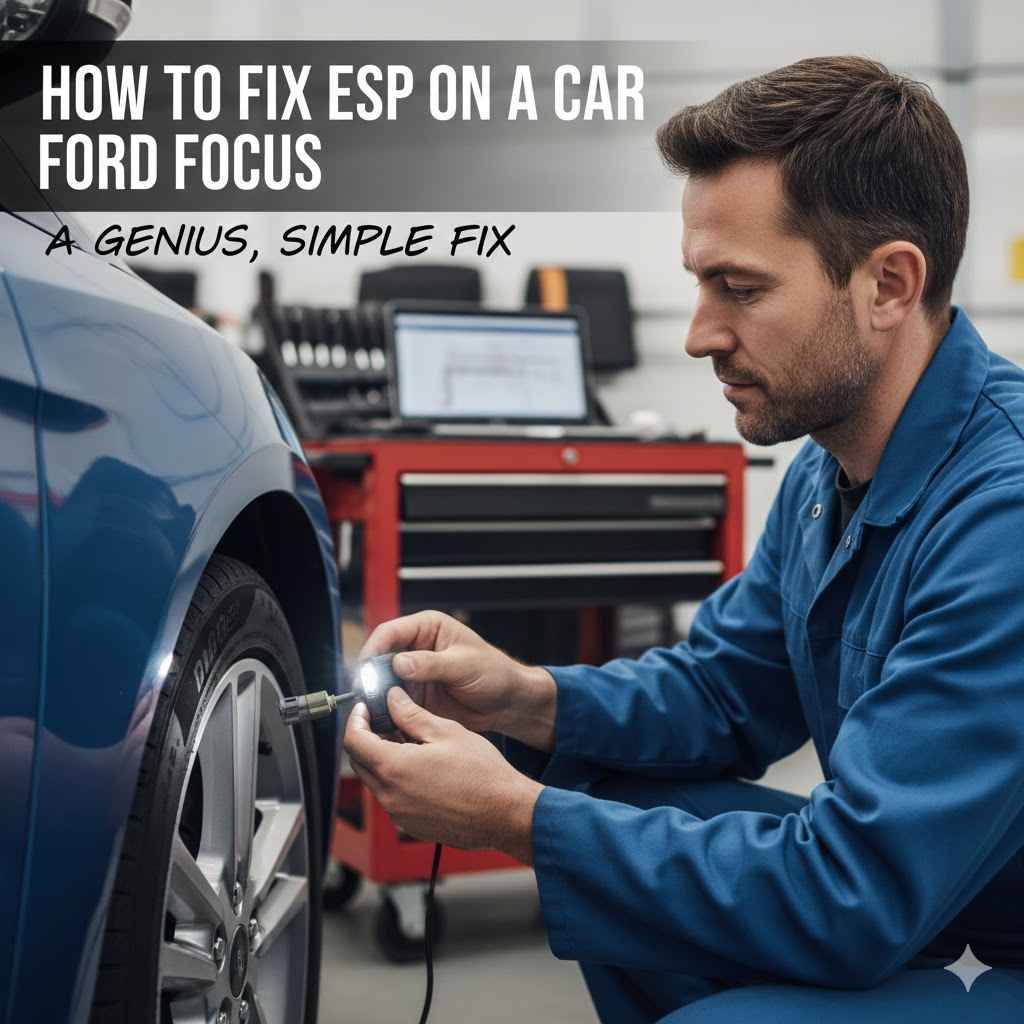
To fix the ESP on a Ford Focus, the most common and simple fix is to replace the brake light switch. This small, inexpensive part is located above the brake pedal and often fails, sending an incorrect signal to the ESP system. Replacing it usually requires no special tools and can be done in under 15 minutes, instantly clearing the warning light.
That little “ESP” light on your dashboard can be worrying. It pops up without warning and makes you wonder if your car is safe to drive. But don’t panic! More often than not, this warning light on your Ford Focus points to a surprisingly simple and cheap problem. You don’t need to be a master mechanic to solve it.
We are going to walk you through the most common fix—a solution so simple, you’ll feel like a genius for doing it yourself. This guide is made for beginners. We will use simple words and clear steps. Let’s get that light turned off and get you back on the road with confidence.
What is ESP and Why Is The Light On?
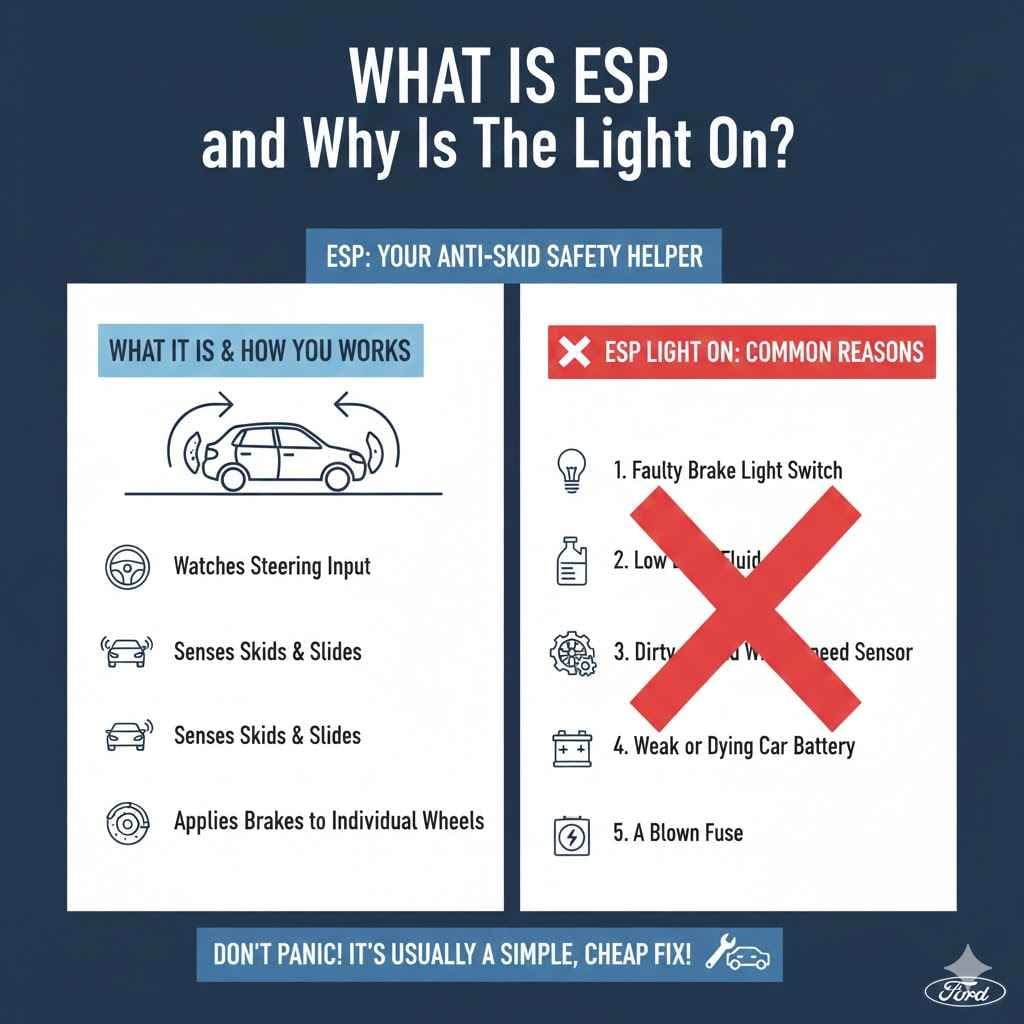
First, let’s talk about what ESP means. ESP stands for Electronic Stability Program. Think of it as a safety helper that keeps your car from skidding or sliding, especially on wet or icy roads. It watches where you are steering and where the car is actually going. If it senses a skid, it gently applies the brakes to one or more wheels to get you back on track.
When the ESP light turns on and stays on, it means the system has found a problem. It has turned itself off for safety. While your car will still drive and brake normally, you won’t have that extra anti-skid protection. The good news is that the cause is often not a big, scary, expensive part. It’s usually a small sensor or switch that is easy to fix.
Common Reasons the ESP Light Comes On
Here are a few of the most frequent culprits for an ESP fault in a Ford Focus. Notice how simple most of them are!
- A faulty brake light switch
- Low brake fluid
- A dirty or bad wheel speed sensor
- A weak or dying car battery
- A blown fuse
We’re going to start with the number one cause: the brake light switch. It’s the perfect place to begin your troubleshooting because it’s cheap, fast, and incredibly common.
The Genius, Simple Fix: Replacing the Brake Light Switch
Why is the brake light switch the star of our show? Because the ESP system needs to know when you are pressing the brakes. The brake light switch is the part that tells it. When this switch starts to fail, it can send confusing signals or no signal at all. The ESP system gets confused, flags an error, and turns on the warning light on your dash.
Replacing this switch is one of the most satisfying DIY car repairs. It costs very little and makes a huge impact, turning off a stressful warning light in minutes. You can absolutely do this yourself.
Tools and Parts You’ll Need
You won’t need a garage full of tools for this job. It’s very simple.
- New Brake Light Switch: Make sure you buy one that fits your specific year and model of Ford Focus. You can find this part at any auto parts store for a low price.
- Flashlight or Headlamp: It’s a bit dark in the driver’s footwell.
- A Small Wrench or Pliers (Maybe): Most switches can be removed by hand, but you might need a little help for a stubborn one.
Step-by-Step Guide to Replacing the Brake Light Switch
Follow these simple steps. Take your time, and you’ll be done before you know it. It’s best to do this with the car turned off and the keys out of the ignition.
Find the Brake Light Switch: The switch is located just above the brake pedal arm. You will need to get into the driver’s side footwell to see it. Use your flashlight to look up at the top of the metal arm that your brake pedal is attached to. You will see a small plastic part with a wiring connector plugged into it. That’s your target!
Disconnect the Electrical Connector: Before you remove the switch, you need to unplug it. There is usually a small tab or clip on the side of the plastic connector. Gently press this tab with your finger and pull the connector away from the switch. It should slide off without much force. Don’t yank on the wires themselves.
Remove the Old Switch: Most Ford Focus brake light switches are held in place by a simple twist-lock mechanism or a single nut.
- For a twist-lock switch: Simply grab the body of the switch and turn it counter-clockwise (to the left) about a quarter of a turn. It will then pop out of its bracket.
- For a switch with a nut: Use a small wrench to loosen the nut holding it in place. Once the nut is off, the switch will slide out.
Compare the Old and New Switches: Take a moment to hold your new switch next to the old one. Make sure they look identical. This confirms you have the right part before you install it.
Install the New Switch: This is just the reverse of removal. Gently insert the new switch into the bracket. If it’s a twist-lock type, push it in and turn it clockwise (to the right) until it clicks securely into place. If it has a nut, slide it in and tighten the nut until it’s snug. Don’t overtighten it.
Reconnect the Electrical Connector: Push the wiring connector back onto the new switch. You should hear or feel a little click as it locks into place. Give it a gentle tug to make sure it’s secure.
Test Your Work: Before you celebrate, let’s make sure it worked. Have a friend stand behind the car while you press the brake pedal. Do the brake lights turn on? Great! Now, start the car. The ESP warning light should turn off either immediately or after driving a few feet. Success!
What If The Simple Fix Didn’t Work? Other Common Causes
If you replaced the brake light switch and that pesky ESP light is still on, don’t worry. There are a few other simple things you can check before heading to a mechanic. Let’s go through them one by one.
1. Check Your Brake Fluid Level
Your car’s brake system is hydraulic, meaning it uses fluid under pressure. The ESP system is tied into this. If your brake fluid is low, a sensor will detect it and can trigger the ESP and ABS warning lights.
- How to Check: Open your hood and locate the brake fluid reservoir. It’s usually a small, semi-clear plastic container near the back of the engine bay on the driver’s side. The cap will have a brake symbol on it.
- What to Look For: The side of the reservoir has “MIN” and “MAX” lines. The fluid should be between these two lines.
- The Fix: If it’s low, buy the correct type of brake fluid for your car (check your owner’s manual for DOT 3 or DOT 4) and carefully top it off to the MAX line. Be careful not to spill any on your paint, as it can be corrosive.
2. Inspect Your Wheel Speed Sensors
Each of your four wheels has a sensor that tells the car’s computer how fast it’s spinning. The ESP system needs this information from all four wheels to detect a skid. If one of these sensors gets very dirty or fails, the system can’t work properly.
- What they are: These are small magnetic sensors located near the center of each wheel hub, behind the brake rotor. They have a wire coming out of them.
- How to Check: You may need to remove the wheel to get a good look. Check if the sensor is covered in brake dust, mud, or grime. Also, check if the wire leading to it is damaged, frayed, or disconnected.
- The Fix: If a sensor is just dirty, you can often fix the problem by gently wiping it clean with a soft cloth. If the wire is damaged or the sensor has failed, it will need to be replaced. This is also a fairly simple DIY job for many car owners.
3. Look at Your Battery and Fuses
Modern cars rely heavily on electricity. A weak battery can cause all sorts of strange electrical problems, including false warning lights. The ESP system needs a steady voltage to work correctly.
- Check the Battery: Pop the hood and look at your car battery terminals. Are they covered in a fuzzy, white or blue-green substance? That’s corrosion, and it can interfere with the electrical connection. Cleaning it off with a wire brush might solve the problem. If your battery is more than 3-4 years old, it might be too weak and need replacement.
- Check the Fuses: Your car has fuse boxes (often one under the hood and one inside the car). Your owner’s manual will show you where they are and which fuse is for the ABS/ESP system. Pull the fuse out and look at the little wire inside it. If the wire is broken, the fuse is blown and needs to be replaced with a new one of the exact same amperage.
Common ESP Faults and Fixes Summary
Here is a handy table that breaks down the common issues, how hard they are to fix, and what you might expect to pay.
| Symptom | Possible Cause | DIY Difficulty Level | Estimated Cost (DIY) |
|---|---|---|---|
| ESP light is on, brake lights don’t work or work intermittently. | Faulty Brake Light Switch | Very Easy | $10 – $25 |
| ESP and Brake warning lights are on. Brake pedal feels soft. | Low Brake Fluid | Very Easy | $5 – $15 |
| ESP light comes on after hitting a bump or during sharp turns. | Dirty or Failing Wheel Speed Sensor | Easy to Moderate | $0 (for cleaning) or $20 – $50 (for a new sensor) |
| ESP light on along with other random electrical issues. Car slow to start. | Weak or Dying Battery / Corroded Terminals | Easy | $0 (for cleaning) or $100 – $200 (for a new battery) |
| ESP light is on and system is completely dead. | Blown Fuse | Very Easy | $1 – $5 |
| ESP light on, car pulls to one side, or tires show uneven wear. | Steering Angle Sensor Fault / Bad Alignment | Difficult (Requires professional tools) | $100 – $300+ |
When to See a Professional Mechanic
While you can fix many ESP issues yourself, there are times when it’s best to call in a professional. Your safety is the most important thing. You should visit a trusted mechanic if:
- You have tried all the simple fixes above and the light is still on.
- The brake pedal feels spongy, soft, or goes to the floor. This is a serious safety issue.
- You hear grinding or scraping noises when you brake.
- The ESP light is flashing while you are driving in normal conditions.
- You don’t feel comfortable or confident performing any of these checks yourself.
A mechanic has a special tool called an OBD-II scanner that can read the specific error code from your car’s computer. This code will tell them exactly which part of the ESP system has failed, taking out all the guesswork. Sometimes, the problem could be a more complex part like the ABS module or a steering angle sensor, which are jobs best left to a professional.
How ESP Works to Keep You Safe
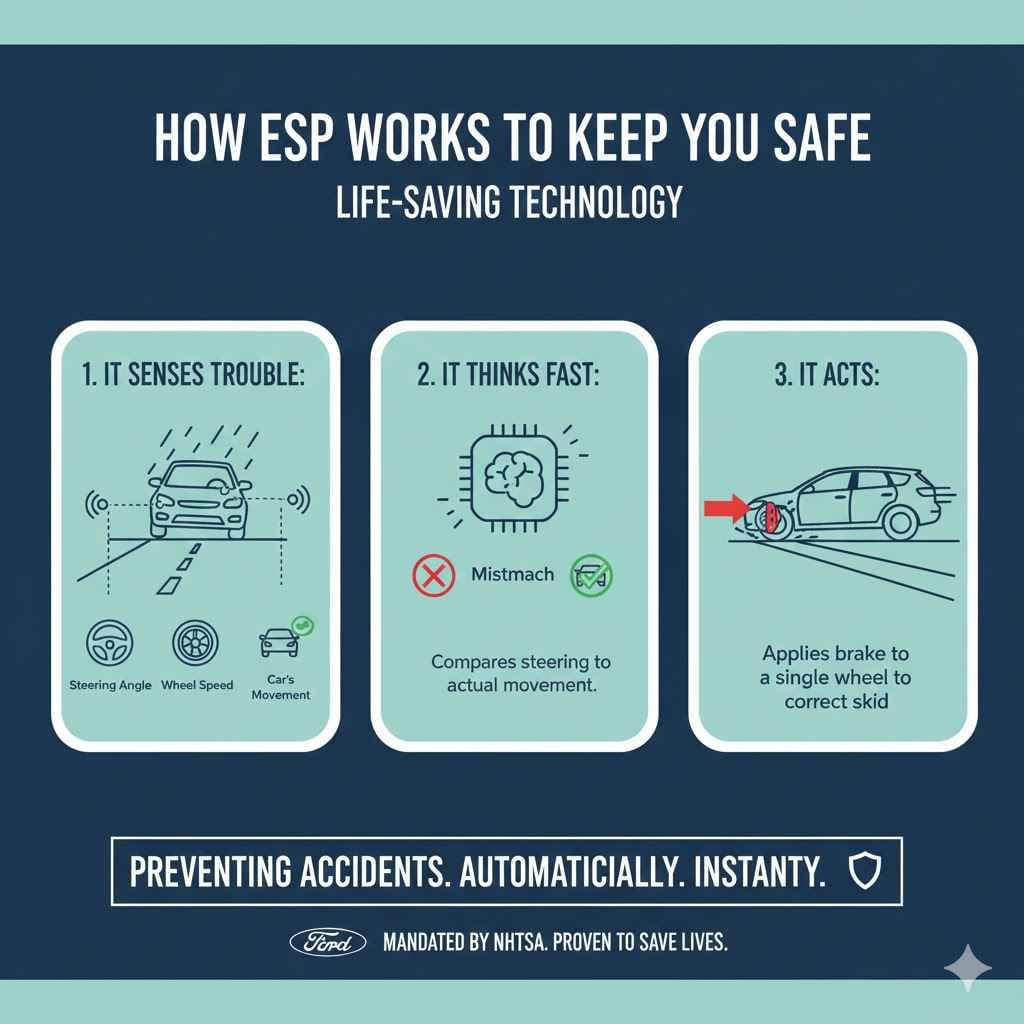
Understanding what this system does can help you appreciate why it’s so important. The National Highway Traffic Safety Administration (NHTSA) has mandated this technology on all new passenger vehicles for years because it is proven to save lives.
Imagine you’re driving on a rainy road and you swerve to avoid something. Your car could easily start to fishtail or skid. Here’s what ESP does in a split second:
- It Senses Trouble: Sensors constantly monitor your steering wheel angle, the speed of each wheel, and how the car is turning.
- It Thinks Fast: The ESP computer compares your steering input to the car’s actual movement. If it detects a mismatch (the start of a skid), it instantly calculates a solution.
- It Acts: The system can reduce engine power and, more importantly, apply the brake to just one specific wheel. For example, if the rear of your car is sliding out to the right, it might apply the brake to the front left wheel. This creates a pivoting force that gently nudges your car back in line.
It all happens automatically, often before you even realize you were in trouble. It’s an incredible safety net that helps prevent accidents.
Frequently Asked Questions (FAQ)
Can I drive my Ford Focus with the ESP light on?
Yes, you can generally drive the car. The basic braking and steering will work as normal. However, the Electronic Stability Program will not be active, so you won’t have the anti-skid safety feature. It’s best to drive more cautiously, especially in bad weather, and get the issue fixed as soon as you can.
How much does it cost to fix an ESP fault?
The cost varies wildly depending on the cause. If it’s a simple fix like a brake light switch or a blown fuse, you could spend less than $30 doing it yourself. If it’s a wheel speed sensor, expect to pay between $100 and $250 at a shop. More complex issues with the ABS module could cost several hundred dollars or more.
Will resetting the battery turn off the ESP light?
Disconnecting the battery for about 15 minutes can sometimes clear temporary error codes. If the ESP light was triggered by a momentary glitch, this might work. However, if there is a real problem with a part (like a bad switch or sensor), the light will come right back on as soon as the system runs its self-check again.
What’s the difference between ESP, ESC, and Traction Control?
They are all related. Traction Control is the simplest system; it just prevents your wheels from spinning during acceleration (like on ice). ESP (Electronic Stability Program) or ESC (Electronic Stability Control)—different names for the same thing—is a more advanced system. It includes traction control but also works to prevent skids and slides during cornering or swerving.
Why does my ESP light come on when it rains?
This could be a sign that a wheel speed sensor or its wiring is exposed to moisture. Water can cause a temporary short in the connection, triggering the light. When it dries out, the light may go off. This points to a failing sensor or a crack in the wiring insulation that needs to be addressed.
Can a bad wheel alignment cause the ESP light to come on?
Yes, it can. The ESP system uses a steering angle sensor to know which way you are trying to go. If your wheel alignment is significantly off, the steering wheel might not be perfectly straight when the car is going straight. This can confuse the sensor and the ESP system, causing it to set a fault code and turn on the warning light.
Conclusion: Drive with Confidence
Seeing a warning light on your dashboard doesn’t have to ruin your day or your budget. As we’ve shown, the “ESP Fault” message on your Ford Focus is often linked to a simple, easy-to-fix part like the brake light switch. By taking a few minutes to investigate, you can often solve the problem yourself for less than the cost of a pizza.
You’ve learned what ESP is, why it’s important for your safety, and how to tackle the most common causes for its warning light. By starting with the easiest and cheapest solutions first, you empower yourself to take control of your car’s maintenance. You build confidence and save money. So next time a light pops up, take a deep breath, remember this guide, and know that you have the power to fix it.