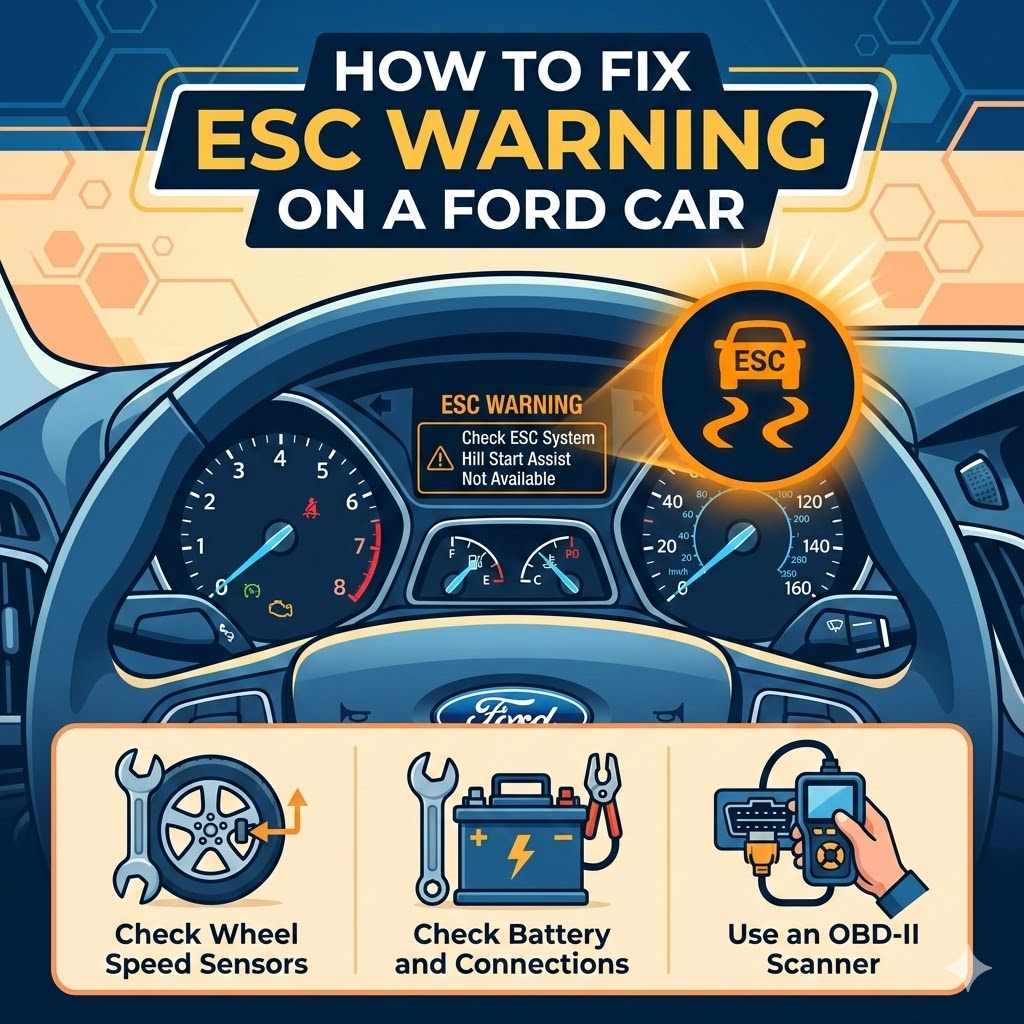
How to Fix ESC Warning on a Ford Car
Seeing that ESC warning light pop up on your Ford dashboard can be a bit confusing, especially if you’re not a car expert. It’s a common issue that many Ford owners run into, and it often makes people wonder if it’s a big, expensive problem. But don’t worry, most of the time, figuring out How to Fix ESC Warning on a Ford Car is simpler than you might think.
We’re going to break down what that light means and guide you through some easy steps to get it sorted out without any fuss.
Understanding the ESC Warning Light
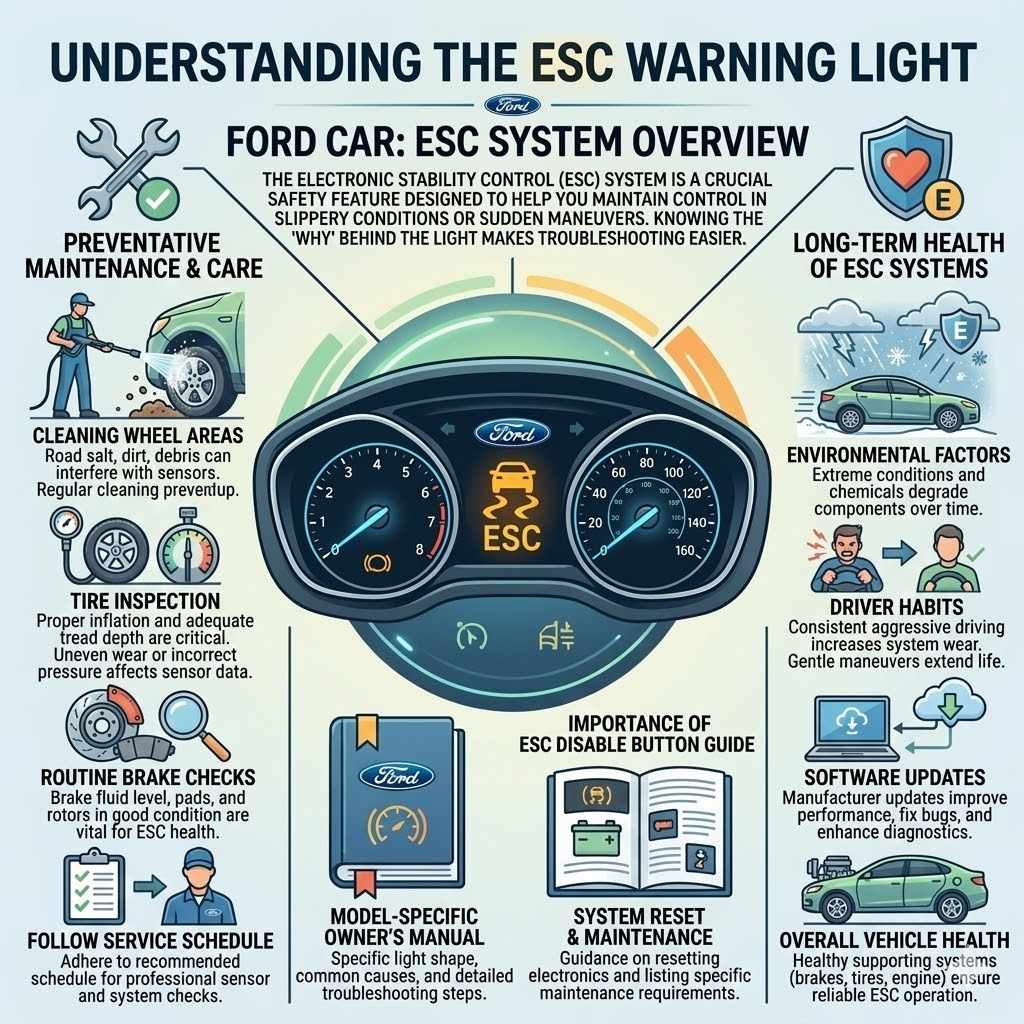
The ESC warning light on your Ford car is an indicator that the Electronic Stability Control system has detected an issue. This system is designed to help you maintain control of your vehicle during slippery conditions or sudden maneuvers. When the light comes on, it means the system may not be functioning as it should, potentially affecting your car’s ability to handle safely.
Many drivers see this light and immediately think of costly repairs. This is often because the technology behind these systems can seem complex. However, the cause can be something quite simple and easily fixable by the owner.
The key is to know what to look for and understand the common reasons behind the warning.
This section will cover what the ESC system is, why the warning light might appear, and the basic principles behind its operation. We’ll explain the components involved in plain language. This will give you a solid foundation for understanding the troubleshooting steps that follow.
Knowing the ‘why’ makes fixing the ‘how’ much easier.
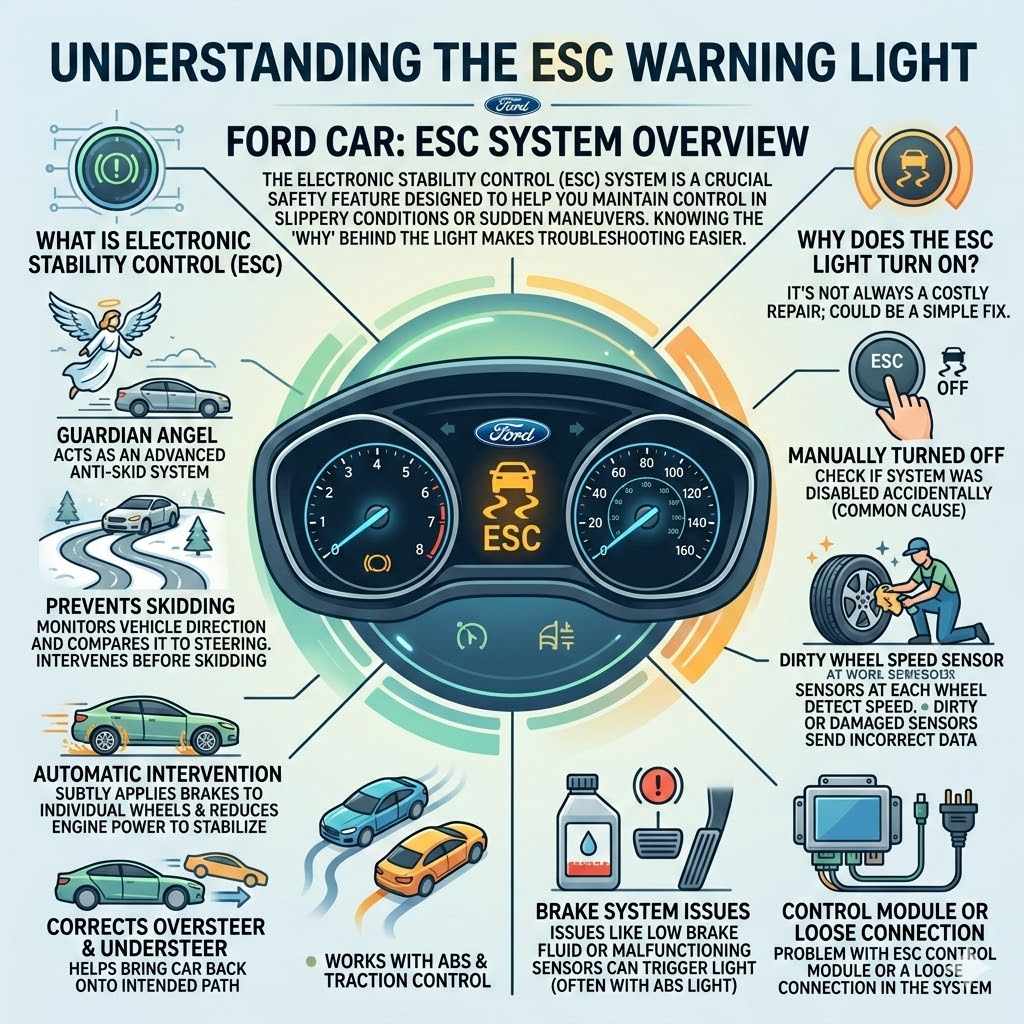
What Is Electronic Stability Control ESC
Electronic Stability Control, often abbreviated as ESC, is a crucial safety feature in modern vehicles. It acts like a guardian angel for your car, especially when driving in less-than-ideal conditions. Think of it as an advanced anti-skid system that works to prevent you from losing control.
ESC uses sensors to monitor your car’s direction and compare it to where you’re trying to steer. If it senses that the car is about to skid or spin out, it can automatically intervene. It does this by subtly applying the brakes to individual wheels and, in some cases, reducing engine power.
This helps to bring the car back onto its intended path. It’s a sophisticated system that enhances driving safety significantly.
The main goal of ESC is to help drivers avoid accidents, particularly during emergency maneuvers or on slippery surfaces like ice, snow, or wet roads. It helps to correct oversteer (when the rear of the car slides out) and understeer (when the front of the car plows straight ahead instead of turning).
For instance, if you have to swerve suddenly to avoid an obstacle, ESC can help keep your car stable and prevent a dangerous spin. Similarly, if you’re accelerating too quickly on a slippery surface, ESC can help prevent wheel spin and loss of traction. It’s a key part of a car’s active safety features, working alongside anti-lock brakes (ABS) and traction control.
Why Does the ESC Light Turn On
The ESC warning light illuminates for several reasons, most of which are designed to alert you to a potential issue. It’s not always a sign of a major breakdown. Often, it’s simply the system informing you that it’s engaged or that a component needs attention.
One of the most common reasons for the ESC light to come on is if the system has been manually turned off. Many cars have a button to disable ESC, usually for situations where you might need more wheel spin, like trying to get unstuck from snow. If you accidentally pressed this button, the light will appear.
Another frequent cause is related to the wheel speed sensors. ESC relies heavily on accurate data from these sensors, which are located at each wheel. If one of these sensors is dirty, damaged, or malfunctioning, the ESC system won’t get the correct information, triggering the warning light.
This is a very common and often simple fix.
Issues with the brake system can also cause the ESC light to illuminate. Since ESC works in conjunction with the brakes, any problem with the brake lights, brake fluid levels, or brake pedal sensor can trigger the warning. The ABS warning light often comes on at the same time if there’s a brake-related issue impacting ESC.
Finally, there could be a problem with the ESC control module itself, or a loose connection somewhere in the system. While less common than sensor issues, these are also possibilities that need to be considered during troubleshooting.
Simple Solutions for How to Fix ESC Warning on a Ford Car
When that ESC warning light shows up on your Ford, there are several straightforward checks you can perform before calling a mechanic. Many times, the solution is something you can do yourself in just a few minutes. These steps focus on the most frequent culprits for the ESC light.
The first and easiest step is to simply restart your car. Many electronic systems in modern vehicles can experience temporary glitches. Turning the car off and then on again can reset these systems and clear the warning light if the issue was a minor, fleeting electronic hiccup.
It’s a quick test that often solves the problem.
Next, check for the ESC system’s disable button. It’s often located on the dashboard or center console. Make sure it hasn’t been accidentally pressed.
If it has, pressing it again should re-enable the system and turn off the warning light. Consult your car’s owner’s manual if you’re unsure where this button is.
Another common fix involves the brake lights. The ESC system is linked to your brake lights. If a brake light bulb is out, it can sometimes trigger the ESC warning.
Check all your brake lights, including the third brake light, and replace any burnt-out bulbs. This is a simple maintenance task that can resolve the issue.
These initial steps are designed to be easy for anyone to perform. They address the most common and least complicated reasons for the ESC warning light to appear. If these steps don’t resolve the issue, we’ll move on to slightly more involved troubleshooting.
Checking Your Ford’s Brake Lights
Your car’s brake lights are a vital safety feature, and surprisingly, they can directly impact your ESC system. The Electronic Stability Control relies on the brake pedal sensor to understand when you’re applying the brakes. If your brake lights aren’t working correctly, this signal can be interrupted, leading to the ESC warning light.
To check your brake lights, you’ll need a helper or a reflective surface. Have someone stand behind your car while you sit in the driver’s seat. When you press the brake pedal, they should see both brake lights illuminate.
Remember to check the third brake light, which is usually located higher up on the rear of the vehicle.
If one or more of the brake lights are not working, the bulb is likely burnt out. Replacing a brake light bulb is usually a simple process. You can typically access the bulb housing by opening the trunk or tailgate and looking for the light assembly.
Consult your owner’s manual for specific instructions on how to access and replace the bulbs in your Ford model.
Sometimes, the issue isn’t the bulb itself but a loose connection or a faulty socket. If you replace the bulb and the light still doesn’t work, check the wiring and socket for any signs of damage or corrosion. A loose connection can be re-seated, and minor corrosion can sometimes be cleaned off.
It’s worth noting that some modern cars use LED brake lights, which are more durable but can be more complex to
The Role of Wheel Speed Sensors
Wheel speed sensors are tiny but incredibly important components for your car’s safety systems, including ESC and ABS. These sensors are mounted near each wheel hub and constantly measure how fast each wheel is rotating. The car’s computer uses this information to understand how the vehicle is moving.
The ESC system, in particular, needs to know the speed of each wheel to detect if any wheels are slipping or rotating at a different speed than the others. If one wheel is spinning faster or slower than the rest, it can indicate that the car is losing traction. The ESC system then intervenes to correct the situation.
If a wheel speed sensor becomes dirty, damaged, or simply stops working, it can send incorrect or no data to the car’s computer. This lack of accurate information causes the ESC system to malfunction, and the warning light will illuminate. Sometimes, the ABS light will come on simultaneously because ABS also relies on these sensors.
Causes for sensor failure can include road debris, salt and grime buildup, or physical damage from potholes or impacts. The wiring leading to the sensor can also become damaged. If you suspect a wheel speed sensor issue, you might notice other symptoms like the speedometer not working correctly, as it also uses this data.
While cleaning a sensor can sometimes help, often a faulty sensor needs to be replaced. This is a task that may require a mechanic, as it involves safely lifting the vehicle and accessing the sensor assembly. However, identifying that a wheel speed sensor is the likely cause is a significant step in troubleshooting the ESC warning.
Resetting Your Ford’s Electronic Systems
One of the simplest yet often effective ways to address a lit ESC warning light is by performing a system reset. Modern vehicles are packed with complex electronics, and like any computer, they can sometimes benefit from a fresh start. This process involves a few different methods that can help clear temporary glitches.
The most basic reset is to turn your car off, remove the key (if applicable), and wait for about 5-10 minutes. This allows the car’s computer modules to fully power down and clear any temporary error codes that might have been stored. After the waiting period, reinsert the key, start the car, and see if the warning light has disappeared.
For a more thorough reset, you can disconnect the car’s battery. First, locate the battery, usually under the hood. You’ll need a wrench to loosen and remove the negative (-) terminal clamp.
Be sure to disconnect the negative terminal first. After disconnecting, wait for at least 15-30 minutes. This ensures that all the electrical components are fully discharged.
Once you’ve waited, reconnect the negative terminal and tighten it securely. Then, start your car. This battery disconnect method often clears more stubborn electronic issues than a simple engine off/on.
However, be aware that resetting the battery might also reset other settings like your radio presets, clock, and learned engine parameters, which will recalibrate over time as you drive.
Some Ford models might also have a specific procedure for resetting the ESC system, often found in the owner’s manual. This might involve a sequence of turning the ignition on and off or pressing specific buttons. Always refer to your vehicle’s manual for the most accurate reset instructions for your specific model.
When to Seek Professional Help for Your Ford ESC Light
While many ESC warning light issues can be resolved with simple home checks, there are times when professional assistance is necessary. If you’ve tried the basic troubleshooting steps and the warning light persists, it’s a good indication that a more complex problem is at play.
One primary reason to seek professional help is if the ESC warning light is accompanied by other warning lights, such as the ABS or check engine light. The combination of lights often points to a more integrated system failure that requires specialized diagnostic tools to pinpoint. This could be related to the car’s braking system, steering angle sensor, or the main ESC control module.
If you suspect a problem with a wheel speed sensor or ABS sensor, it’s often best to let a mechanic handle it. While replacing a sensor might seem straightforward, proper diagnosis is key. A mechanic has the diagnostic equipment to read the specific error codes from your car’s computer, which will tell them exactly which sensor is faulty and why.
They can also ensure the sensor is replaced correctly and calibrated if needed.
Another scenario where professional help is advisable is if the ESC system seems to be engaging erratically or preventing you from driving normally. This could indicate a more serious malfunction of the ESC control module or related electronic components. Driving with a malfunctioning ESC system can be dangerous, so it’s important to have it checked promptly.
Finally, if you’re uncomfortable performing any of the diagnostic checks or repairs yourself, it’s always wise to consult a qualified mechanic. They have the expertise, tools, and knowledge to accurately diagnose and repair the issue, ensuring your Ford’s safety systems are functioning correctly and safely.
Diagnosing Steering Angle Sensor Issues
The steering angle sensor is a critical component for your Ford’s ESC system. It tells the car’s computer the precise direction and angle of the steering wheel. This information is vital for the ESC to know your intended path and to detect if the car’s actual direction deviates from it.
If the steering angle sensor is malfunctioning, dirty, or has a faulty connection, the ESC system will not receive accurate directional input. This can lead to the ESC light coming on, as the system cannot properly interpret your steering commands. In some cases, the car might perceive you as losing control when you are simply making a normal turn.
Diagnosing a steering angle sensor issue typically requires specialized diagnostic tools. A mechanic will use an OBD-II scanner that can read specific codes related to the steering angle sensor. These codes can indicate if the sensor is out of calibration, has an electrical fault, or is simply not communicating with the car’s computer.
If the sensor is found to be out of calibration, it can sometimes be recalibrated without needing replacement. This process involves driving the vehicle in specific patterns or using diagnostic software to reset the sensor’s baseline. However, if the sensor itself is damaged or faulty, it will need to be replaced.
Replacing a steering angle sensor can be a complex task that involves removing the steering wheel and clock spring assembly. It’s usually best left to professional technicians to ensure it’s installed and calibrated correctly. A properly functioning steering angle sensor is essential for the optimal performance of your ESC system.
Understanding ABS and ESC Interconnection
The Anti-lock Braking System (ABS) and the Electronic Stability Control (ESC) system are closely related and often work together. In fact, ESC systems are typically built upon the foundation of ABS technology. This interconnection means that a problem in one system can often trigger warnings in the other.
ABS prevents your wheels from locking up during hard braking, allowing you to maintain steering control. ESC, on the other hand, helps you avoid skids and loss of control during cornering or sudden maneuvers by applying individual brakes and managing engine power. Both systems rely on the same set of wheel speed sensors to function.
Because of this dependency, if one of the wheel speed sensors malfunctions, both the ABS warning light and the ESC warning light will likely illuminate. Similarly, issues with the ABS pump, modulator, or brake pedal sensor can affect the ESC system. The car’s computer sees these problems as compromising the stability control capabilities.
When you see both the ABS and ESC lights on, it’s a strong signal that the root cause is likely related to the braking system or wheel sensors. Mechanics use diagnostic scanners that can read codes from both ABS and ESC modules. This dual warning helps them narrow down the potential problems more efficiently.
For example, if there’s a fault in the hydraulic modulator that controls the ABS, it will prevent ESC from functioning correctly. The system needs precise brake pressure control to manage stability. Therefore, any issue that hinders the ABS’s ability to modulate brake pressure will also disable ESC and turn on the warning light.
The Function of the ESC Control Module
At the heart of your Ford’s Electronic Stability Control system is the ESC control module. This is essentially the brain of the operation. It’s a small computer that receives data from various sensors throughout the vehicle, including wheel speed sensors, steering angle sensor, yaw rate sensor, and others.
Based on the information it receives, the ESC control module analyzes the car’s movement and compares it to the driver’s intended direction. If it detects a discrepancy that suggests a loss of traction or an impending skid, it takes immediate action. This action can involve applying specific wheel brakes with precision or reducing engine torque.
The module is designed to be highly responsive, making split-second decisions to help maintain vehicle control. When this module itself experiences a fault, such as an internal electrical issue, software glitch, or communication error with other vehicle systems, it will trigger the ESC warning light. This signifies that the module cannot perform its safety function reliably.
Diagnosing a faulty ESC control module requires advanced diagnostic equipment. Technicians will connect a scanner to the car’s OBD-II port to communicate with the module. They will look for specific fault codes that point to internal module errors or communication failures.
Sometimes, a module might need to be reprogrammed, while other times, it requires complete replacement.
Troubleshooting Common Ford ESC Light Scenarios
Let’s walk through some typical situations that lead to an ESC warning light on a Ford and how to approach them. These scenarios cover the most frequent reasons drivers encounter this issue, offering practical advice for each.
Scenario 1: The ESC light comes on after hitting a large pothole. This often suggests that the impact may have dislodged a wheel speed sensor or its wiring, or perhaps even damaged the sensor itself. Check for any visible damage around the wheel hub and ensure the sensor connector is securely attached.
If not, this points towards a sensor issue that may need professional attention.
Scenario 2: The ESC light appears after a heavy rainstorm or washing the car. Moisture can sometimes interfere with electrical connections, including those for wheel speed sensors. It could also be a temporary glitch in the system.
Try the car restart method. If it persists, it might indicate a sensor or connection that is not properly sealed against moisture, requiring inspection.
Scenario 3: The ESC light comes on intermittently, sometimes going off on its own. This can be frustrating but often points to a loose electrical connection or a sensor that is starting to fail. Wiggling or checking connectors, if accessible, might reveal the issue.
However, intermittent problems can be tricky to diagnose and may require a mechanic to monitor sensor data over time.
Scenario 4: The ESC light comes on along with the ABS light. As discussed, this strongly suggests a problem common to both systems, most likely related to wheel speed sensors or the ABS/ESC control module. Prioritizing the diagnosis of these shared components is key.
These scenarios help illustrate how different driving conditions or events can correlate with the ESC warning. Understanding these connections can give you a head start in figuring out what might be wrong with your Ford.
Ford ESC System Performance After Reset
After you perform a reset, either by restarting the car or disconnecting the battery, it’s important to observe how the ESC system behaves. Sometimes, the warning light will simply disappear and not return, indicating a minor, one-time glitch.
In other cases, the light might still reappear shortly after the reset, especially when you perform a specific action like braking hard or turning. This persistence of the warning light after a reset is a strong indicator that the underlying problem has not been resolved. It suggests a more persistent fault within the ESC system or its related components.
If the ESC light comes back on after a reset, pay close attention to when it happens. Does it come on during acceleration, braking, or turning? Does it happen on rough roads or smooth ones?
This behavioral information can be incredibly valuable when describing the problem to a mechanic. It helps them narrow down the possibilities.
For example, if the light consistently reappears every time you brake, it might point to an issue with the brake pedal sensor or the brake light switch, rather than a wheel speed sensor. If it appears when turning, the steering angle sensor becomes a more likely culprit.
It’s also important to note that after a battery disconnect, some systems need a short period of driving to recalibrate. Your Ford’s owner’s manual might specify a drive cycle for recalibration. However, if the ESC light comes on immediately or very soon after driving, it is less likely to be a recalibration issue and more likely a fault that needs attention.
Sample Ford ESC Warning Light Troubleshooting Log
To help illustrate the process, here is a sample troubleshooting log for a common ESC warning light scenario. This fictional log shows how a driver might approach the problem step-by-step.
- Date: October 26, 2023
Time: 8:00 AM
Symptom: ESC warning light illuminated on dashboard upon starting the car. No other warning lights were present.
Initial Check: Manually checked if the ESC disable button was accidentally pressed. It was not. - Date: October 26, 2023
Time: 8:05 AM
Action: Performed a simple engine off/on reset. Turned the car off, waited 2 minutes, and restarted.
Result: ESC warning light remained illuminated. - Date: October 26, 2023
Time: 8:15 AM
Action: Checked brake lights. With assistance, confirmed all three brake lights were functioning correctly.
Result: Brake lights were working fine. - Date: October 26, 2023
Time: 10:00 AM
Action: Performed battery disconnect reset. Disconnected the negative battery terminal for 30 minutes. Reconnected and started the car.
Result: ESC warning light stayed off for the initial 10-minute drive. - Date: October 27, 2023
Time: 7:30 AM
Symptom: Upon starting the car, the ESC warning light was illuminated again.
Observation: The light came on immediately after starting the engine. No other warning lights are present.
Next Step: Scheduled an appointment with a mechanic, noting the light reappeared after a battery reset. This suggests a persistent issue likely involving sensors or the control module.
This log demonstrates a methodical approach, starting with the easiest checks and progressing to more involved ones. It highlights how to document findings, which is helpful for both self-diagnosis and communication with a professional.
Preventative Maintenance and ESC System Care
While it’s impossible to prevent every single issue, certain preventative maintenance practices can help keep your Ford’s ESC system in good working order. Regular care can often catch minor problems before they escalate into warning lights and costly repairs.
One of the most straightforward preventative measures is to keep your vehicle clean, especially around the wheel areas. Road salt, dirt, and debris can accumulate over time and potentially interfere with the wheel speed sensors. Regularly washing your car, paying attention to the wheel wells, can help prevent buildup.
Regularly inspecting your tires is also important. Ensure your tires are properly inflated and have adequate tread depth. Uneven tire wear or incorrect tire pressure can affect how the ESC system interprets wheel speeds, potentially leading to false warnings.
Proper tire maintenance ensures the sensors are reading accurate data.
When it comes to your brakes, routine inspections are crucial. Ensure your brake fluid is at the correct level and that your brake pads and rotors are in good condition. Issues with the braking system can directly impact the ESC, so keeping your brakes in optimal shape is vital for overall system health.
Finally, always follow your Ford’s recommended maintenance schedule. This schedule often includes checks for various sensors and electronic systems. Adhering to this schedule ensures that any potential issues are identified and addressed by trained technicians during routine service appointments.
The Importance of Owner’s Manual for ESC Issues
Your Ford’s owner’s manual is an invaluable resource when dealing with any warning light, including the ESC light. It contains specific information about your vehicle’s particular systems and how they operate.
The manual will explain what the ESC warning light looks like and what it signifies for your specific model. It often provides a list of common causes for the light to illuminate and may even suggest simple troubleshooting steps you can take. Some manuals detail the location of the ESC disable button and how to use it.
Furthermore, your owner’s manual can provide guidance on how to reset certain electronic systems, such as disconnecting the battery. It will also list specific maintenance requirements for your ESC system and related components, helping you understand what checks are recommended and when.
If you are unsure about any aspect of your car’s operation or the meaning of a warning light, consulting the owner’s manual is always the best first step. It provides clear, concise, and model-specific information that can save you time and potential confusion when trying to diagnose and fix issues like the ESC warning light.
Long-Term Health of ESC Systems
The ESC system is designed to be a durable and long-lasting safety feature. However, like any complex electronic system, its lifespan and performance can be influenced by various factors. Understanding these can help you ensure its continued reliability.
One of the primary factors influencing ESC system health is exposure to harsh environmental conditions. Extreme temperatures, excessive moisture, and road chemicals like salt can degrade electronic components and connectors over time. While modern vehicles are built to withstand these conditions, prolonged exposure can still take a toll.
Driver habits also play a role. Consistently driving aggressively, for instance, can put more stress on the ESC system as it engages more frequently. While the system is designed to handle this, it’s not immune to wear and tear.
Gentle driving and avoiding unnecessary hard maneuvers can contribute to its longevity.
Proper maintenance, as previously mentioned, is key. Ensuring that all related systems, such as brakes and tires, are in good condition means the ESC system is working with reliable inputs. Neglecting these supporting systems can indirectly lead to premature wear or malfunction within the ESC itself.
Finally, ensuring your vehicle’s software is up-to-date can also contribute to long-term ESC health. Manufacturers occasionally release software updates that can improve system performance, fix minor bugs, or enhance diagnostic capabilities. Staying current with these updates, often done during scheduled maintenance, can be beneficial.
Frequently Asked Questions
Question: What does the ESC light mean on my Ford?
Answer: The ESC light means your Electronic Stability Control system has detected an issue or has been manually turned off. It’s a warning that the system may not be functioning correctly, impacting your car’s ability to maintain stability.
Question: Can I drive my Ford with the ESC light on?
Answer: You can generally drive your Ford with the ESC light on, but it’s not recommended for extended periods. The system may be partially or completely disabled, reducing your car’s ability to prevent skids and maintain control in challenging driving conditions.
Question: How much does it cost to fix an ESC warning light?
Answer: The cost can vary greatly. Simple fixes like a burnt-out brake light bulb might cost only a few dollars for the bulb. However, issues like replacing a faulty steering angle sensor or ESC control module can range from several hundred to over a thousand dollars, depending on the part and labor costs.
Question: Should I disconnect my battery to fix the ESC light?
Answer: Disconnecting the battery can reset electronic systems and sometimes clear a temporary ESC warning light. It’s a simple step to try, but if the light returns, it indicates a more persistent issue that needs further diagnosis.
Question: Is it safe to ignore the ESC warning light?
Answer: No, it is not safe to ignore the ESC warning light. While you can drive, you are losing a critical safety feature. It’s important to diagnose and fix the problem to ensure your vehicle remains safe to drive, especially in adverse weather conditions.
Summary
This article has explored how to fix ESC warning on a Ford car. We covered what ESC is, why the light appears, and easy fixes like checking brake lights and resetting systems. We also discussed sensor issues, professional help, and preventative care.
Your Ford’s safety is important, so address this warning promptly for peace of mind.
Products related to this article
Sponsored / affiliate links. As an Amazon Associate I earn from qualifying purchases. I may earn additional commission from eligible campaigns.