
Quick Summary: If your brake lights won’t turn on, or your cruise control randomly cuts out, your brake pedal switch is likely failing. Look for inconsistent stop light operation or dashboard warnings. This small part is key to safety, but testing it is simple and usually cheap to fix.**
When your car starts acting funny, it can feel frustrating and a little scary. You rely on your car every day, and when something simple seems broken—like the brake lights—you need answers fast. The brake pedal switch is a small but mighty component. It tells your car when you press the brake pedal. If it stops working right, several important safety features might fail.
Don’t worry! Figuring out if this switch is the culprit is easier than you might think. You do not need to be a master mechanic to diagnose this issue. This guide will walk you through the clear signs and simple checks to confirm if your brake pedal switch needs replacing. Let’s get you back in control and driving safely!
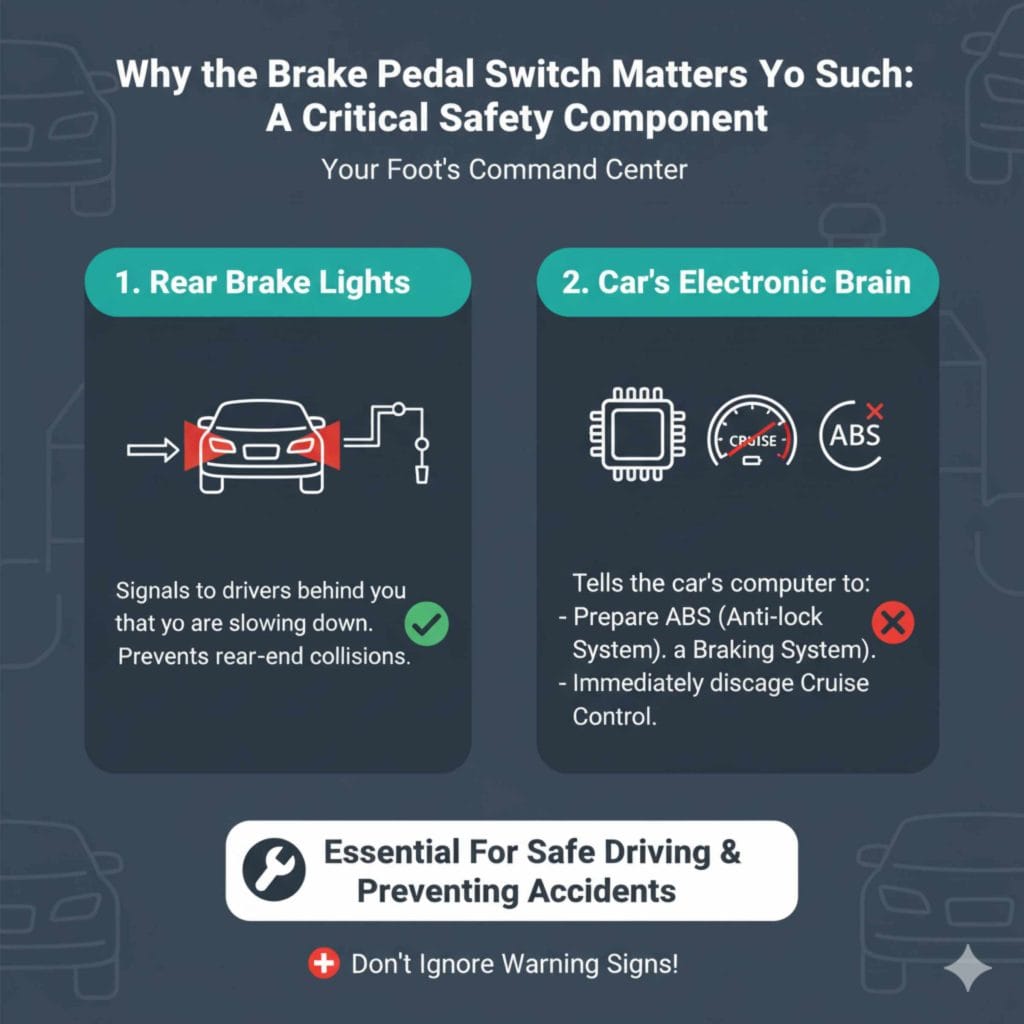
Why the Brake Pedal Switch Matters So Much
The brake pedal switch, sometimes called the stop lamp switch, is more than just a light activator. It is a critical link between your foot and the car’s electronic brain. When you push the brake pedal, this switch closes an electrical circuit. This action does two main things instantly:
- It illuminates your rear brake lights, signaling to drivers behind you that you are slowing down. This is crucial for preventing rear-end collisions.
- It sends a signal to the car’s computer that the brakes are being applied. This tells systems like the Anti-lock Braking System (ABS) they need to stand by, and it tells the Cruise Control system to immediately disengage.
Because it manages essential safety functions, knowing when this part is failing is vital for safe driving. A faulty switch can lead to tickets, accidents, or confusing behavior from your car’s electronics.
Top Signs: How Do You Know If Your Brake Pedal Switch Is Bad?
If your brake pedal switch is failing, your car will usually give you a few very obvious clues. These symptoms range from simple annoyances to serious safety concerns. Pay close attention to these common warning signs.
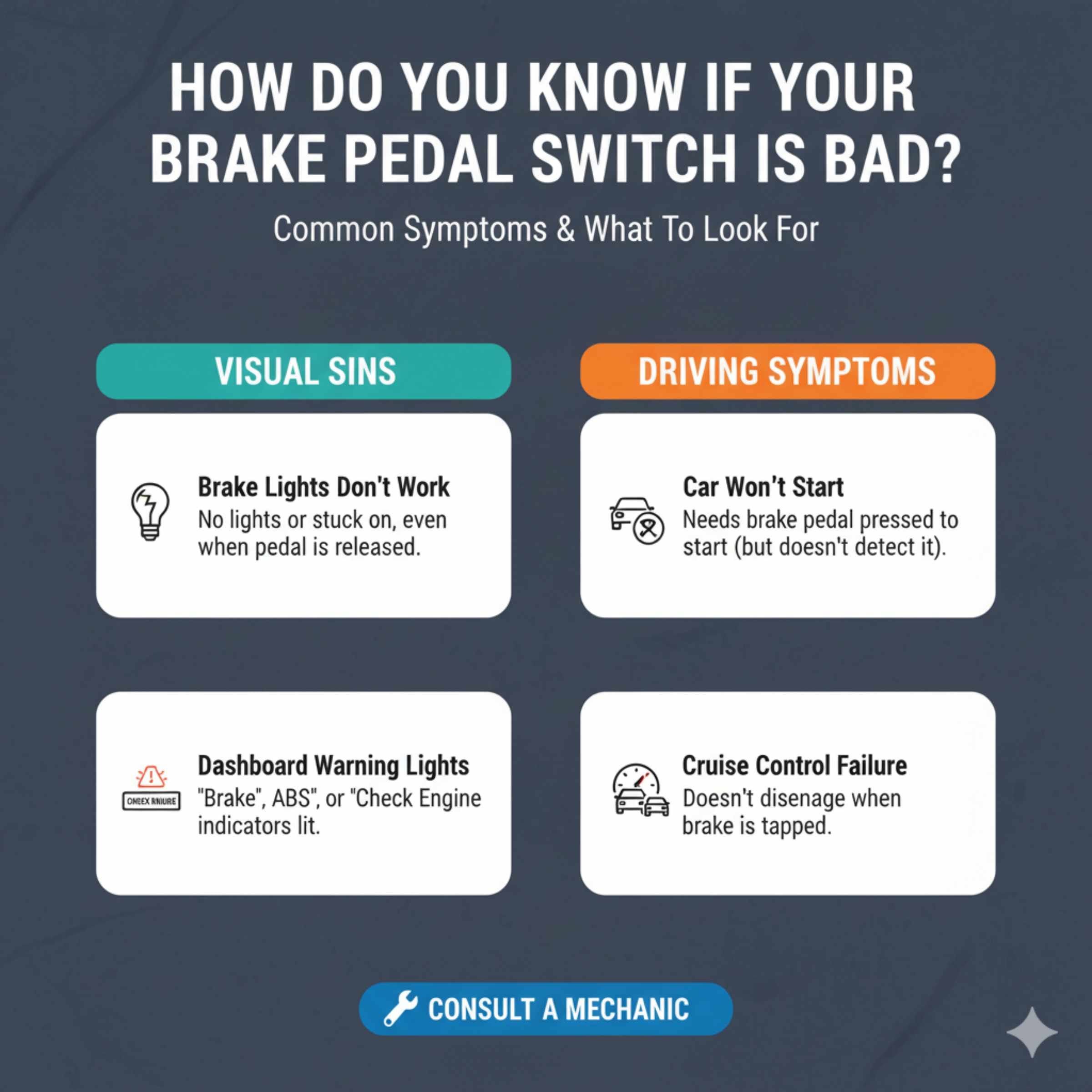
Sign 1: Your Brake Lights Don’t Work (Or Work Unreliably)
This is the most straightforward sign. Since the switch’s primary job is to turn on the lights, any failure here means the lights won’t illuminate when you press the pedal. However, sometimes the failure is intermittent.
- The lights are totally dead: You press the pedal, and nothing happens. This is almost always the switch, a blown fuse, or the bulbs themselves.
- The lights are on all the time: If your brake lights stay lit even when you aren’t pressing the pedal, the switch might be stuck in the “closed” (active) position. This confuses drivers behind you and can drain your battery.
- The lights only work sometimes: You might press gently, and they don’t come on, but pressing hard makes them flash. This indicates a worn or misaligned switch.
Sign 2: Cruise Control Stops Working or Acts Strangely
Modern vehicles rely on the brake pedal switch to immediately cancel cruise control. If the switch fails to send the “brake applied” signal, the car thinks the brakes aren’t being used, or it might not register the input correctly.
You might notice that when you try to set or resume your cruise control, it simply won’t engage. Alternatively, if you are cruising and the car suddenly cancels the setting without you touching the pedal, the switch might be sending intermittent signals indicating you are braking when you are not.
Sign 3: Problems Starting Your Car (Ignition Interlock)
For most automatic transmission vehicles, the ignition system requires a signal that the car is in Park or Neutral. Many cars also use the brake pedal switch to allow the vehicle to start. This is a safety feature designed to prevent the car from lurching forward when you turn the key or push the start button.
If the switch is bad, the car might think your foot isn’t on the brake, and you’ll turn the key to silence—nothing happens. You may have to jiggle the pedal or press it unusually hard to get the starter to engage. For more information on how electrical systems work in vehicles, educational resources like those from the U.S. Department of Energy can offer great background context.
Sign 4: Issues with the Brake Warning Light or ABS Light
In some vehicles, especially newer ones, the brake pedal switch sends continuous diagnostic information to the Engine Control Unit (ECU). If the circuit is open or shorted due to a bad switch, the car’s computer becomes confused.
This confusion often triggers warning lights on your dashboard, such as the dedicated Brake Warning Light (often a circle with an exclamation mark inside) or the ABS light. While these can indicate serious brake fluid issues, they can just as easily point to a simple electrical switch problem.
Sign 5: The Transmission Won’t Shift Out of Park
This is related to the ignition interlock but focuses on the gear selector. Automatic transmissions have a shift lock release mechanism that requires the driver to press the brake pedal before moving the shifter out of Park (P). Like the starting issue, a bad switch might not register this action.
You’ll find yourself pushing the pedal, hearing the solenoid click, but the shifter remains firmly locked in Park. If you try the manual override (often requiring a small screwdriver to access the emergency release), but the car still won’t move, the switch is a major suspect.
How to Safely Test Your Brake Pedal Switch (Step-by-Step)
Diagnosing the switch yourself is a rewarding way to save time and money. This test requires only basic tools and careful observation. Always prioritize safety during these checks.
Tools You Might Need:
- A friend (to check the lights)
- A multimeter (optional, but highly recommended for definitive testing)
- Small flashlight
- Screwdriver (if the switch housing needs removal)
Method 1: The Visual and Helper Test (Easiest Check)
This test confirms only the brake light function. It’s the first step everyone should take.
- Position the Car Safely: Park your vehicle on level ground away from traffic. Turn the ignition on (so the dashboard lights up), but do not start the engine.
- Get Your Helper Ready: Have a trusted friend stand directly behind your car where they have a clear view of both rear brake lights.
- Perform the Test: Have your helper watch the lights. Slowly press and release the brake pedal several times. Ask them to confirm exactly when the lights turn on and off.
- Test Light Pressure: While your friend watches, apply the pedal very gently. If the lights flicker or don’t come on until the pedal is nearly on the floor, the switch is likely loose or worn out.
- Check Both Sides: Ensure both brake lights illuminate simultaneously. If only one works, you might have a simple bulb issue, but if they both fail together, suspect the main switch.
Method 2: Locating and Inspecting the Switch
The location varies, but the switch is almost always mounted directly behind or above the brake pedal arm.
- Access the Area: Crouch down underneath the dashboard on the driver’s side. You might need a flashlight.
- Identify the Switch: Look for a plastic assembly where the stem of the brake pedal rod pushes against a sensor when you release the pedal. This is usually a small, often round or square, device with an electrical connector plugged into it.
- Inspect for Damage: Look closely at the wiring harness connected to the switch. Are there any frayed wires or loose connections? Feel the switch itself; does it feel loose or wobbly on its mounting bracket?
- Check the Push Rod: When your foot is off the pedal, the switch should be fully depressed (pushed in) by the pedal assembly, which turns the lights off. When you press the pedal, the rod should pull back slightly, activating the switch and turning the lights on. If the pedal rod doesn’t push the switch in far enough when released, the lights will stay on.
Method 3: Using a Multimeter (The Professional Check)
A multimeter tells you if electricity is flowing correctly through the switch. This test is definitive for confirming electrical failure.
- Safety First: Disconnect the negative battery terminal before unplugging any electrical connector to prevent sparks or short circuits.
- Locate and Disconnect: Unplug the electrical connector from the back of the brake pedal switch.
- Set the Multimeter: Set your multimeter to test for electrical continuity (usually marked with a speaker symbol or Ω, Ohms).
- Test Continuity (Pedal Released): Touch the two terminals (pins) on the switch itself—not on the car’s wires—with the multimeter probes.
- Expected Result when Pedal is Released (Lights OFF): The meter should show continuity (a beep or close to 0 Ohms), meaning the circuit is closed. Note: Some switches are “normally open” and should show no continuity when released. Check your specific model’s wiring diagram if unsure, but most common brake switches are Normally Closed to keep the lights off.
- Crucial Self-Check: For a standard Stop Lamp Switch (which makes the light turn ON when you press), the meter should show NO CONTINUITY (infinite resistance/OL) when the pedal is fully released (lights are off).
- Test Continuity (Pedal Pressed): Now, press the brake pedal down firmly.
- Expected Result when Pedal is Pressed (Lights ON): The meter should now show CONTINUITY (a beep or 0 Ohms or very low resistance), meaning the circuit is complete and the signal is being sent.
- Diagnose the Failure:
- If the meter shows NO CONTINUITY (OL) both when pressed OR released, the switch is electrically dead and needs replacement.
- If the meter shows CONTINUITY all the time, the switch is stuck “on,” and needs replacement.
Understanding Brake Light Switch Types and Variations
Not all cars use the exact same switch. Understanding the basic types can help you find the right replacement part if you determine yours is bad.
| Switch Type | Function | Common Location |
|---|---|---|
| Two-Wire Switch (Simple) | Activates only the stop lights. | Directly on the pedal bracket. |
| Three-Wire Switch (Complex) | Manages brake lights, cruise control cancel, and transmission interlock. | Often adjustable or threaded into a mounting bracket. |
| Hydraulic Switch (Older/Rare) | Activated by brake fluid pressure, not pedal movement. | Mounted on the master cylinder. |
Most modern vehicles utilize the three-wire switch because it handles all the electronic communication needed for modern driver aids and safety systems. When diagnosing how do you know if your brake pedal switch is bad, look at which systems—lights, cruise, starting—are failing. This points you toward the correct switch type.
Replacing a Bad Brake Pedal Switch: A Confidence Booster
If your testing confirms the switch is bad, congratulations! This is usually one of the easiest, cheapest repairs you can do yourself. Replacing the switch gives you a huge confidence boost in your DIY skills.
The Replacement Process Overview:
- Disconnect Battery: Always disconnect the negative battery terminal first. Safety locks out the electrical system.
- Unplug the Connector: Carefully remove the electrical plug or harness leading into the switch.
- Remove the Old Switch:
- If it screws in, gently unthread it counter-clockwise.
- If it clips in, you may need to twist it slightly or press a release tab to pull it straight out of its mounting hole.
- Adjust the New Switch (Crucial Step): New switches usually require setting the correct “depth” or “throw.” Many modern switches are self-adjusting—when you push the new switch into its hole, the brake pedal resting position pushes the switch stem inward, automatically setting the correct gap. If yours is adjustable, refer to the specific installation instructions that came with the new part to ensure proper alignment with the pedal arm.
- Reconnect and Test: Plug the harness back in. Reconnect the battery. Have a friend check the lights immediately before starting the car.
Correct adjustment is vital. An improperly adjusted switch might be pressed too far in (lights always on) or not far enough out (lights never turn on). Using OEM (Original Equipment Manufacturer) parts where possible generally ensures the best fit and function, which contributes to better long-term reliability and safety outcomes.
Troubleshooting If the Switch Tests Fine
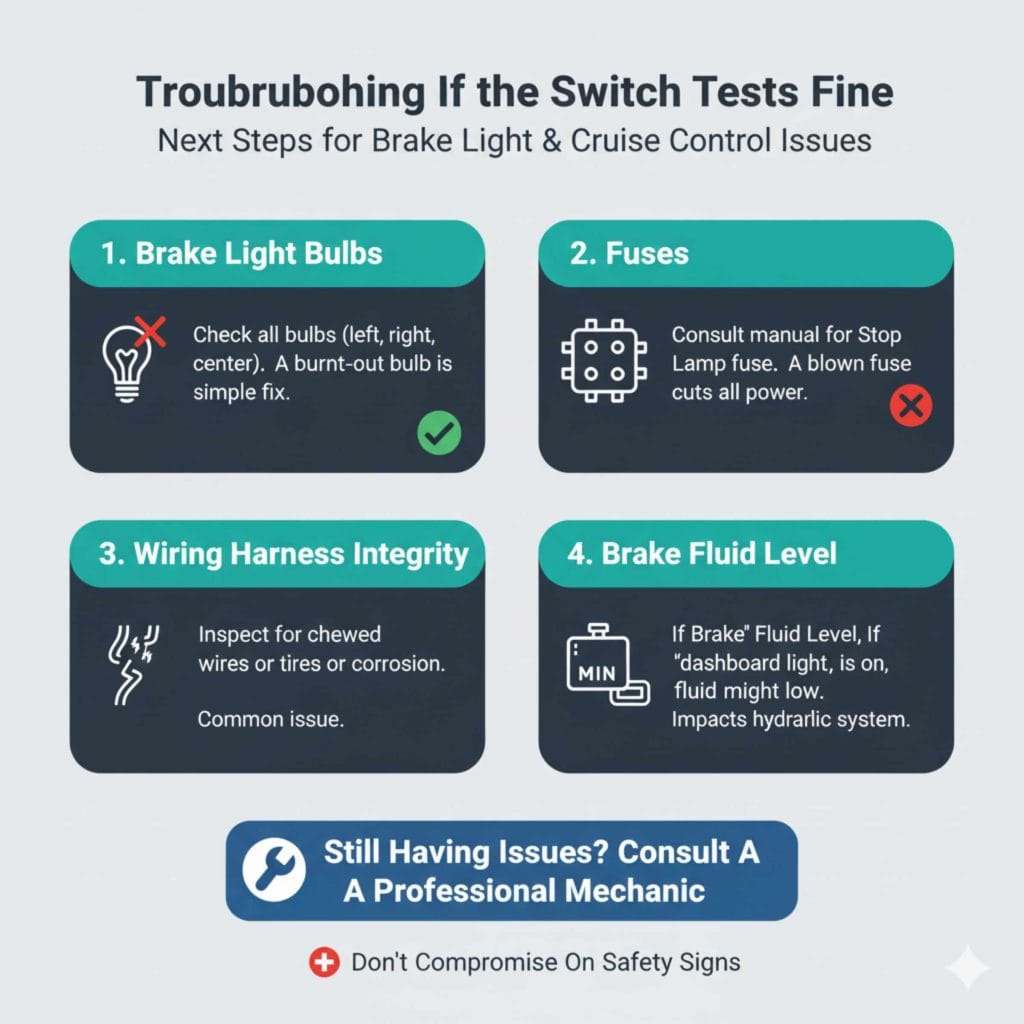
Sometimes, even if the switch tests perfectly with a multimeter, you still have brake light or cruise control issues. In these cases, the issue is likely “upstream” or “downstream” from the switch itself. If you have confirmed how do you know if your brake pedal switch is bad but are still seeing issues, check these components:
- Brake Light Bulbs: Even if the switch is fine, a bad bulb won’t illuminate. Check all three (left, right, and center high-mount stop lamp).
- Fuses: The brake light and cruise control circuits have dedicated fuses. Check your owner’s manual for the exact fuse box location and which specific fuse controls the stop lamps. A blown fuse stops all power flow, mimicking a dead switch.
- Wiring Harness Integrity: Rodents chew wires, and corrosion builds up inside connectors. Inspect the wiring loom between the switch and the rear lights or the fuse panel for any breaks or green/white corrosion.
- Brake Fluid Level (For Specific Warnings): If your general “Brake” warning light is on, but the brake lights themselves are fine, the issue might be low brake fluid, which impacts the hydraulic system, not just the pedal switch.
FAQ: Simple Answers for Brake Pedal Switch Concerns
Q1: Can I legally drive my car if the brake pedal switch is bad?
A: Generally, no, it is illegal in most places to drive without working brake lights, as they are a critical safety feature. If your cruise control also fails, it’s an immediate indicator of a safety/electrical fault.
Q2: How much does a brake pedal switch cost to replace?
A: The part itself is usually inexpensive, often ranging from $15 to $40 for a quality replacement. If you hire a mechanic, labor costs will add $50 to $150, depending on shop rates.
Q3: How long does it take to replace a brake pedal switch?
A: For an experienced DIYer, it takes about 15 to 30 minutes total. For a beginner, allow 45 minutes to locate the switch and ensure proper adjustment the first time.
Q4: Will a bad brake pedal switch cause my car to overheat?
A: No. The brake switch controls signaling and ignition interlocks, not the cooling system. Overheating is usually related to coolant, radiator, or water pump issues.
Q5: If the brake lights are on constantly, is that the switch?
A: Yes, it is a very common cause. It means the switch is stuck in the “closed” position, failing to break the circuit allowing the lights to turn off when your foot is off the pedal.
Conclusion: Small Switch, Big Safety Impact
A failing brake pedal switch may seem like a minor issue, but as you’ve seen, it can disrupt some of the most important safety systems in your vehicle. From brake lights that don’t work properly to cruise control failures, starting problems, or a shifter stuck in Park, this tiny component plays a much bigger role than most drivers realize.
The good news is that the warning signs are usually clear, and diagnosing the problem doesn’t require advanced tools or mechanical expertise. With simple checks—watching the brake lights, observing cruise control behavior, or using a basic multimeter—you can quickly confirm whether the switch is the culprit. Even better, replacement is typically fast, inexpensive, and well within reach for most DIYers.
If your testing points to a bad switch, addressing it promptly protects not only your car, but everyone sharing the road with you. And if the switch checks out fine, you now know exactly where to look next—saving time, money, and frustration.
When it comes to vehicle safety, confidence comes from understanding. By knowing how to spot a bad brake pedal switch and what to do about it, you’ve taken an important step toward safer, more reliable driving.