
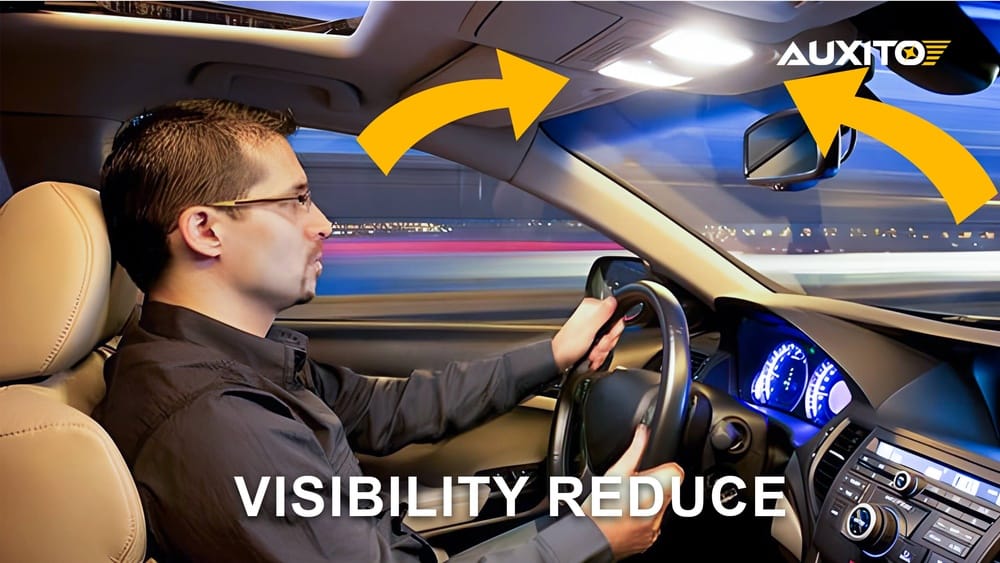
When you drive at night or in low light, you might wonder if it’s okay to have your car’s interior lights on. Some people believe driving with the inside lights switched on is illegal or dangerous. Others say it’s just a matter of comfort.
The real answer is more complex than a simple yes or no. To understand whether you can have your car light on while driving, you need to know the laws, safety concerns, and practical effects. This guide explains everything you need to know, based on facts and real-world examples, so you can make smart decisions on the road.
Understanding Car Interior Lights
Car interior lights are the small lamps inside your vehicle. They include dome lights, map lights, and sometimes ambient lighting. These lights help you see inside the car when it’s dark—maybe to find something, read a map, or check on kids in the back seat.
There are a few main types of interior lights:
- Dome light: Usually placed in the center of the ceiling, turns on when you open a door or press a switch.
- Map lights: Small, focused lights, often near the driver and passenger seats for reading maps or documents.
- Ambient lights: Soft, colored lights in some newer cars, mainly for mood and style.
Most cars let you turn these lights on and off manually, or they come on when you open a door.
The Legal Side: Is It Illegal To Drive With Car Lights On?
Many drivers have heard, often as children, that having the car’s interior light on while driving is illegal. This is one of those beliefs that has spread widely but is not fully accurate. Laws vary by country and even by state or province.
Let’s look at what the rules say in different places.
United States
In the U.S., there is no federal law that bans driving with interior lights on. However, some states have specific rules about lighting inside vehicles. For example, in some states, police can stop you if they believe the light is distracting or affects your night vision.
- California: No law directly bans the practice, but police can pull you over if they think the light affects your ability to drive safely.
- New York: Similar approach—no direct ban, but distractions that affect driving can lead to a citation.
United Kingdom
The UK Highway Code does not specifically prohibit the use of interior lights while driving. However, it does mention that drivers must not be distracted or have their view impaired.
Australia And Canada
Both countries lack a specific law about interior lights. However, police may stop you if they believe your use of interior lights is dangerous or could distract other drivers.
Summary Table: Laws On Driving With Interior Lights On
Here’s a quick comparison of how different regions handle the question:
| Region | Specific Ban? | Can Police Stop You? | Key Law/Rule |
|---|---|---|---|
| United States | No | Yes, if unsafe | General safety/distraction |
| United Kingdom | No | Yes, if distracted | Highway Code 148 |
| Canada | No | Yes, if unsafe | Distracted driving laws |
| Australia | No | Yes, if unsafe | General road rules |
So, in most places, it’s not illegal by itself to have your car light on while driving. However, if the police believe it affects safety, they can stop you.
Safety Concerns: Is It Dangerous?
Even if it’s not illegal, you might wonder if it’s safe. There are good reasons why many people avoid using interior lights while driving at night.
Glare And Reduced Night Vision
When you use an interior light at night, your eyes adjust to the light inside the car. This adjustment can make it harder to see what’s outside, especially in low-light conditions.
- Glare on windows: The light can reflect off the windshield and side windows. This glare can make it harder to see the road, signs, and other vehicles.
- Reduced night vision: Your eyes need time to adapt to darkness. Bright lights inside the car can slow this adjustment, making it harder to spot hazards.
Distraction
Bright lights inside your car can be distracting for both the driver and passengers. If you or a passenger is using the light to read or search for something, it can take attention away from driving.
Distracting Other Drivers
In some cases, a bright interior light might be visible from outside your car. This could distract drivers behind or beside you, especially if the light is very bright or changes suddenly.
Safety Table: Risks Of Driving With Interior Light On
Here’s a breakdown of the main risks:
| Risk | How It Happens | Potential Result |
|---|---|---|
| Glare | Light reflects off glass | Harder to see outside |
| Reduced night vision | Eyes adjust to bright interior | Slower to spot hazards |
| Driver distraction | Looking at bright light or objects | Less focus on road |
| Distracting others | Light visible outside | Other drivers get distracted |
When Might You Need The Car Light On?
While it’s best to avoid using the interior light while driving, sometimes it’s necessary. Here are some common situations:
- Reading a map or directions: Before GPS was common, drivers often used map lights to check routes. Today, a quick look at a paper map or written directions may still happen.
- Looking for dropped items: If something important falls, a quick look might be needed.
- Checking on children: Parents may need to check if their kids are okay in the back seat.
- Emergency situations: If you must find something quickly—like a phone, medication, or important document—a brief light can help.
In all these cases, try to stop the car safely before turning on the light for more than a few seconds.
Myths Vs. Facts
Many people believe myths about car lights and driving. Let’s clear up some common misunderstandings.
Myth 1: “it’s Always Illegal To Drive With The Light On.”
Fact: In most places, there’s no direct law against this. It only becomes an issue if it’s unsafe or distracting.
Myth 2: “police Will Always Pull You Over If They See Your Light On.”
Fact: Most police officers will not stop you just for having the light on. They are more concerned if your driving seems unsafe or if the light is very bright.
Myth 3: “it’s Never Safe To Use The Car Light While Driving.”
Fact: Short, careful use is not dangerous for most drivers. Problems happen if you keep the light on for a long time, especially on dark roads.
Myth 4: “interior Lights Can Blind The Driver.”
Fact: Most modern cars use low-powered LEDs that are not strong enough to blind you, but they can reduce your ability to see outside clearly.
Effects On Night Vision And Reaction Time
Your eyes work differently in the dark. When you turn on a bright light inside your car, it affects your pupil size and your ability to see low-light details outside. Here’s how it works:
- In the dark, your pupils get bigger (dilate) to let in more light.
- If you turn on an interior light, your pupils get smaller (constrict).
- This reduces your ability to see dim objects outside the car, such as a pedestrian or animal crossing the road.
According to vision experts, your eyes can take up to 30 minutes to fully adapt to darkness after exposure to bright light. Even a short burst of interior light can slow your reaction to hazards.
Real-life Examples And Accident Data
There are few official statistics about accidents caused by interior lights. Most crash databases do not track this specific factor. However, some research suggests that driver distraction is a major cause of accidents, especially at night.
- The U.S. Department of Transportation states that distracted driving causes thousands of deaths each year.
- Glare and visibility problems are linked to higher crash rates at night.
- Police sometimes note “interior lighting” as a factor in reports, but it is usually combined with distraction or impaired driving.
In one survey, about 12% of drivers said they had trouble seeing after using their car’s interior light at night. While this is not a huge number, it shows that the risk is real, especially for older drivers or those with vision problems.
Best Practices For Using Car Lights While Driving
If you must use the car’s interior light while driving, follow these tips to stay safe:
- Keep it brief: Use the light only for a few seconds.
- Pull over if possible: The safest option is to stop the car before turning on the light.
- Use map lights: If your car has focused map lights, use them instead of the main dome light. They cause less glare.
- Dim the light: Some cars let you adjust the brightness of interior lights. Use the lowest setting that works.
- Ask a passenger to help: If someone else is in the car, let them use the light so you can keep your eyes on the road.
- Avoid using bright white lights: Use softer or red lights if possible; they affect night vision less.
Table: Good Vs. Bad Lighting Choices While Driving
| Lighting Choice | Effect on Safety | When to Use |
|---|---|---|
| Brief, dim map light | Low risk | Quick checks, reading directions |
| Main dome light, long use | Higher risk | Only in emergency, car stopped |
| Red or soft ambient light | Lowest risk to night vision | Background, mood lighting |
| Bright white LED, wide area | High glare, distraction | Avoid while driving |
How Car Design Affects Interior Lighting
Modern cars are getting smarter about interior lighting. Many now offer adjustable brightness and directional map lights to reduce glare. Some cars even have automatic dimming that lowers interior light levels when the car is moving.
- Luxury cars: Often use soft, indirect lighting that is less likely to distract the driver.
- Family cars and SUVs: Focus on safety, often using lower-powered lights.
- Older cars: May have only a single dome light with no brightness control.
If you drive an older car, consider replacing bulbs with softer LEDs or using stick-on lights with adjustable brightness.
Tips For Parents And Passengers
If you have children or passengers who need to use the light, teach them to:
- Use the light only when necessary.
- Keep it off during challenging driving conditions (bad weather, heavy traffic).
- Let the driver know before turning the light on.
- Turn it off as soon as possible.
For parents, a small flashlight or a wearable headlamp for kids may be safer than using the main interior light.
The Impact On Battery And Electrical System
Some drivers worry that using interior lights will drain the car battery. For most modern cars, this is not a problem. Interior lights use very little power compared to headlights or other systems. However, leaving the lights on for hours (when the engine is off) can eventually drain the battery, especially in older vehicles.
- LED lights: Use less power than old-style bulbs.
- Modern cars: Often turn off interior lights automatically after a set time.
If you notice your lights stay on after you leave the car, check your car’s settings or manual.
Special Situations: Emergency And Professional Drivers
Some people need to use interior lights more often:
- Police and emergency vehicles: Often have special lights designed not to affect night vision.
- Taxi and rideshare drivers: May use interior lights to help passengers, but should keep the use brief and explain to passengers why the light should not stay on.
Professional drivers often use red or amber lights, which are less harsh on the eyes.
What Beginners Often Miss
Many new drivers don’t realize how much even a small light can affect their vision at night. Here are two important insights:
- Peripheral vision suffers first: When you turn on a bright light, you may still see the road ahead, but your ability to see movement or danger at the edges of your vision drops quickly.
- Fatigue makes it worse: If you’re already tired, your eyes recover more slowly from changes in light. This can make late-night driving with interior lights even more risky.
Knowing these facts can help you stay safer when you need to use the light briefly.
Law Enforcement Perspective
While laws are not strict, police sometimes use interior light use as a reason to stop vehicles. If they see a car with a bright interior light on at night, they may pull you over to check if you are distracted, impaired, or need help.
If you are stopped, explain clearly why you needed the light. As long as you were not driving dangerously, most officers will just give a warning.
International Variations
If you travel abroad, check local rules. In some countries, police may be stricter, especially if you are a tourist. Rental car companies sometimes include local driving tips—look for information about lighting.
Car Manual Advice
Most car owner’s manuals recommend using interior lights only when the car is stopped. If you are unsure about your specific car, check the manual for advice. Some even have warnings printed near the switch.
Technology And Future Trends
Car manufacturers are starting to use automatic dimming and motion sensors for interior lights. Some systems turn off the light if the car starts moving, or if the driver’s eyes are detected looking at a screen or bright object. In the future, cars may use smart glass that adjusts to reduce glare automatically, making interior lighting safer to use.
Comparing Car Interior Lights With Other Distractions
Using the interior light is just one possible distraction. Here’s how it compares to other common distractions based on risk:
- Texting while driving: Highest risk, causes many accidents.
- Eating or drinking: Distracting, but less so than using a phone.
- Using interior light briefly: Lower risk, but can still be dangerous at night.
- Talking to passengers: Moderate risk, especially with young children.
Briefly using the interior light is not as risky as texting but is more risky than keeping your full attention on the road.
Expert Recommendations
Most driving experts agree:
- Use interior lights as little as possible while the car is moving.
- Prefer dim, focused lights if you must use them.
- Pull over for longer tasks.
- Teach children and passengers about the risks.
For more on safe driving habits, official road safety organizations like the National Highway Traffic Safety Administration offer detailed guides and statistics.
Frequently Asked Questions
Can I Get A Ticket For Driving With My Interior Lights On?
Usually, you won’t get a ticket just for having your car’s interior light on. However, if police believe it’s affecting your driving or causing a distraction, they may stop you and issue a warning or ticket based on unsafe driving.
Does Using The Car Light While Driving Affect Your Insurance?
Generally, insurance companies do not check if you use your car’s interior light. If you have a crash and interior lighting was found to be a cause, it might affect your claim, but this is rare.
Are There Special Lights I Can Install For Safer Night Use?
Yes, you can buy red or amber LED lights designed for cars. These colors are less likely to affect your night vision. Many modern cars already use adjustable or soft lighting for this reason.
How Long Does It Take For Your Eyes To Recover After Using An Interior Light?
It can take a few seconds to several minutes for your eyes to adapt to darkness after a bright light. Full adaptation can take up to 30 minutes, especially if the light was very bright.
Is It Different For Older Drivers Or People With Glasses?
Yes, older drivers and those with vision problems may notice more glare and slower recovery when using interior lights at night. It’s especially important for these drivers to avoid using bright lights while driving.
Turning on your car’s interior light while driving is not illegal in most places, but it can be risky if not done carefully. Always consider your safety and the safety of those around you. If you must use the light, keep it brief, use the dimmest setting, and pull over if you need more time.
By understanding the real risks and using good judgment, you’ll keep your night driving safe and comfortable.