
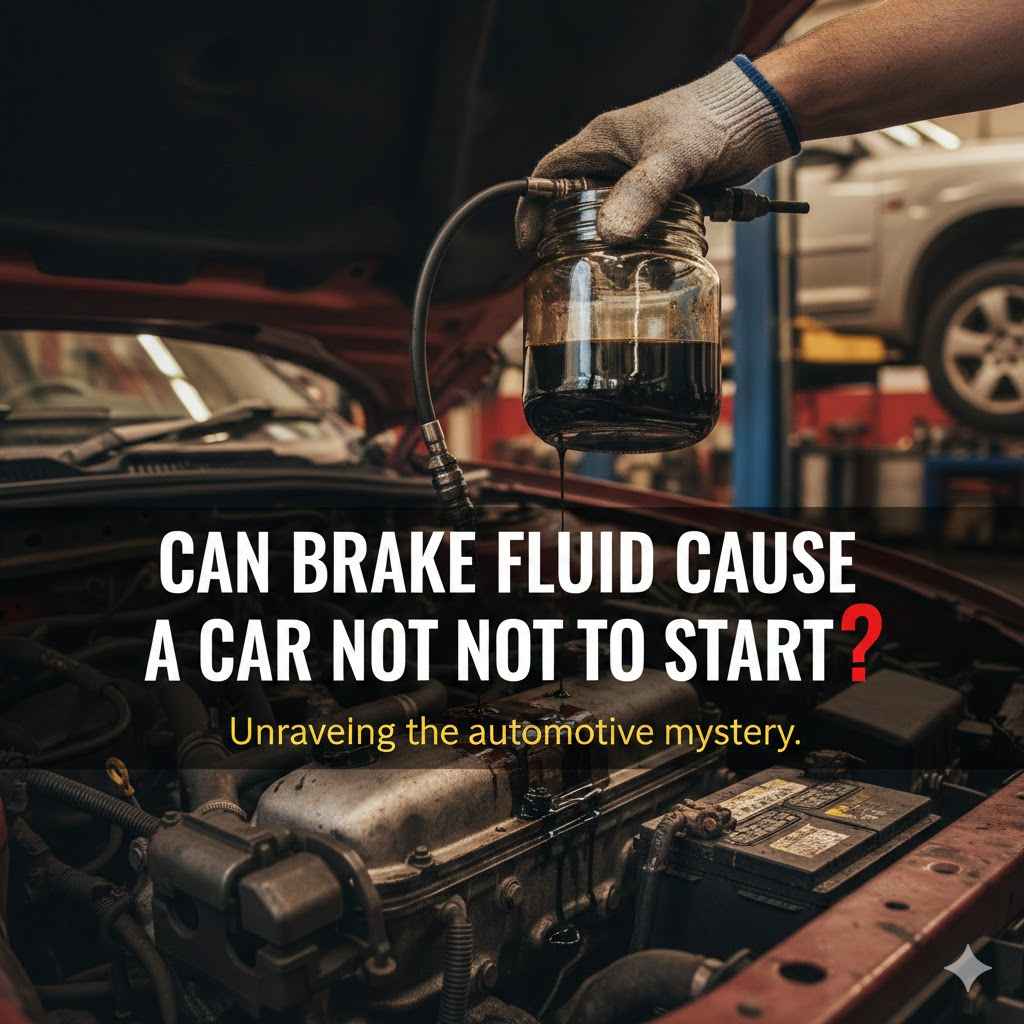
Sometimes your car just won’t turn over, and it can be confusing. You might wonder, Can Brake Fluid Cause a Car Not to Start? Many people think brake fluid only affects your brakes, but it can play a role in how your engine runs. For beginners, it’s a tricky question because the connection isn’t obvious.
We’ll break it down simply. This guide will show you exactly why this happens and what you can do about it, step by step. Let’s figure this out together.
Brake Fluid’s Role in Your Car
Brake fluid is a special liquid that helps your brakes work. When you press the brake pedal, the fluid pushes brake pads against the wheels. This makes your car slow down.
It’s important because it moves pressure very efficiently. Without enough good brake fluid, your brakes won’t work right. This can be dangerous.
What Is Brake Fluid Made Of
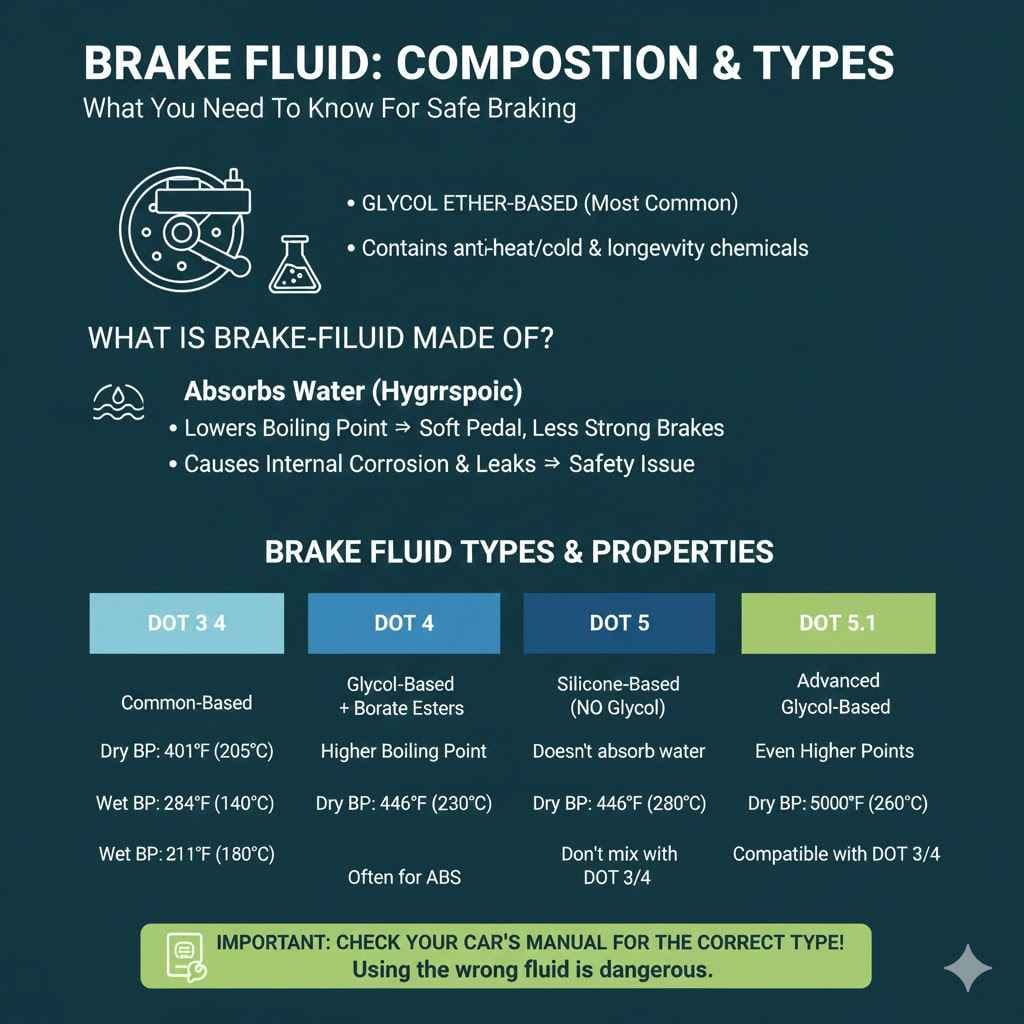
Brake fluid is usually made from a type of alcohol called glycol ether. It also has chemicals that stop it from getting too hot or cold. These chemicals help it to last longer.
There are different types of brake fluid, like DOT 3, DOT 4, and DOT 5. They are not all the same. Using the wrong type can cause problems with your brake system.
It is very important to check your car’s manual for the correct type.
One key thing about brake fluid is that it absorbs water from the air. This is called hygroscopic. When it absorbs water, its boiling point goes down.
This means it can boil more easily when the brakes get hot. Boiling brake fluid creates air bubbles. Air can be compressed, unlike liquid.
So, if there are air bubbles, your brake pedal will feel soft and mushy. The brakes won’t be as strong.
This absorption of water can also lead to corrosion inside the brake lines and other metal parts. Over time, this rust can cause leaks. Leaks mean less brake fluid.
Less fluid means less pressure to stop your car. This is a serious safety issue. Regular checks and fluid changes are vital for safe driving.
Brake Fluid Types and Their Properties
Different types of brake fluid have different chemical makeups and properties. This affects their performance and what they are best used for.
- DOT 3 Brake Fluid This is a common type. It’s made from glycol ether. It has a dry boiling point of at least 401°F (205°C) and a wet boiling point of 284°F (140°C). Its wet boiling point is important because it’s the temperature the fluid can reach after it has absorbed some water.
- DOT 4 Brake Fluid This type is also glycol-based but has added borate esters. This gives it a higher boiling point. Its dry boiling point is at least 446°F (230°C), and its wet boiling point is 311°F (155°C). It’s often recommended for cars with anti-lock braking systems (ABS).
- DOT 5 Brake Fluid This type is silicone-based, not glycol-based. It does not absorb water. This means it won’t cause corrosion like glycol-based fluids. However, it can separate over time and may trap air more easily. Its dry boiling point is 446°F (230°C), and its wet boiling point is 356°F (180°C). It should not be mixed with DOT 3 or DOT 4 fluids.
- DOT 5.1 Brake Fluid This is also glycol-based and is a more advanced version of DOT 4. It offers even higher boiling points. Its dry boiling point is at least 500°F (260°C), and its wet boiling point is 374°F (190°C). It’s compatible with DOT 3 and DOT 4 systems.
Always check your owner’s manual to find the correct brake fluid type for your vehicle. Using the wrong kind can damage your brake system and lead to unsafe braking.
Why Brake Fluid Matters for Starting
Now, you might be wondering how brake fluid, which is for stopping, can affect your car’s ability to start. It might seem like two different systems. However, modern cars have many interconnected parts.
A problem in one area can sometimes cause issues elsewhere. This is especially true for the car’s electrical system and the engine’s computer.
The brake fluid reservoir is located in the engine bay, often near the driver’s side firewall. This area also houses many important sensors and electrical components. If the brake fluid leaks from the reservoir or lines, it can drip onto these sensitive parts.
Some brake fluid is corrosive. If it gets onto electrical connections, it can cause corrosion. This corrosion can lead to poor electrical contact.
Poor electrical contact can prevent the starter from getting the signal it needs to turn the engine over.
Imagine a tiny leak. A small amount of fluid might drip onto a wiring harness or a sensor connector. Over time, this fluid can spread and corrode the metal contacts inside.
When this happens, the flow of electricity is interrupted. The car’s computer might not get clear signals. The starter motor might not receive enough power.
This is why even a seemingly small brake fluid leak can prevent your car from starting.
Another way brake fluid can indirectly affect starting is through the brake light switch. This switch is activated by the brake pedal. If you need to press the brake pedal to start your car (as in many modern vehicles), a faulty switch or a system affected by brake fluid issues could prevent the car from recognizing the pedal press.
This would stop the car from starting.
So, while brake fluid’s primary job is braking, its location and corrosive nature mean it can indirectly impact your car’s ability to start. It’s like a chain reaction where one problem leads to another. Keeping your brake system in good condition is important for many reasons, including ensuring your car starts reliably.
Brake Fluid Leaks and Electrical Systems
A leak in the brake fluid system is a serious issue. When brake fluid escapes, it doesn’t just disappear. It can land on surrounding engine components.
Many of these components are electrical.
- Corrosion of Connectors Brake fluid, especially if it has absorbed water and degraded, can become acidic. When it drips onto electrical connectors, it can eat away at the metal pins and sockets. This creates a layer of corrosion. This corrosion acts like an insulator, blocking the flow of electricity.
- Sensor Malfunctions Many sensors in the engine bay monitor different aspects of your car’s operation. These sensors rely on clear electrical signals. If brake fluid leaks onto a sensor’s wiring or connector, it can cause the sensor to send incorrect readings or no readings at all. Some sensors are critical for the starting sequence.
- Wiring Harness Damage The main wiring harness is a bundle of wires that carries electrical signals throughout your car. If brake fluid seeps into this harness, it can degrade the plastic insulation around the wires. It can also corrode the copper wires themselves. This can lead to shorts or open circuits, both of which can prevent starting.
- Grounding Issues Electrical systems need good ground connections to function properly. If brake fluid contaminates a grounding point, it can create a poor connection. This can affect many systems, including the starter motor and ignition system.
For example, a common point for leaks is the master cylinder, which is where the brake fluid is stored. If the seals here fail, fluid can leak down the firewall and onto the starter motor or its wiring. This can cause the starter to corrode and fail to engage.
A real-world case involved a car that wouldn’t start. The owner noticed a burning smell. After inspection, mechanics found brake fluid had leaked from the master cylinder and dripped onto the starter solenoid.
The corrosive fluid had damaged the solenoid’s electrical contacts, preventing the starter from engaging. Replacing the solenoid and cleaning the affected wiring fixed the problem.
Another scenario: a car started intermittently. It would sometimes refuse to crank. A mechanic discovered a slow leak from a brake line fitting near the main fuse box.
Fluid had seeped into the fuse box connections, causing corrosion. This intermittent connection affected the power supply to the starter relay, leading to the starting problem.
The Master Cylinder and Its Importance
The master cylinder is the heart of your car’s hydraulic brake system. It’s a device that converts the mechanical force of your foot pressing the brake pedal into hydraulic pressure. This pressure is then transmitted through the brake lines to activate the brakes.
When you press the brake pedal, it pushes a piston inside the master cylinder. This piston moves through a cylinder filled with brake fluid. The fluid is incompressible, meaning it doesn’t squeeze down.
So, the force you apply is amplified and sent out through the brake lines. The master cylinder has reservoirs that hold the brake fluid. These are usually visible and have a cap you can open.
If the master cylinder has a leak, it’s a significant problem. Leaks can occur in several places. Seals between pistons can fail, allowing fluid to bypass.
Seals where the reservoir attaches to the cylinder can also leak. Even external seals where brake lines connect can fail.
A leaking master cylinder means the hydraulic pressure needed to operate the brakes will be lost. You’ll notice a spongy or sinking brake pedal. More importantly for starting, a leaking master cylinder can cause the fluid level to drop.
If the fluid level drops too low, air can enter the brake system. Air in the brake lines is a major issue for braking performance. But how does this affect starting?
In some cars, a low brake fluid level sensor is present. If the fluid is too low, this sensor can trigger a warning light on the dashboard. While this light is primarily for braking issues, some vehicle computers are programmed to prevent starting if certain critical warning lights are active.
This is a safety measure.
Furthermore, as mentioned before, a leaking master cylinder is often located at the top of the brake system. Leaked fluid can easily drip down onto the engine block, starter motor, or nearby electrical components. This dripping fluid can cause the same corrosion issues discussed earlier, leading to starting problems.
One car owner noticed their brake pedal felt soft. A few days later, their car wouldn’t start at all. They assumed it was the battery.
However, a mechanic found that the master cylinder was leaking. The fluid had dripped onto the starter motor, corroding the electrical connections. The starter was replaced, and the brake system was repaired, allowing the car to start and stop again.
Consider this scenario: A driver notices their brake fluid light is on. They top up the fluid. The car starts fine for a while.
Then, after a few weeks, it starts to have trouble starting, especially when it’s cold. They discover a slow leak from the master cylinder is making the fluid level drop again. The repeated low fluid levels, combined with potential fluid contact with starter wiring, are causing the starting issue.
Brake Fluid and the Starting System Interplay
The starting system of a car is primarily electrical. It includes the battery, ignition switch, starter motor, and starter solenoid. These components work together to crank the engine and get it running.
The battery provides the power. The ignition switch sends a signal. The starter motor, powered by the battery, turns the engine’s crankshaft.
The starter solenoid is an electromagnet that engages the starter motor and closes the circuit to power it.
How does brake fluid get involved here? As we’ve seen, it’s often through indirect effects like corrosion. However, there are other ways the systems can interact, especially in modern vehicles with complex electronics.
Some cars have a feature where you must press the brake pedal to start the engine. This is a safety feature. The brake pedal activates a switch, known as the brake pedal position sensor or brake light switch.
This switch sends a signal to the car’s computer (ECU or PCM) indicating that the brake pedal is pressed. The computer then allows the starter relay to engage, and the car can start.
If brake fluid leaks and contaminates this brake light switch or its wiring, it can cause the switch to malfunction. The switch might not send the correct signal, or any signal at all. The car’s computer will not receive the confirmation that the brake pedal is pressed, and therefore, it will not allow the car to start.
This is a direct link between a brake system issue and the starting system.
Another connection is through the car’s body control module (BCM) or power control module (PCM). These are sophisticated computers that manage many functions, including starting and braking. If brake fluid causes corrosion in wiring harnesses or connectors that feed into these modules, it can cause system-wide malfunctions.
This could manifest as a failure in the starting sequence.
A common statistic is that faulty electrical connections are responsible for a significant percentage of vehicle starting problems. While not always directly brake fluid related, the corrosive nature of leaked brake fluid makes it a prime suspect for creating these faulty connections.
Consider a case where a car owner was experiencing intermittent starting issues. The car would sometimes crank but not start, and other times it wouldn’t crank at all. They had recently had their brakes serviced.
An inspection revealed a small leak from the brake fluid reservoir. The fluid had dripped onto the wiring harness that controlled the starter solenoid and the brake light switch. Corrosion had set in on the terminals of both, causing the erratic starting behavior.
Here’s a scenario: A car is known to have a slight brake fluid leak. The owner doesn’t think much of it, just topping it up occasionally. Suddenly, the car completely stops starting.
It doesn’t even try to crank. The mechanic finds that the leaked brake fluid has corroded the main ground connection for the starter motor, which is located on the engine block. Without a proper ground, the starter motor cannot complete the circuit and receives no power.
Brake Fluid Contamination and Sensors
Modern cars rely heavily on sensors to monitor every aspect of their performance. These sensors are essentially the eyes and ears of the car’s computer. When brake fluid contaminates these sensors or their connections, it can lead to significant problems, including starting failures.
- Crankshaft Position Sensor (CPS) This sensor tells the engine computer the speed and position of the crankshaft. This information is crucial for timing fuel injection and ignition. If brake fluid leaks onto the CPS connector or wiring, it can cause intermittent or complete failure of the signal. If the computer doesn’t know the crankshaft position, it cannot initiate the starting sequence.
- Camshaft Position Sensor (CMP) Similar to the CPS, this sensor monitors the camshaft. It helps the computer know when to open and close the valves. A contaminated CMP sensor can also prevent the engine from starting.
- Engine Coolant Temperature (ECT) Sensor This sensor informs the computer about the engine’s temperature. The computer uses this information to adjust fuel delivery. While less directly tied to the starting itself, a faulty ECT sensor can sometimes cause hard starting or prevent starting in extreme temperatures. If brake fluid contaminates its wiring, this becomes a possibility.
- Throttle Position Sensor (TPS) This sensor tells the computer how much the throttle is open. This information is vital for engine performance and starting. Contamination of the TPS wiring can lead to erratic engine behavior or a failure to start.
Brake fluid is typically a glycol-based or silicone-based liquid. It can degrade plastic and rubber components over time. This means that even if it doesn’t directly corrode metal terminals, it can damage the insulation on wires, leading to short circuits or exposed conductors.
These exposed wires can then come into contact with each other or with the engine block, causing electrical faults that prevent starting.
A study by an automotive repair association indicated that electrical system issues accounted for approximately 35% of all vehicle breakdown causes. Of these, faulty sensor connections and wiring were a significant contributor. Leaked brake fluid is a known cause of such contamination.
Consider this example: A car owner noticed their check engine light was on, and the car was running rough. A few days later, it wouldn’t start. Mechanics traced the issue to a brake fluid leak from a worn brake hose.
The fluid had dripped onto the wiring harness for the crankshaft position sensor. The corrosion on the sensor’s connector caused it to fail intermittently, leading to the starting problem.
Here’s another scenario: A car owner experienced a failure to start. The car would crank but not fire up. They checked the battery and starter, which seemed fine.
After much searching, a mechanic found that a slow leak from the brake fluid reservoir had dripped onto the main engine control unit (ECU) connector. The fluid had worked its way into the connector pins, causing several crucial signals to be lost, including those related to ignition timing and fuel delivery, thus preventing the engine from starting.
Troubleshooting Starting Issues Linked to Brakes
When your car won’t start, it’s easy to jump to common conclusions like a dead battery or a starter motor issue. However, if you’ve ruled out those typical culprits, it’s wise to consider less obvious causes. The connection between your brake system and your car’s ability to start might not be apparent, but it’s a real possibility.
The first step in troubleshooting is a thorough visual inspection. Look for any signs of leaks around the brake fluid reservoir, master cylinder, brake lines, and brake calipers. Pay attention to any wet spots or unusual residue on the engine bay components, especially around the starter motor and any visible wiring harnesses.
If you see any evidence of brake fluid leaks, this becomes your primary focus. Even a small, dried-up stain can indicate a past leak that might have caused hidden corrosion. Inspect the electrical connectors in the vicinity of the leak.
Look for any signs of green or white powdery buildup, which is a clear indicator of corrosion.
You should also check the brake fluid level in the reservoir. If it’s significantly low, it points to a leak somewhere in the system. While a low fluid level might not directly prevent starting, it’s a strong sign of a compromised brake system that could be affecting other components.
If your car has a brake fluid level sensor or a brake light switch that needs to be engaged for starting, test these components. Sometimes, a simple cleaning of the switch or connector can resolve the issue. If corrosion is present, the affected components might need to be replaced.
It’s also worth checking your car’s owner’s manual. It may contain specific information about how the starting system interacts with the brake system, especially regarding safety interlocks like the brake pedal switch. Understanding these interactions can guide your troubleshooting efforts.
Given the potential for electrical damage, if you’re not comfortable working with car wiring and components, it’s best to seek professional help. A qualified mechanic can perform more detailed diagnostic tests to pinpoint the exact cause of the starting problem.
Visual Inspection Techniques
A good visual inspection can save you a lot of time and money. It involves carefully looking at the components that could be affected by brake fluid. You don’t always need to be a mechanic to spot clues.
- Inspect the Brake Fluid Reservoir Check the fluid level. Is it within the ‘min’ and ‘max’ marks? Look for any cracks in the reservoir itself or around the cap. Note the color of the fluid; it should be clear to amber. Dark or cloudy fluid can indicate it’s old and may be more corrosive.
- Follow the Brake Lines Trace the brake lines from the master cylinder to each wheel. Look for any wetness, rust, or damage along the lines. Pay close attention to connections and fittings, as these are common leak points.
- Examine the Master Cylinder and Booster The master cylinder is usually attached to a brake booster. Look for leaks around the seals of the master cylinder, especially where it meets the booster. Any fluid here can easily drip down.
- Check the Starter Motor and Solenoid The starter motor is typically located near the bottom of the engine. It’s a cylindrical component with wires attached. Look for any signs of fluid contamination on the starter itself, its solenoid, and the thick cable connecting it to the battery.
- Inspect Wiring Harnesses and Connectors Carefully follow any wiring that runs near the brake fluid reservoir or brake lines. Look for signs of corrosion, discoloration, or damage to the plastic insulation. Pay special attention to electrical connectors, where corrosion often builds up first.
A common mistake is assuming a dry stain means no damage. However, brake fluid can seep into connector housings and corrode internal pins over time, even if the exterior looks clean.
Consider a scenario: A car wouldn’t start, and the owner noticed a strange smell. They looked under the hood and saw a faint, dark stain on the engine block near the starter. They then checked the brake fluid reservoir and saw it was low.
Following the trail, they found a tiny drip mark on the firewall directly above the stain on the engine block. This indicated a leak from above that had dripped onto the starter.
Here’s another example: A car owner noticed that their brakes felt a bit spongy, and then one morning, it wouldn’t start. Upon inspection, they saw that the brake fluid reservoir was low. They then looked at the electrical connector for the starter solenoid.
It was covered in a white, chalky substance, indicating corrosion. This corrosion was caused by brake fluid that had leaked from the master cylinder and dripped onto the solenoid’s connector.
Testing Brake Light Switches and Sensors
If your car requires you to press the brake pedal to start, or if you suspect a sensor is involved, testing these components is a logical next step in troubleshooting.
The brake light switch is a simple switch. When you press the brake pedal, the pedal arm pushes a plunger that activates the switch. This completes a circuit, turning on your brake lights and sending a signal to the car’s computer.
A malfunction here can prevent starting.
To test it, you’ll need a multimeter. With the car in park and the parking brake engaged, press the brake pedal. You can often locate the switch near the top of the brake pedal arm, under the dashboard.
You’ll need to disconnect the electrical connector from the switch.
Set your multimeter to continuity mode or resistance mode. Touch the probes to the terminals on the switch. When the brake pedal is NOT pressed, there should be no continuity (or infinite resistance).
When you press the brake pedal, the switch should close the circuit, showing continuity (or very low resistance).
If the switch doesn’t show this behavior, it’s likely faulty. You may also want to inspect the switch and its connector for any signs of brake fluid contamination. If contamination is present, cleaning the connector thoroughly might help, but often the switch itself will need replacement.
Other sensors, like the crankshaft position sensor, are more complex to test without specialized knowledge and equipment. However, a visual inspection of their wiring and connectors for brake fluid contamination is always a good starting point. If you find evidence of corrosion on these sensors’ connections, it strongly suggests they are not receiving or sending proper signals, which can prevent starting.
Statistics show that electrical issues, including sensor malfunctions, are a common cause of no-start conditions. For example, faulty crankshaft position sensors are cited as a reason for approximately 8% of all engine performance problems, and a significant portion of these are due to wiring or connection issues.
Consider this situation: A car owner noticed their brake lights were not working, and then the car wouldn’t start. They tested the brake light switch. With the pedal not pressed, there was no continuity.
But when they pressed the pedal, there was still no continuity. They then noticed a small amount of brake fluid had leaked from the master cylinder and dripped onto the brake light switch connector, causing it to corrode. Replacing the switch and cleaning the connector fixed both the brake lights and the starting problem.
Here’s another scenario: A car consistently fails to start, with the engine cranking but not firing. The owner had previously dealt with a minor brake fluid leak near the engine. Upon inspection, they found the connector for the camshaft position sensor had brake fluid residue causing corrosion on the pins.
The computer wasn’t getting a signal from the camshaft sensor, preventing the engine from starting.
When to Call a Mechanic
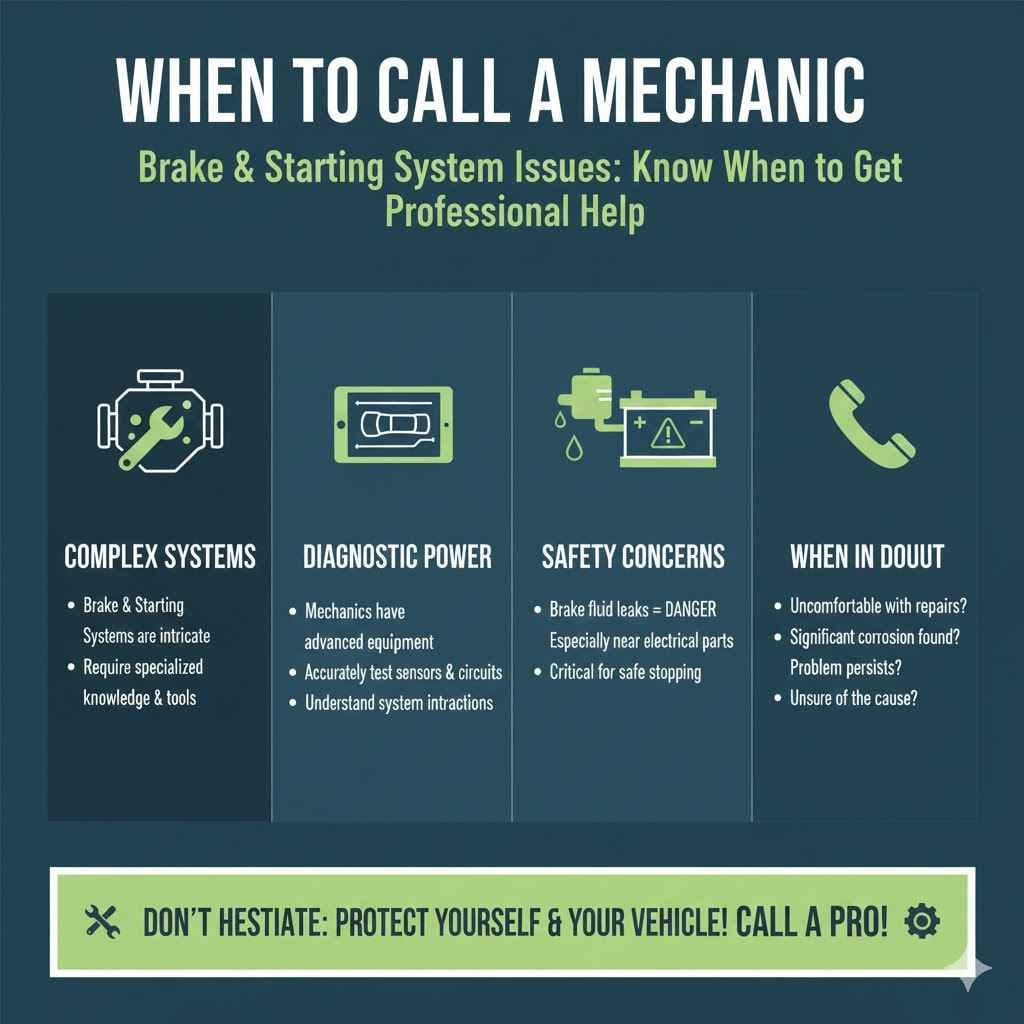
While some car issues can be tackled with a basic toolkit and some online guides, problems involving the brake system and starting system can be intricate. If you’re not confident in your abilities or if the issue seems complex, it’s always best to seek professional help.
Mechanics have specialized tools and diagnostic equipment that can quickly identify the root cause of a starting problem. They can accurately test sensors, electrical circuits, and brake system components. They also have the knowledge to understand how these systems interact.
If you’ve performed a visual inspection and found signs of brake fluid leaks, especially near electrical components, and you’re hesitant to proceed further, that’s a good sign to call a mechanic. Trying to fix electrical issues without the proper knowledge can sometimes lead to more significant damage to your car’s computer systems.
Additionally, any issue related to the brake system itself is a safety concern. If you suspect a brake fluid leak, it’s crucial to have it repaired promptly to ensure your car can stop safely. A mechanic can address both the starting problem and the brake system issue simultaneously.
Don’t hesitate to call a professional if you notice any of the following:
You’re uncomfortable working with electrical components or brake fluid. You find signs of significant corrosion on electrical connectors. The problem persists after basic visual checks.
You’re unsure about the exact cause of the starting issue.
A car that won’t start can be frustrating, but with the right approach, you can get to the bottom of it. Understanding the potential links between brake fluid and your car’s starting ability is key.
Frequently Asked Questions
Question: Can a small brake fluid leak prevent a car from starting?
Answer: Yes, a small brake fluid leak can indirectly cause a car not to start. The fluid can drip onto electrical components, causing corrosion on connectors and sensors, which disrupts the electrical signals needed for starting.
Question: What is the most common way brake fluid affects starting?
Answer: The most common way brake fluid affects starting is by causing corrosion on electrical connectors and wiring harnesses near the leak, leading to faulty signals for the starter or engine computer.
Question: Should I top up brake fluid if my car won’t start?
Answer: While topping up brake fluid might seem like a fix, it won’t solve the underlying problem if a leak has caused electrical damage. It’s more important to find and fix the leak and any resulting corrosion.
Question: How long does it take for brake fluid to cause starting issues?
Answer: The time can vary. If the leak is significant and lands on sensitive electrical parts, issues could arise quickly. If it’s a slow drip, corrosion can build up over weeks or months before causing a starting problem.
Question: Are all cars affected by brake fluid causing starting problems?
Answer: While the principle of corrosion affecting electrical parts is universal, the likelihood can depend on the car’s design, the location of brake fluid components relative to starting system components, and the presence of sensors that link the two systems.
Final Thoughts
Your car not starting can be stressful, but understanding how brake fluid can play a role offers a clear path forward. Leaked brake fluid can corrode electrical connections, disrupt sensor signals, and prevent your engine from cranking. Always inspect for leaks and corrosion around starter components and wiring.
If you find issues, fixing the leak and cleaning affected areas is key. If unsure, a mechanic can help.