

Having a soft brake pedal can feel a bit scary. It might make you wonder, “Why Does My Car Brake Pedal Feel Soft? Causes Explained.” For many people learning about car care, this is a common question because brakes are super important for safety.
Don’t worry, though! We’ll go through this step-by-step in a way that’s easy to understand. We’ll look at what could be causing that soft feeling and what you can do about it.
Common Reasons for a Soft Brake Pedal
A soft brake pedal is a clear sign that something isn’t quite right with your car’s braking system. It means that when you press the pedal, it goes down further than usual, or it feels squishy instead of firm. This is a common problem that many drivers encounter at some point.
It’s not usually something to panic about if you address it promptly. Understanding the basic components of your braking system helps explain why this happens.
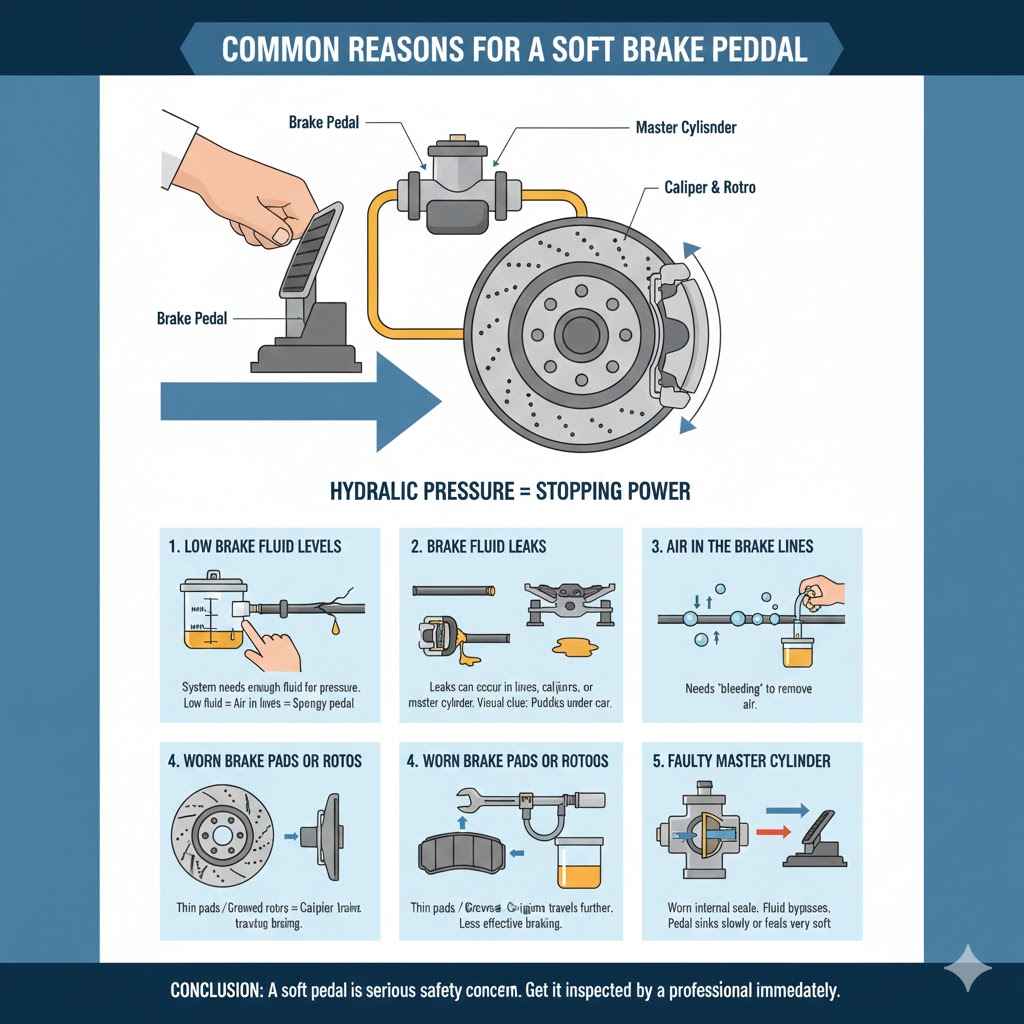
Your car’s brakes work by using hydraulic fluid to push brake pads against the rotors. This friction slows your wheels down. When the pedal feels soft, it often means there’s an issue that prevents this fluid from doing its job effectively.
This could be air in the brake lines, low brake fluid, or problems with the brake components themselves. We’ll explore these causes in detail so you can get a clearer picture.
Low Brake Fluid Levels
Brake fluid is the lifeblood of your hydraulic braking system. It’s a special type of fluid that doesn’t compress easily, which is essential for transferring the force from your foot on the pedal to the brakes themselves. If your brake fluid level is too low, it can lead to a soft brake pedal.
This is because the system needs enough fluid to build up the necessary pressure.
When the brake fluid is low, air can get into the brake lines. Air is easily compressible, unlike the fluid. So, when you press the brake pedal, you’re not just pushing fluid; you’re also compressing air.
This makes the pedal feel spongy and less responsive. Low fluid can happen due to leaks in the brake lines or components, or simply because the brake pads have worn down over time and the fluid level has dropped to compensate for the increased travel distance.
Checking your brake fluid is a simple task. You’ll find the brake fluid reservoir under the hood, usually a clear or translucent plastic container. It has minimum and maximum fill lines on the side.
If the fluid is below the minimum line, it needs to be topped up. However, it’s crucial to remember that low brake fluid is often a symptom of another problem, like a leak, so simply refilling it might not be the complete solution.
Brake Fluid Leaks
As mentioned, low brake fluid often points to a leak. Brake fluid leaks can occur in several places within the braking system. The most common spots are the brake lines themselves, the brake calipers or wheel cylinders, and the master cylinder.
These leaks allow the precious brake fluid to escape, leading to that soft pedal feel.
Brake lines are metal or rubber tubes that carry the fluid from the master cylinder to the wheels. Over time, metal lines can rust and develop holes, and rubber lines can crack or become brittle. The calipers, which house the brake pads and pistons, can also develop leaks around the piston seals.
Similarly, wheel cylinders, found in drum brake systems, can leak from their seals.
Identifying a brake fluid leak can sometimes be tricky, but there are visual clues. You might see puddles of fluid under your car, especially near the wheels. The fluid is typically amber or light brown in color.
If you notice a leak, it’s vital to get it fixed immediately, as driving with a compromised braking system is extremely dangerous. A mechanic will need to find the exact source of the leak and replace the damaged part.
Air in the Brake Lines
One of the most frequent culprits behind a soft or spongy brake pedal is air trapped within the brake lines. As we touched upon earlier, brake fluid is incompressible, meaning it doesn’t squeeze down. Air, on the other hand, is very compressible.
When air gets into the hydraulic brake system, it acts like a sponge, absorbing some of the pressure you apply to the brake pedal.
This air can enter the system if the brake fluid level drops too low (allowing air to be drawn in), or when brake components are replaced, and the system is opened. For instance, if you had new brake pads installed and the mechanic didn’t properly “bleed” the brakes afterward, air could remain. When you press the pedal, the air pockets get compressed first before any significant hydraulic pressure is built up to engage the brakes.
The process of removing air from the brake lines is called “bleeding the brakes.” This involves systematically opening bleeder valves on the calipers or wheel cylinders and flushing out the old fluid and air, usually by pumping the brake pedal or using a vacuum or pressure bleeder. This is a critical maintenance step that ensures your brakes work effectively and safely. It’s often best left to a professional if you’re not comfortable with automotive repair.
Worn Brake Pads or Rotors
While worn brake pads and rotors might not always cause a soft pedal, they can contribute to it, especially when combined with other issues or as they wear down significantly. Brake pads are the material that presses against the brake rotors (the discs attached to your wheels) to create friction and stop your car. Rotors are the rotating discs.
As brake pads wear down, they become thinner. This means the brake calipers have to extend further to make contact. This increased caliper piston travel can, in some systems, lead to a slightly longer pedal stroke.
If the rotors are also heavily worn, grooved, or warped, they can further reduce the effectiveness of the braking action, potentially exacerbating a feeling of sponginess.
Another related issue is if the brake pads are worn unevenly or if one side is significantly more worn than the other. This can cause the car to pull to one side when braking, but it might also contribute to a less consistent pedal feel. Regular inspection of your brake pads and rotors is part of routine maintenance.
Many pads have wear indicators that squeal when they’re getting low, but visual inspection is the most reliable way to check their condition.
Problems with the Master Cylinder
The master cylinder is the heart of your hydraulic braking system. It’s a component that converts the force from your foot pressing the brake pedal into hydraulic pressure. It contains pistons that push brake fluid into the lines.
If the seals within the master cylinder are worn or damaged, it can lead to fluid bypassing the pistons, preventing proper pressure buildup.
When the internal seals of the master cylinder fail, the fluid can leak back into the reservoir or simply not be pushed effectively into the brake lines. This results in a brake pedal that slowly sinks to the floor when you apply steady pressure, or a pedal that feels progressively softer. It’s a serious issue because the master cylinder is critical for generating the hydraulic force needed to stop your vehicle.
Diagnosing a faulty master cylinder usually involves observing how the brake pedal behaves. If the pedal sinks slowly while you maintain pressure, or if it feels unusually soft even after bleeding the system, the master cylinder is a prime suspect. Repairing or replacing a master cylinder is a more involved task and typically requires professional attention due to the precision involved and the critical nature of the component.
Why a Soft Pedal Is a Safety Concern
A soft brake pedal is more than just an annoyance; it’s a significant safety concern. Your brakes are your car’s most important safety feature, and they need to work perfectly every time. When the pedal feels soft, it means your braking system isn’t performing at its best.
This reduced performance can lead to longer stopping distances. In an emergency situation, even a few extra feet can make the difference between a safe stop and a collision. You might find yourself needing to press the pedal much harder or further down than you expect to get the same braking effect.
This unpredictability is dangerous.
It’s also a sign that something is wrong, and that problem could worsen over time. What starts as a slightly soft pedal could evolve into a situation where your brakes don’t work effectively at all. This is why it’s crucial to address this symptom as soon as you notice it.
Don’t wait for it to become a bigger problem.
Impact on Stopping Distance
The primary function of your brakes is to slow and stop your vehicle. A soft brake pedal directly impacts this ability. When the pedal feels soft, it’s a strong indication that the hydraulic pressure needed to engage the brakes is not being generated or transmitted effectively.
This means the brake pads won’t be pressed against the rotors with their full force.
Consequently, it will take longer for your car to slow down. This increase in stopping distance can be very dangerous, especially in situations where you need to react quickly to avoid an accident. Imagine driving on a busy road or highway; the ability to stop rapidly is essential.
A prolonged stopping distance due to soft brakes can lead to rear-end collisions or inability to avoid hitting an obstacle.
For example, if a car normally stops from 60 mph in 120 feet, a system with a soft pedal might require 150 feet or more. That’s an additional 30 feet of stopping distance. In heavy traffic, this difference can be critical.
Statistics show that brake system failures are a contributing factor in a percentage of traffic accidents, highlighting the importance of a responsive braking system.
Potential for Complete Brake Failure
While a soft pedal usually doesn’t mean immediate total brake failure, it’s a warning sign that the system is compromised. If the underlying issue is a significant brake fluid leak, continued driving could lead to the fluid level dropping so low that the system loses most, if not all, of its hydraulic pressure. In such a scenario, pressing the brake pedal would result in very little or no braking action.
Another scenario is that a failing master cylinder could eventually stop providing any pressure at all. Similarly, if a brake line ruptures completely, all the fluid could escape, rendering the brakes useless. These are extreme but possible outcomes if the problem is ignored.
The soft pedal is the system’s way of telling you it’s struggling to do its job. Neglecting this warning increases the risk of a much more dangerous situation.
Consider this: You’re driving down a hill, and you need to brake. If your brakes are already weakened by a soft pedal, they might overheat faster or simply not provide enough force to control your speed. This could lead to a runaway situation where you lose control of the vehicle.
It’s a stark reminder of why brake maintenance is non-negotiable for your safety and the safety of others on the road.
Troubleshooting Steps for a Soft Brake Pedal
When you notice your brake pedal feels soft, the best approach is to tackle it systematically. This ensures you don’t miss any potential causes and helps you understand what might be wrong. Even if you plan to take your car to a mechanic, knowing these steps can help you communicate the problem more effectively.
First, always check the brake fluid level. It’s the easiest thing to inspect. If it’s low, you have a starting point.
If the fluid is at the correct level, you’ll need to look for other signs, such as leaks or listen for unusual noises. Remember, safety first; if you’re unsure, it’s always best to have a professional take a look.
Visual Inspection of Brake Components
A thorough visual inspection of your brake system can often reveal obvious problems. Start by looking at the brake fluid reservoir under the hood. As noted before, check its level against the minimum and maximum marks.
Is it clear or dark and murky? Dark fluid might indicate it’s old and needs changing, which can affect performance.
Next, carefully examine the brake lines. These are typically black rubber hoses leading to the wheels, with metal lines connecting them along the chassis. Look for any signs of damage, such as cracks, kinks, bulges, or corrosion on the metal parts.
Pay close attention to where the rubber hoses connect to the metal lines and where they attach to the calipers or wheel cylinders. Any wetness or residue around these connections could indicate a leak.
Check the brake calipers (on disc brakes) or wheel cylinders (on drum brakes). These are located at each wheel. You might see brake fluid seeping from around the pistons or seals.
Also, look at the brake pads themselves. If they are visibly very thin, they will need replacement. While worn pads are less likely to cause a truly soft pedal, very worn pads can contribute to a longer pedal travel, making it feel less responsive.
Checking for Brake Fluid Leaks
To specifically check for brake fluid leaks, you’ll need to get down and dirty. Park your car on a clean, dry surface. After driving, or after it has been sitting for a while, look underneath the vehicle, particularly under the engine bay and around the wheels.
Brake fluid has a distinct smell and is usually amber or light brown in color. It can also feel slightly oily.
If you see any wet spots on the ground that are consistent with brake fluid, try to pinpoint their location. You can also use a clean rag or paper towel to wipe down suspected areas on the brake lines, calipers, and wheel cylinders. If the rag comes away wet with fluid, you’ve found a leak.
It’s also a good idea to inspect the parking brake cables, though these are mechanical and not related to hydraulic fluid.
A small amount of moisture or grime is normal on brake components due to road dust and heat. However, any evidence of fresh, wet fluid is a red flag. Remember, even a small leak can gradually deplete the brake fluid and introduce air into the system, leading to a soft pedal.
The average car owner might miss these subtle signs, which is why professional inspection is often recommended.
The Bleeding Process Explained
Brake bleeding is a process to remove air from the brake hydraulic system. It’s usually done after brake lines are opened for repairs, or if air has entered the system due to low fluid levels. There are a few methods, but the basic principle is to force old fluid and any trapped air out of the system.
One common method is the “two-person method.” One person pumps the brake pedal and holds it down, while the other opens a bleeder screw on a brake caliper or wheel cylinder. As the pedal is held down, fluid and air will spurt out. The bleeder screw is then closed before the pedal is released.
This process is repeated for each wheel, typically starting from the wheel furthest from the master cylinder and working closer.
Another method uses a vacuum bleeder, which attaches to the bleeder screw and sucks fluid out, or a pressure bleeder that pressurizes the master cylinder reservoir. These can often be done by one person and are generally more efficient. If you’ve had brake work done and the pedal feels soft afterward, or if you suspect air in the lines, bleeding the brakes is a crucial step.
However, if you’re not experienced, it’s wise to have a qualified mechanic perform this procedure to ensure it’s done correctly and safely.
When to Seek Professional Help
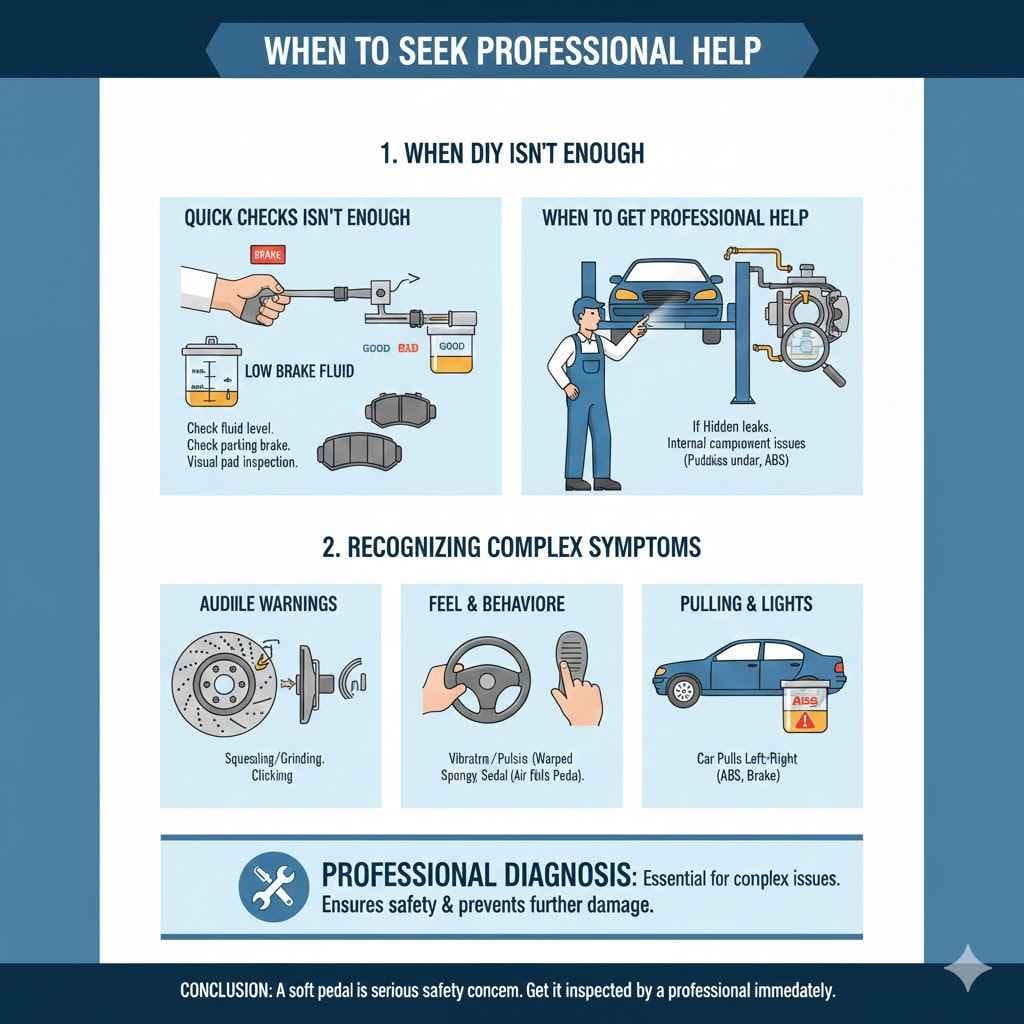
While some brake issues can be addressed by a confident DIYer, a soft brake pedal often signals problems that are best handled by professionals. The braking system is incredibly important for safety, and mistakes can have severe consequences. If you’re not experienced with automotive repairs, it’s always a wise decision to consult a qualified mechanic.
If you’ve checked the brake fluid and it’s at the correct level, and you can’t find any obvious leaks, the problem might be internal to components like the master cylinder or ABS (Anti-lock Braking System) module, which requires specialized knowledge and tools to diagnose and repair.
Also, if you’ve attempted to bleed the brakes yourself and the pedal still feels soft, it suggests the problem is more complex than just trapped air. Persistent issues, or any situation where you feel unsure about the safety of your vehicle, warrant a visit to a trusted auto repair shop. Mechanics have the diagnostic equipment and expertise to pinpoint the exact cause and perform the necessary repairs to restore your braking system to optimal condition.
Recognizing Symptoms Beyond a Soft Pedal
Beyond the soft pedal, other symptoms can accompany brake issues, giving you more clues about the problem. Paying attention to these can help you communicate better with your mechanic or understand the severity of the situation. For instance, you might hear squealing, grinding, or clicking noises when you brake.
These sounds often indicate worn brake pads, rotors, or other damaged components.
Does your car pull to one side when you brake? This can suggest uneven wear on brake pads, a sticking caliper, or a problem with the brake lines on one side of the car. A vibrating or pulsing brake pedal, especially when you apply moderate pressure, often means the brake rotors are warped or have an uneven surface.
This can also happen with ABS systems activating, but a consistent pulse when braking normally is usually a sign of rotor issues.
Sometimes, the brake warning light on your dashboard might illuminate. This light can indicate several things, including low brake fluid, a problem with the parking brake, or a more serious issue within the ABS or main braking system. If this light is on, it’s imperative to get your vehicle inspected immediately.
Combining these symptoms with a soft pedal provides a clearer picture of what might be wrong.
The Importance of Professional Diagnosis
When faced with a soft brake pedal, especially if basic checks don’t reveal the issue, professional diagnosis is invaluable. Mechanics have specialized tools and extensive training to identify problems that might be invisible to the untrained eye. For example, a mechanic can test the pressure within the brake system using a gauge to determine if the master cylinder is functioning correctly.
They can also perform leak-down tests on the calipers and wheel cylinders to ensure seals are intact. Furthermore, they are trained to diagnose complex systems like the ABS, which can sometimes contribute to brake pedal feel issues. Relying on a professional ensures that the root cause of the soft pedal is identified and addressed properly.
This prevents recurring problems and ensures your car’s safety is fully restored.
Consider a scenario where a small leak is only present under high pressure. A DIYer might not catch this, but a mechanic’s pressure test would reveal it. Without this professional diagnosis, the problem would persist, leading to further degradation of the braking system and potential safety risks.
Many sources suggest that annual brake inspections by a professional are a good practice for all drivers.
Frequently Asked Questions
Question: What is the most common cause of a soft brake pedal?
Answer: The most common causes for a soft brake pedal are air in the brake lines or low brake fluid level. Both issues reduce the hydraulic pressure needed for effective braking.
Question: Can I fix a soft brake pedal myself?
Answer: Some simple fixes, like topping up brake fluid or visually inspecting for leaks, can be done by a DIYer. However, bleeding brakes or repairing components like the master cylinder often requires specialized tools and expertise.
Question: How often should I check my brake fluid?
Answer: It’s recommended to check your brake fluid level at least once a month. Also, check it whenever you notice any changes in your brake pedal feel or hear unusual noises.
Question: What happens if I ignore a soft brake pedal?
Answer: Ignoring a soft brake pedal can lead to reduced braking performance, longer stopping distances, and in severe cases, complete brake failure, which is extremely dangerous.
Question: Does a soft brake pedal mean my brakes need replacing?
Answer: Not always. A soft pedal can be caused by simpler issues like air in the lines or low fluid. However, it can also indicate worn components or failing parts that might need replacement, so professional inspection is key.
Conclusion
A soft brake pedal is a warning sign your car needs attention. Air in the lines, low fluid, or leaks are common culprits. Worn parts or a failing master cylinder are also possibilities.
Addressing this promptly ensures your car stops safely and effectively.