
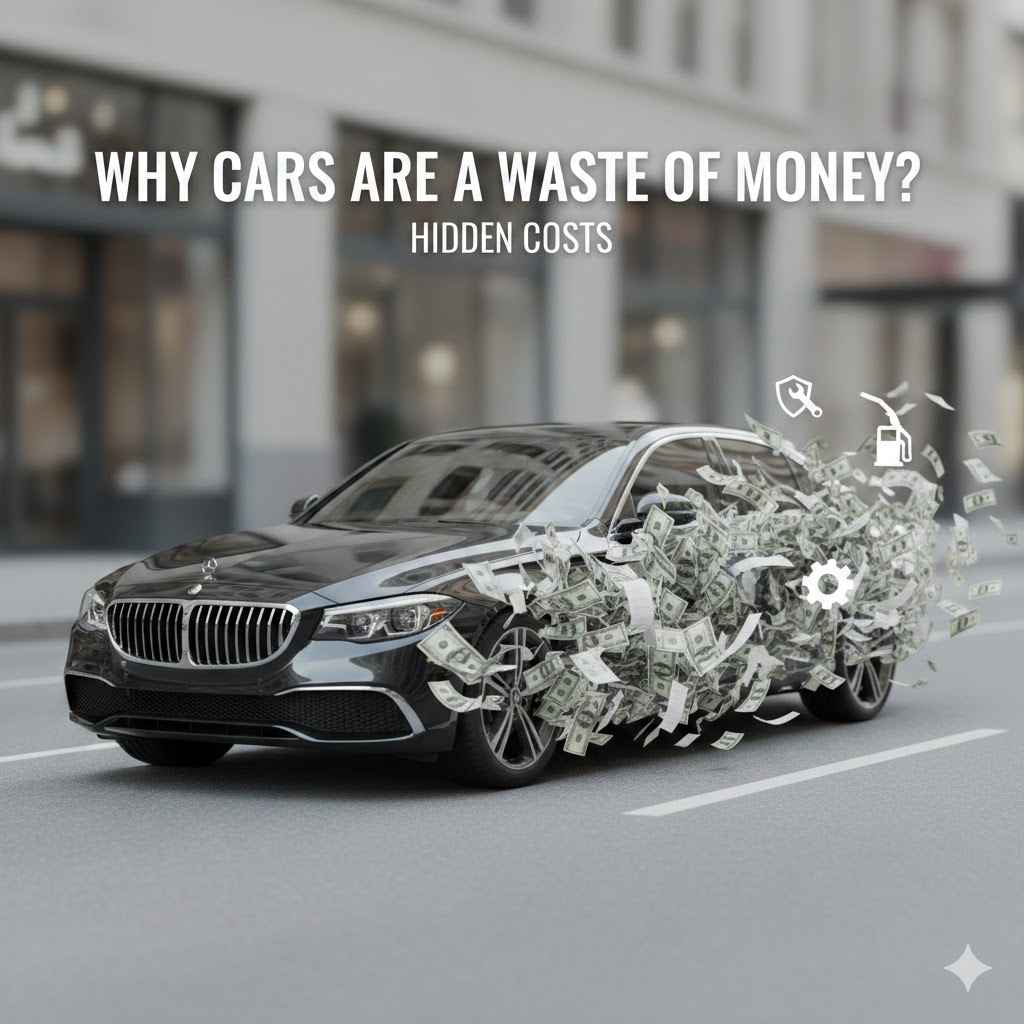
Thinking about car ownership can feel overwhelming, especially when you first look into it. The big question, Why Are Cars Such a Waste of Money? Hidden Costs Explained, is common because there’s a lot more to it than just the price tag.
It’s easy to get lost in all the numbers and details. But don’t worry, this guide breaks it all down simply, step by step. We’ll look at all the little costs that add up, so you can see the full picture.
Understanding the True Cost of Car Ownership
Many people think the biggest cost of a car is buying it. While that’s a big chunk, it’s just the start. Cars come with many hidden expenses that can surprise you.
These costs pop up throughout the year, sometimes when you least expect them. We will explore all these unexpected expenses so you have a clear idea of what owning a car really means for your wallet.
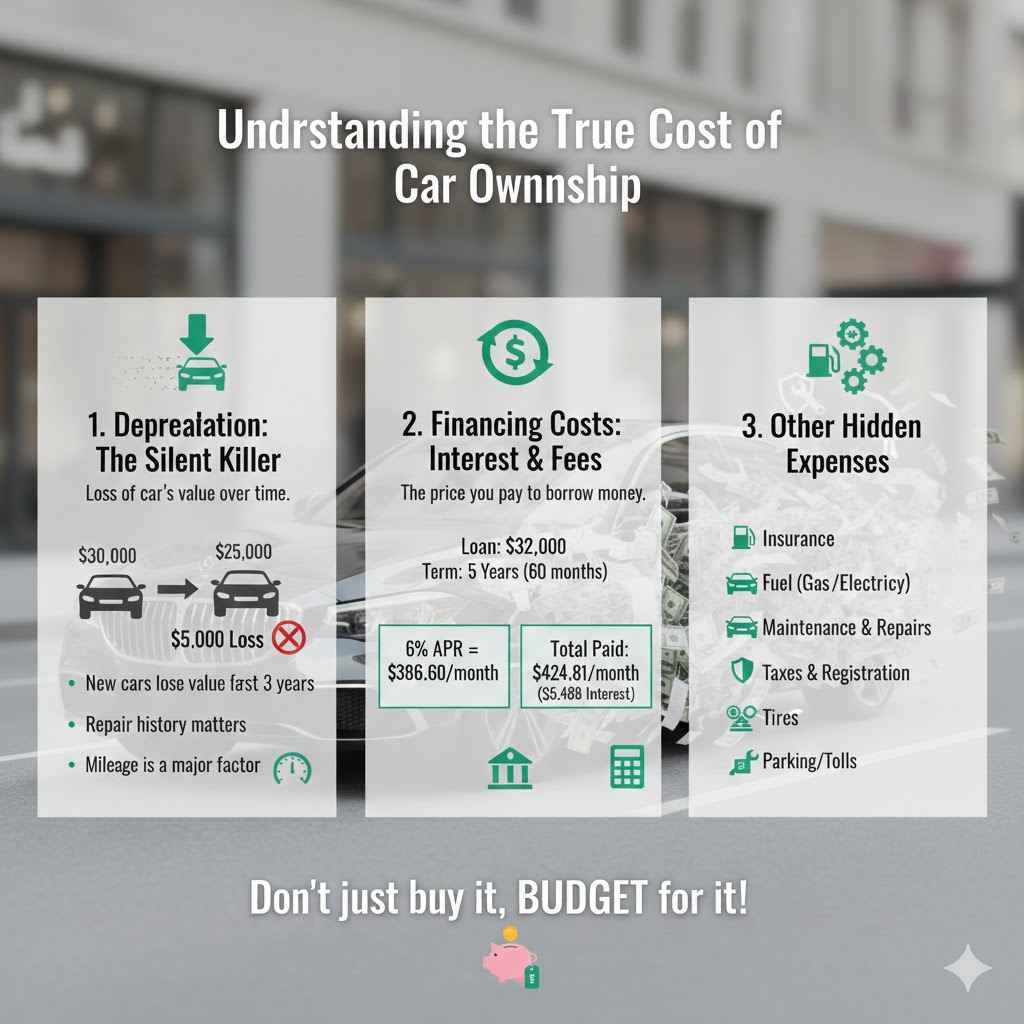
Depreciation The Silent Killer
Depreciation is the loss of a car’s value over time. It happens the moment you drive it off the lot. New cars lose a big part of their worth in the first few years.
This is money you won’t get back if you decide to sell it.
Imagine buying a brand-new car for $30,000. In just one year, it might be worth $25,000. That’s a $5,000 loss, and you haven’t even driven it that much!
This is a cost you pay without getting anything tangible for it.
Several factors affect how fast a car depreciates. These include the make and model, its mileage, its condition, and even the color. Popular models and those with good reliability ratings tend to depreciate slower.
Here are some key points about depreciation:
New cars lose value fastest. The first three years often see the steepest drop.
This is because the car is no longer “new.” It has been used, and parts begin to show normal wear. Also, new models come out each year, making the older ones less desirable and valuable.
Repair history matters. Accidents can significantly reduce a car’s resale value.
A car that has been in a major accident might be worth much less than an identical car with a clean history. Buyers often worry about hidden damage or long-term problems caused by the crash.
Mileage is a major factor. Higher mileage means more wear and tear.
Cars with very high mileage are usually sold for much less. Mechanics often consider excessive mileage to mean the car’s components have been used more heavily and might need repairs sooner.
Financing Costs Interest and Fees
If you don’t buy a car with cash, you’ll likely get a car loan. Loans mean paying interest on the money you borrow. This interest adds to the total cost of the car over many years.
Interest is the price you pay to borrow money. The longer you take to pay back the loan, the more interest you will pay. Even a small interest rate can add hundreds or thousands of dollars over the life of a loan.
There can also be other fees associated with car loans. These might include loan origination fees, late payment fees, or early payoff penalties. These fees are extra costs that eat into your budget.
Consider this example:
You borrow $20,000 for a car. The loan term is 5 years (60 months). The annual interest rate is 6%.
Your monthly payment would be about $386.60. Over 5 years, you would pay back a total of $23,196. That means you paid $3,196 just in interest!
Now, imagine the interest rate is 10% for the same loan. Your monthly payment jumps to $424.81. The total paid over 5 years is $25,488.60.
This is $5,488.60 in interest. That’s an extra $2,292.60 paid just because the interest rate was higher.
These numbers show how significant financing costs can be. They are a major part of why cars can be a waste of money if not financed wisely.
Why Are Cars Such a Waste of Money Insurance and Taxes
Insurance and taxes are unavoidable costs for car owners. These expenses are paid regularly, either monthly, annually, or when you renew registration. They add up to a substantial amount of money over the years.
Car Insurance Premiums
Car insurance protects you financially if you have an accident, theft, or other damage to your vehicle. The cost of insurance, known as premiums, varies greatly.
Several factors influence your insurance rates. These include your age, driving record, location, the type of car you drive, and how much coverage you choose. Drivers with a history of tickets or accidents pay more.
Some states require minimum liability coverage, while others do not. The more comprehensive coverage you opt for, such as collision and comprehensive, the higher your premium will be. Collision covers damage from accidents, and comprehensive covers other issues like theft or natural disasters.
Here’s a look at common insurance costs:
Average Annual Cost: The national average for full coverage car insurance can range from $1,500 to $2,000 per year. This can be significantly higher in certain areas or for drivers with higher risk profiles.
This average is a broad estimate. In major cities with more traffic and higher rates of theft, insurance could easily cost $3,000 or more per year. For young drivers or those with past accidents, it can also be much higher.
Factors Affecting Premiums:
Credit Score: In many states, insurance companies use your credit score to help determine your premium. People with better credit often pay less.
The idea is that people with good credit tend to be more responsible overall, which might translate to safer driving habits. This is a debated point but is a reality for many insurance providers.
Vehicle Type: Sports cars or luxury vehicles are more expensive to insure than standard sedans or economy cars.
This is because these vehicles are more costly to repair or replace if they are stolen or damaged. The parts for luxury cars are also often more expensive.
Driving Habits: Daily commute distance, annual mileage, and whether your car is used for business purposes all impact your rates.
Driving many miles increases your chances of being in an accident. If you use your car for ride-sharing or delivery services, you will likely pay more for insurance than someone who only uses their car for personal trips.
Taxes Registration and Fees
Owning a car also comes with various taxes and fees that are mandatory for legal operation. These are often recurring costs that must be paid to the government.
Registration fees are paid annually or biennially to the state’s Department of Motor Vehicles (DMV). These fees help fund road maintenance and other transportation projects. The amount varies by state and often depends on the vehicle’s weight or value.
In addition to registration, many states have annual property taxes on vehicles. This tax is based on the car’s assessed value. Sales tax is also paid when you initially purchase the vehicle, which can be a significant one-time cost.
Here’s a breakdown of common taxes and fees:
Annual Registration Fees: These can range from $20 to over $100 per year, depending on the state and vehicle type.
For example, a lightweight, fuel-efficient car might have a lower registration fee than a large truck or an SUV. Some states also have additional fees for specific types of vehicles or for vanity license plates.
Vehicle Property Tax: This tax is paid annually to your local government or state. It’s calculated based on your car’s current market value.
A car that is several years old will have a lower property tax bill than a brand-new vehicle. This tax helps fund local services like schools and public safety.
Sales Tax: When you buy a car, you pay sales tax on the purchase price. This rate varies by state and can add a substantial amount to the total cost.
For instance, if you buy a car for $25,000 and your state has a 7% sales tax, you’ll pay $1,750 in sales tax alone. This is a one-time cost but a very significant one.
Fuel Maintenance and Repair Costs
Beyond the initial purchase and ongoing taxes, the day-to-day operation of a car involves significant recurring expenses. These are the costs you face for keeping the car running and in good condition.
Fuel Expenses Gasoline and Electricity
The cost of fuel is one of the most consistent expenses for any car owner. Whether you drive a gasoline-powered car or an electric vehicle (EV), you will pay to keep it powered.
For gasoline cars, the price of gas fluctuates based on global oil prices, supply, demand, and geopolitical events. The amount you spend depends on your car’s fuel efficiency (miles per gallon or MPG) and how much you drive.
Electric vehicles require electricity, and while often cheaper per mile than gasoline, the cost of electricity can also vary by region and time of day. Charging at home is usually less expensive than using public fast chargers.
Consider these points about fuel costs:
Average Annual Fuel Cost: A typical driver who travels 15,000 miles per year might spend anywhere from $1,500 to $3,000 annually on gasoline, depending on fuel prices and MPG.
For example, if gas is $4 per gallon and your car gets 25 MPG, you’ll use 600 gallons of gas per year (15,000 miles / 25 MPG). This results in a yearly fuel cost of $2,400 (600 gallons * $4/gallon).
Fuel Efficiency Matters: Cars with higher MPG ratings are cheaper to run. A fuel-efficient car can save you hundreds of dollars each year in fuel costs.
Upgrading from a car that gets 15 MPG to one that gets 30 MPG can effectively halve your fuel spending for the same amount of driving. This makes a big difference over time.
Electric Vehicle Charging Costs: Charging an EV at home can cost significantly less per mile than gasoline. For instance, if electricity costs $0.15 per kilowatt-hour (kWh) and your EV uses 4 miles per kWh, you’re paying about $0.0375 per mile.
Driving 15,000 miles at this rate would cost about $562.50 per year for electricity, a substantial saving compared to gasoline. However, public charging can be more expensive.
Routine Maintenance and Unexpected Repairs
Cars need regular maintenance to stay in good working order. Neglecting maintenance can lead to more serious and expensive problems down the line. Even with perfect maintenance, cars can still break down.
Routine maintenance includes oil changes, tire rotations, brake checks, and fluid replacements. These are preventative measures to keep your car running smoothly and safely. They are a predictable part of car ownership.
Unexpected repairs, however, are unpredictable and can be very costly. These can range from replacing worn-out parts like alternators or water pumps to more major issues like transmission problems or engine failures. These repairs often come at inconvenient times, adding financial stress.
Let’s look at typical costs:
| Maintenance Item | Estimated Cost Range |
|---|---|
| Oil Change | $50 – $100 |
| Tire Rotation | $25 – $75 |
| Brake Pad Replacement (per axle) | $150 – $300 |
| New Tires (set of 4) | $600 – $1,200 |
| Major Repair (e.g., Transmission) | $2,000 – $5,000+ |
As you can see from the table, routine maintenance costs are manageable. However, a single major repair can easily cost as much as several years of routine upkeep. These unexpected costs are a major reason why cars are perceived as a financial burden.
Here are some scenarios of repair costs:
Scenario 1: A car needs new brake pads and rotors. The cost is $400.
This is a common wear-and-tear item. While it costs money, it ensures your car can stop safely. It’s a necessary expense for safety and maintaining the car.
Scenario 2: A car’s air conditioning system fails. The repair could cost $1,500.
This is a more significant repair. While not always critical for the car’s basic operation, it greatly impacts comfort, especially in hot weather. The cost can be a surprise and a strain on a budget.
Other Financial Considerations and Hidden Fees
Beyond the direct costs of buying, insuring, fueling, and maintaining a car, there are several other financial aspects to consider. These often overlooked expenses can further contribute to the idea that cars are a significant drain on financial resources.
Parking and Toll Fees
If you live or work in urban areas, parking fees can add up quickly. Daily parking rates, monthly garage passes, and even street parking meters can become a substantial expense.
Tolls are another recurring cost if your commute involves toll roads or bridges. These fees are often necessary to use faster or more direct routes, but they represent a continuous outlay of cash.
Consider these common parking and toll expenses:
Daily Parking Costs: In many cities, parking for a full workday can cost $15-$30 per day. This adds up to $3,000-$6,000 per year if you drive to work daily.
This cost is often higher than the monthly cost of public transportation. It’s a direct expense for the convenience of having your car nearby.
Monthly Parking Passes: For residents in apartments or areas with limited street parking, a monthly garage pass might be required. These can range from $100 to $400 or more per month, totaling $1,200 to $4,800 annually.
This fee is often considered a part of housing costs for car owners in dense areas. It’s a premium for securing a parking spot.
Toll Road Expenses: Depending on your commute, toll fees can add $5-$20 per day. Over a year, this can easily reach $1,000-$2,000 or more.
While tolls might save time, they are a continuous expense that doesn’t offer any tangible return beyond convenience.
Cleaning Detailing and Accessories
Keeping your car looking its best and adding personal touches also costs money. While these might seem like minor expenses, they accumulate over time.
Regular car washes, professional detailing services, and purchasing accessories like floor mats, seat covers, or stereo upgrades all add to the overall cost of car ownership. These are often discretionary expenses, but many owners choose to incur them.
Here are some examples of these costs:
Car Washes: A basic car wash might cost $10-$20. If you wash your car weekly, that’s $520-$1,040 per year.
Professional detailing services can cost $200-$500 or more for a thorough interior and exterior cleaning. This is a luxury expense for many car owners.
Accessories: Items like custom floor mats, seat covers, or phone mounts can cost anywhere from $50 to several hundred dollars.
These are often purchased to improve comfort, protect the interior, or personalize the vehicle, but they are additional expenses beyond the car’s functional needs.
Opportunity Cost The Value of Your Money
Opportunity cost is a key economic concept that applies to car ownership. It’s the value of the next best alternative that you give up when you choose to spend money on something.
If you spend thousands of dollars on a car and its associated costs, that money could have been invested elsewhere. It could have earned interest, grown in stocks, or been used for other financial goals like saving for a home or retirement.
Let’s illustrate this with an example:
Total Annual Car Costs: Suppose your total annual costs for a car (loan payments, insurance, fuel, maintenance, taxes, fees) come to $6,000.
This $6,000 is money that is gone each year. It doesn’t generate any income or grow in value.
Investment Growth: If you instead invested that $6,000 annually in a fund that earns an average of 7% per year, the money would grow significantly over time.
After 10 years, your initial $60,000 in investments (not counting compounding) would have grown. With compounding, the total value would be much higher, providing a financial asset instead of a depreciating one.
This concept of opportunity cost highlights that the “waste” of money on a car isn’t just about the explicit expenses; it’s also about the potential financial growth you sacrifice.
Why Are Cars Such a Waste of Money Alternatives and Savings
Understanding why cars can be a financial drain is the first step. The next is exploring alternatives that can save you money and reduce the stress of ownership. Many options exist that provide transportation without the full cost of owning a vehicle.
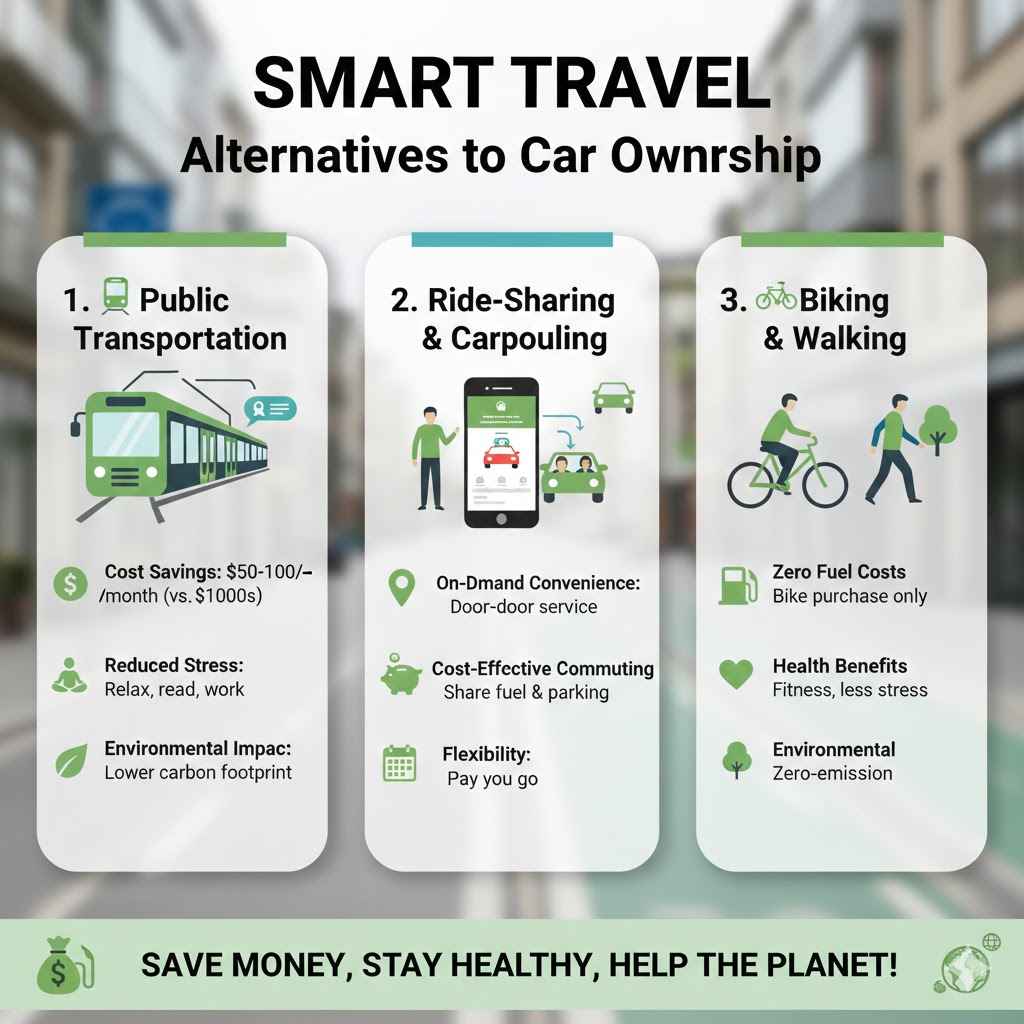
Public Transportation Benefits
Public transportation, such as buses, trains, and subways, offers a cost-effective way to get around. Fares are typically much lower than the combined costs of car ownership.
Beyond saving money, public transit reduces stress. You can read, work, or relax instead of focusing on driving. It also benefits the environment by reducing the number of cars on the road.
Here are key benefits of public transport:
Cost Savings: A monthly public transit pass can cost $50-$100, compared to hundreds or thousands of dollars in monthly car expenses.
This difference alone can amount to thousands of dollars saved annually. This saved money can be used for savings, investments, or other important financial goals.
Reduced Stress: Not having to deal with traffic, parking, or car maintenance can significantly lower daily stress levels.
This allows for more productive or relaxing commute times. You can also avoid the anxiety associated with unexpected car problems or accidents.
Environmental Impact: Using public transport reduces your carbon footprint. Fewer cars on the road mean less pollution and lower greenhouse gas emissions.
This is a choice that benefits not only your wallet but also the planet’s health.
Ride-Sharing and Carpooling
Ride-sharing services like Uber and Lyft, and carpooling with friends or colleagues, offer flexible transportation solutions. These options can be cost-effective for specific trips or commutes.
Ride-sharing is convenient for occasional travel or when public transit isn’t feasible. Carpooling distributes costs among multiple people, making it a very economical option for daily commutes.
Consider these points:
On-Demand Convenience: Ride-sharing provides convenient door-to-door service without the responsibilities of ownership.
This is ideal for trips to the airport, nights out, or when you need to get somewhere quickly without your own vehicle.
Cost-Effective Commuting: Carpooling can drastically cut down on fuel, parking, and wear-and-tear costs for individuals.
If you and a coworker live near each other, you can take turns driving or share the expenses, saving both parties money.
Flexibility: These options allow you to use transportation only when you need it, avoiding fixed costs associated with owning a car.
You can plan your trips around available services, making it a budget-friendly choice for those who don’t require constant personal vehicle access.
Biking and Walking
For shorter distances, biking and walking are the cheapest and healthiest transportation methods. They require no fuel, minimal maintenance, and offer excellent health benefits.
Many cities are improving their infrastructure for cyclists and pedestrians, making these options more viable and safer. Even incorporating these methods for part of your commute can lead to significant savings.
Key advantages include:
Zero Fuel Costs: Biking and walking cost nothing in terms of fuel. The only expenses are for the initial purchase of a bike and safety gear.
This represents a significant long-term saving compared to the continuous expense of gasoline or electricity.
Health Benefits: Regular physical activity from biking or walking improves cardiovascular health, reduces stress, and helps maintain a healthy weight.
These health improvements can lead to lower healthcare costs over your lifetime.
Environmental Friendliness: Both are zero-emission modes of transport, contributing to cleaner air and a healthier environment.
They are the most sustainable choices for personal mobility, requiring no fossil fuels or electricity.
Frequently Asked Questions
Question: What is the biggest hidden cost of owning a car
Answer: The biggest hidden cost is often depreciation. It’s the loss of value the moment you buy the car and continues over time, meaning you paid more than you can sell it for.
Question: How much does car insurance typically cost per year
Answer: Car insurance can range from $1,500 to $2,000 per year on average, but it varies greatly based on your driving record, location, and the type of car you own.
Question: Are electric cars cheaper to own than gasoline cars
Answer: Electric cars often have lower fuel costs and maintenance. However, their initial purchase price can be higher, and battery replacement can be a significant future expense.
Question: How much can I save by carpooling
Answer: Savings from carpooling vary, but you can significantly reduce costs by sharing fuel, parking fees, and wear-and-tear on your vehicle with others.
Question: Is it ever worth it to own a car
Answer: Owning a car can be worth it if you live in an area with poor public transit, need a vehicle for work, or have specific lifestyle needs that alternatives cannot meet. Careful budgeting is always advised.
Conclusion
Cars represent a significant financial commitment. The purchase price is just the beginning. Hidden costs like depreciation, financing, insurance, taxes, fuel, maintenance, and parking add up quickly.
Exploring alternatives like public transit, ride-sharing, biking, or walking can lead to substantial savings. You can improve your financial health and reduce stress by understanding these expenses and choosing wisely.