
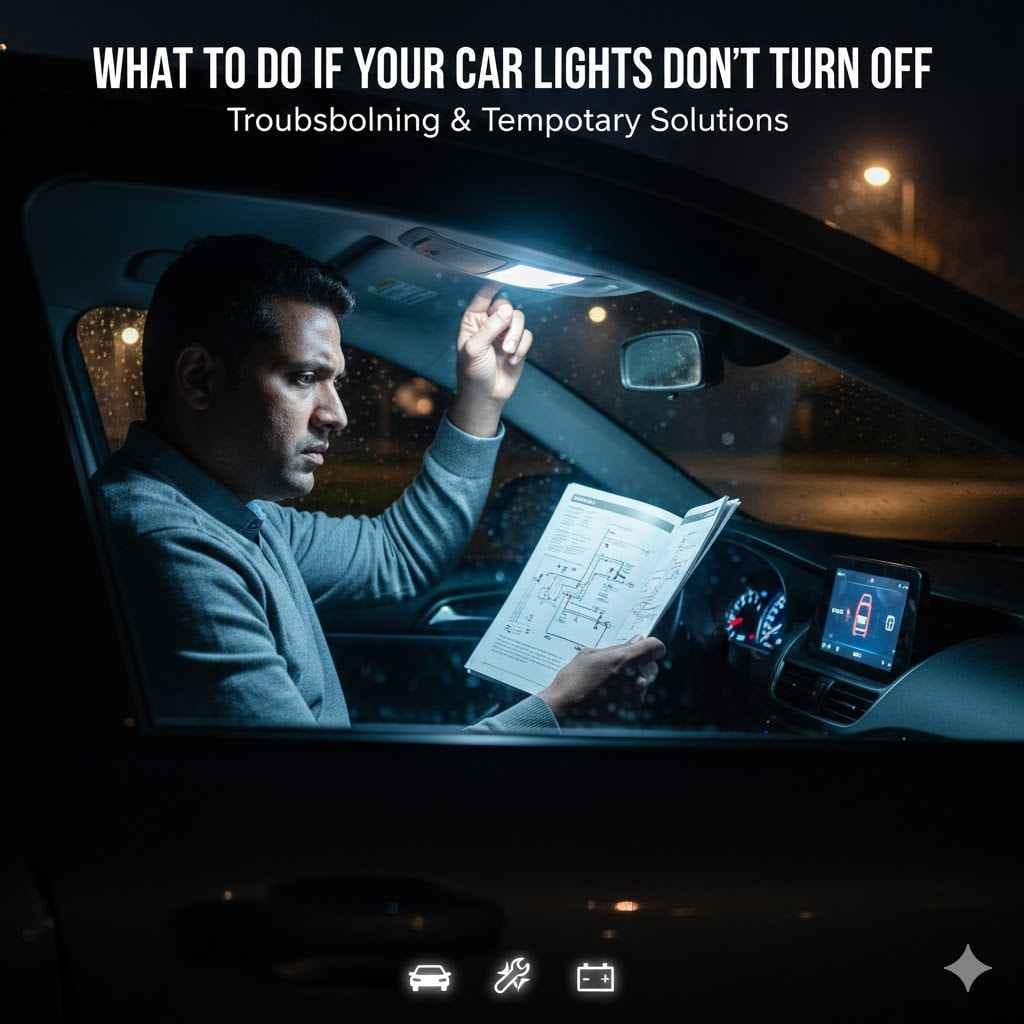
It can be a little puzzling when your car lights decide to stay on even when they shouldn’t. This is a common thing many drivers run into, and for folks new to cars, it might seem a bit tricky to figure out. But don’t worry, this is totally fixable!
We’ll walk you through it step-by-step so you can get those lights sorted out in no time. Here’s how to handle What to Do If Your Car Lights Won’t Turn Off and get back to driving with confidence.
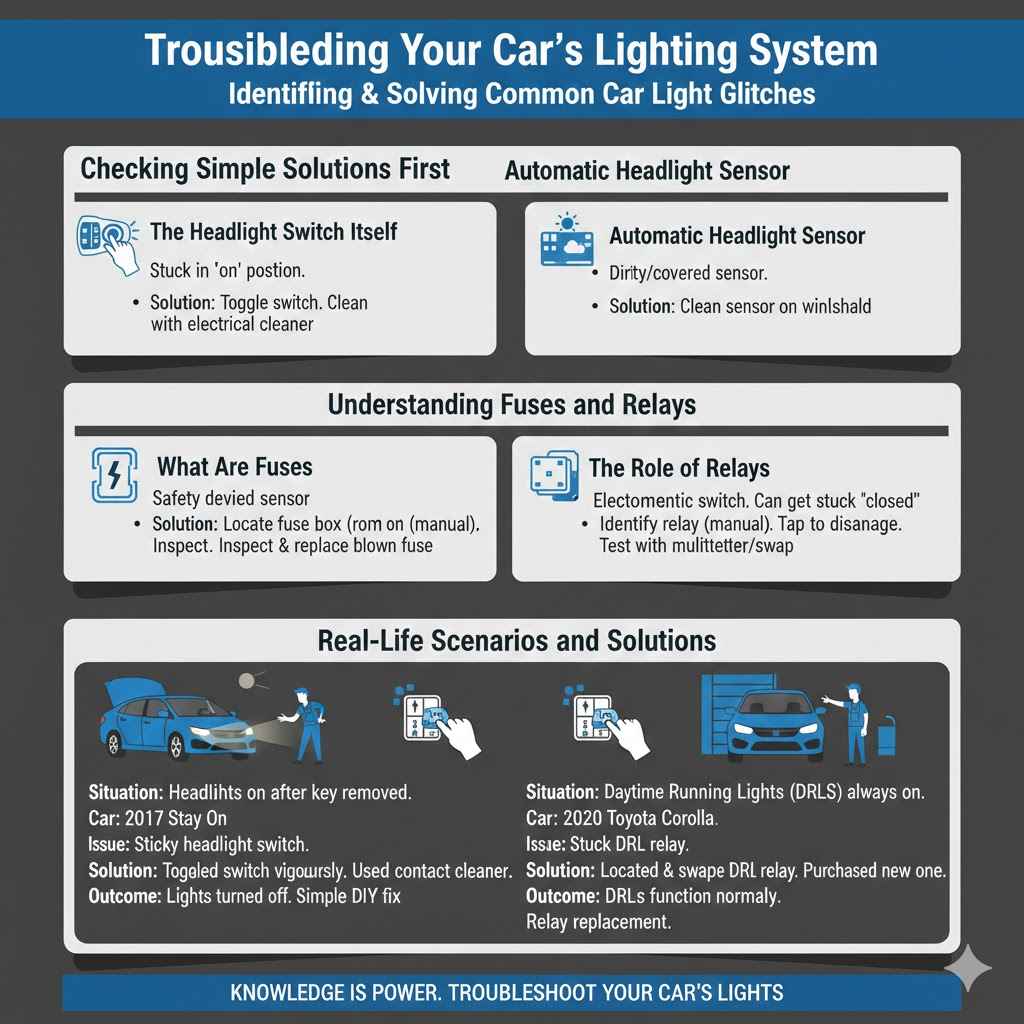
Troubleshooting Your Car’s Lighting System
When your car lights stay on longer than they should, it’s a signal that something in the electrical system needs a closer look. This can range from simple issues like a stuck switch to more complex problems with fuses or relays. Understanding these common causes is the first step to solving the problem efficiently.
This section will help you identify the potential culprits and what they mean for your vehicle’s electrical setup. It’s about making the invisible workings of your car’s lights a little clearer.
Checking Simple Solutions First
Before diving into more complicated fixes, it’s always best to start with the easiest things to check. Sometimes, the solution is right in front of you, and you just need to know where to look. These quick checks can save you a lot of time and effort, and often, they’re all you need to get your car lights working correctly again.
It’s about being systematic and ruling out the straightforward possibilities.
The Headlight Switch Itself
The most direct control for your headlights is the headlight switch, often found on the dashboard or as a stalk on the steering column. Over time, these switches can develop faults, causing them to stick in the ‘on’ position. This means even if you turn the knob or pull the stalk, the electrical connection for the lights remains active.
A simple test is to move the switch through all its positions several times. If the lights flicker or respond inconsistently, the switch might be the issue. Replacing a faulty headlight switch is a common repair.
It involves carefully removing the old switch and installing a new one, reconnecting the wiring harness. This task is often within reach for DIY mechanics with basic tools and a bit of patience. The switch is a critical component, acting as the gatekeeper for your headlights.
Automatic Headlight Sensor Issues
Many modern cars have an automatic headlight system that turns the lights on and off based on light levels. This system uses a sensor, often located on the windshield near the rearview mirror. If this sensor gets dirty, covered, or malfunctions, it might incorrectly tell the car that it’s dark outside, even in broad daylight.
This can cause your headlights to stay on constantly. Cleaning the sensor gently with a soft cloth can sometimes resolve the problem. If cleaning doesn’t help, the sensor itself might need testing or replacement by a professional.
It’s a smart feature, but like any electronic part, it can sometimes misbehave, leading to unexpected behavior from your car’s lights.
Battery Voltage and Electrical Load
While less common for lights staying on, extreme battery issues or sudden electrical surges can sometimes cause strange behavior in your car’s electrical systems. If your battery is very low or has faulty connections, it might not be able to properly signal the light control modules to turn off. Similarly, a sudden voltage spike could potentially confuse the system.
However, this is usually accompanied by other electrical problems, like dashboard warning lights or starting issues. It’s worth noting as a possibility, especially if you’ve experienced other electrical oddities. Most of the time, persistent lights staying on point to a specific component failure rather than a general electrical problem.
Understanding Fuses and Relays
Fuses and relays are the unsung heroes of your car’s electrical system. Fuses are designed to blow and break a circuit if too much electricity flows through it, protecting components from damage. Relays are essentially electrically operated switches that use a small current to control a larger current.
When your car lights won’t turn off, it could be that a relay is stuck in the closed position, meaning it’s keeping the circuit powered. Diagnosing these components requires understanding your car’s fuse box layout and the function of each relay. It’s a bit like being a detective, tracing the path of electricity to find the blockage or the component that’s not sending the right signal.
What Are Fuses and How Do They Work
A fuse is a safety device containing a thin wire that melts and breaks the circuit when the current exceeds a safe level. Think of it as a deliberate weak link designed to sacrifice itself to protect more expensive or vital parts of your car’s electrical system. When a fuse blows, it interrupts the flow of electricity to the component it protects, such as the headlights.
This prevents overheating and potential fires. You can usually identify a blown fuse by looking at the wire inside the fuse; if it’s broken or melted, the fuse needs replacement. Most cars have a fuse box, often located under the dashboard or in the engine bay, containing spare fuses and a diagram to help you identify which fuse controls which system.
Checking and replacing fuses is a common and often simple fix for electrical issues.
The Role of Relays in Car Lighting
Relays are electromagnetic switches that allow a low-power circuit to control a high-power circuit. In your car’s lighting system, a relay might be used to turn on your headlights. The headlight switch sends a small electrical signal to the relay.
This signal energizes an electromagnet within the relay, which then closes a set of contacts, allowing the main power from the battery to flow to the headlights. If a relay’s internal contacts get stuck in the closed position, it will keep the headlights powered even when the switch is turned off. Diagnosing a stuck relay can involve tapping it gently to see if it disengages, or by testing its electrical operation with a multimeter.
Relays are crucial for managing the significant power demands of automotive lighting and other high-draw accessories.
Locating Your Fuse Box and Relays
Your car’s fuse boxes and relay panels are typically located in a few common spots. The primary fuse box is often found under the driver’s side dashboard, behind a small panel that you can pull off. Another fuse box might be located in the engine compartment.
Your owner’s manual will be the definitive guide to finding these locations for your specific vehicle model. It will also contain a diagram of the fuse box, showing what each fuse and relay is responsible for. This diagram is essential for identifying the specific fuse or relay related to your headlights or daytime running lights.
Without this diagram, it’s like trying to solve a puzzle without the picture on the box.
Testing and Replacing a Blown Fuse
To test a fuse, you first need to identify the fuse that controls your headlights. Using the diagram in your owner’s manual, find the corresponding fuse slot. You can visually inspect the fuse by carefully pulling it out using a fuse puller (often included in your car’s toolkit or available at auto parts stores).
Look for a broken wire inside the plastic casing. If it’s broken, the fuse is blown and needs to be
Diagnosing a Stuck Relay
Diagnosing a stuck relay is a bit more involved. You’ll need to identify the relay that controls your headlights, again using your owner’s manual. Sometimes, a relay can be tested by carefully tapping it with the handle of a screwdriver while the lights are stuck on.
If the lights go off after tapping, the relay is likely sticking. A more thorough test involves using a multimeter to check for continuity and voltage. However, for many car owners, simply replacing the suspect relay with a known good one (perhaps from a non-essential system with the same part number) is a practical way to diagnose if the relay is the issue.
If replacing it solves the problem, then you’ve found your culprit.
Common Electrical Faults and Solutions
Beyond simple switches and fuses, more complex electrical faults can lead to persistent car lights. These can involve issues with the car’s Body Control Module (BCM), wiring harness problems, or even issues with the light switch dimmer. Each of these can cause the headlights or other exterior lights to remain illuminated when they should not be.
Addressing these requires a systematic approach to tracing electrical signals and identifying where the system is being told to stay on. Understanding these potential faults will help you know when to seek professional help.
Body Control Module (BCM) Issues
The Body Control Module, or BCM, is a computer that manages many of the car’s electrical functions, including lights, power windows, and door locks. If the BCM malfunctions, it can send incorrect signals to various systems. For instance, a glitch in the BCM could tell the headlights to stay on regardless of the switch position.
Diagnosing BCM issues usually requires specialized diagnostic tools that can read error codes from the module and test its various outputs. Sometimes, a software update or a reset of the BCM can fix minor glitches. However, if the module is physically damaged or has internal electronic failures, it will need to be replaced, which is typically a job for a dealership or a specialized automotive electronics technician.
The BCM is like the brain for many of your car’s accessory functions.
Damaged Wiring Harnesses
A wiring harness is a bundle of wires that carries electrical signals throughout your car. Over time, these wires can become damaged due to heat, vibration, corrosion, or physical stress. A damaged wire could create a short circuit, sending constant power to the headlights, or it could interfere with the signals that tell the lights to turn off.
For example, if a wire carrying the “off” signal gets grounded prematurely, the lights might think the system is still active. Inspecting the wiring harness, especially in areas prone to wear like near the engine or under the car, is important. Repairing a damaged wire involves splicing in a new section of wire or re-taping and securing the harness.
This can be a time-consuming process that requires careful attention to detail to ensure all connections are sound and properly insulated.
Light Switch Dimmer Problems
Many vehicles have a dimmer function for the dashboard and interior lights, often integrated with the headlight switch. If this dimmer circuit is faulty or the switch itself has an issue, it can sometimes affect the exterior light controls as well. In some designs, a problem with the dimmer’s resistance could trick the system into thinking the headlights should remain on.
While less common than a direct headlight switch failure, it’s a possibility, especially if you notice other oddities with your interior lighting at the same time. Testing the dimmer circuit would involve checking its resistance across its range of motion with a multimeter and comparing it to specifications in a service manual. If the dimmer is found to be faulty, the entire headlight switch assembly might need replacement.
Real-Life Scenarios and Solutions
Seeing how others have faced similar issues can be incredibly helpful. These real-life examples show how seemingly complex problems can often be traced back to simple, overlooked causes, or how a systematic diagnostic approach leads to a resolution. They also highlight the importance of consulting your vehicle’s specific service manual when dealing with electrical issues.
Scenario: The Headlights Stayed On After Parking
A driver named Mark noticed his headlights were still on after he turned off his engine and removed the key. He initially panicked, thinking it was a major electrical fault. After checking his owner’s manual, he found the section on the headlight switch.
He noticed that the switch felt a little loose. He turned the switch off and on several times vigorously. On the third try, the headlights finally shut off.
It turned out the switch was slightly sticky. He cleaned around it with some electrical contact cleaner and it worked perfectly afterwards. This saved him a trip to the mechanic and a potentially expensive repair for what was a simple switch issue.
Scenario: Daytime Running Lights Always On
Sarah’s daytime running lights (DRLs) were constantly on, even when she put her car in park or turned off the ignition. She checked her manual and found that DRLs are often controlled by a separate relay or module. She located the fuse box in the engine bay and found the relay labeled for DRLs.
She pulled it out and noticed it felt warm. She swapped it with a similar relay from the horn circuit (which she didn’t use often) and her DRLs turned off as expected when the car was parked. She then bought a new DRL relay, and the problem was permanently solved.
This showed her the value of knowing where to find and how to swap out relays for testing.
Scenario: Intermittent Headlight Problem
David’s headlights would sometimes stay on, and sometimes turn off normally. It was frustrating because he never knew when it would happen. He spent a weekend checking fuses, relays, and even the headlight switch, all of which appeared to be fine.
He decided to take it to a mechanic specializing in auto electrics. The mechanic discovered a section of the wiring harness under the car that had a small break in the insulation. This was causing intermittent shorts.
The mechanic carefully repaired the wire and reinforced the harness. After this repair, the headlight problem completely disappeared. This case highlights that sometimes, the issue is hidden within the wiring itself.
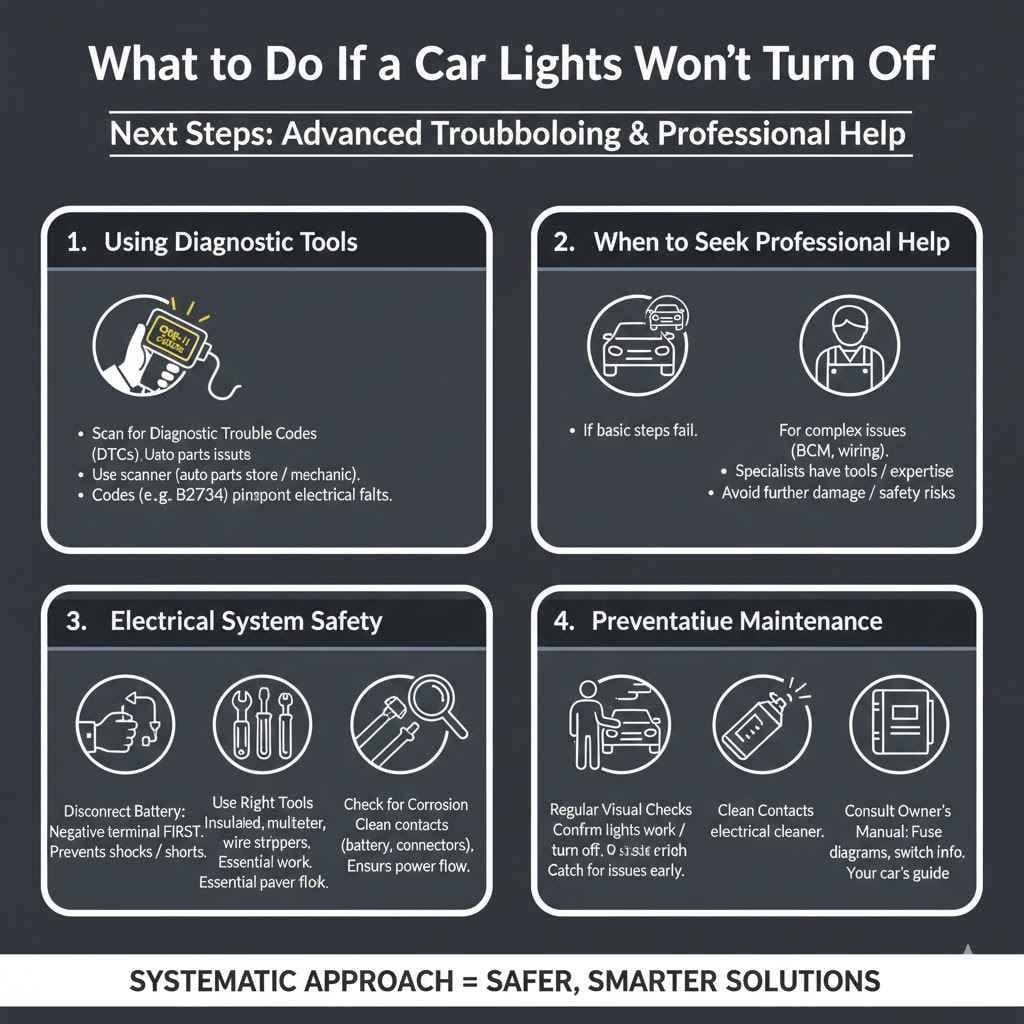
What to Do If Your Car Lights Won’t Turn Off Next Steps
So, you’ve gone through the basic checks, maybe even tested a fuse or relay, and still, those car lights are stubbornly staying on. This section is about what to do when the problem isn’t immediately obvious and requires a bit more investigation or professional help. We’ll cover how to systematically approach more complex issues and when it’s time to call in the experts to ensure your car’s electrical system is functioning safely and correctly.
Using Diagnostic Tools
For many modern cars, the computer system holds the key to understanding why certain functions, like your lights, are behaving unexpectedly. Diagnostic tools, also known as OBD-II scanners (On-Board Diagnostics II), can plug into a port usually located under the dashboard and read error codes stored by the car’s computer. These codes can point directly to a faulty sensor, module, or circuit.
Even if your car’s lights are the only issue, the BCM might have logged a code related to lighting control. Understanding these codes requires a bit of research, as each code corresponds to a specific problem. Many auto parts stores will read these codes for free, which can give you a starting point for repairs or at least help you communicate the issue clearly to a mechanic.
Understanding OBD-II Codes
OBD-II is a standardized system found in vehicles manufactured since 1996. It allows mechanics and car owners to access diagnostic information about the car’s engine and other electronic systems. When a component isn’t working as expected, the car’s computer will often store a Diagnostic Trouble Code (DTC).
These codes start with a letter (P for powertrain, B for body, C for chassis, U for network) followed by four digits. For example, a code like ‘B2734’ might relate to a problem with the headlight control circuit. Knowing the specific code can help you pinpoint the exact area of the problem.
You can then use online resources or repair manuals to understand what that code means and what steps are needed to fix it. It’s like a secret language that tells you what’s wrong under the hood.
When to Seek Professional Help
While many car issues can be resolved with DIY effort, some electrical problems are best left to the professionals. If you’ve tried the basic troubleshooting steps and are still stumped, or if the problem involves complex components like the BCM or intricate wiring, it’s wise to consult a qualified mechanic. They have the specialized tools, knowledge, and experience to diagnose and repair these issues safely and effectively.
Attempting complex electrical repairs without proper expertise can sometimes lead to further damage or even pose safety risks. A professional can also ensure that any repairs are done to factory specifications, maintaining the integrity of your car’s electrical system.
Electrical System Safety Precautions
Working with car electrical systems, even for simple tasks like checking fuses, carries inherent risks if not done carefully. Understanding these safety precautions is paramount to prevent injury or further damage to your vehicle. Always prioritize safety when dealing with any automotive electrical issue, and never hesitate to stop and reassess if you feel uncertain.
Disconnecting the Battery
Before working on any electrical component, it’s a critical safety measure to disconnect the negative terminal of your car’s battery. This prevents accidental shorts and protects you from electric shock. To do this, locate your battery and use a wrench to loosen the clamp on the negative (-) terminal.
Once loose, carefully remove the cable from the terminal post and secure it away from the battery so it cannot accidentally make contact. Remember which terminal is negative; when reconnecting, the negative terminal is always the last one to be reattached. This simple step can prevent a lot of potential problems and ensure your safety.
Using the Right Tools
Using the correct tools for the job significantly increases safety and the likelihood of a successful repair. For electrical work, this includes insulated tools, a reliable multimeter for testing voltage and continuity, and appropriate screwdrivers and socket sets. A fuse puller is essential for safely removing fuses without damaging the fuse box or the fuse itself.
If you’re working with wiring, using wire strippers and crimpers designed for automotive use will ensure clean, secure connections. Cheap or incorrect tools can slip, damage components, or lead to hazardous situations, so investing in quality tools is a good idea for any car owner who plans to do their own maintenance.
Checking for Corrosion and Loose Connections
Corrosion on battery terminals, fuse box connections, or any electrical connector can impede the flow of electricity, leading to erratic behavior or complete failure of components. Regularly inspect these areas for any signs of white or bluish-green powdery residue. Loose connections are another common culprit.
Ensure that all connectors are seated firmly and that wiring is securely attached. Sometimes, simply wiggling a connector can temporarily fix a problem, indicating that it needs to be properly secured or repaired. Addressing corrosion and loose connections proactively can prevent many electrical gremlins before they even start.
Preventative Maintenance for Your Lighting System
Keeping your car’s lighting system in good shape involves more than just replacing bulbs when they burn out. Regular checks and simple maintenance can help prevent issues like your lights refusing to turn off. These habits ensure your car’s electrical systems remain reliable and functional, saving you from unexpected problems on the road.
Regular Visual Inspections
Make it a habit to do a quick walk-around of your car, especially at dusk or dawn. Turn on your headlights and check that they illuminate correctly. Also, check your taillights, brake lights, and turn signals.
Ensure all lights are functioning as expected and are not dim. This simple routine can help you catch potential problems early, like a bulb that’s about to go out or a switch that’s not responding correctly. Early detection is key to preventing more significant issues down the line, such as the lights staying on unexpectedly.
Keeping Electrical Contacts Clean
As mentioned, corrosion can cause a lot of electrical headaches. Periodically, and especially if you notice any flickering or dimming, you can clean the electrical contacts for your battery terminals and any accessible electrical connectors related to your lighting system. A specialized electrical contact cleaner spray can be very effective.
For battery terminals, a wire brush can remove stubborn corrosion. Keeping these contact points clean ensures a strong, consistent flow of electricity, which is vital for all your car’s electrical components, including the lighting system.
Consulting Your Owner’s Manual
Your car’s owner’s manual is an invaluable resource for understanding its specific systems, including the lighting. It often contains diagrams of the fuse box, explanations of the headlight switch functions, and tips for basic maintenance. Familiarizing yourself with its contents can empower you to troubleshoot common issues yourself and know when to seek professional assistance.
It’s the first place to look when you encounter a problem, as it’s written specifically for your vehicle model and provides official guidance.
Frequently Asked Questions
Question: What could cause my car lights to stay on all the time?
Answer: Several things can cause your car lights to stay on. Common causes include a faulty headlight switch, a stuck relay, a malfunctioning automatic headlight sensor, or issues with the Body Control Module (BCM). Less common reasons might involve wiring harness problems or problems with the dimmer switch.
Question: Is it dangerous if my car lights won’t turn off?
Answer: Yes, it can be dangerous. If your headlights stay on constantly, they can drain your car’s battery, leaving you unable to start the car. It can also be a safety hazard for other drivers if your headlights are too bright at the wrong time, or if they don’t turn off when needed.
Additionally, it can be illegal in some areas if lights are on when they shouldn’t be.
Question: How can I check if a fuse is blown?
Answer: To check a fuse, you’ll need to locate your car’s fuse box (usually under the dashboard or in the engine bay) and consult your owner’s manual for the correct fuse related to your lights. Carefully remove the fuse using a fuse puller and inspect the metal filament inside. If the filament is broken or melted, the fuse is blown and needs to be
Question: Can I fix a stuck relay myself?
Answer: Sometimes, you can try tapping the relay gently with a screwdriver handle to see if it dislodges. For a more certain diagnosis, you can test it with a multimeter or swap it with a known good relay of the same type from a less critical system. If swapping or tapping resolves the issue, replacing the relay is often the solution, which is usually a straightforward DIY task.
Question: When should I take my car to a mechanic for light issues?
Answer: You should consider taking your car to a mechanic if you’ve checked fuses and relays and the problem persists, if you suspect a problem with the Body Control Module (BCM) or wiring harness, or if you are uncomfortable performing any of the diagnostic steps. Mechanics have specialized tools and expertise to safely and accurately diagnose and repair complex electrical issues.
Summary
Addressing your car lights staying on involves checking simple things first like the headlight switch and sensors. If those are fine, investigate fuses and relays. More complex issues might involve the BCM or wiring.
Always prioritize safety by disconnecting the battery and using the right tools. Regular checks can prevent problems. If you’re unsure, a mechanic can help.