
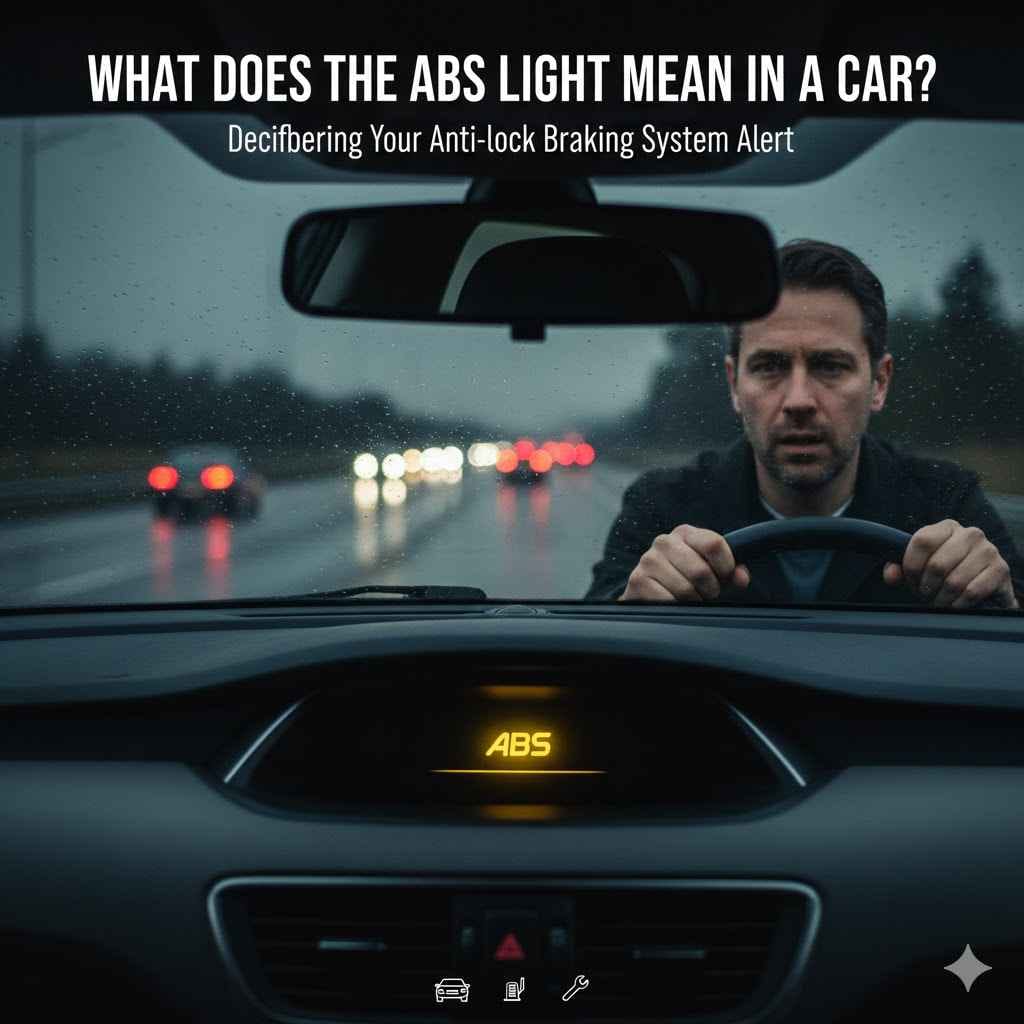
Ever seen that yellow light pop up on your dashboard and wondered, “What Does the ABS Light Mean in a Car?” You’re not alone. For many drivers, especially those new to cars, a dashboard warning light can be a bit confusing or even a little scary. It’s natural to feel unsure about what it means for your car’s safety and how to fix it. Don’t worry, though. This guide will break it down simply, step by step, so you can understand what’s happening and what to do next.
Understanding the ABS Warning Light
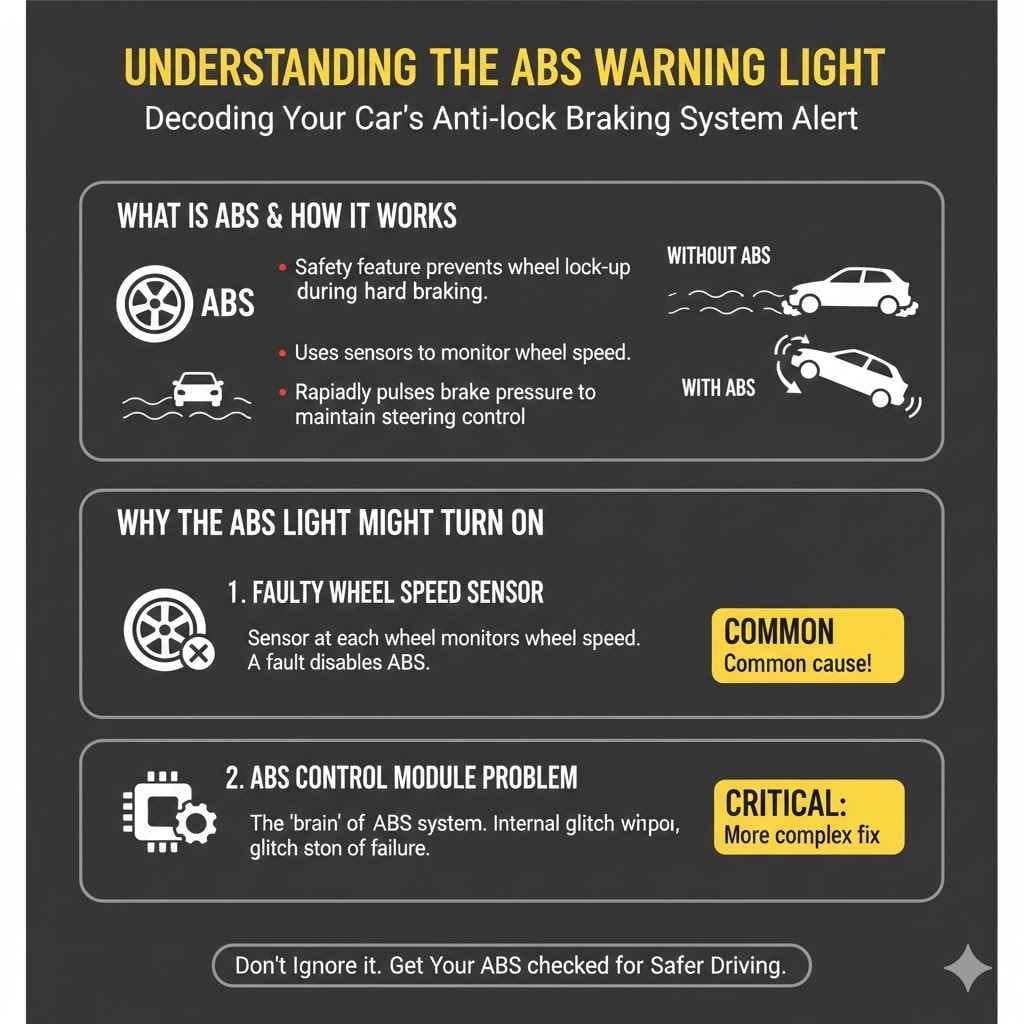
The ABS warning light is a signal from your car’s Anti-lock Braking System (ABS). This system is designed to help you maintain control of your vehicle when you brake hard. It prevents your wheels from locking up, allowing you to still steer. When this light comes on, it means there might be a problem with the ABS itself or a related system. It doesn’t necessarily mean your regular brakes have failed, but it’s still something to pay attention to.
What is ABS and How Does It Work
ABS stands for Anti-lock Braking System. It’s a safety feature built into most modern cars. When you slam on the brakes, especially in an emergency or on slippery surfaces like ice or rain, your wheels can sometimes lock up. If your wheels lock up, they stop rotating and start skidding. This means you lose the ability to steer, and your stopping distance can become much longer.
The ABS system uses sensors on each wheel to monitor its speed. When it detects that a wheel is about to lock up during braking, it rapidly pulses the brake pressure to that specific wheel. It’s like the system is tapping the brakes on and off very quickly, much faster than a human could. This pulsing action allows the wheel to keep rotating slightly, which helps maintain traction and lets you steer around obstacles even while braking hard. It’s a crucial part of your car’s safety features, especially in challenging driving conditions.
ABS is a smart system that helps prevent serious accidents. Without it, in a sudden stop, your car might just slide straight ahead, no matter which way you turn the steering wheel. This can lead to collisions that might have been avoided.
Many drivers find the sensation of ABS working quite different from normal braking; the brake pedal might pulsate, and you might hear some unusual noises. This is normal operation for ABS doing its job.
Why the ABS Light Might Turn On
There are several reasons why the ABS warning light might illuminate on your dashboard. It’s usually a sign that the system has detected an issue. This could be something as simple as a faulty wheel speed sensor. These sensors tell the ABS computer how fast each wheel is spinning. If one of them isn’t working correctly, the system can’t function properly.
Another common cause is a problem with the ABS control module, which is like the brain of the ABS system. It receives information from the sensors and tells the brake actuators what to do. If this module has a glitch or a component failure, the ABS light will likely come on. Low brake fluid levels can also sometimes trigger the ABS light, though this often coincides with the regular brake warning light as well. Corroded or loose wiring connections within the ABS system can also cause issues.
It is important to remember that the ABS light often comes on without affecting your car’s ability to brake normally. Your standard braking system will still work. However, the ABS feature, which helps you maintain steering control during hard braking, will likely be disabled until the issue is fixed.
This is why it is vital to have the ABS light checked out by a qualified mechanic.
Common Causes of the ABS Light
Let’s explore some of the most frequent culprits behind that glowing ABS light. Understanding these can help you better communicate with your mechanic or even identify a simple fix yourself, if you’re comfortable working on cars.
Faulty Wheel Speed Sensors
Wheel speed sensors are critical components of the ABS. They are located at each wheel hub and measure the rotational speed of each wheel. This data is sent to the ABS control module. If a sensor becomes dirty, damaged, or simply fails, it cannot provide accurate speed readings. The ABS module interprets this faulty or missing data as a system malfunction, triggering the warning light.
These sensors can fail due to several reasons. Road debris, salt, or even just age can cause corrosion or damage to the sensor or its wiring. Sometimes, a sensor might simply stop working due to an internal electrical fault. If one wheel speed sensor fails, the ABS system will typically deactivate. In many vehicles, the ABS light will stay on continuously until the issue is resolved.
Explanation of Wheel Speed Sensors
Wheel speed sensors are small but mighty devices. They typically use magnetic technology to detect the rotation of a toothed ring, called a reluctor ring, that is attached to the wheel hub or axle. As the teeth on the reluctor ring pass by the sensor, they generate a fluctuating magnetic field.
This change is converted into an electrical signal that the ABS control module can read. The faster the wheel spins, the higher the frequency of the electrical pulses. The control module compares the speeds of all the wheels.
If one wheel is spinning significantly slower than the others during braking, it knows that wheel is about to lock up.
A common symptom of a failing wheel speed sensor is that the ABS light might flicker on and off, especially when going over bumps, or it might illuminate intermittently. In some cases, the speedometer might also stop working, as it often uses the same wheel speed sensor data. This is because the ABS system and the speedometer rely on similar information to function.
Regular maintenance checks, including cleaning around the wheel hubs, can help prevent some issues. However, sensors can also fail due to wear and tear or manufacturing defects. When a mechanic diagnoses a faulty sensor, they will usually
ABS Control Module Issues
The ABS control module, also known as the Electronic Control Unit (ECU) for ABS, is the central processor for the entire system. It takes input from the wheel speed sensors and other potential sensors (like steering angle sensors) and sends commands to the hydraulic modulator. This modulator then adjusts brake pressure to each wheel as needed. If the control module itself develops a fault, the ABS light will illuminate.
These modules are complex electronic devices. They can fail due to electrical surges, water damage, or internal component failure. Sometimes, a software glitch within the module can cause it to malfunction. Diagnosing a control module issue can be more challenging than a sensor problem.
Explanation of the ABS Control Module
The ABS control module is essentially a small computer dedicated to managing the anti-lock braking system. It contains microprocessors, memory, and input/output circuits. When it receives data from the wheel speed sensors, it analyzes this information in real-time.
It uses complex algorithms to determine if any wheel is decelerating too quickly, indicating an impending lock-up. If a problem is detected with the module itself, it will often shut down the entire ABS system to prevent incorrect braking behavior, and the ABS warning light will come on.
In some cases, the ABS control module might need to be reprogrammed rather than replaced. This is done using specialized diagnostic equipment. However, if the module is physically damaged or has a severe internal failure, replacement is the only option.
This can be a more expensive repair than replacing a wheel speed sensor, as control modules are more complex and costly components.
Symptoms of a failing ABS control module can sometimes be more varied. Besides the ABS light, you might notice that your brakes feel less responsive, or you might experience inconsistent braking performance. In very rare cases, the module might fail in a way that affects other vehicle systems, though this is less common.
It’s vital to have a mechanic perform a thorough diagnosis to confirm if the control module is the culprit.
Low Brake Fluid Levels
Your car’s braking system relies on hydraulic fluid to transmit the force from the brake pedal to the brake calipers. The ABS system also uses this fluid. If the brake fluid level drops too low, it can affect the performance of both the standard braking system and the ABS. A low fluid level can sometimes trigger the ABS warning light, especially if the fluid level sensor is integrated with the ABS system’s diagnostics.
Low brake fluid can indicate a leak somewhere in the braking system. It could be a small leak at a brake line, a caliper, or a wheel cylinder. It’s also possible that the brake pads are worn down significantly, which causes the caliper pistons to extend further, thus lowering the fluid level in the master cylinder reservoir.
Explanation of Brake Fluid
Brake fluid is a special type of hydraulic fluid that is incompressible, meaning it doesn’t get squeezed when pressure is applied. This property allows it to effectively transfer force from the brake pedal to the brakes. Brake fluid also needs to have a high boiling point, as braking generates a lot of heat.
If the fluid boils, it can create vapor bubbles, which are compressible, leading to a spongy brake pedal and reduced braking power.
Most cars have a brake fluid reservoir located under the hood, usually near the brake master cylinder. There is often a minimum and maximum fill line on the reservoir. If the fluid level is below the minimum line, it’s a sign that either there’s a leak, or the brake pads are very worn.
It’s important to check the brake fluid level regularly as part of your routine maintenance.
If you notice the ABS light comes on and your brake pedal feels soft or goes closer to the floor, it’s a strong indication of a brake fluid issue. In such cases, it’s best to stop driving as soon as it’s safe and have your car inspected immediately. Driving with compromised brakes is extremely dangerous.
Mechanics will check for leaks, inspect the brake pads and rotors, and top up or flush and replace the brake fluid as needed.
Other Potential Causes
While wheel speed sensors, control modules, and brake fluid are the most common reasons for the ABS light, other issues can also trigger it. These might include problems with the ABS pump, fuses related to the ABS system, or even issues with the car’s overall electrical system.
For instance, the ABS pump is responsible for moving brake fluid to apply pressure to the brakes during ABS activation. If this pump fails, the ABS system won’t be able to function. A blown fuse can also disrupt power to the ABS system, leading to the warning light. In some vehicles, the traction control system shares components with the ABS. Therefore, a problem with traction control could also illuminate the ABS light.
Sometimes, even a simple loose connection in the wiring harness for the ABS system can cause intermittent problems and trigger the light. These less common causes highlight why a proper diagnosis by a qualified technician is so important. They have the specialized tools and knowledge to pinpoint the exact problem.
What to Do When Your ABS Light Is On
Seeing the ABS light can be concerning, but it’s important to remain calm and take the right steps. The primary goal is to ensure your safety and address the issue effectively.
Continuing to Drive Safely
If the ABS light comes on, your car’s standard braking system will likely still function. You will still be able to stop your vehicle. The main difference is that the anti-lock feature, which prevents wheel lock-up during hard braking and allows for steering control, will be disabled. This means that in an emergency braking situation, especially on slippery surfaces, your wheels might lock up.
Therefore, it’s advisable to drive more cautiously. Avoid sudden braking whenever possible. Maintain a greater following distance from other vehicles to give yourself more room to stop. Be particularly careful on wet, icy, or gravel roads. If the regular brake warning light also comes on, or if you notice any change in how your brakes feel (like a soft pedal or longer stopping distances), you should stop driving immediately and call for assistance.
It is not recommended to ignore the ABS light. While you can continue to drive, the absence of ABS protection can be dangerous in certain situations. Think of it as a heads-up that a safety feature isn’t working as it should.
Addressing the problem will restore your car’s full safety capabilities.
Getting a Diagnosis and Repair
The most important step when your ABS light comes on is to have your vehicle diagnosed by a qualified mechanic. They have the specialized tools, such as OBD-II scanners, that can read the error codes stored in your car’s computer. These codes provide specific information about the problem the ABS system has detected.
An OBD-II scanner plugs into a port typically located under the dashboard. It communicates with the car’s onboard computer and retrieves diagnostic trouble codes (DTCs). These codes are like a secret language that points towards the root cause of the problem. For example, a code like “C0020” might indicate a problem with a specific wheel speed sensor.
Once the mechanic has the error codes, they can perform further tests to confirm the diagnosis. This might involve checking wiring harnesses, testing sensors directly, or inspecting brake components. Based on the findings, they will recommend the necessary repairs.
This could range from replacing a sensor to repairing wiring or replacing a more complex component like the ABS control module.
Understanding Repair Costs
The cost of repairing an ABS light issue can vary widely. Simple fixes, like replacing a faulty wheel speed sensor or topping up brake fluid, are usually relatively inexpensive. For example, a wheel speed sensor might cost between $100 and $300, including labor.
More complex repairs, such as replacing an ABS control module or fixing damaged wiring, can be significantly more costly. An ABS control module can sometimes cost several hundred dollars on its own, and the labor to replace and program it can add to that. Brake line repairs can also add to the bill.
It’s always a good idea to get an estimate from your mechanic before approving any work. You can also ask for an explanation of the repairs and why they are necessary. If you are mechanically inclined, you might be able to perform some of the simpler repairs yourself, but it’s generally best left to professionals to ensure the job is done correctly and safely.
ABS Light vs. Other Brake Warning Lights
It’s important to distinguish the ABS light from other brake-related warning lights on your dashboard. Different lights indicate different issues, and understanding them is key to addressing brake problems correctly.
The Regular Brake Warning Light
Most cars have a separate brake warning light, often depicted as an exclamation mark inside a circle or the letters “BRAKE”. This light typically indicates one of two main issues: low brake fluid level or the parking brake being engaged. If this light is on while you are driving and you haven’t engaged the parking brake, it is a serious warning that your brake fluid is low.
Low brake fluid can be caused by normal brake pad wear (as the pads wear down, the caliper pistons extend, lowering the fluid level in the reservoir) or by a leak in the brake system. If this light comes on, it’s critical to check your brake fluid level immediately and have your brakes inspected by a professional. Driving with insufficient brake fluid can lead to brake failure.
The ABS light and the regular brake warning light can sometimes illuminate at the same time. This often happens when the underlying issue affects both systems. For instance, a critically low brake fluid level might trigger both lights because the ABS system also relies on hydraulic pressure from the brake fluid.
Traction Control and Stability Control Lights
Many modern vehicles also have traction control (TC) and electronic stability control (ESC) systems. These systems work in conjunction with the ABS. The traction control system helps prevent wheel spin during acceleration, while the stability control system helps you maintain control during sharp turns or evasive maneuvers by applying brakes to individual wheels and sometimes reducing engine power.
These systems often use the same wheel speed sensors and ABS hardware. Therefore, if the ABS system is malfunctioning, it can sometimes cause the traction control or stability control warning lights to illuminate as well. Conversely, a problem with the traction control system might also trigger the ABS light.
If you see the ABS light along with the traction control or stability control lights, it suggests a common underlying issue affecting the braking and vehicle dynamics systems. Your mechanic will likely address the ABS fault first, which may then resolve the other warning lights.
Intermittent vs. Constant ABS Light
The behavior of the ABS light can sometimes offer clues about the problem. An ABS light that stays on constantly usually indicates a more persistent fault that the system has detected and is unable to resolve on its own. This could be a failed sensor, a faulty module, or a significant leak.
An intermittent ABS light, meaning it comes on and then goes off, can be trickier to diagnose. It might appear when you go over bumps, hit a pothole, or during certain driving conditions like heavy braking. This behavior often suggests a loose connection, a corroded wire, or a sensor that is beginning to fail but not completely dead yet.
Even if the ABS light is intermittent, it’s crucial to get it checked. An intermittent fault can quickly become a constant one, and driving without ABS protection can be risky. Mechanics may use advanced diagnostic tools to capture data from when the light first comes on, helping them pinpoint the issue.
ABS Light Troubleshooting Scenarios
Let’s look at a couple of scenarios to understand how ABS light issues might play out in real life. These examples show common problems and their resolutions.
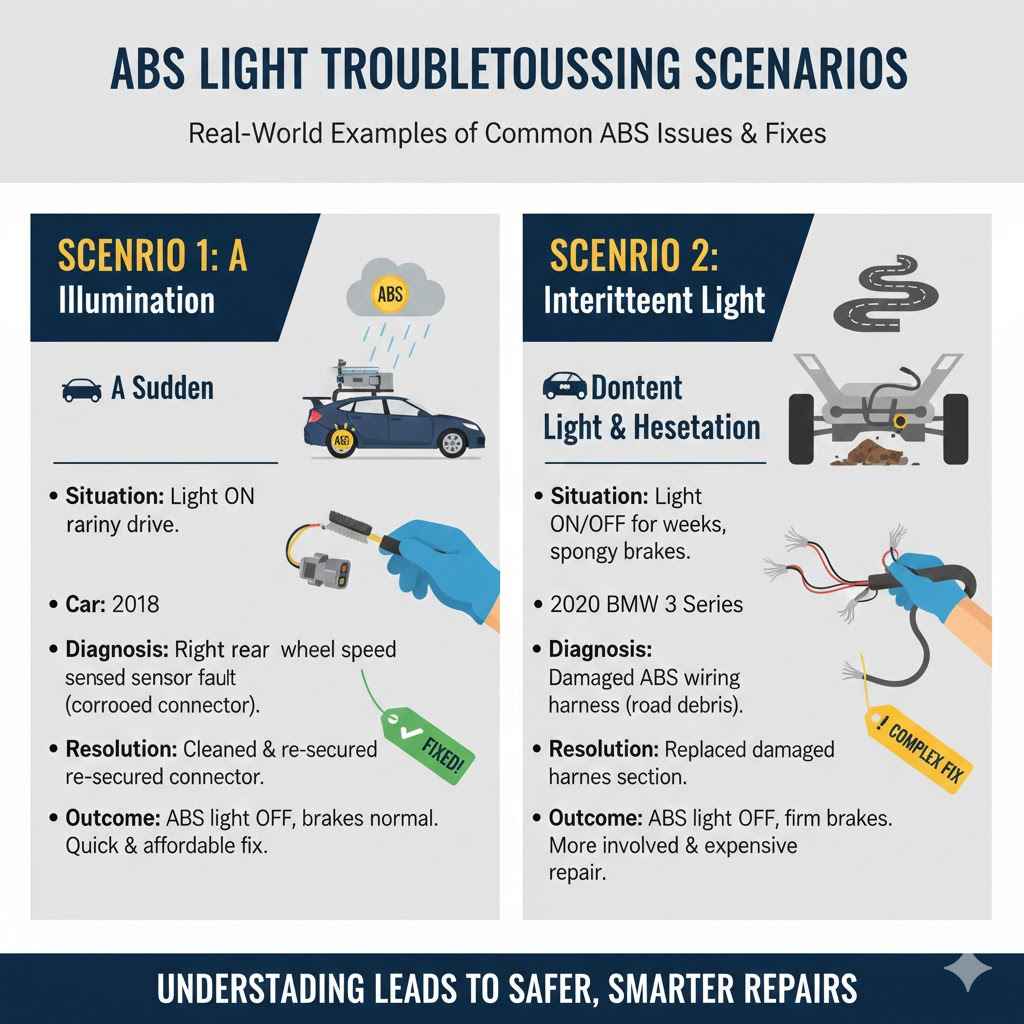
Scenario 1 A Sudden Illumination
Sarah was driving to work on a rainy morning when her ABS warning light suddenly illuminated on the dashboard. She didn’t notice any immediate change in her brakes, but she felt a bit uneasy. She decided to take it easy and head to her trusted mechanic after work.
The mechanic connected an OBD-II scanner and found an error code indicating a fault with the right rear wheel speed sensor. After a quick inspection, they discovered that the sensor’s wiring connector was corroded from exposure to moisture and road salt. The mechanic cleaned the connector, re-secured it, and cleared the error code. Sarah’s ABS light turned off, and her brakes performed normally. The repair was relatively quick and affordable.
Scenario 2 Intermittent Light and Hesitation
Mark had been experiencing an intermittent ABS light for a few weeks. It would come on during highway driving and then disappear later. Recently, he also noticed a slight hesitation when applying his brakes, and the pedal felt a bit spongy.
He took his car to the shop. The diagnostic scan revealed multiple wheel speed sensor faults, but the mechanic suspected a broader issue. Upon further investigation, they found that a section of the ABS wiring harness under the car had been damaged by road debris, causing intermittent signal loss to the sensors. They replaced the damaged section of the harness and confirmed all sensors were working correctly. The ABS light remained off, and the braking felt firm and responsive again. This repair was more involved and thus more expensive than Sarah’s sensor issue.
Frequently Asked Questions
Question: Does a car with the ABS light on still have brakes?
Answer: Yes, a car with the ABS light on will still have its standard braking system functioning. The ABS feature itself is likely disabled, meaning your wheels may lock up during hard braking, but you will still be able to stop your car.
Question: Can I drive with the ABS light on?
Answer: You can generally drive with the ABS light on, but it is not recommended for extended periods or in challenging driving conditions. It’s best to get the issue diagnosed and repaired as soon as possible to restore full safety capabilities.
Question: How much does it cost to fix an ABS light?
Answer: The cost can vary widely, from around $100 for a simple fix like a sensor replacement to several hundred or even over a thousand dollars for more complex repairs like replacing an ABS control module or damaged wiring harness.
Question: Will the ABS light go off by itself?
Answer: In some very rare cases, a temporary glitch might cause the light to go off after the car has been turned off and restarted. However, if there is a genuine fault, the light will typically stay on until the underlying problem is repaired.
Question: What should I do if both the ABS light and the brake warning light are on?
Answer: If both lights are on, this indicates a more serious issue, possibly with low brake fluid or a critical failure in the braking system. You should stop driving as soon as it is safe to do so and have your vehicle towed to a mechanic for immediate inspection.
Summary
Seeing the ABS light on your car’s dashboard means there’s likely an issue with the Anti-lock Braking System. It could be a faulty sensor, a problem with the control module, low brake fluid, or other less common causes. While your regular brakes will still work, the ABS safety feature will be disabled. It’s important to get a professional diagnosis to identify the exact problem and have it repaired promptly to ensure your vehicle remains safe to drive.